
Review · ARCHITECTURE TOURS
Kuala Lumpur: Batu Caves & Historic Buildings Tour
Kuala Lumpur makes most sense when you see its faiths and neighborhoods side by side. This four-hour tour takes you from the Hindu shrines of Batu Caves to a Chinese temple, an important national mosque, Chinatown and Little India. In a short morning or afternoon, you get a useful first look at how Malay, Chinese, Indian and Islamic traditions share one city.
I like two things here. First, the air-conditioned car saves you from piecing together distant sights in Kuala Lumpur heat. Second, the guides often make the tour feel personal. Ayyanar, Nesh, Jennifer, Yuvanesh and Jag are among the guides praised for clear explanations, flexible timing and help with photos. The main consideration is pace: five or more stops in four hours means short visits, not a slow study of each place.
Key points to know before booking
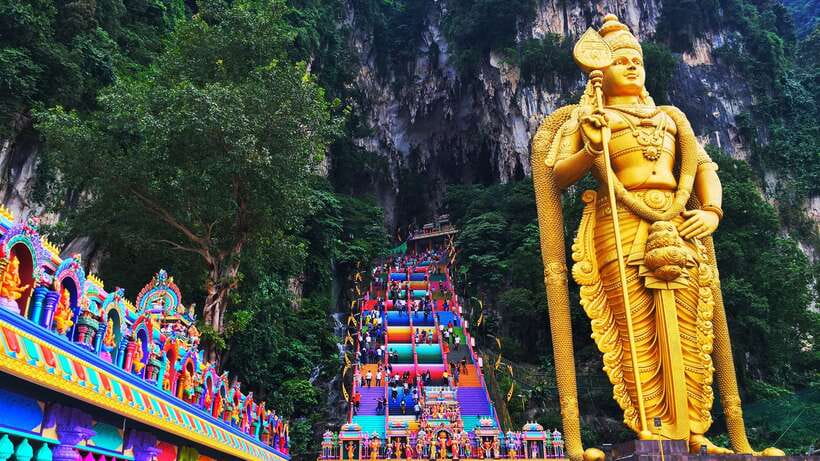
- The 272-step Batu Caves climb is the physical centerpiece, with Cathedral Cave waiting above.
- The route covers several faiths and communities, including Hindu, Chinese and Islamic sites.
- A private-feeling car is common, even though pickup may involve several bookings and is described as a group tour.
- Early timing matters, since guides have adjusted departures to reach Batu Caves before the crowds.
- The National Mosque closes on Friday, so check your date before booking.
- The $34 price is strong for a first look at KL, but food and entrance costs are extra.
Batu Caves gives the tour its big moment

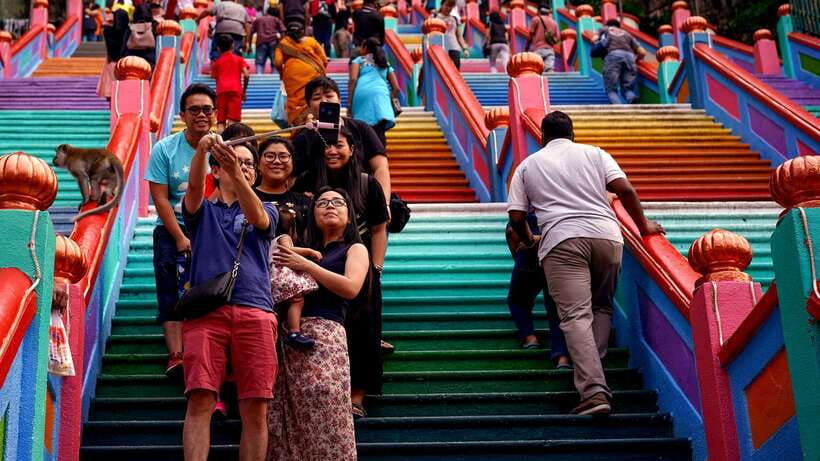
The tour usually begins with a hotel pickup in Kuala Lumpur and heads north to Batu Caves. This is the stop that gives the experience its visual punch: a huge golden statue of Lord Murugan faces the famous staircase leading up to the Hindu shrine.
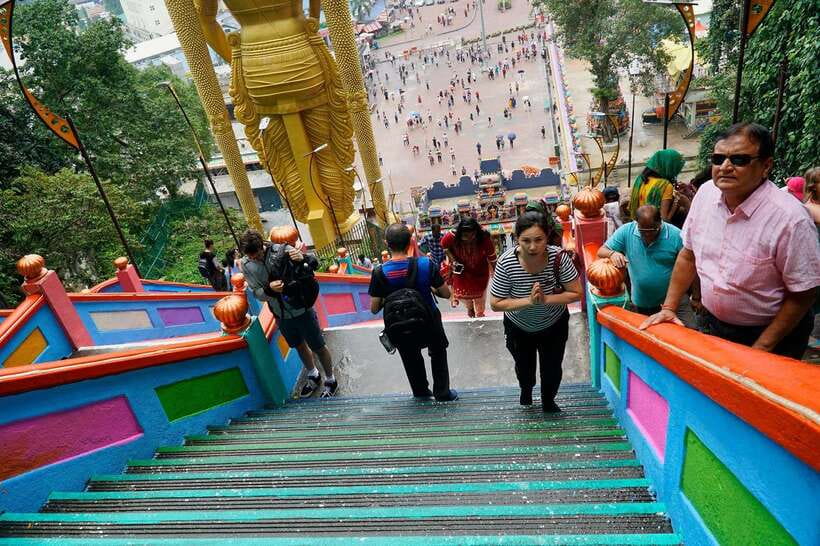
You climb 272 steps to reach the upper cave complex. It is not a technical walk, but it does call for a basic level of fitness, especially in warm weather. Wear proper sneakers, bring water, and take your time. The car is air-conditioned, but the stairs are not.
At the top, Cathedral Cave is the largest cave in the complex. Your guide explains the Hindu roots of the shrine and points out how the cave serves as a place of worship, not simply a dramatic photo stop. That context matters. Without it, Batu Caves can look like a colorful staircase and a giant statue. With it, the site becomes an introduction to the religious traditions that form part of Malaysia’s identity.
You should dress with the visit in mind. Women need long dresses or pants with shoulders covered. Men can wear a simple T-shirt with knee-length shorts or pants. Modest clothing is the safer choice for the rest of the day too.
This stop can be hot, crowded and physically tiring. Still, I would not skip it. The climb is the one part of the tour you cannot duplicate from a car window, and the view back toward the statue makes the effort worthwhile. Ask your guide where to meet afterward, since clear meeting instructions are useful when you return to the lower level.
More history tours in the world:
- Chicago in a Day: Food, History & Architecture Walking Tour
★ 5.0 · 1,153 reviews - Charleston’s Best Highlights: History, Culture & Architecture
★ 5.0 · 422 reviews - Palm Springs Modernism Architecture & History Bike Tour
★ 5.0 · 359 reviews
Thean Hou Temple brings Chinese tradition into the route
Next comes Thean Hou Temple, a six-tiered pagoda temple on Robson Heights. The Hainanese community of Kuala Lumpur built it, with construction completed in 1987 and the official opening held in 1989. The temple is dedicated to Tian Hou, a goddess honored by the Chinese community.
The visit is shorter, usually about 30 minutes, so you should expect an overview rather than a long religious study. Your guide can explain the temple’s role and help you notice the details that are easy to miss when you walk in without context.
Thean Hou is also a useful counterpoint to Batu Caves. The first site is a Hindu shrine inside a limestone cave. This one is a Chinese temple built above the city. Together, they show how different communities have shaped Kuala Lumpur without needing a long museum visit.
Some tour experiences also include a look at traditional batik painting, depending on the guide and the day’s arrangements. Treat that as a possible addition rather than a guaranteed stop. If you are especially interested in it, ask before departure.
The National Mosque connects religion with modern Malaysia
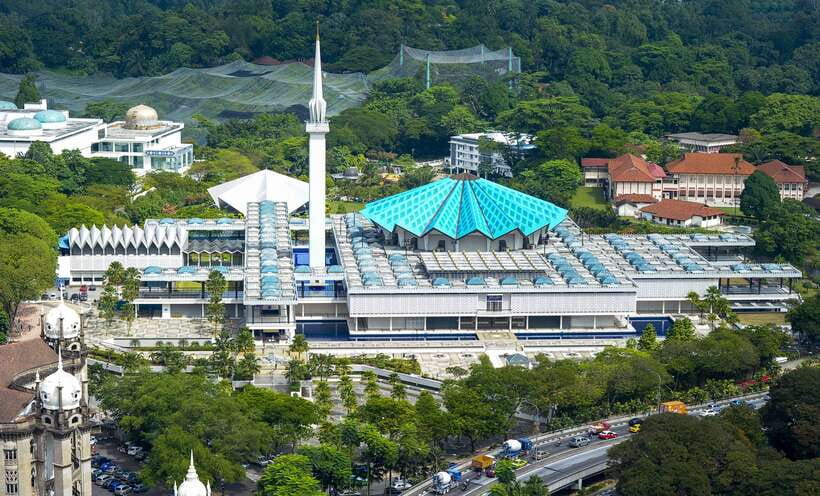
The National Mosque of Malaysia occupies 13 acres of gardens and was designed in the late 1950s as a symbol of the newly independent nation. Its setting gives you a change of mood after the color and movement of Batu Caves and Thean Hou Temple.
You generally have about 30 minutes here. That is enough for a look around and an explanation from your guide, but not enough for a detailed architectural visit. The mosque’s design and gardens matter because this is not just another religious building on a sightseeing list. It represents Malaysia as an independent country and gives the tour a national, civic dimension.
Keep the clothing rules in mind. Ladies need long dresses or pants with covered shoulders. Men should choose modest shorts or pants and a simple shirt. The National Mosque is closed on Friday, so this route needs adjusting on that day.
One useful feature of the tour is the driving commentary between stops. Guides such as Louis, Aru, Prabaz and Taufiq have been praised for explaining buildings and city history while driving, rather than saving every fact for a rushed stop. You may also pass landmarks such as the old railway station, and some guides have added the Royal Palace or other requested sights when time allowed. These additions are not guaranteed, but the route can have some flexibility.
Chinatown and Petaling Street shift the tour toward daily life
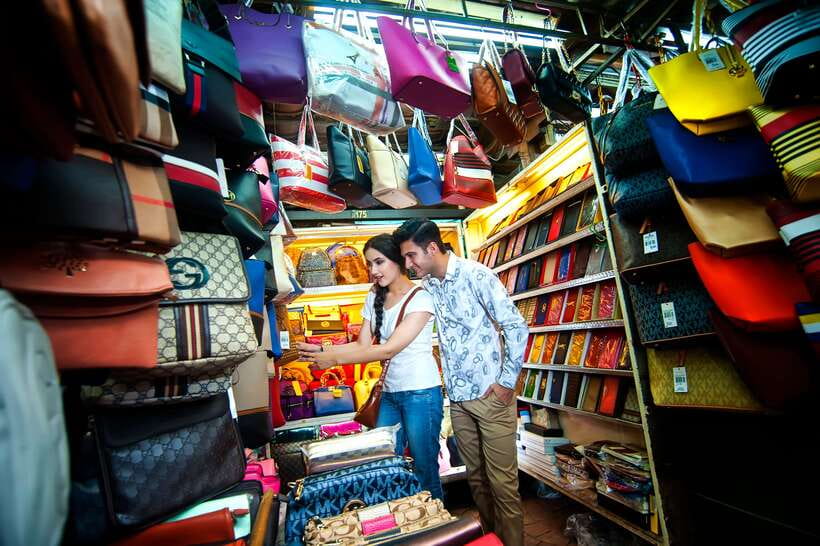
Petaling Street Market gives you a less formal look at Kuala Lumpur. Instead of a shrine or national building, you get stalls, shopping and food. The area is associated with Chinatown and brings you closer to the city’s commercial side.
The food choices described for this part of town include curry noodles, Hokkien mee, ikan bakar and asam laksa. The stalls may be run by Chinese, Indian, Malay and Bangladeshi traders, which makes the market a good place to see the city’s mixed character in ordinary settings.
Food is not included, so you decide if you want to buy something. With only about 30 minutes, you may need to choose between eating, browsing and taking photos. I would use this stop for a quick look and save a full meal for later unless your guide changes the timing.
You may also have time for retail therapy at Central Market, which is highlighted as part of the experience, although the listed stop sequence focuses on Petaling Street Market. If shopping is important to you, confirm the exact route with your guide at the start. The itinerary has enough flexibility for some guides to adjust the order or spend less time in places you already know.
A few more architecture tours around the world worth a look
- Chicago Architecture River Cruise
★ 5.0 · 15,756 reviews - Chicago River 90-Minute Architecture Tour
★ 4.5 · 9,629 reviews - Chicago River: 1.5-Hour Guided Architecture Cruise
★ 4.8 · 8,046 reviews - Chicago Architecture Center River Cruise aboard First Lady
★ 5.0 · 5,536 reviews
Little India adds another layer to the city
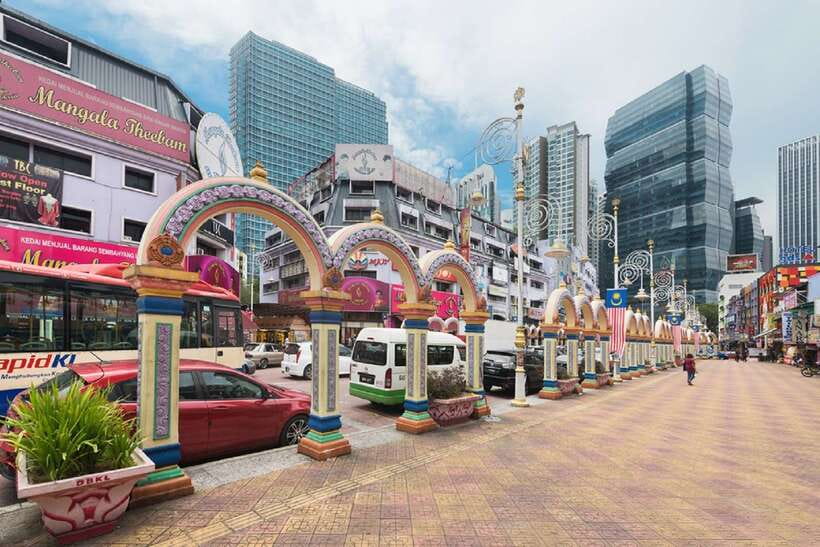
The final neighborhood stop is Little India, Kuala Lumpur. It completes the tour’s cultural arc after Batu Caves and the Chinese temple. You see the Indian community not only through a major religious site, but also through shops, food and street life.
The stop is normally around 30 minutes. That gives you a taste rather than a full exploration. I like this inclusion because it keeps the tour from becoming a parade of grand buildings. You get a glimpse of the communities that give Kuala Lumpur its character, then return to your hotel with a better sense of where to explore on your own.
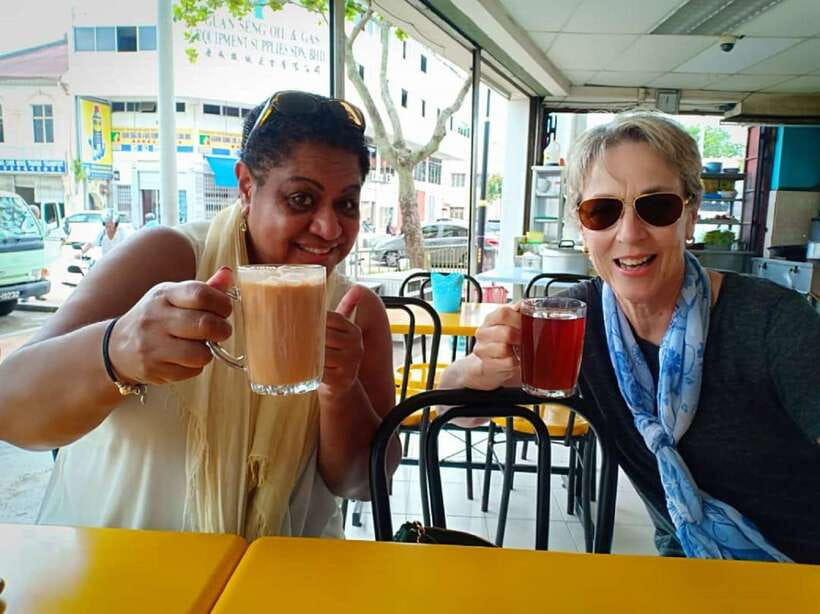
Several guides have offered food suggestions for later in the trip. That can be especially useful if this is your first time in Malaysia and you are unsure what to order. The tour does not include food or drinks, so bring money if you want to sample something along the way.
The car and guide make the tight schedule workable
The tour lasts four hours and includes hotel pickup and drop-off from city hotels, an English-speaking driver-guide and an air-conditioned vehicle. That combination is the reason the route works. Batu Caves is outside the central sightseeing area, while the temple, mosque and neighborhoods are spread across different parts of Kuala Lumpur.
Public transport can be useful in KL, but on a half-day schedule you would spend more time changing plans and watching the clock. Here, the driver handles the city traffic while the guide points out places along the way. Reports about smooth driving and comfortable cars are particularly relevant in a city where congestion can eat into a short tour.
The pickup details need a little attention. Although the experience is described as a group tour, it may involve three or four different pickup locations, and the exact time can move slightly earlier or later. Keep WhatsApp active around pickup time so the guide can confirm arrival. Guides such as Ayyanar and Nesh have contacted people the evening before, which makes the meeting easier.
A recurring benefit is the private feel. Many bookings have ended up with one party in the car, even though the product information refers to a group tour. That can make a real difference. A solo visitor can ask more questions, and a couple or family can spend longer at a favorite stop if traffic and timing allow. Do not assume a private vehicle is guaranteed unless your booking specifically says so.
What the $34 price really buys you
At $34 per person, this is a good value if you want orientation rather than a specialist tour of one monument. You are paying for transport, a driver-guide and a route that connects several hard-to-combine sights. Hotel pickup also removes the need to arrange separate rides to Batu Caves.
The price does not include entrance tickets, food, drinks or tips. No specific admission costs are provided here, so budget separately for any ticket required at the sites and for snacks or lunch. The tour is best value when you use the guide for context and the vehicle for convenience, not when you expect long, unhurried visits.
The strongest part of the value is time. If you have only one day in KL, the tour can give you a map of the city in four hours. You can then return later to Chinatown, Central Market, Little India or a religious site that caught your attention.
Timing, clothing and comfort tips
I would choose an early departure when possible. Guides have moved the start time forward to reach Batu Caves before larger crowds, and beginning at the caves also means tackling the steps before the day becomes hotter.
Wear comfortable sneakers. The 272 steps are the main physical demand, but you will also be getting in and out of the car and walking around several sites. Carry water, even though some guides provide bottled water. An umbrella may also be useful, and one guide was noted for preparing both water and an umbrella.
Dress modestly from the beginning. Covered shoulders and longer bottoms make the temple and mosque visits easier, and you will not need to worry about changing clothes between stops. If you are not comfortable with the stair climb, tell the guide early so expectations are clear.
The itinerary is active but not extreme. You need enough fitness for the stairs and enough energy for several short walks. The air-conditioned vehicle provides useful breaks between them.
Who will get the most from this tour
I would recommend it to a first-time visitor, anyone with a short stay, and solo visitors who want a friendly introduction without arranging several taxis. It also suits people who want cultural context, since the route covers Hindu, Chinese and Islamic places rather than focusing only on modern city sights.
Families with older children may like the variety, although the Batu Caves stairs could be tiring. The experience also works well for couples who prefer a car and guide over a large coach. The repeated praise for guides such as Ayyanar, Jennifer, Jag, Nesh, Yuvanesh and Aru suggests that the human side of the tour can shape the day. A good guide explains, watches the clock, takes photos when asked and lets you wander without hovering.
I would hesitate if you want deep time at each site, a dedicated food tour or a slow shopping afternoon. Five or more stops in four hours is an efficient sampler. You will see a lot, but you will not study everything.
Should you book this Kuala Lumpur tour?
Book it if you want a practical first day in Kuala Lumpur, especially if Batu Caves is high on your list and you do not want to manage the transport yourself. The mix of shrines, mosque, markets and neighborhoods gives you more cultural range than a standard city drive.
Before booking, check three things: your date is not Friday if the National Mosque is essential, your clothing works for religious sites, and you are ready for the 272-step climb. If those points suit you, $34 is a sensible price for four hours of transport and guided orientation. Use the tour to get your bearings, then return to the places that deserve more time.
FAQ
How long is the Kuala Lumpur Batu Caves tour?
The tour lasts four hours, including hotel pickup and return to Kuala Lumpur.
Is hotel pickup included?
Yes. Pickup and drop-off are included from Kuala Lumpur city hotels, with the meeting point at the hotel lobby.
Is the tour private or shared?
The experience is described as a group tour with three or four pickup locations, but it is also listed as a private group. Several bookings have used a private car for one party. Confirm the exact arrangement when booking.
Is the Batu Caves stair climb difficult?
The climb involves 272 steps and requires a basic level of physical fitness. Comfortable sneakers are recommended.
What should I wear?
Ladies need long dresses or pants with shoulders covered. Men can wear a simple T-shirt with knee-length shorts or pants. Modest clothing is suitable for the temples and mosque.
Is the National Mosque open every day?
The National Mosque is closed on Friday. Check the tour date if visiting it is important to you.
Are food and entrance tickets included?
No. Entrance tickets, food and beverages are not included. Optional gratuities are also separate.
Just added around the world
- Wilmington History and Architecture Tour★ 4.8 · 18 reviews
- Washington, DC: Georgetown Architecture Walking Tour★ 5.0 · 8 reviews
- New Orleans : Garden District Architecture Walking tour★ 4.8 · 5 reviews
- Washington DC: Dupont Circle & Embassy Row Architecture Tour★ 5.0 · 6 reviews
- Vicenza: discovering the city of Palladio by e-bike★ 5.0 · 4 reviews
- Vicenza: Palladian Architecture Private Walking Tour★ 3.3 · 3 reviews
- Walk & Discover KL’s Architectural and Heritage Gems★ 5.0 · 7 reviews
- Unveiling Brno: History, Culture & Architectural Delights★ 5.0 · 2 reviews
Historical Tours, compared.
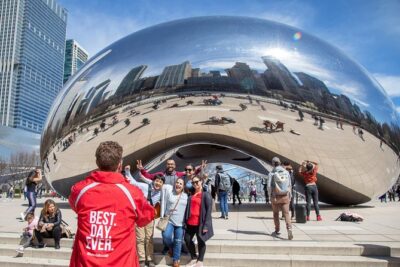
Chicago in a Day: Food, History & Architecture Walking Tour
Read our review →
Charleston’s Best Highlights: History, Culture & Architecture
Read our review →
Palm Springs Modernism Architecture & History Bike Tour
Read our review →
Charleston: History and Architecture Guided Walking Tour
Read our review →
Historic Georgetown: History, Gossip, & Architecture Walking Tour
Read our review →
Charleston History, Homes, and Architecture Guided Walking Tour
Read our review →

Historical and Architectural Chicago Fireboat River & Lake Cruise
Read our review →Browse the lists this tour appears in