
Review · MUNICH
Art Nouveau Meets Street Art in Munich (Max. 12 guests)
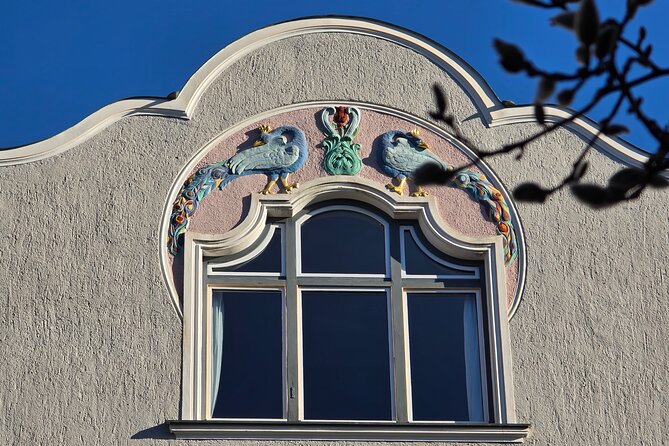
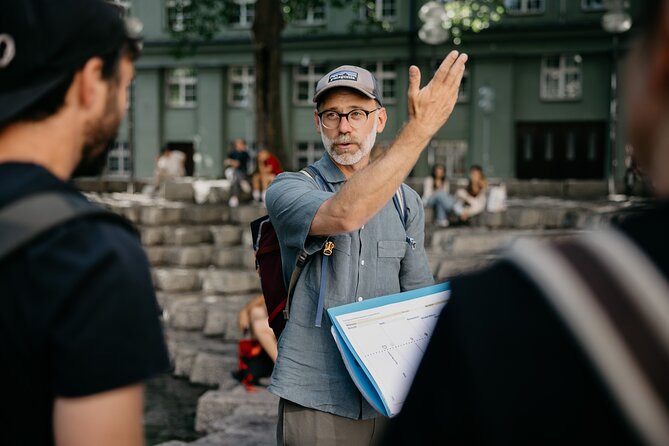
Munich’s Schwabing is the place to see the city’s playful side, and this tour adds a creative twist: you study four Art Nouveau façades, then turn their shapes and floral details into your own spray-painted postcards. Architect Philipp leads the walk and the workshop, so you get both design insight and practical guidance.
I like the small maximum of 12 people, which should make it easier to ask questions and see the façade details without being herded along. I also like the shift from old buildings to a heated shipping-container studio at Bahnwärter Thiel. The main consideration is mobility: the tour includes walking and a subway ride, and it is not suitable for wheelchair users.
Key points at a glance
- Four façades, one creative project: You study selected Jugendstil details before using them as stencil designs for four postcards.
- Led by Philipp: Your guide is an architect and certified official Munich city guide.
- Schwabing focus: The walk explores the historic bohemian district where German Art Nouveau took shape.
- Beginner-friendly workshop: Spray paint, gloves, masks, protective clothing, and stencils are supplied.
- Small-group setting: The standard group is capped at 12 people, with private groups available.
- Useful extras: You receive one finished postcard as a gift and a digital map of Philipp’s favorite Munich places.
Why this Munich art tour feels different
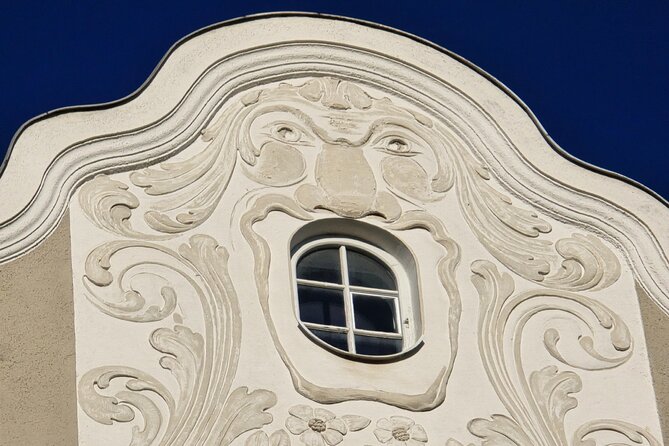
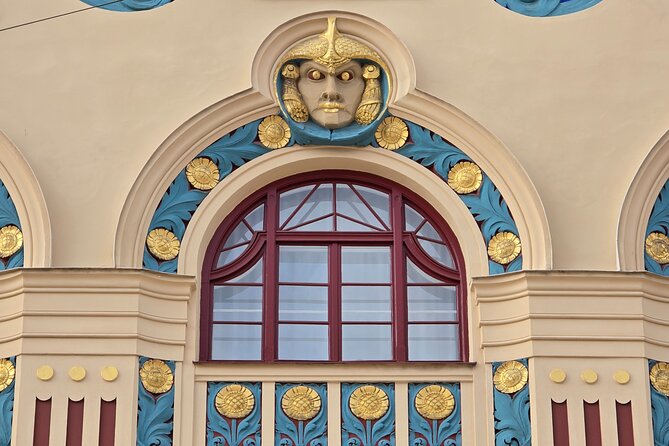
Many architecture walks end with a final façade and a polite goodbye. This one gives you a task. You look closely at Jugendstil buildings, notice their curves, leaves, flowers, and bold decorative choices, then use those observations to make something with your own hands.
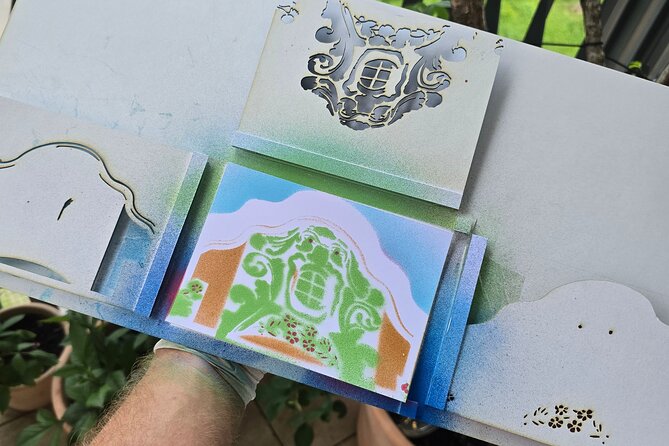
That change matters. Art Nouveau can seem like a parade of pretty façades if you only glance at it from the pavement. Here, you are asked to frame four buildings and remember their visual details. Later, those details return as stencils. You begin to see how a line, repeated motif, or decorative shape can move from architecture to a small piece of graphic art.
The experience lasts 150 minutes and is designed for a maximum of 12 people. That is a sensible size for a walking tour with a hands-on ending. You should have room to hear Philipp, inspect the buildings, and work at the spray-paint station without the activity becoming chaotic.
The tone is not meant to be a formal art lecture. Families, first-time visitors, art enthusiasts, and complete beginners can all take part. Philipp’s background as an architect gives the tour a useful foundation, while his official Munich guide certification connects the buildings to the city around them.
More Art Nouveau tours in Germany:
- Art Nouveau Meets Street Art in Munich (Max. 12 guests)
★ 5.0 · 3 reviews - Riga: Old Town Walking Tour with Art Nouveau Highlights
★ 4.7 · 332 reviews - Brussels 3-Hour Guided Art Nouveau Tour
★ 4.0 · 282 reviews
Meeting Philipp on Georgenstraße
The tour begins at Georgenstraße 7, in front of the entrance to the building. Philipp says to look for him with a tablet slung over his shoulder, which should make the meeting point easy to identify.
The most convenient public transport route is the U3 or U6 subway line. Get off at Giselastraße station, then allow about 10 minutes to walk to the start. Wear comfortable shoes. This is not a long-distance hike, but the route combines city walking, time spent standing while looking at façades, and a subway transfer later in the afternoon.
I would arrive with enough time to find the meeting point without rushing. Georgenstraße is not presented as a café-style meeting place where you can linger indoors, so it is smart to be ready before the stated start time. Food and drinks are not included.
The tour is described as bilingual in English and German. English and German are listed among the available languages, with Spanish also listed for the live guide service. If language is important to you, check the available starting option when booking.
Reading Schwabing’s Jugendstil façades
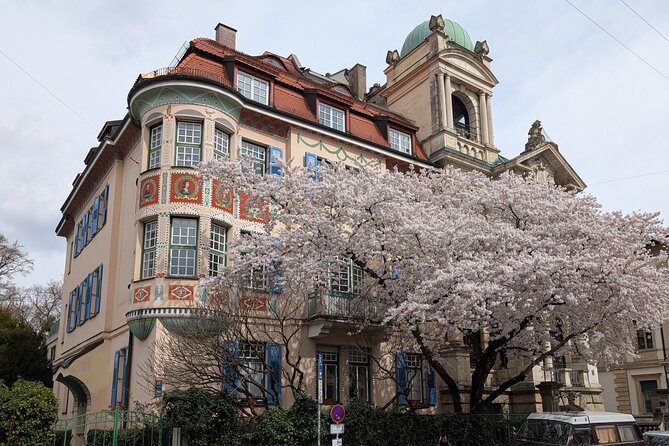
The first hour centers on Schwabing, Munich’s historic bohemian quarter and an important setting for German Art Nouveau, known locally as Jugendstil. The tour focuses on the buildings themselves rather than treating them as background scenery.
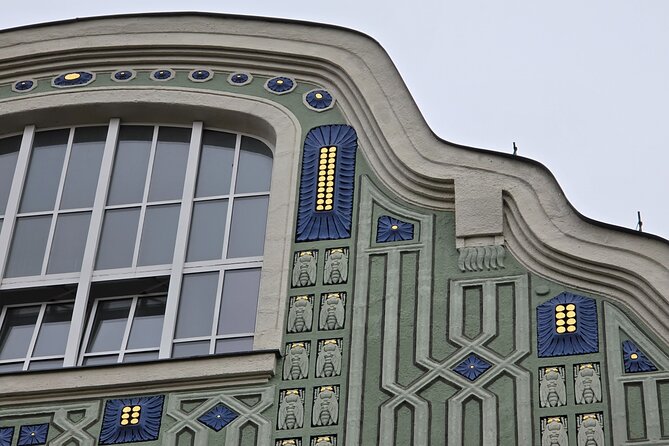
Jugendstil favored flowing lines, plant forms, decorative façades, and a willingness to rethink how a city building should look. The style could be delicate, but it could also be bold. As you move through Schwabing, Philipp points out details that are easy to miss from a passing tram or a quick sightseeing walk.
The format involves closely observing and framing four outstanding façades. That wording suggests a more focused approach than simply stopping at a long list of buildings. You are encouraged to isolate details, look at the composition, and notice how ornament works across the front of each structure.
This is where Philipp’s architectural training should be especially useful. A general guide can tell you that a building is Art Nouveau. An architect can help explain why a curve, window treatment, floral motif, or arrangement of decorative elements catches your eye. The available information does not promise technical drawings or an academic lecture, so expect clear interpretation rather than a university seminar.
The walk also brings in artists linked to Munich’s creative life, including Wassily Kandinsky and Paul Klee. Their names give the architecture a wider setting. Schwabing was not only a district of attractive buildings. It was also connected to artists and new ideas that helped shape Munich’s reputation as a place where traditional forms could be challenged.
I would pay attention to the act of framing the façades. The tour’s central idea works best if you resist the urge to photograph everything. Choose the details Philipp emphasizes, compare the four buildings, and keep an eye out for shapes that might work well as a simple stencil later.
From historic buildings to Bahnwärter Thiel
After about an hour of discovery, the group travels by subway to a contemporary art district on a former castle-yard site. The change of setting is part of the appeal. You move from permanent city façades to an art space built around reuse, improvisation, and contemporary creative work.
The final stop is Bahnwärter Thiel. The tour information identifies it as the finish point and places the workshop inside a heated shipping container. That is a memorable setting, but it also has practical meaning. You are not simply standing outdoors with a can of paint. You have a defined workspace, protection from cold weather, and a place to focus on the activity.
The subway ride is part of the 150-minute experience, so you do not need to arrange separate transport between the two sections. Transportation to and from the initial meeting point is your responsibility, however. The tour does not include food or drinks, and no meal stop is built into the plan.
The move from Schwabing to Bahnwärter Thiel may appeal most to people who like cities with more than one artistic personality. You begin with historic ornament and end in a contemporary setting made for creative experiments. If you prefer a tour that stays entirely within one historic district, this change of scene may feel less focused. For this particular experience, though, the contrast is the point.
A few more architecture tours around Germany worth a look
- Rione Sanità tour among baroque, revival, street art & food
★ 4.8 · 59 reviews - Walking Tour of Houston: History, Architecture, Street Art
★ 5.0 · 59 reviews - Rione Sanità Tour among Baroque, Revival, Street Art & Food
★ 5.0 · 48 reviews - Tirana: Street Art & Modern Architecture Walking Tour
★ 4.9 · 31 reviews
Making four spray-painted postcards

The workshop is designed for beginners. You use stencils based on the Art Nouveau details seen earlier, then create four postcards with spray paint. The activity is not presented as a test of artistic skill. Philipp supplies the equipment and guides you through the process, so you can concentrate on choosing colors, placing stencils, and building the image.
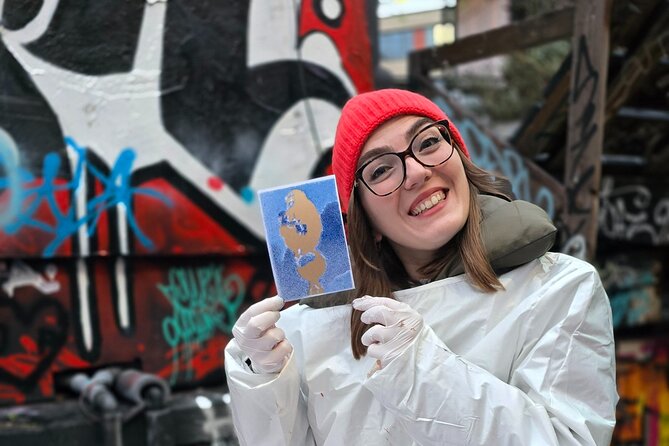
Safety equipment is included: glasses, protective gloves, masks, and clothing covers. That is useful for families and anyone who does not want paint on a favorite coat. The heated container also makes the workshop more comfortable than an outdoor spray-paint session, particularly on a cool Munich day.
You should expect some practical mess, even with protective gear. Wear comfortable clothing and shoes that you do not mind using during a hands-on art activity. Smoking is not allowed.
The four postcards give the workshop a little more substance than a quick souvenir craft. You have several chances to try the technique and adjust your approach. You might make one postcard that closely follows a façade detail and another that uses the stencil in a looser, more personal way.
One postcard depicting a highlight from the tour is included as a gift. That is separate from the four postcards you make, so you leave with both a prepared souvenir and your own work. Envelopes are also supplied, which makes the finished cards easier to carry or send.
I like this part because it gives the architecture a second life. Instead of taking only photographs, you leave with a small object connected to what you saw. The result will depend on your own choices and comfort with spray paint, but the point is participation, not polished studio work.
What the $42 price gets you
At $42 per person, the cost is reasonable if you want more than a standard two-hour city walk. You are paying for a small group, an official guide, architectural interpretation, a subway transfer within the experience, a supplied workshop, safety gear, four postcards, one gift postcard, and a digital Munich map.
The value is strongest for people who would otherwise book both an architecture tour and a short art activity. This combines those ideas in 150 minutes. You also get access to Philipp’s personal suggestions through the digital map, which can help you plan the rest of your time in Munich.
The price is less compelling if you only want to see Jugendstil buildings from the street. The spray-paint section is not an optional extra; it is half of the experience’s character. If you are not interested in making art, you may find a conventional architecture walk a better use of your money.
The small group is another part of the value. With up to 12 people, the guide can keep the walking commentary more personal and manage the workshop more easily than a large sightseeing group. A private group is available if you want the experience arranged just for your own party, though the supplied information does not give a separate private-group price.
Who will enjoy this experience most
I would recommend this tour to families with older children who enjoy making things, couples looking for a less predictable Munich activity, and art-minded visitors who want to connect historic design with current creative spaces.
It also suits beginners. You do not need previous spray-paint experience, art training, or specialist knowledge of Art Nouveau. The structure gives you enough context to understand what you are seeing, then lets you respond to it in a simple, hands-on way.
Architecture students, designers, and photographers may appreciate the close study of four façades. The tour is not limited to professional interests, though. The careful framing exercise can help anyone look more closely at Munich’s buildings.
You may want to choose another activity if you need step-free access. The tour is not suitable for wheelchair users, and the combination of walking, subway travel, and a shipping-container workshop may be difficult for anyone with mobility limits.
Practical details that affect your choice
Plan for 150 minutes from the opening meeting to the finish at Bahnwärter Thiel. The route begins outdoors, includes a subway ride, and ends with spray painting, so comfortable shoes are more important than dressing formally.
Participation is at your own risk. Safety glasses, gloves, masks, and clothing covers are included, but follow Philipp’s instructions carefully during the spray-paint session.
You can cancel up to 24 hours in advance for a full refund, and the reserve-now, pay-later option lets you hold a place without paying immediately. Those terms are useful if your Munich schedule is still changing.
The tour is listed with English, German, and Spanish language options, while the experience itself is described as bilingual in English and German. Check the available language at your chosen time so you know what to expect.
Feedback about the experience repeatedly emphasizes Philipp’s friendly manner, careful organization, passion, and strong commentary. That praise fits the design of the tour: it has a clear first half, a planned transfer, and a creative finish rather than a loose collection of stops.
Should you book Art Nouveau Meets Street Art in Munich?
Book it if you want to look closely at Munich’s architecture and then do something with what you have seen. The combination of Schwabing’s Jugendstil façades and a spray-paint workshop at Bahnwärter Thiel gives the afternoon a clear shape, and the four postcards make the activity feel personal rather than decorative filler.
Skip it if you want a purely historical walking tour, dislike hands-on crafts, or need wheelchair access. For everyone else, $42 is a fair price for a small, guided experience that joins architecture, local art, and a practical souvenir in one compact outing.
FAQ
Where does the tour begin?
The tour begins at Georgenstraße 7, in front of the entrance to the building. Look for Philipp with a tablet slung over his shoulder.
How do I reach the meeting point?
Take the U3 or U6 subway lines to Giselastraße station, then walk about 10 minutes to Georgenstraße 7.
How long does the experience last?
The tour lasts 150 minutes, or two and a half hours, and finishes at Bahnwärter Thiel.
Which languages are available?
English, German, and Spanish are listed as available languages. The experience is described as bilingual in English and German, so check the language option when choosing your time.
What do I make during the workshop?
You create four postcards with spray paint and stencils based on Art Nouveau details seen during the walking tour.
Is the spray-paint equipment provided?
Yes. Spray paint, stencils, envelopes, postcards, safety glasses, protective gloves, masks, and clothing covers are included.
Is the tour suitable for wheelchair users?
No. The experience is listed as not suitable for wheelchair users.
Just added around Germany
- Beautiful Baroque Potsdam: A Self-Guided Audio Tour★ 4.5 · 4 reviews
- Munich Your Way: Private Tour with Architect & Guide★ 5.0 · 2 reviews
- Private Munich Tour for History Buffs with Architectural Gems and WWII sites★ 5.0 · 3 reviews
- Art Nouveau Meets Street Art in Munich (Max. 12 guests)★ 5.0 · 3 reviews
- Hidden Architectural Gems of Munich (Max. 16 guests)★ 5.0 · 2 reviews
- Architectural Frankfurt: Private Tour with a Local Expert★ 5.0 · 2 reviews
- Private Taxi Tour of City East History and Architecture 2-3h★ 5.0 · 2 reviews
- Architectural Berlin: Private Tour with a Local Expert★ 4.0 · 3 reviews
Art Nouveau Tours, compared.
Riga: Old Town Walking Tour with Art Nouveau Highlights
Read our review →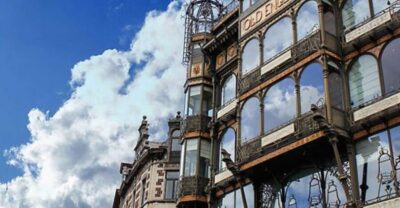
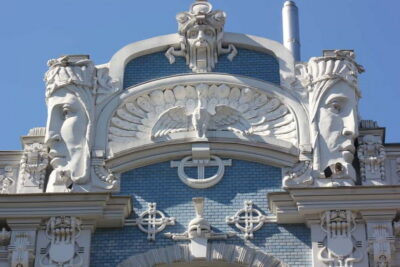
Riga: 2-Hour History of Art Nouveau Walking Tour
Read our review →
Brussels: Art Nouveau Pass – Entry to Three Locations
Read our review →
Small Group Tour in Ålesund: Art Nouveau, Sea Views & Insider Tips
Read our review →
Browse the lists this tour appears in