Review · ARCHITECTURE TOURS
Wings of Dubai: Downtown Dubai Art & Architecture Tour
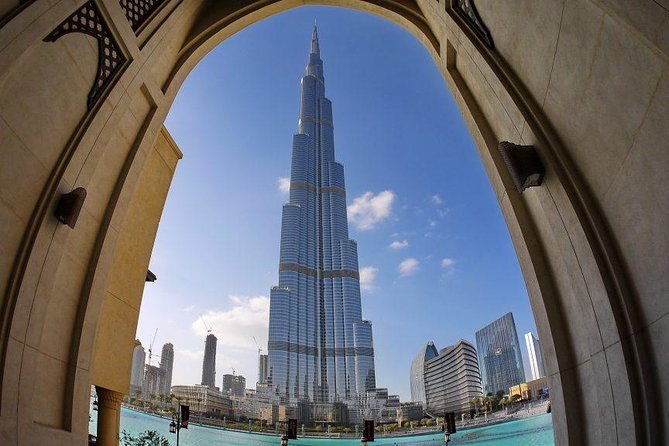
Downtown Dubai is more than a collection of shiny towers. This four-hour tour shows you how architecture, public art, and UAE symbolism fit together, beginning inside Dubai Mall and ending among the galleries of Alserkal Avenue. You’ll see Dubai Dino, the Dubai Fountain, Burj Khalifa, Dubai Opera, and works by El Seed and Jorge Marin.
I like the small group limit of five and the included SUV, which makes the shift from Downtown to Alserkal Avenue easy. I also like the art focus: you get more than the usual photo stops, with gallery visits and a planned Atelier visit connected to Tunisian-French artist El Seed. The main consideration is price. At $544 per person, this is a premium outing, so it makes the most sense if you want expert context and personal attention rather than a basic city walk.
Key points to know
- Dubai Mall is the starting point: Meet at the Tiffany store by the mall’s main entrance, where your orange-clad guide will find you.
- The tour links famous sights with design details: You’ll study Burj Khalifa, Dubai Opera, Burj Plaza, the Dubai Fountain, and public artworks.
- Dubai Dino adds a surprising natural-history stop: The massive skeleton is said to be 155 million years old.
- Alserkal Avenue changes the mood: An SUV transfer takes you from polished Downtown to warehouse-style galleries and studios.
- El Seed is a major highlight: The Atelier visit connects calligraphy, graffiti, Arabic identity, and large public commissions.
- The group stays very small: With no more than five participants, questions and conversation should be easier than on a large sightseeing bus.
Starting inside Dubai Mall with Dubai Dino
The tour begins at the Tiffany store near Dubai Mall’s main entrance. Look for a guide dressed in orange, a useful detail in a huge complex where meeting points can otherwise become vague.
Starting indoors is practical. Dubai Mall is enormous, and the first part of the tour gives you a sense of how Downtown Dubai operates as a designed environment, not simply as a shopping center. You are walking through a place built to combine retail, entertainment, architecture, and spectacle on a very large scale.
One of the first unusual sights is Dubai Dino, a massive dinosaur skeleton presented as 155 million years old. It is an excellent early stop because it breaks up the modern-city story. You go from glass, polished stone, and luxury brands to a prehistoric creature, then back into Dubai’s carefully planned urban world.
I would not treat this as a museum tour. The dinosaur is one part of a broader walk, and the real value comes from your guide explaining why such a display belongs in Dubai Mall. You can expect the guide to connect the mall’s attractions with the city’s larger habit of combining commerce, entertainment, art, and architectural drama.
A few more architecture tours around the world worth a look
- Chicago Architecture River Cruise
★ 5.0 · 15,756 reviews - Chicago River 90-Minute Architecture Tour
★ 4.5 · 9,629 reviews - Chicago River: 1.5-Hour Guided Architecture Cruise
★ 4.8 · 8,046 reviews
Walking from Souk Al Bahar to Burj Plaza
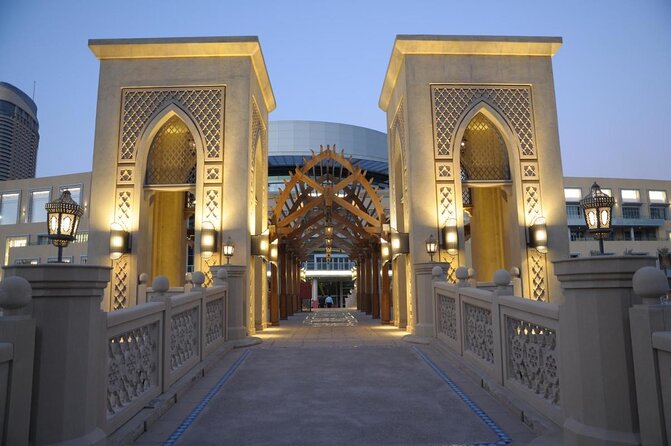
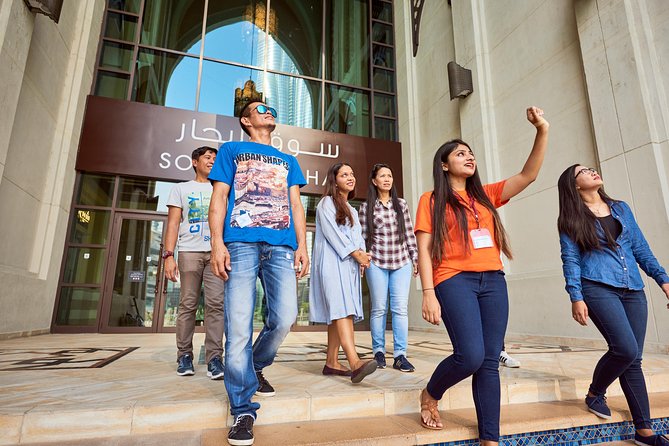
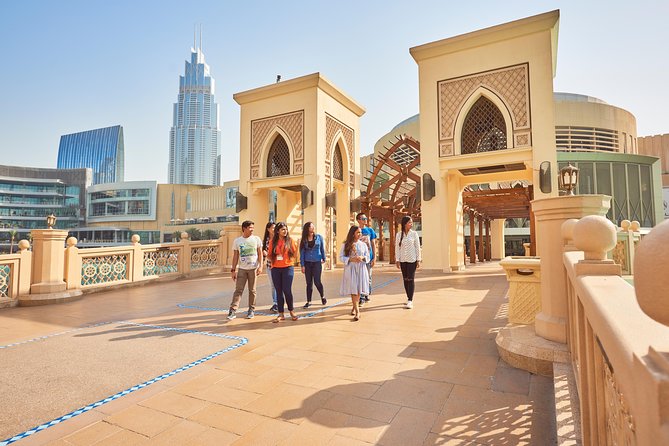
From Dubai Mall, the route heads toward Souk Al Bahar and then into Burj Plaza. This section helps you see the contrast between modern mall design and a more traditional Arabian visual language.
Souk Al Bahar is important here as a transition point. The name and styling refer to a souk, but the setting remains part of Downtown Dubai’s carefully constructed visitor district. The tour uses this shift to discuss how cultural references are folded into modern construction.
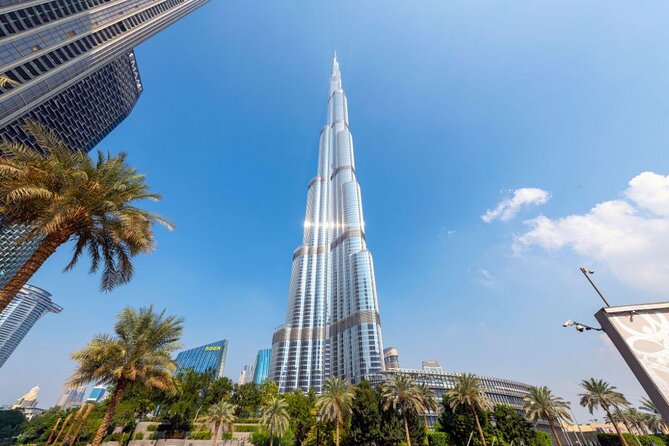
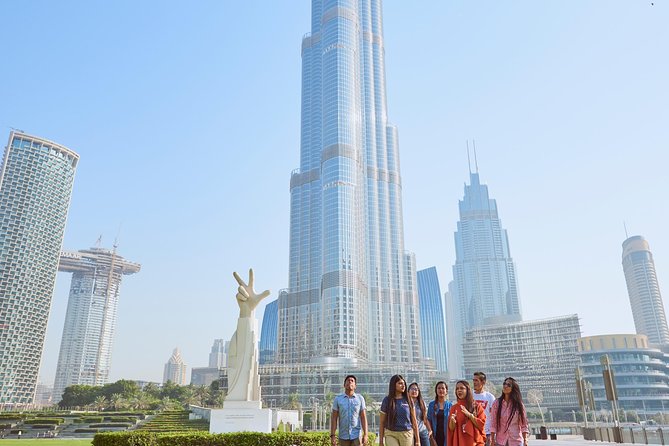
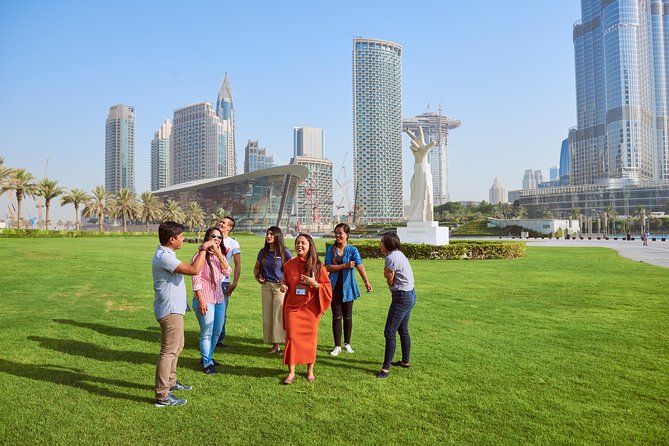
Burj Plaza gives you one of the clearest views of the Downtown complex. From here, you can look toward Burj Khalifa and the Dubai Fountain while also seeing public art placed in the same public spaces. The point is not just to collect photographs. Your guide explains how the buildings, open areas, water features, and sculptures were planned to work together.
This is where the tour’s architectural angle becomes useful. Dubai is often presented through record-breaking height and scale. A good guide adds the missing question: how does a district this large create places where people actually gather, walk, and look?
Burj Khalifa, Dubai Fountain, and the Downtown art trail
You will see Burj Khalifa throughout the Downtown portion, but this experience is not described as a visit to the observation decks. The tour ends in the Burj Khalifa area rather than including admission to the tower’s upper levels.
That distinction matters if you are comparing this with a ticketed Burj Khalifa visit. You are paying for interpretation of the tower and its surroundings, not for access to the top. One previous participant finished near Burj Plaza and then walked to the Burj Khalifa entrance to buy a separate ticket. You can do the same if you want to add the observation decks, but that admission is not part of this tour.
The Dubai Fountain is another major reference point. From Burj Plaza and Burj Park, you get direct views toward the fountain area and the surrounding towers. The tour uses this setting to explain how water, height, open space, and public art help shape Downtown’s identity.
The public artworks give the walk a clear thread:
- Wings of Mexico by Jorge Marin adds a playful, highly photographable image to the district.
- Declaration by El Seed brings Arabic calligraphy into the city’s modern public setting.
- The Three Finger Salute Statue refers to a recognizable UAE symbol used in public imagery.
- Dubai Opera takes the form of a dhow, linking a contemporary performance building with the country’s maritime past.
These works are not all alike, which is part of the appeal. You get monumental sculpture, calligraffiti, political symbolism, and architectural form in one compact route. I like that the tour treats public art as part of city planning rather than as decoration added after the buildings were finished.
Dubai Opera and the dhow-shaped design story
Dubai Opera is one of the most interesting stops because its form carries a local reference without copying an old building. The structure is shaped like a dhow, the traditional sailing vessel associated with the Gulf.
That shape gives your guide a useful way to discuss Dubai’s approach to culture. The city often uses familiar symbols, such as boats, calligraphy, and souk-inspired forms, inside new buildings made for a modern international audience. The result can feel polished and deliberate, but it also tells you something about the image Dubai wants to project.
The Opera complex is also a good reminder that this is not a conventional heritage walk. You will not be moving through an old neighborhood with original buildings. Instead, you are reading cultural meaning in new construction.
For travelers who enjoy design, this is likely one of the strongest parts of the Downtown walk. For anyone mainly seeking historic streets and older architecture, the experience may feel less authentic in the traditional sense. The value lies in understanding how a young, rapidly growing city presents its identity through new public places.
Same city, a completely different century:
- Chicago Architecture Center River Cruise aboard First Lady
★ 5.0 · 5,536 reviews - Chicago: Architecture River Cruise Skip-the-Ticket Line
★ 4.8 · 4,325 reviews - Chicago River 45-Minute Architecture Tour from Magnificent Mile
★ 4.5 · 2,924 reviews - Barcelona: Sant Pau Recinte Modernista Entry Ticket
★ 4.6 · 2,567 reviews
A short SUV ride to Alserkal Avenue
After the Downtown walk, the experience shifts by SUV to Alserkal Avenue. The included pickup and drop-off service covers anywhere in Dubai, and the vehicle transfer is important because Alserkal Avenue is a separate art district rather than a simple extension of the Downtown route.
This change of setting is one of the tour’s best features. Downtown gives you giant towers, formal plazas, a luxury mall, and public sculptures. Alserkal Avenue offers warehouse-style art and design spaces. You get to see two very different sides of Dubai’s cultural life in the same four-hour program.
The group is limited to five participants, which should make the car ride and gallery visits more comfortable than a large group transfer. It also gives the guide room to explain the differences between commercial public art in Downtown and the gallery-driven art scene at Alserkal Avenue.
The exact galleries visited can depend on what is on display. The route may include Ayyam, a Syrian-owned gallery, and Green Art Gallery. Both were among the first galleries to move into Alserkal Avenue in 2007. That detail gives the district some useful context: it was not simply created as a tourist attraction, but became a base for galleries and creative businesses.
Galleries, design spaces, and the Italian Shoe Factory
At Alserkal Avenue, you move through warehouse-style art and design spaces. This part is less about famous landmarks and more about seeing how Dubai supports an art district in converted industrial surroundings.
Ayyam and Green Art Gallery can introduce you to work from Arab and South Asian artists, depending on current exhibitions. Since the displays change, the precise art you see cannot be guaranteed. That is normal for a gallery visit, and it is also why the guide’s explanation matters. You are not just checking a permanent sight off a list.
The Italian Shoe Factory adds a design and fashion angle. The space uses local Sadu prints on international leather and explores reclaimed shoes and fashion. Sadu refers to a traditional textile pattern associated with the region, so this stop connects craft motifs with modern products.
I like this contrast. In Downtown, you see cultural symbols scaled up into sculptures and buildings. At the Italian Shoe Factory, the same broad idea appears in smaller, wearable forms. The result is more varied than a tour focused only on towers and public monuments.
You will also see the Dubai Circle Game, a signage installation by New York artist Mary Ellen Carroll. It adds a clever visual piece to the warehouse district and reinforces the idea that Alserkal Avenue is a place where design experiments can sit beside commercial studios and galleries.
Meeting El Seed and understanding calligraffiti
The Atelier visit with El Seed is likely the most distinctive part of the program. El Seed is a Tunisian-French artist known for combining Arabic calligraphy with graffiti-style composition. His work appears at Dubai Opera, the Dubai Expo 2020 site, Louvre Abu Dhabi, Cairo, and Paris.
Seeing an artist’s Atelier gives you a more direct connection to the work than looking at a finished public commission from across a plaza. You can expect the guide to explain how El Seed’s lettering functions as both text and image, though the supplied details do not specify exactly what the artist or studio team will demonstrate during the visit.
His work also brings the Downtown and Alserkal Avenue portions together. In Downtown, you see Declaration by El Seed in a public setting. At the Atelier, you get a chance to place that kind of work in the wider context of an artist’s practice.
This is particularly useful if you are interested in modern Arab art, calligraphy, urban design, or the way artists work across languages and cultures. It also gives the tour a stronger personal connection than a standard architecture route.
What the guide adds to the experience
The tour is led in English by a certified premium guide. The strongest guide experience will matter here because many of the sights are easy to see without help. Anyone can photograph Burj Khalifa. The guide’s job is to explain why the district looks as it does and how its art, symbols, and buildings relate.
One family group with teenagers found the architecture explanations especially clear, with the guide using images to explain the design. That is a useful clue for parents. The route is not pitched only at art specialists. A guide who can explain structures visually can keep younger visitors involved when the subject becomes technical.
The experience is limited to five people, which gives you a better chance to ask questions about a particular building or artwork. It also means the guide can adjust the conversation more easily than on a full-size city tour.
Still, do not expect the same thing as a private tour if your booking includes other participants. The group is small, not necessarily one household. The guide language listed is English, so this is best for visitors comfortable discussing art and architecture in English.
Is $544 per person a fair price?
At $544 per person, this is expensive for a four-hour activity. The price is not easy to justify if you want a simple walking tour of Downtown Dubai. You can see many of the public sights on your own, and the Burj Khalifa observation decks require a separate ticket if you want to go up.
The value comes from the package of services and access:
- Pickup and drop-off anywhere in Dubai by SUV
- A certified English-speaking guide
- A group limited to five
- Downtown architecture and public art interpretation
- A transfer to Alserkal Avenue
- Gallery and design-space visits
- An Atelier visit with El Seed
For a couple, family, or small group that values private-style attention, the SUV and limited group size help explain the premium. The tour also saves you from planning how to connect Dubai Mall with Alserkal Avenue on your own.
I would book it only if the art and design angle is central to your plans. If you mainly want Dubai Mall, the fountain, and Burj Khalifa photos, the price is too high. If you want to understand how the city uses architecture and art to express modern UAE identity, the package becomes easier to defend.
Food and drinks are not included, and guide gratuity is extra. Build those costs into your budget.
Who will enjoy this tour most?
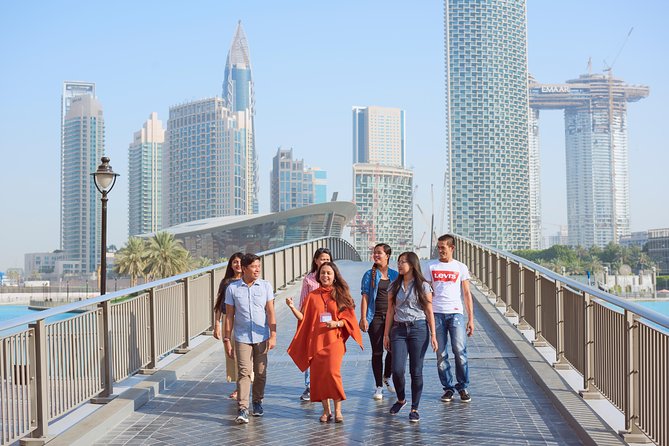
I would recommend this experience to visitors who want more than landmark photographs. It suits:
- Art and architecture fans
- Families with teenagers who enjoy visual explanations
- First-time visitors who want Downtown placed in context
- Visitors interested in Arab and South Asian contemporary art
- Small groups willing to pay for private-style transport and attention
- Anyone curious about El Seed’s work and calligraphy-based art
It is less suitable if you dislike malls, modern planned districts, or gallery visits. It also may not satisfy you if your main goal is old Dubai, traditional markets, or a long visit inside Burj Khalifa.
The four-hour length is well chosen for the number of places covered, but the route is full. You will move from Dubai Mall to Downtown’s outdoor spaces, then by car to several art venues. Expect a packed introduction rather than a slow, unhurried museum day.
Booking details worth knowing
You can cancel up to 24 hours before the tour for a full refund, and you can reserve now and pay later. Availability depends on the starting time you choose.
The stated meeting point is the Tiffany store at Dubai Mall’s main entrance. Your guide will wear orange. Since Dubai Mall is very large, arrive with enough time to locate the entrance rather than cutting it close.
Pickup and drop-off by SUV are included anywhere in Dubai, but the meeting-point information still identifies Dubai Mall as the standard starting location. Confirm the pickup arrangement when booking if you want to use the vehicle service instead of meeting at the mall.
Should you book Wings of Dubai?
Book this tour if you want to connect Burj Khalifa and Dubai Opera with public art, galleries, design studios, and El Seed’s calligraffiti. The small group, SUV transfer, and strong architecture focus make it far more personal than a standard Downtown sightseeing walk.
Skip it if you only need the headline sights or if $544 feels out of proportion to four hours. For the right audience, especially art-minded families and small groups, this is a thoughtful way to see Dubai’s polished center and its creative warehouse district in one outing.
FAQ
How long is the Downtown Dubai Art and Architecture Tour?
The tour lasts four hours.
Where does the tour begin?
The stated meeting point is the Tiffany store at Dubai Mall’s main entrance.
How will I recognize the guide?
The guide will be dressed in orange.
What language is the tour conducted in?
The live tour guide language is English.
How many people can join the group?
The group is limited to five participants.
Is transportation included?
Yes. Pickup and drop-off by SUV car and driver are included anywhere in Dubai.
Does the tour include entry to the top of Burj Khalifa?
No. The tour finishes in the Burj Khalifa area, but admission to the observation levels is not listed as included.
Is food included?
No. Food and drinks are not included.
Can I cancel the tour for a refund?
Yes. You can cancel up to 24 hours in advance for a full refund.
Just added around the world
- Wilmington History and Architecture Tour★ 4.8 · 18 reviews
- Washington, DC: Georgetown Architecture Walking Tour★ 5.0 · 8 reviews
- New Orleans : Garden District Architecture Walking tour★ 4.8 · 5 reviews
- Washington DC: Dupont Circle & Embassy Row Architecture Tour★ 5.0 · 6 reviews
- Vicenza: discovering the city of Palladio by e-bike★ 5.0 · 4 reviews
- Vicenza: Palladian Architecture Private Walking Tour★ 3.3 · 3 reviews
- Walk & Discover KL’s Architectural and Heritage Gems★ 5.0 · 7 reviews
- Unveiling Brno: History, Culture & Architectural Delights★ 5.0 · 2 reviews
Architecture Tours, compared.
Chicago River: 1.5-Hour Guided Architecture Cruise
Read our review →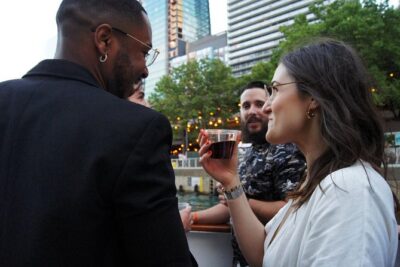
Chicago Architecture Center River Cruise aboard First Lady
Read our review →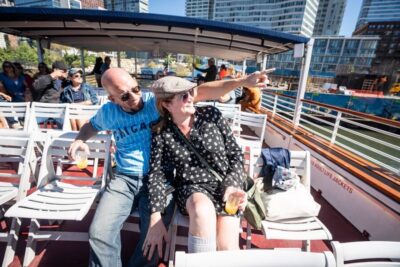
Chicago: Architecture River Cruise Skip-the-Ticket Line
Read our review →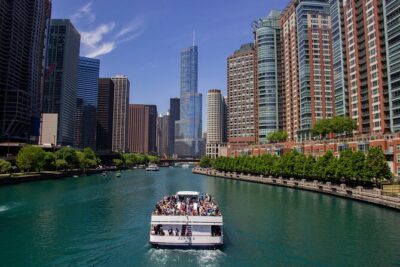
Chicago River 45-Minute Architecture Tour from Magnificent Mile
Read our review →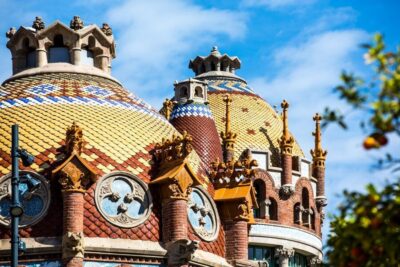
Barcelona: Sant Pau Recinte Modernista Entry Ticket
Read our review →