
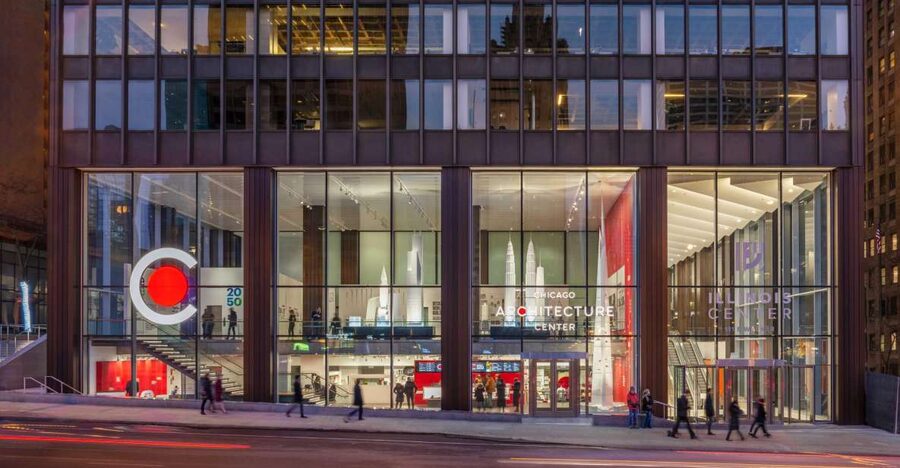
Review · THE USA
Chicago: Architecture Center Exhibit Admission
The Chicago Architecture Center puts Chicago’s built story in one room. You can stand over a model of more than 4,200 buildings, then turn to giant skyscraper models that explain how engineers pushed buildings higher, from the Home Insurance Building to Jeddah Tower.
I especially like the Chicago City Model Experience, with its film, lights, and touch screens, and the wide glass wall looking toward the Tribune Tower, Wrigley Building, and Apple Store. The main drawback is simple: this is self-guided admission, not a guided tour, and the gallery may feel small if you expect a full-day museum visit.
Key points
- 4,200-plus Chicago buildings: Study the expanded city model and watch Chicago’s growth unfold through film and light.
- Super-tall skyscrapers: Compare famous towers from Chicago and around the world, including the planned Jeddah Tower.
- Hands-on orientation: Use touch screens to search by architect, building style, neighborhood, and walking route.
- A strong downtown setting: The CAC sits at 111 E Upper Wacker Drive, close to Michigan Avenue and the river cruise dock.
- Architecture beyond skyscrapers: Learn about neighborhoods, housing styles, city planning, and the architects who shaped Chicago.
- Self-guided and accessible: Admission covers all exhibits, but not a docent-led tour, food, storage, or transportation.
Start with Chicago’s city model
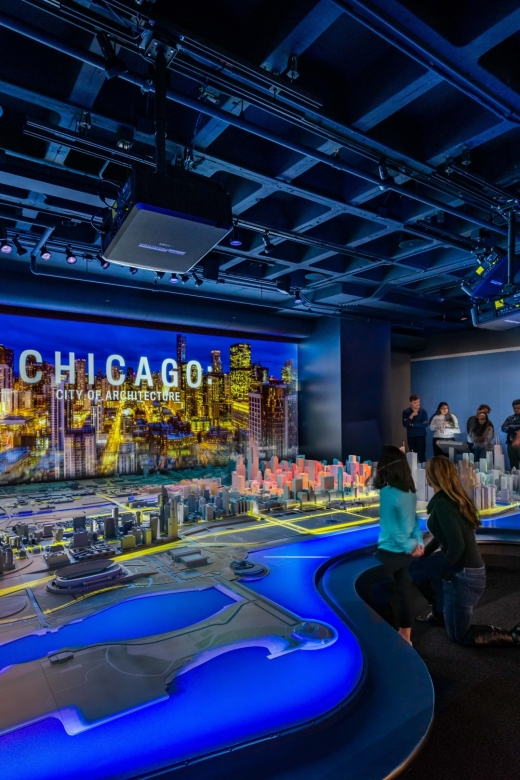
I would begin with the Chicago Gallery and its centerpiece, the Chicago City Model Experience. It is the clearest way to get your bearings before looking at individual buildings.
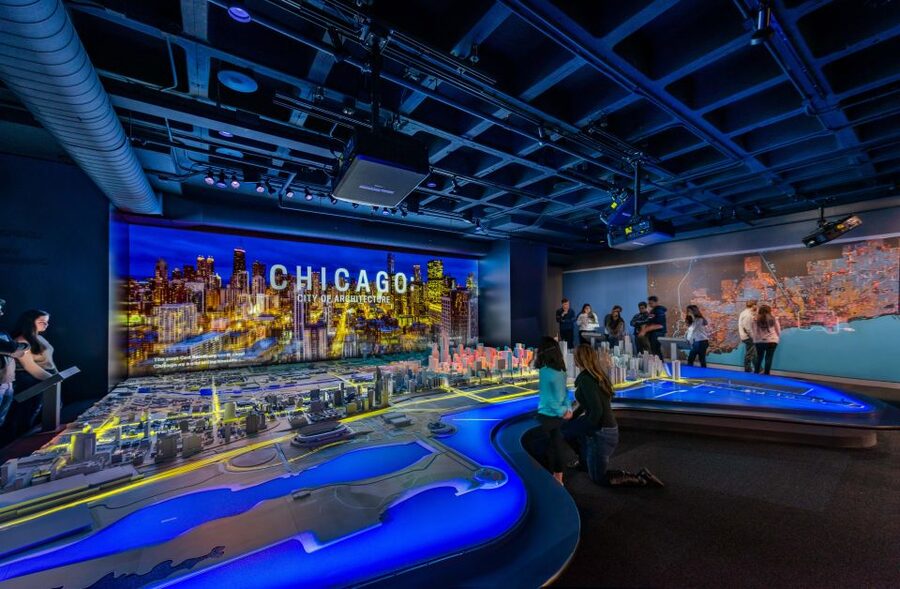
The model covers more than 4,200 buildings, a major expansion from the earlier version that showed about 1,300. That scale matters. Instead of seeing a tower as an isolated object, you can understand how it relates to the river, downtown streets, nearby districts, and the wider city.
A film and light show brings the model to life. It traces Chicago’s early growth, the city’s rebuilding after the Great Chicago Fire, the arrival of the first skyscrapers, and the later spread of steel-and-glass modernism. You are not simply looking at tiny blocks. You are watching a city change shape.
The touch screens make the model more useful. You can search for buildings by architect or style, find walking routes, and follow the city’s changing boundaries. You can also see new projects that may alter the skyline and explore how big data is being used to understand the city.
I like this part because it gives you a working map of Chicago. Afterward, a walk along the river or around the Loop can feel less random. You begin to see why one cluster of towers feels different from another, and why the river remains so important to the city’s form.
A few more architecture tours around the USA worth a look
- Chicago Architecture River Cruise
★ 5.0 · 15,756 reviews - Chicago River 90-Minute Architecture Tour
★ 4.5 · 9,629 reviews - Chicago River: 1.5-Hour Guided Architecture Cruise
★ 4.8 · 8,046 reviews
See how a city rebuilt itself
Chicago’s architecture is easier to understand when you know the basic sequence. The city grew quickly, suffered a devastating fire, and then rebuilt with new construction methods and ambitious ideas.
The center uses its exhibits to connect those moments. The Home Insurance Building represents the early skyscraper era, when steel framing and new engineering methods allowed buildings to rise beyond traditional limits. The Willis Tower, formerly known as the Sears Tower, shows how Chicago later helped define the modern super-tall office building.
This historical thread is useful because the CAC does not treat architecture as a collection of pretty facades. It links buildings to materials, engineering, land use, and city growth. You can see how a change in structure made taller buildings possible, then how taller buildings changed the way downtown worked.
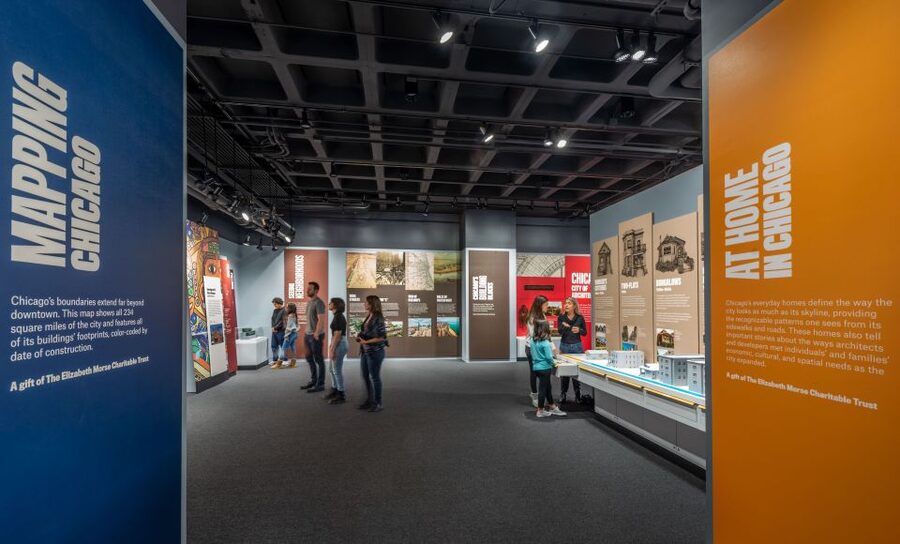
The Chicago Gallery also looks beyond the central towers. Neighborhoods, housing styles, and expanding city boundaries are part of the story. That broader view helps balance the usual Chicago architecture narrative, which can focus too heavily on famous downtown buildings.
Compare skyscrapers from Chicago to Jeddah
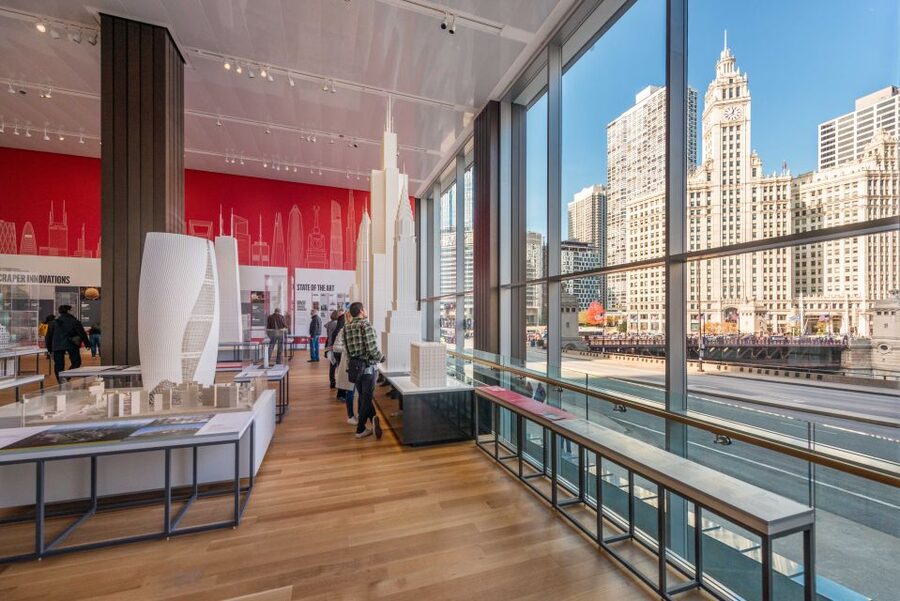
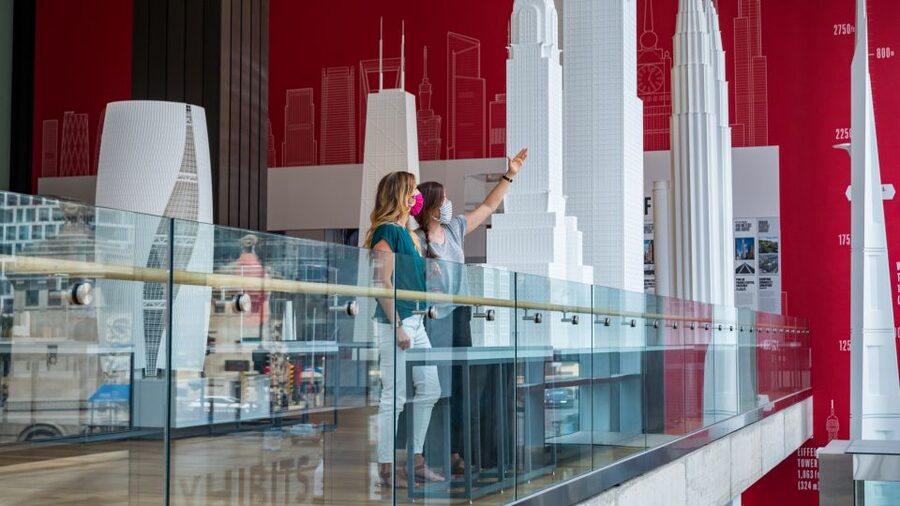
The Drake Family Skyscraper Gallery focuses on the race to build taller. Its large-scale models make the size and shape of famous towers easier to grasp than photographs do.
You can compare the world’s first skyscraper, Chicago’s Home Insurance Building, with the Willis or Sears Tower, which held the title of world’s tallest building for nearly 25 years. The progression shows that height is not just a matter of adding more floors. Wind, weight, elevators, structure, materials, and the needs of people inside all become harder to solve as a building rises.
The gallery also includes a model of Jeddah Tower in Saudi Arabia, designed in Chicago and intended to become the world’s tallest building. The exhibit presents it as the next step in the contest for height, while also showing the design and engineering ideas behind that goal.
This section should appeal to anyone who likes the practical side of architecture. You can focus on the models themselves, or use them as prompts to think about why one tower has a tapered form, why another uses a bundled structure, and how design responds to extreme height.
The models are also useful for families and younger visitors because they make technical ideas visible. You do not need a professional background to follow the basic question: how do you keep a very tall building stable, useful, and safe?
Look through the 40-foot glass wall
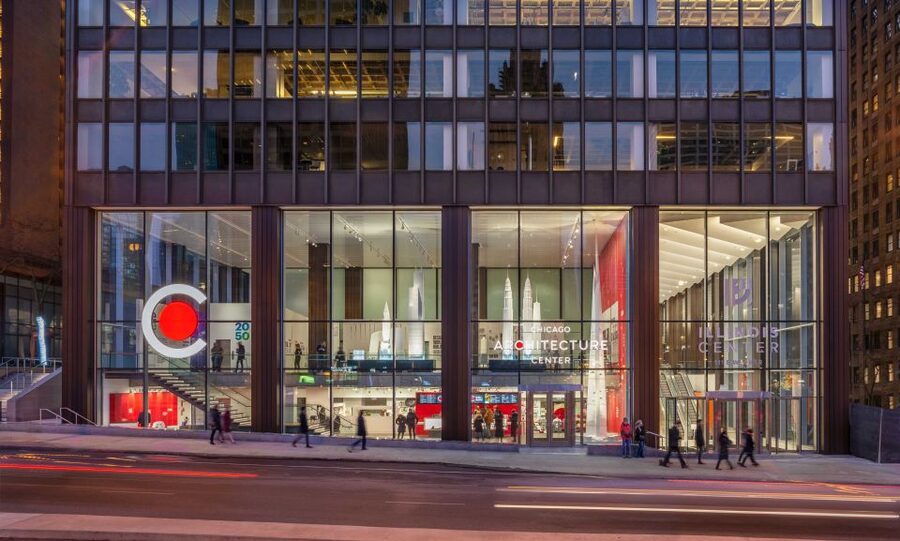
The CAC occupies a dramatic 20,000-square-foot space designed by Adrian Smith + Gordon Gill Architecture. The building itself is part of the visit.
A 40-foot wall of glass gives you views of the Tribune Tower, the Wrigley Building, and the flagship Apple Store. These buildings represent different eras and design approaches, so the view works almost like an outdoor extension of the galleries.
The center is also located in a building by the Office of Mies van der Rohe, an important name in mid-century modernism. That setting adds another layer to the visit. You are learning about Chicago architecture inside a building shaped by one of the city’s major modernist traditions.
I would take a few minutes before or after the exhibits simply to look outside and compare the real buildings with the models indoors. The view is especially helpful if you are still learning the city. You can connect the names and forms on the model with the actual skyline beyond the glass.
Same city, a completely different century:
- Chicago Architecture Center River Cruise aboard First Lady
★ 5.0 · 5,536 reviews - Chicago: Architecture River Cruise Skip-the-Ticket Line
★ 4.8 · 4,325 reviews - Chicago River 45-Minute Architecture Tour from Magnificent Mile
★ 4.5 · 2,924 reviews - Chicago Lake and River Architecture Tour
★ 4.5 · 2,308 reviews
Use the touch screens to plan a walking route
The CAC is not a walking tour, but its interactive tools can help you prepare for one. Search the model by architect or building style, then look for routes that connect buildings you want to see in person.
That feature adds value to a short visit. You are not only consuming information inside the gallery. You are also getting ideas for what to notice outside.
The supplied information does not identify specific route lengths or walking times, so you should treat the suggested routes as orientation tools rather than a complete itinerary. If you want a docent to explain the buildings as you walk, you will need to book a separate guided program. Exhibit admission does not include a guide.
One visitor from Mexico felt the museum was small and would have preferred a short walking tour. That is a fair point to keep in mind. The CAC is best used as a focused introduction to Chicago architecture, not as a substitute for a full river cruise or a long neighborhood walk.
What your one-day visit feels like
This ticket is valid for one day, and the admission covers all Chicago Architecture Center exhibits. You can move through the galleries at your own speed rather than following a fixed group schedule.
A sensible order would be:
- Start with the Chicago City Model to understand the city’s layout and growth.
- Use the film and light show to follow Chicago from early development through rebuilding and modernism.
- Search the touch screens for buildings, architects, styles, and possible walking routes.
- Move to Building Tall for the history and engineering of skyscrapers.
- Compare the Home Insurance Building, Willis Tower, and Jeddah Tower models.
- Finish with the views through the glass wall and a short look at the building housing the CAC.
The center is above the dock for the Chicago Architecture Foundation River Cruise aboard Chicago’s First Lady Cruises. That makes it convenient if you are pairing the exhibits with a river cruise, though the cruise itself is not included in this admission.
Allow enough time to read and use the screens rather than rushing through. The exact amount depends on how closely you study the models and how much time you spend with the film. Still, the center is a focused attraction, so you should not assume it will fill an entire day by itself.
The price and what it supports
The listed price is $15 for one person. For a museum-style admission in central Chicago, that is a reasonable cost, particularly if you have an interest in buildings, city planning, or design.
The value comes from the combination of exhibits rather than from sheer size. You get the large city model, the skyscraper gallery, interactive screens, the film and light presentation, and the building views under one ticket.
The purchase also supports the CAC’s nonprofit work. Ticket income helps fund education programs such as Girls Build!, Teen Fellows, and the Newhouse Architecture + Design Competition. It also helps keep Open House Chicago free for participants.
That gives the admission a useful local benefit, but I would still judge the ticket by your own interests. If you want a long museum visit packed with many galleries, the center may feel limited. If you want a clear, hands-on explanation of why Chicago looks the way it does, the price makes sense.
Practical details before you go
The Chicago Architecture Center is at 111 E Upper Wacker Drive, just off Michigan Avenue and near the river cruise dock. There is no hotel pickup or drop-off, so you arrange your own way to the center.
The facility is wheelchair accessible. Admission does not include food or drinks, and food and drinks are not allowed inside. Pets are not allowed, although service animals are welcome.
The CAC cannot provide secure storage for luggage, large bags, coats, or strollers. This is an important detail if you are visiting between hotels or carrying belongings around downtown. Travel light and make storage plans before arriving.
Flash photography is not allowed. The listed information also asks visitors to bring a face mask or protective covering, so check the current requirements before your visit.
You can cancel up to 24 hours in advance for a full refund, and the reserve-now, pay-later option can help if your Chicago schedule is still shifting.
Who will enjoy the CAC most?
I would recommend this admission to first-time Chicago visitors who want a useful introduction before exploring the city on foot. It is also a good choice for architecture fans, families interested in engineering, students, and anyone planning to take a river cruise.
The city model is the main reason to go. It turns a complicated downtown into something you can read at a glance, then explore in greater detail through the screens.
The skyscraper gallery suits visitors who are more interested in height, structure, and design. The neighborhood and housing material broadens the visit for people who want more than famous towers.
I would be cautious about booking it if you expect a guided tour, a large collection of historic objects, or a full-day museum. The exhibits are self-guided, and one Spanish-language visitor found the exhibition disappointing. The experience will work best if you arrive ready to look, read, compare, and then use the ideas outdoors.
Should you book this architecture admission?
Book it if you want to understand Chicago before you start sightseeing. The 4,200-building model, the skyscraper comparisons, and the glass-wall views give you a strong visual introduction to the city.
Skip it if your schedule is extremely tight or if you want a guide to lead you through every exhibit. In that case, a guided architecture tour may suit you better.
For $15, this is a practical and worthwhile stop near Michigan Avenue, especially when paired with a river cruise or a self-guided walk. Just bring light belongings, allow time to use the interactive displays, and keep your expectations focused: this is a compact architecture center with smart exhibits, not a sprawling museum.
FAQ
Where is the Chicago Architecture Center?
It is located at 111 E Upper Wacker Drive in Chicago, near Michigan Avenue and above the dock for the Chicago Architecture Foundation River Cruise aboard Chicago’s First Lady Cruises.
What does admission include?
Admission includes access to all Chicago Architecture Center exhibits.
Is a guided tour included?
No. The ticket provides exhibit admission only. A guided tour of the exhibits is not included.
How long is the ticket valid?
The admission is valid for one day. Available starting times should be checked when booking.
Is the Chicago Architecture Center wheelchair accessible?
Yes, the center is wheelchair accessible.
Can I bring luggage or a stroller?
The CAC cannot provide secure storage for luggage, large bags, coats, or strollers. Plan to arrive without items that need storage.
Are food, drinks, or pets allowed?
Food and drinks are not allowed. Pets are also not allowed, although service animals are welcome.
Can I cancel my booking?
Yes. You can cancel up to 24 hours in advance for a full refund. A reserve-now, pay-later option is also available.
Just added around the USA
- Wilmington History and Architecture Tour★ 4.8 · 18 reviews
- Washington, DC: Georgetown Architecture Walking Tour★ 5.0 · 8 reviews
- New Orleans : Garden District Architecture Walking tour★ 4.8 · 5 reviews
- Washington DC: Dupont Circle & Embassy Row Architecture Tour★ 5.0 · 6 reviews
- Tulsa: Art Deco Walking Tour of Tulsa★ 5.0 · 8 reviews
- Castle to Capitol: Museums of the National Mall Architecture Tour★ 4.5 · 9 reviews
- Private Colonial Williamsburg Architectural Tour★ 5.0 · 5 reviews
- Iconic Capitol Hill Architectural Walking Tour★ 5.0 · 21 reviews
the USA Architecture Tours, compared.
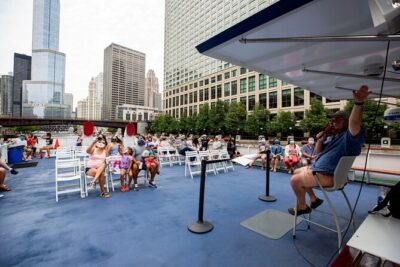
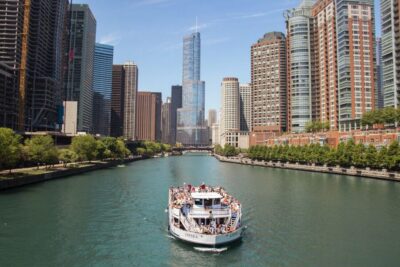
Chicago River: 1.5-Hour Guided Architecture Cruise
Read our review →
Chicago Architecture Center River Cruise aboard First Lady
Read our review →
Chicago: Architecture River Cruise Skip-the-Ticket Line
Read our review →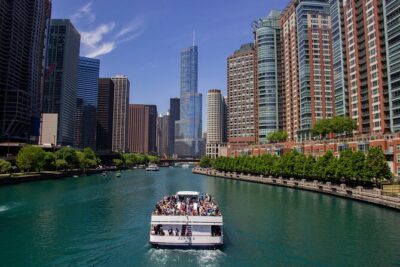
Chicago River 45-Minute Architecture Tour from Magnificent Mile
Read our review →

Chicago: 1.5-Hour Lake and River Architecture Cruise
Read our review →Browse the lists this tour appears in