
Review · ARCHITECTURE TOURS
The Pearl of the European Baroque – former Cistercian Abbey in Krzeszow Tour
Krzeszow Abbey is the star here, a grand Cistercian complex filled with Baroque art, dramatic frescoes, and two very different churches. The day also adds Bolkow Castle and the 12 wooden weavers’ houses at Chelmsko Slaskie, giving you art, medieval ruins, and local craft history in one outing.
I like the small maximum of eight people and the fact that castle and abbey admission are included. I also like the sensible route from Wroclaw: the castle gives you a strong medieval opening, while Krzeszow supplies the artistic centerpiece. The main drawback is the long day, with about an hour of driving each way and only 30 minutes at Chelmsko Slaskie.
Key points to know before booking
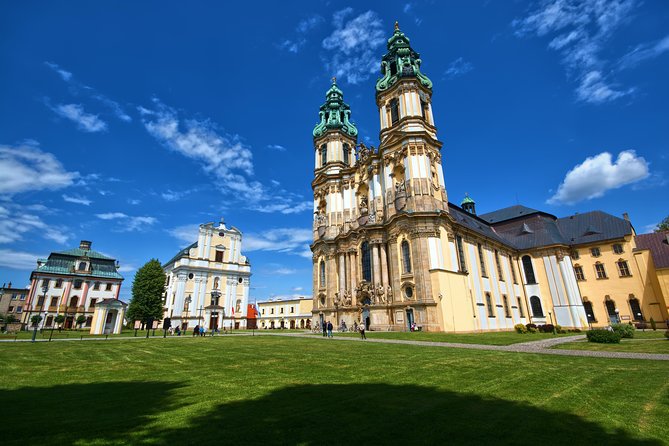
- Krzeszow Abbey is the main event: See St. Joseph’s Church and the Basilica of the Assumption, both included in the tour.
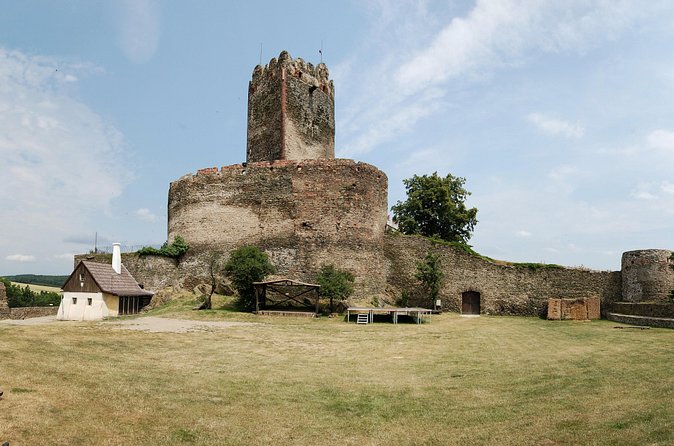
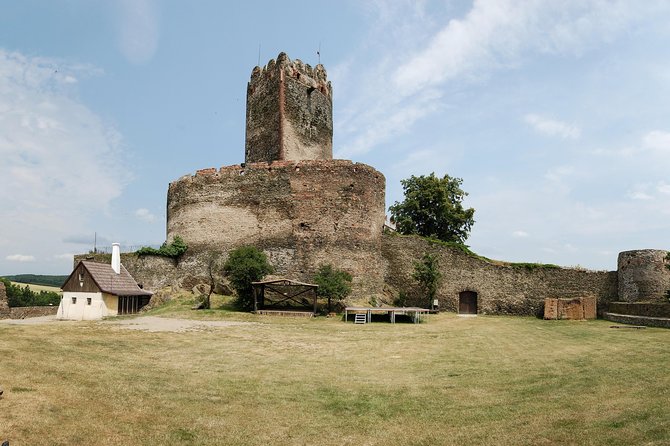
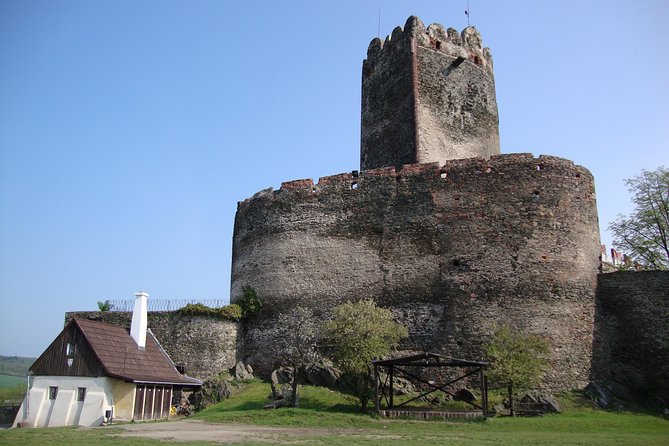
- Bolkow adds medieval atmosphere: Walk among thick defensive walls and see the old fortified tower above the surrounding scenery.
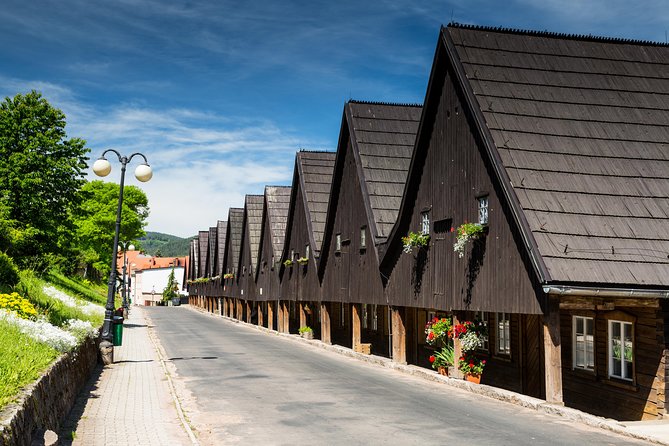
- Chelmsko Slaskie preserves 12 wooden homes: The houses reveal how flax weavers worked with hand tools and wooden looms.
- The group is capped at eight: This is a more personal setup than a large coach excursion.
- Lunch is not included: You have free time at Krzeszow to find and pay for your own meal.
- The price is $151.23 per person: That covers the guide-driver, transportation as part of the excursion, and entrance tickets to the castle and abbey.
Why Krzeszow Abbey deserves the long ride
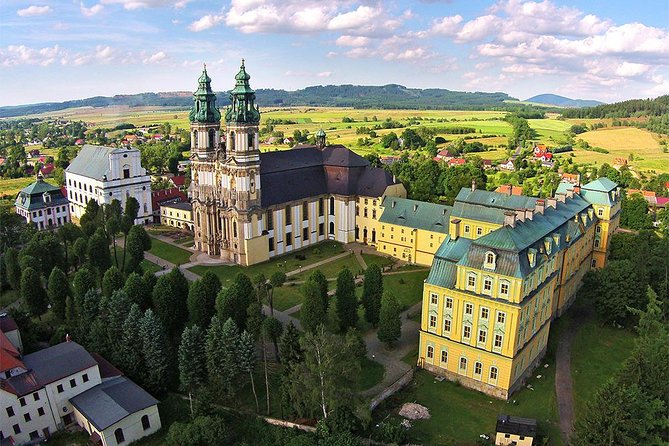
The former Cistercian Abbey at Krzeszow is the reason to book this trip. It is often called the Silesian pearl of Baroque, and the description fits the place: this is not a quiet, bare monastic ruin. It is a powerful display of church art, architecture, and Cistercian wealth.
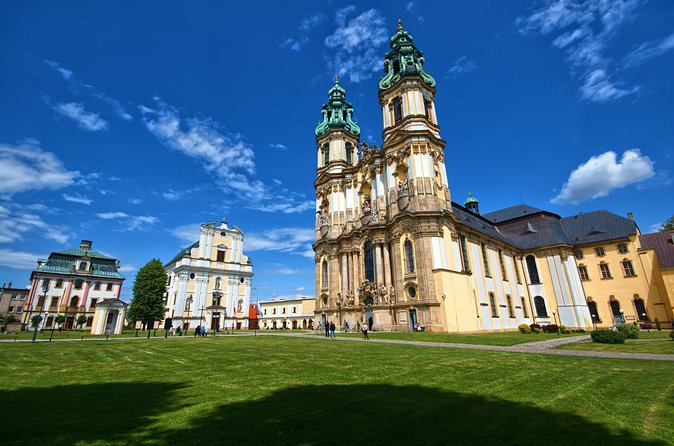
You visit two churches. St. Joseph’s Church is known for its frescoes by Michael Willmann, a major Silesian painter. The wall paintings are so important that the church has earned the nickname the Silesian Sistine Chapel. That comparison sets a high bar, but it does tell you what kind of visit to expect: painting, decoration, and visual drama are central here.
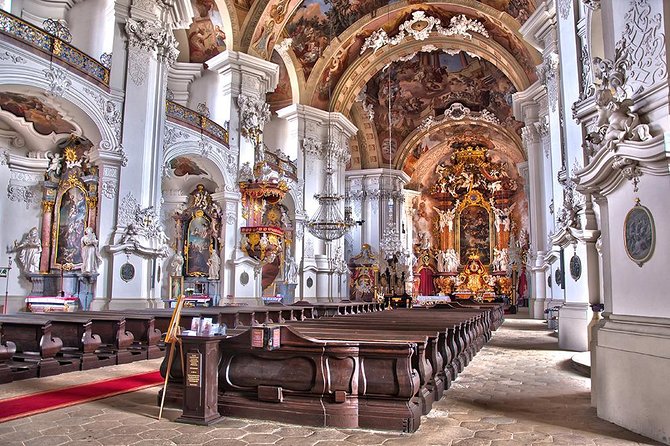
The Basilica of the Assumption of the Holy Virgin offers a different experience. Its Baroque interior is full and ornate, with the sort of layered detail that rewards a slow look. I would give yourself time to study the ceilings, altars, and decorative work rather than treating the basilica as a quick photo stop.
The visit lasts about 90 minutes. That is enough time for a guided look at both churches, though art lovers may want even longer. Your guide-driver is expected to explain the Cistercian legacy, local legends, and the order’s role in Lower Silesia. That context matters because the abbey was not only a religious center. It also helped shape the economy and culture of the surrounding area.
More Baroque architecture tours in the world:
- Lecce: Baroque Architecture and Underground Walking Tour
★ 4.6 · 1,248 reviews - Noto: Sicilian Baroque Architecture Guided Walking Tour
★ 4.3 · 6 reviews - Martina Franca: Baroque and Rococo Architecture Walking Tour
★ 5.0 · 4 reviews
Bolkow Castle opens the day with stone and stories
After roughly an hour on the road from Wroclaw, you reach Bolkow Castle. The first stop lasts about an hour, and admission is included.
The castle dates to the 13th century and is tied to the Piast dynasty, one of the key ruling families in Polish history. You can expect massive walls, a fortified tower, and a strong sense of the site’s defensive purpose. This is the kind of place where the structure itself does much of the talking.
The elevated position also gives you broad views over the surrounding scenery. Bring sensible shoes, since old castle sites can involve uneven surfaces, though the supplied information does not specify the exact walking conditions at Bolkow.
I like this stop as an introduction to the day. Bolkow is more rugged and military in character than Krzeszow. You start with walls, towers, and medieval legends, then move into the polished religious art of the Baroque. The contrast keeps the excursion from feeling like a string of similar church visits.
The one-hour limit is both useful and restrictive. It keeps the day moving, but it will not allow a slow, detailed exploration of every corner. If you are mainly interested in medieval fortifications, you may wish for more time. If you want a broad day trip rather than a single-site visit, the schedule is sensible.
Krzeszow connects art with Cistercian enterprise
A visit to Krzeszow makes more sense when you see the Cistercians as organizers and economic figures, not only as monks surrounded by beautiful buildings. Their influence in Lower Silesia included religious life, artistic patronage, and economic growth.
That wider story continues at the final stop, Chelmsko Slaskie. The wooden homes there are linked to flax weaving and preserve a more modest side of the region’s past. Together, the abbey and the village show two ends of the same story: major religious investment on one side, and local production and trade on the other.
The tour’s focus on legends and lore also adds some welcome texture. A guide can connect the stones and paintings to the people who built, used, and supported these places. Since the tour is limited to eight participants, you may have a better chance to ask questions than you would on a full-size coach.
The guide-driver speaks English, German, or Spanish. Be sure to select the language you need when booking, since the experience is offered in those languages and confirmation depends on availability.
Chelmsko Slaskie shows the human side of the region
On the return journey, the tour stops for about 30 minutes in Chelmsko Slaskie. The village preserves 12 original wooden houses built for flax weavers.
This is a short visit, but it adds a useful change of pace. Instead of grand churches or defensive stonework, you see simple homes and former workshops. The hand tools and wooden looms help explain how weaving was done before modern industrial equipment.
You should think of this as a compact historical stop, not a full museum visit. Thirty minutes is enough to look at the houses and understand the basic craft story. It is not enough for a long workshop session or a detailed inspection of every building.
I like the stop because it keeps the Cistercians from appearing only as patrons of lavish art. The wooden homes point to their role in local economic development and show how ordinary work supported the wider region. If you enjoy traditional buildings and social history, this may be one of the most memorable parts of the day.
Same city, a completely different century:
- Chicago Architecture River Cruise
★ 5.0 · 15,756 reviews - Chicago River 90-Minute Architecture Tour
★ 4.5 · 9,629 reviews - Chicago River: 1.5-Hour Guided Architecture Cruise
★ 4.8 · 8,046 reviews - Chicago Architecture Center River Cruise aboard First Lady
★ 5.0 · 5,536 reviews
What the $151.23 price really covers
At $151.23 per person, this is not a budget outing. The value depends on how much you want handled for you.
The price includes a guide-driver and entrance tickets to Bolkow Castle and Krzeszow Abbey. The group maximum is eight, which is an important part of the calculation. You are paying for a small-group day with a defined route, rather than simply buying admission to two sites.
Lunch is not included. You have free time at Krzeszow for a meal, so keep money available and do not expect the quoted price to cover food. The information provided does not specify the restaurant options, meal cost, or exact length of the lunch break.
For someone staying in Wroclaw without a car, the package can be practical. Reaching a medieval castle, a rural abbey complex, and a small historic village independently would require separate transport planning. Here, the route is arranged into one eight-hour day, beginning at 8:30 a.m. and ending back at the meeting point.
The value is strongest for visitors who want interpretation and convenience. If you only want to see Krzeszow Abbey and prefer to arrange every detail yourself, the cost may feel high. If you want three connected sights with admission and a guide included, the price is easier to justify.
The eight-hour schedule and meeting point
The tour begins at Kazimierza Wielkiego 19 in Wroclaw at 8:30 a.m. It returns to that same meeting point at the end of the day.
The stated duration is about eight hours. The first drive takes around an hour, followed by one hour at Bolkow Castle, 90 minutes at Krzeszow Abbey, 30 minutes at Chelmsko Slaskie, and the return journey. The remaining time allows for driving, transitions, and a lunch break.
This is a full day, not a quick half-day outing. I would avoid scheduling an important evening commitment immediately afterward. Roads, time spent looking around, and the lunch stop can all affect the exact return time.
An early start is helpful. You get the day moving before the schedule becomes compressed, and the route has enough stops to feel substantial. Still, you should expect a fair amount of time seated in the vehicle. The supplied information confirms an approximately one-hour drive to the first stop, but it does not give the exact driving time between every location.
The small group size should make the day easier to manage. With a maximum of eight people, departures and regrouping may be simpler than on a large bus. This is also a good format for asking the guide about the Cistercian order, Willmann’s frescoes, or the stories connected with Bolkow Castle.
Who will enjoy this day most
I would recommend this tour to you if you enjoy several types of history in one outing. It suits people who like medieval fortifications, church art, historic villages, and regional stories but do not want to arrange separate trips.
It is especially good for art lovers because Krzeszow includes both Michael Willmann’s frescoes and a richly decorated Baroque basilica. It also suits visitors interested in religious history, since the Cistercian role in Lower Silesia is part of the explanation.
Families and general sightseers may like the variety. A castle gives the day an adventurous start, the abbey supplies the grand interiors, and the wooden homes offer a smaller-scale final stop. Most travelers can participate, and service animals are allowed. The tour is also near public transportation at its meeting point.
You may want to reconsider if you dislike long day trips, prefer unstructured wandering, or want a great deal of time at one attraction. The schedule is planned and efficient, but it does not leave large blocks for independent exploration.
Practical details that can affect your decision
Book ahead if your dates are fixed. The tour is booked, on average, 19 days in advance, and confirmation arrives within 48 hours, subject to availability.
The tour requires a minimum number of participants. If that minimum is not reached and the activity is canceled, you are offered another date or experience, or a full refund.
You can cancel for a full refund up to 24 hours before the start time. Changes or cancellations made less than 24 hours before the start are not accepted for a refund. The cut-off follows local time.
Wear comfortable footwear and bring what you need for a full day away from Wroclaw. The supplied information does not list a dress code or specific walking requirements, so practical clothing is the safest choice.
Should you book the Krzeszow Abbey tour?
Book it if Krzeszow Abbey is high on your list and you want the surrounding area explained rather than simply visited. The combination of Willmann’s frescoes, the Basilica of the Assumption, Bolkow’s medieval walls, and Chelmsko Slaskie’s wooden weavers’ homes gives you a well-shaped day.
The strongest reason to go is the abbey. The strongest practical reason is the small group and included admission. The main caution is the price and the amount of time spent on the road.
For an independent traveler focused only on low cost, this may not be the best fit. For you if you want an organized, art-centered day from Wroclaw with a guide-driver and three distinct historical stops, it is a solid choice. Just plan for a full day, bring money for lunch, and give the Baroque churches the attention they deserve.
FAQ
How long does the tour last?
The tour lasts approximately eight hours.
What time does the tour begin?
It begins at 8:30 a.m.
Where does the tour start and finish?
It starts at Kazimierza Wielkiego 19 in Wroclaw and ends back at the same meeting point.
What languages are offered?
The guide-driver speaks English, German, or Spanish.
Is lunch included?
No. Lunch is not included, but you have free time at Krzeszow for a meal.
Are entrance tickets included?
Yes. Admission to Bolkow Castle and Krzeszow Abbey is included.
How large is the tour group?
The activity has a maximum of eight participants.
Can I cancel for a full refund?
Yes, if you cancel at least 24 hours before the experience start time. Cancellations made less than 24 hours before the start are not refunded.
Just added around the world
- Wilmington History and Architecture Tour★ 4.8 · 18 reviews
- Washington, DC: Georgetown Architecture Walking Tour★ 5.0 · 8 reviews
- New Orleans : Garden District Architecture Walking tour★ 4.8 · 5 reviews
- Washington DC: Dupont Circle & Embassy Row Architecture Tour★ 5.0 · 6 reviews
- Walk & Discover KL’s Architectural and Heritage Gems★ 5.0 · 7 reviews
- Vicenza: discovering the city of Palladio by e-bike★ 5.0 · 4 reviews
- Vicenza: Palladian Architecture Private Walking Tour★ 3.3 · 3 reviews
- Unveiling Brno: History, Culture & Architectural Delights★ 5.0 · 2 reviews
Baroque Architecture Tours, compared.
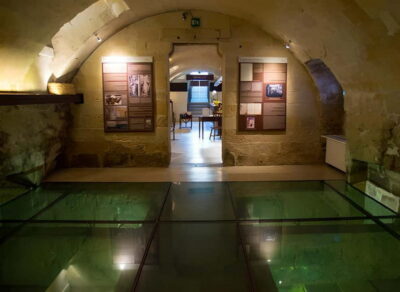
Lecce: Baroque Architecture and Underground Walking Tour
Read our review →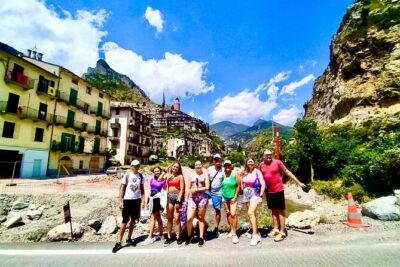
Train Exp. through the Alps (Royal Baroque Route from Nice)
Read our review →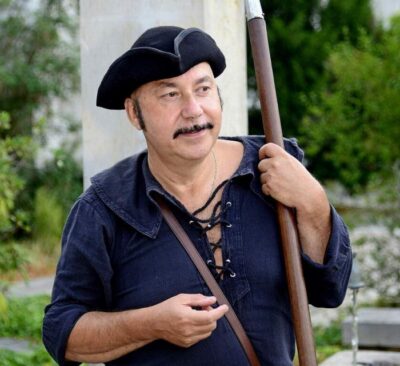
Dresden: Tour of the Baroque Quarter with a Night Watchman
Read our review →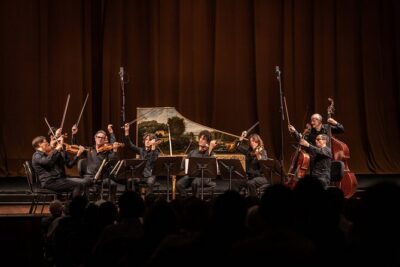
Interpreti Veneziani Ensemble Baroque Concert in Venice Ticket
Read our review →
Borghese Gallery Max 6 People Tour: Baroque & Renaissance in Rome
Read our review →
Concert at the Palais Schönborn-Batthyány by the Vienna Baroque Orchestra
Read our review →
Guided Walking Tour of Rome: Top Sights & Baroque Treasures
Read our review →
Noto, Modica and Ragusa: The Baroque Tour from Catania
Read our review →Browse the lists this tour appears in