
Review · ARCHITECTURE TOURS
Brutal Tbilisi — Night Edition: Dark Side of Soviet Architecture
Tbilisi’s Soviet-era buildings look most dramatic after sunset. On this private night tour, you’ll move from an unfinished hotel and a solemn hilltop monument to suspended apartment bridges and a futuristic wedding palace. It is less about polished sightseeing and more about seeing the city’s strange, difficult, beautiful past in concrete and shadow.
I like two things here. First, private transport lets you reach scattered sites that are awkward to connect by public bus. Second, the guide brings practical phone photography tips, not just architecture facts. The main caution is that this is a dark, emotionally heavy outing, with uneven ground, long drives, heights, and some claustrophobic spaces.
Key points to know before booking
- Six unusual night stops: The route covers Arashenda Building, the Chronicles of Georgia, the Former Archaeology Museum, the former Ministry of Highways, Nutsubidze Skybridge, and the Wedding Palace.
- A private experience: Only your group takes part, with transport included between sites.
- A story-led tour: You hear about unfinished Soviet projects, war displacement, civic rituals, and the changing role of Georgian architecture.
- A strong photo focus: Your guide points out good angles and explains what your phone camera can do in low light.
- Central pickup: Door-to-door service is available in central Tbilisi, with Liberty Square or Europe Square offered as alternate meeting points.
- Not a gentle evening stroll: Expect darkness, uneven surfaces, heights, possible long drives, and emotionally intense subjects.
Why Tbilisi’s Soviet architecture works at night
This is not the usual Tbilisi evening of wine bars, old balconies, and warm sulfur baths. The tour takes you beyond the familiar center to large concrete structures built during the Soviet period or its final years. At night, floodlights, empty stairways, and scattered apartment windows change the mood completely.
I find the timing especially useful because darkness hides some of the visual clutter around these buildings. The Former Archaeology Museum can look like a forgotten temple. The Ministry of Highways resembles a stack of floating blocks. At Nutsubidze, dim corridors appear to hang above the city.
The darkness also has a cost. You will not see every architectural detail as clearly as you would in daylight. This experience depends on mood, stories, and carefully chosen viewpoints. If you want a full architectural survey, a daytime visit may suit you better. If you want unusual photographs and a sense of Tbilisi’s more complicated past, night is the right setting.
The tour lasts about three to four hours. The listed visits add up to roughly two hours, so the rest of the time goes toward driving between widely separated parts of the city. That is important: this is a car-based architectural route, not a continuous walk.
A few more architecture tours around the world worth a look
- Chicago River: Guided Sunset Cocktail & Architecture Tour
★ 4.6 · 203 reviews - Night Tapas Walking Tour in Barcelona Modernist Area with Small Group and Dinner
★ 4.5 · 56 reviews - Saint Augustine Evening Architectural Photo Tour
★ 5.0 · 15 reviews
Arashenda Building: an unfinished hotel turned refuge
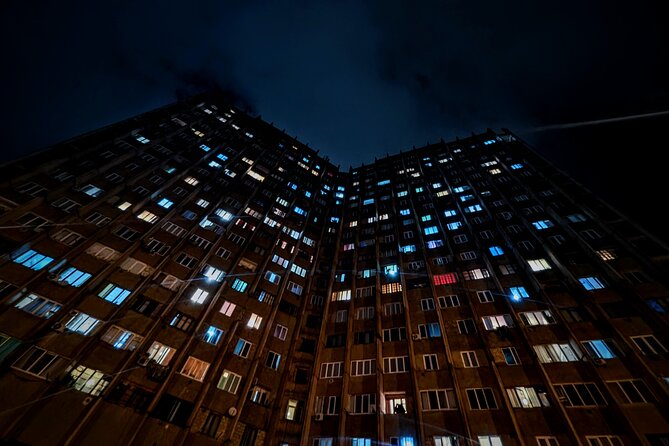
The first stop introduces the tour’s central idea: Soviet ambition interrupted by political change. The Arashenda Building was begun in the early 1980s as the Hotel Odishi, but it was never completed. Its 17-storey frame later became shelter for people displaced by war.
That history gives the building a human weight that a simple architectural stop would not have. Its two folded sections resemble an open book, yet the pages were never written in the way planners intended. At night, cracked walls and improvised balconies create a stark view of a project left behind.
Your guide explains why locals call it Arashenda, meaning the one that did not get built. The phrase captures the building’s unfinished form and the interrupted hopes around it. From the open stairways, you can also look toward the Chronicles of Georgia, creating a sharp visual contrast between a grand completed monument and a ruined concrete shell.
The visit lasts about 20 minutes and admission is free. Do not expect a restored interior or a conventional attraction with displays and signs. The appeal lies in the building’s history, the stories of those who used it, and the night view.
Chronicles of Georgia: giant stone figures above the Tbilisi Sea
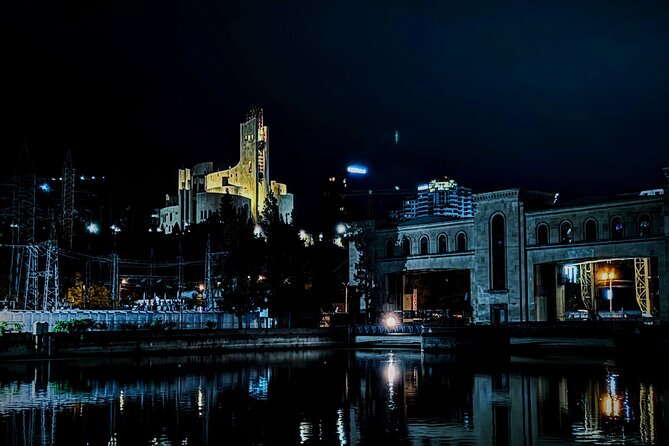
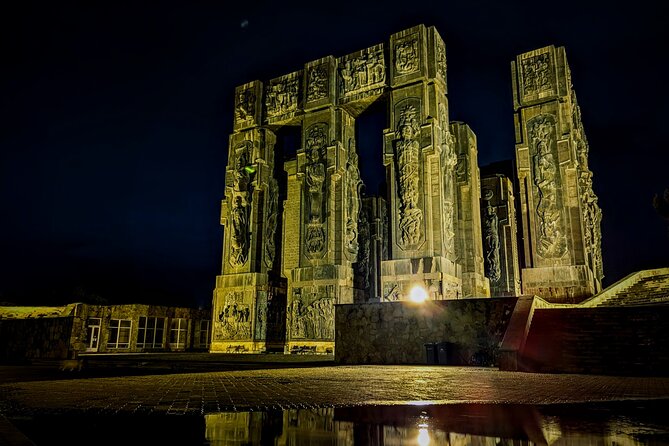
The Chronicles of Georgia is likely the most imposing stop on the route. Set high above the city, the monument uses towering columns and carved scenes to tell stories connected with Georgian kings, saints, and religious tradition.
After dark, soft golden lighting picks out parts of the carvings while leaving other sections in shadow. That partial view makes the monument feel quieter and more mysterious than it can during a busy daytime visit. You will walk among the columns with the guide, who explains the figures and the ideas behind them.
From the upper platform, you can look over the city and the dark waters of the Tbilisi Sea. Bring a jacket if the evening is cool, since the elevated setting can feel exposed. The broad view is also one of the best chances to test your phone’s night mode, though you should expect some trial and error.
You get about 45 minutes here. That is enough time for the main explanations, photographs, and a pause to take in the setting. The stop is free, but the climb and open surfaces may be tiring for anyone uncomfortable on slopes or uneven ground.
Former Archaeology Museum: a grand entrance with no collection inside
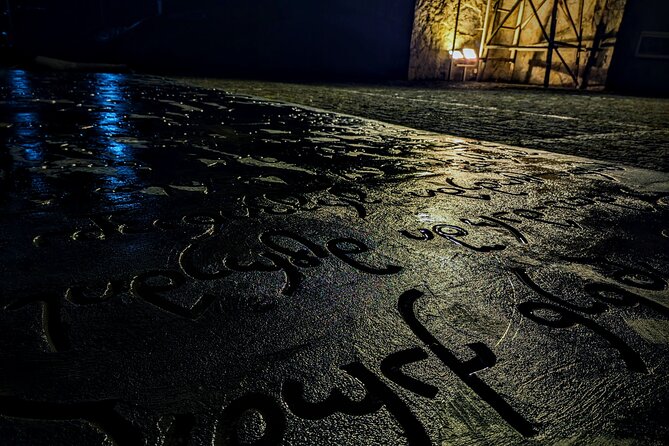
On Digomi Hill, the former Archaeology Museum offers a different kind of Soviet story. Construction began in 1988, with the aim of housing Georgia’s ancient discoveries. The museum never fully opened.
The exterior still suggests a major cultural institution. A broad stairway leads toward the building, and carved bas-reliefs decorate the structure. In low light, the figures seem to emerge from the stone rather than present themselves clearly. The effect is more atmospheric than informative, so your guide’s explanation matters here.
This stop connects modern architecture with Georgia’s ancient past. The building was designed to protect and present old treasures, yet it became another unfinished project shaped by political change. You are looking at a place intended to explain history that now has its own history of abandonment.
The scheduled visit is about 20 minutes. That keeps the stop focused, which is useful because the building is best appreciated from selected exterior angles. If you are expecting to enter a functioning museum, adjust your expectations before booking.
Same city, a completely different century:
- Chicago Architecture River Cruise
★ 5.0 · 15,756 reviews - Chicago River 90-Minute Architecture Tour
★ 4.5 · 9,629 reviews - Chicago River: 1.5-Hour Guided Architecture Cruise
★ 4.8 · 8,046 reviews - Chicago Architecture Center River Cruise aboard First Lady
★ 5.0 · 5,536 reviews
Former Ministry of Highways: Soviet engineering in stacked concrete
The former Ministry of Highways of the Georgian SSR is one of Tbilisi’s most recognizable pieces of late Soviet architecture. Designed in the 1970s, it uses massive concrete blocks arranged like bridges suspended over one another.
The original idea was tied to Georgia’s mountain roads and the connections between regions. Today, the building houses the Bank of Georgia headquarters, so this is not an abandoned ruin. It is a working structure with a remarkable earlier identity.
At night, the voids between the blocks glow, and the building takes on a sculptural quality. From the right viewpoint, it can look futuristic. From another, it feels like a fortress or a piece of infrastructure lifted into the air. Your guide helps you find the strongest angles rather than simply pointing at the facade from the roadside.
The visit lasts about 20 minutes. That is enough for photographs and a concise explanation, though it will not provide an interior tour of the bank. The value is in understanding how political purpose and bold design once worked together, then seeing the same building used for modern business.
Nutsubidze Skybridge: an elevator ride into the apartment blocks
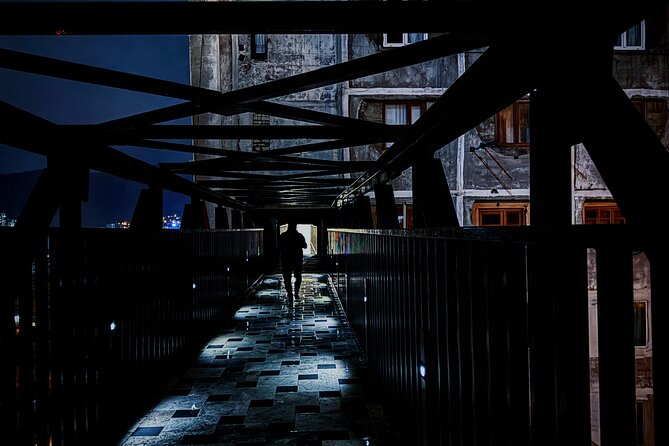
The Nutsubidze Skybridge is the tour’s most unusual stop for anyone interested in everyday Soviet life. Three large residential blocks on the steep Nutsubidze Plateau are connected by suspended pedestrian bridges.
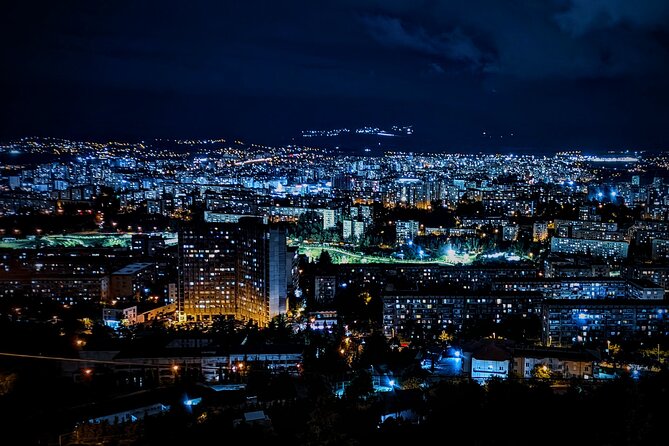
This was not a monument built for visitors. It was housing, designed around the difficult slopes and practical movement of residents. At night, the faintly lit bridges connect the buildings across the darkness, while Tbilisi’s lights spread out below.
You ride an old elevator as part of the visit. A local lift attendant operates it, and that small detail gives the stop a more personal feel than a purely visual photo stop. The hum of the elevator, the dim corridors, and the large concrete towers make the ascent memorable.
Allow about 45 minutes here. The guide can show you where to photograph the bridges and the distant city. You should be comfortable with heights, enclosed elevator space, and uneven walking surfaces. The tour information specifically warns against booking if you have a fear of heights or claustrophobia.
This is also one of the places where respectful behavior matters most. People live in these buildings. Keep voices low, follow your guide, and treat the lift attendant and residents as part of a neighborhood, not as scenery.
Wedding Palace: civic romance in raw concrete
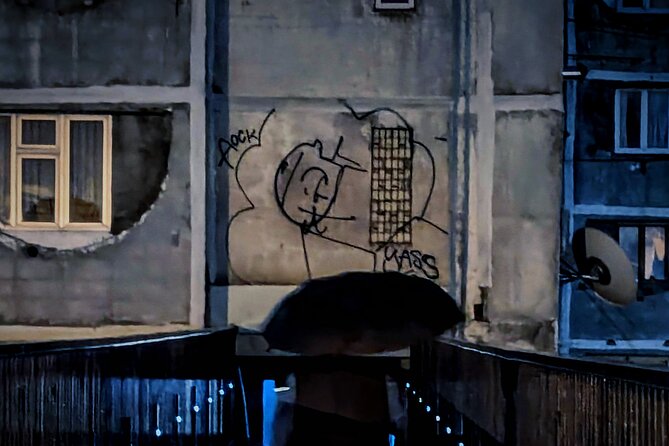
The final stop is the Wedding Palace, also known as the Palace of Rituals or Arcadia Georgia. Built in 1984 by architect Victor Jorbenadze, it was created for civil wedding ceremonies during the Soviet period.
The building’s shape is hard to classify. It rises in a spiraling form, with arches and curves that recall Georgian church architecture while using raw concrete and modernist structure. The result is both ceremonial and strange, a place where love, government, and architectural ambition meet.
During the Soviet era, couples came here for a state-approved wedding ritual rather than a church ceremony. That makes the building more than an unusual photo backdrop. It shows how architecture was used to give civic life its own ceremonies and symbols.
At night, the interior light creates curved shadows around the windows and arches. The mood can feel romantic, but also slightly surreal. You spend about 20 minutes here, enough to hear the story and take photographs without turning the stop into a long architectural lecture.
This is a fitting final visit because it leaves you with a less bleak view of the period. The route includes abandoned projects and hard political memories, but the Wedding Palace shows how people still sought beauty and meaning inside an official system.
What the private format adds
The private setup is one of the tour’s strongest practical features. You are not waiting for a large group at every stop, and the guide can adjust the pace within the planned route. If your group wants more time for photographs at the Chronicles of Georgia or less time at a concrete facade, that flexibility can make the evening feel more personal.
Door-to-door pickup is offered within central Tbilisi. If your accommodation lies outside the pickup area, the usual alternatives are Liberty Square or Europe Square near the vintage tram-café. The guide or driver contacts you through WhatsApp on the day to confirm the exact meeting point.
Private transport matters because these sites are spread across Tbilisi. It also keeps the evening simpler in poor weather, when moving between exposed hilltop locations and distant neighborhoods by public transport would be less appealing. The sequence can change with traffic, weather, or city events, but the key places and viewpoints are included.
The tour is offered in English. A live local guide provides the historical context and photo advice. Meals are not included, so eat before departure or plan food afterward.
Is the $100 price fair?
At $100 per person, this is not a cheap sightseeing ride. The price makes more sense if you are booking for a small private group and care about both transport and photography. You are paying for a three to four hour route across several distant areas, a local guide, door-to-door service within central Tbilisi, and help with night photographs.
The cost is less convincing if you only want to see one or two famous buildings. Many stops are free, and several can be viewed from outside. The value comes from combining them into one evening, hearing the stories in the right order, and avoiding the effort of planning transport between them.
Group discounts may improve the price for larger parties. Since this is a private activity, ask about the total cost for your group before booking and compare it with the cost of arranging separate taxis and a guide.
Who will enjoy this evening most?
I would recommend it to you if you like architecture, photography, urban history, and places that show a city’s less polished side. It suits people who want more than Tbilisi’s old town and standard viewpoints.
You should also enjoy listening to stories about political change and human hardship. The Arashenda Building is tied to war displacement, while several stops deal with abandoned public projects and the end of the Soviet period. This is not a light entertainment tour.
The experience may not suit you if you dislike heights, enclosed elevators, poor weather, or uncertain walking surfaces. The operator says the tour runs in rain or snow, so wear shoes with a firm sole and clothing suited to the forecast. You should be physically and emotionally ready for uneven terrain, long drives, and strong visual material.
The experience is private, and most people can take part, but the warnings should be taken seriously. Darkness can make ordinary steps harder to judge, and some locations may feel exposed or confined.
Booking, cancellation, and practical details
Confirmation is provided when you book. Free cancellation is available until 24 hours before the start time, with a full refund. Changes or cancellations made inside that 24-hour window are not accepted for a refund.
The route may change because of traffic, weather, or special events. That is normal for a night drive across Tbilisi, and the operator says the main highlights and viewpoints remain part of the experience.
I would charge your phone before leaving and keep storage space free for photographs. Since the guide teaches you what your phone camera can do, you will get more from the photo side of the tour if you are willing to try night mode, steady framing, and several angles rather than taking one quick picture at each stop.
Should you book Brutal Tbilisi, Night Edition?
Book it if you want a private, atmospheric look at Tbilisi’s Soviet architecture and are happy to trade polished attractions for unfinished buildings, dim corridors, and unusual viewpoints. The route is especially good for photographers and for anyone curious about how Georgia’s recent past still shapes the city.
Skip it if you want a relaxed old-town walk, indoor museums, or a simple evening with no difficult subjects. At $100 per person, the tour earns its price through transport, guiding, privacy, and access to far-flung sites rather than admission tickets. For the right kind of visitor, that combination makes this one of Tbilisi’s more memorable night outings.
FAQ
How long does the tour last?
The experience lasts approximately three to four hours, including transportation between the six stops.
Is this a private tour?
Yes. Only your group participates in the activity.
Is pickup available?
Door-to-door pickup is available within central Tbilisi. If your accommodation is outside the pickup area, the suggested meeting points are usually Liberty Square or Europe Square.
What language is the tour offered in?
The tour is offered in English with a live local guide.
Is transportation included?
Yes. Private transportation is included, along with the live guide and photo tips.
Are admission tickets included?
All six listed stops have free admission.
Are meals included?
No. Meals are not included in the tour price.
Can the itinerary change?
Yes. The order and timing of the stops may change because of traffic, weather, or special events, but the key highlights and viewpoints are included.
Is the tour suitable for people afraid of heights or enclosed spaces?
No. The experience is not suitable for people with a fear of heights or claustrophobia. It can also include uneven terrain, long drives, and emotionally intense stories.
Just added around the world
- Wilmington History and Architecture Tour★ 4.8 · 18 reviews
- Washington, DC: Georgetown Architecture Walking Tour★ 5.0 · 8 reviews
- New Orleans : Garden District Architecture Walking tour★ 4.8 · 5 reviews
- Washington DC: Dupont Circle & Embassy Row Architecture Tour★ 5.0 · 6 reviews
- Vicenza: discovering the city of Palladio by e-bike★ 5.0 · 4 reviews
- Vicenza: Palladian Architecture Private Walking Tour★ 3.3 · 3 reviews
- Walk & Discover KL’s Architectural and Heritage Gems★ 5.0 · 7 reviews
- Unveiling Brno: History, Culture & Architectural Delights★ 5.0 · 2 reviews
Evening Experiences, compared.

Dresden: Tour of the Baroque Quarter with a Night Watchman
Read our review →
Barcelona: Casa Batlló ‘A Winter Night’ Experience
Read our review →
Chicago River: Guided Sunset Cocktail & Architecture Tour
Read our review →
Sagrada Familia Evening Private Tour with Expert Guide
Read our review →
Barcelona: Sagrada Familia Evening Tour with Cava
Read our review →
Browse the lists this tour appears in