Review · ARCHITECTURE TOURS
Scandinavian Art, Architecture and Design Tour in Stockholm
Stockholm’s design story is easiest to understand on foot, and this tour connects the city’s polished shopfronts with its food halls, theaters, parks, and museums. You’ll move from fashionable Östermalm to the Nationalmuseum, seeing how Swedish interiors, architecture, and public spaces fit together.
I like the small maximum of 10 people, which should make it easier to ask questions and keep pace with the guide. I also like the planned time inside design shops, where you can browse furniture, textiles, and home accessories rather than simply hear a string of facts from the pavement.
The main drawback is that three hours covers a lot of ground. You’ll see several important places from the outside or in passing, not spend long inside museums or historic buildings. The tour also requires good weather, so a wet day could affect your plans.
Key points to know before you book
- Östermalm sets the tone: Begin among design houses, antique dealers, upholstery shops, and the grand streets around Stureplan.
- A food hall adds local flavor: Östermalms Saluhall gives you a look at Swedish specialties in a 19th-century market building.
- The route links style with history: Art Nouveau, Gothic, Baroque, modern design, parks, theaters, and royal settings all appear along the way.
- You get time to browse: Access to design shops is included, with room to explore at your own pace.
- The finish is especially scenic: The route ends at the Nationalmuseum, with views toward the Old Town from the waterfront area.
- Small groups matter: The maximum is 10 people, and the tour is offered in English.
Why this Stockholm walk is more than a shopping stroll
Swedish design is often reduced to clean lines and pale wood. This walk gives you a broader picture. It places modern interiors beside old city streets, public parks, a food market, and grand cultural buildings.
That contrast is the real strength of the experience. You are not simply shown a row of stylish stores. You hear how design developed in Stockholm and how it serves different parts of city life, from private homes and hotels to theaters, markets, and civic spaces.
The tour begins at Svampen, the familiar meeting point at Stureplan in Östermalm. From there, the route moves through some of central Stockholm’s most polished streets and finishes in front of the Nationalmuseum at Södra Blasieholmshamnen.
At $61.62 per person, the price is reasonable if you want a guide to connect these scattered sights. You are paying for about three hours of walking and commentary, plus access to design shops, rather than admission to a series of indoor attractions. If your main goal is to spend hours inside museums, this is not the best use of your budget. If you want an introduction to Stockholm’s visual culture, it offers solid value.
A few more architecture tours around the world worth a look
- Chicago Architecture River Cruise
★ 5.0 · 15,756 reviews - Chicago River 90-Minute Architecture Tour
★ 4.5 · 9,629 reviews - Chicago River: 1.5-Hour Guided Architecture Cruise
★ 4.8 · 8,046 reviews
Östermalm, where Swedish design meets high-end Stockholm
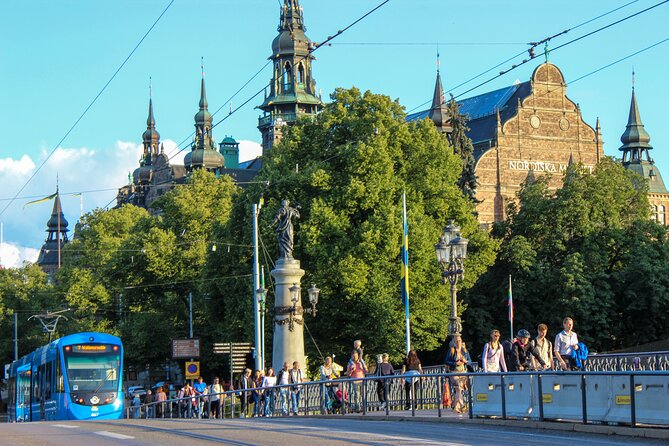
The first hour focuses on Östermalm, one of the city’s most fashionable districts. The route includes Stureplan, Linnégatan, Nybrogatan, and Strandvägen, giving you a useful look at both the streets and the businesses that shaped Stockholm’s design identity.
This is the part of the tour most likely to interest anyone who follows furniture, interiors, textiles, upholstery, or antiques. The guide introduces the well-known Swedish names connected with the district and explains their place in local design history.
You will also see how the area serves Stockholm’s wealthy residents. The itinerary includes a stop connected with a famous Swedish upholstery name, where the guide explains how specialist design work meets the demands of VIP clients.
That detail makes the walk more specific than a general architecture tour. You get a look at design as a working trade, not just as an attractive style in a showroom.
The shopping element is handled sensibly. You are given time to enter design shops and browse furniture, home accessories, and textiles at your own pace. This matters because some people want practical inspiration, while others simply enjoy looking without pressure to buy.
Still, keep your expectations realistic. Access to design shops does not mean that purchases or private appointments are included. The value is in seeing the interiors and learning about the names and traditions behind them.
A recent private outing with Olesia included a particularly good balance between explanation and free browsing. Her approach allowed time to look around alone rather than keeping the entire experience as a nonstop guided talk. Olesia may not be the guide on every departure, so treat her style as an example of what has been provided, not a guarantee.
Östermalms Saluhall brings food into the design story
After the streets of Östermalm, the route enters Östermalms Saluhall. This market hall dates from the 19th century and is both a food destination and an architectural landmark in central Stockholm.
The visit lasts about 30 minutes. That is long enough to take in the building and see the stalls without turning the tour into a full meal outing.
This stop adds something important: Swedish design is not only about chairs, lamps, and fabrics. The market shows how presentation, materials, and public spaces shape everyday life. You also get a chance to see typically Swedish delicacies, which gives the walk a more grounded local feel.
Do not assume that a meal or tasting menu is included. The information for the experience says you go through the market to experience Swedish food, but it does not promise food samples or a dedicated lunch. If you are hungry, plan around the tour rather than relying on this stop as a meal.
For many people, this will be a welcome pause after the first hour on foot. For others, half an hour may feel short, especially if you want to examine every counter or stop for food. The timing keeps the tour moving toward the city’s cultural landmarks.
The Royal Dramatic Theater and Stockholm’s stage tradition
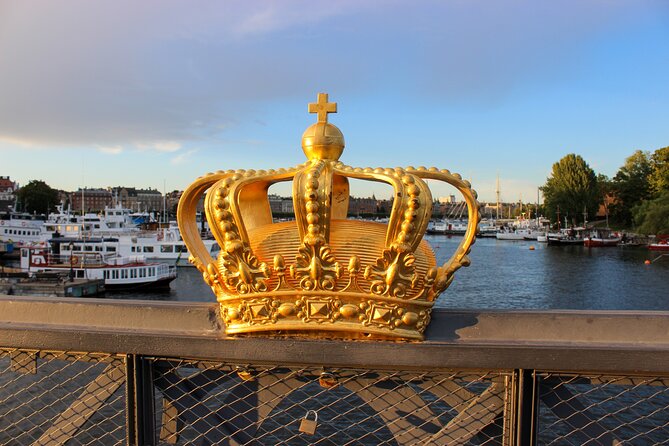
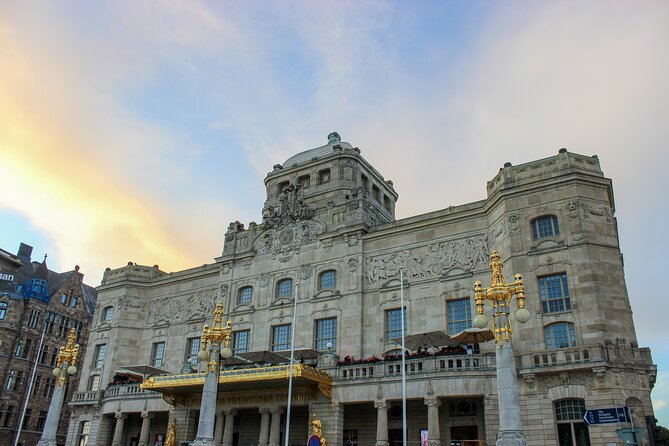
The Royal Dramatic Theater, or Kungliga Dramatiska Teatern, is one of the route’s most striking buildings. The stop lasts about 15 minutes and focuses on its Art Nouveau character and its place in Swedish theater.
The building is also linked with major Swedish film and stage names, including Greta Garbo and Ingrid Bergman. That connection gives the stop a human angle. You are not only looking at an ornate theater facade. You are hearing about a place tied to performers who later became internationally known.
Fifteen minutes is a quick visit, so this is primarily an exterior explanation rather than a full theater tour. You should not expect backstage access or a performance. The short pause works well if you want a clear sense of the building before continuing, but it may feel limited to serious theater fans.
The stop also helps balance the design focus. A city’s visual identity comes from performance spaces as much as private interiors. The theater shows how public culture can influence the way Stockholm presents itself.
Same city, a completely different century:
- Chicago Architecture Center River Cruise aboard First Lady
★ 5.0 · 5,536 reviews - Chicago: Architecture River Cruise Skip-the-Ticket Line
★ 4.8 · 4,325 reviews - Chicago River 45-Minute Architecture Tour from Magnificent Mile
★ 4.5 · 2,924 reviews - Barcelona: Sant Pau Recinte Modernista Entry Ticket
★ 4.6 · 2,567 reviews
Kungsträdgården explains Stockholm through trees, color, and change
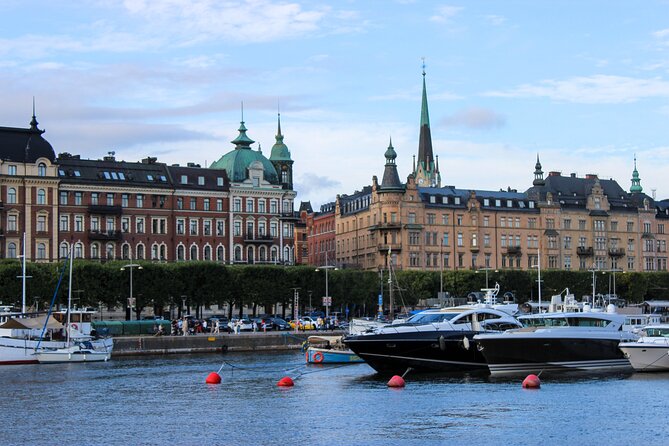
Kungsträdgården, or King’s Garden, receives about 45 minutes. This is one of the more thoughtful parts of the route because it uses a public park to explain how Stockholm has changed over time.
The guide covers the garden’s origins in the 15th century and its later reinventions. You will also hear about architectural phases ranging from Gothic and Baroque influences to modern design.
That wide timeline is useful because it prevents the city from being treated as a single style. Stockholm has layers, and the park offers a place to talk about them without rushing from one building to another.
The tour also discusses the origin of Sweden’s famous Falu red paint. This is a small but memorable subject. The color is closely associated with Swedish houses, so learning where it came from helps connect national design traditions with ordinary buildings beyond central Stockholm.
The park stop is also a chance to slow down. After streets, shops, and a market hall, an open green space changes the rhythm of the walk. You will hear why parks matter in Stockholm’s urban planning, not merely pass through one on the way to the next sight.
Because much of the discussion takes place outdoors, weather matters here. The experience requires good weather, and poor conditions can lead to a different date or a full refund. Bring sensible walking shoes and plan for exposure to the elements.
The Royal Swedish Opera adds a grand theatrical counterpoint
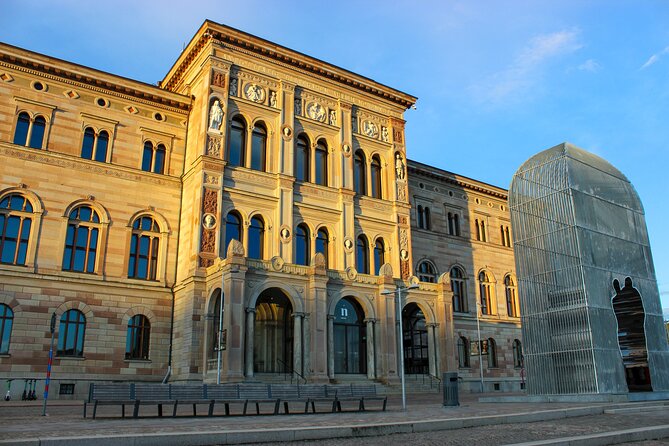
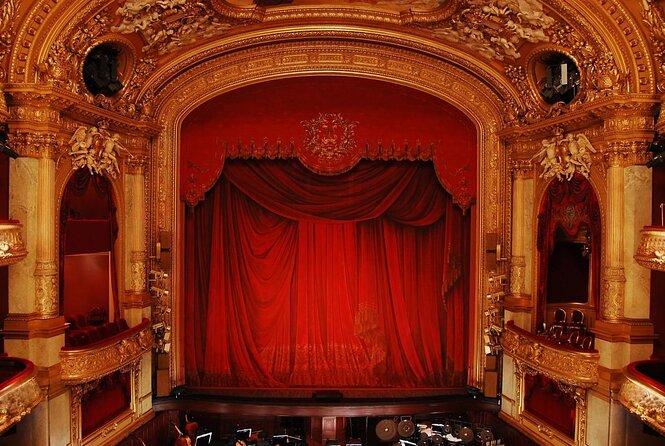
The Royal Swedish Opera is another architectural highlight along the route. It is described as a late 19th-century masterpiece, and the guide uses it to tell the story of Stockholm’s own version of the Phantom of the Opera.
This is a quick interpretive stop rather than an interior visit. You will learn about the building and its theatrical associations, then continue through the city center.
Placed after the Royal Dramatic Theater, the Opera creates a useful comparison. One stop focuses on drama and acting, while the other brings opera and musical performance into the picture. Together, they show how Stockholm’s cultural buildings are part of its design identity.
You should not book this tour expecting entry to either theater. Admission is not listed for these stops, and the schedule leaves little time for a full indoor visit. The appeal is the guide’s explanation and the chance to see major buildings as part of a connected route.
Skeppsholmen and the final view toward the Nationalmuseum
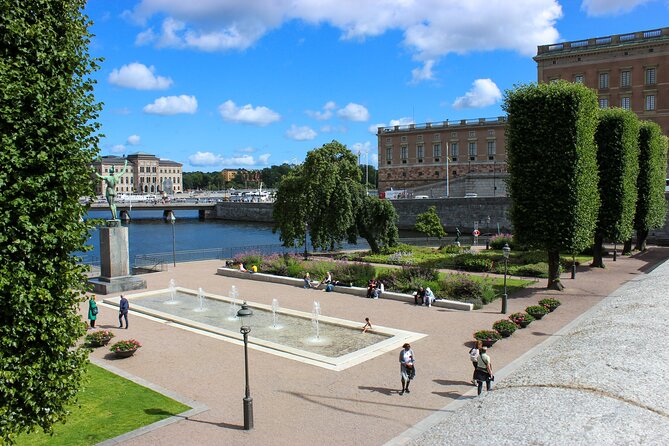
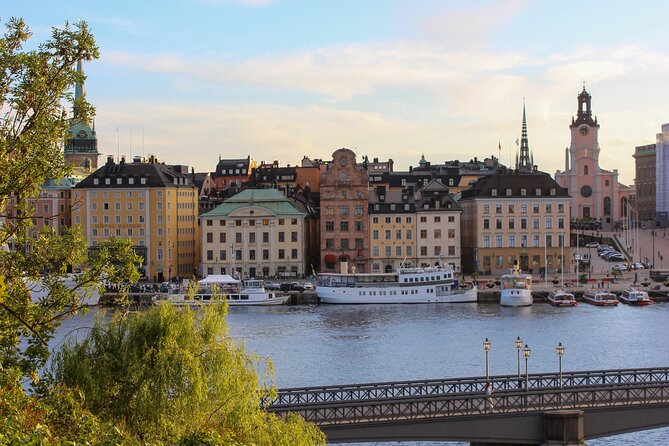
The final section takes you toward Skeppsholmen, one of the prettiest islands in central Stockholm. From here, you get a fine view toward the Old Town, and the discussion turns back to art, architecture, and culture.
Skeppsholmen is home to major Swedish art institutions, including the Nationalmuseum, Moderna, and ArkDes. The route finishes in front of the Nationalmuseum, so you end with a clear sense of where to continue exploring on your own.
This is a smart ending. You finish beside one of Stockholm’s key museums rather than at an unrelated street corner, and you can use the guide’s introduction to decide if you want to return for a longer visit.
The waterfront setting also gives the tour a visual payoff. After the close streets of Östermalm and the formal city buildings, the views open toward the water and Old Town. You will want a little extra time after the official finish for photographs and orientation.
The exact amount of time spent on every Skeppsholmen point is not specified, so expect this to be part of the final walking section rather than a long museum visit. Museum admission is not listed as included.
Group size, pace, and what the three hours really means
The experience lasts about three hours, and travel time is included. That wording matters. The tour covers several districts and landmarks, so the clock is not devoted entirely to standing in front of buildings.
A maximum of 10 people is a comfortable size for an urban walk. It should be easier to hear the guide, ask questions, and stay together than it would be in a large coach group. The small size also suits the design-shop visits, where a crowd would be awkward.
The tour is offered in English and uses a mobile ticket. Most people can participate, and service animals are allowed. The meeting point is near public transportation at Svampen, Stureplan, while the end is in front of the Nationalmuseum.
You should be ready to walk outdoors for the full period. The route includes streets, a market hall, parks, and waterfront areas. Since the schedule includes many stops, comfortable shoes will help you enjoy the commentary instead of thinking about your feet.
The tour is recommended by 91 percent of customers and has a 4.7 rating from 11 ratings. That is a strong early signal, though the sample is small. The praise centers on the guide’s storytelling, the personal feel of a small group, and the useful time allowed for browsing design shops.
Who will get the most from this experience?
I would choose this tour if you have an interest in Swedish interiors, architecture, antiques, theater buildings, or urban planning. It is also a good first-day activity because it gives you a broad introduction to central Stockholm and points you toward museums and neighborhoods worth revisiting.
It suits curious shoppers who want context before entering design stores. You may not buy anything, but you will have a better idea of the names, materials, and traditions connected with Swedish design.
It also works for people who prefer a city introduction with several themes. You get food, public parks, theater, opera, art, and architecture in one route.
I would be more cautious if you dislike walking, need extended indoor time, or want a detailed museum tour. The visit to the Nationalmuseum is a finish point, not a museum admission and guided collection tour. The same applies to the Royal Dramatic Theater and the Opera.
Free cancellation is available up to 24 hours before the start time for a full refund. Changes or cancellations inside that window are not accepted, and poor weather may lead to a new date or a full refund.
Should you book the Stockholm design walk?
Book it if you want to understand why Stockholm looks the way it does, not just photograph its best buildings. The mix of Östermalm design shops, Saluhall, theaters, Kungsträdgården, Skeppsholmen, and the Nationalmuseum gives you a useful framework for exploring the city afterward.
The strongest reason to go is the combination of guided context and personal browsing. You get stories about Swedish design, then time to look at real furniture, textiles, and home accessories for yourself.
Skip it if you want long museum visits, a food-focused tour, or a purely historical walk. At $61.62, the price makes sense for a small English-language introduction with a maximum of 10 people, especially early in your stay. Just remember that the real product is the guide’s interpretation and the route between places, not admission to every landmark along the way.
FAQ
How long does the Scandinavian Art, Architecture and Design Tour last?
The tour lasts approximately three hours, including travel time between stops.
Where does the tour begin?
It begins at Svampen, Stureplan, in Östermalm, Stockholm.
Where does the tour end?
The tour ends in front of the Nationalmuseum at Södra Blasieholmshamnen 2.
What language is the tour offered in?
The tour is offered in English.
How many people can join the tour?
The group has a maximum of 10 travelers.
Are museum or theater admissions included?
The listed stops at the Royal Dramatic Theater, Kungsträdgården, and other landmarks do not include admission tickets. Access to design shops is included, and the tour ends at the Nationalmuseum rather than providing a listed museum visit.
Is food included at Östermalms Saluhall?
The tour takes you through the food hall to experience typically Swedish delicacies, but the provided details do not state that tastings or a meal are included.
What happens if the weather is poor?
The experience requires good weather. If it is canceled because of poor weather, you will be offered a different date or a full refund.
Just added around the world
- Wilmington History and Architecture Tour★ 4.8 · 18 reviews
- Washington, DC: Georgetown Architecture Walking Tour★ 5.0 · 8 reviews
- New Orleans : Garden District Architecture Walking tour★ 4.8 · 5 reviews
- Washington DC: Dupont Circle & Embassy Row Architecture Tour★ 5.0 · 6 reviews
- Vicenza: discovering the city of Palladio by e-bike★ 5.0 · 4 reviews
- Vicenza: Palladian Architecture Private Walking Tour★ 3.3 · 3 reviews
- Walk & Discover KL’s Architectural and Heritage Gems★ 5.0 · 7 reviews
- Unveiling Brno: History, Culture & Architectural Delights★ 5.0 · 2 reviews
Architecture Tours, compared.

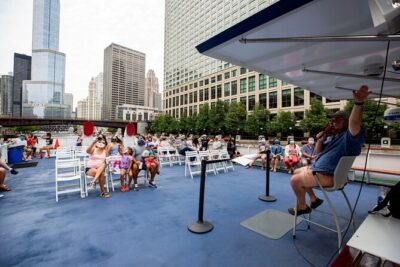
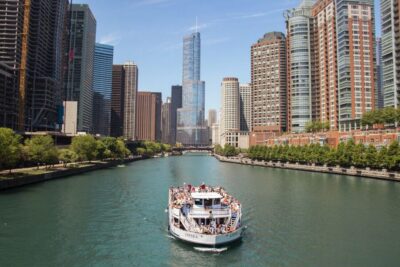
Chicago River: 1.5-Hour Guided Architecture Cruise
Read our review →
Chicago Architecture Center River Cruise aboard First Lady
Read our review →
Chicago: Architecture River Cruise Skip-the-Ticket Line
Read our review →
Chicago River 45-Minute Architecture Tour from Magnificent Mile
Read our review →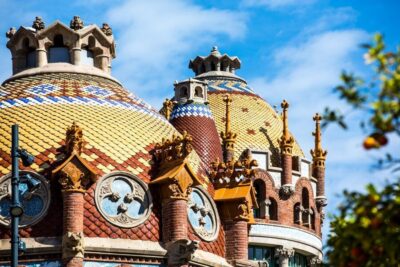
Barcelona: Sant Pau Recinte Modernista Entry Ticket
Read our review →