
Review · PRAGUE
Best of Prague Architecture – private tour with PERSONAL PRAGUE GUIDE
Prague reveals its story through stone and stucco, and this private tour gives you a fast, well-shaped look at the city’s finest architecture. In about three hours, you move from Prague Castle and St. Vitus Cathedral to Charles Bridge, Old Town Square, Wenceslas Square, and the Art Nouveau Municipal House.
I like the private format, since your guide can adjust the route and answer your questions instead of leading a fixed crowd. I also like the mix of famous sights and quieter lanes, something guides Jana and Betty have done especially well. The drawback is pace: three hours is enough for an excellent overview, but not for lengthy interior visits at every stop.
Key points
- Private hotel pickup: Meet your guide at your hotel reception or the street entrance of your Prague apartment.
- Architecture across the centuries: See Gothic, Baroque, Rococo, Art Nouveau, and 20th-century styles in one compact route.
- A flexible experience: Your group alone takes part, so the guide can respond to your interests and questions.
- The city’s essential sights: Prague Castle, Charles Bridge, Old Town Square, the Astronomical Clock, and Municipal House all feature.
- Quieter corners included: The route may reveal small lanes and less-touristed areas around Prague Castle.
- Entry fees are mostly extra: The walking portions are included, but attractions such as Loreta and the Old Town Hall tower cost more if you choose to enter.
Why this private Prague tour works
Prague is easy to admire and surprisingly hard to read. A Gothic tower may sit beside a Baroque church, a Rococo palace, or a bright Art Nouveau facade. Without context, the city can feel like a beautiful collection of unrelated buildings.
This tour gives you a framework. You spend time in the castle district, cross Charles Bridge, walk through the Old Town, and finish around Wenceslas Square and Municipal House. The route covers the major architectural chapters of Prague without requiring a full-day commitment.
The private setup matters. You are not trying to hear a guide over a large group, and you can ask why a building looks the way it does or stop for a closer look at a detail. If you care more about architecture than shopping, or more about old churches than broad city anecdotes, you can say so.
The experience costs $112.46 per person. That is a serious price for three hours, especially if you are traveling alone. For two or more people, the cost buys private attention, hotel pickup, and a guide who can shape the walk around your interests. Admissions are not generally included, so add those costs if you want to go inside Loreta or climb the Old Town Hall tower.
More private architecture tours in Prague:
- Beer & Baroque: A Private Highbrow Brew Tour
★ 5.0 · 33 reviews - Private Prague Art Nouveau and Cubism Walking Tour
★ 5.0 · 30 reviews - Prague: Private Cubism & Art Nouveau Walking Tour
★ 5.0 · 15 reviews
Meeting your guide and getting oriented
Pickup is available at your hotel reception or at the street entrance of your Prague apartment. You need to send the provider the name and address of your accommodation in advance. That small step matters, since the meeting point is not one central public square.
The walking route may use public transportation at some point. One private outing began with a tram ride to the Old Town before continuing through the Jewish Quarter, Charles Bridge, and the castle area. Do not assume every group follows that exact order, but the private format allows the guide to make sensible adjustments.
Your guide may be Jana, Betty, or another member of the Personal Prague Guide team. Jana has led tours that helped guests get comfortable enough with the city to explore independently afterward. Betty has been praised for showing quieter alleys around Prague Castle and for answering detailed questions about both buildings and history.
That is the real value at the start of the tour: you get your bearings quickly. Prague’s center is compact, but its streets, courtyards, bridges, and hills can make the first day confusing. A private walk gives you a useful mental map.
Prague Castle and the Gothic power of St. Vitus
The castle area is the grand opening. Prague Castle is not one single building but a large complex filled with courtyards, churches, palaces, and architectural treasures. The great attraction is St. Vitus Cathedral, whose Gothic form gives the castle its strongest visual punch.
The scheduled visit here is about 30 minutes, and the admission ticket is not included. That timing tells you what kind of experience to expect. You will get an architectural introduction and a close look at the major exterior sights, but you may not have time for a long, quiet inspection of every chapel or interior detail.
The castle district also rewards attention beyond the main entrance. Smaller palaces, lanes, and courtyards help explain how Prague developed around its seat of power. Betty’s route, for example, included less-touristed alleys near the castle that made good picture stops without pulling the group far from the main sights.
Ask your guide to explain the contrast between the cathedral’s Gothic vertical lines and the later styles around it. That kind of comparison is where this tour earns its price. You are not just collecting photographs. You are learning how Prague’s buildings changed as political power, religion, and taste changed.
Loreta and the Baroque face of Hradčany
Loreta Praha is a short stop, about 10 minutes, but it adds a different note to the castle district. This Baroque Marian pilgrimage site includes the Church of the Nativity, a replica of the Holy House, surrounding cloisters, and chapels.
The normal plan is to view Loreta from outside rather than spend time inside. If you want to see the interior treasures, you can decide to pay an entry fee of about $10. This is worth considering before the tour begins, since an interior visit may affect the pace of the rest of your walk.
Loreta is useful in an architecture tour because it shows how strongly Baroque design shaped Prague. Its theatrical details and religious purpose contrast with the severe upward pull of Gothic St. Vitus. In a short distance, you see two very different ideas of what a grand sacred building should do.
More guided tours in Prague:
- Prague: Modern Architecture and Design Guided Tour
★ 3.9 · 20 reviews - Barcelona: Sagrada Familia Entry Ticket with Audio Guide
★ 4.6 · 105,312 reviews - Fast Track Sagrada Familia Guided Tour
★ 4.5 · 8,795 reviews - Chicago River: 1.5-Hour Guided Architecture Cruise
★ 4.8 · 8,046 reviews
Wallenstein Gardens and a change of scale
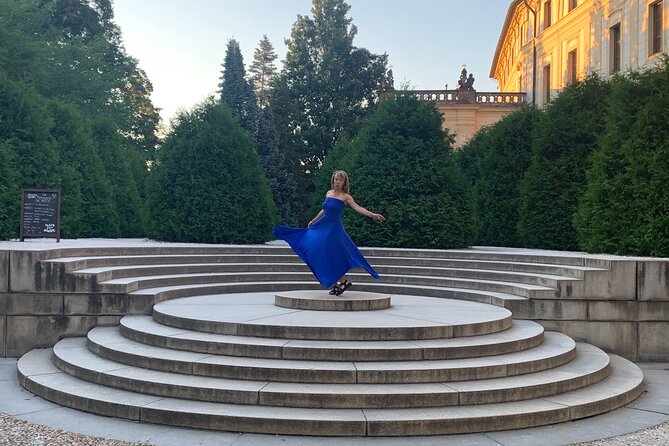
Wallenstein Palace Gardens provide a brief pause from churches and city streets. The palace and garden complex was built by Albrecht von Wallenstein, one of the most powerful and wealthy Czech noblemen of his time. The site now serves as the seat of the Czech Senate.
The gardens are open to the public in summer and admission is free. The planned stop lasts around 10 minutes, so treat it as a focused look rather than a long garden visit. You may have time to appreciate the layout, palace setting, and Baroque character, but not to wander every path at leisure.
This stop is valuable because architecture is not only about facades. The garden shows how a powerful owner used open space, symmetry, and grand surroundings to make a statement. It also gives your feet a short break before the route heads toward the bridge and Old Town.
Charles Bridge, Prague Venice, and the John Lennon Wall
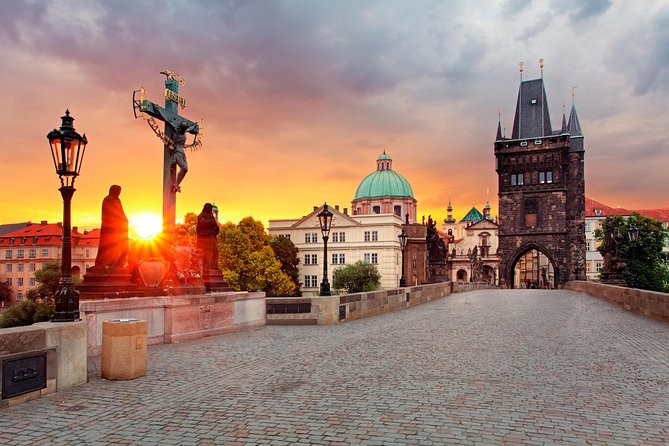
Charles Bridge is the emotional center of the tour. Built in the 14th century, it crosses the Vltava with a line of statues and a Gothic bridge tower. The walk across takes about 15 minutes in the planned schedule, though the actual pace depends on crowd levels and how many questions you ask.
The bridge is one of Prague’s best places for understanding the city’s layout. From here, the castle district, river, Old Town, and church towers connect into one view. Your guide can also explain the bridge’s familiar legends, including the story that eggs were mixed into the mortar. Treat that as folklore, but enjoy it. Prague is full of stories that have grown around its monuments.
The statues lining the bridge were added over time, and their religious imagery gives the crossing a ceremonial feel. One popular tradition involves touching a five-star sign for good luck. It is a small ritual, but it helps explain why this bridge feels like more than a route from one bank to the other.
Nearby is Prague Venice, an area shaped by the Devil’s Stream side channel. You may also see the John Lennon Wall, a symbol of anti-communist protest. At the Old Town end, the Klementinum occupies the site of a former Jesuit college and now serves as the National Library.
The bridge is also linked with film history. You may recognize parts of the setting from the first Mission: Impossible movie. The film reference is fun, but the bridge’s real appeal is older and more substantial: it has been part of Prague’s daily life for centuries.
Old Town Square as an open-air architecture lesson
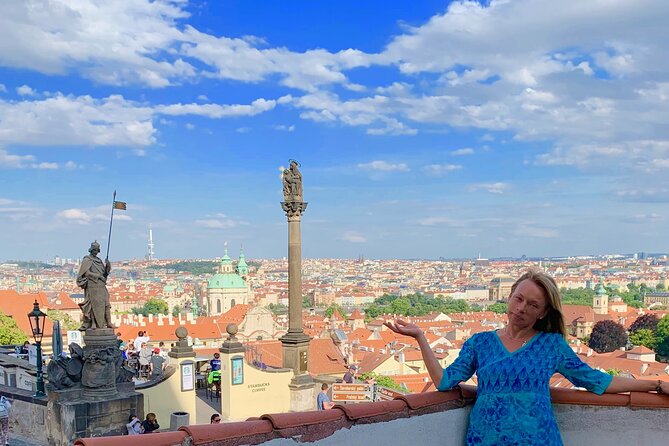
Old Town Square is where the tour’s architectural variety becomes easiest to compare. The square brings together Baroque, Rococo, Gothic, and civic architecture in a compact setting. You can look in nearly any direction and find a building worth discussing.
The Baroque St. Nicholas Church has a pale, elaborate facade. Kinský Palace is known for its refined Rococo exterior. The Gothic House at the Stone Bell and the Church of Our Lady before Týn add sharper medieval forms to the same urban scene.
The square also carries difficult history. A statue honors Jan Hus, and crosses mark the site of a bloody execution. The Old Town Hall was damaged by the Nazis during World War II. These details keep the square from being just a pretty backdrop. Its architecture reflects faith, royal power, protest, punishment, war, and civic life.
The Astronomical Clock is the main crowd magnet. When the hour arrives, the Twelve Apostles appear in two small windows while a skeleton rings a bell. The show is brief, so your guide can help you find the right side of the Old Town Hall and explain what you are seeing.
The tower visit is optional and costs extra. An elevator makes the climb easier, and the view over the Old Town is one of the best add-ons available here. If you want the panorama, say so early. The three-hour schedule is tight, and the tower visit may need to be balanced against other stops.
Týn Church and the Old Town’s sharp Gothic profile
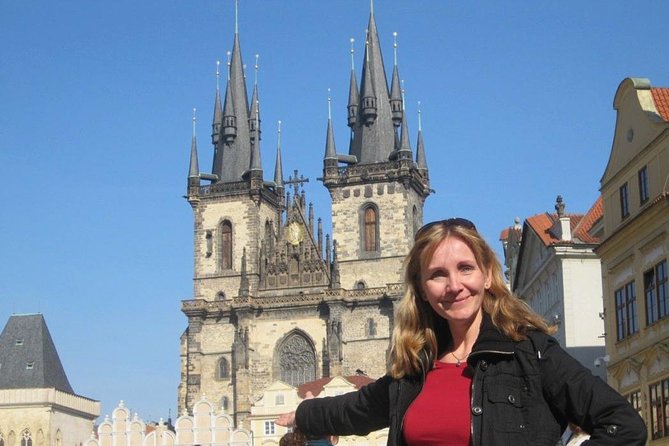
The Church of Our Lady before Týn is one of the most recognizable buildings in Prague. Its twin spires rise behind Old Town Square, giving the city one of its classic silhouettes.
The church is Gothic, but its location among later buildings makes the architecture even more interesting. The spires look almost theatrical from the square, while the surrounding facades show how many periods Prague has absorbed without erasing its older core.
The church is also associated with Tycho Brahe, the Danish astronomer buried inside. The planned stop lasts about 15 minutes and is listed as free, though the experience may focus mainly on the exterior depending on the route and timing. Ask your guide if you want to know more about the church interior and Brahe’s connection to Prague.
Wenceslas Square and 20th-century Prague
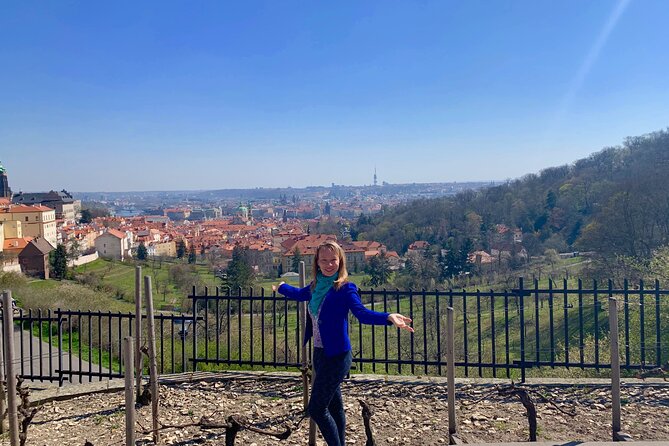
Wenceslas Monument shifts the focus from medieval Prague to the 20th century. The stop offers a chance to see how the city’s architecture and public spaces changed beyond the Old Town’s Gothic and Baroque center.
The monument anchors Wenceslas Square, a long urban space rather than a traditional enclosed square. It represents a more modern civic Prague, one shaped by public gatherings, national identity, commerce, and broad avenues.
The provided schedule allows about 15 minutes here. That is enough for an introduction, but not a full study of every building around the square. If modern architecture matters to you, tell your guide. The private format makes that request more useful than it would be on a fixed group route.
Municipal House and Prague’s Art Nouveau flourish
Municipal House is the architectural high point for many people who enjoy decorative design. Its monumental facade combines allegorical figures, floral Art Nouveau ornament, and classical elements. Local artists created much of the decoration, giving the building a strongly Czech artistic identity.
Inside is Smetana Hall, a celebrated concert venue connected with the Prague Spring festival. The tour normally allows about 10 minutes at this stop, and entry is not included. You should expect an exterior explanation unless you arrange and pay for admission separately.
Look closely at the facade rather than treating it as a quick photo stop. Art Nouveau rewards patience. Curving plant forms, sculptural figures, and the balance between decoration and structure are easier to appreciate when a guide points out what your eye might otherwise skip.
Municipal House also makes a good final architectural comparison. Earlier stops show religious authority, aristocratic power, and medieval city life. This building expresses civic pride and artistic confidence in a newer Prague.
What three hours really gives you
Three hours sounds generous until you count nine stops across several districts. The schedule is designed for breadth. You will see major exteriors, hear the story behind them, and walk through some of Prague’s most important public spaces.
Do not book this tour expecting a slow museum day. Loreta, Wallenstein Gardens, Charles Bridge, Old Town Square, and the two Old Town Hall references each receive short visits. The route is best for getting a strong first impression and deciding where you want to return later.
The private format helps soften the time limit. A guide can spend more time on the buildings that interest you and move quickly past subjects you already know. Still, admission fees and interior visits can reduce the number of stops you cover in depth.
Wear comfortable shoes. This is a walking tour, and the route crosses old streets, bridges, squares, and changing districts. Pickup is convenient, but it does not turn the experience into a vehicle tour.
Who should book this Prague architecture walk
I would choose this tour if you want a clear introduction to Prague’s buildings and prefer a private conversation to a large group. It suits first-time visitors who want to understand the city before exploring on their own.
It also works well for families or small groups with different interests. One person can ask about churches, another about political history, and another about film locations or photography. The guide can adjust the explanation without holding up a large party.
Architecture students, photographers, and repeat visitors may appreciate the quieter corners around the castle. The tour can also help you see familiar sights with more attention to materials, decoration, and urban design.
I would hesitate if you want extensive interior access. Tickets are not included for Prague Castle, Loreta, Municipal House, or the Old Town Hall tower, and the short schedule favors exterior viewing. In that case, use this walk as an orientation, then return to your favorite buildings on another day.
Booking is flexible up to 24 hours before the start time, when you can receive a full refund. Child pricing applies only when the child shares the tour with two paying adults. Service animals are allowed, and the experience is near public transportation.
Should you book it?
Book it if you want Prague explained through its buildings, not just pointed out from a distance. The route connects castle courtyards, sacred architecture, aristocratic gardens, a famous bridge, medieval squares, a national monument, and Art Nouveau civic design in one private outing.
The strongest reasons are the guide’s personal attention and the chance to see less-touristed lanes near Prague Castle. Jana and Betty are named guides associated with especially attentive, well-informed tours, but your assigned guide may be someone else.
At $112.46 per person, the value improves with a small group and with a clear interest in architecture or local history. Add the cost of any optional admissions, and remember that three hours means a brisk overview rather than a deep interior tour. For a first morning in Prague, it is a practical way to get oriented and then explore the city with more confidence.
FAQ
Where does the tour begin?
You meet the guide at your hotel reception or at the street entrance of your Prague apartment. You need to provide the accommodation name and address in advance.
How long does the experience last?
The tour lasts approximately three hours.
Is this a private tour?
Yes. Only your group participates in the activity.
Are admission tickets included?
Admission is not included for Prague Castle, Loreta, Wallenstein Palace Gardens, Municipal House, or the Old Town Hall tower. Wallenstein Gardens are open to the public free of charge during the summer, and the Charles Bridge, Old Town Square, Týn Church, and Wenceslas Monument are listed as free stops.
Is the tour offered in English?
Yes. The experience is offered in English.
Can I cancel for a full refund?
Yes, if you cancel at least 24 hours before the experience start time. Cancellations or changes made less than 24 hours before the start time are not accepted for a refund.
Just added around Prague
- Private Prague Art Nouveau and Cubism Walking Tour★ 5.0 · 8 reviews
- Private Prague Renaissance & Baroque Gardens Walking Tour★ 5.0 · 8 reviews
- Prague Renaissance & Baroque Gardens Walking Tour★ 5.0 · 23 reviews
- Prague: Private Prague Art Nouveau and Cubism Tour★ 4.8 · 6 reviews
- Prague Renaissance and Baroque Gardens Walking Tour★ 5.0 · 5 reviews
- Prague: Private Cubism & Art Nouveau Walking Tour★ 5.0 · 15 reviews
- Prague Art Nouveau Tour★ 4.9 · 12 reviews
- Prague: Modern Architecture and Design Guided Tour★ 3.9 · 20 reviews
Prague Architecture Tours, compared.
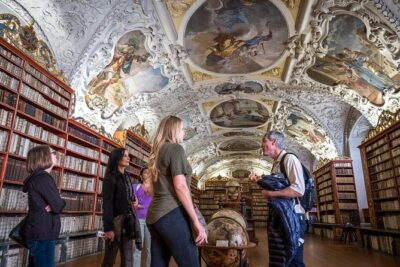
Prague Renaissance & Baroque Gardens Walking Tour
Read our review →
Prague: Modern Architecture and Design Guided Tour
Read our review →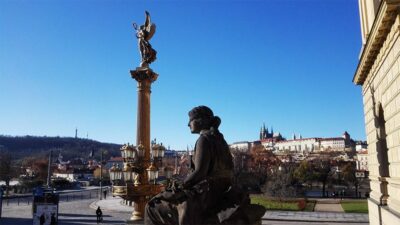
Browse the lists this tour appears in