Review · ARCHITECTURE TOURS
Architecture Tour of Melbourne
Melbourne’s architectural story is written across a surprisingly small part of the city center. In about two hours, this walking tour links grand 19th-century buildings with newer designs at Federation Square, while guides such as San, John, and Kathy explain the choices, changes, and odd details you might otherwise miss.
I like the small groups of no more than 10, which give you a better chance to ask questions. I also like the way the tour goes beyond façades. Guides have pointed out buildings that are easy to miss from the street and explained which ones you can enter.
The main drawback is simple: this is a walking tour, not a seated city excursion. You need comfortable shoes, and the route is not wheelchair accessible. The finish is roughly near Bourke Street Mall rather than at one fixed endpoint.
Key points to know before booking
- Melbourne’s architecture in a compact walk: Cover major city-center buildings and architectural styles in roughly two hours.
- Small groups capped at 10: The format allows for questions and some adjustment to the group’s interests and pace.
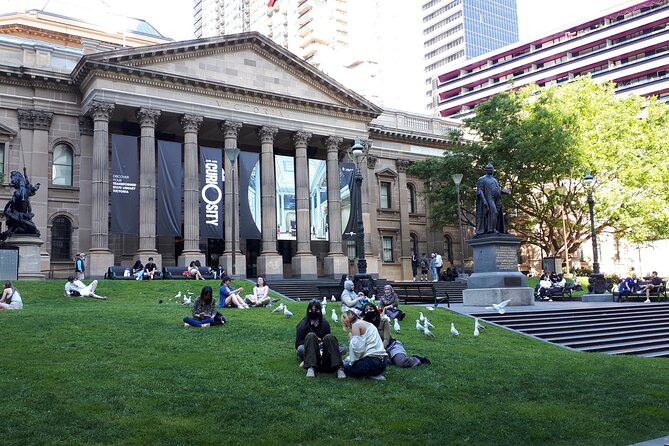
- A useful mix of famous and overlooked places: See Federation Square, Flinders Street Station, the ANZ Bank Museum, Scots Church, and buildings that can be easy to miss.
- Guides bring different strengths: San, John, and Kathy have led tours praised for clear explanations, humor, and their ability to handle varied questions.
- Start at St Paul’s Cathedral: Meet at 198-206 Flinders Street, close to public transport.
- Plan for Melbourne weather: Poor weather may lead to a new date or a full refund.
Why this tour works for understanding Melbourne
Melbourne can feel like a city assembled in layers. A grand railway station may sit near a sharp modern building, a church, a bank, or a civic project that changed how people used the center. Walking between these places gives you a better sense of that sequence than seeing one building in isolation.
The tour focuses on architecture dating from the 1850s onward. That broad time span matters because Melbourne’s city center is not defined by one look. You can expect discussion of older buildings, later additions, and the ideas behind different designs.
I like this approach for a first or second day in Melbourne. You get a practical orientation to the central streets while learning why several important buildings matter. It also gives you a useful habit for the rest of your visit: look up, check the entrance, and notice what sits beside the obvious landmark.
The guides are a major part of the experience. San, also referred to in some booking information as Sam, has been praised for interesting facts and a friendly manner. John is known for combining architectural information with Melbourne’s past, while Kathy has been described as able to answer a wide range of questions without making the tour feel memorized.
That last point is important. A city architecture walk can become a list of dates and styles. Here, the guide’s personality appears to shape the experience, and the small group gives the conversation room to move beyond a fixed script.
A few more architecture tours around the world worth a look
- Chicago Architecture River Cruise
★ 5.0 · 15,756 reviews - Chicago River 90-Minute Architecture Tour
★ 4.5 · 9,629 reviews - Chicago River: 1.5-Hour Guided Architecture Cruise
★ 4.8 · 8,046 reviews
Meeting at St Paul’s Cathedral on Flinders Street
The walk begins near St Paul’s Cathedral at 198-206 Flinders Street. This is a convenient central meeting place, close to public transportation and across from one of Melbourne’s best-known civic settings.
Arrive ready to walk rather than expecting a formal indoor presentation. The exact path can change with group size, walking speed, and the interests of people on the tour. That flexibility is useful if you have a particular interest in churches, banks, railway buildings, modern design, or Melbourne’s older streets.
The mobile ticket keeps arrival simple. Confirmation is provided at booking, so you should have the tour details ready on your phone. Wear comfortable shoes. Two hours on city pavements is manageable for most people, but it is not the right choice if you need a fully accessible route or want to avoid standing and walking.
Federation Square and Melbourne’s changing identity
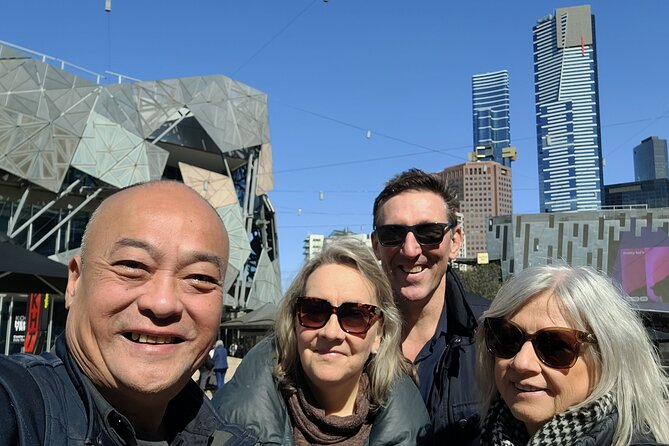
Federation Square is one of the key stops. It gives the guide a chance to discuss a modern architectural project rather than focusing only on Melbourne’s 19th-century buildings.
The square is useful in this tour because it creates a clear contrast with nearby historic structures. You can look at how a newer public space relates to the older city around it, and how contemporary design changes the experience of a central meeting place.
The tour does not treat architecture as decoration alone. The guide explains the significance of the places you visit, so you can expect Federation Square to be part of a larger discussion about Melbourne’s changing identity.
This stop may be especially useful if you have already photographed the square but have not thought much about its design. It also gives you a reference point for the rest of the walk: after seeing something modern, older buildings can look less like isolated monuments and more like part of an ongoing city story.
Flinders Street Station and the city’s grand scale
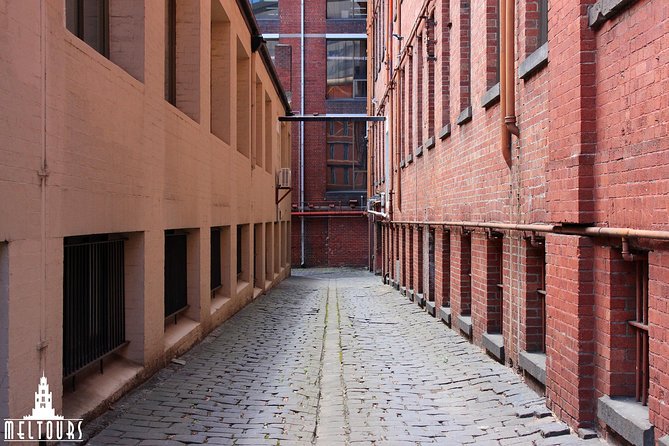
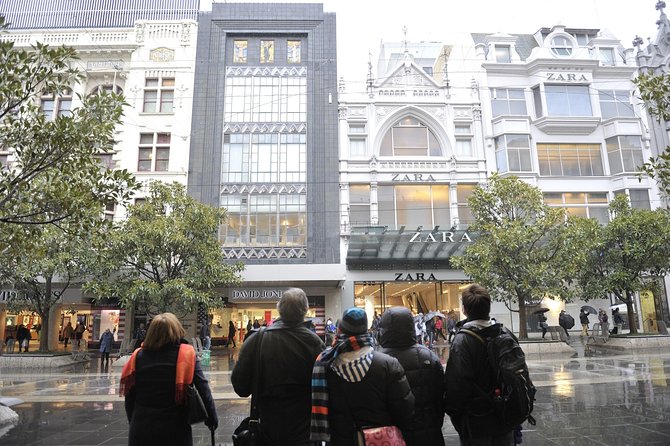
Flinders Street Station is another important stop. Its location near the meeting point makes it a natural part of the opening section, and its size and presence help explain the scale of central Melbourne.
You will look at the building as architecture, not simply as a transport hub. The guide can connect its appearance with the way Melbourne developed from the 1850s onward, helping you read the station as part of the city’s growth.
One advantage of discussing Flinders Street Station on foot is that you can see it in relation to the surrounding streets and buildings. A photograph shows the front, but a walking tour can draw your attention to details and neighboring structures you might pass without a second thought.
The route may not offer a long interior visit at every stop. This is mainly an outdoor walking experience, with access to certain buildings discussed as part of the tour. If you want a full museum visit or extended time inside each building, you should plan separate visits.
Same city, a completely different century:
- Chicago Architecture Center River Cruise aboard First Lady
★ 5.0 · 5,536 reviews - Chicago: Architecture River Cruise Skip-the-Ticket Line
★ 4.8 · 4,325 reviews - Chicago River 45-Minute Architecture Tour from Magnificent Mile
★ 4.5 · 2,924 reviews - Barcelona: Sant Pau Recinte Modernista Entry Ticket
★ 4.6 · 2,567 reviews
The ANZ Bank Museum and buildings you can enter
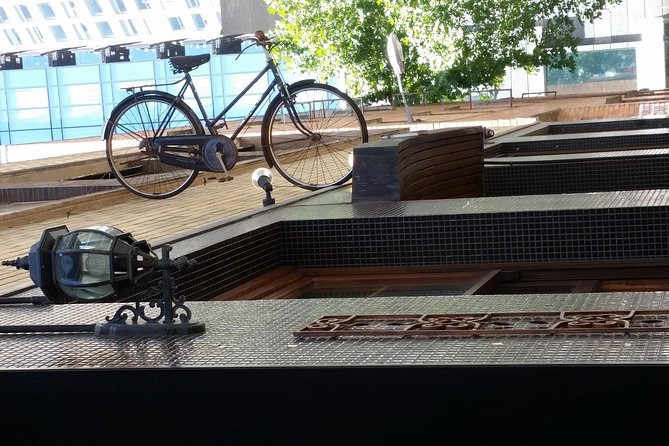
The ANZ Bank Museum adds a different layer to the walk. Banks are often treated as background scenery, but their architecture can reveal how institutions wanted to present security, money, and importance.
The guide explains the significance of the building and may point out what is available to see inside. This is one of the tour’s practical strengths. Several people have appreciated being shown places they would not have noticed alone, including buildings whose entrances are easy to overlook.
Do not assume every stop involves a full interior tour. The appeal is the combination of exterior details, historical context, and guidance about which buildings you can enter. That makes the tour useful even if you return later for a longer look.
If you are the kind of person who walks past a doorway and wonders what is inside, pay close attention here. The guide’s local knowledge can turn an ordinary street frontage into a place worth revisiting.
Scots Church and Melbourne’s religious architecture
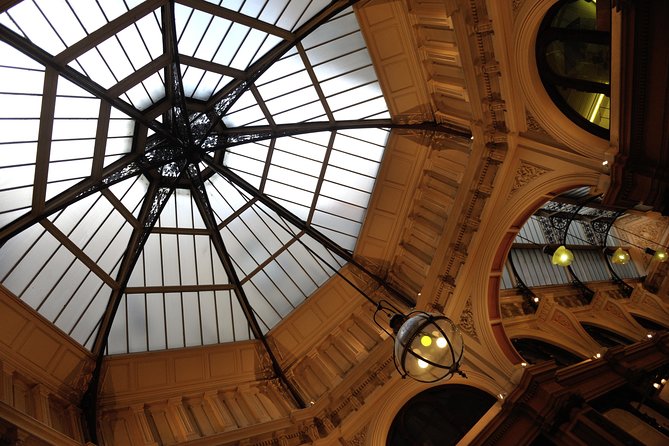
Scots Church provides a change of mood and building type. Religious buildings offer a chance to consider how faith communities shaped the city center and how architecture served both practical and symbolic purposes.
The stop also helps broaden the tour beyond banks, stations, and civic buildings. Churches can be read through their materials, proportions, entrances, and position in the street. Your guide gives you the context needed to notice those elements rather than simply labeling the building old.
The tour’s focus is not limited to a single architectural style. That variety is one reason the walk suits people who want a general introduction to Melbourne rather than a specialist lecture on one period.
You may not be an architecture enthusiast when you book. That is fine. The explanations are designed to make the buildings approachable, and the guide can answer questions that range from broad city history to small details on a particular façade.
The overlooked buildings between the headline stops
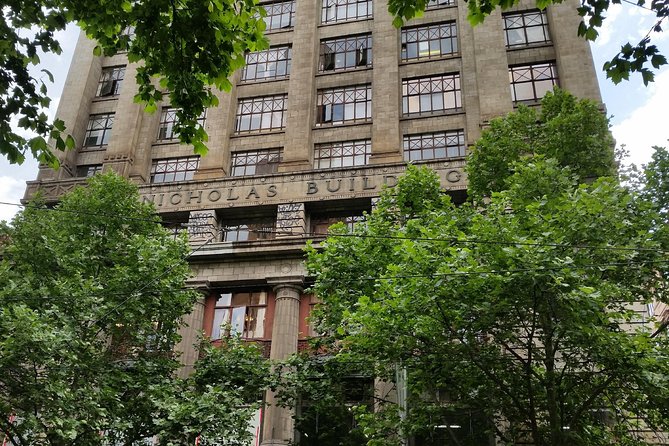
The most rewarding part of this tour may be the spaces between its named landmarks. The route includes additional buildings and details, and guides have drawn attention to places that are difficult to spot from a normal street walk.
That can mean a building entrance, an upper-level feature, or a relationship between neighboring structures. The information provided does not promise a fixed list of every extra stop, so you should expect some variation rather than a rigid checklist.
This flexible format works well for a small group. If everyone is moving quickly, the walk can keep its pace. If the group has questions about a building or style, the guide can spend more time there. The end point is similarly flexible, finishing roughly near Bourke Street Mall according to the group’s speed and size.
That location is practical. Bourke Street Mall puts you near shops, cafés, public transport, and other central sights, so the tour can fit easily into a wider day of exploring. Since there is no exact final address, keep your schedule slightly open rather than arranging a timed booking immediately afterward.
What the guides add to the walk
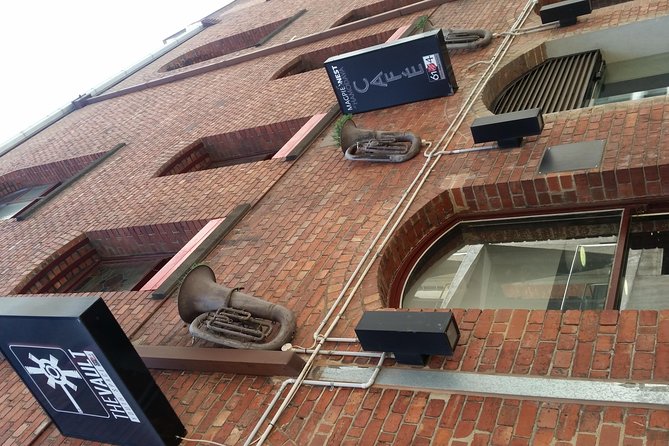
The strongest praise has focused on the guides’ command of both architecture and Melbourne’s past. That combination is more useful than a guide who simply names styles.
San has been described as friendly, helpful, and able to share interesting facts without making the tour feel stiff. John has been praised for being informative and funny, with a good grasp of the city’s architectural development. Kathy has been noted for answering varied questions in a natural, unscripted way.
Of course, guides differ, and you cannot select one with certainty when booking. Still, the pattern is encouraging: the experience depends on explanation and conversation rather than on a printed route alone.
I would ask questions as you walk. The group size makes that realistic, and the tour is tailored as much as possible to the interests of the people attending. If you want to know how an older building was used, why a newer design looks so different, or which places are open to the public, this is the moment to ask.
Price, duration, and overall value
At $64.55 per person, this is not the cheapest way to walk through Melbourne. You are paying for a two-hour guided experience, a small group, and a guide who can connect buildings with the city’s past.
The value is strongest if you would otherwise pass these structures without understanding them. A self-guided walk costs less, but it requires research and will not tell you which details matter or which buildings are worth entering. The small group also makes this feel more personal than a large city tour.
The value is weaker if you already know Melbourne’s central architecture well or prefer to explore at your own pace. You may also want more time inside individual buildings than the schedule allows.
For first-time visitors, architecture fans, and people who enjoy city walks with context, the price is reasonable. It is also a good choice soon after arrival. One person used the tour as a way to stay awake and get oriented after arriving from the United States, which makes sense: you are walking, learning, and getting a working map of the center at the same time.
Who should book this Melbourne architecture walk
I would choose this tour if you want:
- A compact introduction to Melbourne’s central buildings
- A guide who can explain both architecture and city history
- A small group with room for questions
- A walking route that includes famous places and easy-to-miss details
- A useful activity soon after arriving in Melbourne
- A flexible experience shaped partly by group interests
I would think twice if you need wheelchair access, dislike walking for two hours, or want a tour with a guaranteed indoor itinerary. The weather policy also matters. Poor weather can lead to a different date or a full refund, but you should not treat this as an all-conditions activity.
Book at least 24 hours ahead of the start time if you want the option of a full refund after cancellation. Changes or cancellations made less than 24 hours before the start are not accepted for a refund. The tour also requires a minimum number of people, so an insufficient group can lead to a new date, another experience, or a full refund.
Should you book it?
Book this architecture tour if you want Melbourne’s buildings to make more sense, not just look impressive in photographs. The short route, central meeting point, small group, and guides such as San, John, and Kathy make it a practical introduction to the city’s built story.
Skip it if your priority is a long indoor visit at each site or a fully accessible route. For everyone else, especially first-time visitors who enjoy asking questions and noticing details, the $64.55 cost buys useful context you can carry into the rest of your Melbourne stay.
FAQ
Where does the Architecture Tour of Melbourne begin?
The tour begins at St Paul’s Cathedral, at 198-206 Flinders Street, Melbourne VIC 3004. The meeting point is near public transportation.
Where does the tour finish?
There is no fixed end address. The walk finishes roughly near Bourke Street Mall, depending on the group’s size and walking speed.
How long does the tour last?
The tour lasts approximately two hours.
How large is the group?
The tour has a maximum of 10 people.
Is the tour wheelchair accessible?
No. The tour is not wheelchair accessible.
What happens if the weather is poor?
If poor weather causes the tour to be canceled, you can choose a different date or receive a full refund.
Just added around the world
- Wilmington History and Architecture Tour★ 4.8 · 18 reviews
- Washington, DC: Georgetown Architecture Walking Tour★ 5.0 · 8 reviews
- New Orleans : Garden District Architecture Walking tour★ 4.8 · 5 reviews
- Washington DC: Dupont Circle & Embassy Row Architecture Tour★ 5.0 · 6 reviews
- Vicenza: discovering the city of Palladio by e-bike★ 5.0 · 4 reviews
- Vicenza: Palladian Architecture Private Walking Tour★ 3.3 · 3 reviews
- Walk & Discover KL’s Architectural and Heritage Gems★ 5.0 · 7 reviews
- Unveiling Brno: History, Culture & Architectural Delights★ 5.0 · 2 reviews
Architecture Tours, compared.
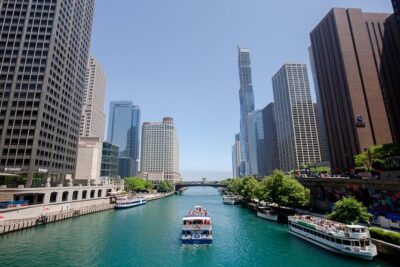
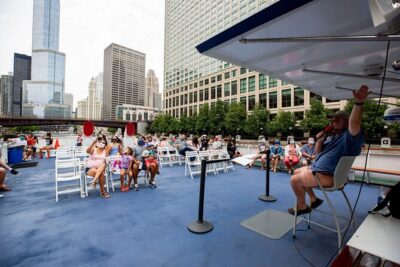
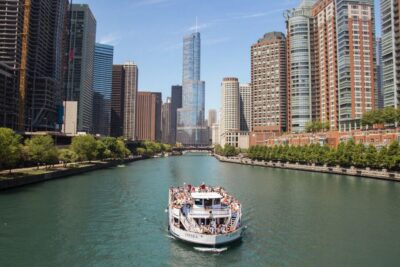
Chicago River: 1.5-Hour Guided Architecture Cruise
Read our review →
Chicago Architecture Center River Cruise aboard First Lady
Read our review →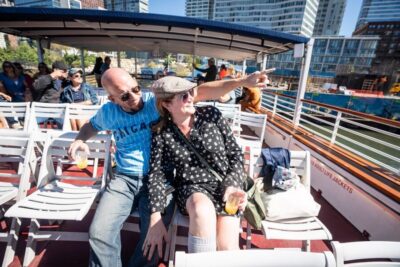
Chicago: Architecture River Cruise Skip-the-Ticket Line
Read our review →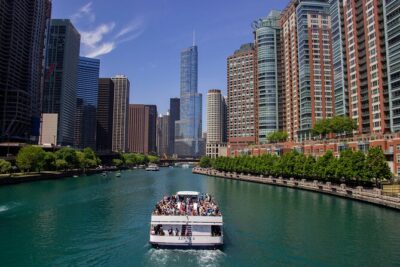
Chicago River 45-Minute Architecture Tour from Magnificent Mile
Read our review →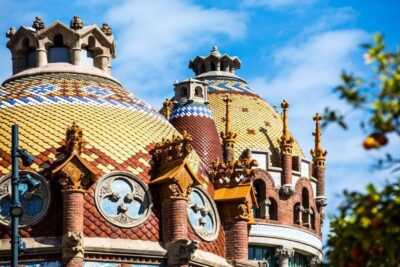
Barcelona: Sant Pau Recinte Modernista Entry Ticket
Read our review →