Review · ARCHITECTURE TOURS
Tour about Art and Architecture in Maputo City
Maputo’s story comes together through artists, architecture, and everyday city life on this compact walking tour. You move from working art studios to a former colonial-era building, a craft market, an Orthodox church, and a grand hotel with sea views. Guide Ercilio brings local knowledge and personal connections, including access to artists at Núcleo de Arte.
I like the chance to meet a local artist rather than simply look at finished objects behind glass. I also like the route’s range: FEIMA adds food and crafts, while Vila Algarve and the city’s religious and hotel architecture give the walk a historical backbone. The main consideration is that private transport and an air-conditioned vehicle are not included, so you should be ready to walk outdoors in Maputo’s weather.
Key points at a glance
- Meet artists at Núcleo de Arte: Spend time at the artists’ association and its galleries, with a chance to interact with some of Mozambique’s best-known artists.
- Connect buildings to politics: Vila Algarve provides a setting for discussing colonial architecture and the Mozambican revolution.
- Browse FEIMA’s national craft display: See handmade goods brought from different parts of Mozambique, along with local cuisine.
- Finish with two major landmarks: The Orthodox Church and Polana Serena Hotel show two very different sides of Maputo’s built environment.
- Small enough to stay personal: The maximum group size is 25 people, and Ercilio’s local connections are a central part of the experience.
- A short route with variety: The tour lasts about two and a half hours, making it a useful introduction rather than an all-day city survey.
Why this Maputo walk is different
Many city tours give you a string of façades and dates. This one tries to explain how Maputo feels through the people who make its art, the buildings shaped by colonial rule, and the markets where local products are still sold.
That mix is the real strength. You are not spending the full two and a half hours in a museum or looking at monuments from the outside. Instead, the route moves between creative spaces, public places, and landmark buildings. Each stop is fairly short, but together they give you several ways to read the city.
Ercilio is the guide named for this experience. His focus is not limited to architecture. He brings knowledge of art, art history, and local life, and he has been praised for being well connected in the city. That matters most at Núcleo de Arte, where the visit can become a direct meeting with working artists rather than a standard gallery stop.
The tour is also a good fit if you want context without committing to a full-day program. You get a clear starting point at the Natural History Museum area and finish at the Polana Serena Hotel, leaving you in a useful part of Maputo for lunch, an onward walk, or a taxi.
A few more architecture tours around the world worth a look
- Chicago Architecture River Cruise
★ 5.0 · 15,756 reviews - Chicago River 90-Minute Architecture Tour
★ 4.5 · 9,629 reviews - Chicago River: 1.5-Hour Guided Architecture Cruise
★ 4.8 · 8,046 reviews
Starting at Núcleo de Arte with working artists
The first stop is Núcleo de Arte, the association and gallery space linked with some of Mozambique’s most respected artists. You have about 20 minutes here, with admission included.
The important point is that this is presented as an active artists’ space, not just a room filled with old objects. You can expect to see gallery work and, depending on who is present, interact with artists connected to the association. A direct meeting adds something a guidebook cannot provide: you can ask about the work, the local art scene, and the ideas behind the pieces.
This is likely to be the most personal part of the walk. One of the strongest features of Ercilio’s guiding is his connection to the local creative community, and the opportunity to meet an artist has been singled out as a highlight of the experience.
Twenty minutes is enough for an introduction, but not enough for a long gallery visit. If you are deeply interested in contemporary African art, you may want to ask Ercilio whether there is time to return later on your own. The tour’s aim here is contact and orientation, not an exhaustive survey of every artist or exhibition.
Reading colonial power at Vila Algarve
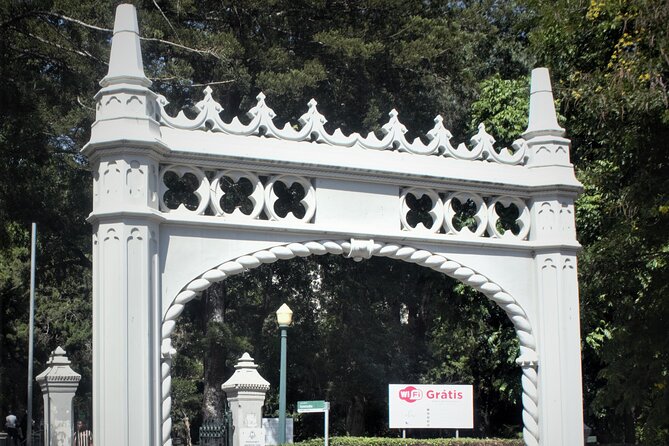
The next stop, Vila Algarve, lasts about 25 minutes. The building provides a way to discuss architecture alongside the political past of Mozambique.
The conversation includes the building’s design and the history of the Mozambican revolution during the colonial period. That pairing is useful. Architecture can look decorative or simply old when you do not know who commissioned it, how it was used, or what political system it represented. A guide can help you see the building as part of a larger story about colonial control and the struggle that followed.
This stop should appeal to anyone who wants more than surface-level sightseeing. It connects a physical place to a major turning point in Mozambique’s past.
Do not expect an extended museum visit here. The listed time is short, and the value comes mainly from Ercilio’s explanation. The building itself is important, but the historical framing is what makes the stop worthwhile.
FEIMA, where crafts and food meet
FEIMA, the Feira de Artesanato, Flores e Gastronomia, receives the longest visit, about one hour. This is the tour’s most practical stop if you want to see what Mozambique’s makers and food sellers put in front of visitors.
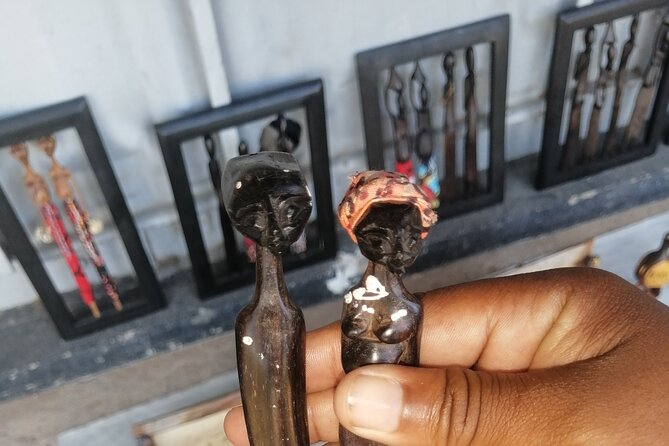
The market brings together crafts from different parts of Mozambique. That gives you a broader view than a single shop or hotel display. You might find objects representing several regional traditions in one place, and you will have time to browse rather than make a hurried pass through a stall-lined street.
The food element matters too. The tour description includes local cuisine, and the general overview refers to food and drinks as part of the experience. Still, you should treat this as a chance to find and sample local food rather than assume a full meal or tasting menu is included. The stated inclusions cover fees and taxes, not food purchases.
An hour is a sensible amount of time here. You can look carefully, ask questions, consider buying a craft, and take in the market atmosphere without feeling rushed. If you plan to shop, bring a little flexibility. The tour is not designed as a dedicated shopping trip, but FEIMA is the place where you will have the most room to browse.
There is also a value question here. A market visit costs nothing to enter, yet a guide gives you a better sense of what you are seeing and how it connects to Mozambique’s wider culture. You still decide what to buy and pay for separately, so the $40 tour price is paying for the guided route and interpretation, not a bundle of souvenirs.
Same city, a completely different century:
- Chicago Architecture Center River Cruise aboard First Lady
★ 5.0 · 5,536 reviews - Chicago: Architecture River Cruise Skip-the-Ticket Line
★ 4.8 · 4,325 reviews - Chicago River 45-Minute Architecture Tour from Magnificent Mile
★ 4.5 · 2,924 reviews - Barcelona: Sant Pau Recinte Modernista Entry Ticket
★ 4.6 · 2,567 reviews
A brief look at Maputo’s Orthodox Church
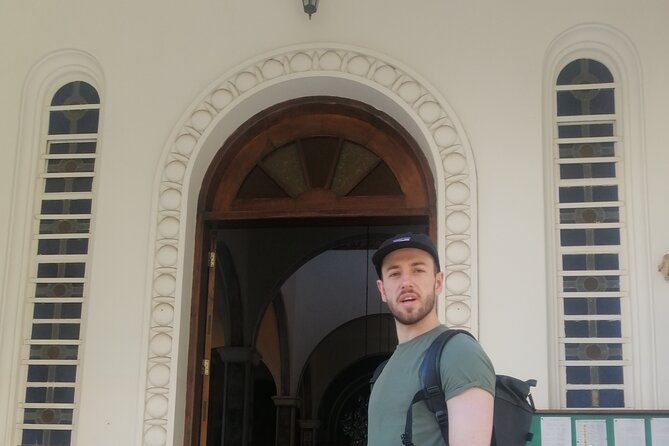
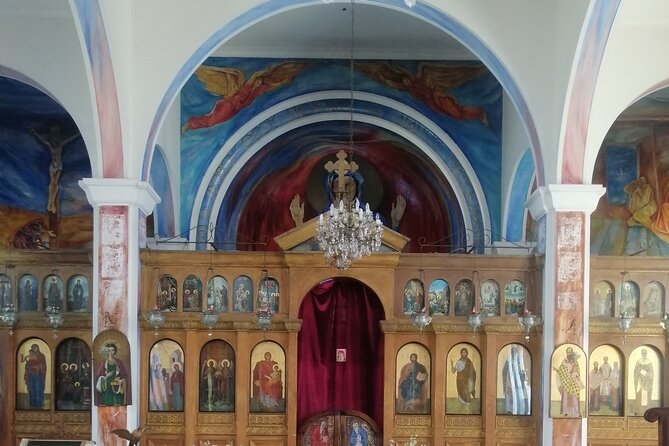
The fourth stop is the Maputo Orthodox Church, with about 15 minutes set aside for it. The supplied details do not specify an interior visit, so you should expect a short architectural and cultural stop rather than a long service or church tour.
Its place in the route helps show that Maputo’s identity is not limited to one religious or colonial tradition. After the art association, political history, and craft market, the church adds another layer to the city’s public architecture.
Fifteen minutes is enough for an introduction and photographs if permitted, but it is not much time for quiet reflection or detailed study. If religious architecture is your main interest, this will feel like a brief chapter in a broader walk rather than the central event.
Ending at Polana Serena Hotel
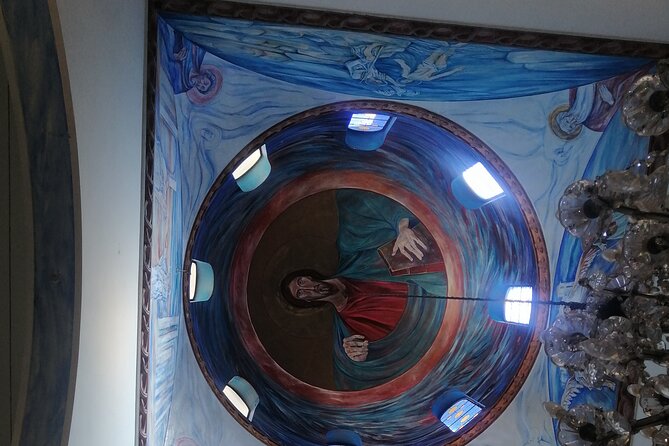
The tour finishes at the Polana Serena Hotel on Avenida Julius Nyerere. You spend about 20 minutes at this Victorian-style building, noted for its art collection and privileged sea view.
This is a strong final stop because it changes the mood of the route. Núcleo de Arte shows contemporary creative work in an artists’ setting. Polana Serena offers a more formal architectural environment, with a grand style and a collection of art within the hotel.
The sea view gives the stop an obvious visual payoff, but the building’s design is the main reason it belongs on an art and architecture tour. You get to consider how a major hotel can function as both a landmark and a place where art is displayed.
The tour ends here rather than returning to the starting point. That is convenient if you want to continue exploring the Polana area, but it is worth planning ahead if you need to collect luggage, return to a hotel, or meet transport elsewhere. The end point is Polana Serena Hotel, 1380 Avenida Julius Nyerere.
What the $40 price gives you
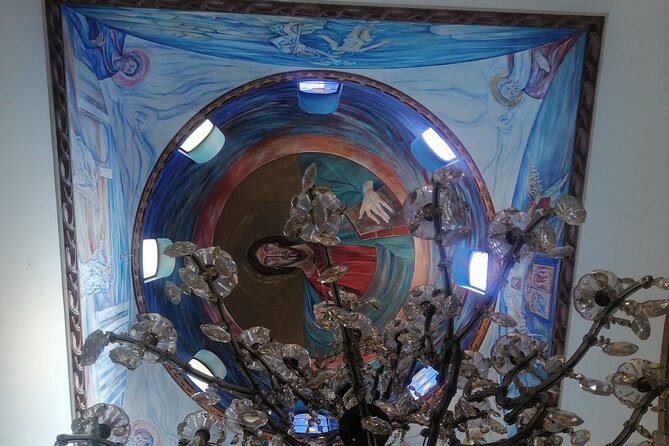
At $40 per person, this is not the cheapest way to simply walk past Maputo’s buildings. It is better judged as a guided introduction to the city’s creative and historical side.
The fee includes all fees and taxes. It does not include private transportation or an air-conditioned vehicle. Since the route is described and experienced as a walk, the price is mainly for Ercilio’s time, explanations, local connections, and the organization of the route.
The strongest value comes from Núcleo de Arte. If you visited the galleries alone, you might see the work but miss the chance to meet an artist or understand the association’s role. The guide’s local connections can turn a short stop into the most memorable part of the morning.
FEIMA also adds value because it gives you a place to see crafts and local food in one setting. You should budget separately for anything you want to eat or buy. That keeps the price clear, but it means the advertised $40 is not an all-inclusive spending budget.
For a first visit to Maputo, I think the price is reasonable if you care about context and personal contact. If you only want a quick list of major sights, you may find the same route too slow at some stops and too brief at others.
Walking, weather, and group size
The experience lasts approximately two hours and 30 minutes. That is long enough to require comfortable shoes and some attention to the weather, but short enough to fit into a morning or afternoon.
No private transport is provided, and there is no air-conditioned vehicle. Plan for an outdoor city walk, with stops in buildings and market spaces along the way. One account of a morning with Ercilio included both sun and rain, so a small umbrella or light rain layer is a sensible precaution when conditions look unsettled.
The maximum group size is 25 people. That is not an intimate private tour, but it is still limited enough to keep the route manageable. The experience will feel most personal if the group is smaller, especially at Núcleo de Arte, where conversations with artists work better when everyone can hear.
The starting point is the Museu de Historia Natural, at Travessia de Zambeze in Maputo. The area is near public transportation. The end point is Polana Serena Hotel, so you should think of the experience as a point-to-point walk, not a loop back to the museum.
Most people can participate, according to the supplied booking information. No special physical requirements are stated, but the absence of private transport means you should be comfortable walking between stops.
Who will get the most from this experience
I would choose this tour if you want to understand Maputo through several connected subjects rather than focus on one museum or monument.
It suits you especially well if you:
- Like meeting artists and seeing creative work in a working local setting
- Want colonial architecture explained alongside Mozambique’s political history
- Enjoy browsing crafts and learning about local food
- Prefer a guide with city connections instead of a purely scripted route
- Have only a few hours and want a useful orientation
- Are happy to walk outdoors without an air-conditioned vehicle
It may be less suitable if you need a fully vehicle-based tour, want a long museum visit, or expect food tastings and shopping to be included in the price. The itinerary moves quickly, and the church and Vila Algarve stops are short.
The experience also works well for returning visitors who have already seen the main city center and now want more contact with local art. Ercilio’s links to artists are a stronger reason to book than the simple act of ticking off five sights.
Booking details worth knowing
Confirmation is provided at the time of booking, and the ticket is mobile, so you can keep the booking on your phone rather than print it.
The tour has free cancellation if you cancel at least 24 hours before the local start time. Cancelling less than 24 hours before the start, or making changes inside that window, does not qualify for a refund.
Since the meeting point and end point are different, check both addresses before you set out. Start at Museu de Historia Natural and finish at Polana Serena Hotel. The route’s point-to-point design is useful, but only if it fits your plans for the rest of the day.
Should you book this Maputo art and architecture tour?
Book it if you want a human-scale introduction to Maputo, especially one that gives art and local connections as much attention as famous buildings. Núcleo de Arte and the chance to meet a local artist are the biggest reasons to choose it, while FEIMA adds a practical look at crafts and food.
The tour is also a good match for anyone who likes history explained on location. Vila Algarve connects architecture with the colonial period and the Mozambican revolution, while the church and Polana Serena broaden the picture.
Think twice if you dislike walking in changing weather, need private transport, or want every food cost included. But if you can manage a two-and-a-half-hour outdoor route and want more than a quick photo stop, the $40 price buys a thoughtful introduction led by Ercilio, with several experiences you would be unlikely to connect on your own.
FAQ
How much does the tour cost?
The tour costs $40 per person.
How long does the experience last?
It lasts approximately two hours and 30 minutes.
Where does the tour start?
The meeting point is Museu de Historia Natural, 2HFP+4Q7, Travessia de Zambeze, Maputo, Mozambique.
Where does the tour finish?
The tour ends at Polana Serena Hotel, 1380 Avenida Julius Nyerere, Maputo, Mozambique.
Is transportation included?
No. Private transportation and an air-conditioned vehicle are not included.
What is included in the price?
All fees and taxes are included. Food, drinks, purchases, and private transportation are not listed as included.
What is the maximum group size?
The experience has a maximum of 25 participants.
Can I cancel for a full refund?
Yes. You can receive a full refund if you cancel at least 24 hours before the experience start time. Cancellations within 24 hours are not refunded.
Is the tour suitable for most people?
The booking information says most people can participate, and the route is near public transportation. The experience does involve walking between stops, and no private vehicle is provided.
Just added around the world
- Wilmington History and Architecture Tour★ 4.8 · 18 reviews
- Washington, DC: Georgetown Architecture Walking Tour★ 5.0 · 8 reviews
- New Orleans : Garden District Architecture Walking tour★ 4.8 · 5 reviews
- Washington DC: Dupont Circle & Embassy Row Architecture Tour★ 5.0 · 6 reviews
- Vicenza: discovering the city of Palladio by e-bike★ 5.0 · 4 reviews
- Vicenza: Palladian Architecture Private Walking Tour★ 3.3 · 3 reviews
- Walk & Discover KL’s Architectural and Heritage Gems★ 5.0 · 7 reviews
- Unveiling Brno: History, Culture & Architectural Delights★ 5.0 · 2 reviews
Architecture Tours, compared.
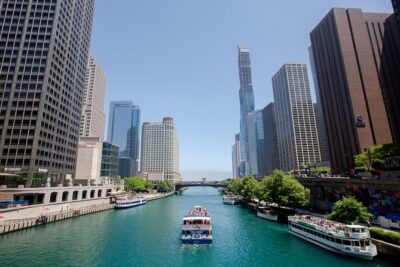
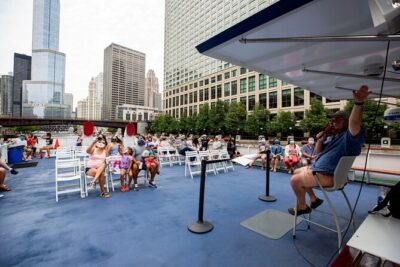
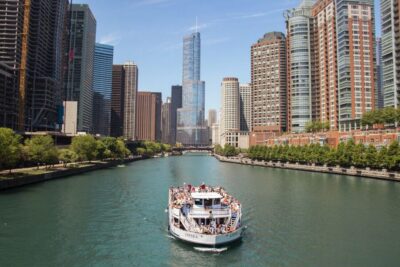
Chicago River: 1.5-Hour Guided Architecture Cruise
Read our review →
Chicago Architecture Center River Cruise aboard First Lady
Read our review →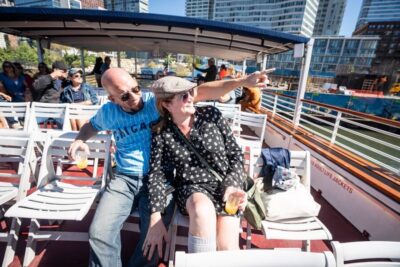
Chicago: Architecture River Cruise Skip-the-Ticket Line
Read our review →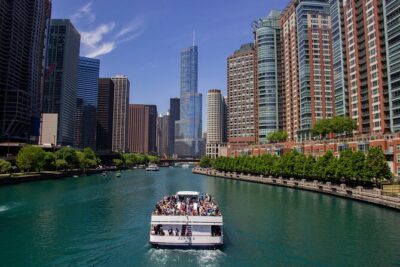
Chicago River 45-Minute Architecture Tour from Magnificent Mile
Read our review →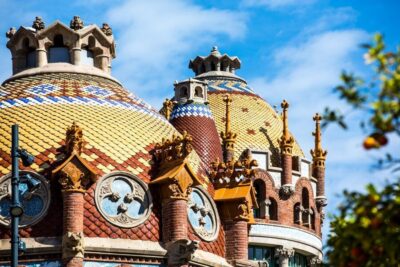
Barcelona: Sant Pau Recinte Modernista Entry Ticket
Read our review →