Review · ARCHITECTURE TOURS
Lisbon Contemporary Architecture
Lisbon’s modern side comes into sharp focus on this private four-hour tour. You move from the sculptural Champalimaud Foundation and the bold Belém Cultural Center to MAAT and the rebuilt waterfront of Parque das Nações. It is a useful counterpoint to Lisbon’s tiled churches and old stone streets.
I like the private format, since guide Nelson Leona can shape the outing around your interests. I also like the mix of architecture, urban planning, and river views, with the Parque das Nações cable car included. The main drawback is price: at $181.39 per person, this is a serious spend, and MAAT admission is not included.
Key Points at a Glance
- A private look at modern Lisbon: Your group has the guide to itself, rather than joining a large coach tour.
- Guide Nelson Leona: He is fluent in English, personable, polite, and able to tailor the visit to your preferences.
- Four major stops: See the Champalimaud Foundation, Belém Cultural Center, MAAT, and Parque das Nações.
- MAAT from the outside and inside: The museum’s famous curved form is included in the route, but admission costs extra.
- Cable car included: Ride above Parque das Nações for a broad view of its modern buildings and the Tagus.
- A strong choice for architecture fans: This is less about ticking off old Lisbon sights and more about seeing how the city changed in recent decades.
Why This Tour Shows a Different Lisbon
Most first visits to Lisbon focus on Alfama, Belém’s historic monuments, and the city’s lookout points. Those places deserve their time, but this tour asks you to look at another Lisbon, one shaped by research, culture, technology, and large-scale redevelopment.
The route links two very different waterfront areas. Belém carries Portugal’s maritime memory, with the Tower of Belém and the riverfront tied to the country’s seafaring past. Parque das Nações, by contrast, presents a newer vision of the city, built around striking public buildings, transport links, and open space.
I find that contrast especially useful. You are not simply looking at isolated buildings. You are seeing how architects worked within old neighborhoods, former industrial areas, and newly planned districts.
The experience lasts about four hours and is private, which matters here. Contemporary architecture often benefits from explanation. A building can look unusual in a photograph, but a good guide helps you notice its materials, purpose, setting, and relationship to nearby structures.
Nelson Leona is named as the guide for this experience. He speaks fluent English and has been described as courteous and personable, with a strong grasp of Lisbon and Portugal. The tour can also be adjusted to your preferences, a helpful feature if you care more about museums, public buildings, waterfront design, or photography.
A few more architecture tours around the world worth a look
- Chicago Architecture River Cruise
★ 5.0 · 15,756 reviews - Chicago River 90-Minute Architecture Tour
★ 4.5 · 9,629 reviews - Chicago River: 1.5-Hour Guided Architecture Cruise
★ 4.8 · 8,046 reviews
The Champalimaud Foundation and the Architecture of Therapy
The first major architectural stop is the Champalimaud Foundation, also known as the Center of Research into the Unknown. It faces the Tagus and occupies a striking position between Belém’s national symbols and the Dock of Rocks.
The building was designed by Charles Correa. Its aim is not simply to provide offices and laboratories. The architecture is meant to support the foundation’s work in biomedical research, while also creating a setting tied to beauty, reflection, and healing.
That purpose gives the building more weight than a quick photo stop. Its form is intended to rise from practical research facilities toward something more sculptural. You can consider how a research center presents itself to the public and how design might affect the people who work there or visit for treatment.
The setting does much of the work. With the Tagus directly ahead, the foundation has an open waterfront position that contrasts with the compact streets of central Lisbon. At the same time, it sits near some of the city’s most recognizable historic symbols.
I like this early stop because it establishes the main theme of the tour: modern architecture does not need to erase the past. Instead, it can sit beside older landmarks and create a conversation between different periods.
The information provided does not specify an interior visit or admission to the foundation, so you should think of this primarily as an architectural stop. Nelson’s role is important here. The building’s meaning comes from its purpose as much as from its appearance, and a guide can help connect those two sides.
Belém Cultural Center Beside the Old City
The Belém Cultural Center, commonly known as CCB, brings a different kind of modern design to the route. Designed by Manuel Salgado and Vittorio Gregotti, it is one of Lisbon’s major modern cultural buildings.
Its location is part of the experience. Belém is full of landmarks associated with Portugal’s past, yet the cultural center uses modern forms and large-scale planning. The contrast is not harsh. Instead, the building creates a measured visual shift from old Lisbon to new Lisbon.
This is one of the tour’s more useful urban-design lessons. You can see how a modern cultural institution was placed in an area already filled with historic importance. The building does not try to imitate old architecture, but it also does not exist in isolation from it.
The tour summary does not list a ticket or a scheduled interior program at the cultural center. That means the focus is likely on the building, its setting, and its role in Belém. If you want to spend time inside cultural venues, ask Nelson what can fit during your four hours.
For me, this stop works best when viewed as part of the sequence. The Champalimaud Foundation has a research and medical purpose. The Belém Cultural Center has a cultural purpose. Both use modern architecture to give public life a physical home.
MAAT and the Curved Tagus Waterfront
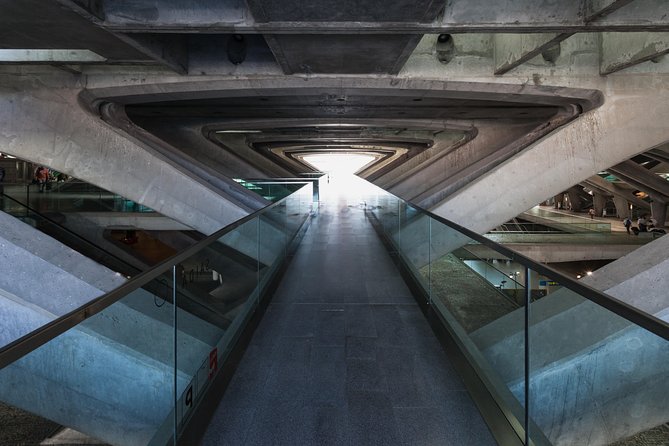
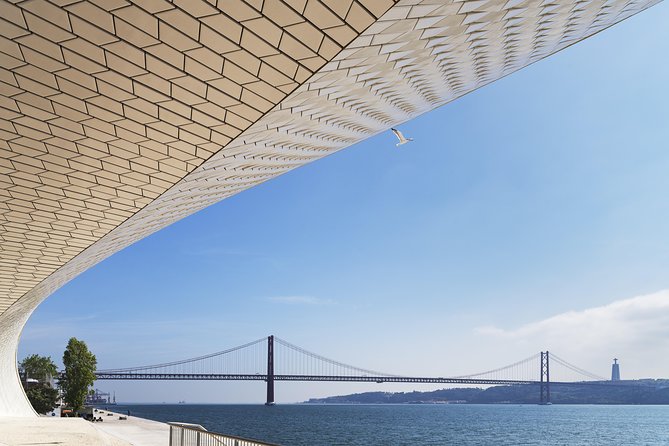
MAAT, the Museum of Art, Architecture and Technology, is the most immediately recognizable stop for many people. Its low, arching structure follows the Tagus and looks less like a conventional museum than a piece of the riverfront itself.
The building was designed by Amanda Levete Architects. Its curved form is covered with 15,000 glazed tiles, and the roof is designed as a place where you can walk above the museum. That roofline helps connect the building with the promenade, rather than treating it as a box set apart from the river.
Inside, MAAT brings art, architecture, and technology together. The stated purpose is not limited to displaying objects. It is meant to create space for debate, discovery, critical thinking, and international dialogue.
MAAT also connects with the Central Tejo Power Station, one of Portugal’s notable examples of industrial architecture from the first half of the 20th century. This pairing is one of the museum’s strongest ideas. You get a newer, flowing structure beside an older industrial building, with both contributing to the identity of the museum.
The tour includes about one hour at MAAT, but the admission ticket is not included. That point matters when you compare the cost with other Lisbon sightseeing options. You will see the building as part of the tour, but if you want to enter the museum, you need to pay separately.
I would ask yourself what you want from this stop. If you mainly want the exterior, photographs, the riverfront, and an explanation of the design, the guided visit may be enough. If you want exhibitions and the Central Tejo Power Station, budget extra time and money for admission.
The outside is also worth attention. Look at how the tiled surface changes with light and how the building bends toward the river. The design is strongest when you treat it as part of the public walkway, not just as a museum façade.
Same city, a completely different century:
- Chicago Architecture Center River Cruise aboard First Lady
★ 5.0 · 5,536 reviews - Chicago: Architecture River Cruise Skip-the-Ticket Line
★ 4.8 · 4,325 reviews - Chicago River 45-Minute Architecture Tour from Magnificent Mile
★ 4.5 · 2,924 reviews - Barcelona: Sant Pau Recinte Modernista Entry Ticket
★ 4.6 · 2,567 reviews
Parque das Nações and Lisbon’s Planned Future
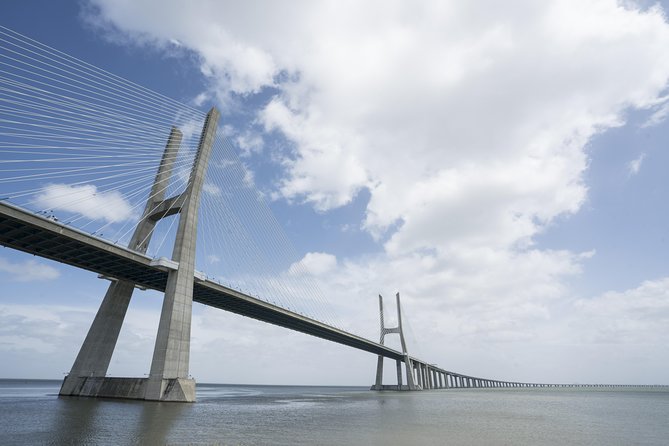
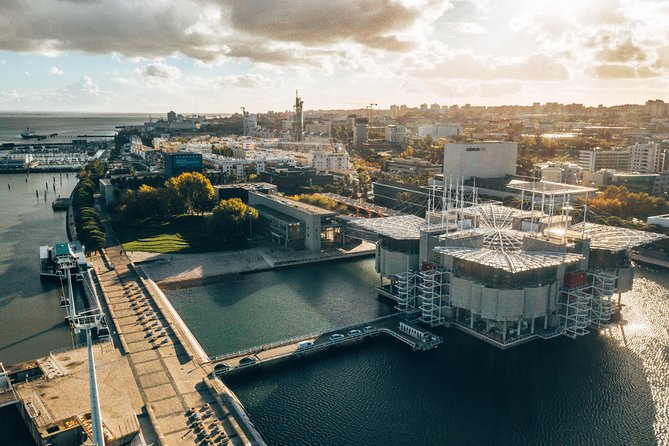
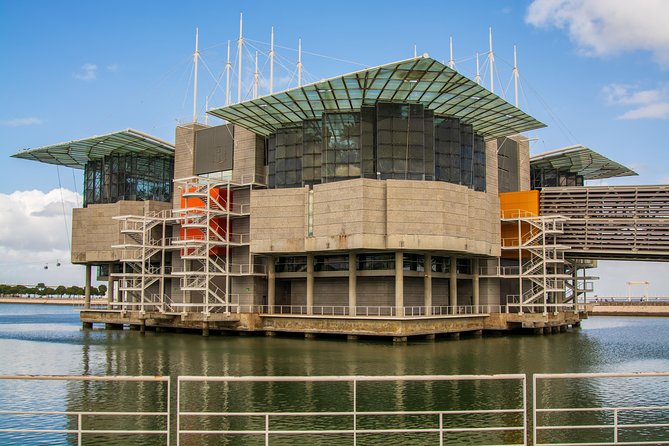
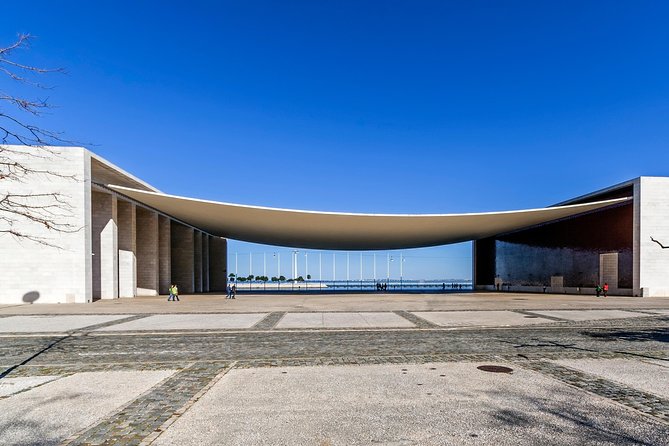
The second hour-long stop takes you to Parque das Nações, an area planned as a new part of the city. This is the clearest expression of Lisbon’s late 20th-century architectural ambition.
The district includes several notable buildings:
- Portuguese Pavilion
- Atlantic Pavilion
- Knowledge Pavilion
- Vasco da Gama Tower
- Oriente Station
Each represents a different answer to the question of what a modern city should look like. The area was planned with architecture as a central concern, so the buildings take varied forms instead of following one repeated style.
This is where the tour moves beyond individual buildings and into city planning. You can look at how a large waterfront district was organized and how public buildings, transport, and open areas work together.
The included cable car gives you a useful change in viewpoint. From above, you can see the arrangement of the district and the relationship between its buildings and the Tagus. The ride is a practical addition to the tour because architecture is easier to understand when you can see the whole area at once.
The cable car is included in the price, unlike MAAT admission. That helps offset some of the tour cost, although the overall price remains high at $181.39 per person.
Parque das Nações will appeal most to you if you enjoy contemporary buildings, public spaces, and urban planning. If your idea of Lisbon is mainly tiled façades, narrow lanes, and old churches, this district may feel less intimate. That is not a flaw, but it is a clear difference in mood.
The area also gives the tour a strong ending. Belém shows modern buildings set among historic monuments. Parque das Nações shows a purpose-built district where newer architecture shapes the identity of the entire neighborhood.
What the Private Format Adds
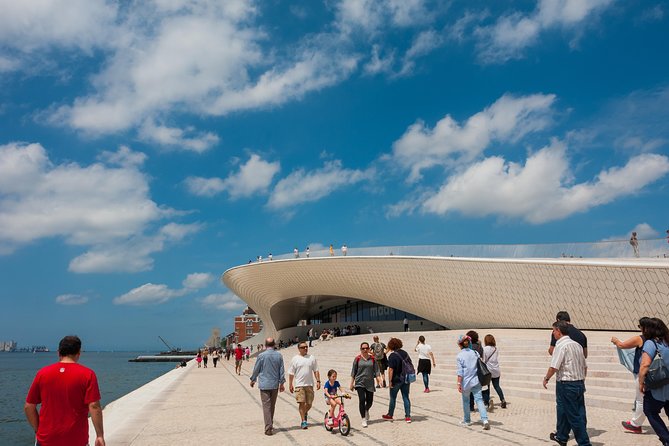
This is a private activity, so only your group takes part. That changes the pace and the conversation. You are not trying to hear a guide over a crowd or waiting for a large group to gather before moving on.
The ability to customize the route is especially useful for architecture. You may want more time at MAAT, a stronger focus on Charles Correa, or more discussion of Parque das Nações and its public buildings. Nelson can adjust the emphasis around your interests.
The available comments describe Nelson as friendly, courteous, fluent in English, and well informed about Lisbon and Portugal. One specific point is that he customized the trip to suit personal preferences. That is the kind of detail I value more than a long list of standard sightseeing claims.
Still, a private tour is not automatically good value for every budget. At $181.39 per person, the cost makes more sense for couples, families, or small groups who want a dedicated guide and do not want to piece together the route themselves.
Group discounts are available, though the exact discount is not given. If you are traveling with several people, check the final group price before booking. The private format may become more reasonable when the cost is shared across a larger party.
Timing, Tickets, and Practical Details
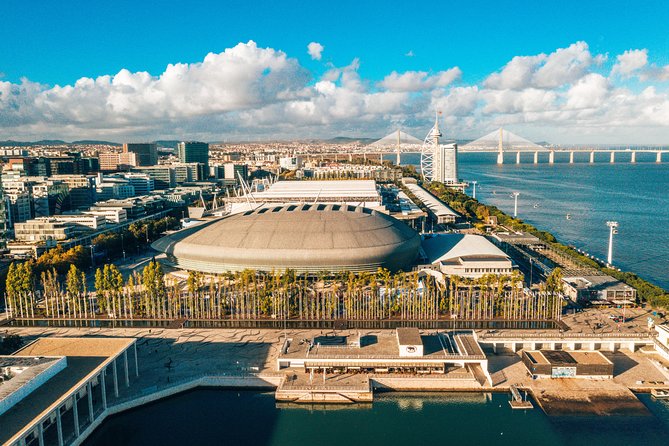
The experience takes about four hours and operates Monday through Sunday between 7:00 AM and 8:00 PM during the stated operating period. The exact starting point is in Lisbon, and the activity ends back at the meeting point.
Because the meeting information only identifies Lisbon rather than a specific street or landmark, confirm the precise pickup location when you book. The tour is near public transportation, but no particular transit route is supplied.
MAAT admission is not included. The Parque das Nações cable car is included, so you should separate those two costs when planning your day.
Most people can participate, and service animals are allowed. Confirmation is provided at booking. Free cancellation is available if you cancel at least 24 hours before the start time. Changes or cancellations inside that window are not accepted for a refund.
The tour is offered in English. Since the guide is fluent in English, this is a practical option if you want architectural explanations without a language barrier.
Who Will Get the Most From This Experience
I would choose this tour if you have already seen Lisbon’s main historic sights or if modern design is one of your main interests. It is also a good fit if you want a guide to connect buildings with their purpose and setting, rather than simply point them out.
It suits:
- Architecture and design enthusiasts
- Visitors interested in museums and cultural buildings
- Photographers looking for unusual forms and waterfront views
- First-time visitors who want a different side of Lisbon
- Families or small groups who prefer a private guide
- People who want an organized route between Belém and Parque das Nações
I would think twice if you have only a short time in Lisbon and have not yet visited the city’s major historic sights. You may prefer to spend four hours in Alfama, central Lisbon, or traditional Belém first.
I would also compare the price with your plans for MAAT. Since museum admission is extra, the total cost will be higher if you want to visit the exhibitions and power station. The tour is strongest as a guided architecture experience, not as an all-inclusive museum ticket.
Should You Book the Lisbon Contemporary Architecture Tour?
Book it if you want Lisbon explained through its modern buildings, not just its famous old ones. The private format, English-speaking guide Nelson Leona, included cable car ride, and carefully chosen waterfront route give you a focused way to see the city’s newer identity.
The price is the main hurdle. At $181.39 per person, you are paying for private attention and a tailored route, not a long list of admission tickets. If that suits your budget, this is a smart choice for design-minded visitors who want context and flexibility.
Skip it if your priority is low-cost sightseeing or historic Lisbon. Choose it if you want to understand why MAAT curves toward the river, how the Champalimaud Foundation uses architecture to support its mission, and how Parque das Nações was planned as a new city within the city.
FAQ
How long does the Lisbon Contemporary Architecture tour last?
The tour lasts approximately four hours.
Is this a private tour?
Yes. Only your group participates in the activity.
Is the tour offered in English?
Yes. The experience is offered in English, and guide Nelson Leona is fluent in English.
Is MAAT admission included?
No. Admission to MAAT is not included in the tour price.
Is the Parque das Nações cable car included?
Yes. The round-trip cable car ride in Parque das Nações is included.
Can I cancel for a full refund?
Yes, if you cancel at least 24 hours before the experience start time. Cancellations or changes made less than 24 hours before the start time are not accepted for a refund.
Just added around the world
- Wilmington History and Architecture Tour★ 4.8 · 18 reviews
- New Orleans : Garden District Architecture Walking tour★ 4.8 · 5 reviews
- Washington, DC: Georgetown Architecture Walking Tour★ 5.0 · 8 reviews
- Washington DC: Dupont Circle & Embassy Row Architecture Tour★ 5.0 · 6 reviews
- Vicenza: discovering the city of Palladio by e-bike★ 5.0 · 4 reviews
- Vicenza: Palladian Architecture Private Walking Tour★ 3.3 · 3 reviews
- Walk & Discover KL’s Architectural and Heritage Gems★ 5.0 · 7 reviews
- Unveiling Brno: History, Culture & Architectural Delights★ 5.0 · 2 reviews
Architecture Tours, compared.
Chicago River: 1.5-Hour Guided Architecture Cruise
Read our review →
Chicago Architecture Center River Cruise aboard First Lady
Read our review →
Chicago: Architecture River Cruise Skip-the-Ticket Line
Read our review →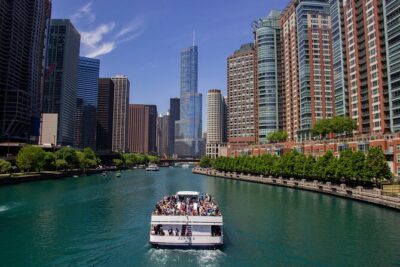
Chicago River 45-Minute Architecture Tour from Magnificent Mile
Read our review →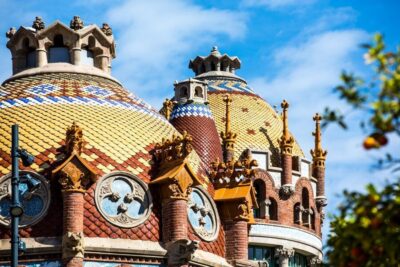
Barcelona: Sant Pau Recinte Modernista Entry Ticket
Read our review →