
Review · BUDAPEST
Buda Castle Tour: History and Architecture
Buda Castle is far more than a grand palace on a hill. This three-and-a-half-hour walking tour traces royal power, medieval trade, Jewish life, Ottoman conflict, and 20th-century rebuilding through the actual streets and ruins of the Castle District. Guide Matthew, also called Máté, brings an archaeology and history background, and uses images on an iPad to show how vanished buildings once looked.
I especially like the route through Tárnok Street and Úri Street, where medieval homes and gateways tell you how ordinary merchants and noble families lived. I also like the Jewish prayer house, a modest but meaningful survival that gives the district a human story beyond kings and battles. The main drawback is clear: you do not tour inside the Royal Palace, Matthias Church, or the upper terrace of Fisherman’s Bastion, and the walk is not suitable for anyone with limited mobility.
Key points to know before booking
- A history and architecture walk, not an indoor palace tour: Most of the experience takes place outdoors among streets, walls, ruins, and façades.
- Matthew or Máté leads the tour: His archaeology and history training, visual material, and enthusiasm add useful context to buildings that can otherwise look like a jumble of styles.
- The medieval Jewish prayer house is included: This is the only listed indoor admission and is closed on Saturdays and Mondays.
- The route covers 16 stops: You see the Royal Palace, old merchant streets, noble houses, the Finance Ministry, medieval ruins, siege sites, and Fisherman’s Bastion.
- Small groups keep the walk personal: The maximum is 12 people, a good size for questions and close attention.
- Plan for extra admissions: Matthias Church, the Royal Palace interior, and Fisherman’s Bastion’s upper terrace cost extra and are not part of the $43.25 price.
What this Buda Castle walk really covers
The name can make this sound like a standard castle tour. It is not. You will not spend the afternoon moving through royal rooms or museum galleries.
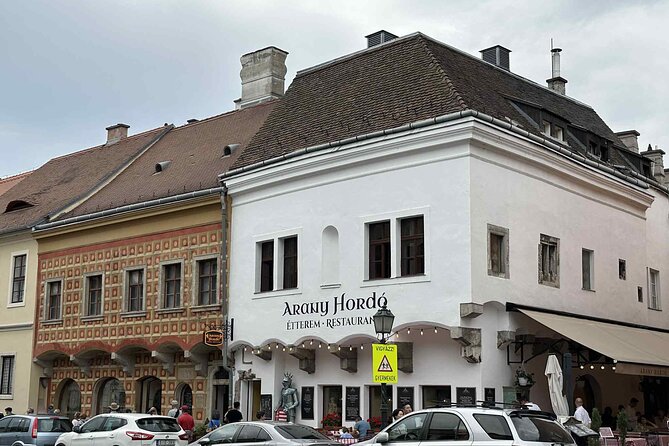
Instead, you walk through the Castle District as an open-air historical record. The guide links a Gothic foundation to a Baroque rebuilding, a medieval merchant house to a modern restaurant street, and a war-damaged government building to a disputed restoration. That approach suits you if you want to understand how Buda developed over many centuries, rather than simply photograph its best-known monuments.
The pace is roughly 16 stops in 3 hours and 30 minutes. Some are brief orientation points, while streets such as Tárnok, Úri, Országház, and Fortuna receive more attention. Since admission is free at most stops, the $43.25 fee mainly pays for the guide’s time, interpretation, research, and the small-group format.
More history tours in the world:
- Chicago in a Day: Food, History & Architecture Walking Tour
★ 5.0 · 1,153 reviews - Kuala Lumpur: Batu Caves & Historic Buildings Tour
★ 4.7 · 539 reviews - Charleston’s Best Highlights: History, Culture & Architecture
★ 5.0 · 422 reviews
The Royal Palace and Sigismund’s medieval chapel
The walk begins at the Statue of Prince Eugene of Savoy and moves toward Buda Castle. The first look at the Royal Palace takes about 20 minutes, enough to frame the building’s long career as fortress, royal residence, ruin, and rebuilt landmark.
You will hear how the palace changed as rulers and political powers changed. Medieval Gothic work gave way to Baroque and Neoclassical designs. Sieges and fires destroyed large sections, while later governments rebuilt the complex to fit new ideas about monarchy and national identity.
This is one of the best places for the guide’s visual material. A present-day courtyard or wall can be hard to read without help. Images showing earlier phases make the site easier to understand, especially when the surviving structure does not match the medieval palace in your imagination.
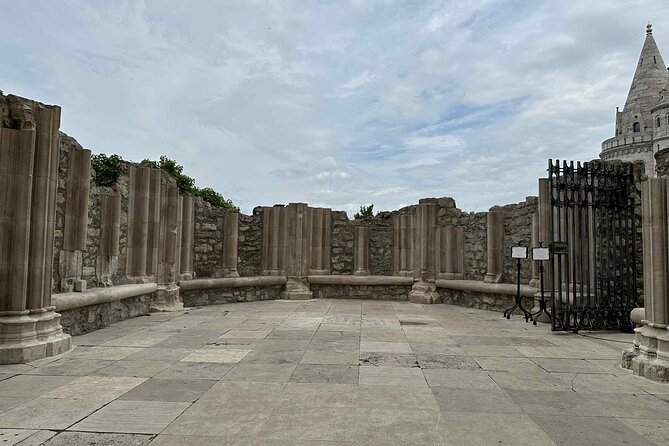
A short stop follows at the remains of the Sigismund Church. The foundations belong to a Gothic royal chapel built during King Sigismund’s expansion of the palace in the early 15th century. It is only a three-minute pause, but it gives you a physical marker for the period when Buda was being shaped into an imperial residence.
Do not expect a complete church or a dramatic interior here. The value is in seeing how much of the old palace complex survives at ground level, often as foundations rather than soaring walls.
Tárnok and Úri Streets: medieval life beyond the court
Tárnok Street was the commercial spine of medieval Buda’s burgher town. The walk shifts here from rulers to merchants, storage rooms, workshops, and homes.
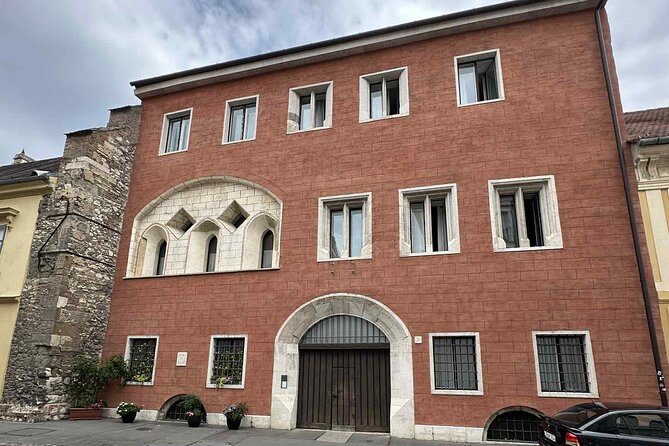
The street’s cobbled surface and old façades help, but the real interest is behind the visible fronts. You learn how goods were stored, traded, and displayed, and how merchant houses combined business space with domestic rooms. Three authentic buildings on original medieval foundations receive attention, giving the street more substance than a quick photo stop.
I like this section because it corrects the usual castle-city imbalance. Royal buildings get the grand views, but streets such as Tárnok explain how the city functioned day to day. Fire, siege, and rebuilding changed the upper façades, yet the older plan and foundations still guide the neighborhood.
Úri Street offers a different social picture. This was the quarter of noble residences and aristocratic houses, with thick walls and carefully designed gateways. The guide points out how the entrances signaled status and how medieval buildings changed as wealthy owners altered them over time.
The collection of medieval gateways is a special feature here. Look up and around the arches rather than walking quickly from one landmark to another. These entrances once received merchants, craftsmen, and visitors from across the kingdom. The stop lasts about 15 minutes, so ask questions if a particular doorway catches your eye.
Saint Mary Magdalene and the Italian Street
The Church of Saint Mary Magdalene has one of the most painful stories on the route. Its foundations reach back to the 13th century, and the church served the Hungarian-speaking population of the Castle District, in an area historically called Szombathely.
The church suffered major damage during the 1686 siege of Buda. Centuries later, the ruined structure was demolished under Hungary’s communist government in the 1950s. Archaeologists and preservationists saved the medieval tower, which now gives the site its lonely profile.
You spend about eight minutes here. Admission is not included, and the stop is mainly about the surviving tower, the vanished church, and the political choices that shaped what remains. It is a useful reminder that historic buildings can disappear long after the war that first damaged them.
Országház Street was known in medieval times as Italian Street. Italian merchants lived and worked here, helping make Buda a meeting point for commerce, diplomacy, and foreign influence.
The street also contains the Castle District’s only surviving 16th-century sgraffito decoration. Sgraffito is made by cutting through layers of plaster to reveal a contrasting surface below. It is a small detail, but it shows how Renaissance taste reached Buda and how much can survive in fragments.
A few more architecture tours around the world worth a look
- Chicago Architecture River Cruise
★ 5.0 · 15,756 reviews - Chicago River 90-Minute Architecture Tour
★ 4.5 · 9,629 reviews - Chicago River: 1.5-Hour Guided Architecture Cruise
★ 4.8 · 8,046 reviews - Chicago Architecture Center River Cruise aboard First Lady
★ 5.0 · 5,536 reviews
Government grandeur and Matthias Church
The former Royal Hungarian Ministry of Finance is a striking Neo-Gothic building from the early 20th century. Its design deliberately echoes the medieval district, though creating it required the demolition of several older structures.
World War II caused severe damage. After the war, the decorative façade was simplified, stripping away much of its original character. In the past five years, the façade has been reconstructed, restoring much of the building’s earlier appearance. The work has not been free of controversy, since part of one original wing was demolished during the project.
That makes this a useful stop for thinking about restoration. You are not looking at a purely medieval building, and you are not looking at a simple modern copy either. You are seeing a 20th-century monument rebuilt according to a current idea of the past.
The Church of the Assumption of the Buda Castle is usually called Matthias Church, though that common name is technically incorrect. The church was originally tied to Buda’s German-speaking community, and its history reflects the changing languages, faiths, and political powers of the district.
The tour pauses outside for about five minutes. Interior admission is not included, but you can visit independently after the walk. If you want to see the inside, leave time and budget for that extra visit rather than expecting it to be part of the guided experience.
Fortuna Street and Hungary’s first printed book
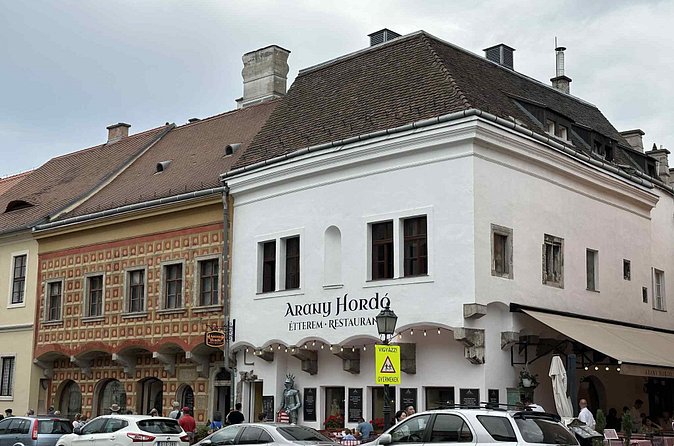
Fortuna Street now has restaurants and a calm, polished feel. Its medieval past was more aristocratic. Noble residences and grand townhouses lined the street, and in the 1470s it became associated with one of Hungary’s major printing milestones.
Andreas Hess, a German-born printer, produced Hungary’s first printed book here, the Chronica Hungarorum. The guide also points out the former site of the Red Hedgehog Inn, once a meeting place for travelers, merchants, and intellectuals.
This is a fine example of the tour’s wider method. A street is not treated as scenery alone. You get connections between architecture, trade, technology, and social life. The 15-minute stop gives you time to picture Fortuna Street as a place of new ideas, not only a row of elegant buildings.
Becsi Kapu, the Archives, and the siege of 1686
Becsi Kapu Square served as a marketplace and a main entrance to medieval Buda. Its past included Hungarian townspeople and the local Jewish community, who met here to trade, talk, and worship.
The stop is brief, about five minutes, but it helps you read the square as a public meeting place. The area is quieter now, so the guide’s historical explanation does much of the work.
Nearby, the National Archives of Hungary uses Neo-Romanesque design to echo the Castle District’s medieval character. Its stonework, arches, and solid form make it look older than it is. The building’s purpose adds another layer: it houses written records from across Hungary’s past.
At the outer walls, the route turns to the Siege of Buda in 1686. You see the place where Christian allied forces first breached the walls, and a nearby memorial honors the multinational soldiers who died during the city’s liberation. The memorial also recalls Abdurrahman Abdi Pasha, the Ottoman governor of Buda who fell in the fighting.
This is one of the more powerful outdoor sections. The wall is not just a scenic edge above the city. It is a military site where several empires and armies collided, and where the Ottoman period in Buda came to an end.
The medieval Jewish prayer house
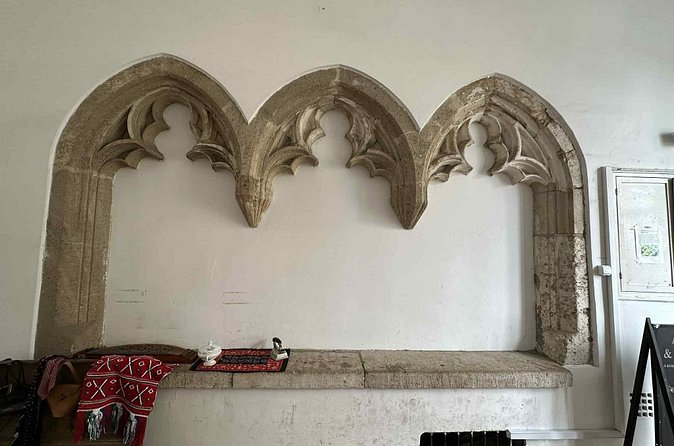
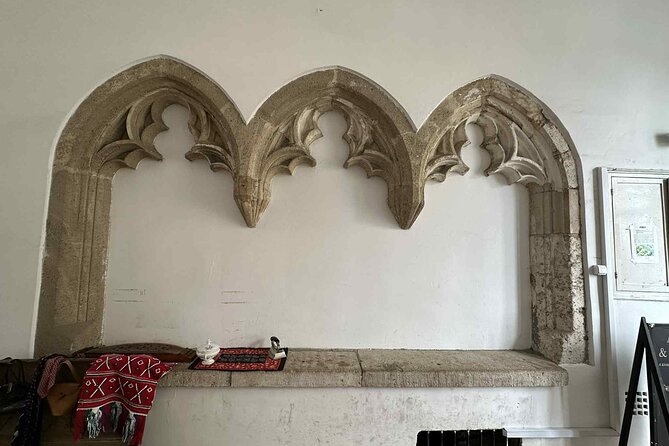
The walk then enters the area of the medieval Jewish quarter. You pause at the former Gothic synagogue site before entering the excavated medieval Jewish prayer house.
This is the only included admission on the route, and it gives the tour a quieter center. The prayer house is modest, but it offers a direct connection to the religious life of a community that once lived within the Castle walls.
The prayer house is closed on Saturdays and Mondays. Check your chosen date before booking, since the tour’s most distinctive indoor stop will not be available on those days. When open, it adds an important social and cultural dimension to a route otherwise dominated by royal power, military conflict, and elite architecture.
Táncsics Street and the Dominican monastery
On Táncsics Mihály Street, the guide points out how older Gothic ruins were reused inside Baroque and later residential buildings. Medieval walls and cellars were not always cleared away. They became part of new homes, often hidden behind later façades.
This is a practical way to understand Buda’s rebuilding after the Ottoman period. The city did not begin again on an empty site. New owners worked with whatever walls, foundations, and underground spaces remained.
At Dominikánus Udvar, you see the remains of the Dominican monastery of Saint Nicholas. The Dominican order is linked with Friar Julianus, whose 13th-century journey became one of the notable stories associated with the site.
The ruins later met a very modern challenge. When the Hilton Hotel was built in the 20th century, the medieval remains were incorporated into the project. The result brings old stone and modern architecture into direct contact. Some people will appreciate the contrast; others may find it an uneasy compromise. Either way, it gives you a concrete example of the choices made when a living city grows around fragile ruins.
Fisherman’s Bastion and the finish beside Matthias Church
The final major stop is Fisherman’s Bastion, where the tour examines the monument and the equestrian statue of Saint Stephen, Hungary’s first Christian king.
You remain on the main level. The upper panoramic terrace requires a separate ticket, so that cost is not part of the tour. This is worth knowing because many photos of Fisherman’s Bastion are taken from those higher viewing areas.
The tour ends at Szentháromság Square, beside Matthias Church. That is a useful finish because you can choose your next step without being rushed. You may visit the church interior, buy access to the upper bastion terrace, or simply spend more time around the square.
Price, group size, and physical demands
At $43.25 per person, the tour is a fair buy if you want a serious historical explanation rather than a quick orientation walk. The price does not cover major interiors, but it does include a licensed English-speaking guide, the Jewish prayer house admission when open, and a maximum group size of 12.
A small group matters here. Much of the route depends on noticing details in walls, foundations, gateways, and façades. A large crowd would make questions and close viewing harder. The guide’s iPad images also work better when you can gather around and compare the old view with the building in front of you.
You need moderate physical fitness. The experience is not suitable for people with limited mobility, and children under 10 are not permitted because of the physical and thematic nature of the walk. Wear practical shoes and prepare for a long period outdoors. The tour requires good weather, and if poor conditions cancel it, you receive a different date or a full refund.
The meeting point is the Statue of Prince Eugene of Savoy in Budapest 1013. Public transportation is nearby. The endpoint is beside Matthias Church, not back at the starting point, so plan your afternoon from the Castle District rather than assuming a return transfer.
Free cancellation is available up to 24 hours before the start time. Late cancellations and late changes are not accepted for a refund. The experience also requires a minimum number of participants, so a cancellation for that reason results in another date or experience, or a full refund.
Who should book this tour?
Book it if you enjoy history, architecture, archaeology, and walking through a city at a thoughtful pace. It is especially suitable if you want to understand the Castle District beyond its postcard views, or if you like asking detailed questions about buildings and vanished communities.
You should also book it if the Jewish prayer house, medieval merchant streets, and reused Gothic ruins sound as interesting as the Royal Palace. Those less famous places are where the tour earns its price.
Skip it if you mainly want palace interiors, a quick sightseeing circuit, or a panoramic photo stop. You will need separate tickets for Matthias Church, the Royal Palace interior, and the upper Fisherman’s Bastion terrace. For an outdoor history walk led by Matthew or Máté, with strong attention to architecture and archaeological detail, this is a focused and worthwhile way to spend an afternoon in Buda.
FAQ
How long does the Buda Castle tour last?
The tour lasts approximately 3 hours and 30 minutes.
What language is the tour offered in?
The tour is offered in English and includes an officially licensed English-speaking guide.
Does the tour enter the Royal Palace?
No. The tour discusses the Royal Palace from the outside and does not include admission to its interior. You may visit the interior independently after the tour.
Is Matthias Church included?
No. Admission to the interior of Matthias Church is not included, but you can visit it independently after the tour ends beside the church.
Is the Fisherman’s Bastion upper terrace included?
No. The tour visits the main level. Access to the upper panoramic terrace requires a separate ticket purchased on site.
Is the medieval Jewish prayer house open every tour day?
No. It is closed on Saturdays and Mondays. Admission is included when the prayer house is open.
Just added around the world
- Wilmington History and Architecture Tour★ 4.8 · 18 reviews
- Washington, DC: Georgetown Architecture Walking Tour★ 5.0 · 8 reviews
- New Orleans : Garden District Architecture Walking tour★ 4.8 · 5 reviews
- Washington DC: Dupont Circle & Embassy Row Architecture Tour★ 5.0 · 6 reviews
- Vicenza: discovering the city of Palladio by e-bike★ 5.0 · 4 reviews
- Vicenza: Palladian Architecture Private Walking Tour★ 3.3 · 3 reviews
- Walk & Discover KL’s Architectural and Heritage Gems★ 5.0 · 7 reviews
- Unveiling Brno: History, Culture & Architectural Delights★ 5.0 · 2 reviews
Historical Tours, compared.
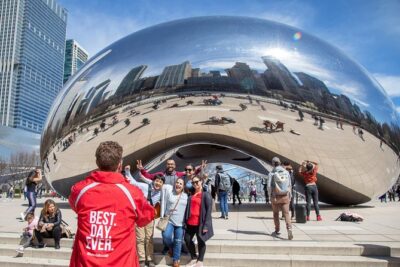
Chicago in a Day: Food, History & Architecture Walking Tour
Read our review →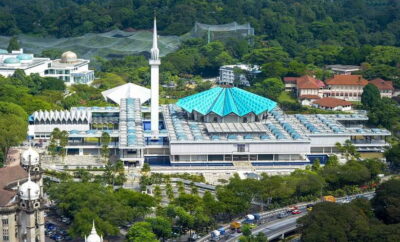
Kuala Lumpur: Batu Caves & Historic Buildings Tour
Read our review →
Charleston’s Best Highlights: History, Culture & Architecture
Read our review →
Palm Springs Modernism Architecture & History Bike Tour
Read our review →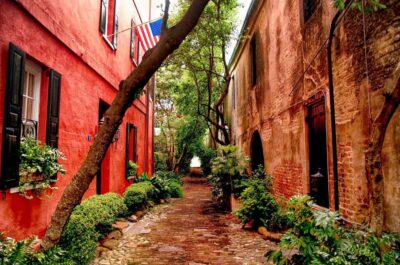
Charleston: History and Architecture Guided Walking Tour
Read our review →
Historic Georgetown: History, Gossip, & Architecture Walking Tour
Read our review →
Charleston History, Homes, and Architecture Guided Walking Tour
Read our review →
Browse the lists this tour appears in