
Review · THE CZECH REPUBLIC
Brno’s Modernist Marvels: A Private Functionalist Journey
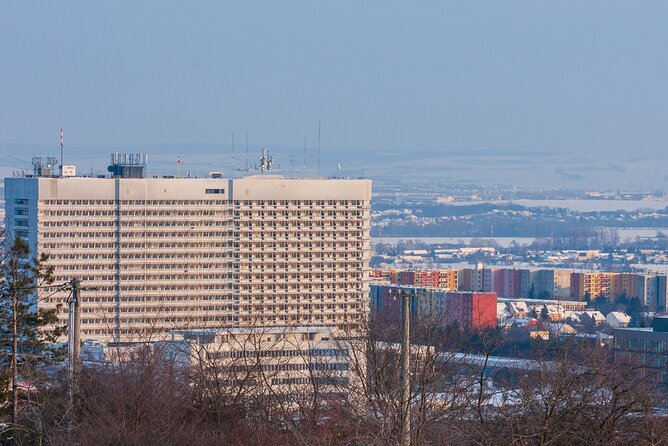
Brno’s Functionalist center is a lesson in how much architecture can do with very little. On this private two-hour walk, you move from the famously narrow Hotel Avion to banks, department buildings, a gallery, and a railway post office, seeing how early modern design reshaped daily city life. I especially like the compact route and the chance to focus on buildings that many visitors pass without a second glance.
I also like that the tour is private, so your group can set the pace and ask about details that catch your eye. The main drawback is the price: at $400.28 per person, it is costly for a two-hour city walk, especially if only one or two people are booking.
Key points at a glance
- Hotel Avion begins the story: Its slender facade and inventive use of limited space make an immediate introduction to Brno’s modernist spirit.
- Seven central buildings in two hours: The route covers banks, offices, retail architecture, a gallery, and a railway post office.
- Private English-language format: Only your group takes part, giving you more room for questions and discussion.
- A walk through practical design: Functionalism here is not just about clean lines. It is about how buildings served banking, travel, shopping, art, and transport.
- A useful finish near the station: The tour ends at Česká pošta on Nádražní, close to Brno’s railway area and public transport.
- Best for architecture-minded visitors: The walk suits anyone who wants urban context rather than a standard list of Brno sights.
Why Brno is such a good city for Functionalist architecture
Brno is one of the best places in the Czech Republic to look at early modern architecture in a compact city setting. You do not need a long bus ride between distant buildings. Instead, this route links a series of central addresses where design was tied to ordinary urban business.
That matters because Functionalism is easiest to understand when you see what each building was meant to do. A bank needed a formal public face. A hotel had to fit rooms and services into a narrow site. A department or commercial building needed to handle customers, staff, movement, and display. A post office had to support a large public service efficiently.
The tour presents these buildings as part of a city system rather than as isolated monuments. You look at proportion, facade, space, and purpose, then connect those choices to the building’s original role.
You should also set your expectations correctly. The supplied information identifies the buildings and the time spent at each stop, but it does not promise interior entry. Plan on an exterior architecture walk unless your guide tells you otherwise. That is not a serious flaw, but it affects how you judge the price.
More private architecture tours in the Czech Republic:
- Beer & Baroque: A Private Highbrow Brew Tour
★ 5.0 · 33 reviews - Private Prague Art Nouveau and Cubism Walking Tour
★ 5.0 · 30 reviews - Best of Prague Architecture – private tour with PERSONAL PRAGUE GUIDE
★ 5.0 · 21 reviews
Hotel Avion: a narrow building with a big idea

The tour begins at Hotel Avion Brno, at Česká 150. You spend about 20 minutes here, and it is a smart starting point because the building makes Functionalist design easy to grasp.
Hotel Avion is known for its slender facade and inventive use of space. Its narrow form raises an obvious question: how do you fit a working hotel into such a tight urban site? That question gives the guide a clear way to explain minimalist architecture without turning the first stop into a lecture.
You can expect to study the facade and the way the building presents itself from the street. The important point is not decoration. It is the effort to make a limited site useful while keeping the exterior clean and controlled.
This is also the point where the tour feels most distinctive. Many city walks begin with a church, square, or palace. This one begins with a building that asks you to notice width, height, and planning. If you enjoy architecture, you will likely appreciate that direct start.
The admission charge is listed as free, but that does not necessarily mean the tour includes interior access. The building is worth seeing from outside, and you should use the opening minutes to ask whether the route focuses on exterior viewing throughout.
Moravian Bank: when a bank becomes civic design
The second stop is the Moravian Bank, listed in the route under Moravia. You spend another 20 minutes here. This building represents the more formal side of Functionalism, where a commercial institution needed to project order and confidence.
The useful idea at this stop is proportion. Functionalist buildings can look plain at first glance, yet their balance often depends on careful spacing, strong horizontal or vertical lines, and a disciplined relationship between openings and solid wall.
A bank also gives the guide a chance to explain why function does not mean careless or cheap. A building can be practical while still paying close attention to how it meets the street. The Moravian Bank helps connect the movement’s visual restraint to the demands of public business.
I would not expect this stop to feel like a museum visit. Its value comes from looking closely and hearing how design choices relate to the bank’s purpose. If you prefer interiors, artifacts, and long historical displays, 20 minutes outside may feel brief. If you like learning to read a city’s facades, it should be time well used.
Alfa Palace: modernity in a commercial setting

Alfa Palace is next, with about 20 minutes set aside for it. The description emphasizes clean lines and an elegant modern appearance, so this stop adds a strong example of how early 20th-century designers presented a progressive image to the public.
The building’s appeal lies in its controlled appearance. You can look for the way the facade avoids excess and uses simple forms to create a sense of movement and order. The effect is modern without needing elaborate ornament.
This is where the tour’s theme broadens. Functionalism was not limited to factories or offices. It also shaped the look of commercial central Brno, where buildings needed to signal that the city was moving forward.
The route gives you enough time to compare Alfa Palace with Hotel Avion and the Moravian Bank. Hotel Avion makes you think about tight space. The bank emphasizes institutional order. Alfa Palace shows how the same modern language could be used to project urban confidence.
A few more architecture tours around the Czech Republic worth a look
- Prague: Modern Architecture and Design Guided Tour
★ 3.9 · 20 reviews - Prague 3-Hour Architectural Tour
★ 4.7 · 18 reviews - Český Krumlov: Half-Day Medieval Architecture Walking Tour
★ 5.0 · 13 reviews - Unveiling Brno: History, Culture & Architectural Delights
★ 5.0 · 2 reviews
Baťa: industrial efficiency reaches the city center
The Baťa building receives about 20 minutes. Its name connects the stop to one of the best-known Czech business traditions, but the architectural point is wider than the company itself. This building shows how industrial ideas about efficiency could influence urban design.
Here, notice the relationship between practical purpose and visual discipline. The building is presented as an example of industrial efficiency combined with a functional appearance. That makes it a good stop for understanding why Functionalism appealed to businesses that wanted clear systems, modern operations, and a forward-looking public image.
I like this part of the route because it moves the subject away from architecture as pure style. A Baťa building is about commerce and organization as much as it is about facade design. It suggests that the modern city was being shaped by new ways of producing, selling, and serving customers.
You may find that the stop works best when you compare it with Alfa Palace. Both speak the language of modernity, but Baťa brings the idea of efficiency more openly into the discussion. The tour is strongest when it makes those comparisons rather than treating every building as a separate item.
Pražák Palace and the Moravian Gallery
Pražák Palace, associated with the Moravian Gallery, is given 20 minutes. Its streamlined forms and elegant facade make it one of the more visually refined stops on the walk.
The building is useful for showing that Functionalism could be graceful as well as practical. The movement is often reduced to flat surfaces and plain boxes, but Pražák Palace lets you consider how proportion and restraint can create an elegant public building.
Because the site is linked to an art gallery, you may be tempted to expect an art visit. The information for this experience does not state that gallery admission is included, so treat this as an architectural stop rather than a gallery tour.
That distinction is important when comparing this walk with an indoor museum visit. Here, you get a focused look at the building’s exterior role in the city. You also get a chance to see how a cultural institution adopted the same modern design principles used by banks and commercial businesses.
Čedok: travel made modern

The Čedok building receives about 10 minutes. This is a shorter stop, but the subject fits the tour well. Čedok is connected with travel, and its building shows how Functionalist design could serve a business that represented movement, planning, and modern tourism.
The description highlights adaptability and innovation. That gives you a chance to consider how a building’s form can communicate a company’s purpose. A travel office needed to appear current and efficient, and a modern silhouette helped send that message.
Ten minutes is enough for a quick exterior explanation and comparison with the earlier buildings. It is not enough for a long architectural study, so keep your expectations modest. The stop works as part of the wider sequence, showing that modern design appeared across many kinds of businesses.
I find this kind of connection particularly useful. Rather than seeing Functionalism as a style attached to one narrow period, you see it applied to banking, retail, art, hotels, and travel. That variety is one of the walk’s strongest features.
Česká pošta: finishing at the Railway Post Office
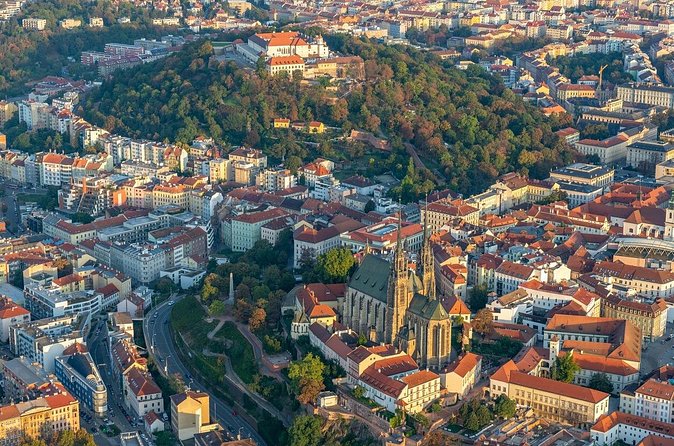
The final stop is Česká pošta at Nádražní 681/2a, near Brno’s railway station. You spend about 10 minutes here, and the tour ends at this building.
The Railway Post Office brings the subject back to public service. Like a bank, it had to handle large numbers of people and daily transactions. Its design shows how efficiency and appearance could work together in a building used by the general public.
Ending here also gives the route a practical shape. You begin at Hotel Avion in central Brno and finish near the railway area, rather than returning to the starting point. That is useful if you plan to continue by train or use nearby public transport after the walk.
The final stop is shorter than the first five, so it functions as a closing example rather than a full architectural session. Still, it completes the tour’s main idea: Functionalism was not only an artistic movement. It was a way of organizing buildings around real public needs.
What two hours feels like on this route
Seven stops in approximately two hours means you average about 17 minutes per building, though the schedule gives 20 minutes to the first five and 10 minutes to the last two. That is a brisk but manageable pace for a central city walk.
You will not get an exhaustive history of every building. Instead, you get a guided introduction to the visual language of Brno’s Functionalism and a set of examples you can recognize later on your own.
The private format matters here. Since only your group participates, you can ask the guide to spend more time on the buildings that interest you most. You can also move on without waiting for a large group. No guide name is provided in the supplied details, but the tour is offered in English.
Wear comfortable shoes, even though the route is short. The experience is primarily an outdoor walk, and the value depends on being willing to stop, look up, compare facades, and listen. If you rush from point to point, the buildings may blur together.
Is $400.28 per person good value?
At $400.28 per person, this is an expensive two-hour experience. The price needs to be judged against the private format, not against a standard group walking tour.
If you are booking for several people and can use a group discount, the cost may become easier to justify. A private guide gives your group exclusive attention and lets you ask questions that might not fit a large public tour. That is the main value here.
The tour does not list admission fees for the stops, and each building is marked as free admission. You are paying mainly for the guide’s time, route planning, and architectural interpretation, not for tickets or a long indoor program.
For a solo visitor or a couple on a tight budget, the price is hard to defend. You could walk through central Brno and see the same exteriors without paying a private-tour rate. The difference is the explanation and structure. If you already know Functionalist architecture, the cost may feel too high. If you want a focused introduction and are willing to pay for private guidance, it can make sense.
Who should book this Brno architecture walk?
I would recommend it most strongly to visitors who already have some interest in buildings, design, city planning, or 20th-century cultural history. You do not need specialist training, but you should enjoy stopping to study facades rather than simply passing them on the way to a major attraction.
It also suits repeat visitors to Brno. Once you have seen the main squares and churches, this route gives you a new way to read the city. The experience has been described as interesting, cultural, and full of new knowledge about urban life, which is a fair description of its strongest benefit.
The private setup is helpful for families, couples, or small groups with different levels of interest. A guide can explain basic ideas for beginners while answering more specific questions from architecture fans.
I would be less likely to recommend it to someone looking for a broad introduction to Brno. The walk focuses tightly on Functionalist buildings, and it does not promise entry to museums, hotel rooms, or public interiors. It is also not the best choice if your priority is a low-cost activity.
Booking and practical details
The tour starts at Hotel Avion Brno, Česká 150, in Brno-střed. It finishes at Česká pošta, Nádražní 681/2a, near the railway station. Both points are near public transportation, and the end point is convenient for continuing through the city.
Confirmation is provided when you book. Most people can participate, and the activity is private, with only your own group taking part.
The tour is offered in English and includes mobile ticketing. Free cancellation is available if you cancel at least 24 hours before the local start time. Inside that 24-hour window, refunds are not provided and changes are not accepted.
Because the experience is often booked about 127 days in advance, do not assume you can leave it until the last minute if your dates are fixed. That booking pattern also suggests that advance planning is sensible, especially if you need a private English-language walk at a particular time.
Should you book Brno’s Modernist Marvels?
Book this tour if you want a focused, private explanation of Brno’s Functionalist buildings and you value the guide’s interpretation more than ticketed attractions. The route is compact, the subject is distinctive, and the finish near the railway station is practical.
Skip it if $400.28 per person feels out of proportion for two hours, or if you prefer a broad city tour with interiors and major historic sights. For the right audience, this is a sharp introduction to Brno’s modern urban character. For budget-minded visitors, it is better treated as a specialist splurge than an essential city activity.
FAQ
Where does the tour begin?
It begins at Hotel Avion Brno, Česká 150, Brno-střed, Brno 602 00, Czechia.
Where does the tour end?
The tour ends at Česká pošta, Nádražní 681/2a, Brno-střed. This is also known as the Railway Post Office.
How long does the experience last?
The experience lasts approximately two hours.
Is this a private tour?
Yes. Only your group participates in the activity.
What language is the tour offered in?
The tour is offered in English.
Which buildings are included?
The route includes Hotel Avion Brno, Moravian Bank, Alfa Palace, Baťa, Pražák Palace and the Moravian Gallery, Čedok, and Česká pošta.
Are admission tickets included?
Each listed stop has a free admission ticket. The supplied details do not state that interior access is included, so you should confirm this with the provider if it matters to you.
Is the tour suitable for most people?
Yes. The activity information says most travelers can participate.
Can I cancel for a full refund?
Yes, if you cancel at least 24 hours before the experience start time. Cancellations within 24 hours are not refunded, and changes during that period are not accepted.
Just added around the Czech Republic
- Unveiling Brno: History, Culture & Architectural Delights★ 5.0 · 2 reviews
- Private Prague Art Nouveau and Cubism Walking Tour★ 5.0 · 8 reviews
- Best of Prague Architecture – private tour with PERSONAL PRAGUE GUIDE★ 5.0 · 21 reviews
- Private Prague Renaissance & Baroque Gardens Walking Tour★ 5.0 · 8 reviews
- Prague Renaissance & Baroque Gardens Walking Tour★ 5.0 · 23 reviews
- Prague: Private Prague Art Nouveau and Cubism Tour★ 4.8 · 6 reviews
- Prague Renaissance and Baroque Gardens Walking Tour★ 5.0 · 5 reviews
- Prague: Private Cubism & Art Nouveau Walking Tour★ 5.0 · 15 reviews
the Czech Republic Architecture Tours, compared.
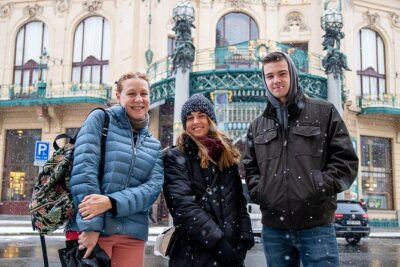
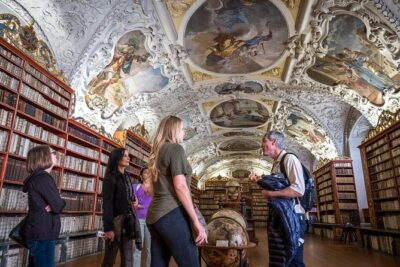
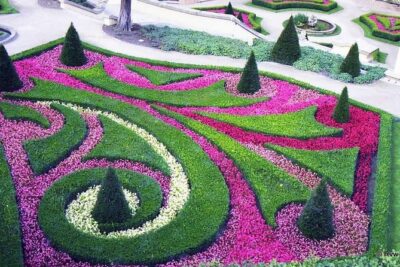
Prague Renaissance & Baroque Gardens Walking Tour
Read our review →
Best of Prague Architecture – private tour with PERSONAL PRAGUE GUIDE
Read our review →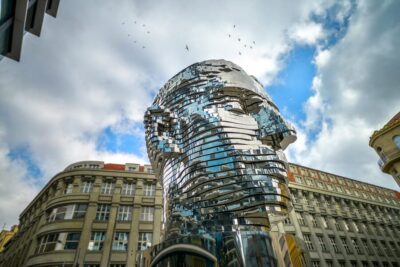
Prague: Modern Architecture and Design Guided Tour
Read our review →Browse the lists this tour appears in