

Review · BERLIN
Private Taxi Tour of City East History and Architecture 2-3h
Berlin’s City East is too spread out for a quick stroll, but this private SUV tour brings its major chapters together. Gunter Bauer, a Berlin resident for more than 20 years, drives you from Brandenburg Gate to Alexanderplatz, Museum Island, Nikolaiviertel, and former Wall sites while adding local stories and room for your questions. The personal route and the relaxed pace are the big draws.
I like that you can shape the outing around your interests. You may stop for a short walk at Brandenburg Gate, Pariser Platz, Nikolaiviertel, or Checkpoint Charlie, or simply keep moving when a sight is less important to you. I also like the convenience of pickup at your hotel or apartment within the S-Bahn ring. The main consideration is time: at 2.5 hours, many stops are viewed from the car, and entrance fees are not included.
Key points at a glance
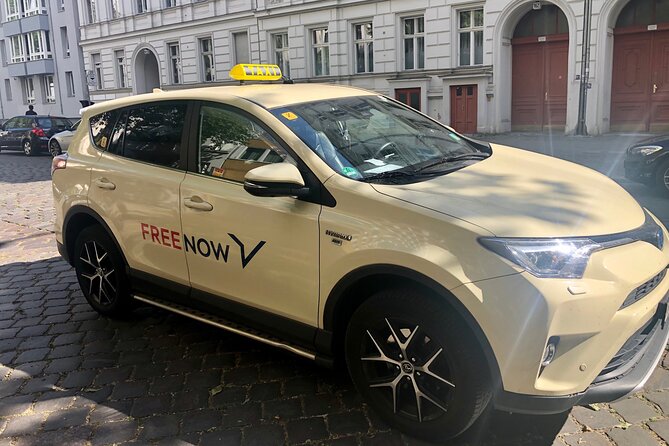
- A private SUV and a local guide: You ride with Gunter Bauer in a comfortable, air-conditioned Berlin taxi SUV rather than joining a large bus group.
- A broad City East route: The tour links Brandenburg Gate, Unter den Linden, Museum Island, Alexanderplatz, the old city center, Potsdamer Platz, and Wall history.
- Flexible stops: You can decide what deserves a short walk, what gets a photo stop, and what is best seen from the vehicle.
- Useful historical connections: Gunter links grand Prussian buildings, Nazi-era sites, the divided city, and modern Berlin instead of treating each sight as an isolated monument.
- Pickup and practical comfort: Hotel or apartment pickup within the S-Bahn ring, parking fees, WiFi, and private transport are included.
- Best for orientation: This is a strong first look at central Berlin, not a substitute for full museum visits or a detailed walking tour.
Why a private SUV makes sense in Berlin
Berlin is not a compact old town where every major sight sits around one square. The Brandenburg Gate, Museum Island, Alexanderplatz, Potsdamer Platz, and the surviving Wall sections are spread across a large central area. Public transport can connect them, but you will spend part of your sightseeing day finding stations, changing trains, and walking between stops.
This tour solves that problem with a private, air-conditioned SUV. Pickup is offered from your accommodation inside the S-Bahn ring, and the ride, city tour, parking fees, and onboard WiFi are included. You are not paying separately for a taxi between sights while also trying to follow a guide.
The value is strongest for a couple, family, or small group that wants a quick orientation without the fixed route of a bus. At $119.18 per person, the price is not low, but you are paying for private transport, a dedicated guide, and the ability to adjust the route. Group discounts may improve the cost for larger bookings.
The trade-off is equally clear. This is mainly a driving tour with selected stops, not a long walking visit at every address. If you want to spend an hour inside the German Historical Museum, climb Berlin Cathedral, or carefully examine every courtyard at Hackescher Höfe, you will need separate time.
More history tours in Germany:
- Private Taxi Tour City East & West History and Architecture 3-4h
★ 5.0 · 42 reviews - Lübeck: Private Historical and Architectural Walking Tour
★ 4.5 · 6 reviews - Private Munich Tour for History Buffs with Architectural Gems and WWII sites
★ 5.0 · 3 reviews
Brandenburg Gate begins the story
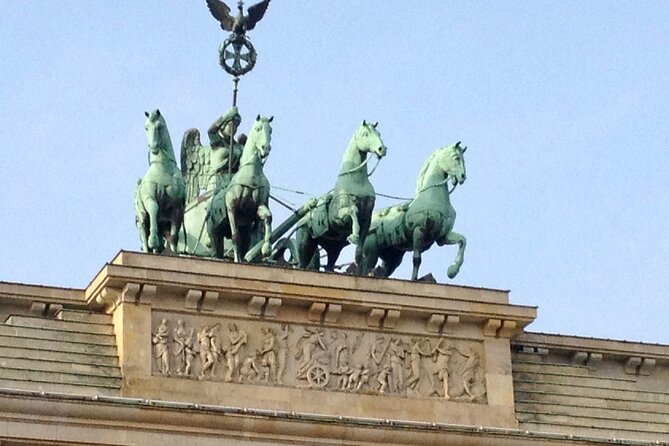
The tour starts at Brandenburg Gate, one of Berlin’s most useful orientation points. Today it is an international symbol of the city, but its original purpose was more practical. It was a city gate, and the road west led the elector from the Berlin Palace toward his hunting grounds in what is now Tiergarten.
The familiar neoclassical form came shortly after the French Revolution. That detail gives Gunter a chance to explain how Berlin’s rulers used architecture to project power and how a route once connected the royal center with the countryside beyond the city.
You get about five minutes here, with admission free. That is enough for a look at the gate and a short walk if you choose, but not enough for a long photo session when the square is busy. The important benefit is context. Brandenburg Gate is not just a backdrop. It is the western end of the great royal route along Unter den Linden.
Parliament and the modern government quarter
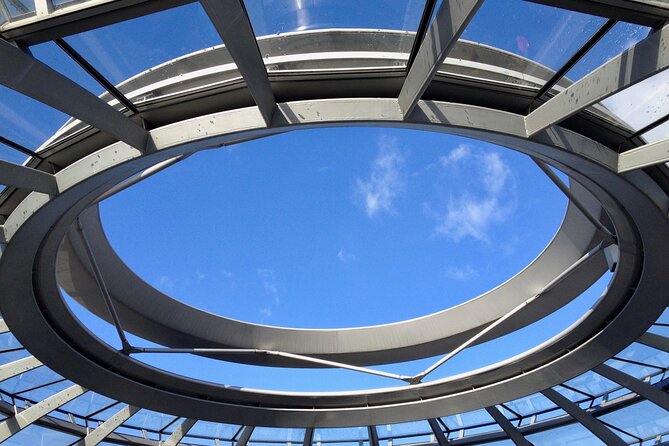
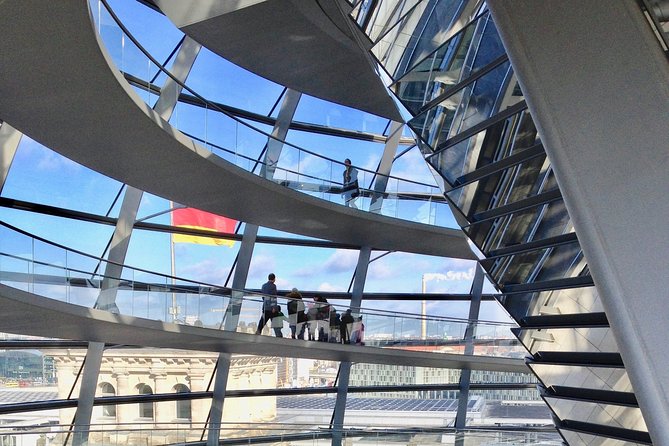
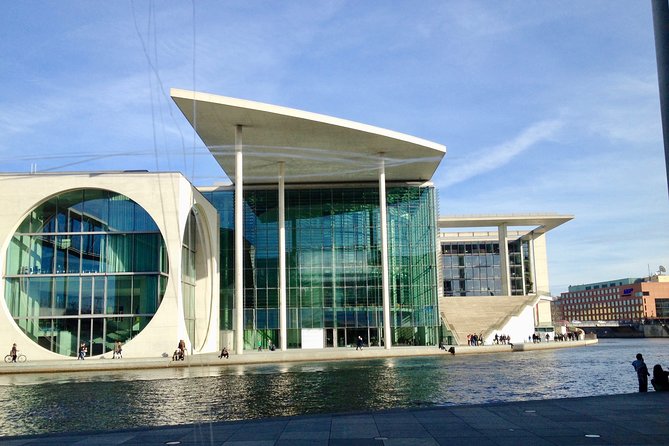
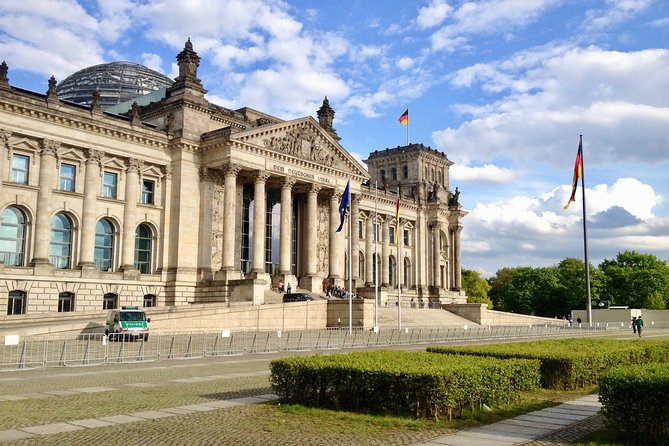
From the gate, the SUV passes the Reichstag Building, the Federal Chancellery, and Paul-Löbe-Haus. These buildings show how Berlin moved from a royal capital to the seat of a modern parliamentary government.
The Reichstag has a dramatic political past. It was built during the imperial period and was criticized by some contemporaries as an awkward or oversized building. Its greatest symbolic moment came after World War II, when Soviet soldiers placed their flag on it.
The nearby Federal Chancellery is a lesson in scale. Its white, modern form contains hundreds of offices and a large number of staff. Paul-Löbe-Haus is more functional than ceremonial. Parliamentary committee work takes place there, while the grand speeches and public sessions occur in the Reichstag.
These are pass-by sights, so you will not tour the interiors. That is fine for a first look, especially if modern government architecture interests you. If the Reichstag is high on your list, arrange a separate visit rather than expecting this drive-by view to cover it.
Unter den Linden, Pariser Platz, and diplomatic Berlin
Unter den Linden is Berlin’s grand historic boulevard. It began as a quiet riding path from the royal palace toward the west, passing through Brandenburg Gate on the way to the hunting grounds. The trees and formal buildings give the route its ceremonial character, but the guide’s explanation helps you see its earlier, more practical purpose.
At Pariser Platz, you can pause for about five minutes and hear about the surrounding embassies, the Academy of Arts, and the buildings that give this square its formal appearance. It is often described as Berlin’s finest reception room, and the comparison works. This is where the city presents its most polished face.
The Russian Embassy is passed along the route. Its size was deliberate after World War II, when the Soviet Union wanted its diplomatic presence in central Berlin to make a clear political statement. That is a useful reminder that Berlin’s architecture often carries a message beyond its design.
A few more architecture tours around Germany worth a look
- Munich 3-Hour Segway Tour: Nazi Munich & Royal Architecture
★ 4.9 · 194 reviews - Brussels 3-Hour Guided Art Nouveau Tour
★ 4.0 · 282 reviews - Barcelona: 3-Hour Discover Gaudí GoCar Tour
★ 4.5 · 123 reviews - Barcelona: 3-Hour Sagrada Familia eScooter Tour
★ 4.7 · 93 reviews
Gendarmenmarkt and the Forum Fridericianum
Gendarmenmarkt is one of the city’s most handsome urban spaces, framed by the German Cathedral, French Cathedral, and concert hall. You see these buildings from the vehicle unless you arrange otherwise, so your experience depends heavily on Gunter’s explanation and on how much time you want to spend outside.
Nearby Bebelplatz gathers several major buildings into one historic setting. The former royal library, St. Hedwig’s Cathedral, the State Opera, and Humboldt University form the Forum Fridericianum, an ambitious statement of royal culture and learning.
The Neue Wache adds a more solemn note. It once housed a guard and became known for its ceremonial changing of the guard in East Berlin. That public spectacle is gone, but the building remains an important memorial site.
The Kronprinzenpalais and Kronprinzessinnenpalais are easy to miss when larger landmarks compete for attention. A private guide can point out these quieter buildings and explain why they mattered, which is one advantage over simply following a standard monument checklist.
Museum Island and the rebuilt palace
The German Historical Museum occupies the former armory, a building connected with the military history of Prussia and Germany. Depending on your interests, you may stop or continue driving. Entrance fees are not included, so a full museum visit belongs on another part of your schedule.
The route then reaches the rebuilt Berlin Palace, now the Humboldt Forum. For decades, this central site was a parking area and open space. The reconstructed exterior recalls the former royal palace, while the modern institution inside gives the building a new cultural role.
Here you may have the tour’s longest stop, about 30 minutes, and admission to the tour site is included. That does not mean all interior exhibits or separate activities are covered, so ask Gunter what is practical during your visit.
Berlin Cathedral and Museum Island follow. The cathedral is notable for its grand interior, Hohenzollern burial place, and dome ascent. Museum Island is a UNESCO-protected group of five famous museums on an island in the Spree. You will generally pass these sights, but the route gives you enough orientation to decide which one deserves a later visit.
Jewish Berlin and Hackescher Markt
The route can extend toward the New Synagogue and Centrum Judaicum. The larger area includes Hamburger Straße, the Sophienkirche, a Jewish cemetery, and a Catholic hospital. The tour description allows an extended visit here depending on your interests, but the exact amount of walking will depend on your choices and the available time.
This is a useful part of the tour because it moves beyond imperial Berlin. The central districts contain layers of religious, social, and political history that are not always obvious from the main boulevards.
Hackescher Markt offers another change of mood. The historic S-Bahn station and Hackesche Höfe represent a more informal side of central Berlin, with courtyards and urban details that contrast with the royal buildings along Unter den Linden.
You may find this section more rewarding on foot than from the SUV. If courtyards, neighborhood architecture, and everyday city life appeal to you, ask for time here. If your priority is political history, the vehicle may carry you onward to the next major stop.
Alexanderplatz, the Red City Hall, and old Berlin
Alexanderplatz is one of the clearest symbols of East Berlin. The television tower, World Clock, House of the Teacher, House of Statistics, House of Electrical Engineering, and House of Tourism give the square its broad socialist-era character and later commercial life.
The tour can drive past or stop, depending on what you want. A stop makes sense if you want photographs or need to understand the scale of East Berlin’s redevelopment. It is less useful if you are looking for a preserved medieval square, since the area has been repeatedly altered.
Nearby, the Red City Hall serves as Berlin’s municipal headquarters. Its name comes from the red brick construction, not from the political party of the governing mayor. That small clarification is typical of the tour’s approach: Gunter links architecture to the way Berlin’s institutions actually work.
Nikolaiviertel is one of the best places to request a short walk. It was rebuilt to create an old Berlin setting around St. Nicholas Church, the Garlic House, and other historic-looking buildings. It is not an untouched medieval quarter, and that is worth knowing. Its value lies in the reconstruction and in the effort to recreate an older urban character close to the modern center.
The Wall, Potsdamer Platz, and the bunker site
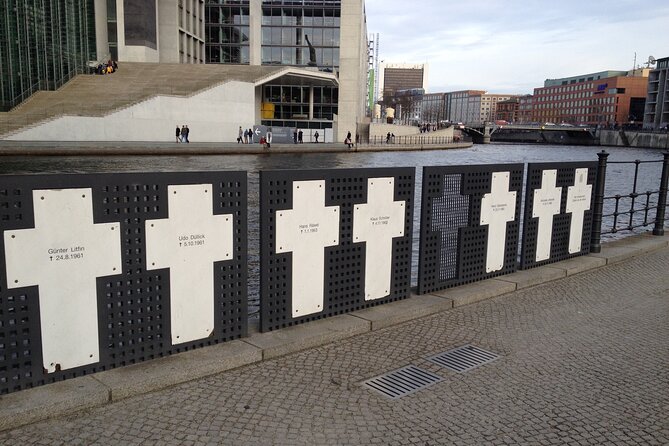
The tour then turns toward the city’s 20th-century breaks and rebuildings. Niederkirchnerstraße has one of the few original sections of the Berlin Wall still in central Berlin. Wallpeckers made holes in the concrete after the Wall fell, and a fence now protects the remaining section.
The route continues to Potsdamer Platz, once one of Europe’s busiest traffic centers. War damage destroyed much of the surrounding area, and the empty zone later became one of Berlin’s most dramatic redevelopment projects. From the car, you will understand the broad change, but a separate walk is better if you want to study the modern buildings.
The Holocaust Memorial, officially the Memorial to the Murdered Jews of Europe, sits between Brandenburg Gate and Potsdamer Platz. Its 2,711 concrete steles are designed for walking, not simply viewing from a car. The tour passes it, and a walk is recommended. Give this site quiet time on your own if you want its physical design to make an impression.
The final historical stop is the former location of Hitler’s bunker, near the Berlin Story Bunker. The original bunker is gone. The tour does not pretend otherwise. You stop at the location and learn what occupied the site, while a nearby bunker with an exhibition about Berlin’s bunker history can be visited separately for an additional fee.
What the guide adds
The guide is the heart of this experience. Gunter Bauer has lived in Berlin for more than 20 years, and his style is described as conversational, quick with answers, and comfortable mixing serious history with rumors and funny stories from the period.
That balance matters in Berlin. A list of dates can make the city feel like a string of monuments. Stories about why a building was placed where it is, how East Berlin used a public square, or what happened to a former palace make the route easier to remember.
You can also ask to leave out sights that do not interest you. A history-focused group might spend more time around the Wall, the bunker site, and the government quarter. An architecture-minded group might favor Gendarmenmarkt, Museum Island, the palace, and Hackescher Markt. Families may want fewer formal explanations and more short stops.
Timing, pickup, and who should book
The scheduled start time is 12:30 p.m., and the total outing lasts about two hours and 30 minutes. Since pickup is available from your accommodation inside the S-Bahn ring, you do not need to make your way to a fixed meeting point. Pickup from BER Airport or outside the ring costs extra at the Berlin taxi tariff.
The private format suits most people, including families. A toddler seat for ages six months to three years and a booster seat for older children are available. A baby seat can be brought on request. Service animals are allowed, and the tour is near public transportation.
Free cancellation is available up to 24 hours before the start time. Changes made inside that period are not accepted, and the amount paid is not refunded for a late cancellation.
Should you book the City East tour?
Book it if you want a broad first look at central Berlin, prefer a private vehicle, and value a guide who can answer questions and adjust the route. It is especially useful on a first visit, for families, for older visitors, or for anyone who wants to connect distant sights without spending the day changing trains.
Skip it if your main goal is long museum visits, extensive walking, or detailed interior tours. The $119.18 per person price makes the most sense when the private pickup, dedicated guide, and flexible route matter to you. For a small group that wants comfort and orientation, it is a practical way to see how Berlin’s royal, political, divided, and modern chapters fit together.
FAQ
How long does the private taxi tour last?
The tour lasts approximately two hours and 30 minutes.
What time does the tour start?
The listed start time is 12:30 p.m.
Where can pickup take place?
Pickup is available from your desired hotel, apartment, or other accommodation within Berlin’s S-Bahn ring. Pickup from BER Airport or outside the ring costs extra according to the Berlin taxi tariff.
Is the tour private?
Yes. Only your group participates in the activity.
What kind of vehicle is used?
You ride in a private, air-conditioned luxury taxi SUV with WiFi onboard.
Are entrance fees included?
Entrance fees are not generally included. The tour includes the taxi ride and city tour, while optional museum and exhibition visits may require separate payment.
Can the itinerary be changed?
Yes. You can discuss what interests you most, choose where to stop for a short walk, and leave out sights that are less important to you.
Are child seats available?
A toddler seat for children from six months to three years and a booster seat for older children are available. A baby seat can be brought on request.
What is the cancellation policy?
You can cancel for a full refund up to 24 hours before the experience starts. Cancellations or changes made less than 24 hours before the start time are not accepted for a refund.
Just added around Germany
- Beautiful Baroque Potsdam: A Self-Guided Audio Tour★ 4.5 · 4 reviews
- Munich Your Way: Private Tour with Architect & Guide★ 5.0 · 2 reviews
- Private Munich Tour for History Buffs with Architectural Gems and WWII sites★ 5.0 · 3 reviews
- Art Nouveau Meets Street Art in Munich (Max. 12 guests)★ 5.0 · 3 reviews
- Hidden Architectural Gems of Munich (Max. 16 guests)★ 5.0 · 2 reviews
- Architectural Frankfurt: Private Tour with a Local Expert★ 5.0 · 2 reviews
- Architectural Berlin: Private Tour with a Local Expert★ 4.0 · 3 reviews
- Berlin Architecture/River Spree Full Day Photography Tour★ 5.0 · 2 reviews
Historical Tours, compared.
Chicago in a Day: Food, History & Architecture Walking Tour
Read our review →
Kuala Lumpur: Batu Caves & Historic Buildings Tour
Read our review →
Charleston’s Best Highlights: History, Culture & Architecture
Read our review →
Palm Springs Modernism Architecture & History Bike Tour
Read our review →
Charleston: History and Architecture Guided Walking Tour
Read our review →
Historic Georgetown: History, Gossip, & Architecture Walking Tour
Read our review →
Charleston History, Homes, and Architecture Guided Walking Tour
Read our review →
Browse the lists this tour appears in