
Review · CHICAGO
Walking Tour: Chicago’s Loop – Home of the Modern Skyscraper
Chicago’s early skyscrapers are not just things to admire from the sidewalk. On this tour, you step inside them, ride a manually operated elevator, use the L train, and finish beneath the world’s largest Tiffany dome. That mix of street-level walking and interior visits gives the Loop real shape.
I like the small group of no more than ten, which makes it easier to ask questions and notice details you might miss on your own. I also like the local focus: guides such as Tom bring a lifelong Chicago connection to buildings that can otherwise look like a blur of stone, steel, and glass.
The main consideration is physical. You will walk for about three and a half hours, use public transit, and may need to climb stairs because not every train station has an elevator. The food stop is useful, but snacks and drinks cost extra.
Key points to know before you book
- A close look at early skyscrapers: Visit the Monadnock Building and the Rookery Building, two major chapters in Chicago’s move toward tall office buildings.
- Small-group format: The tour is limited to ten people, allowing for a more personal pace and easier conversation with the guide.
- Architecture you can enter: The Fine Arts Building, Macy’s on State Street, and the Chicago Cultural Center reward you for looking up and stepping inside.
- A useful L train ride: Your transit ticket is included, and the ride from Quincy helps connect the southern and northern parts of the Loop.
- A built-in refreshment break: Revival Food Hall gives you time to pause and buy a snack, though food is not included in the $65 price.
- A strong final stop: The Chicago Cultural Center’s Tiffany dome provides a memorable finish near the end point.
Why Chicago’s Loop is best explored from the sidewalk up
The Loop can feel overwhelming at first. Large buildings crowd the streets, elevated tracks cut through the blocks, and famous names appear faster than you can place them. A guided walk gives you a thread to follow: Chicago’s growth, its early tall buildings, and the ways architects solved the practical problems of building upward.
You begin at 10:00 a.m. in the lobby of the Fine Arts Building at 410 South Michigan Avenue. Starting indoors is smart, especially in poor weather, and it puts you right beside one of the tour’s more unusual details: elevators that are still operated manually.
This is not a tour built around racing from one photo stop to the next. The schedule allows time for interiors, short explanations, and a food hall break. You also get a quick ride on the L, a useful part of Chicago’s story in its own right.
Tom is named as one of the guides, and the experience is led by a lifelong Chicago resident. That local connection matters here. The best parts of the Loop are often not the biggest buildings, but the details tucked into lobbies, ceilings, elevators, and public rooms.
More skyscraper tours in Chicago:
- Chicago Premium Driving Tour with River Boat Cruise and Sky Deck
★ 4.5 · 165 reviews - Chicago Walking Tour: Art Deco Skyscrapers Loop
★ 5.0 · 138 reviews - Chicago Walking Tour: Historic Skyscrapers
★ 5.0 · 67 reviews
The Fine Arts Building and its old-fashioned elevator
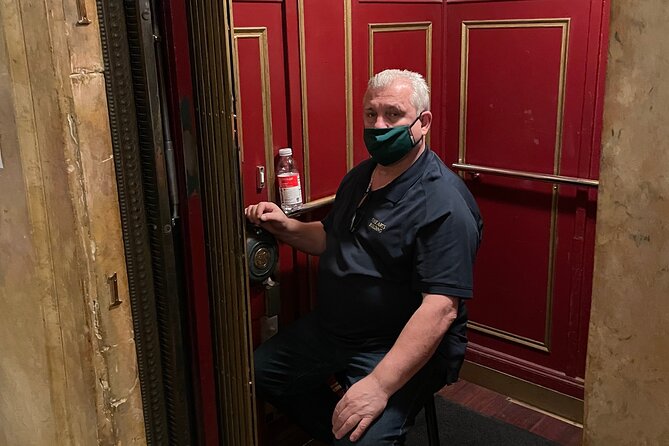
The Fine Arts Building receives about 30 minutes, beginning with a meeting in the lobby. The building is known for its manually operated elevators, giving you an immediate reminder that historic architecture is not only about decoration.
An elevator with a human operator changes the feel of a visit. It slows things down and makes you notice how a building worked when vertical travel was still a relatively new part of city life. You are not simply looking at an old facade. You are seeing a piece of its daily operation.
The stop is free, as are most of the interior visits on this tour. That helps the $65 price go toward the guide, transit, and the structure of the experience rather than a long list of admission fees.
The Harold Washington Library Center’s public spaces
Next comes the Harold Washington Library Center, with about 30 minutes to look at its public areas and exhibits. The stop broadens the tour beyond commercial office buildings and department stores.
Libraries are useful on an architecture walk because they show how a city gives public space a role in its center. Here, you can expect the guide to point out details and exhibits that are easy to miss if you are only using the building as a place to borrow books or find a quiet seat.
This is also a good place to keep the larger theme in mind. Chicago’s architecture is not only a story of business and office towers. It includes civic buildings that serve residents every day.
The Monadnock Building and the weight of early skyscrapers
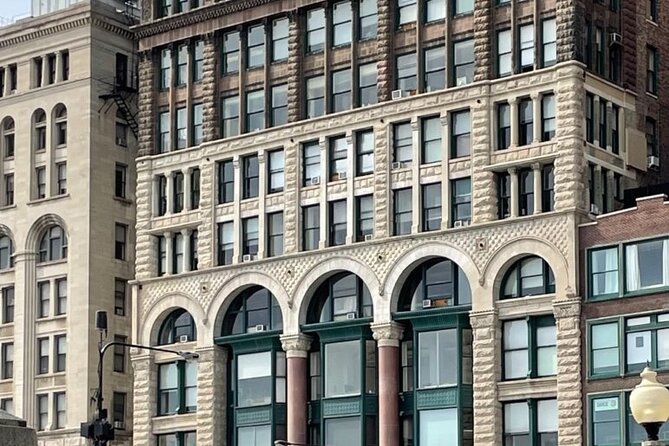
The Monadnock Building gets a shorter visit of about 15 minutes, but it carries major importance. The tour uses it to explain an early stage in Chicago’s skyscraper story, when builders were testing how tall an office building could be while still supporting its own weight.
You will take a close look at a building that was once the largest office building in the world. That fact gives the stop useful scale. What now looks like one part of a dense downtown was once a major statement about what modern cities could do.
The short timing is practical, though it means you should listen closely. This is a place where a few clear observations can help you understand why early tall buildings look different from later steel-frame towers.
More architecture walks in Chicago:
- Chicago in a Day: Food, History & Architecture Walking Tour
★ 5.0 · 1,153 reviews - Chicago’s Secret Interiors Architectural Walking Tour
★ 5.0 · 635 reviews - Chicago: Secret Interiors Architecture Walking Tour
★ 4.9 · 498 reviews - Chicago Architecture Walking Tour: Incredible Art Deco Interiors
★ 5.0 · 85 reviews
The Marquette Building’s national importance
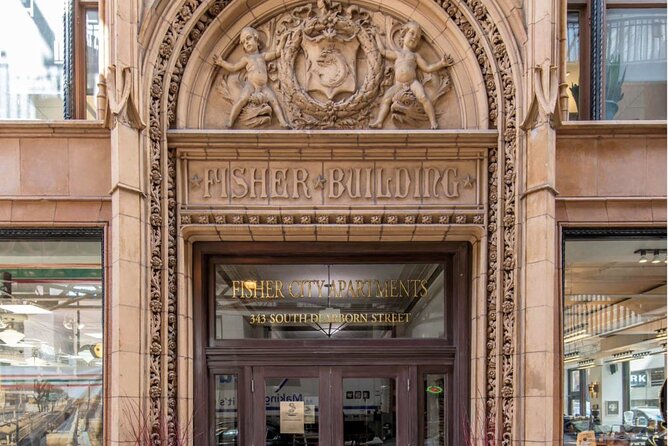
The Marquette Building follows, with roughly 15 minutes devoted to this national landmark. It is another stop where the guide’s explanation helps you read the building rather than simply photograph it.
A landmark designation tells you that the building has importance beyond its immediate block. The visit also reinforces the tour’s central idea: Chicago’s architectural story is spread through working buildings and public interiors, not gathered in one museum.
You may find this stop especially useful if you enjoy decoration and design details. The tour is not limited to engineering. It asks you to notice how buildings express civic pride, commercial ambition, and changing ideas about the modern city.
A pause at Revival Food Hall
About halfway through, you stop at Revival Food Hall for around 30 minutes. The break gives your feet a rest and lets you buy a snack or drink.
Food is not included, so bring a payment method and plan to spend extra if you want refreshments. That is a small but important detail when comparing the tour price with a self-guided walk.
I like this pause because a three-and-a-half-hour walking tour benefits from a natural break. It also keeps the morning from becoming a nonstop lecture. You have time to sit, eat, and reset before the next set of buildings.
The Rookery Building and a major Chicago interior
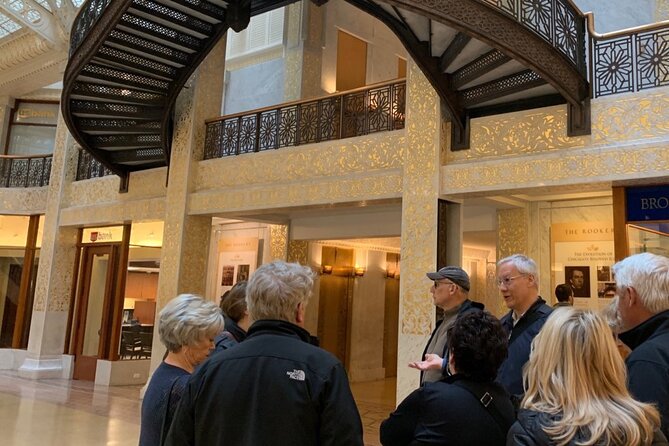
The Rookery Building gets about 15 minutes, described as a quick look at one of the city’s most significant buildings. Even with limited time, this is an important stop because the building represents the mix of engineering and design that made Chicago’s early commercial architecture so influential.
The visit is another chance to look inside rather than simply stand outside. That is one of the strongest reasons to choose this experience over a basic sightseeing walk. A facade can tell you about height and style, but a lobby can show how the building welcomed workers, clients, and shoppers.
The timing may feel brief if architecture is your main passion. Still, the tour covers many sites, and the guide has to balance depth with variety. You get a sequence of meaningful interiors instead of spending the whole morning at one building.
Riding the L from Quincy

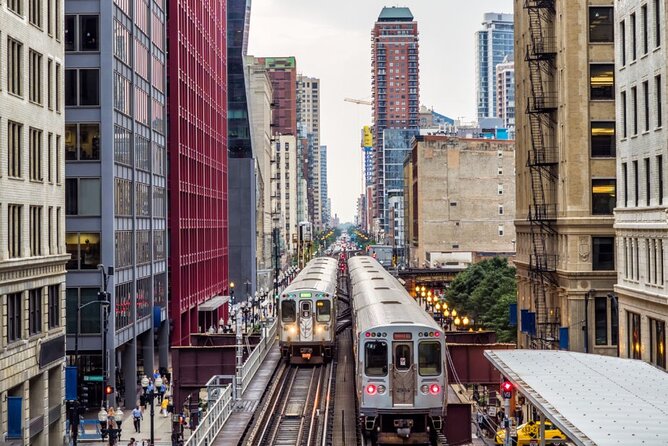
At Quincy, the group boards the L for about 15 minutes. Transit tickets are included, so you do not need to arrange this part separately.
This section adds movement and context. Chicago’s elevated train is not just a way to get from one stop to another. It is part of the city’s visual identity and urban plan, and riding it helps connect the buildings you have seen in the southern Loop with the final stops near State Street and Washington Street.
The practical warning is simple: you should be able to manage stairs. Not all stations have elevators, and the tour requires a moderate level of fitness. If stairs are difficult for you, ask about this before booking rather than assuming every station will provide step-free access.
Macy’s on State Street and the ceiling most people miss
The Macy’s visit lasts about 30 minutes. The building is famous as a department store, but the point here is its architecture, including an impressive tiled dome.
This is exactly the sort of detail you might miss while shopping or walking through the store. The practical tip is to look up. A building can hide its best work above eye level, and a guide helps direct your attention to the ceiling instead of keeping you focused on the displays at ground level.
The Macy’s stop also gives the tour a different mood. After offices, libraries, and landmark lobbies, you enter a large retail space that shows how architecture can shape a public shopping experience. You do not need to be interested in shopping to appreciate the building itself.
The Chicago Cultural Center and its Tiffany dome
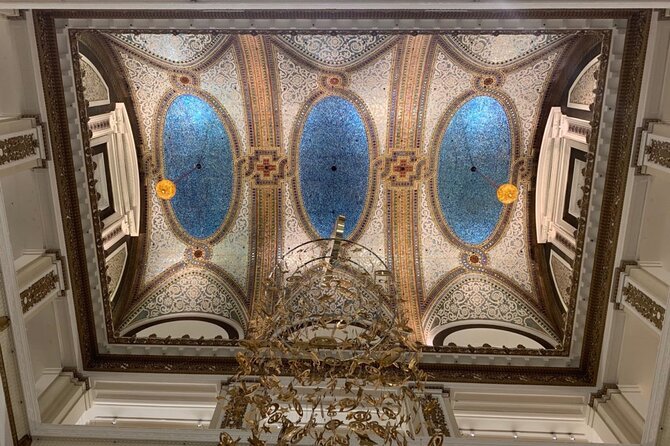
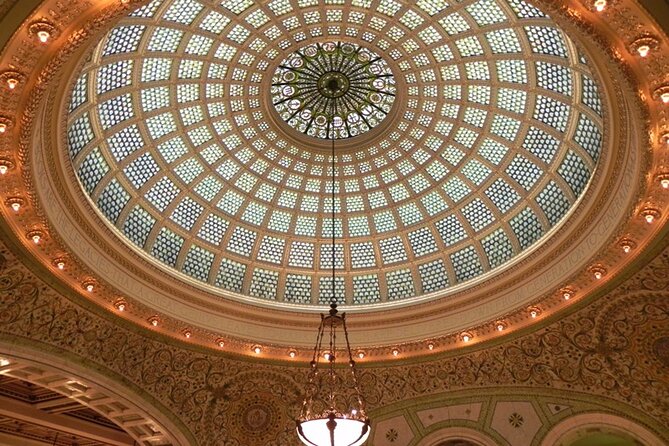
The tour ends at the Chicago Cultural Center, 78 East Washington Street, with about 30 minutes to look around. The main attraction is the world’s largest Tiffany dome.
This is a strong final stop because it leaves you with a single, easy-to-remember image. The dome rewards patience and a raised gaze, much like the tiled ceiling at Macy’s. After a morning spent learning how Chicago built upward, you finish by looking overhead at a piece of public art and architecture.
The end point is convenient for continuing your day in the Loop, and the tour does not require you to return to the starting point. That one-way arrangement makes sense geographically, especially after the L train ride.
What the $65 price includes
The price is $65 per person. It includes the local guide and transit tickets, but not food or drinks at Revival Food Hall.
I see the value in the price if you want access to interiors and a clear explanation of Chicago’s early skyscrapers. A self-guided walk can cover many of the same streets, but it may not get you through the buildings or help you understand why the Monadnock and Rookery matter.
The group cap is also important. With no more than ten people, you are not trying to hear a guide across a large crowd. You can ask about a building, pause for a detail, or stay close enough to see what the guide is pointing out.
The value is less clear if you prefer to move at your own pace, skip historic interiors, or spend most of your morning taking photographs. The tour has a set route and timing, and the 15-minute stops will feel short if you want a long, careful look at each building.
How to prepare for the morning
Wear comfortable shoes. The experience lasts about three hours and 30 minutes and combines walking, standing, interior visits, and a short L train ride.
A moderate fitness level is expected. Plan for stairs at some train stations, since not all are equipped with elevators. You should also keep your mobile ticket ready and arrive at the Fine Arts Building before the 10:00 a.m. start.
Food is not included, so use the Revival Food Hall stop to buy something if you need a meal or snack. The pause is part of the schedule, but it is not a catered break.
The tour is near public transportation, though your included transit ticket covers the planned L ride. Free cancellation is available when you cancel at least 24 hours before the start time. Changes or cancellations made later are not accepted for a refund, and the experience requires a minimum number of participants.
Who will get the most from this Chicago architecture tour
I would choose this tour for a first visit to Chicago if you want a strong introduction to the Loop without spending your entire day inside a museum. It suits people who enjoy buildings, city planning, and small details, but do not want to study a guidebook before arriving.
It also works well for anyone who likes a personal guide. Tom is described as personable and accommodating, and his lifelong connection to Chicago fits the subject. The experience is built around explanation, not just movement.
Families with older children may find the manual elevators, elevated train, and changing building types more engaging than a standard history lecture. The only caution is the walking and stairs.
You may want another option if you need step-free access, dislike fixed schedules, or want a longer visit inside each landmark. This tour covers a lot of ground, so its strength is range and connection rather than extended time at one site.
Should you book the Loop skyscraper walk?
Book it if you want to understand why Chicago became a birthplace of the modern skyscraper, while also seeing the interiors that make the story human. The small group, included L train ticket, local guide, and access to buildings such as the Fine Arts Building and Rookery make the $65 reasonable for many first-time visitors.
Skip it if stairs are a serious problem or if you want a slow photography tour. For everyone else, this is a well-paced way to connect famous buildings with the city streets around them. Keep your eyes up, especially at Macy’s and the Cultural Center, and you will get more from the morning than a list of addresses.
FAQ
Where does the tour start?
The tour starts in the lobby of the Fine Arts Building at 410 South Michigan Avenue, Chicago, Illinois 60605.
What time does the experience begin?
The start time is 10:00 a.m.
Where does the tour finish?
The tour finishes at the Chicago Cultural Center, 78 East Washington Street, Chicago, Illinois 60602.
How long does the tour last?
The experience lasts approximately three hours and 30 minutes.
How many people can join the tour?
The group has a maximum of ten participants.
Is the L train ticket included?
Yes. Transit tickets are included, including the planned L train ride from Quincy.
Are food and drinks included?
No. Food and beverages are not included. You can buy a snack or drink during the stop at Revival Food Hall.
Just added around Chicago
- Private Chicago Architecture Tour★ 5.0 · 5 reviews
- Chicago Luxury Minibus City Tour and Architecture River Cruise★ 4.5 · 8 reviews
- Private Frank Lloyd Wright Architectural Tour by Luxury Vehicle★ 3.5 · 7 reviews
- Small Group History And Architecture Walking Tour of Chicago★ 4.5 · 8 reviews
- Private Chicago Architecture Walking Tour★ 5.0 · 6 reviews
- Chicago History and Architecture Walking Tour with Boat Cruise★ 4.5 · 10 reviews
- Chicago: Evolution of the Skyscraper Walking Tour★ 4.9 · 10 reviews
- Chicago’s Modern Skyscrapers Guided Walking Tour★ 5.0 · 6 reviews
Skyscraper Tours, compared.
Chicago Premium Driving Tour with River Boat Cruise and Sky Deck
Read our review →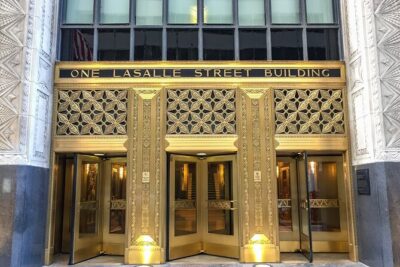
Chicago Walking Tour: Art Deco Skyscrapers Loop
Read our review →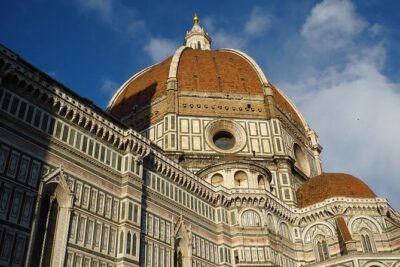
Florence Skyline from the Top of Brunelleschi’s Dome
Read our review →
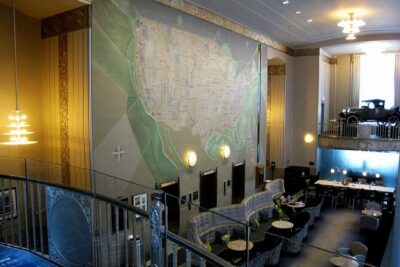
Chicago Walking Tour: Art Deco Skyscrapers Riverfront
Read our review →

3-Hour Shanghai Bund Swift Tour with River Cruise or Skyscraper
Read our review →
Midtown Manhattan: Times Square & Skyscrapers Walking Tour
Read our review →Browse the lists this tour appears in