

Review · CHICAGO
Small Group History And Architecture Walking Tour of Chicago
Chicago’s best feature is its compact story on foot. In about two and a half hours, you move from Cloud Gate and Millennium Park through the underground Pedway, along the Chicago River, across the DuSable Bridge, and up the Magnificent Mile to Navy Pier.
I like the small group limit of 10, and I like that the tour mixes famous sights with less obvious city infrastructure. The Chicago Pedway gives you a glimpse of how locals move through downtown in bad weather, while the riverfront and Michigan Avenue bring the grand architecture into view.
The main consideration is consistency. Most feedback is highly positive, especially for guide Andrew, but one serious complaint describes an uncomfortable interaction with a guide before the tour. Confirm your guide and meeting details, and trust your instincts if anything feels wrong.
Key points at a glance
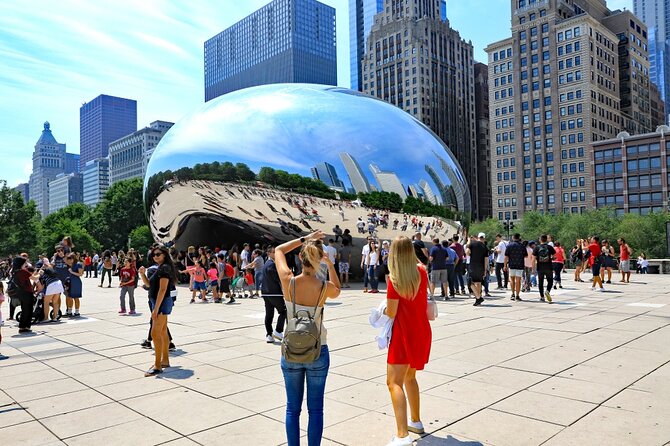
- Cloud Gate start: Meet by McCormick Tribune Plaza and begin beside Millennium Park’s famous reflective sculpture.
- Chicago beneath the streets: Spend about 20 minutes in the Pedway, a network of tunnels, bridges, and concourses downtown.
- Architecture with context: See the Tribune Tower, Wrigley Building, DuSable Bridge, and the former Medinah Athletic Club.
- Small group format: The maximum group size is 10, useful for questions and a more personal pace.
- Coffee stop with a price tag: The Starbucks Reserve Roastery is included as a stop, but coffee and snacks are extra.
- Navy Pier finish: End at the lakefront, with the option to keep exploring or take an architecture cruise at additional cost.
Starting beneath Cloud Gate in Millennium Park
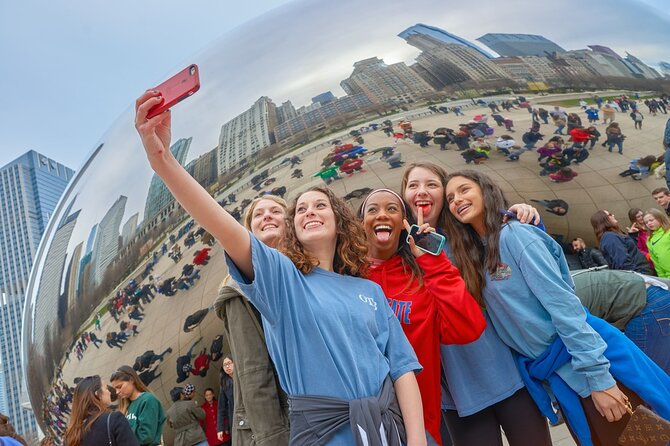
The tour begins at McCormick Tribune Plaza, at 1 N Michigan Avenue, beside Millennium Park. That puts you right near Cloud Gate, the polished stainless-steel sculpture better known as The Bean.
Allow yourself time to find the meeting point. The park is large, and the starting location is in one of Chicago’s busiest visitor zones. A mobile ticket makes check-in simple, but you still need to keep your phone charged and easy to access.
Cloud Gate works well as the opening stop because it introduces several themes at once: public art, city design, and Chicago’s relationship with its skyline. The curved surface reflects the buildings and people around it, so you are not just looking at a sculpture. You become part of the picture.
The formal stop lasts about 15 minutes. That is enough for photos and a short introduction, not enough for a long art lecture. Millennium Park itself includes the Jay Pritzker Pavilion, Crown Fountain, gardens, and other public artworks, so your guide can give you a useful orientation without trying to cover every corner.
I appreciate this start because it avoids a slow warm-up. You meet in the center of the city, see an instantly recognizable Chicago sight, and begin walking almost at once.
More architecture walks in Chicago:
- Chicago in a Day: Food, History & Architecture Walking Tour
★ 5.0 · 1,153 reviews - Chicago’s Secret Interiors Architectural Walking Tour
★ 5.0 · 635 reviews - Chicago: Secret Interiors Architecture Walking Tour
★ 4.9 · 498 reviews
Millennium Park and the city’s public face
Millennium Park is more than a photo stop. Opened in 2004, it brought art, performance, lawns, and public gathering space into the heart of downtown.
You can expect the guide to connect the park’s design with Chicago’s broader interest in architecture and civic spaces. The park hosts concerts, cultural events, and changing art installations, so the mood can shift depending on the day.
This part is relatively easy walking, though the tour soon becomes a city route rather than a park stroll. Comfortable shoes matter more than dressy clothes. The tour lasts 2 hours and 30 minutes, and there is no indication that transportation is provided between stops.
The Chicago Pedway, a practical city beneath the pavement
The Pedway is one of the tour’s more unusual stops. About 20 minutes are set aside for this network of underground passageways, sky bridges, and connected concourses.
The system links office buildings, hotels, transit stations, and other downtown destinations across more than 40 blocks. It is not a single polished tunnel with one clear entrance and exit. It is an urban system, and that is exactly why it is interesting.
For you, the value is practical as well as historical. The Pedway shows how Chicago adapts to its climate and dense downtown layout. It gives you another way to understand the city, not through grand towers but through the routes people use to get around them.
Do not expect a museum-style attraction. Some sections may feel more functional than pretty, and the route can be less intuitive than a normal street walk. That is part of its character. A guide adds value here by explaining how the pieces fit together.
The riverfront and Chicago’s architectural stage
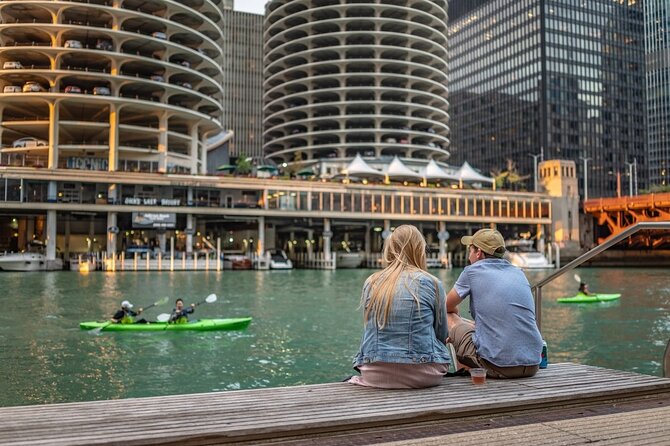
The Chicago Riverwalk brings the tour back into open air. The riverfront has walking paths, seating, restaurants, and views of downtown buildings from a low and flattering angle.
I particularly like this part of the route because Chicago architecture makes more sense when you can see several buildings at once. From the river, towers rise around the water in layers, giving you a better sense of how the city grew upward and outward.
The riverfront also supports boat tours and kayaking, although neither is part of the walking tour. You may see those activities during the stop, but do not count on time to join one.
The Chicago Architecture Center is scheduled for about 30 minutes. It sits by the river and focuses on the city’s buildings, design traditions, and architectural development through exhibits and educational programs.
The supplied details do not specify whether this tour includes a ticketed interior exhibit or an outside visit near the center, so ask your guide what access is planned on the day. The stop remains useful either way, especially if you want a clearer framework for the buildings you see later.
More history tours in Chicago:
- Historical and Architectural Chicago Fireboat River & Lake Cruise
★ 5.0 · 246 reviews - Chicago: Food, History and Architecture Tour
★ 4.8 · 104 reviews - Chicago Walking Tour: Historic Skyscrapers
★ 5.0 · 67 reviews - Chicago River Architecture Tour Aboard a Historic Yacht
★ 5.0 · 45 reviews
Crossing the DuSable Bridge and Michigan Avenue
The DuSable Bridge carries Michigan Avenue over the main branch of the Chicago River. It is a working movable bridge, but its importance goes beyond engineering.
This crossing connects the riverfront with the Magnificent Mile and has a place in the early story of Chicago. It also gives you a strong view along the water and toward the city’s major commercial corridor.
A walking tour can make an ordinary crossing feel more meaningful. Instead of simply going from one neighborhood to another, you get a brief explanation of why this location mattered as Chicago expanded.
The bridge is also a reminder that this is an active city route. Traffic, pedestrians, and other groups may share the space. Stay close enough to hear your guide, particularly if the group is spread out.
Tribune Tower and the stones in its walls
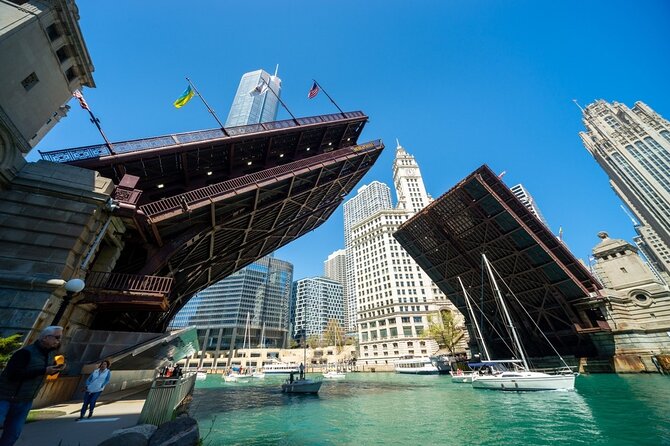
Tribune Tower receives about 10 minutes. Built in 1925 for the Chicago Tribune, the neo-Gothic skyscraper is one of the most decorative buildings on Michigan Avenue.
Its most curious feature is the collection of stones set into the exterior. Pieces came from famous places around the world, giving the facade a kind of architectural scrapbook effect.
Ten minutes is enough for an explanation and exterior photographs. It is not an interior tour, and the building is best appreciated from several steps back, where you can see the pointed forms and detailed surface.
This stop is especially useful if you enjoy the way buildings reveal the values of their original owners. A newspaper company did not choose a plain office block. It chose a building designed to announce power, tradition, and public importance.
The InterContinental and the old Medinah Athletic Club
The route passes the InterContinental Chicago, a major hotel on the Magnificent Mile. The building began in 1929 as the Medinah Athletic Club, and its past remains visible in its grand design.
The hotel is known for its Grand Ballroom and a junior Olympic-size swimming pool. You should treat this as an exterior architectural stop unless your guide says otherwise. The tour does not include a hotel room, pool, or ballroom admission.
This is a good example of the way the tour moves beyond the usual postcard sights. You get a look at how Chicago buildings have changed use over time. A private club became a luxury hotel, but the original ambition of the building still shapes its identity.
The Magnificent Mile itself is busy and commercial, with shops, hotels, restaurants, and heavy foot traffic. That energy can be fun, but it may also make conversation harder than in Millennium Park or along the river.
Coffee and a pause at Starbucks Reserve Roastery
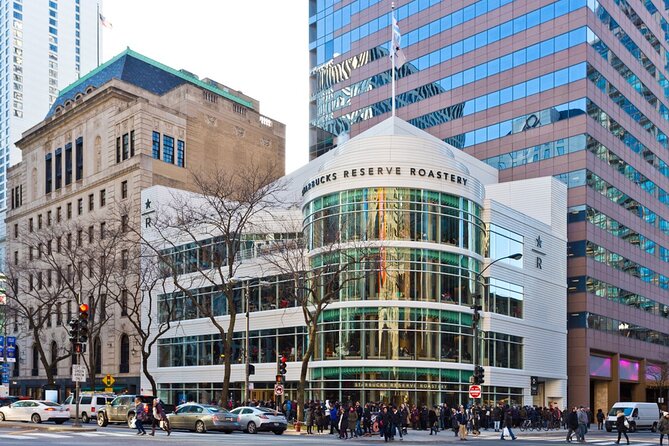
The Starbucks Reserve Roastery takes about 30 minutes and occupies five floors on Michigan Avenue. It opened in 2019 and includes coffee roasting, Reserve blends, food, and elaborate interior design.
This is not simply a quick cafe stop. It is designed as a large coffee attraction, with the roasting process and specialty drinks forming part of the visit.
Coffee and snacks are not included in the $64.99 tour price. If you want to taste something, budget extra. You can also treat this stop as a chance to rest and look around without buying a full snack or drink, but the precise arrangement depends on your guide and the group’s pace.
I see this stop as a matter of taste. Coffee fans may enjoy the scale and special blends. If your main reason for booking is architecture, the half-hour could feel less important than extra time at the river or Millennium Park.
The stop does add variety. After public art, underground routes, bridges, and historic buildings, you get a modern commercial space built around a familiar Chicago habit: stopping for coffee.
Wrigley Building views on the Magnificent Mile
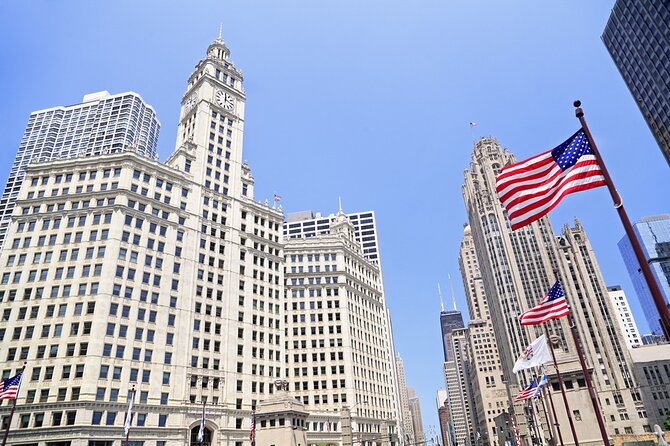
The Wrigley Building is one of the city’s most recognizable towers. Its white terra-cotta exterior and Spanish Colonial Revival design give it a softer, more decorative look than many Chicago skyscrapers.
Built in the 1920s as the headquarters of the Wrigley Company, it remains a key sight along the avenue. Your route passes the building, giving you a chance to compare it with Tribune Tower and the InterContinental.
These buildings tell different stories through their surfaces. Tribune Tower looks medieval and editorial. The Wrigley Building feels lighter and more polished. The InterContinental carries the grandeur of an old private club.
That comparison is one of the tour’s strengths. You are not merely collecting photographs. You are learning to notice how materials, decoration, and original purpose shape a city block.
Chicago’s fire and the city’s ability to rebuild
The tour also covers the Chicago Fire. The supplied details do not specify a separate fire site or museum visit, so expect the subject to appear through the guide’s narration while you walk.
That history matters because Chicago’s growth cannot be understood without the fire and the rebuilding that followed. The story helps explain why the city became such an important place for new construction and changing ideas about urban design.
A good guide can make this kind of history useful without turning the walk into a classroom. Andrew receives especially strong praise for clear explanations, concern for older participants, and a friendly approach. Several people describe him as passionate and well informed, and one account says he went out of his way to answer questions and help the group feel comfortable.
Guide quality matters a great deal on a walking tour. Buildings are easy to see on your own. The value comes from learning why they look the way they do and how they fit into Chicago’s past and present.
Reaching Navy Pier after the final stretch
The tour ends at Navy Pier, 600 E Grand Avenue. The pier reaches into Lake Michigan and includes dining, theaters, museums, seasonal events, and the Ferris wheel.
This is a useful endpoint because you can continue your afternoon without retracing your steps. You can explore the pier, find something to eat, or consider an architecture cruise. The cruise is an option after the tour, not part of the included walking experience, so plan to pay separately if you choose it.
Navy Pier also changes the mood of the day. The tour begins with urban art and architecture, then ends with open lake views and entertainment. If you still have energy, it is an easy place to extend your visit.
The scheduled stop is listed as 30 minutes, but the overall tour is approximately 2 hours and 30 minutes. Since the stop times listed for the individual attractions do not create a perfectly clear minute-by-minute schedule, ask your guide how much time will be spent walking between locations and how long you will have at the pier.
Price, group size, and physical demands
At $64.99 per person, the tour is priced above a basic self-guided walk but below many full-day guided experiences. The value depends on how much you want interpretation and structure.
You are paying for a local guide, a planned route, a small group capped at 10, and coverage of several distinct parts of downtown. Admission fees and taxes are included, while drinks, snacks, and any optional architecture cruise cost extra.
For me, the small group is the strongest value point. Ten people is small enough for questions and easier conversation than a large coach-style group. It also makes it less likely that you will miss a comment when the route crosses a busy street.
You should have a moderate level of fitness. The walk includes city streets, bridges, park paths, and the Pedway. Wear shoes you can use comfortably for the full 2.5 hours, and expect to remain on your feet for much of the experience.
The tour is near public transportation, and service animals are allowed. Confirmation arrives when you book, and the mobile ticket keeps the process simple.
A note about guide quality and personal safety
Most of the available feedback is strongly positive, with an overall score of 4.5 from eight ratings. Andrew is named repeatedly and receives praise for his clear storytelling, kindness, friendliness, and attention to older participants.
There is also one serious complaint involving another guide. The person described receiving unwanted texts, being told that the guide had looked up their phone number and knew where they were from, then finding a police officer and arranging a Lyft away from the meeting point.
That account is unusual compared with the other comments, but it should not be ignored. Before you go, confirm who is leading the tour and use the official booking contact if anything about the communication feels improper. Meet in the public starting area, keep control of your personal information, and leave if you feel unsafe.
This is practical advice for any walking tour, not just this one. A good guide should make you feel comfortable while explaining the city, and Andrew’s positive feedback suggests that he does that well.
Who will enjoy this Chicago walk?
I would recommend the tour to a first-time visitor who wants a broad introduction to central Chicago without spending a full day in museums. It gives you public art, architecture, local infrastructure, river views, shopping avenues, and a lakefront finish.
It also suits repeat visitors who have seen Cloud Gate and the Wrigley Building but want more context. The Pedway, DuSable Bridge, Chicago Fire discussion, and former Medinah Athletic Club add layers to familiar places.
Coffee fans may especially like the Starbucks Reserve Roastery. Architecture fans will likely appreciate the comparison between Tribune Tower, the Wrigley Building, and the riverfront buildings.
I would think twice if you want a slow photography walk. The route covers a lot of ground, and 2.5 hours is not much time for long stops at every sight. I would also avoid booking it if you need a fully accessible or seated experience, since the tour requires moderate physical fitness and detailed accessibility information is not provided.
Free cancellation is available if you cancel at least 24 hours before the start time. Inside that window, the price is not refunded, so keep the deadline in mind when making plans.
Should you book it?
Book this tour if you want a compact, guided introduction to downtown Chicago and value stories as much as sights. The small group, strong feedback about Andrew, unusual Pedway visit, and Navy Pier finish make the route more useful than a simple walk down Michigan Avenue.
Skip it if you prefer to set your own pace, dislike commercial stops, or want a dedicated architecture cruise instead. If you do book, wear good shoes, bring water, budget extra for coffee or snacks, and confirm the guide’s identity before meeting.
FAQ
Where does the tour begin?
It begins at McCormick Tribune Plaza, 1 N Michigan Avenue, Chicago, Illinois 60602, near Millennium Park and Cloud Gate.
Where does the tour end?
The tour ends at Navy Pier, 600 E Grand Avenue, Chicago, Illinois 60611.
How long does the tour last?
The walking tour lasts approximately 2 hours and 30 minutes.
What is the maximum group size?
The tour has a maximum of 10 participants.
Is Cloud Gate included?
Yes. Cloud Gate is part of the route, and there is no admission charge for the stop.
Are coffee and snacks included?
No. Coffee, tea, and snacks are not included in the tour price and must be purchased separately.
Is an architecture cruise included?
No. After reaching Navy Pier, you have the option to take an architecture cruise, but that is not included in the walking tour price.
Can I cancel for a full refund?
Yes, if you cancel at least 24 hours before the scheduled start time. Cancellations made within 24 hours are not refunded.
Just added around Chicago
- Private Chicago Architecture Tour★ 5.0 · 5 reviews
- Chicago Luxury Minibus City Tour and Architecture River Cruise★ 4.5 · 8 reviews
- Private Frank Lloyd Wright Architectural Tour by Luxury Vehicle★ 3.5 · 7 reviews
- Private Chicago Architecture Walking Tour★ 5.0 · 6 reviews
- Chicago History and Architecture Walking Tour with Boat Cruise★ 4.5 · 10 reviews
- Chicago: Evolution of the Skyscraper Walking Tour★ 4.9 · 10 reviews
- Chicago’s Modern Skyscrapers Guided Walking Tour★ 5.0 · 6 reviews
- Chicago Walking Tour: See Inside Art Deco Masterpieces★ 4.9 · 8 reviews
Walking Tours, compared.
The Official Art Deco Walking Tour by The Miami Design Preservation League
Read our review →
Barcelona: Gothic Quarter Ghosts and Legends Walking Tour
Read our review →
Barcelona: Old Town and Gothic Quarter Walking Tour
Read our review →
Lecce: Baroque Architecture and Underground Walking Tour
Read our review →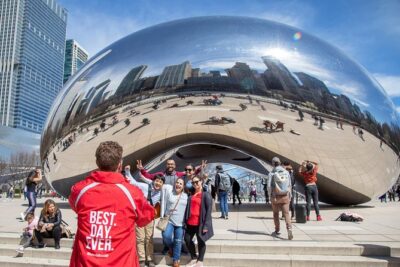
Chicago in a Day: Food, History & Architecture Walking Tour
Read our review →
Ramblas, Old Town, Gothic and Gaudi Architecture Walking Tour
Read our review →
Chicago’s Secret Interiors Architectural Walking Tour
Read our review →Browse the lists this tour appears in