
Review · CHICAGO
Chicago: Art Deco Skyscrapers Walking Tour
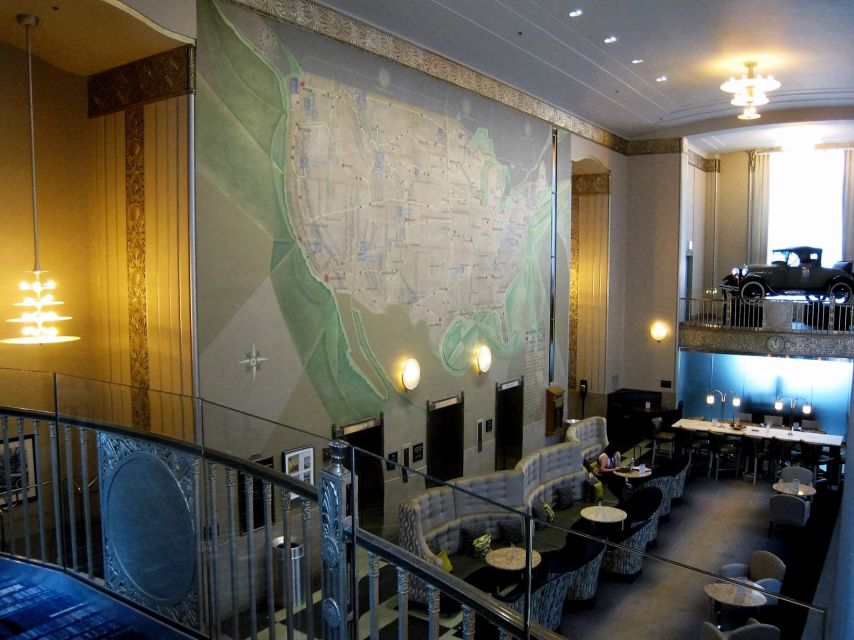
Chicago’s Art Deco is best understood from the inside. On this 90-minute walk, you move through five grand skyscraper lobbies where geometric patterns, polished materials, and bold color turn an office entrance into a piece of civic theater. Carbide and Carbon Building and the often-overlooked Trustees System Service Building are major highlights.
I like the small group, limited to 10 people, and the fact that guides receive hundreds of hours of training from the Chicago Architecture Center. I also like the useful route: it links several buildings near the Chicago River and ends at the Merchandise Mart. The main drawback is that this is a lobby tour, not a climb to a rooftop or a broad city sightseeing walk, and the tour runs rain or shine.
Key points to know before you book
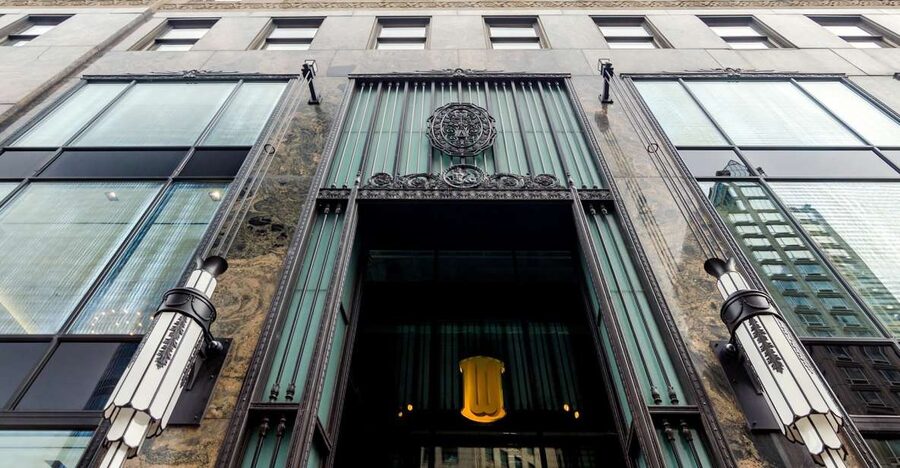
- Five opulent lobbies in 90 minutes: You get inside five Art Deco skyscrapers rather than simply viewing their façades from the sidewalk.
- Look for four signature motifs: Zigzags, octagons, sunbursts, and flowers help you read the style instead of just admiring shiny surfaces.
- A trained Chicago Architecture Center docent leads the way: Guides are volunteer city and architecture specialists with hundreds of hours of preparation.
- The Carbide and Carbon Building is now the St. Jane Hotel: Its changing use gives the tour a useful link between 1920s design and modern Chicago.
- The route finishes at Merchandise Mart: This makes the walk easy to pair with more sightseeing along the Chicago River.
- Small group, English, and wheelchair accessible: The group limit is 10, and free cancellation is available up to 24 hours before departure.
Why Chicago became an Art Deco city
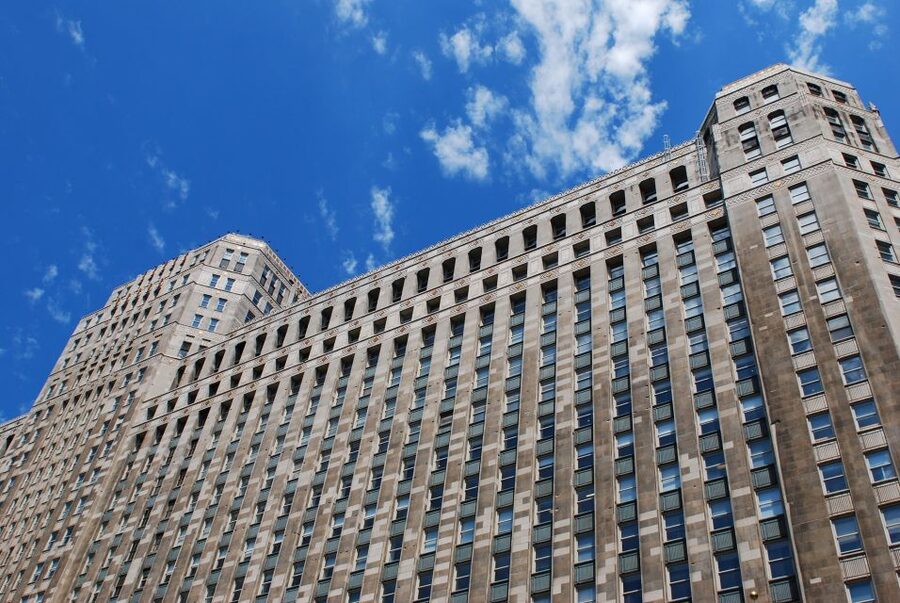
Art Deco arrived in Chicago during the 1920s, a period when new business towers were reshaping the city around the river. The style had been displayed at an international art exposition in Paris, then gained a prominent Chicago showcase at the 1933 and 1934 Century of Progress Exposition.
That timing matters. Art Deco was not meant to look shy or old-fashioned. It expressed the confidence of a city filled with new machines, new businesses, and new forms of entertainment. Designers used strong lines and repeated shapes to make buildings feel modern, while lavish materials gave them the polish expected by banks, offices, hotels, and commercial institutions.
You will see influences from Cubism and the art and architecture of the ancient Middle East. The usual shapes are easy to spot once your docent points them out: zigzags suggest movement, octagons create order, sunbursts radiate energy, and flowers soften the hard geometry.
I find the interior focus especially worthwhile because Art Deco can be easy to miss from the street. A tall tower may look restrained outside, but its lobby can reveal ornamental metalwork, decorative stone, patterned floors, and rich color. The architecture was designed to impress people the moment they walked through the door.
More Art Deco tours in Chicago:
- Chicago Walking Tour: Art Deco Skyscrapers Loop
★ 5.0 · 138 reviews - Chicago Architecture Walking Tour: Incredible Art Deco Interiors
★ 5.0 · 85 reviews - Chicago Walking Tour: Art Deco Skyscrapers Riverfront
★ 5.0 · 53 reviews
Starting at 30 N LaSalle Street
Arrive 10 minutes early at 30 N LaSalle Street with your confirmation ready. The docent checks your name against the attendance list, so this is not the time to arrive at the last second and hope to catch up with the group.
The meeting point puts you in Chicago’s central business district, close to the area where the tour’s Art Deco buildings were built during the Roaring ’20s. You do not need hotel pickup, and none is offered. Plan your route to the meeting point in advance, especially if you are carrying bags or coordinating this walk with a train arrival.
The group is capped at 10 people. That is a useful size for an architecture tour. You can usually hear a guide more easily than in a large crowd, and a docent has a better chance to answer a focused question or point out a small detail that a big group might miss.
This is an English-language tour. The route is wheelchair accessible, but the practical limits still matter: luggage and large bags are not allowed, and there is no secure storage for luggage or strollers. Coat check is not provided either. Leave your heavy bags at your accommodation or arrange storage before arriving.
Reading the Carbide and Carbon Building
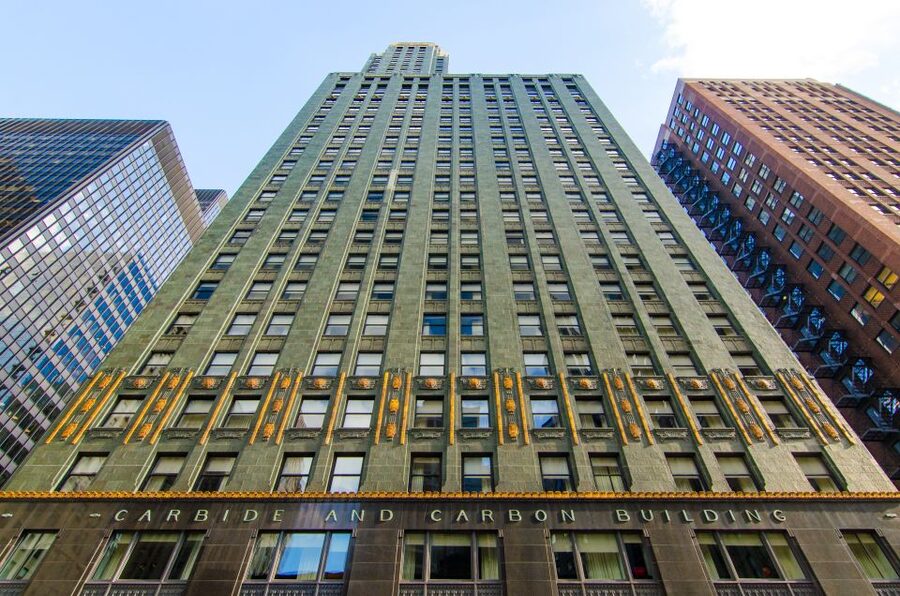
The Carbide and Carbon Building, now the St. Jane Hotel, is one of the clearest reasons to choose this walk. It is a designated Chicago landmark and gives you the chance to see how Art Deco can make a commercial tower feel almost theatrical.
The building’s current hotel use also adds a useful layer to the visit. You are looking at a structure that has moved from its original business-era role into modern hospitality, while its Art Deco character remains part of the experience. The tour helps you connect the building’s past purpose with what you see today.
Your docent explains how the style works rather than asking you to admire it without context. Look for the repeated geometry and the lavish treatment of the public interior. The point is not just that the lobby is attractive. The point is that the design announces ambition, prosperity, and modernity before you ever reach an office or hotel room.
This stop is likely to appeal to you if you enjoy buildings that tell two stories at once. One story concerns the 1920s business boom. The other concerns the way Chicago continues to reuse and protect notable architecture.
The Chicago Motor Club Building and its new role
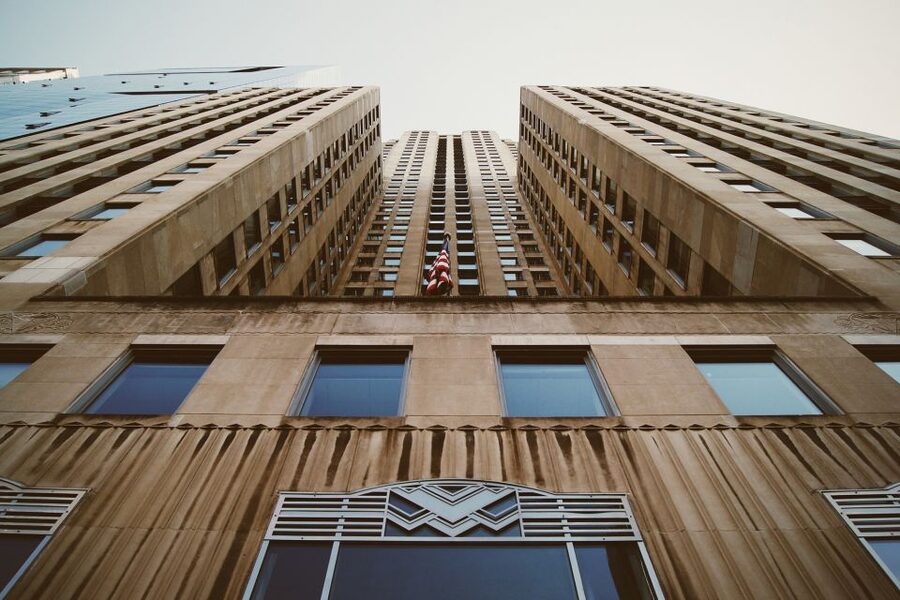
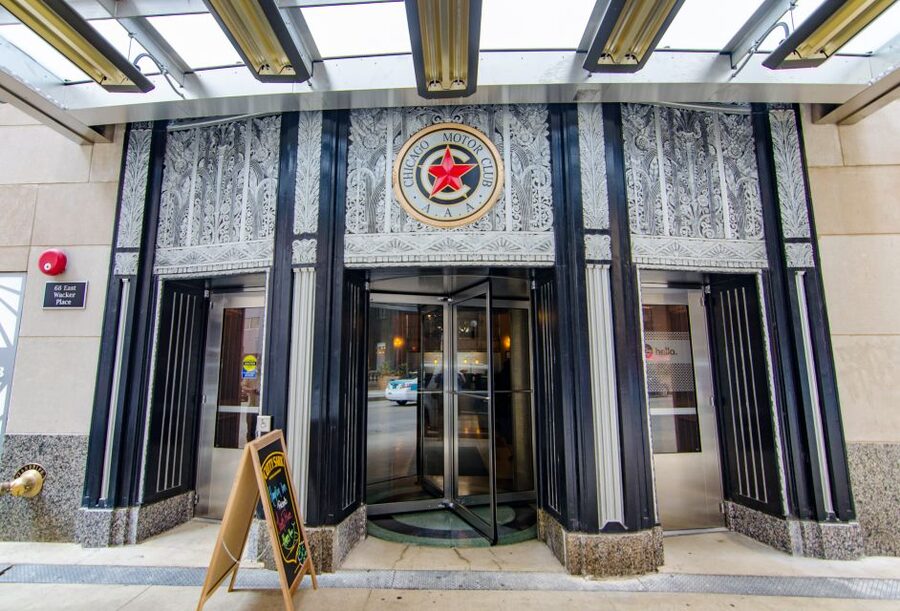
The Chicago Motor Club Building, now a Hampton Inn, is another designated Chicago landmark on the route. Its inclusion reinforces one of the tour’s strengths: you are not walking through a single preserved museum building. You are seeing Art Deco landmarks that have been adapted for present-day use.
That makes the tour more practical than a style lesson alone. You can see how historic buildings remain part of everyday Chicago, even when their functions change. The docent also helps separate genuine Art Deco features from the general idea of anything old, glossy, or decorated.
The building’s name points to an era when the automobile was reshaping American life. Art Deco fit that mood well. Its lines could suggest speed, machinery, and progress, while its decorative details kept the setting polished and aspirational.
I would pay attention here to the balance between vertical scale and interior decoration. Chicago skyscrapers reach upward with great force, but their lobbies bring the human scale back down to eye level. Floors, walls, doors, and decorative panels become the close-up evidence of what the building was trying to say.
More skyscraper tours in Chicago:
- Chicago Premium Driving Tour with River Boat Cruise and Sky Deck
★ 4.5 · 165 reviews - Chicago Walking Tour: Historic Skyscrapers
★ 5.0 · 67 reviews - Walking Tour: Chicago’s Loop – Home of the Modern Skyscraper
★ 5.0 · 36 reviews - Chicago: Evolution of the Skyscraper Walking Tour
★ 4.9 · 10 reviews
The overlooked Trustees System Service Building
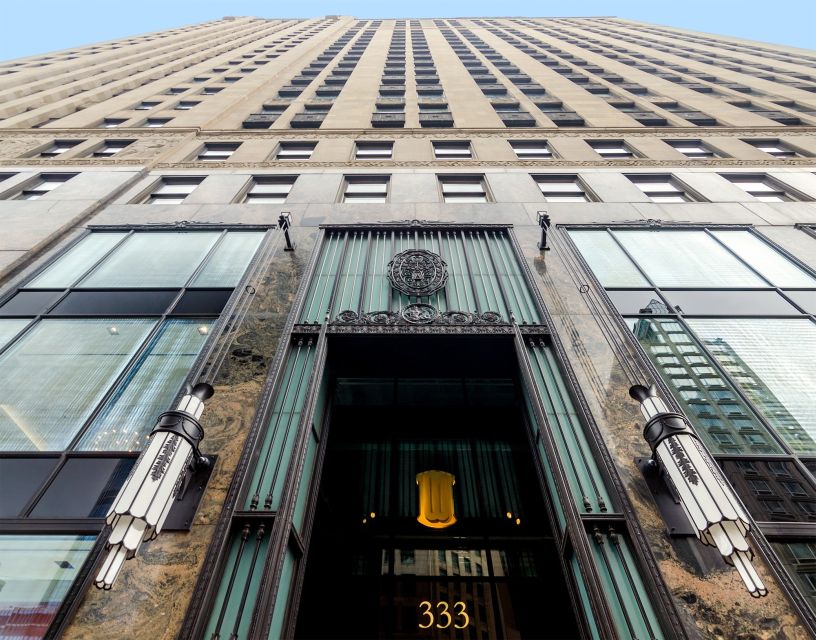
The Trustees System Service Building, now called Century Tower, is a particularly good reason to take a guided walk instead of relying only on a standard list of famous Chicago towers. It is colorful and often overlooked, yet it is one of the designated Chicago landmarks included in the route.
That combination is valuable. The most famous buildings can draw all the attention, while a less familiar structure may reveal more surprising details. Here, color becomes an important part of the Art Deco story, showing that the style was not limited to black, gray, brass, and solemn stone.
This is also where a trained docent can make a real difference. Without an explanation, you might pass the building and never know what you were missing. With the right context, a building that seems less familiar becomes a meaningful part of the city’s design story.
I like this stop for another reason: it keeps the tour from becoming a parade of only marquee names. Chicago’s architectural character is spread across major monuments and quieter landmarks. The Trustees System Service Building helps you notice the second group.
The Engineering Building and the language of modern industry
The Engineering Building is another designated Chicago landmark visited during the walk. Its name fits the period nicely. Art Deco developed during a time when engineering, transportation, manufacturing, and new construction methods were changing daily life.
At this stop, you can consider how the style turns technical confidence into visual form. The clean geometry and repeated patterns do not merely decorate a building. They create a sense of order, power, and forward motion.
The tour’s stated highlights include both soaring exteriors and opulent interiors. You should expect the docent to connect the two, showing how a tower’s vertical lines relate to its more detailed public spaces. The exterior gives the building presence on the street. The lobby gives that presence a human welcome.
Because the full walk lasts only 90 minutes, each stop is handled as part of a larger story rather than as a long building-by-building lecture. That is a strength if you want a well-paced introduction. It may feel brief if you are an architecture specialist hoping to study every decorative panel at length.
Finishing at Merchandise Mart
The route ends at Merchandise Mart, giving the tour a clear finish rather than sending you back to the starting point. This matters when planning your day. Afterward, you can continue exploring the Chicago River area, visit another nearby attraction, or simply stop for a meal without retracing the entire route.
The Merchandise Mart also fits the tour’s commercial focus. The walk is about the relationship between design, business, and public display. These buildings were not decorated at random. Their lobbies helped companies and institutions project stability, modernity, and success.
I would treat the ending as a planning advantage. If you are building a morning or afternoon around the river, this tour can function as one part of a larger route. Just remember that the experience itself is a walking tour of interiors, not a river cruise and not a general overview of all Chicago architecture.
What the docent adds to the experience
The guides are certified Chicago Architecture Center volunteer docents. They receive hundreds of hours of training in Chicago architecture and local history, and they are described as storytellers as well as city experts.
That preparation is central to the value of the walk. Art Deco motifs are easy to identify after someone shows you what to look for, but the larger payoff comes from learning why those motifs appeared when they did. You begin to see decoration as a record of public taste, business confidence, and cultural exchange.
The strongest feedback about this experience focuses on the guides’ clear explanations, humor, pacing, and detailed descriptions. That matches what I would want from a short architecture walk. You do not need a lecture packed with specialist terms. You need someone who can make a zigzag, sunburst, or octagon meaningful within the wider story of Chicago.
No individual guide name is provided, so your docent will depend on the departure date. The quality of a volunteer-led program can vary slightly from one person to another, but the training framework gives each guide a serious base to work from.
Is $35 good value for 90 minutes?
The listed price is $35 per group up to 1, so check the booking screen carefully to understand how the price applies to your party. The value comes from more than the walking time. Your ticket includes entry into five Art Deco buildings, a certified docent, and admission to the Chicago Architecture Center exhibits.
For someone interested in architecture, that is a solid bundle. You are getting access to interiors that may be difficult to interpret on your own, along with a trained guide who supplies the context. The tour also avoids the cost and time of arranging separate visits to several buildings.
The value is less clear if you want a broad Chicago sightseeing tour. You will not cover the city’s entire architectural story, and the route does not promise observation decks, museum collections, or a boat ride. You are paying for a focused look at one style and five important interiors.
Your ticket also supports Chicago Architecture Center education programs and community projects. Those include Girls Build!, Teen Fellows, the Newhouse Architecture and Design Competition, and free Open House Chicago programming. I would not book solely for that reason, but it is a useful benefit when comparing this tour with a purely commercial walk.
Weather, comfort, and practical limits
Tours depart rain or shine, and weather does not qualify you for a refund. Bring suitable clothing and shoes, even though much of the experience takes place indoors. You will still be walking between buildings and standing during explanations.
The 90-minute length is manageable for most visitors and works well in a busy Chicago schedule. It is long enough to establish the Art Deco story, but short enough to combine with another activity. If you need frequent sitting breaks, ask about the pace when you arrive, since the available information does not specify seating at each stop.
The tour is wheelchair accessible. Pets are not allowed, although service animals are welcome. Since there is no luggage or stroller storage, this is best scheduled when you can travel light.
You can cancel up to 24 hours in advance for a full refund, and the reserve-now, pay-later option keeps your plans flexible. Those policies help if your Chicago schedule is still changing, but they do not remove the weather issue. Once the tour day arrives, plan to go out in the conditions.
Who should book this Art Deco walk?
I would choose this tour if you enjoy architecture, city history, photography, design, or the details of old commercial buildings. It is also a good fit if you have already seen Chicago’s famous skyline and want to understand what happens at street level and inside the doors.
The small group suits you if you prefer asking questions and hearing a guide without a crowd. The English format is straightforward for English-speaking visitors, and the wheelchair-accessible route widens its appeal.
You may want something else if you are seeking a high-energy sightseeing circuit, an outdoor-only walk, or a rooftop view. The experience is focused and interior-based. Its pleasure comes from looking closely, listening carefully, and noticing design choices that are easy to miss while hurrying through downtown.
Should you book it?
Book this tour if you want a compact, well-guided introduction to Chicago Art Deco, especially if the chance to enter five landmark lobbies matters to you. The Carbide and Carbon Building, Chicago Motor Club Building, Trustees System Service Building, Engineering Building, and Merchandise Mart create a strong route, and the trained docent adds the context that turns decoration into a story.
Skip it if you are carrying luggage, need a weather-proof cancellation option, or want a general survey of Chicago rather than a focused look at 1920s design. For the right audience, the combination of small-group access, five interiors, and Chicago Architecture Center expertise makes this a worthwhile 90-minute stop.
FAQ
How long is the Art Deco skyscrapers walking tour?
The tour lasts 90 minutes.
Where does the tour meet?
Meet at 30 N LaSalle Street and arrive 10 minutes before departure with your confirmation ready.
Where does the tour end?
The tour ends at Merchandise Mart.
How many buildings do you visit?
You enter five iconic Art Deco buildings during the walk.
Is the tour wheelchair accessible?
Yes, the activity is wheelchair accessible.
Is the tour offered in English?
Yes, the live tour guide language is English.
Can I bring luggage or a stroller?
No. Luggage and large bags are not allowed, and secure storage for luggage or strollers is not available. Coat check is not provided.
What happens if it rains?
Tours depart rain or shine, and refunds are not available because of the weather. You can cancel for a full refund up to 24 hours before departure.
More Architecture Walks in Chicago
- Chicago in a Day: Food, History & Architecture Walking Tour
★ 5.0 · 1,153 reviews - Chicago’s Secret Interiors Architectural Walking Tour
★ 5.0 · 635 reviews - Chicago: Secret Interiors Architecture Walking Tour
★ 4.9 · 498 reviews - Chicago Architecture Walking Tour: What’s New
★ 5.0 · 64 reviews
Just added around Chicago
- Private Chicago Architecture Tour★ 5.0 · 5 reviews
- Private Frank Lloyd Wright Architectural Tour by Luxury Vehicle★ 3.5 · 7 reviews
- Chicago Luxury Minibus City Tour and Architecture River Cruise★ 4.5 · 8 reviews
- Chicago History and Architecture Walking Tour with Boat Cruise★ 4.5 · 10 reviews
- Small Group History And Architecture Walking Tour of Chicago★ 4.5 · 8 reviews
- Private Chicago Architecture Walking Tour★ 5.0 · 6 reviews
- Chicago: Evolution of the Skyscraper Walking Tour★ 4.9 · 10 reviews
- Chicago’s Modern Skyscrapers Guided Walking Tour★ 5.0 · 6 reviews
Art Deco Tours, compared.
The Official Art Deco Walking Tour by The Miami Design Preservation League
Read our review →

Guided 10am Morning Art Deco Walk From Napier Art Deco Trust
Read our review →
Award-winning Art Deco & Neon Lights Walking Tour in Miami Beach
Read our review →
Browse the lists this tour appears in