
Review · VIENNA
Vienna Art Nouveau Walking Tour
Vienna’s Art Nouveau is not confined to a single museum. It appears in Otto Wagner’s elegant metro stations, apartment buildings, bridges, and the bold Secession building. This small-group tour connects those pieces into one clear story, ending at an imperial station built just for the emperor.
I like the route for two reasons: it gives you a useful introduction to Vienna’s architecture around 1900, and it uses the city’s metro system as part of the lesson. Guides such as Jan, Suzanne, Ilse, Angelina, and Wolfgang Augsten have been praised for adapting the walk, answering detailed questions, and adding practical tips about Vienna. The main drawback is the price, $180.04 per person, especially since museum admissions and food are extra.
Key points to know before booking
- Otto Wagner’s metro stations are the main attraction, including the Stadtpark station and the imperial stop near Schönbrunn.
- Secession and Klimt’s Beethoven Frieze add an important museum visit when the building is open.
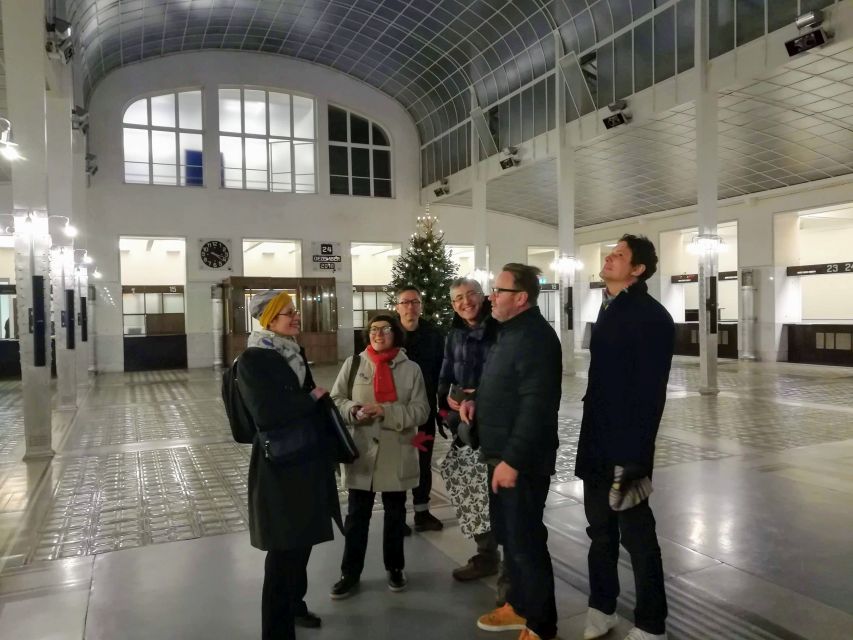
- Groups are limited to eight people, which suits anyone who wants time for questions.
- The guide shapes the experience, with past guides including Jan, Stefan, Suzanne, Ilse, Angelina, and Wolfgang Augsten.
- The route mixes walking with a metro ride, so you see both the architecture and the transport system that helped modernize Vienna.
- Extra admission costs matter, especially the Otto Wagner Pavilion from April through October and Secession House from Tuesday through Sunday.
Why Vienna’s metro is an Art Nouveau museum
At the turn of the 20th century, Vienna was changing fast. The city was expanding, new public transport was needed, and architects were looking for a style that did not simply copy earlier Gothic, Baroque, or Renaissance forms.
Otto Wagner helped give that change a visual language. His city railway stations used practical modern construction, but they were also carefully designed. Floral decoration, pale surfaces, metal details, geometric patterns, and strong symmetry made public transport part of the city’s identity.
That is the clever idea behind this tour. You are not just looking at handsome buildings one by one. You are seeing how transport, politics, architecture, and daily life came together in Vienna.
Your guide also introduces Jugendstil, the German-speaking version of Art Nouveau. The term refers to the desire for a new style, one suited to modern life rather than borrowed from old European models. As you walk, you learn to spot the materials and symbols that artists and architects favored.
This makes the tour useful even after it ends. Once you know what to look for, you may begin noticing related details in other Vienna buildings and in cities such as Budapest.
More Art Nouveau tours in Vienna:
- Vienna Art Nouveau Walking Tour
★ 4.4 · 33 reviews - Private Tour with an Art Historian of the Leopold Museum: Gustav Klimt, Egon Schiele and Viennese Art Nouveau
★ 5.0 · 16 reviews - Private Klimt & Vienna Art Walk — From Baroque to Secession
★ 4.5 · 16 reviews
Starting at the Otto Wagner Pavilion at Karlsplatz
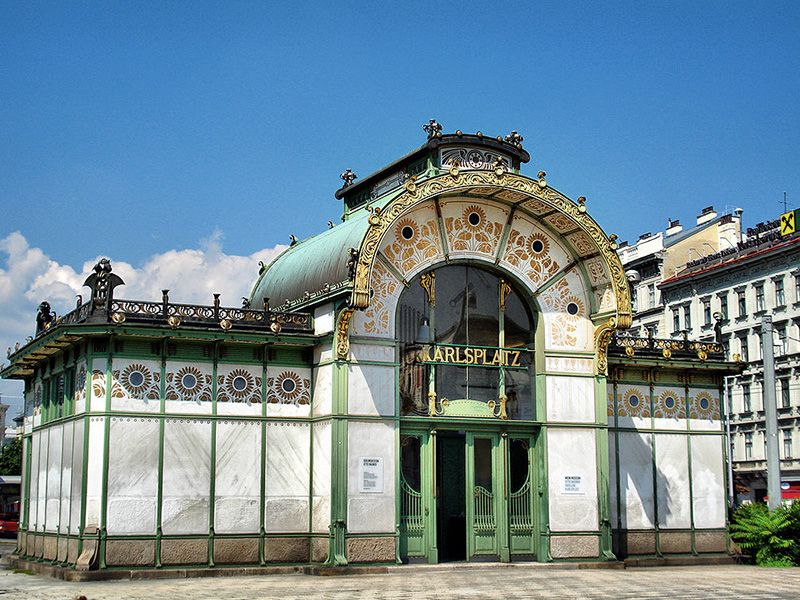
The tour begins at Operngasse 7 in central Vienna and heads to the Otto Wagner Pavilion at Karlsplatz. This small green-and-white structure is one of the city’s most recognizable Art Nouveau buildings.
The pavilion originally served Vienna’s city railway. Its delicate decoration and formal shape show how Wagner treated a transport stop as an architectural statement rather than a plain shelter. The building now houses a small Wagner Museum when open.
This is a good first stop because it gives your guide a place to explain the main ideas before the walking begins in earnest. You can expect discussion of Wagner’s role in Vienna’s modernization and of the tension between useful public design and artistic expression.
From April through October, when the museum is open, the tour includes the pavilion museum. Admission is not included in the tour price. General admission is €5, while seniors, students, Vienna Card holders, and people with disabilities pay €4.
That extra fee is modest, but you should know about it before you arrive. The museum is small, so do not expect a long indoor visit. Its value comes from the setting and from having the guide explain the building as part of a larger city project.
Stadtpark station and the Vienna River problem
The next major stop is the Stadtpark station, one of the best-preserved original metro stations still in use. This is where the tour begins to examine design details more closely.
The station is especially interesting because of its relationship with the Vienna River. When the city railway was built, the waterway had to be redirected. That created a practical problem: how could the new transport line and the altered river fit into the existing city?
The answer included an artificial riverbed beside the station. It is a small detail, but it opens up a larger discussion about how Vienna was rebuilt and reorganized. You see that infrastructure was not treated as something to hide. It became part of the city’s public design.
I like this stop because it prevents the tour from becoming a parade of decorative façades. You learn how Art Nouveau worked at the level of engineering, urban planning, and public use. The prettiness is there, but it is tied to real problems that needed solving.
The walk from Karlsplatz to Stadtpark also helps you get your bearings in central Vienna. You are moving through an active part of the city rather than being driven from one isolated sight to another.
Secession House and the bold new Vienna
From Stadtpark, the route continues toward Kettenbrücke station and the Secession building. Secession is the visual shock of the tour. Its white structure, unusual dome, and decorative details look very different from Vienna’s grand imperial buildings.
The building was created for artists who wanted to break from established institutions and show new work on their own terms. It became the clearest architectural symbol of Viennese Jugendstil.
Inside, you may see Gustav Klimt’s Beethoven Frieze. The admission charge is €9.50 for adults and €6 for students and seniors when the tour runs Tuesday through Sunday. Your guide helps with the payment.
The Frieze is one of the strongest reasons to choose this tour over a simple outdoor architecture walk. It connects the building’s symbolism to Klimt’s art and gives you a chance to see how Vienna’s artists approached myth, music, human desire, and fear.
Do keep the schedule in mind. The Secession visit and the Beethoven Frieze are not described as an all-day museum stop. The tour has a set length, so your guide will keep the visit focused.
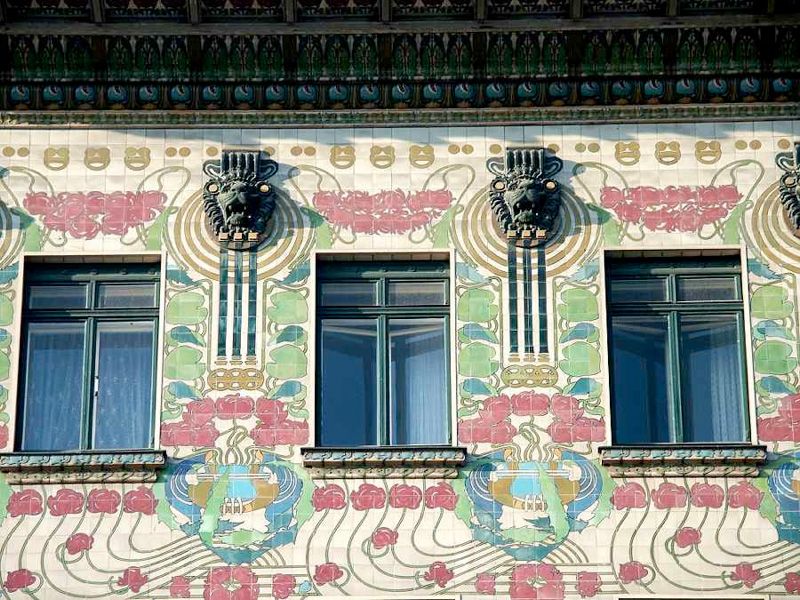
Outside, your guide explains the ideas behind Jugendstil and points out two attractive apartment buildings by Otto Wagner. These residential buildings are valuable because they show how the new style reached ordinary city life, not just exhibition halls and public monuments.
You will look at patterns, surfaces, windows, balconies, and decorative motifs. The guide also explains how the artists used symbols and materials to give buildings a modern identity.
More architecture walks in Vienna:
- Private Vienna Art Nouveau Walking Tour
★ 5.0 · 4 reviews - The Official Art Deco Walking Tour by The Miami Design Preservation League
★ 5.0 · 1,580 reviews - Barcelona: Gothic Quarter Ghosts and Legends Walking Tour
★ 4.7 · 1,443 reviews - Barcelona: Old Town and Gothic Quarter Walking Tour
★ 4.8 · 1,393 reviews
Kettenbrücke and the final metro ride
At Kettenbrücke station, the tour uses the metro for its final stop. This is a practical part of the experience, not a break from it.
The ride helps you understand Vienna’s public transport system, and one past participant specifically appreciated learning how to navigate the city’s trains. If you are new to Vienna, that small lesson can make the rest of your stay easier.
The route also gives your feet a rest. The tour lasts about two and a half hours, though it is sometimes described as a three-hour walk. You should expect steady walking, periods of standing, and a short metro journey.
A useful detail from past tours is that guides have adjusted the pace or route for the group. Suzanne used the U4 to reduce walking and provide a warm break on a cold day, while another guide offered a car ride during particularly poor weather. These arrangements should not be treated as guaranteed features, but they show the benefit of a small group and a flexible guide.
The imperial station near Schönbrunn
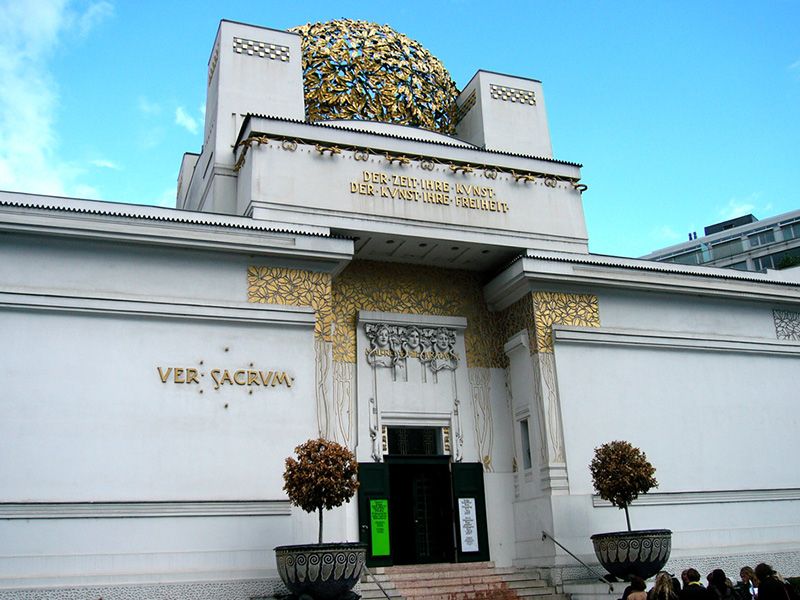
The final stop is the most unusual: an ornate station built outside Schönbrunn Palace solely for the emperor.
It was not simply a convenient private platform. The station carried a political message. Critics of Vienna’s metro system could see that the emperor supported the railway. Public transport, in other words, had become part of the imperial image.
The building combines the familiar vocabulary of Wagner’s work with a more formal, grand setting. Your guide points out the same Art Nouveau ideas seen earlier, then explains how they were adapted for imperial use.
This stop gives the tour a strong ending because it gathers the earlier themes into one place. You have seen Wagner’s public transport architecture, the problem of fitting infrastructure into the city, the independent spirit of Secession, and the decorative language of private apartment buildings. Here, those ideas are adjusted for the monarchy.
The station is small, but that is part of its appeal. It is not a vast palace interior. It is a concentrated example of how architecture can serve both practical and symbolic purposes.
The guide makes or breaks this tour
This experience depends heavily on the person leading it. Art Nouveau can be reduced to a list of dates and façades, but the guide needs to explain why the buildings matter.
The strongest guide reports describe people who could answer specific questions, connect architecture to Austrian history, and adapt the route to the group. Jan was praised for his enthusiasm for Vienna, while Suzanne helped build a clear understanding of the city around 1900, the Secession movement, and Otto Wagner.
Ilse was described as entertaining and flexible. Angelina was noted for being friendly, prepared, and willing to add more when the group wanted it. Wolfgang Augsten guided visitors through Vienna’s architectural development with a personal touch.
The provider also uses Stefan or Stephan among its guides, depending on the tour. One guide added suggestions for places to eat and visit, which can be useful if this is your first day in Vienna.
You are not guaranteed a particular guide, so book this tour for the subject and format rather than for one named person. Still, the pattern is clear: this is intended as an expert-led cultural walk, not a basic sightseeing circuit.
Is $180.04 a fair price?
At $180.04 per person, this is an expensive walking tour. The price includes about two and a half hours with a professional guide and a group capped at eight people. It does not include food, drinks, hotel pickup, or all entrance fees.
The value depends on how much help you want making sense of Vienna’s architecture. If you already know Wagner, Klimt, and the Secession movement, you may find the price hard to justify. You could see several buildings independently for much less.
For an art, design, or history enthusiast, the calculation is different. You are paying for a connected explanation, a carefully chosen route, and the ability to ask questions along the way. A private guide for up to eight people can also make sense for a family or group of friends, since the experience becomes more personal than a large public walk.
The small group is important. With a maximum of eight people per booking, you have a better chance of hearing clearly and getting an answer tailored to your interests. Group discounts are available, though the exact saving is not provided, so check the booking details before counting on one.
Remember to add the museum fees when comparing the total cost. The Otto Wagner Pavilion costs €5 for general admission when open, and Secession House costs €9.50 for adults from Tuesday through Sunday.
Who will enjoy this walking tour most?
I would choose this tour if you care about architecture, art, urban planning, or Vienna around 1900. It is also a strong first-day option for someone who wants a quick orientation to central Vienna and its public transport.
Klimt fans get the Beethoven Frieze. Wagner fans get several buildings and metro stations. General culture buffs get a useful explanation of how Vienna moved from imperial tradition toward modern design.
The tour may be less suitable if you want long museum visits, a relaxed café stop, or a broad survey of every major Vienna sight. Its subject is narrow by design. You will not get a full tour of Schönbrunn Palace or a general city sightseeing circuit.
Weather is another factor. Much of the experience takes place outdoors. Cold rain can make any walking tour tiring, although the small-group format gives the guide some room to adjust. Wear practical shoes and check the forecast before setting out.
The tour is offered in English, and most people can participate. It is near public transportation, but hotel pickup and drop-off are not included.
Booking, timing, and cancellation details
Confirmation is provided at booking, and the tour is often reserved well ahead of time, with an average booking lead time of about 36 days. That suggests you should plan early if the date matters to you.
The meeting point is Operngasse 7, 1010 Vienna. The listed end point is Vienna, so confirm the exact meeting instructions and timing in your booking confirmation.
Free cancellation is available until 24 hours before the start time for a full refund. Changes or cancellations made less than 24 hours before the experience are not accepted for a refund, and the cut-off follows local Vienna time.
Should you book the Vienna Art Nouveau Walking Tour?
Book it if you want Vienna’s Art Nouveau explained as a connected story rather than photographed as a series of pretty buildings. The route has real variety: Wagner’s Karlsplatz pavilion, the working Stadtpark station, the Secession building and Klimt’s Beethoven Frieze, apartment architecture, and the emperor’s private metro stop.
I especially like the way it links art with public works. You learn not only what Jugendstil looks like, but why Vienna needed new stations, how the Vienna River shaped construction, and how the emperor used a railway building to make a political point.
Skip it if the $180.04 price feels high for a two-and-a-half-hour walk, or if you prefer to explore at your own speed. For everyone else, particularly art and architecture fans, the small group and strong guide-led discussion make this one of the better focused ways to understand modern Vienna.
FAQ
How long does the Vienna Art Nouveau Walking Tour last?
The tour lasts approximately two and a half hours. It is also described in the tour details as a three-hour walking tour, so allow roughly three hours for the full experience.
Where does the tour start?
The listed meeting point is Operngasse 7, 1010 Vienna, Austria.
Where does the tour end?
The listed end point is Vienna, Austria. The exact final location should be confirmed in your booking information.
How many people can join the tour?
A booking can include a maximum of eight people, and the activity also has a maximum group size of eight.
Is the tour offered in English?
Yes. The tour is offered in English and includes a professional guide.
Are admission fees included?
The guided tour is included, but some admission fees are extra. From April through October, the Otto Wagner Pavilion costs €5 for general admission or €4 for seniors, students, Vienna Card holders, and people with disabilities. Secession House costs €9.50 for adults and €6 for students and seniors from Tuesday through Sunday.
Can I cancel for a full refund?
Yes, if you cancel at least 24 hours before the local start time. Cancellations or changes made less than 24 hours before the start time are not eligible for a refund.
Just added around Vienna
- Vienna: Baroque Orchestra Concert and Dinner★ 4.6 · 18 reviews
- Vienna’s Hills Private tour: Nature & Hidden Architectural Jewels★ 5.0 · 12 reviews
- Private Tour with an Art Historian of the Leopold Museum: Gustav Klimt, Egon Schiele and Viennese Art Nouveau★ 5.0 · 16 reviews
- Private Klimt & Vienna Art Walk — From Baroque to Secession★ 4.5 · 16 reviews
- Private Vienna Art Nouveau Walking Tour★ 5.0 · 4 reviews
- An Architectural insight of Vienna on a Private Tour with a local★ 3.5 · 2 reviews
- Vienna Art Nouveau Walking Tour★ 4.4 · 33 reviews
- Vienna: Concert by the Vienna Baroque Orchestra★ 4.6 · 56 reviews
Art Nouveau Tours, compared.
Riga: Old Town Walking Tour with Art Nouveau Highlights
Read our review →
Riga: 2-Hour History of Art Nouveau Walking Tour
Read our review →
Brussels: Art Nouveau Pass – Entry to Three Locations
Read our review →
Small Group Tour in Ålesund: Art Nouveau, Sea Views & Insider Tips
Read our review →
Browse the lists this tour appears in