
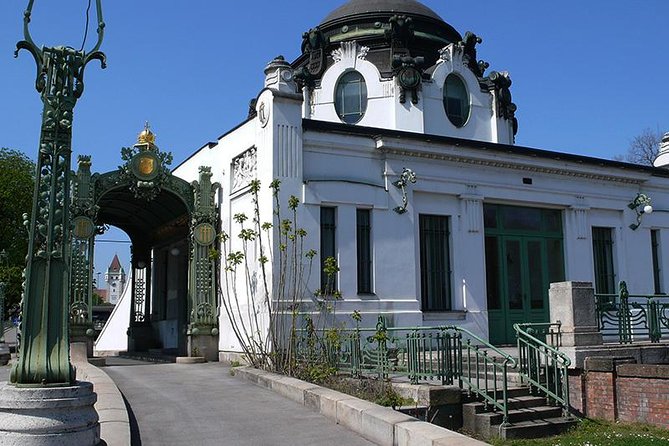
Review · VIENNA
Private Vienna Art Nouveau Walking Tour
Vienna’s Art Nouveau is easiest to understand when you see it in motion: from a grand exhibition hall to practical metro stations, apartment houses, and a tiny stop built for an emperor. This private walk links those pieces into one clear story, with guides such as Barbara, Wolfgang, and Annelie bringing in art, architecture, and Vienna’s changing society.
I like the private format, since you can ask about Klimt, Otto Wagner, Secession design, or daily Viennese life without waiting for a large group. I also like the route’s mix of famous buildings and useful city spaces, from Karlsplatz to Naschmarkt. The main drawback is cost: $490 per group is strong value for a full group of up to 10, but expensive for one or two people.
Key points to know before booking
- Klimt’s Beethoven Frieze: The Secession Building gives the tour an artistic centerpiece, though museum admission costs extra.
- Otto Wagner’s practical design: You see his metro stations, pavilion, and Postal Savings Bank, not just grand façades.
- A genuinely private experience: Your group alone takes part, making it easier to set the pace and ask detailed questions.
- Three hours on foot: The route covers several central areas, so comfortable shoes matter.
- Seasonal and day-specific admissions: The Otto Wagner Pavilion is visited when open, mainly April through October, and Secession admission varies by opening day.
- Best for curious design fans: Art, architecture, city history, and Vienna’s modern identity all meet on this walk.
Why Vienna’s Art Nouveau works so well on foot
Vienna’s Art Nouveau, often called Jugendstil or Vienna Secession, was not simply a decorative fashion. It was a break with older academic rules. Artists and architects wanted new forms for a changing city, and they applied those ideas to museums, banks, markets, apartments, and public transport.
That is what makes this tour useful. You are not confined to one museum or one architect. You move between buildings with different jobs, then see how the same period handled each one.
The tour lasts about three hours and is private for your group. That matters in Vienna, where a quick look at a façade can turn into a useful discussion about materials, symbolism, or the city’s development. You can ask your guide to spend more time on Klimt, Otto Wagner, the metro system, or the wider Secession movement.
The route is also well suited to people who want more than a photo stop. You will see buildings from the outside and, where operating hours and admission allow, enter selected sites. Since the walking is spread across several stops, expect a steady city walk rather than a single museum visit.
More Art Nouveau tours in Vienna:
- Vienna Art Nouveau Walking Tour
★ 4.4 · 33 reviews - Vienna Art Nouveau Walking Tour
★ 5.0 · 21 reviews - Private Tour with an Art Historian of the Leopold Museum: Gustav Klimt, Egon Schiele and Viennese Art Nouveau
★ 5.0 · 16 reviews
Starting with rebellion at the Secession Building
The Secession Building is one of the clearest statements of Vienna’s artistic break with tradition. Joseph Maria Olbrich completed it in 1898 as an exhibition hall for the Vienna Secession, a group of artists who had separated from Vienna’s established fine-art institution.
Its famous dome of gilded laurel leaves gives it an unmistakable profile. The building was designed as an architectural manifesto, so even before entering, you are looking at a claim about what modern art should be.
Inside, the main prize is Gustav Klimt’s Beethoven Frieze. The work was made for one of the Secession’s early exhibitions and fills the walls with a long symbolic tale inspired by Beethoven’s Ninth Symphony. It is not a small Klimt side room. The scale and setting help you understand why the building mattered to artists who wanted a new kind of exhibition space.
Allow about 30 minutes here. Admission is not included. If you visit Tuesday through Sunday, the stated price is €9.50 for adults and €6 for students and seniors. Your guide can help with payment, which is handy when you are moving through several stops.
This is an important practical point: if Klimt is your main reason for booking, check the day of your tour. The Secession visit is most useful when the interior is open, and the fee is separate from the tour price.
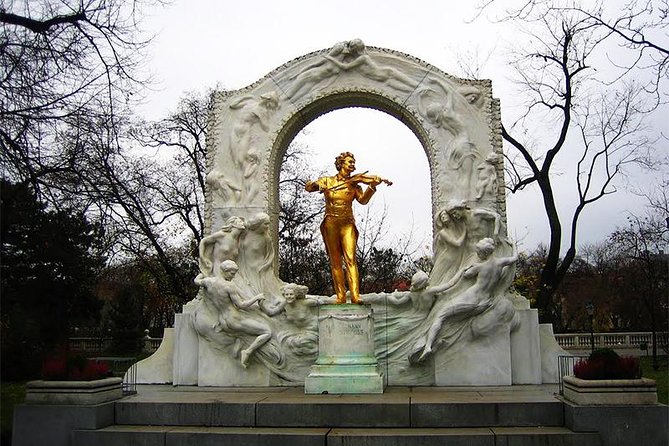
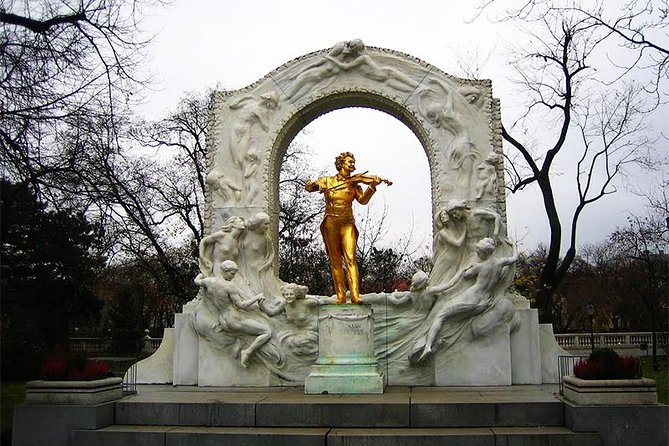
A short pause among monuments at Stadtpark
Stadtpark provides a change of pace after the Secession Building. The municipal park stretches from the Ringstrasse area of the first district toward Heumarkt, giving you a little breathing room between architectural stops.
The planned time here is about 15 minutes, with no admission fee. That is not long enough for a leisurely park visit, but it gives your guide room to place Vienna’s buildings in their urban setting.
I like this kind of stop because it keeps the tour from becoming a parade of façades. You get a sense of how central Vienna’s grand public spaces connect, and you can reset before the denser architectural discussion ahead. If you want a long park walk, this tour is not designed for that. Stadtpark is a brief part of a larger route.
Karlsplatz, where public transport became modern design
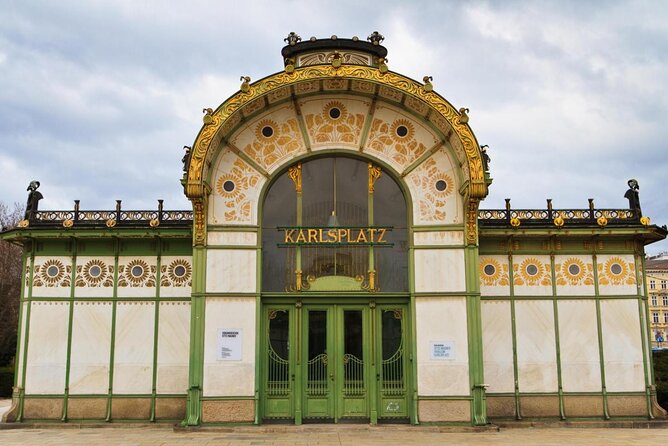
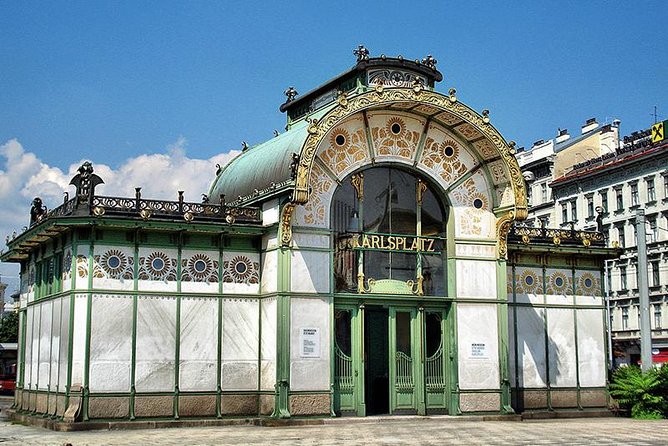
At Karlsplatz, Otto Wagner’s ideas become especially easy to read. The former Stadtbahn station buildings were designed by Otto Wagner with Joseph Maria Olbrich, and their pale surfaces, metal details, and controlled decoration show how public transport could receive serious architectural treatment.
These were not private palaces. They served ordinary movement through the city, yet Wagner treated them as worthy of careful design. That contrast is one of the best lessons on the walk. Vienna’s modern style was not limited to art galleries. It reached the systems people used every day.
The listed time at Karlsplatz is about 20 minutes, with admission not included. Much of the interest is visible from outside, so you still gain plenty even if you do not enter every building.
Your guide can help you look past the overall prettiness. Pay attention to how the stations balance ornament with function. The value here lies in seeing Art Nouveau as public design, not just a style for wealthy homeowners.
More architecture walks in Vienna:
- Private Klimt & Vienna Art Walk — From Baroque to Secession
★ 4.5 · 16 reviews - The Official Art Deco Walking Tour by The Miami Design Preservation League
★ 5.0 · 1,580 reviews - Barcelona: Gothic Quarter Ghosts and Legends Walking Tour
★ 4.7 · 1,443 reviews - Barcelona: Old Town and Gothic Quarter Walking Tour
★ 4.8 · 1,393 reviews
Inside Otto Wagner’s small Karlsplatz pavilion
The Otto Wagner Pavilion at Karlsplatz gives the architect a more personal setting. This former station building now presents an exhibit about Wagner’s life and work, inside one of his own 1898 Art Nouveau structures.
The stop is planned for about 15 minutes. It is compact, but it adds useful context after you have seen the station buildings from the outside. Instead of only hearing Wagner’s name attached to several façades, you get a closer look at the person and the ideas behind them.
Admission is not included. From April through October, when the museum is open, the stated fees are €5 for general admission and €4 for seniors, students, Vienna Card holders, and people with disabilities.
The seasonal detail matters. If you are visiting outside that period, you should not assume the pavilion will be part of the indoor portion. Ask when booking or at the start of the walk if this stop is open during your date.
The Postal Savings Bank and Otto Wagner’s working side
The Austrian Postal Savings Bank, or Postsparkasse, is another major Otto Wagner work. It is widely regarded as an important Vienna Secession building, and it shows how the movement could shape a serious civic institution.
This stop lasts about 25 minutes and has no admission fee listed. That makes it one of the strongest value points on the route. You spend time with a major building without adding another ticket to the day.
The bank is especially useful after Karlsplatz because it shifts the focus from transport to finance. You can compare how Wagner handled a station, a pavilion, and a bank. The buildings had different purposes, yet they belong to the same modern period and share a disciplined approach to form and detail.
This is the sort of stop where a private guide earns the fee. A quick photograph will show you the broad design, but a good explanation can point out why a bank needed to look modern, trustworthy, and efficient. Guides on this experience are prepared to discuss Vienna’s past and present, not only identify the architect.
Naschmarkt brings Art Nouveau into daily life
Naschmarkt is Vienna’s best-known culinary market, with around 120 market stalls and restaurants. The scheduled visit is short, about 10 minutes, and admission is free.
Do not expect a full food tour here. Food and drinks are not included, and the timing is too brief for a proper market meal. Instead, Naschmarkt helps connect the architecture to a living part of the city.
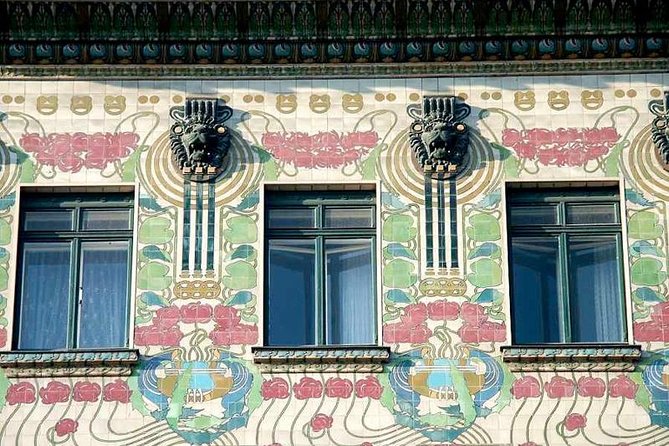
The area also provides a useful link to nearby Art Nouveau buildings. The route description includes two apartment houses designed by Otto Wagner, and the wider tour may point out buildings such as the Majolikahaus near Naschmarkt. The Zacherlhaus in central Vienna has also been part of the architectural highlights associated with this experience.
Because the formal timing is tight, ask your guide how much time will be spent on the market itself and how much on nearby buildings. If you want to browse stalls or stop for lunch, plan to return on your own after the tour.
The final metro stations and the emperor’s private stop
The walk finishes with a pair of attractive metro stations, including a tiny station built for the Emperor. This ending brings the tour back to public transport, but with a more personal and ceremonial twist.
The small imperial station is a memorable detail because it shows how the same transport network could serve both public needs and royal privilege. It also gives the route a neat arc: you begin with Vienna’s artistic rebels and finish with the city’s transportation architecture and imperial world.
Exact timing for these final stations is not separately listed in the supplied schedule, so the pace may depend on the group, guide, and opening conditions. That is another advantage of a private walk. If the stations are your main interest, say so early and ask your guide to give them enough attention.
How the $490 price works in real life
The tour costs $490 per group of up to 10 people. For a full group, that works out to $49 per person before any admission fees. For two people, it is $245 each, which is a serious expense for a three-hour walk.
The price makes the most sense when you are traveling with family or friends and can fill much of the 10-person limit. It also has more value for people who would normally book a private guide anyway. You are paying for an expert who can adjust the conversation, not just lead you between marked points.
Admission costs are extra. Depending on the date, you may pay €9.50 or €6 for the Secession Building, plus €5 or €4 for the Otto Wagner Pavilion when it is open. Food, drinks, and hotel pickup and drop-off are also excluded.
Pickup is offered as a feature, but the stated meeting point is Operngasse 7 in Vienna’s first district. Confirm the exact pickup arrangement when booking rather than assuming the guide will come to your hotel.
The tour is booked, on average, 11 days ahead. That does not create a guaranteed availability rule, but it is a good reason to reserve before your preferred date disappears, especially if you need a particular guide or want the museum portions open.
Which guide style and audience fit this walk
This experience suits you best if you enjoy asking questions. The guides are expected to discuss architecture, art, Vienna’s history, and the city today. Barbara, Wolfgang, and Annelie have each led this walk, and the feedback connected with them highlights thorough explanations and an easy response to different levels of background knowledge.
You do not need to arrive as an Art Nouveau expert. Someone familiar with the movement can focus on design details, while a newcomer can use the walk as a clear introduction to Vienna Secessionism.
I would choose this tour for:
- Architecture and design enthusiasts
- People interested in Klimt and the Vienna Secession
- Families or friends who can share the private-group price
- Visitors who prefer questions and discussion to a scripted group walk
- Anyone wanting to connect museums, public transport, banks, markets, and apartments in one story
I would think twice if you want a relaxed food outing, extensive museum time, or a low-cost group tour. Three hours is enough to build a strong overview, but not enough to linger at every stop.
The tour is near public transportation, and most people can participate. Still, it is a walking experience across central Vienna, so wear comfortable shoes and keep your expectations realistic about the amount of ground covered.
Should you book the private Vienna Art Nouveau walk?
Book it if you want Vienna’s Art Nouveau to make sense as a movement rather than a collection of pretty buildings. The combination of Klimt’s Beethoven Frieze, Wagner’s stations, the pavilion, Postsparkasse, and Naschmarkt gives you several ways into the subject.
For a couple, the price is hard to justify unless architecture is a major priority. For a group of friends or family members, the cost becomes much more reasonable, especially since the guide can shape the three hours around your interests.
Before paying, check three things: the Secession Building’s opening day, the seasonal availability of the Otto Wagner Pavilion, and the final pickup arrangement. If those details line up, this is a thoughtful, focused way to see a side of Vienna that is easy to miss while rushing between the palace and cathedral.
FAQ
How long is the private Vienna Art Nouveau walking tour?
The tour lasts approximately three hours.
How many people can join the private tour?
The price covers one private group of up to 10 people. Only your group participates.
What is included in the tour price?
The price includes a three-hour guided tour of Vienna’s Art Nouveau metro stations and notable buildings, along with a professional guide.
Are admission fees included?
No. Secession House and the Otto Wagner Pavilion require separate admission fees when those sites are open and included in the route.
Where does the tour start?
The stated meeting point is Operngasse 7, 1010 Vienna, Austria. Pickup may be offered, but hotel pickup and drop-off are not included.
Can I cancel for a full refund?
Yes. You can cancel at least 24 hours before the local start time for a full refund. Cancellations or changes made less than 24 hours before the start time are not accepted for a refund.
Just added around Vienna
- Vienna: Baroque Orchestra Concert and Dinner★ 4.6 · 18 reviews
- Vienna’s Hills Private tour: Nature & Hidden Architectural Jewels★ 5.0 · 12 reviews
- Private Tour with an Art Historian of the Leopold Museum: Gustav Klimt, Egon Schiele and Viennese Art Nouveau★ 5.0 · 16 reviews
- Vienna Art Nouveau Walking Tour★ 5.0 · 21 reviews
- Private Klimt & Vienna Art Walk — From Baroque to Secession★ 4.5 · 16 reviews
- An Architectural insight of Vienna on a Private Tour with a local★ 3.5 · 2 reviews
- Vienna Art Nouveau Walking Tour★ 4.4 · 33 reviews
- Vienna: Concert by the Vienna Baroque Orchestra★ 4.6 · 56 reviews
Art Nouveau Tours, compared.
Riga: Old Town Walking Tour with Art Nouveau Highlights
Read our review →
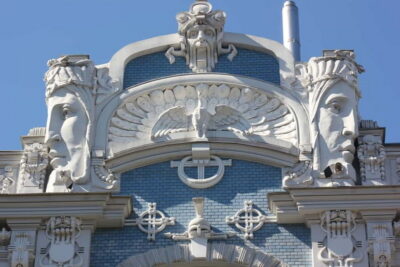
Riga: 2-Hour History of Art Nouveau Walking Tour
Read our review →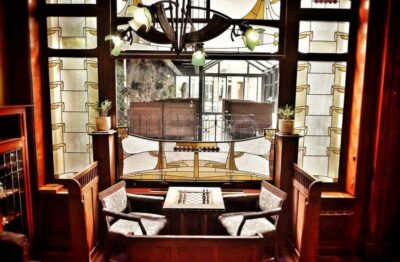
Brussels: Art Nouveau Pass – Entry to Three Locations
Read our review →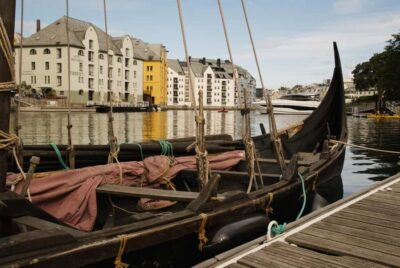
Small Group Tour in Ålesund: Art Nouveau, Sea Views & Insider Tips
Read our review →
Browse the lists this tour appears in