
Review · CHICAGO
Chicago Loop: Art, Skyscrapers, Millennium Park & “The Bean”
Chicago’s Loop is best understood on foot, where overhead trains rattle past skyscrapers and grand lobbies open onto streets filled with public art. This two-hour walk connects Macy’s former Marshall Field’s building, Picasso, Millennium Park, Crown Fountain, the Art Institute, and The Bean without trying to cover the whole city.
I like the way the route links architecture with everyday city life, especially the train system that gives the Loop its name. I also like the weather plan: on cold or wet days, you spend more time inside handsome public buildings and lobbies rather than simply shivering beside a tower.
The main consideration is pace. At $49, this is a strong introduction to downtown, but it is still a walking tour, not a museum visit or a full architectural survey. You will see the Art Institute and major landmarks, but the two-hour schedule leaves little time for long indoor visits.
Key points about the Chicago Loop walk
- Marshall Field’s legacy: Begin at the former department store, now Macy’s on State Street, and see why the building matters to Chicago.
- Public art at street level: Meet Picasso in Daley Plaza, Crown Fountain in Millennium Park, and Cloud Gate near the end of the route.
- Tiffany glass details: Look inside selected public buildings for delicate, colorful glasswork that is easy to miss on your own.
- Chicago’s rebuilding story: Connect the Great Fire of 1871 with the city’s later engineering and architectural growth.
- Weather-aware route: In winter or rain, the guide uses indoor lobbies as places to warm up while keeping the history moving.
- A local guide’s view: The tour is in English, with live commentary, jokes, stories, and room for questions in a small group setting.
Why the Loop makes a good first Chicago walk
Chicago can feel like a city designed by several eras at once. One block gives you a grand department store, the next brings a steel sculpture by Picasso, and then the city opens into a park filled with digital art and polished metal.
This tour gives you a useful map of that change. You are not only checking off famous sights. You are learning how the Loop works, why the downtown core is called the Loop, and how Chicago rebuilt itself after the Great Fire of 1871.
I especially like the way the tour treats the city as a living place rather than a collection of monuments. The overhead rail is part of the story. So are the office lobbies, department stores, plazas, train tracks, and public spaces where Chicagoans pass through each day.
That makes this a good first activity in Chicago. After two hours, you should have a clearer sense of where State Street, Daley Plaza, Millennium Park, the Art Institute, and the lakefront side of downtown fit together.
More skyscraper tours in Chicago:
- Chicago Premium Driving Tour with River Boat Cruise and Sky Deck
★ 4.5 · 165 reviews - Chicago Walking Tour: Art Deco Skyscrapers Loop
★ 5.0 · 138 reviews - Chicago Walking Tour: Historic Skyscrapers
★ 5.0 · 67 reviews
Starting at the Chicago Theatre and former Marshall Field’s
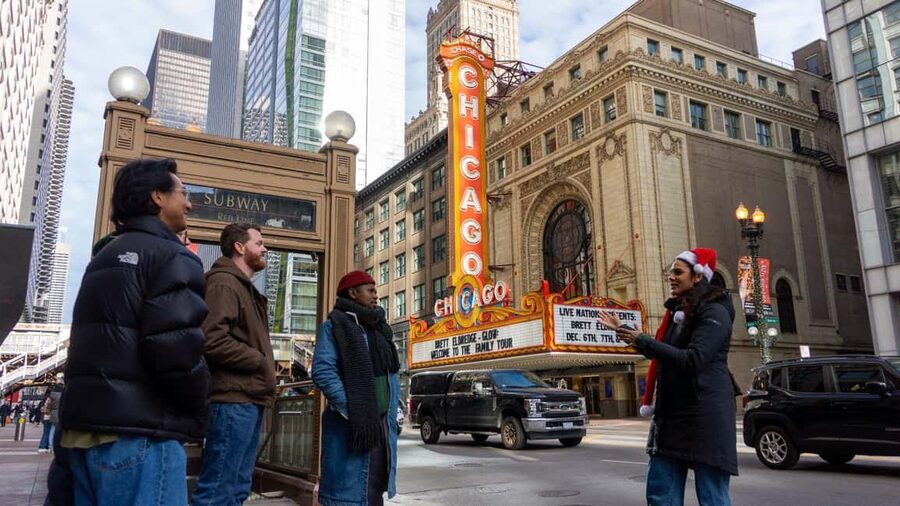
Meet your guide in front of the Chicago Theatre at 175 North State Street, at the corner of State and Lake. This is a practical meeting point in the center of the Loop, and the famous theatre marquee makes it easier to spot than a generic street corner.
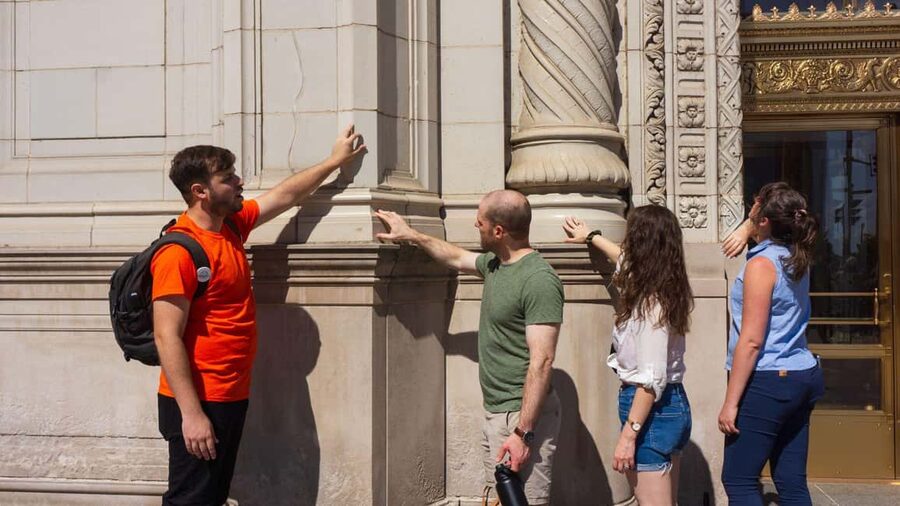
The first major stop is Marshall Field’s, now Macy’s on State Street. The name has changed, but the building still carries the marks of Chicago’s department-store era. You will look at its architecture and hear how this store once served as one of the city’s best-known retail institutions.
This opening stop gives the tour a human scale. Skyscrapers often dominate Chicago sightseeing, but department stores tell another part of the city’s story: shopping, design, civic pride, and the wish to make an ordinary errand feel special.
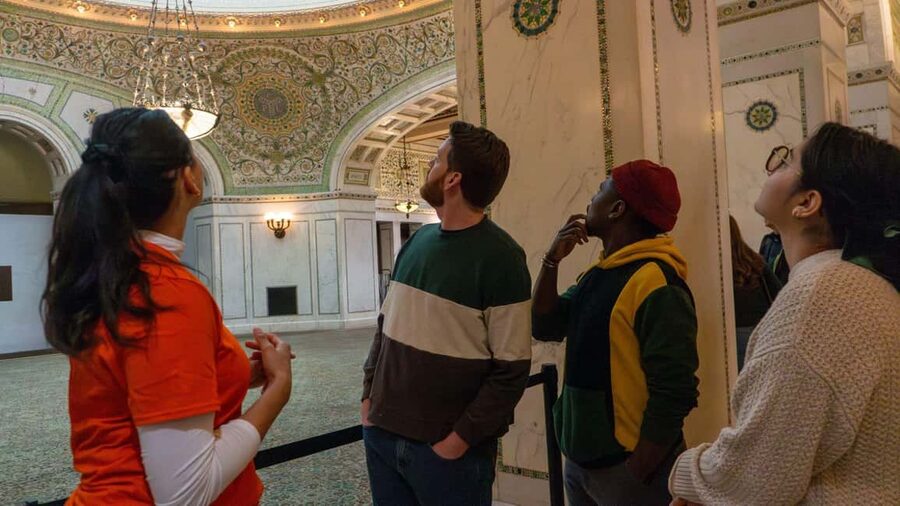
The interior details matter here. The tour includes beautiful Tiffany glass, and this is exactly the sort of feature that many people walk past without noticing. Look up, slow down, and let the guide point out the craftsmanship. You may value this part most if you enjoy decorative art as much as steel and stone.
Indoor stops can vary with conditions, so do not expect every tour to follow the same amount of time inside. That flexibility is useful, especially in January or on a rainy day.
Picasso in Daley Plaza and Chicago’s taste for bold art
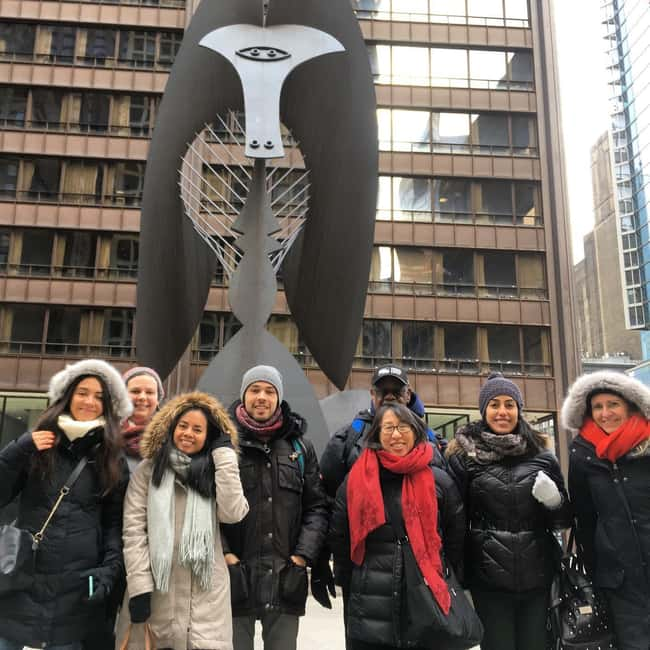
From State Street, the route heads toward Daley Plaza and Picasso. The steel sculpture is a gift from Pablo Picasso to Chicago, and it has become one of the city’s most recognizable pieces of public art.
Picasso can look strange at first. That is part of the point. Instead of placing modern art safely inside a gallery, Chicago put this large, abstract work in a public square where office workers and visitors encounter it during an ordinary day.
Your guide adds the context that a quick photograph cannot. You get a chance to consider why Chicago embraced a work that was not designed to please everyone. It is a small lesson in the city’s willingness to take chances with public space.
This stop also helps prepare you for The Bean later in the tour. Both works ask you to see sculpture as part of city life, not simply something displayed behind museum walls. The difference is that Picasso feels rough and mysterious, while Cloud Gate is smooth, reflective, and built for interaction.
Millennium Park, Crown Fountain, and Chicago’s public stage
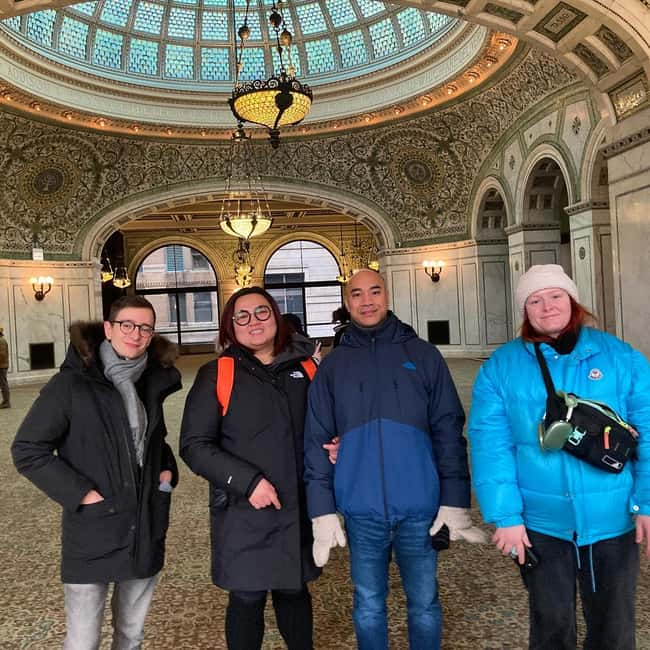
The walk continues to Millennium Park, a large public gathering place in the heart of downtown. In warmer weather, the tour spends more time here, which makes sense. The park is at its best when you can pause among its art and open spaces without rushing indoors.
Crown Fountain is one of the park’s most playful works. Large video projections show the faces of Chicagoans, with water spilling from the sculpture. It combines local people, moving images, and water in a way that feels more like a public event than a traditional monument.
I like this stop because it shows a different side of Chicago’s art program. Picasso asks you to think. Crown Fountain invites you to watch, smile, and perhaps get splashed. The art is accessible without being empty, and the guide can explain how public art changes the way people use a square.
Your time here depends on the season. In warm weather, the park receives more attention. In winter, the guide balances outdoor views with indoor buildings and lobbies. Bring clothing suited to the forecast, since the tour remains a walking outing even when the route includes warm-up stops.
Same city, a completely different century:
- Chicago Architecture River Cruise
★ 5.0 · 15,756 reviews - Chicago River 90-Minute Architecture Tour
★ 4.5 · 9,629 reviews - Chicago River: 1.5-Hour Guided Architecture Cruise
★ 4.8 · 8,046 reviews - Chicago Architecture Center River Cruise aboard First Lady
★ 5.0 · 5,536 reviews
The Great Fire and the city’s second act
Chicago’s Great Fire of 1871 is not treated as a distant disaster in this walk. It becomes a key to understanding the buildings around you.
As you pass landmarks built during the city’s rebuilding, you will hear how Chicago came back with new ideas about construction, infrastructure, and urban growth. The fire story is valuable because it explains why the city became such an important place for new forms of architecture and engineering.
The tour does not turn this into a lecture hall lesson. The history arrives while you move through actual streets and public spaces. That keeps the subject grounded. You can see the result of rebuilding while standing in the middle of the city that made it happen.
This is also where a good guide earns the fee. Facts about dates and buildings are easy to read later. A local guide can connect them with stories, jokes, and small details that help you remember what you saw. The guide’s lively style is meant to keep the group involved rather than simply reciting a script.
Looking up at the Loop’s overhead trains
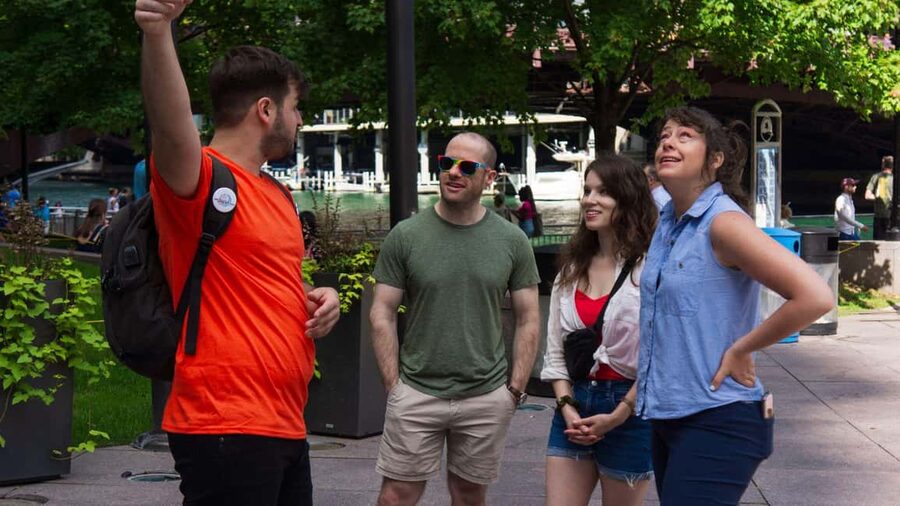
The Loop gets its name from the elevated train tracks that circle the downtown core. The tour includes a look at this rail system, an important part of Chicago’s transport network and one of the city’s most familiar sights.
The trains do more than move people. They shape the feel of the streets below. Steel tracks, passing cars, and the sound of trains create a distinctly urban setting that separates Chicago from cities where rail lines run mostly underground.
I like having this included because it gives the route a practical thread. You are not only looking at famous buildings. You are seeing how the city functions. The rail system helps explain the Loop’s name and gives you a useful reference point for later exploring on your own.
The best way to appreciate this part is to look upward when the guide directs your attention there. The noise and movement can compete with conversation, so stay close enough to hear the explanation. A small group helps, but busy streets may still make some moments less intimate.
Route 66, the Art Institute, and the edge of the park
The route also reaches the downtown sign marking the start of Route 66. The famous road runs from Chicago toward California, and this sign ties the city to one of the best-known road trips in the United States.
It is a brief stop, but a useful one. Route 66 gives you a reminder that Chicago is not only a destination. It is also a starting point, with rail lines, roads, and long-distance connections spreading outward from the center.
You then pass or visit the Art Institute of Chicago, home to a major collection of paintings, sculpture, and cultural objects. The tour does not include an art museum admission, so you should not plan to explore the galleries during this two-hour walk. Instead, use the stop as an introduction and return later if the collection interests you.
This is one of the tour’s limits. The Art Institute deserves hours, not a quick look between other landmarks. Still, including it helps you place one of Chicago’s leading cultural institutions within the downtown route.
Finishing at Cloud Gate, better known as The Bean
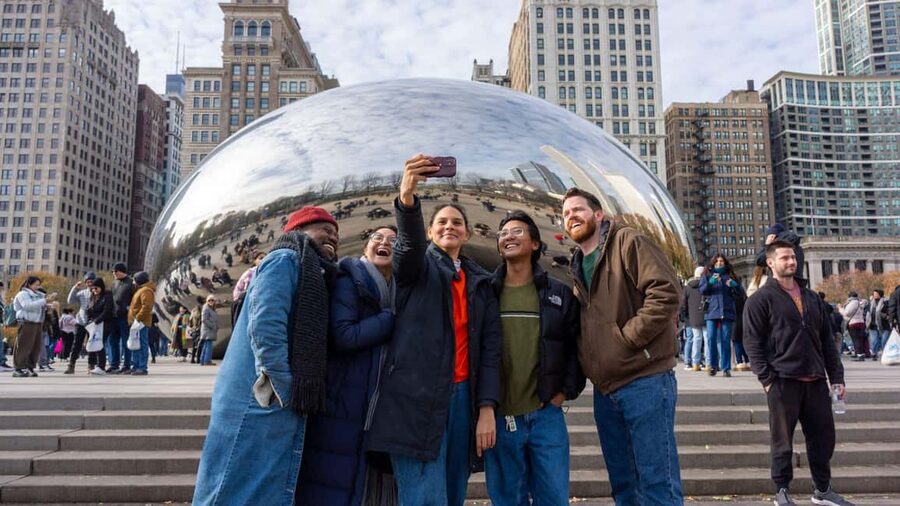
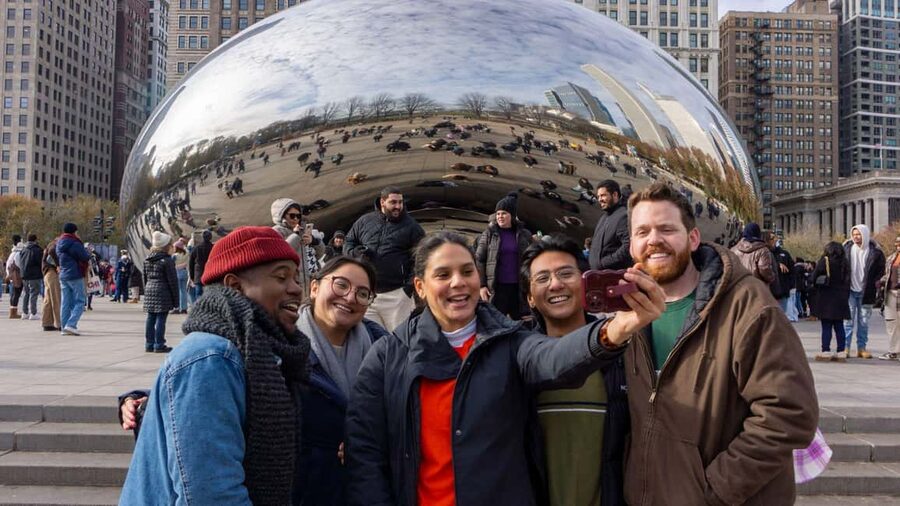
The final major stop is Cloud Gate, the polished stainless-steel sculpture commonly called The Bean. Its curved surface reflects the skyline, the park, and the people gathered around it.
The Bean is an easy crowd favorite because you can walk around it and see the city bend across its surface. Your own reflection becomes part of the sculpture, which turns a large work of art into a shared photo stop.
Expect plenty of people around it. The sculpture is popular for a reason, but it is not a quiet place for private contemplation. If you want a clean photograph, patience helps. The guide can explain the work and its place in Chicago’s modern identity, but you will also have to work around the crowd and the available time.
Ending here makes good sense. The tour begins with historic architecture and traditional decorative detail, then moves through modern public art before finishing with a sculpture that mirrors the city around it.
What $49 gets you, and what it does not
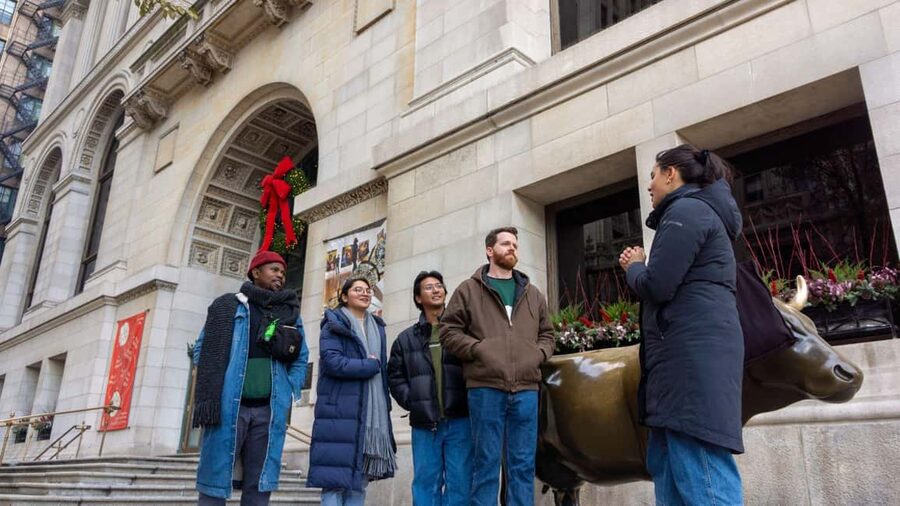
The price is $49 per person for two hours, including a professional guide and live English commentary from a Chicago local. I consider that fair if you want a clear introduction to downtown and prefer stories to a self-guided walk.
The value rests on the guide. You can walk to Millennium Park and The Bean for free, and you can see Picasso from the plaza. What you are paying for is the route, the background, the indoor details, and the connection between places that may otherwise feel unrelated.
The cost is less compelling if you already know the Loop well or mainly want photographs. You could visit several of the outdoor sights without booking anything. You also should not expect museum admission, a meal, or transportation.
A strong point is the ability to reserve now and pay later. You can also cancel up to 24 hours before the tour for a full refund, which makes it easier to fit into a changing Chicago schedule.
Weather, timing, and practical comfort
The tour lasts two hours and is usually offered in the morning and afternoon. Morning can be a smart choice if you want to use the rest of the day for the Art Institute, an architecture cruise, or another downtown stop.
The route changes with the weather. In warm conditions, expect more outdoor time in Millennium Park. In winter or rain, the guide uses public buildings and lobbies as warm places to continue the discussion.
That does not make this an indoor tour. You still walk through the Loop, so wear comfortable shoes and check the forecast. On cold days, bring a proper coat rather than relying on the indoor stops to solve everything.
The walk is in English. The guide’s tone includes jokes and stories, and the pacing has been described as comfortable rather than hurried. Still, you should be ready to keep moving through city streets for the full two hours.
Who should book this Chicago walking tour?
I would recommend it to first-time Chicago visitors who want a foundation before exploring on their own. It also suits anyone curious about architecture, public art, city planning, and the way an urban center works day to day.
Families may like the variety. The Bean and Crown Fountain offer visual fun, while the trains and Picasso keep the route from feeling like a standard park walk. The tour is also useful for people who want a winter activity that includes outdoor sights without spending the entire time in the cold.
Art lovers should see it as an introduction, not a substitute for the Art Institute. Architecture fans may want a longer architecture cruise afterward, especially if their main goal is detailed building history from the river.
Should you book the Loop, Millennium Park, and The Bean tour?
Book it if you want two well-used hours, a local guide, and a sensible first look at Chicago’s downtown core. The strongest parts are the links between public art, architecture, the Great Fire, Tiffany glass, and the overhead rail system.
Skip it if you prefer exploring at your own pace, dislike walking, or want extended time inside museums. For most first visits, though, $49 buys more than a list of photo stops. It gives you a working sense of the Loop, plus enough context to make the rest of your Chicago sightseeing more rewarding.
FAQ
Where does the tour meet?
Meet your guide in front of the Chicago Theatre at 175 North State Street, at the corner of State and Lake.
How long does the tour last?
The walking tour lasts two hours.
What language is the tour conducted in?
The tour is conducted in English with live commentary from a Chicago local.
What places are included on the route?
The route includes Macy’s on State Street, formerly Marshall Field’s, Daley Plaza and Picasso, Millennium Park, Crown Fountain, the Loop’s overhead trains, the Route 66 starting sign, the Art Institute of Chicago, and Cloud Gate, also called The Bean.
Does the tour operate in cold or rainy weather?
Yes. The route is adjusted to the weather, with more time inside public buildings and lobbies during cold or rainy conditions.
Is admission to the Art Institute included?
No museum admission is listed as included. The tour takes you to the Art Institute as part of the walking route.
What does the $49 price include?
The price includes the professional tour guide and two-hour walking tour with live English commentary. Gratuity is not included.
Can I cancel or pay later?
You can reserve now and pay later. Cancellation is free up to 24 hours in advance for a full refund.
Just added around Chicago
- Private Chicago Architecture Tour★ 5.0 · 5 reviews
- Private Frank Lloyd Wright Architectural Tour by Luxury Vehicle★ 3.5 · 7 reviews
- Chicago Luxury Minibus City Tour and Architecture River Cruise★ 4.5 · 8 reviews
- Chicago History and Architecture Walking Tour with Boat Cruise★ 4.5 · 10 reviews
- Small Group History And Architecture Walking Tour of Chicago★ 4.5 · 8 reviews
- Private Chicago Architecture Walking Tour★ 5.0 · 6 reviews
- Chicago: Evolution of the Skyscraper Walking Tour★ 4.9 · 10 reviews
- Chicago’s Modern Skyscrapers Guided Walking Tour★ 5.0 · 6 reviews
Skyscraper Tours, compared.
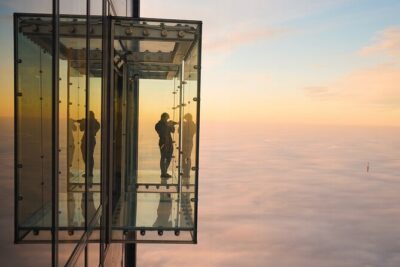
Chicago Premium Driving Tour with River Boat Cruise and Sky Deck
Read our review →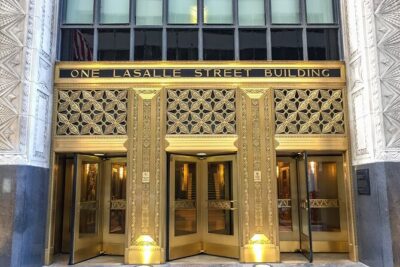
Chicago Walking Tour: Art Deco Skyscrapers Loop
Read our review →
Florence Skyline from the Top of Brunelleschi’s Dome
Read our review →
Chicago Walking Tour: Art Deco Skyscrapers Riverfront
Read our review →
Walking Tour: Chicago’s Loop – Home of the Modern Skyscraper
Read our review →

3-Hour Shanghai Bund Swift Tour with River Cruise or Skyscraper
Read our review →Browse the lists this tour appears in