
Review · THE NETHERLANDS
Amsterdam Architecture Tour
Amsterdam’s canals make the city look effortless, but the neat rows of narrow houses hide a clever story of trade, defense, religion, and limited space. This private architecture walk takes you beyond postcard views, with time to study the canal ring, enter Huis Bartolotti, and understand why Amsterdam grew in such a distinctive way.
I like the one-to-eight group size and the chance to ask questions without competing with a crowd. I also like the access to Huis Bartolotti, where the interior and garden reveal a side of canal-house life you cannot see from the street.
The main consideration is price. At $384.63 for the group, this makes the most sense for several people traveling together, not for a solo visitor watching every dollar. The walk also requires a moderate level of fitness and lasts about two and a half hours.
Key points to know before booking
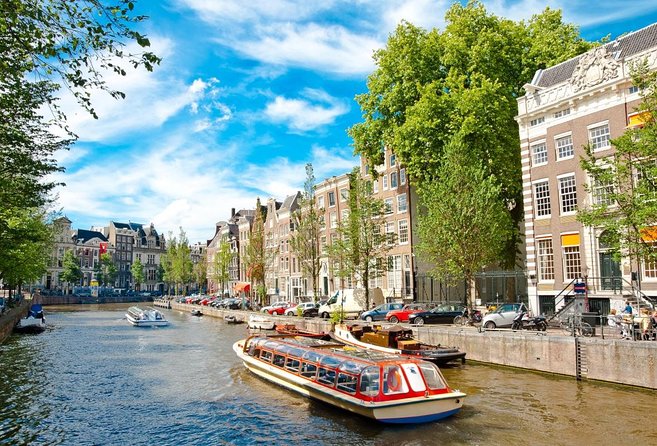
- Private guide for up to eight people: You get a personal walking experience rather than a large group moving from stop to stop.
- Huis Bartolotti visit included: A 15-minute visit brings you inside one of Amsterdam’s grandest canal houses, including its carefully designed interior and garden.
- Architecture explained in context: You learn how trade, religion, city expansion, and restricted land shaped the Canal Ring.
- English-language tour with flexible start times: Several start times make it easier to fit the walk around museum visits and meals.
- Route can be discussed with your guide: The Dutch-language feedback indicates that the route may be adjusted in consultation with the guide.
- Strong guide-led storytelling: Tijs and Edgar are specifically praised for clear explanations, humor, courtesy, and personal attention.
Why Amsterdam’s canals need an architecture tour
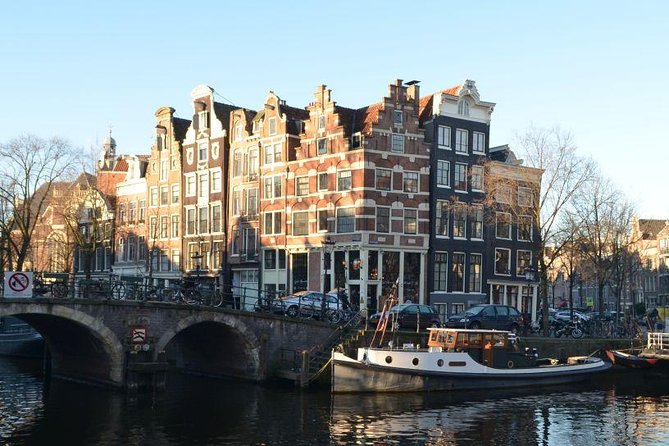
From street level, Amsterdam’s Canal Ring can seem like a long row of handsome façades. Look closer, and the details begin to argue with one another. Houses differ in width, height, gable shape, decoration, and period. The canals form an orderly plan, yet the buildings reveal years of changing taste, wealth, religion, and urban pressure.
That is where a guide helps. Instead of simply photographing the prettiest house, you can learn how the canal system was organized and why the skyline looks the way it does. The tour connects the water, streets, houses, and churches into one readable story.
The walk also brings out details you may otherwise miss. Past participants learned about old city walls, canal fortifications, the expansion of Amsterdam from its medieval center, and the reasons behind different house widths and gable ends. You may also hear the story of the Multatuli statue on the oldest bridge, a bridge with a prison below it, along with the origins of fair trade coffee.
Those subjects give the walk more range than a narrow architecture lecture. You are not only looking at façades. You are learning how daily life, commerce, faith, and city planning left marks on the streets.
A few more architecture tours around the Netherlands worth a look
- Rotterdam: Architectural Highlights Guided Walking Tour
★ 4.8 · 215 reviews - Rotterdam: Highlights, Gems, Architecture & History Walk
★ 5.0 · 191 reviews - Rotterdam Walk: Hilights, Gems, Architecture & WWII | 2 or 3hrs
★ 5.0 · 149 reviews
Starting at Brouwersgracht 64
The tour begins at Design Amsterdam, at Brouwersgracht 64, 1013 GX Amsterdam. This places you near the western part of the Canal Ring, where the canal-side setting gives you an immediate lesson in how Amsterdam’s waterways organize the city.
Your guide begins by explaining the structure of the canal ring and the types of buildings along the water. That opening matters because it gives you a framework for the rest of the walk. Without it, each canal house can blur into the next. With it, you can start comparing width, ornament, age, and position.
The meeting point is near public transportation, and the activity returns there at the end. Since the walk lasts roughly two and a half hours, plan your day around a fixed block of time. The start-time choices are useful if you want to visit a museum before or after, but you should still leave room for the walking pace and questions.
Reading Amsterdam’s canal houses
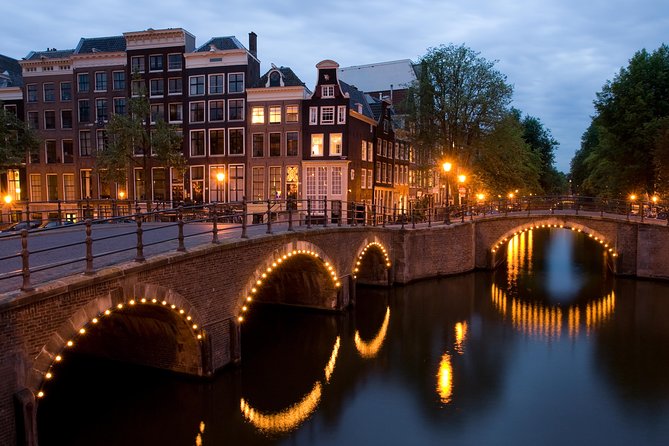
Amsterdam’s houses were shaped by practical limits. Land along the canals was valuable, plots were often narrow, and buildings had to serve both private and commercial purposes. These limits produced the tall, slim façades that now define the city.
Your guide explains why the houses do not all look alike. The gable ends, widths, and decorative styles carry clues about the period and the owner. Dutch Renaissance design appears in some places, while later houses show a different sense of proportion and display.
One especially useful part of the walk is the explanation of the skyline. Amsterdam’s buildings are not simply arranged for beauty. Their form reflects the way the city expanded as trade grew, and the way older defenses and waterways continued to shape new development.
You will also hear about the old city walls and the fortifications connected to the canals. These details help explain why the water is not just scenery. The canals were part of the city’s working structure and protection.
I appreciate this kind of explanation because it gives you something to do after the tour ends: look up. A narrow doorway, an unusual gable, or a house that seems slightly wider than its neighbors becomes a clue rather than background decoration.
Huis Bartolotti and the secret behind the façades
The visit to Huis Bartolotti is the clear interior highlight. The house is described as one of the most beautiful canal houses in Amsterdam, and the tour includes admission for about 15 minutes.
Inside, you can admire its detailed interior design and learn about the gardens behind the canal façades. Those gardens are an important part of the story. From the street, Amsterdam’s canal houses appear tightly packed and urban. Behind them, the garden spaces offer a quieter and more private arrangement.
That contrast helps explain the Canal Ring. The public face of a house points toward commerce, status, and the canal. The garden side offers a different kind of life. Seeing both sides gives you a better sense of how these buildings were planned and used.
The short visit also keeps the tour moving. You get a real interior experience without spending a large part of the afternoon in one house. Still, if you want a long museum-style visit with time for every room, 15 minutes may feel brief. The value is in the access and the guide’s explanation, not in an extended independent visit.
This is also where a private tour has an advantage. You can ask why a detail matters, how the house fits into the canal district, or what you should notice before leaving. Tijs is specifically praised for making the history clear and bringing a personal touch to the walk.
Same city, a completely different century:
- Rotterdam Architecture Highlights Walking Tour
★ 5.0 · 66 reviews - The rise of Haarlem: Culture, History, Art and Architecture Walking Tour
★ 5.0 · 59 reviews - Rotterdam Must Do Tour: Highlights, History, WW2 and Architecture
★ 5.0 · 20 reviews - Rotterdam: Architecture Highlights Tour including the Depot
★ 4.6 · 17 reviews
Late 17th century architecture and religious limits
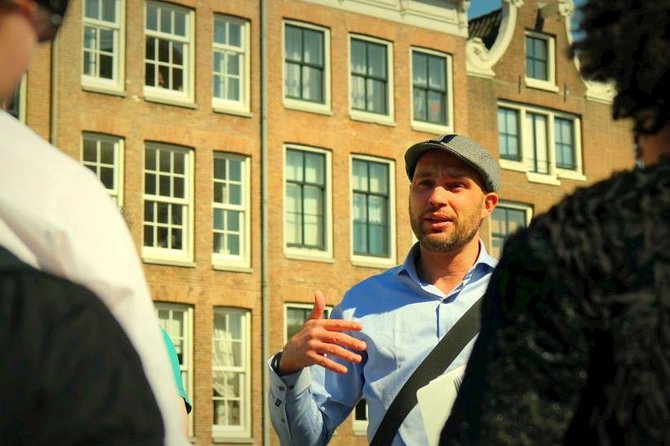
Another stop focuses on a distinctive example of late 17th century architecture. It was created as an inventive response to physical restrictions faced by religious minorities.
That idea adds an important layer to the tour. Amsterdam’s buildings were not shaped only by money and taste. Religious rules and social limits also affected where and how people could gather. Architecture became a practical answer to restrictions.
The supplied details do not identify the building by name, so you should not book this expecting a particular famous church or interior beyond what is specified. Instead, expect the guide to use the example to explain how religious life affected Amsterdam’s built environment.
This section should appeal to anyone who likes architecture with a human problem behind it. The building is not interesting only because of its date or style. It shows how people adapted space to meet a need.
Westerkerk and early 17th century design
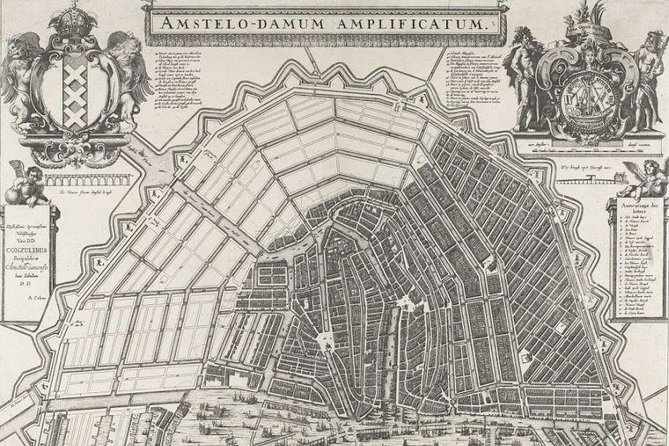
The walk also covers early 17th century architecture in general, with special attention to the Westerkerk. This gives you a chance to compare church design with the canal houses you have already seen.
The guide explains the architecture of the Westerkerk and places it within Amsterdam’s early 17th century development. The tour’s broader themes continue here: faith, public buildings, changing urban form, and the practical choices that gave Amsterdam its familiar outline.
A detail mentioned in the walking experience is the swan on top of a Protestant domed church. That small feature is exactly the sort of thing a guide can make memorable. Without context, it is an odd decoration. With context, it becomes part of the city’s religious and architectural story.
The route may also touch on the way Amsterdam’s old center expanded as trade increased. You can expect the church discussion to work best when you are willing to stop, look upward, and ask questions. This is not a rapid checklist of famous façades.
The House with the Heads
The House with the Heads is an extravagant early 17th century canal house in Dutch Renaissance style. It once had influential residents and now houses a special library listed by UNESCO.
This stop adds another private-house perspective to Huis Bartolotti. The two buildings help show how canal houses could serve as expressions of wealth, taste, and social position. The House with the Heads is especially useful for understanding Dutch Renaissance decoration and the changing role of prominent residences.
The library adds a second reason to pay attention. You are not simply looking at an old façade. The building has continued to serve a cultural purpose, and its UNESCO-listed collection gives the house modern importance as well as architectural interest.
The available details do not state that admission to the House with the Heads is included, so check the exact arrangements when booking if entering the library is essential to you. The confirmed included interior visit is Huis Bartolotti.
Stories that make the walk memorable
The best parts of this experience are likely to be the connections between buildings. You may learn why canal fortifications still require maintenance, how Amsterdam grew out of its medieval core, or how the city’s old walls can still be located.
The guide may also bring in stories that are not strictly about façades, such as the Multatuli statue and the history of fair trade coffee. These side stories give the route a human scale. They prevent the walk from becoming a parade of dates and building styles.
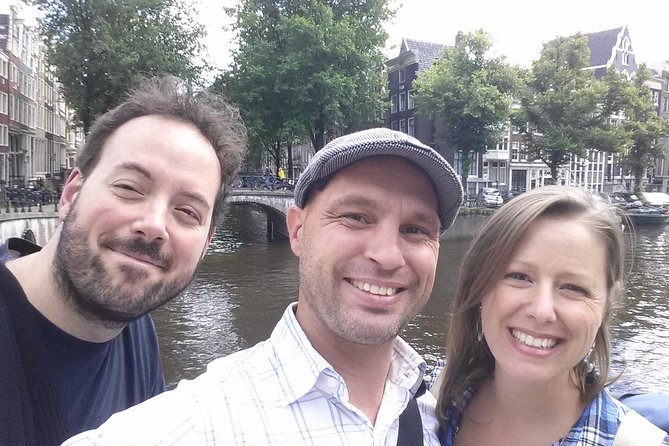
Tijs is praised for explaining complicated historical details clearly and with humor. Edgar is praised for his pleasant manner and broad command of Amsterdam’s culture, architecture, and history. The Dutch-language feedback also points to Thijs, with humor and a route chosen in consultation.
The names matter because a private tour depends heavily on the guide. The subject can be excellent, but the experience works best when the person leading it listens, explains plainly, and lets you ask questions. The available feedback points strongly toward those qualities, though guide assignment is not stated as guaranteed.
Price, group size, and overall value
The cost is $384.63 per group of up to eight people. That is a high total for a two-and-a-half-hour walking tour, but the comparison changes when you divide it across a full group.
For eight people, the cost works out to about $48 per person. For four people, it is about $96 each. For two people, it is roughly $192 each. The private format becomes much better value when you can fill most of the eight-person limit.
You are paying for more than a walk between landmarks. The fee includes a private English-language guide, the chance to shape the conversation, and admission to Huis Bartolotti. You also avoid the stop-and-start rhythm of a large group.
I would not choose this tour for a solo budget trip unless architecture is a top priority. A smaller group of friends or family can get more from it, especially if everyone enjoys asking questions and comparing buildings.
The private format also suits families. One member can ask about city planning, another about church design, and another about the gardens or interior decoration. The guide can adjust the explanation instead of delivering one fixed speech to a large crowd.
Who should book this Amsterdam architecture walk?
I would recommend it to you if you want to understand Amsterdam rather than simply photograph it. It is especially useful early in a visit, since the canal-ring explanation can help you read the city during the rest of your stay.
It also suits repeat visitors. If you have already walked the canals and seen the major façades, a guide can give familiar streets new meaning. The stories about gables, house widths, city walls, religious buildings, and old bridges may change the way you see places you thought you knew.
Families and small groups should consider it because the private setup makes questions easy. The moderate fitness requirement means you should be comfortable walking for about two and a half hours.
You may want another experience if you prefer a self-guided stroll, dislike scheduled start times, or mainly want long interior visits. The included Huis Bartolotti visit is brief, and not every stop is described as an interior admission.
Free cancellation is available if you cancel at least 24 hours before the start time. Changes or cancellations inside that window are not accepted for a refund, so keep the local cut-off time in mind.
Should you book it?
Book this tour if your group can share the cost and you want a clear explanation of Amsterdam’s canals, houses, churches, and urban growth. The strongest reasons are the private guide, the included visit to Huis Bartolotti, and the chance to ask about details that most people walk past.
I would be more cautious if you are traveling alone, need a low-cost activity, or want a long museum visit. For the right group, though, this is a useful way to turn Amsterdam’s famous streets into a readable story, with architecture, religion, trade, and everyday city life all connected.
FAQ
How long is the Amsterdam Architecture Tour?
The tour lasts approximately two hours and 30 minutes.
How much does the tour cost?
The price is $384.63 per group, with up to eight people included.
Is this a private tour?
Yes. Only your group participates in the activity.
What language is the tour offered in?
The tour is offered in English.
Where does the tour begin?
It begins at Design Amsterdam, Brouwersgracht 64, 1013 GX Amsterdam, Netherlands.
Where does the tour end?
The activity ends back at the meeting point.
Is admission to Huis Bartolotti included?
Yes. The visit to Huis Bartolotti is included and lasts about 15 minutes.
Can I cancel for a full refund?
Yes, if you cancel at least 24 hours before the experience start time. Cancellations or changes made less than 24 hours in advance are not accepted for a refund.
Just added around the Netherlands
- Rotterdam Must Do Tour: Highlights, History, WW2 and Architecture★ 5.0 · 20 reviews
- Private Rotterdam Walking Tour – guided by Architects★ 5.0 · 2 reviews
- Rotterdam Architecture and Highlights Walking Tour (TOP RATED)★ 4.5 · 14 reviews
- Escape Room – l’Architecte★ 4.5 · 13 reviews
- Maastricht Highlights, Architecture & Heritage Tour★ 5.0 · 7 reviews
- Gouda Private Walking Tour: History, Architecture & Cheese★ 4.5 · 8 reviews
- Amsterdam Walking Tour. All about History, Architecture, Traditions & Anecdotes.★ 5.0 · 2 reviews
- Walking Tour about Golden Age Architecture, private local guide★ 5.0 · 15 reviews
the Netherlands Architecture Tours, compared.

Rotterdam: Architectural Highlights Guided Walking Tour
Read our review →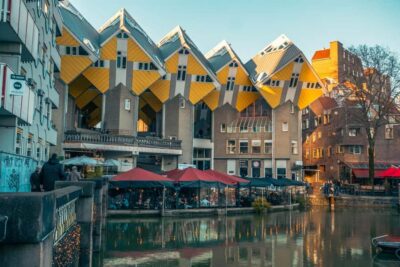
Rotterdam: Highlights, Gems, Architecture & History Walk
Read our review →
Rotterdam Walk: Hilights, Gems, Architecture & WWII | 2 or 3hrs
Read our review →
The rise of Haarlem: Culture, History, Art and Architecture Walking Tour
Read our review →
Rotterdam Must Do Tour: Highlights, History, WW2 and Architecture
Read our review →
Rotterdam: Architecture Highlights Tour including the Depot
Read our review →
Walking Tour about Golden Age Architecture, private local guide
Read our review →Browse the lists this tour appears in