
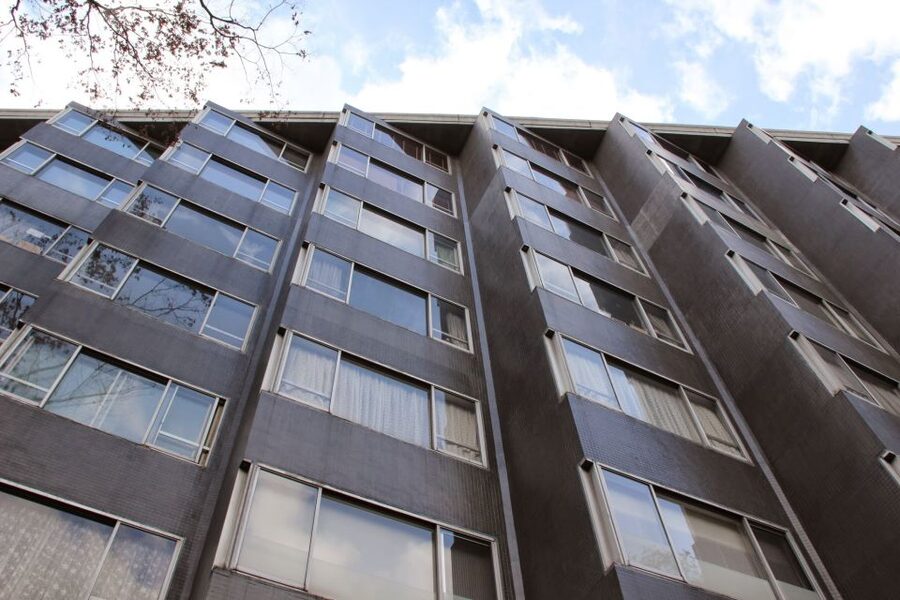
Review · TOKYO
Private Harajuku Omotesando Architecture Tour
Omotesando looks like a luxury shopping street at first glance, but this private walking tour shows you the design logic behind the shops, public buildings, side streets, and old-new mix. I like the sharp focus on architecture, especially the chance to study buildings by Prada, Dior, Louis Vuitton, Sunny Hills, and The Iceberg in one compact route. I also like that the walk slips into quieter Harajuku neighborhoods instead of staying on the polished avenue.
The guides can shape the outing around your interests. Taka has worked as an urban planner, while Fuki, Yoshi, Mari Sakai, and other guides bring their own architectural interests and local knowledge. The main consideration is the walking: 210 minutes is a long stretch on city streets, so comfortable shoes matter, and the $129 per-person price makes most sense for people who truly want a private, detailed look at Tokyo design.
Key points to know before you book
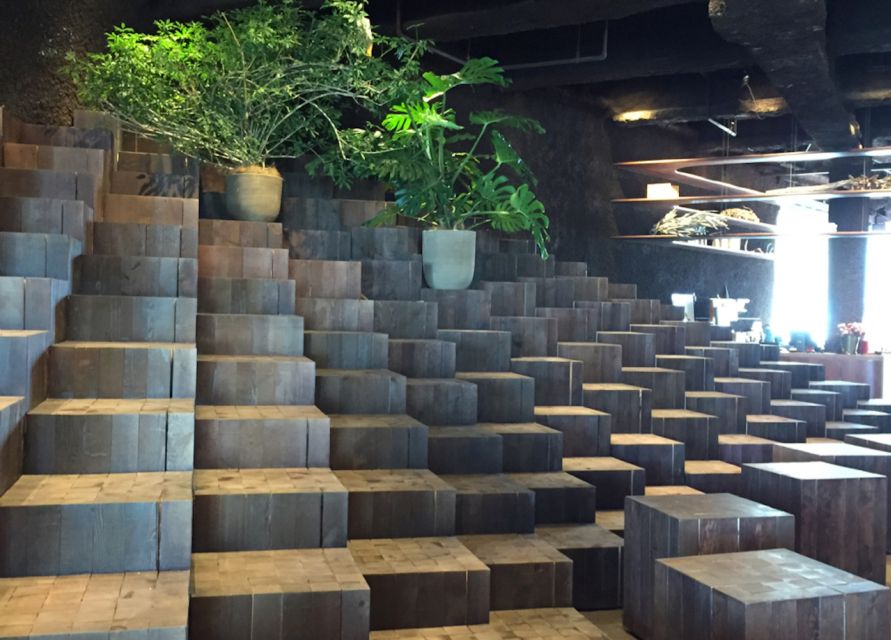
- You compare Tokyo’s major fashion districts through architecture: Omotesando is not simply another Ginza-style luxury strip.
- You see major works in a compact route: The walk includes Yoyogi Gymnasium, The Iceberg, Dior, Louis Vuitton, Sunny Hills, and Prada.
- You get a private English-speaking guide: The route can respond to your interest in architects, buildings, shopping streets, or local neighborhoods.
- You leave the main avenue for everyday Harajuku: The back streets reveal homes, smaller businesses, and a different side of the district.
- You can book a night walk: Omotesando’s buildings and lighting take on a different character after dark.
- You receive a café break with drinks: Meals are not included, but a short rest is built into the outing.
Why Harajuku and Omotesando make such a good architecture walk
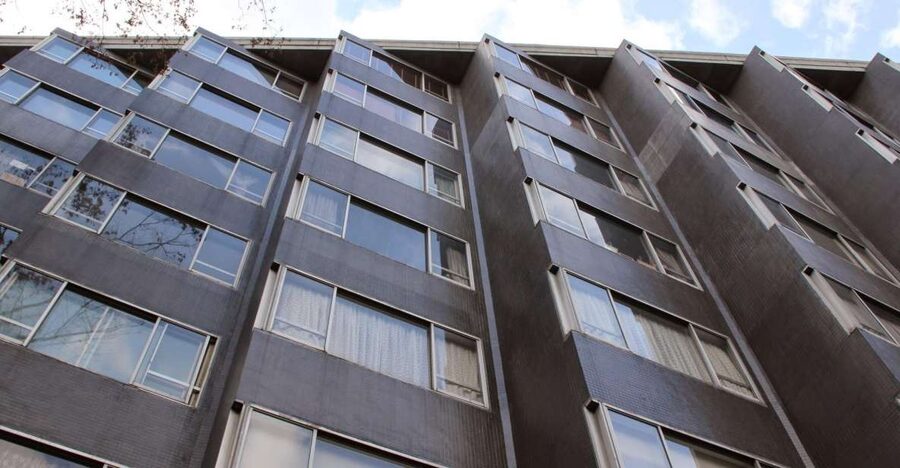
Harajuku is often reduced to youthful fashion, colorful street style, and crowded shopping lanes. Omotesando is often treated as Tokyo’s answer to Rodeo Drive. Both descriptions catch only part of the picture.
The real appeal is the collision of design and daily life. On the main avenue, international fashion houses use their buildings as giant three-dimensional advertisements. A few minutes away, quieter streets show ordinary Japanese homes, small shops, and local routines. You are not just looking at isolated landmarks. You are seeing how architecture changes the way a district feels.
I especially like this tour for that reason. It gives you a way to read the area instead of merely passing through it. The guide can explain why major designers and architects choose Omotesando, how the buildings differ from one another, and why the district has a different tone from Ginza.
The private format matters here. A public group might need to follow a fixed script and pace. With your own guide, you can spend more time on a building that catches your eye, ask about Japanese architects, or shift attention toward the neighborhood streets. Several guides have architectural or urban-planning experience, and the route can be adjusted to suit your interests.
More private architecture tours in Japan:
- Private Harajuku Omotesando Architecture Walking Tour
★ 5.0 · 67 reviews - Private Ginza Architecture Walking Tour
★ 5.0 · 50 reviews - Private Edo-Tokyo Open Air Architectural Museum Tour
★ 4.8 · 15 reviews
Starting at Meiji Shrine, with Yoyogi Gymnasium in view
The meeting point is Café Mori no Terrace, in the large open area by the wooden entrance gate to Meiji Shrine. From JR Harajuku Station, leave through the Omotesando exit and walk toward the forest. You do not need to pass through a Shinto gate to reach the café.
That last detail is worth remembering. There is a similarly named café inside Meiji Shrine, so check that you are going to the one at 1 Yoyogikamizonocho, Shibuya City. It is an easy place to meet, but the shrine setting can make the two cafés confusing if you are rushing.
The tour begins near the Jingubashi Bridge, in front of the shrine. This creates a useful contrast right away. Meiji Shrine is associated with wooded grounds, traditional worship, and a sense of quiet. From there, the walk turns toward modern Tokyo and the bold architectural work around Omotesando.
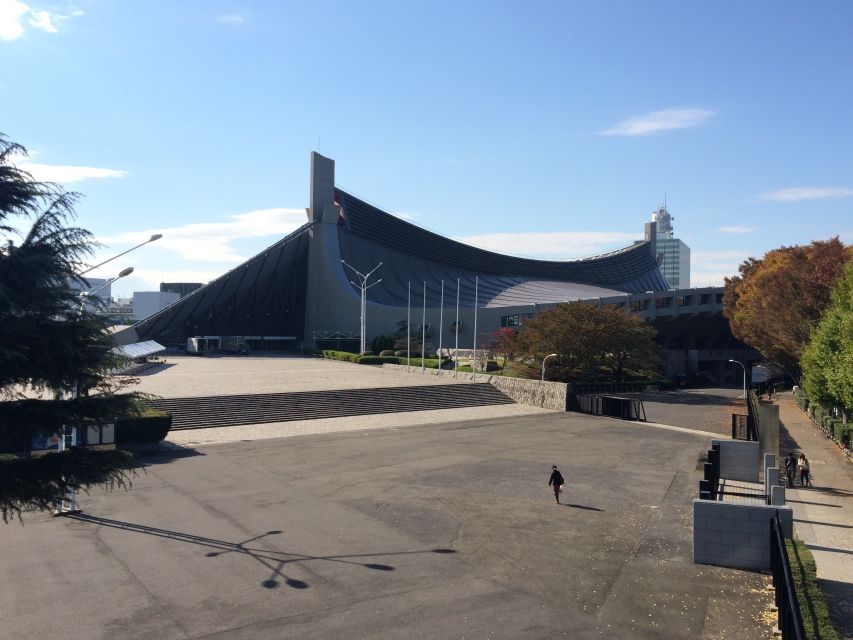
You also see Yoyogi Gymnasium from a distance. The building is one of Tokyo’s best-known modern landmarks, and its sweeping form gives the opening section a strong architectural focus. Since the tour views it from afar rather than presenting a full interior visit, think of this stop as visual context for the city’s modern design story.
Omotesando’s designer buildings as outdoor exhibits
The central section brings you into the area that attracts fashion houses, architects, photographers, and design-minded visitors. The buildings are not plain containers for shops. Their façades, structure, materials, and relationship to the street are part of the message each brand wants to send.
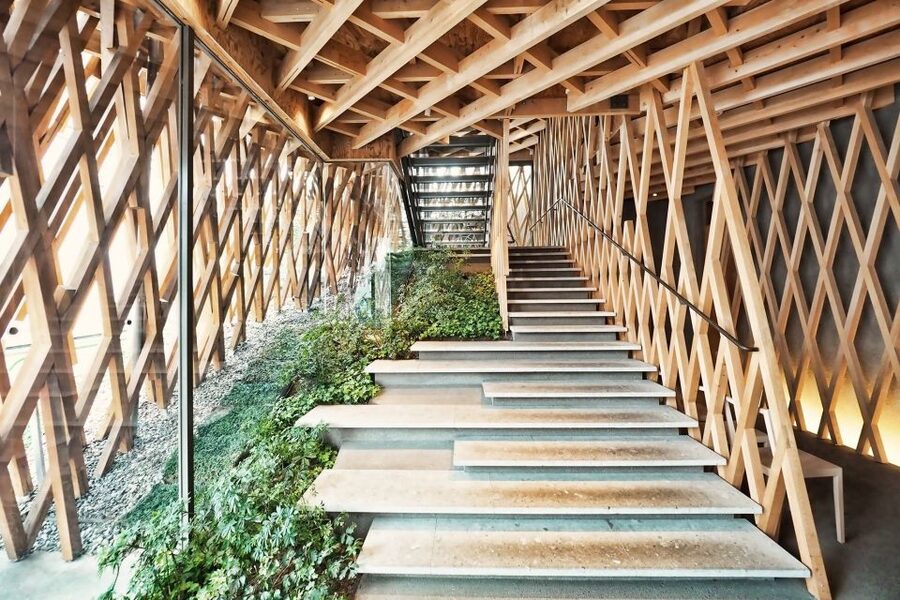
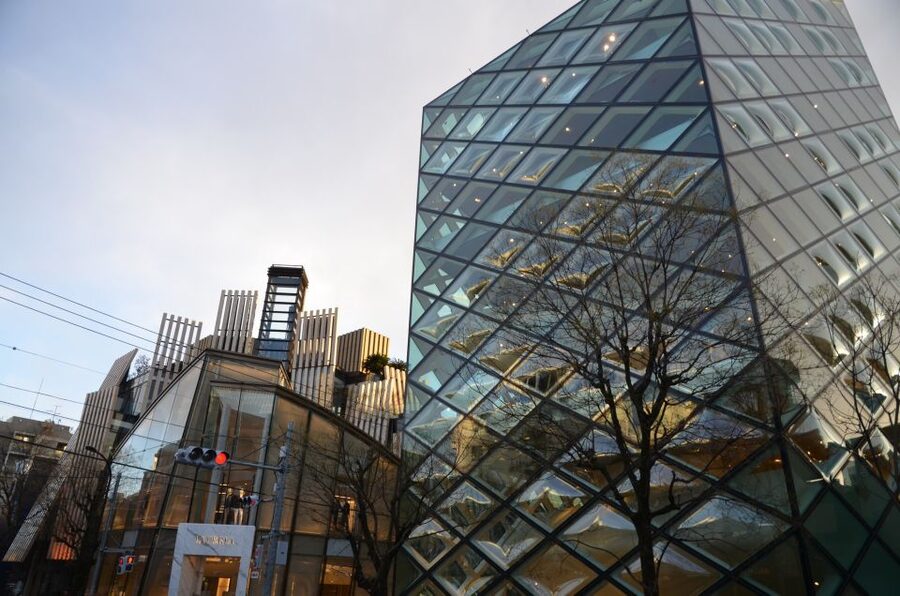
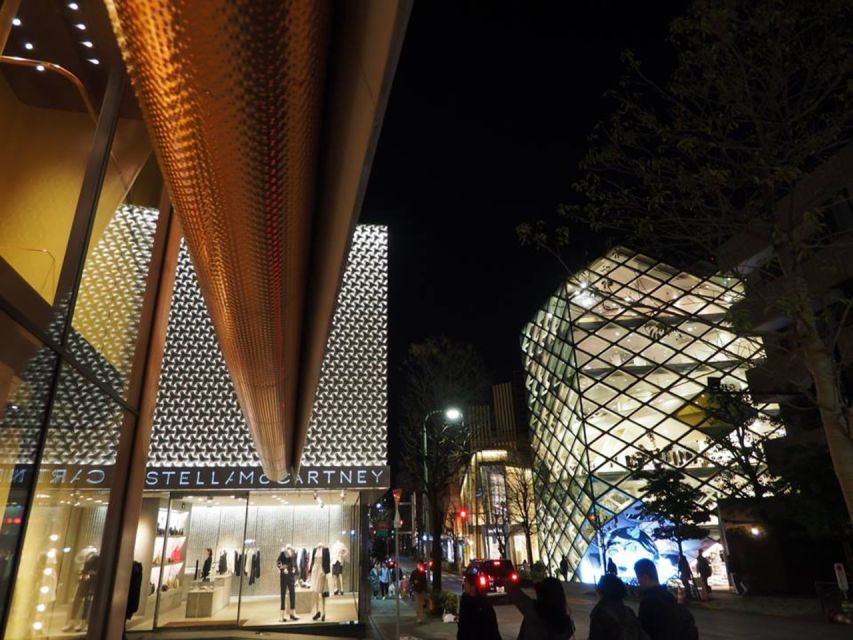
You will see The Iceberg, Dior, Louis Vuitton, Sunny Hills, and Prada. Each offers a different response to the same challenge: how do you make a retail building memorable on one of Tokyo’s most visible avenues?
The value of a guide is strongest here. You can see that one façade is unusual, but a guide can help explain how the building handles shape, light, transparency, texture, or the flow of people around it. You can also ask about the architects and the choices behind the designs rather than simply taking a photo and moving on.
Bring your camera, because photo opportunities come quickly. The buildings have strong lines and unusual surfaces, and the changing angle of the street gives you more than one useful view. Still, this is not a photography workshop, and the guide’s attention is divided between visual details, architectural context, and the group’s walking pace.
Dior and Louis Vuitton are especially useful for understanding how luxury retail works as urban design. Prada and The Iceberg show how a brand can turn its entire exterior into a visual identity. Sunny Hills adds another kind of interest, linking a distinctive building with a food brand rather than a traditional fashion label.
You should not expect entry into every store or building. The experience is primarily an exterior walking tour, with explanations from the street and public areas. That keeps the pace practical and allows you to cover several buildings within the 210-minute schedule.
The back streets reveal another Harajuku
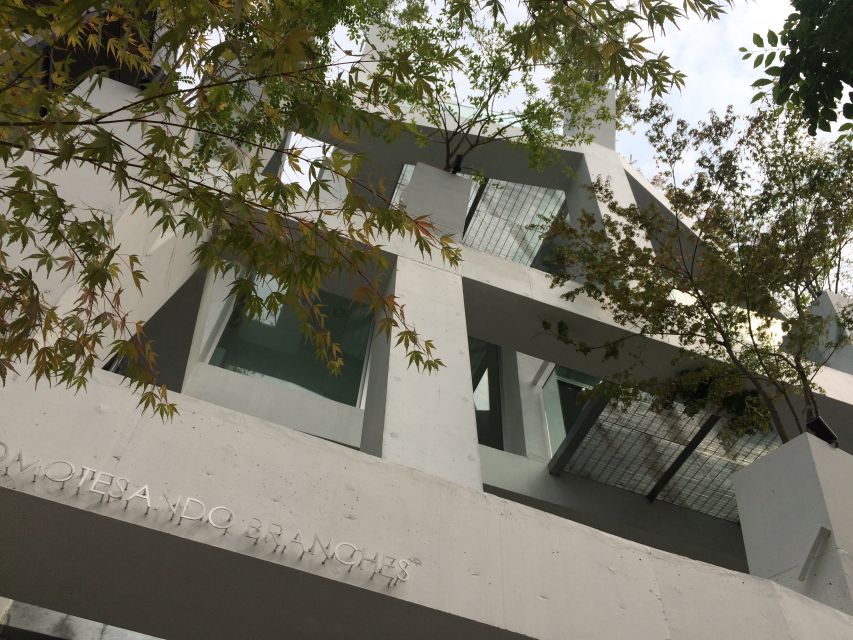
The main avenue tells only one story. The side trip into the back streets is one of the most valuable parts of the route because it changes the scale of what you are seeing.
Here, you can observe a wider range of Japanese lifestyles. The setting is less polished and more residential, with everyday streets replacing the large façades of the luxury brands. That shift helps you understand why Harajuku and Omotesando feel more layered than a standard shopping district.
A guide can point out details you might otherwise miss, including less dramatic buildings and the way homes, shops, and narrow streets fit together. The architecture may not be as famous as Prada or Dior, but it gives the grand buildings a context. You see the district as a place where people live and work, not just a showroom for global fashion.
The route may also include Cat Street. It is described as a lively neighborhood with a cozy feel, and it makes a good contrast with the broad, formal avenue of Omotesando. If you enjoy places that feel more local and less carefully staged, this section may become a personal favorite.
You should keep your expectations sensible. The back streets are not a separate sightseeing attraction with a long list of formal landmarks. Their value comes from comparison. After studying designer architecture, you can see how ordinary urban spaces create a different rhythm.
A few more architecture tours around Japan worth a look
- Tokyo Architecture and Contemporary Art Walking Tour with a local guide
★ 5.0 · 15 reviews - Japanese Garden & Western Architecture: Akasaka exploration tour
★ 5.0 · 9 reviews - Private Ueno Park Architecture Walking Tour
★ 5.0 · 8 reviews - Small-Group Architecture Tour in Ginza, Tokyo
★ 5.0 · 6 reviews
A café break keeps the long walk manageable
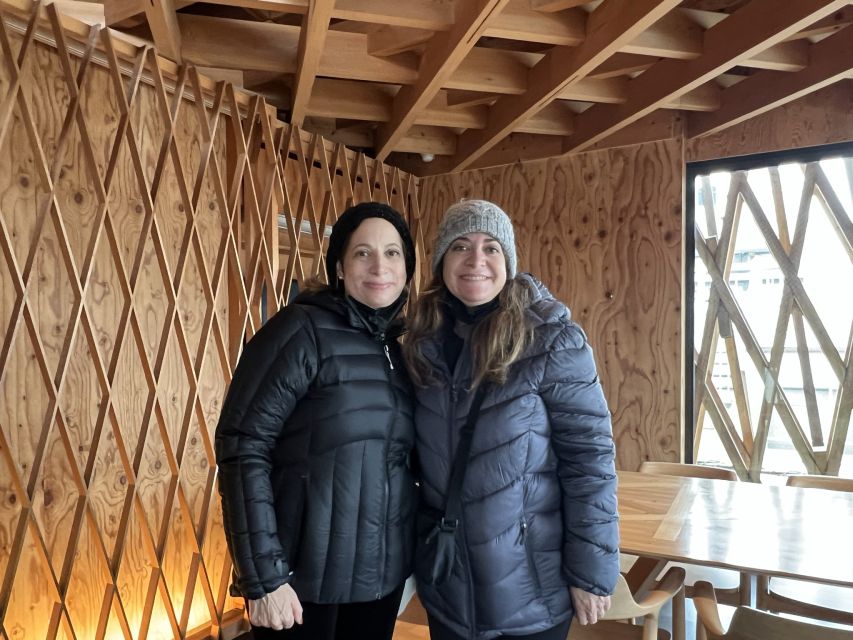
The experience includes a short break with drinks. Meals are not included, so do not arrive expecting lunch or a full café stop. This is a practical pause during a long walk, not a dining activity.
I like having this built into the schedule. Three and a half hours on foot can become tiring, especially if you are photographing buildings or stopping often for explanations. The break gives you time to sit, ask follow-up questions, and watch people move along Omotesando.
The pace can also be discussed with your guide. The tour is private, and the route can respond to your priorities. If you care most about famous architects, you can keep the focus there. If you want more time in the side streets, tell the guide early. One useful feature of the private arrangement is that the outing does not have to treat every stop as equally important.
What the guides add to the experience
The guide quality is central to this tour. You are not simply being led from one storefront to the next. The strongest version of the experience is a conversation about cities, architecture, and how Tokyo changes from one block to another.
Taka is a retired urban planner who graduated from MIT, with particular knowledge of Japanese architects and major international architecture awards. That background suits visitors who want a more serious explanation of design and city planning.
Fuki is described as passionate about architecture and able to include buildings that match a guest’s specific interests. Yoshi and Mari Sakai are also named as guides who bring strong English and an energetic approach. Other guides may lead the tour, so you should not assume that one particular person will be assigned unless you confirm it when booking.
The guide can also help you understand the difference between architectural fame and everyday usefulness. A building may be celebrated by architects but feel awkward at street level. Another may seem simple at first but work well for pedestrians and neighborhood life. Those are the questions that make the tour worthwhile.
English is the stated language. The activity is private, so it suits solo visitors, couples, families, and small groups who prefer to ask plenty of questions. A solo participant can still book it, though the per-person cost should be weighed carefully.
Daylight or night: choosing the better time
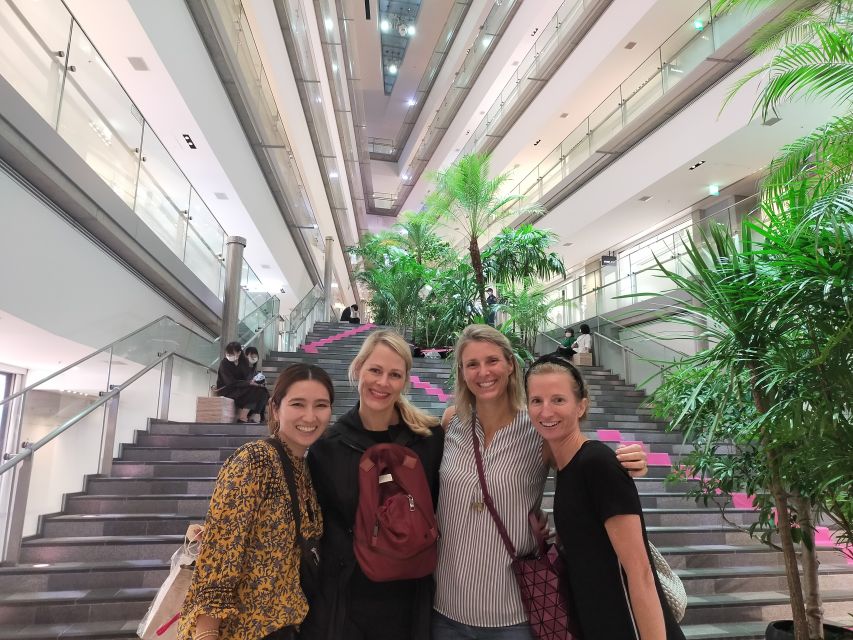
Daytime gives you the clearest view of materials, façades, structural details, and the surrounding streets. It is the best choice if you want to study how buildings meet the sidewalk or photograph the details of the architecture.
Night offers a different experience. Lighting can change the mood of the buildings and make familiar façades look more dramatic. The tour specifically allows for a night perspective, so ask about evening starting times if that is important to you.
The trade-off is simple. Daylight is better for detail. Night is better for atmosphere and illuminated storefronts. Since the tour lasts 210 minutes, choose the time that matches your main interest rather than trying to fit it around a crowded sightseeing schedule.
Is $129 per person a fair price?
At $129 per person, this is not a cheap orientation walk. You are paying for a private guide, English explanations, a tailored route, and a full 210 minutes focused on architecture. The price does not include transportation to the area, meals, or entry fees, though the tour is mainly based around outdoor viewing.
For a group of friends or a family that wants a specialized outing, the value is easier to see. You can ask direct questions, set the pace, and avoid spending time on stops that do not interest you. The guide’s architectural or urban-planning background can also make the price worthwhile if you have already seen Tokyo’s major sights and want something more focused.
For a solo visitor on a tight budget, the cost is harder to justify. You could walk Omotesando independently and see many of the façades. The difference is the interpretation. If you want to understand why these buildings matter, how the district differs from Ginza, and what lies beyond the main avenue, the private guide provides the main benefit.
The 4.9 rating from 18 ratings reflects a very strong response, but the small number means you should still judge the tour by your own interests. This is not a general introduction to Tokyo. It is a specialist walking experience with a broad appeal for people who enjoy design.
Who should book this walk?
I would choose this tour if you have an interest in architecture, fashion, photography, urban design, or modern Japanese culture. It also works well if you have already visited the obvious Harajuku sights and want to understand the area at a slower, more thoughtful pace.
It suits solo visitors because the private guide can keep the conversation moving. It suits couples and families because the route can be adjusted. It may also appeal to architects, design students, and anyone who wants to recognize important buildings during the rest of a Tokyo trip.
I would be more cautious if you dislike walking, want a food-focused tour, or expect extensive interior access. The experience is built around outdoor streets, building exteriors, commentary, and neighborhood observation. Comfortable shoes are essential.
The tour is wheelchair accessible, but the provided information does not describe the exact street conditions or route details. If you use a wheelchair, confirm the route and any specific mobility needs before booking.
Practical details for a smoother outing
Meet at Café Mori no Terrace by the large wooden entrance gate to Meiji Shrine. The café is outside the shrine grounds, not the similarly named café inside.
Allow the full 210 minutes. The route covers several major buildings, a back-street section, and a drinks break, so it is not a quick loop. Wear comfortable shoes and bring a camera if you enjoy architectural photography.
Transportation to and from the Harajuku and Omotesando area is not included. Check the starting time when you reserve, especially if you want a night walk.
You can cancel up to 24 hours in advance for a full refund, and the reserve-now, pay-later option gives you some flexibility while planning your Tokyo schedule.
Should you book the Private Harajuku Omotesando Architecture Tour?
Book it if you want more than a shopping stroll. The best part is the connection between famous designer buildings and ordinary neighborhood streets. You see major works by Prada, Dior, Louis Vuitton, Sunny Hills, and others, then step away from the polished avenue and observe another side of Harajuku.
The tour is especially worthwhile when you value explanation over simple sightseeing. Guides such as Taka, Fuki, Yoshi, and Mari Sakai bring different strengths, and the private format lets you shape the conversation.
Skip it if you want a short, inexpensive introduction or a food-and-shopping itinerary. At $129 per person, this is a focused architectural walk, not a general city tour. For the right audience, its long route, flexible format, and strong guide focus make it one of the more distinctive ways to understand Omotesando.
FAQ
How long does the tour last?
The tour lasts 210 minutes, or three and a half hours.
What language is the tour conducted in?
The tour is conducted in English by a licensed English-speaking guide.
Is the tour private?
Yes. It is offered as a private group experience.
Where does the tour meet?
The meeting point is in front of Café Mori no Terrace in the open space by the large wooden entrance gate of Meiji Shrine. The address is 1 Yoyogikamizonocho, Shibuya City, Tokyo 151-0052, Japan.
How do I reach the meeting point from Harajuku Station?
Leave JR Harajuku Station through the Omotesando exit and walk toward the forest. You do not go through a Shinto gate to reach the café.
Which buildings are included?
The route includes Yoyogi Gymnasium viewed from a distance, The Iceberg, Dior, Louis Vuitton, Sunny Hills, and Prada. It also includes Harajuku and Omotesando back streets.
Is a café break included?
Yes. The tour includes break time with drinks. Meals are not included.
Is the tour wheelchair accessible?
Yes, the activity is listed as wheelchair accessible. Contact the provider before booking if you need details about the exact route.
Can I take the tour at night?
Yes. Night tours are available depending on the starting time, and they offer a different view of the buildings and lighting.
Just added around Japan
- Small-Group Architecture Tour in Ginza, Tokyo★ 5.0 · 6 reviews
- Japanese Garden & Western Architecture: Akasaka exploration tour★ 5.0 · 9 reviews
- Tokyo Architecture and Contemporary Art Walking Tour with a local guide★ 5.0 · 15 reviews
- Private Ueno Park Architecture Walking Tour★ 5.0 · 8 reviews
- [Aomori Prefecture] Tour the history and architecture in Towada City, the art city★ 5.0 · 6 reviews
- Private Ueno Park Architecture Tour★ 5.0 · 5 reviews
- Private Ginza Architecture Tour★ 5.0 · 3 reviews
- Kyoto: Nijo Castle & Gardens 2-Hour Guided Tour★ 4.5 · 2 reviews
Tokyo Architecture Tours, compared.
Tokyo: Shibuya Highlights Walking Tour & Secret View Spot
Read our review →
Private Harajuku Omotesando Architecture Walking Tour
Read our review →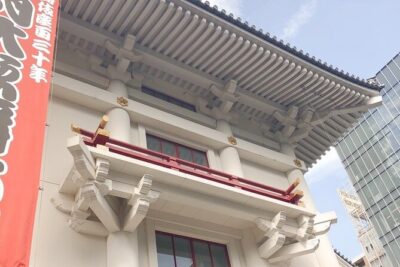
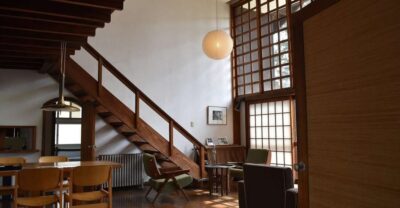
Private Edo-Tokyo Open Air Architectural Museum Tour
Read our review →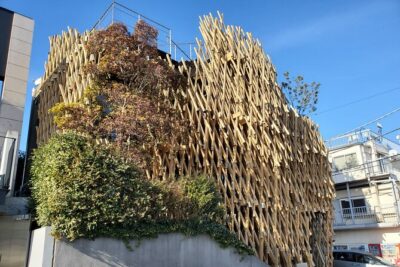
Tokyo Architecture and Contemporary Art Walking Tour with a local guide
Read our review →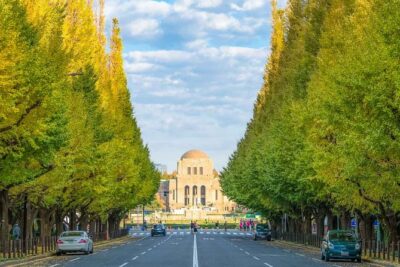
Japanese Garden & Western Architecture: Akasaka exploration tour
Read our review →
Browse the lists this tour appears in