
Review · TOKYO
Private Ginza Architecture Tour
Ginza is more than luxury shops and polished department stores. This private walking tour reveals the district as an open-air lesson in Japanese architecture, moving from Tsukiji Hongwan-ji’s Indian-style exterior to the clean modern lines of Maison Hermès and the bold forms of Tokyu Plaza Ginza. The final view toward the Wako building gives you Ginza’s most recognizable corner.
I like the wide architectural range, from a temple with a European church-like interior to a Kabuki theater that carries forward older Japanese design. I also like the private format, which gives your English-speaking guide room to explain why each building matters instead of rushing a large group down the street.
The main consideration is time and walking. Three and a half hours is a serious architecture outing, and the tour does not include meals or transportation to the Ginza area. If buildings are only a small part of your Tokyo interests, this may feel too focused.
Key points to know before booking
- A 210-minute route connects Tsukiji and Ginza: You begin at Tsukiji Hongwan-ji and finish at the Ginza 4-chome intersection.
- The tour compares old and new design: You see a traditional-style Kabuki theater beside modern commercial buildings and a Metabolism movement masterpiece.
- The private group format matters: You receive a live English tour rather than a recorded commentary or a large shared walk.
- A backstreet detour adds contrast: The route includes a side trip away from Ginza’s best-known avenues.
- Drinks are included during a break: Meals are not included, so plan your food separately.
- The price is $129 per person: That is easier to justify for architecture fans who value a personal guide and focused route.
Why Ginza works so well for an architecture walk
Ginza gives you a useful slice of Tokyo without asking you to cross the entire city. In a short area, you can compare religious architecture, performance spaces, luxury retail buildings, postwar design ideas, and older urban fabric.
That variety is the real point of the tour. You are not simply collecting famous facades. You are seeing how Japan places very different design ideas side by side. A building can look traditional from one angle, highly experimental from another, or quiet and restrained until your guide points out its structure.
The route also helps correct a common first impression of Ginza. The district is famous for shopping, but its architecture is part of the attraction. The streets offer broad views of major facades, while the side trip brings you into a less polished part of the neighborhood. That change in tone helps you see Ginza as a working urban district, not just a display window.
More private architecture tours in Japan:
- Private Harajuku Omotesando Architecture Walking Tour
★ 5.0 · 67 reviews - Private Ginza Architecture Walking Tour
★ 5.0 · 50 reviews - Private Harajuku Omotesando Architecture Tour
★ 4.9 · 18 reviews
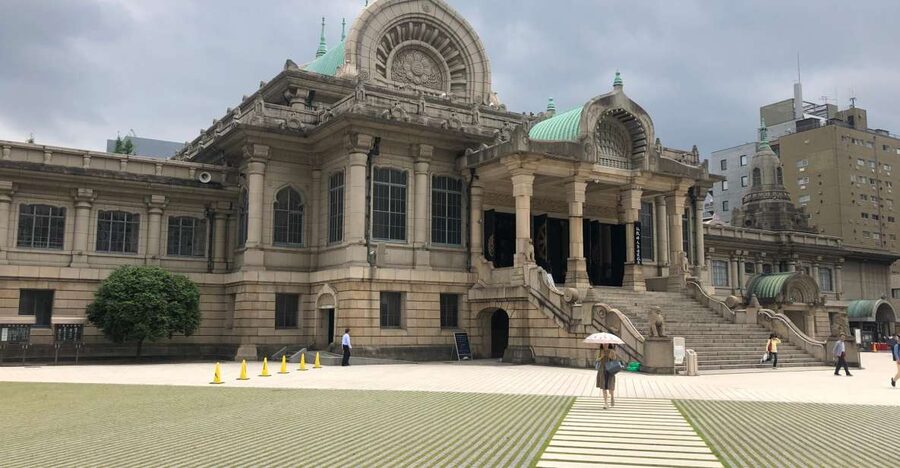
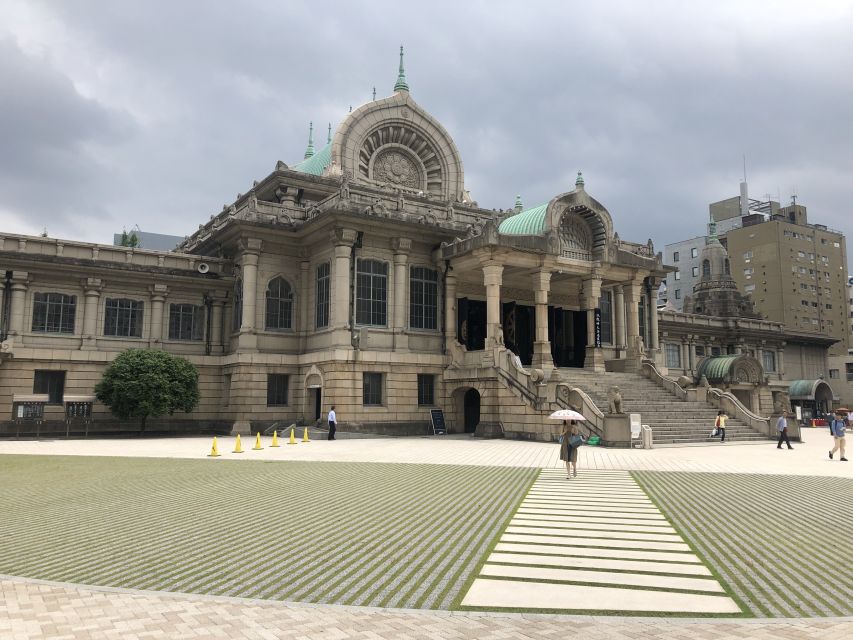
Starting at Tsukiji Hongwan-ji
The tour begins in front of the main gate of Tsukiji Hongwan-ji temple. The meeting point is particularly easy to find: leave Exit 1 of Tsukiji Station on the Tokyo Metro Hibiya Line, turn left, and walk straight for less than a minute.
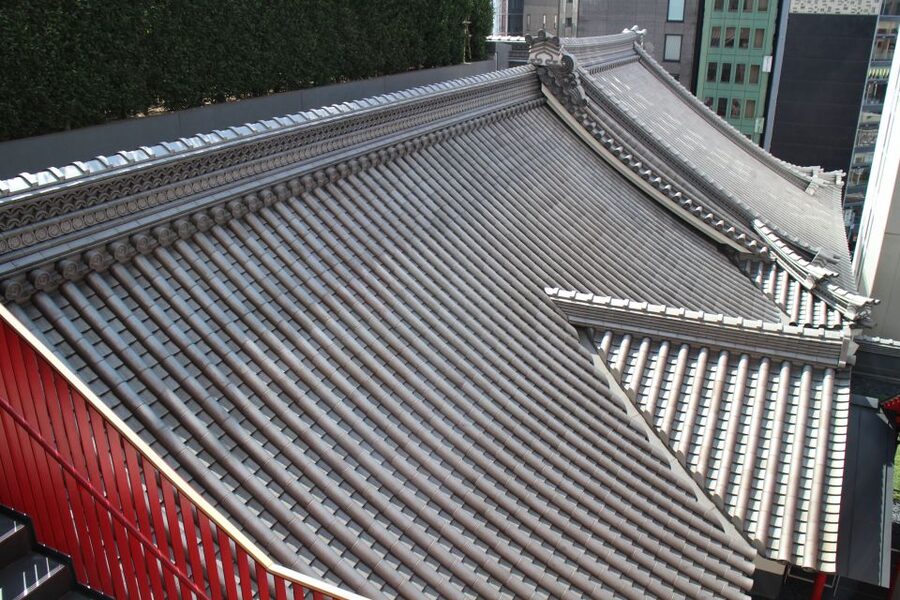
The temple is an unusual opening stop. Its exterior uses an Indian style, while its interior has the feel of a European church. That combination immediately sets up one of the tour’s main themes: Japanese architecture does not fit neatly into a single visual category.
You will want to take a little time here before the group moves on. Look at how different the outside and inside feel, and listen for the guide’s explanation of the building’s design choices. The temple also makes the point that Tsukiji is not only about its famous fish market.
This stop is useful even if you came mainly for Ginza. It gives you a strong comparison point before the modern commercial buildings appear. The drawback is that anyone expecting a market-focused tour may find the temple’s architecture more important than food or neighborhood history.
Kabuki-za and the art of carrying tradition forward
Next comes the Kabuki theater, rebuilt in 2013. Its design inherits traditional forms from earlier generations, making it a natural bridge between the temple and the contemporary buildings that follow.
You are not simply looking at an old theater preserved in place. This is a newly built structure that continues a familiar visual language. That makes it a good example of how a modern city can preserve a traditional identity without freezing the building in the past.
The theater also adds a cultural layer to the walk. Kabuki is closely tied to Japanese performance traditions, and the building’s exterior gives that role a public face in central Ginza. Your guide can help you read the building as both a theater and a piece of urban design.
Because the tour is private, you can ask questions when the contrast between the older style and the new construction raises them. That is one of the practical advantages of this experience. Architecture can be hard to read from a quick glance, and a guide can direct your attention to the details that would otherwise pass unnoticed.
The Nicolas G. Hayek Center and Maison Hermès
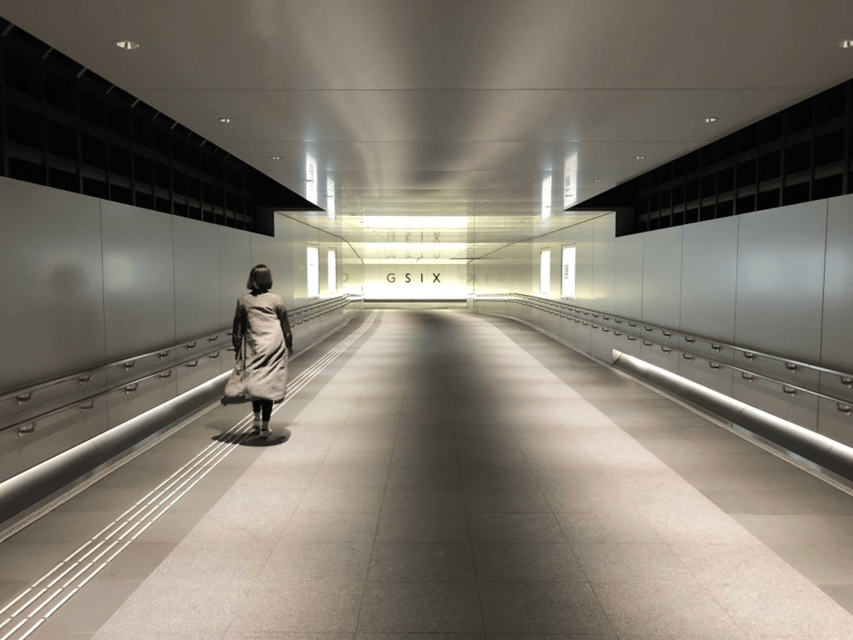
The route then moves into Ginza’s modern commercial architecture, including the Nicolas G. Hayek Center and Maison Hermès. These buildings show how luxury brands use architecture to express an identity before you even enter the shop.
The Nicolas G. Hayek Center is part of the tour’s modern side, while Maison Hermès offers another take on high-end retail design. Seeing both in sequence lets you compare different ideas about proportion, materials, branding, and the relationship between a store and the street.
You do not need to be an architect to get something from this section. The useful question is simple: what does each building want you to feel as you approach it? One may appear formal, another light, another highly controlled. The guide’s role is to give those impressions some structure.
This is also where the walking format earns its keep. You see the buildings at street level and from changing angles, rather than as isolated photographs. That matters in Ginza, where the experience depends on how a facade meets the sidewalk, neighboring buildings, signs, and passing pedestrians.
A few more architecture tours around Japan worth a look
- Tokyo Architecture and Contemporary Art Walking Tour with a local guide
★ 5.0 · 15 reviews - Private Edo-Tokyo Open Air Architectural Museum Tour
★ 4.8 · 15 reviews - Japanese Garden & Western Architecture: Akasaka exploration tour
★ 5.0 · 9 reviews - Private Ueno Park Architecture Walking Tour
★ 5.0 · 8 reviews
Tokyu Plaza Ginza and the Metabolism connection
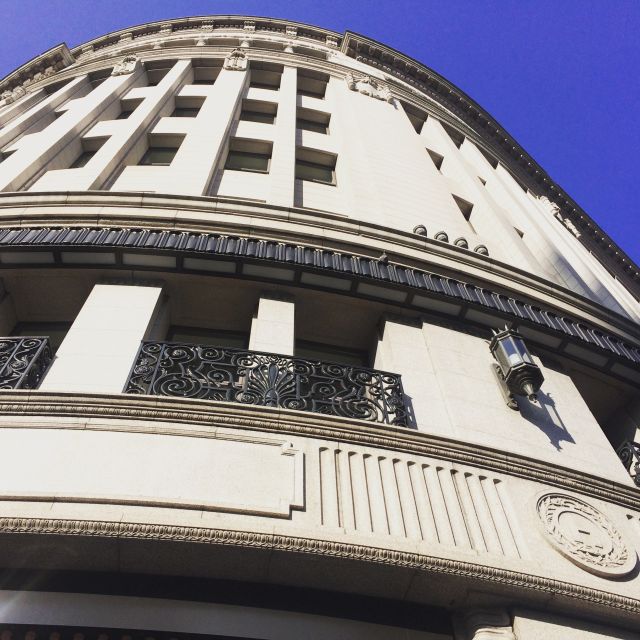
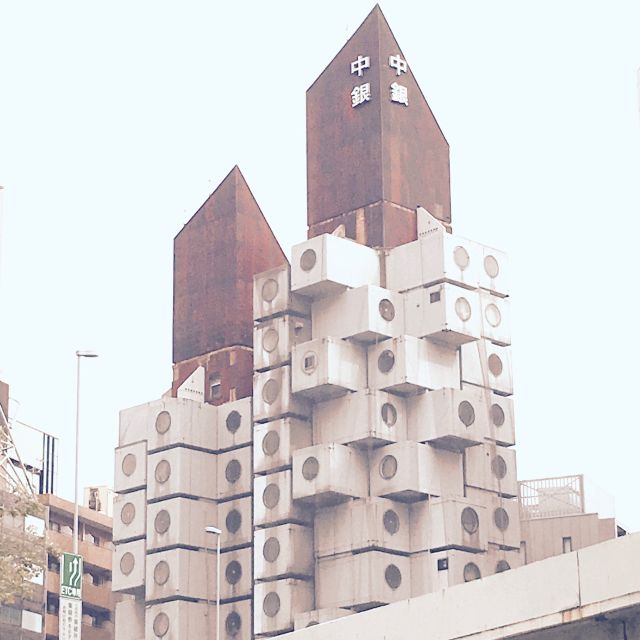
Tokyu Plaza Ginza brings a more openly contemporary note to the route. It is one of the places where the tour connects Ginza’s present-day commercial scene with the ideas of Japanese architects who pushed for new forms of urban life during the 1960s and 1970s.
The Japanese Metabolism movement proposed new approaches to urbanism. Its ideas treated cities as systems that might grow, change, and adapt instead of remaining fixed. The tour includes a masterpiece connected with this movement, so this stop gives you a chance to place one building within a larger architectural debate.
That context is important. Without it, experimental architecture can seem merely odd or stylish. With it, you can see how postwar Japanese designers were responding to rapid urban change and asking what a future city might look like.
Tokyu Plaza also helps keep the route grounded in modern Ginza. You are not studying architecture in a museum. You are seeing ambitious design used for daily commerce in one of Tokyo’s best-known districts. The contrast between bold ideas and ordinary city use is one of the most worthwhile parts of the walk.
Mikimoto Ginza 2 and the pleasure of unusual details
Mikimoto Ginza 2 is another modern stop, and it adds a different mood to the route. Along with the other retail buildings, it shows how a narrow urban site can become part of a brand’s public image.
This is a good point to pay attention to the building as a complete object, not just a shopfront. Notice the exterior treatment, its place among neighboring structures, and the way it presents itself from the street. Your guide can help you compare it with Maison Hermès and the Nicolas G. Hayek Center instead of treating each building as an unrelated photo stop.
The value here is in the comparison. Ginza’s architecture is easier to understand when you see several commercial buildings together. You begin to notice that modern design is not one single style. Some buildings aim for restraint, some for visual drama, and some for a strong connection between a company and its surroundings.
If you are hoping to go inside every building, keep expectations in check. The experience is a walking tour of architecture, not a shopping itinerary or a series of interior visits. Its focus is what you can understand from the street and through the guide’s explanation.
The Okuno Building and Ginza’s older face
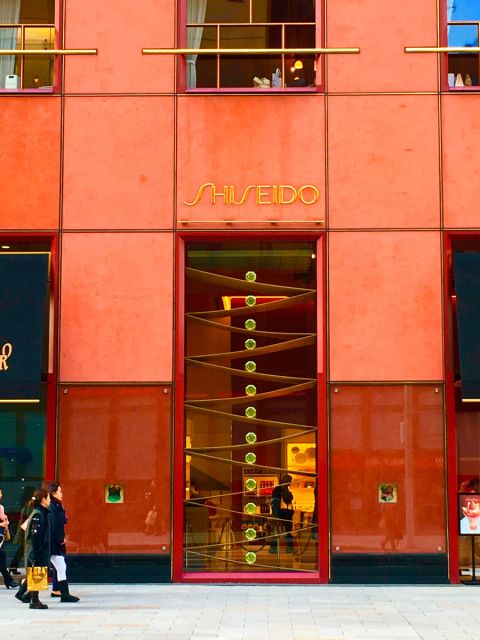
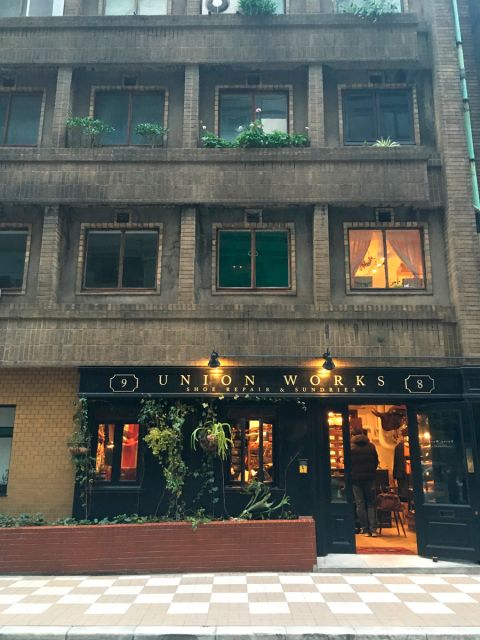
The Okuno Building gives the tour a change of pace. After several newer, highly designed commercial buildings, this stop helps you appreciate another side of Ginza.
The building is part of the district’s older visual layer, and it works as a useful counterpoint to the newer works. The tour’s strength is not that every stop looks spectacular. It is that the stops make sense together. The Okuno Building helps you see what has been retained as Ginza has continued to change.
This is where the route’s balance between traditional and modern becomes clearest. Tsukiji Hongwan-ji and Kabuki-za connect to older cultural forms. The Okuno Building represents another period of urban development, while the later retail buildings show current design ambitions.
You may find this section especially rewarding if you like buildings with character rather than only famous landmarks. It also prepares you for the final stop, where Ginza’s past and present meet in one of Tokyo’s most recognizable intersections.
Finishing at Ginza 4-chome and the Wako building
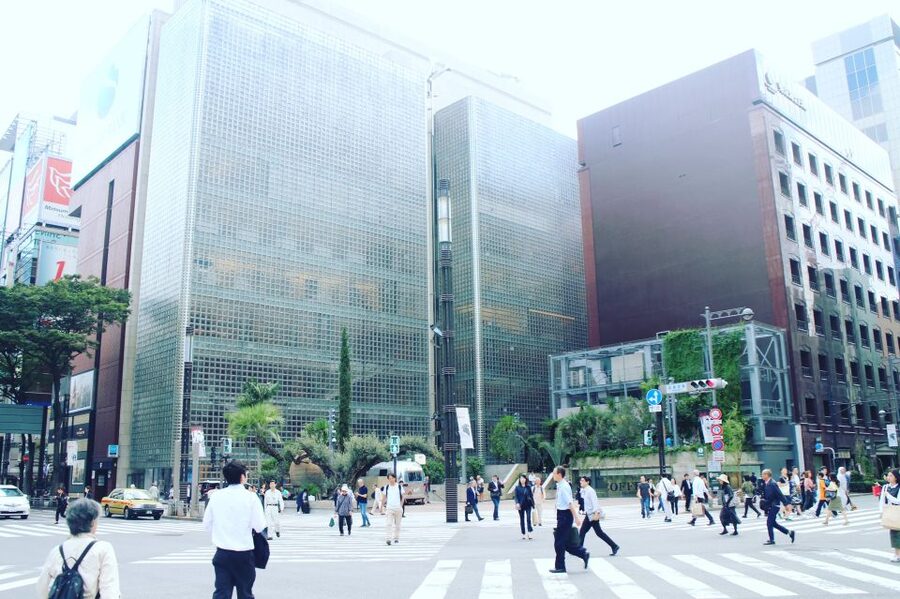
The tour ends at the Ginza 4-chome intersection, where the Wako building, associated with SEIKO watches, provides the familiar closing image. This is a smart endpoint because it gives you a clear sense of place after the more detailed stops along the route.
The building is one of Ginza’s signature landmarks. Ending here lets you step back and see how the district’s architecture works at a major crossroads, where branding, traffic, retail, and public space all meet.
You can also use this location to continue your own Ginza visit. The tour does not include a meal, so the end of the route is a practical time to arrange lunch, coffee, or further sightseeing on your own. Transportation to and from the Ginza area is also separate, but the starting point is simple to reach from Tsukiji Station.
The backstreet side trip
One of the more useful details is the secret side trip into a backstreet neighborhood. The main avenues show Ginza’s polished public face. The smaller streets offer a different view of the district and make the walk feel less like a checklist of major facades.
This detour matters because architecture is shaped by its surroundings. A luxury building can look very different when you compare it with a quieter neighborhood street, smaller structures, and less formal urban space. The contrast helps you understand that Ginza is not one uniform district.
The exact nature of the side trip is not specified, so you should not expect a particular shop, cafe, or hidden landmark. Think of it as a change in setting that adds texture to the main route.
What $129 per person gets you
At $129 per person, this is not a bargain sightseeing walk in the usual sense. You are paying for a private group, a live English-speaking guide, a 210-minute route, and a focused subject rather than a general introduction to Tokyo.
The price makes the most sense if you would otherwise spend hours photographing buildings without understanding their connections. A guide can explain the Metabolism movement, point out the contrast between traditional and modern forms, and keep the route coherent.
The included drinks break also gives you a pause during a long walk. Meals are not included, so this is not an all-day food and architecture package. You should budget separately for anything you want to eat before or after the tour.
For architecture enthusiasts, design students, photographers, and repeat visitors to Tokyo, the cost can be reasonable because the route is specific and private. For a first-time visitor who wants temples, markets, shopping, and food all in one outing, a broader Tokyo tour may offer better value.
Timing, meeting point, and practical details
The experience lasts 210 minutes, or three and a half hours. Wear shoes suitable for sustained city walking and leave room in your schedule for the full route. The tour begins at the main gate of Tsukiji Hongwan-ji, not at the Ginza 4-chome finish.
The meeting point is convenient. Exit 1 of Tsukiji Station on the Hibiya Line puts you less than a minute from the temple after you turn left and walk straight. You are responsible for getting to the area, since transportation to and from Ginza is not included.
The tour is offered in English with a live guide. It is a private group experience, which is useful if you want to ask about particular buildings or adjust the discussion toward traditional design, modern retail architecture, or the Metabolism movement.
The experience also allows cancellation up to 24 hours in advance for a full refund, and you can reserve now and pay later. Those terms help if your Tokyo schedule is still taking shape.
Who should book this Ginza architecture tour
I would choose this tour if you like cities best when you can understand how their buildings fit together. It suits visitors who already know Ginza as a shopping district and want to see its design with more purpose.
It is also a good match for anyone drawn to the contrast between tradition and modernity. The temple, Kabuki theater, Metabolism-related architecture, luxury retail buildings, Okuno Building, and Wako building create a clear progression through different design periods.
The tour may not suit you if you dislike long walks, want a food-centered Tsukiji experience, or prefer to explore at your own pace without a guide. The route has a strong architecture focus, and its value depends on your interest in buildings.
The experience has a top rating from the small number of published bookings, and one verified guest from Martinique specifically praised the guide as very capable and pleasant. That matches the main reason to book: this is a personal, focused walk where the guide’s ability to explain unusual architecture matters.
Should you book it?
Book this tour if Ginza’s buildings have caught your eye and you want the ideas behind them, not just their photographs. At $129 per person, the private format is the key value, especially for a couple, family, or small group that wants an English discussion tailored to its interests.
Skip it if you are mainly after the fish market, Kabuki tickets, shopping, or a general Tokyo orientation. For the right audience, though, the route offers a thoughtful three-and-a-half-hour look at how Japanese architecture moves from temple forms and inherited traditions to ambitious modern urban design.
FAQ
Where does the tour begin?
The tour begins in front of the main gate of Tsukiji Hongwan-ji temple. From Exit 1 of Tsukiji Station on the Tokyo Metro Hibiya Line, turn left and walk straight for less than a minute.
Where does the tour finish?
The route finishes at the Ginza 4-chome intersection, where the Wako building associated with SEIKO watches is located.
How long does the tour last?
The tour lasts 210 minutes, or three and a half hours.
What language is the tour offered in?
The tour is offered in English with a live tour guide.
Is this a private tour?
Yes. The experience is arranged for a private group.
Are meals and transportation included?
Meals are not included. Transportation fees to and from the Ginza area are also not included, but drinks are provided during the break.
Just added around Japan
- Small-Group Architecture Tour in Ginza, Tokyo★ 5.0 · 6 reviews
- Japanese Garden & Western Architecture: Akasaka exploration tour★ 5.0 · 9 reviews
- Tokyo Architecture and Contemporary Art Walking Tour with a local guide★ 5.0 · 15 reviews
- Private Ueno Park Architecture Walking Tour★ 5.0 · 8 reviews
- [Aomori Prefecture] Tour the history and architecture in Towada City, the art city★ 5.0 · 6 reviews
- Private Ueno Park Architecture Tour★ 5.0 · 5 reviews
- Kyoto: Nijo Castle & Gardens 2-Hour Guided Tour★ 4.5 · 2 reviews
- Private Edo-Tokyo Open Air Architectural Museum Tour★ 4.8 · 15 reviews
Tokyo Architecture Tours, compared.
Tokyo: Shibuya Highlights Walking Tour & Secret View Spot
Read our review →
Private Harajuku Omotesando Architecture Walking Tour
Read our review →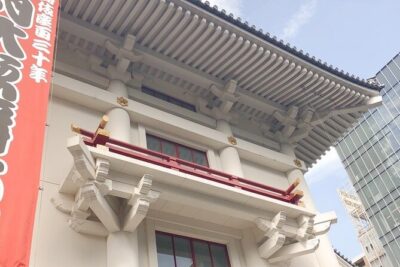
Private Edo-Tokyo Open Air Architectural Museum Tour
Read our review →
Tokyo Architecture and Contemporary Art Walking Tour with a local guide
Read our review →
Japanese Garden & Western Architecture: Akasaka exploration tour
Read our review →
Browse the lists this tour appears in