
Review · ROTTERDAM
Rotterdam: Highlights, Gems, Architecture & History Walk
Rotterdam makes the most sense when you connect its medieval harbor roots with the city of today. This walk does that well, moving from the Rotte River story and the port districts through WWII destruction, postwar rebuilding, striking modern buildings, and plans for the future.
I like the way local guide Yoreh uses large photo sheets to show what Rotterdam looked like before the bombing and what may rise next. I also like the practical finish at the Markthal, where you can eat, ask for restaurant suggestions, and continue exploring on your own.
The main tradeoff is physical: you cover about 5 kilometers, or roughly 11,000 steps, and may stand for long stretches. The pace is steady, and there are short sitting and restroom breaks, but this is not a gentle stroll for anyone with foot, hip, or back trouble.
Key points to know before booking
- See Rotterdam in three time periods: Follow the city from its 13th-century beginnings through WWII and into its current building boom.
- Choose two or three hours: The shorter walk gives you a useful orientation, while the longer route adds more stories, central areas, and visual material.
- Meet local guides Yoreh or Elmer: Both bring strong personal knowledge of Rotterdam, with Yoreh especially noted for his humor, preparation, and love of the city.
- Expect about 11,000 steps: Good walking shoes and weather-ready clothing are essential.
- Finish at the Markthal: The tour ends where you can eat, take photos, and continue to the nearby Cube Houses.
- Small groups make a difference: The guide can answer questions, take photos, suggest museums and restaurants, and adjust the conversation to your interests.
Why this walk helps Rotterdam make sense
Rotterdam can feel puzzling at first. It has a few old corners, but much of the central city looks boldly new. One block may show traditional harbor buildings, while the next brings angular apartments, huge glass structures, or experimental homes.
This tour gives you the missing link. You hear how a settlement on the Rotte River grew into a major port, then learn how the destruction of WWII changed the city’s center. The point is not just to identify buildings. You begin to understand why Rotterdam rebuilt with such freedom and why it still treats architecture and city planning as works in progress.
That approach suits a first visit. You get a working map of the city, then receive suggestions for places to return to later. Several people who took the longer version used the walk to plan museums, meals, shopping, and photo stops for the rest of their stay.
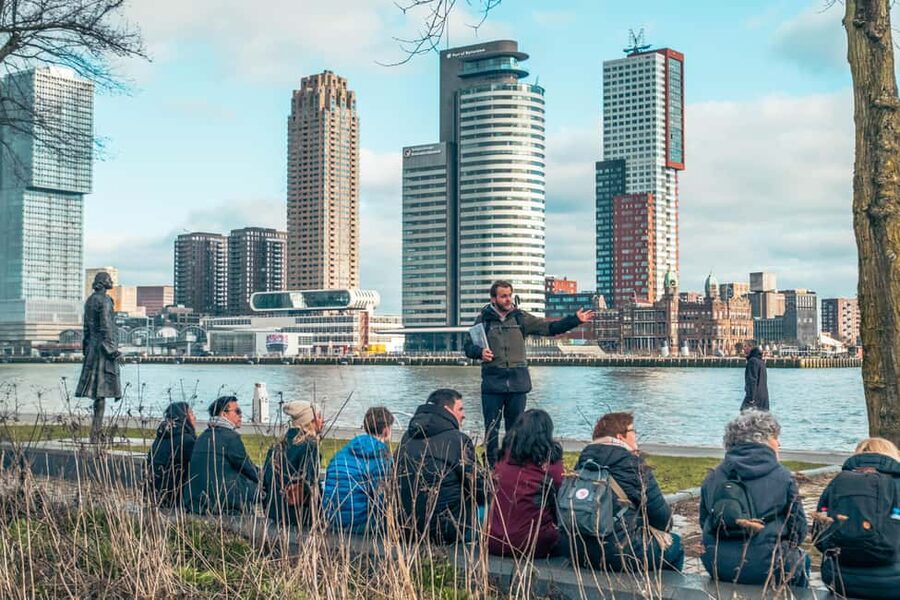
Yoreh is the main guide described for this experience, and Elmer also leads tours. Both speak English and Dutch. Yoreh brings A3-sized photos, maps, and other visual aids, which are particularly useful when discussing vanished buildings, wartime Rotterdam, and future projects. A complicated story becomes easier to follow when you can compare an old photograph with the street in front of you.
More architecture walks in the Netherlands:
- Rotterdam: Architectural Highlights Guided Walking Tour
★ 4.8 · 215 reviews - Rotterdam Walk: Hilights, Gems, Architecture & WWII | 2 or 3hrs
★ 5.0 · 149 reviews - Rotterdam Architecture Highlights Walking Tour
★ 5.0 · 66 reviews
Choosing between two and three hours
The two-hour option works if you want a broad introduction before a short visit, a cruise departure, or a busy day of sightseeing. You still see major areas and landmarks, hear the main WWII and rebuilding story, and finish at the Markthal.
The three-hour option is the better choice if Rotterdam is new to you and you want the city to feel familiar by the end. You go farther into the central districts, hear more detailed stories, and spend more time on architecture, local life, and future plans.
The longer version does not simply add time beside the same building. It gives the guide room to explain why Rotterdam looks as it does. You also have more chances to ask questions and stop for photographs. The extra hour matters most to people who enjoy cities as living places rather than a checklist of sights.
The tradeoff is clear. Three hours on foot takes energy, especially in cold rain or strong wind. Seating is available at selected points, and there is a restroom stop halfway, but plan on standing and walking for much of the outing.
From the Museum Quarter to Veerhaven
The route begins at one of several listed starting points, including the Vaimoo shared-bike station at Melkkoppad. Your exact meeting place depends on the option booked, so check it carefully before setting out.
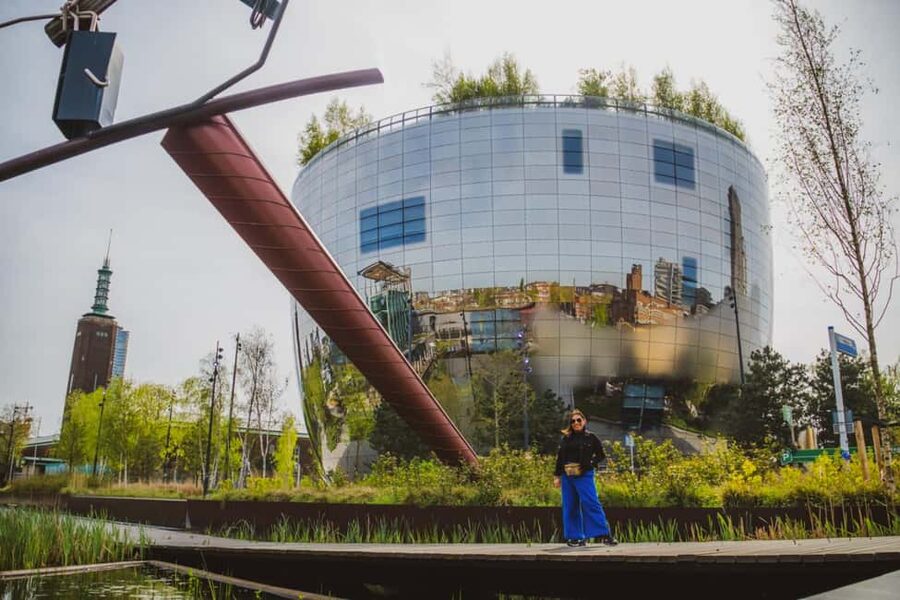
Early stops include the Depot Boijmans Van Beuningen, the Museum Quarter, and Veerhaven. The Depot is a striking modern building and a useful introduction to Rotterdam’s habit of turning cultural storage, public space, and architecture into one experience. The tour passes by rather than serving as an interior museum visit, so do not book this walk expecting time inside the art collection.
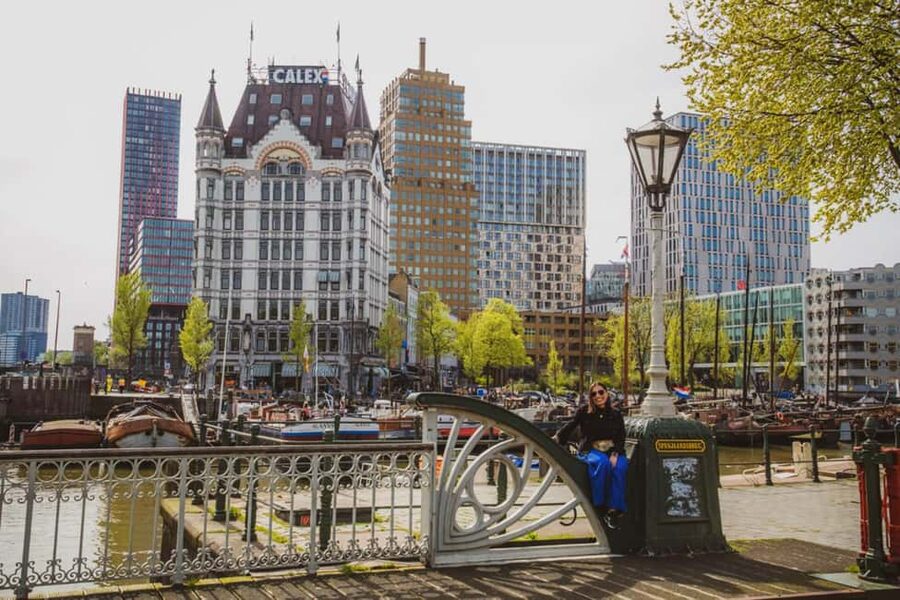
Veerhaven gives you a different side of the city. Its setting helps show Rotterdam as a port city, not only as a center of daring new construction. The contrast between the harbor atmosphere and the later angular buildings is one of the walk’s strengths.
This first section also gives the guide room to connect art, shipping, architecture, and daily life. Yoreh is known for adding personal stories from growing up in Rotterdam, which helps keep the discussion from turning into a string of dates and building names.
The Erasmus Bridge and the maritime districts
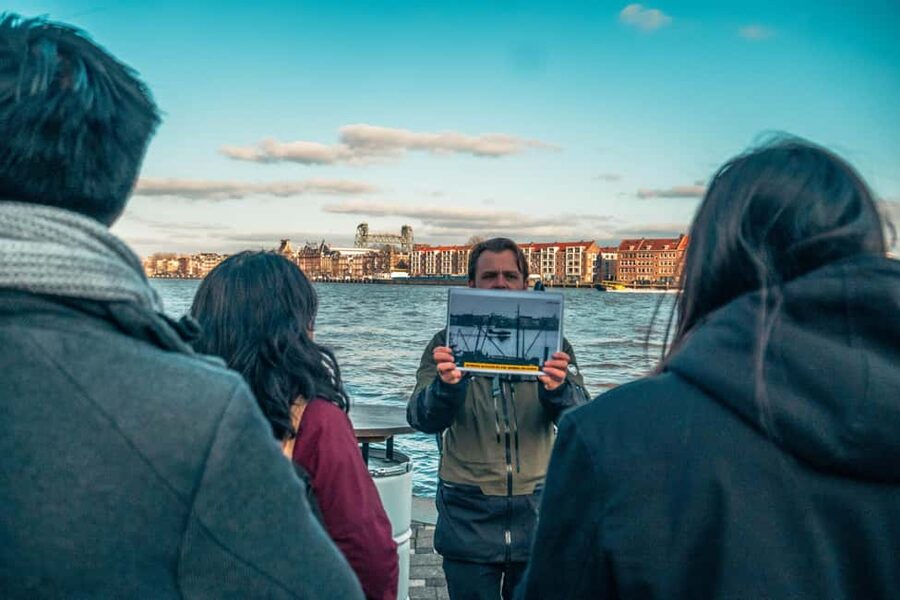
The route continues toward the Erasmus Bridge area, one of Rotterdam’s most recognizable modern sights. The bridge is tied closely to the city’s postwar identity and its connection across the Maas. You get good opportunities for skyline photographs, along with the guide’s advice on where to stand for better angles.
The walk then passes through Leuvehaven and the Maritime District. Leuvehaven brings Rotterdam’s working-waterfront story closer to the center. Here, the city’s shipping past is not an abstract chapter. It is part of the setting around you.
The Maritime District adds another layer. Older port uses meet newer apartments, offices, and public spaces. This is where the tour’s old, current, and future theme becomes especially clear. You are not simply looking at attractive buildings. You are seeing how a port city changes as land near the water gains new uses.
The route may shift slightly during city events or extreme weather. That is sensible in a city where public spaces, bridges, and waterfront routes can be affected by crowds or conditions. You should allow a little flexibility rather than planning another appointment immediately after the walk.
More history tours in the Netherlands:
- The rise of Haarlem: Culture, History, Art and Architecture Walking Tour
★ 5.0 · 59 reviews - Rotterdam Must Do Tour: Highlights, History, WW2 and Architecture
★ 5.0 · 20 reviews - Gouda Private Walking Tour: History, Architecture & Cheese
★ 4.5 · 8 reviews - Maastricht Highlights, Architecture & Heritage Tour
★ 5.0 · 7 reviews
Oude Haven and the Cube Houses
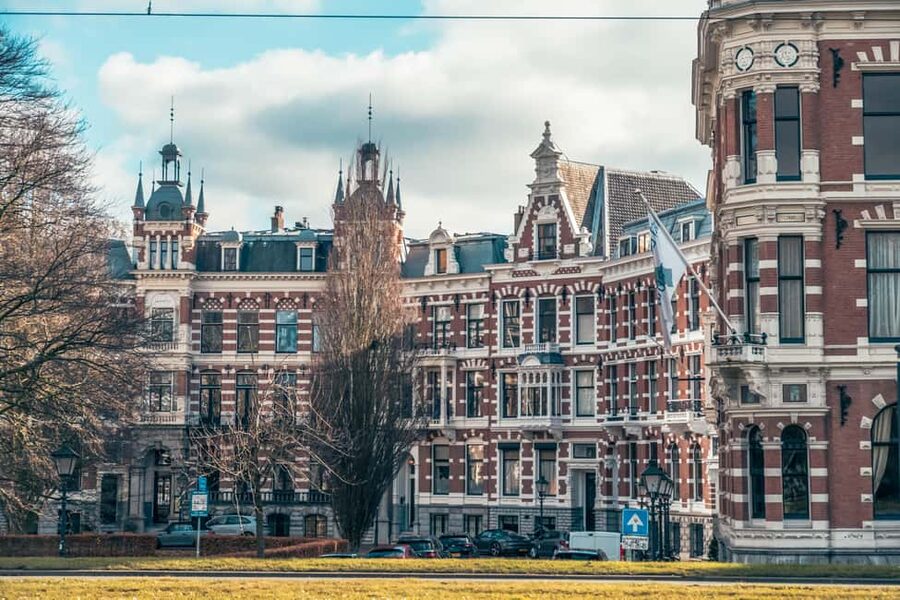
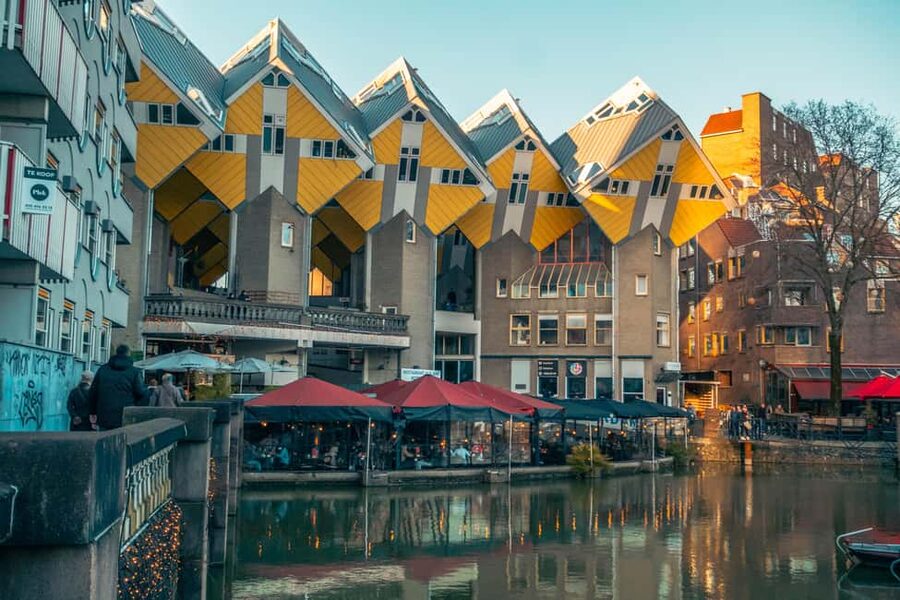
Oude Haven offers one of the most useful contrasts on the route. It connects Rotterdam’s older harbor character with the city’s more experimental side. From here, the Cube Houses and the Overblaak area make a natural architectural climax before the final food stop.
The Cube Houses are easy to recognize, but understanding the idea behind them adds much more than a quick photograph. The unusual angles and raised forms show Rotterdam’s willingness to test how people might live in a dense city. The tour takes you through the Cube House area, but entering one of the homes is not part of the walk. You can visit the interior afterward, about a minute away.
That detail matters. If you have a special interest in the Cube Houses, treat the guided walk and the interior visit as two separate activities. The guide explains the setting and design from outside, then you can decide if you want a closer look after the tour.
This section is also good for families. One parent described the guide as able to keep children aged 12 and 16 interested for the full three hours. The unusual buildings give younger visitors something concrete to look at, while the stories and visual aids help keep the history from feeling remote.
Arriving at the Markthal
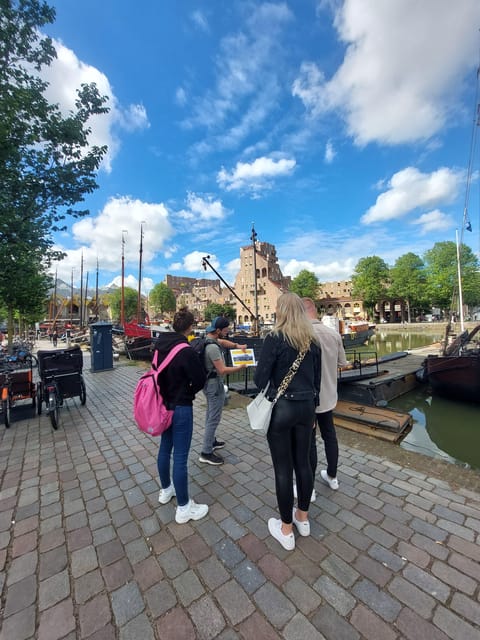
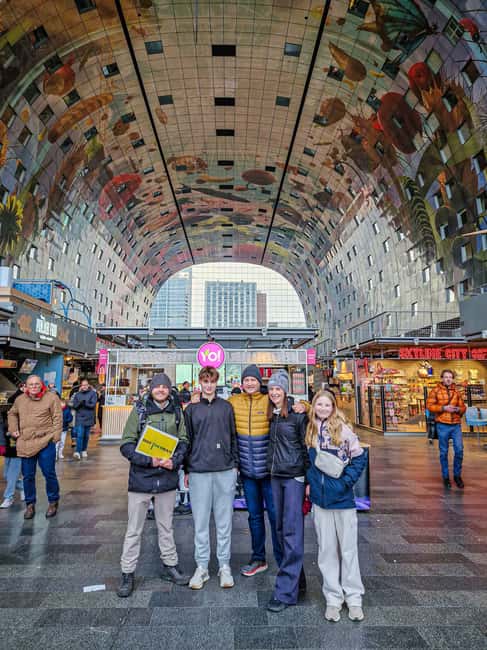
The tour finishes inside or at the Markthal, one of Rotterdam’s best-known modern buildings. Its large interior artwork has earned it comparisons with the Modern Sistine Chapel, a colorful description that reflects the scale and spectacle of the space.
Ending here is practical, not just photogenic. After several hours on foot, you are ready for food. The guide offers suggestions on where to eat inside the market, so you can finish with Dutch snacks, international dishes, or something quick before the next stop on your day.
You also end near several major sights. The Cube Houses are close by, and the surrounding area is well suited to more photos and independent exploring. The final location works especially well for a first-day tour because you can pause for lunch and then return to places that caught your attention.
A stroopwafel is provided halfway through the walk. It is a small touch, but a welcome energy boost during a route of this length. Some tours promise local flavor and deliver only a few facts. Here, the snack, food advice, and personal suggestions fit naturally into the outing.
The guide’s storytelling style
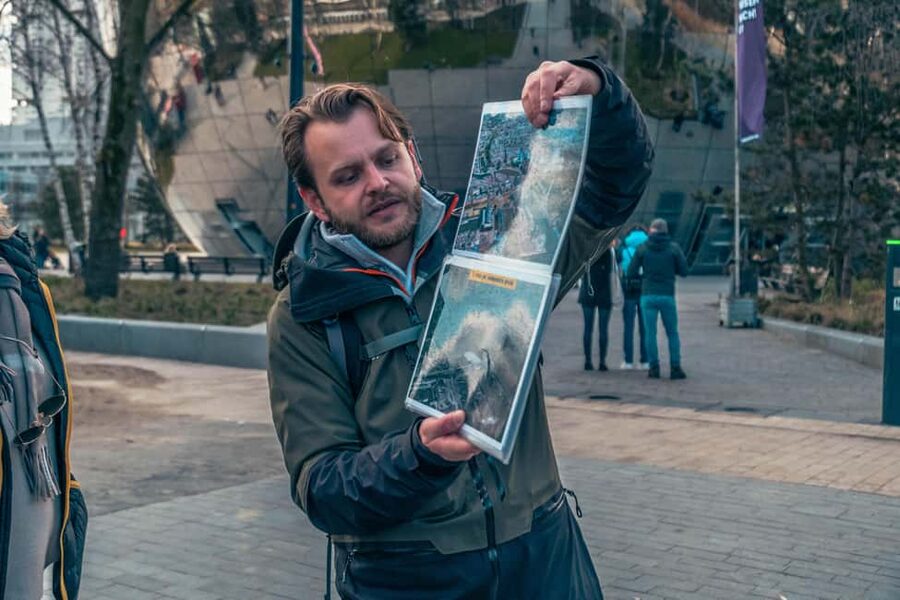
The strongest part of this experience is the way the guide joins facts with visual proof and personal detail. Yoreh carries photographs and charts showing Rotterdam before the bombing, after the destruction, and in its changing future. That makes the city’s transformation easier to picture.
The WWII section receives unusual attention for a general city walk. You hear about the bombing, the German invasion, the effect on local people, and the decisions that followed. The subject is serious, but it helps explain why Rotterdam’s center feels so different from many Dutch cities.
The guides also discuss folklore, important local figures, industry, lifestyle, current affairs, and architecture. The tone is not strictly academic. Humor and small details keep the walk moving, while the guide makes time for questions.
Yoreh has also been praised for taking photographs, sharing links to places visited, and suggesting museums, shops, restaurants, and bars. Those extras are useful because a city tour should help you use the rest of your time, not end the moment the guide says goodbye.
Price, group size, and overall value
At $48 per person, this is not the cheapest way to see Rotterdam. You can walk past the Markthal, Cube Houses, and Erasmus Bridge area on your own without paying an admission fee.
The value comes from the connections. You get a local guide, a small-group setting, visual material, a structured route, a stroopwafel, photo advice, and practical food suggestions. You also cover several districts without needing to work out the best sequence yourself.
The price makes the most sense if you are visiting Rotterdam for the first time or have only a day or two. A good orientation can save time later, especially in a city whose modern center may not be easy to read from a map.
Small groups are another advantage. The guide can slow down for a photograph, answer a specific question, or adjust the emphasis toward architecture, WWII, food, or city planning. On quieter dates, the walk may still go ahead with only one person booked, though that depends on the operation and date.
Who should book this walk

I would choose this tour if you want more than a list of famous buildings. It suits visitors who enjoy architecture, urban planning, port history, WWII stories, local anecdotes, and practical advice for the rest of a trip.
It is also a good match for families with older children and teenagers. The Cube Houses, bridge, market, and changing skyline offer plenty to see, while the photos give the historical sections a clear visual hook.
You should think twice if you dislike walking, need frequent seating, or have back, hip, or foot problems. The route covers about 5 kilometers, includes stairs or steps in the walking environment, and asks you to keep a steady pace. The route can avoid stairs for wheelchair users, and the tour is described as wheelchair accessible with an accessible restroom, but it is still important to discuss mobility needs when booking.
Pregnant visitors who find long walks uncomfortable may also prefer a shorter or less active outing. The tour includes breaks, but not constant seating.
Book early in your Rotterdam stay if possible. The guide’s restaurant and museum suggestions are most useful when you still have time to act on them.
Should you book Rottourdam?
Book it if you want Rotterdam explained as a city shaped by water, war, rebuilding, and ambitious design. The route covers the essential sights, but the real benefit is learning how they fit together.
Choose two hours for a solid introduction. Choose three hours for a fuller sense of the city and its character. Wear good shoes, bring a weatherproof layer, and keep your schedule open for a few minutes after the finish.
I would skip it only if you want a short, mostly seated sightseeing trip or plan to spend the day inside museums. For an active first look at Rotterdam, the combination of local storytelling, old photographs, bold architecture, and a Markthal finish makes the $48 price reasonable.
FAQ
How long does the Rotterdam walking tour last?
You can choose a two-hour or three-hour version. The two-hour option gives you a general orientation, while the three-hour route includes more detailed stories and additional areas.
How much walking is involved?
The full experience covers about 5 kilometers and roughly 11,000 steps. You should expect a steady pace, standing, and some stairs or steps.
Which languages are available?
The tour is offered in Dutch and English.
Who guides the tour?
The guides include Yoreh and Elmer, both associated with Rottourdam. Yoreh is described as a local Rotterdam guide who uses photographs and visual material during the walk.
What sights are included?
The route passes the Depot Boijmans Van Beuningen, Veerhaven, Erasmus Bridge, Leuvehaven, Maritime District, Oude Haven, and Cube Houses. It visits the Markthal and finishes there.
Can I enter a Cube House during the tour?
The walk goes through the Cube Houses and Overblaak area, but entering a Cube House is not included. An interior visit can be done afterward, about one minute from the tour area.
Is food included?
A stroopwafel is provided halfway through the walk. The guide also suggests places to eat inside the Markthal, but a full meal is not included.
Is the tour wheelchair accessible?
The route is described as wheelchair accessible, and stairs or steps can be avoided. An accessible restroom is available, though the tour still involves walking and standing for long periods.
What happens if the weather is extreme or there is a city event?
The route may change slightly, and the tour may run a little shorter or longer. You should allow some flexibility in your schedule.
Just added around the Netherlands
- Rotterdam Must Do Tour: Highlights, History, WW2 and Architecture★ 5.0 · 20 reviews
- Private Rotterdam Walking Tour – guided by Architects★ 5.0 · 2 reviews
- Rotterdam Architecture and Highlights Walking Tour (TOP RATED)★ 4.5 · 14 reviews
- Escape Room – l’Architecte★ 4.5 · 13 reviews
- Maastricht Highlights, Architecture & Heritage Tour★ 5.0 · 7 reviews
- Gouda Private Walking Tour: History, Architecture & Cheese★ 4.5 · 8 reviews
- Amsterdam Walking Tour. All about History, Architecture, Traditions & Anecdotes.★ 5.0 · 2 reviews
- Walking Tour about Golden Age Architecture, private local guide★ 5.0 · 15 reviews
Walking Tours, compared.
The Official Art Deco Walking Tour by The Miami Design Preservation League
Read our review →
Barcelona: Gothic Quarter Ghosts and Legends Walking Tour
Read our review →
Barcelona: Old Town and Gothic Quarter Walking Tour
Read our review →
Lecce: Baroque Architecture and Underground Walking Tour
Read our review →
Chicago in a Day: Food, History & Architecture Walking Tour
Read our review →

Ramblas, Old Town, Gothic and Gaudi Architecture Walking Tour
Read our review →
Chicago’s Secret Interiors Architectural Walking Tour
Read our review →Browse the lists this tour appears in