
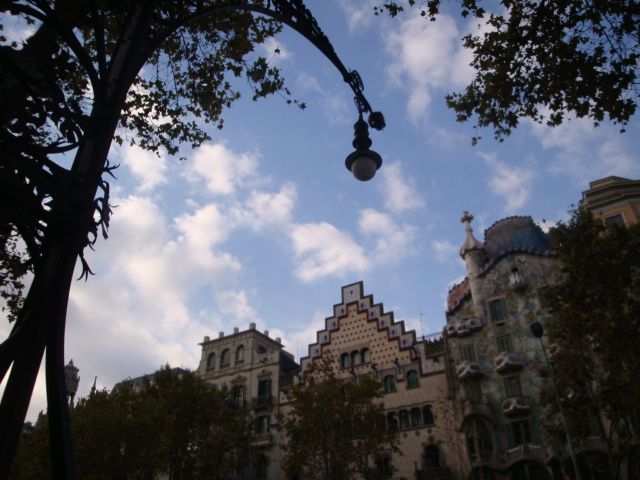
Review · BARCELONA
Barcelona: Art Nouveau & Gaudí Tour
Barcelona’s Eixample is where money, politics, and artistic ambition collided. On this private walking tour, you follow the broad streets of the Golden Square past palaces built by industrialists and returning South American fortunes, with Gaudí, Domènech i Montaner, and Puig i Cadafalch competing for attention in stone, ceramic, glass, and iron.
I like the strong historical frame, which links Barcelona’s 19th-century building boom to the fall of the city walls and the painful politics that came before it. I also like the guide-led storytelling, especially if Johannes, known as Hannes, leads your group. His explanations connect architecture with local events, famous names, and odd details rather than treating each façade as a pretty object. The main consideration is that this is mostly an exterior tour, so you will not spend much time inside the major buildings.
Key points to know before you book
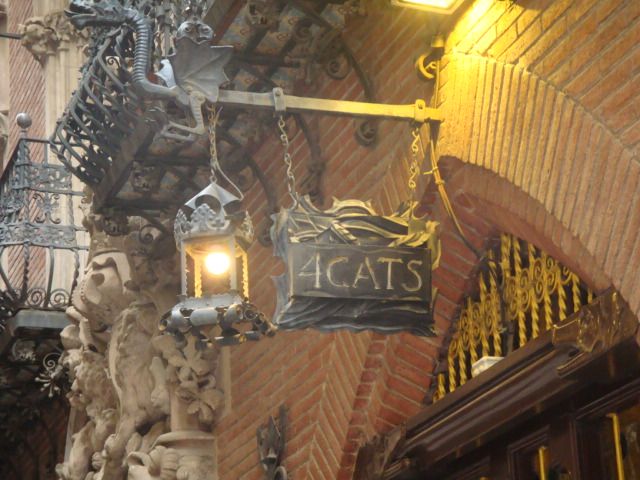
- The Golden Square is the main stage: Walk through Eixample, Barcelona’s planned expansion, and see some of Catalonia’s finest Modernist façades.
- The history is bigger than Gaudí: Expect discussion of the 1714 war, the city walls, Catalan identity, industrial wealth, and Ildefons Cerdà’s urban plan.
- Johannes brings the story to life: The guide is praised for linking politics, people, and architectural styles without needing to stop and consult notes.
- This is a private group: The $212 price covers up to four people, making the cost easier to justify when shared by a small party.
- You mostly admire buildings from outside: Entry fees are not included, and museum visits are generally not part of the walk.
- Plan for Barcelona weather: The walk runs in sun, rain, and wind, so bring water, sun protection, and a light layer.
Why Eixample tells Barcelona’s modern story
Start at Plaza de Urquinaona, in front of Theater Borrás. From there, the tour moves into Eixample, whose name means expansion. That simple word explains the neighborhood’s importance.
For roughly two centuries, Barcelona was hemmed in by its medieval walls. The old city became crowded, and wealthy families lived close to poorer residents because there was nowhere else to build. When the walls came down in 1854, the empty land between the old city and the small town of Gracia opened up.
That change was not only a construction project. It was a release of pressure. The tour places Eixample within Barcelona’s long struggle for local control and the effects of policies imposed from Madrid. You get a clearer sense of why the new district became a stage for wealth, identity, and ambition.
I find this background useful because it keeps the architecture from becoming a parade of names. The decorated façades were not random acts of fancy. They reflected a newly confident upper class that wanted its homes to announce success.
More Gaudí tours in Barcelona:
- Barcelona: Park Güell and Gaudí House Museum Entry Ticket
★ 4.5 · 6,326 reviews - Sagrada Familia & Gaudi Tour Private or Small Group with Tickets
★ 4.5 · 1,188 reviews - Complete Gaudi Tour: Casa Batllo, Park Guell & Sagrada Familia
★ 5.0 · 1,152 reviews
Cerdà’s city plan and the corners you keep noticing
One of the most practical parts of the Eixample story is Ildefons Cerdà’s idea of a better city. His plan aimed to create a more orderly, healthier urban district after Barcelona’s cramped old quarters had become difficult to live in.
The most familiar clue is the treatment of the street corners. The blocks have leveled, angled façades instead of sharp right angles. Those open corners make intersections feel broader and give buildings more visibility. They also help explain why Eixample is so pleasant to walk through compared with the tight lanes of the old city.
The tour uses Cerdà’s plan to ask what happened when an ideal city met real money and real politics. The answer is that Eixample tells more than one story. It was designed with social goals in mind, yet its grandest buildings became addresses for industrialists, aristocrats, and Catalans who made fortunes in South America.
That contrast is worth paying attention to. The district is both an urban experiment and a display case for private wealth.
Modernisme, Catalan identity, and the buildings’ message
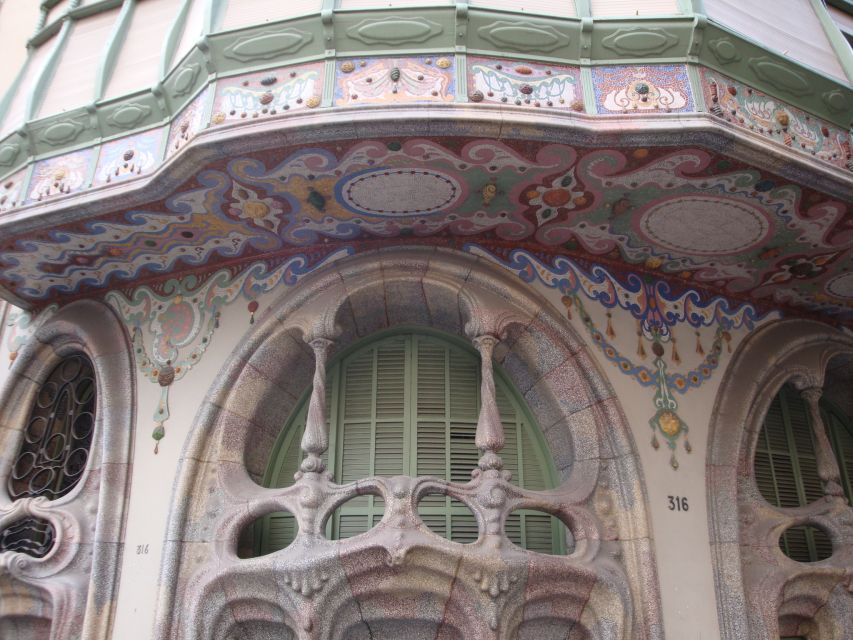
Catalan Modernism began around 1885 as more than an architectural style. It was a cultural movement that reached into literature and visual art as well as building design. In Barcelona, architecture became one of the clearest ways to express Catalan pride.
The guide introduces the main figures of the period, including Lluís Domènech i Montaner, Josep Puig i Cadafalch, and Antoni Gaudí. You will see how each architect handled decoration, structure, color, and symbolism differently.
Domènech i Montaner’s Palau de la Música Catalana provides a useful example. Its design pays tribute to Catalan folk songs not only through performances, but through an architectural allegory made from stone and decoration. Even if you only see the exterior on this walk, the building helps explain how Modernist architecture could carry a cultural message.
The tour also places the Catalan Renaissance, or Renaixença, within this period. The point is not simply that Barcelona had beautiful new buildings. The city was using art and architecture to recover a sense of identity after political and social pressure.
Passeig de Gracia and the Block of Discord
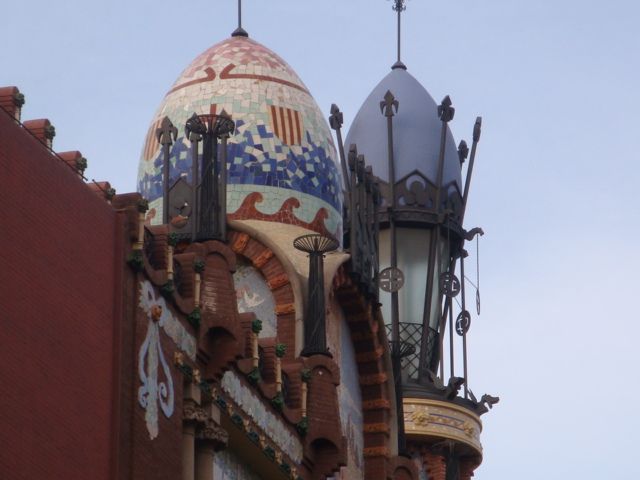
Passeig de Gracia is the grand route through the Golden Square, and it brings the competition between wealthy patrons and famous architects into full view. As you walk, look for the way neighboring buildings answer one another with different balconies, rooflines, colors, and surface decoration.
The Block of Discord is one of the key moments. Three celebrated buildings share the same stretch of street, but their façades do not agree on much. The result is a visual argument in stone and ceramic. This is a good place to listen closely, because the guide can show how architectural rivalry shaped the appearance of the block.
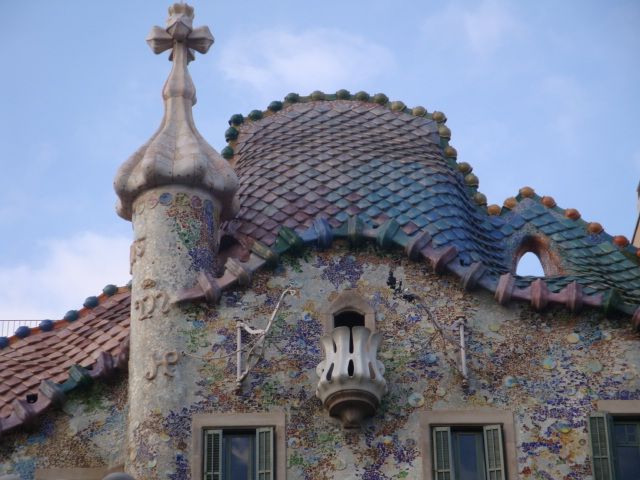
Gaudí’s work receives special attention, including the use of trencadís, a mosaic technique made from broken ceramic shards. The pieces catch light in a way that gives the surfaces a lively, irregular finish. The tour also connects Gaudí with his unusual working methods, including the string model associated with his structural thinking.
You will hear references to Gaudí’s work beyond Barcelona too, including Gaudí and New York. Some of these subjects are best understood as part of the guide’s wider story about his ambitions and influence, rather than as a visit to an additional site.
More Art Nouveau tours in Barcelona:
- Sant Pau Art Nouveau Site Skip The Line | Sant Pau Hospital
★ 4.5 · 21 reviews - Ticket to Sant Pau Art Nouveau Barcelona
★ 5.0 · 2 reviews - Riga: Old Town Walking Tour with Art Nouveau Highlights
★ 4.7 · 332 reviews - Brussels 3-Hour Guided Art Nouveau Tour
★ 4.0 · 282 reviews
Gaudí’s houses, dragons, and unexpected details
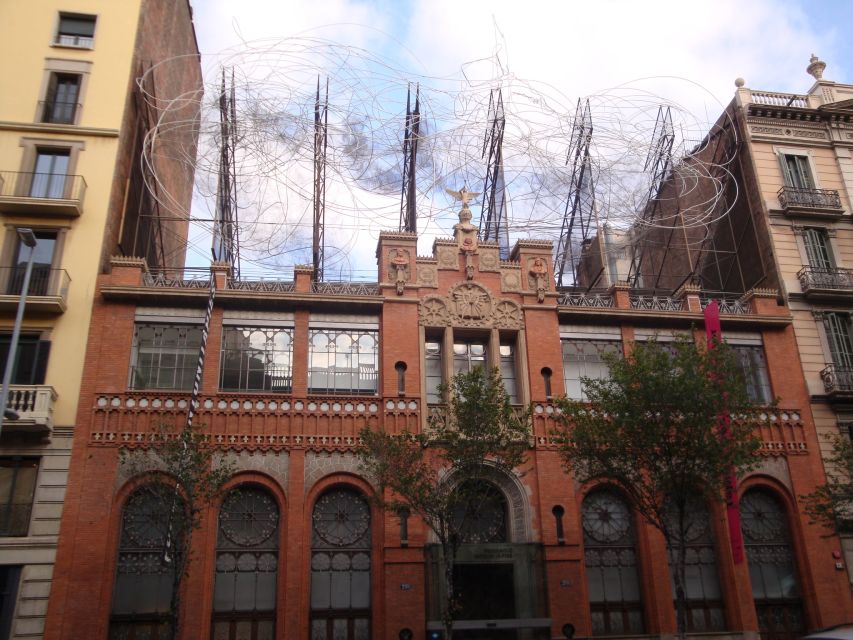
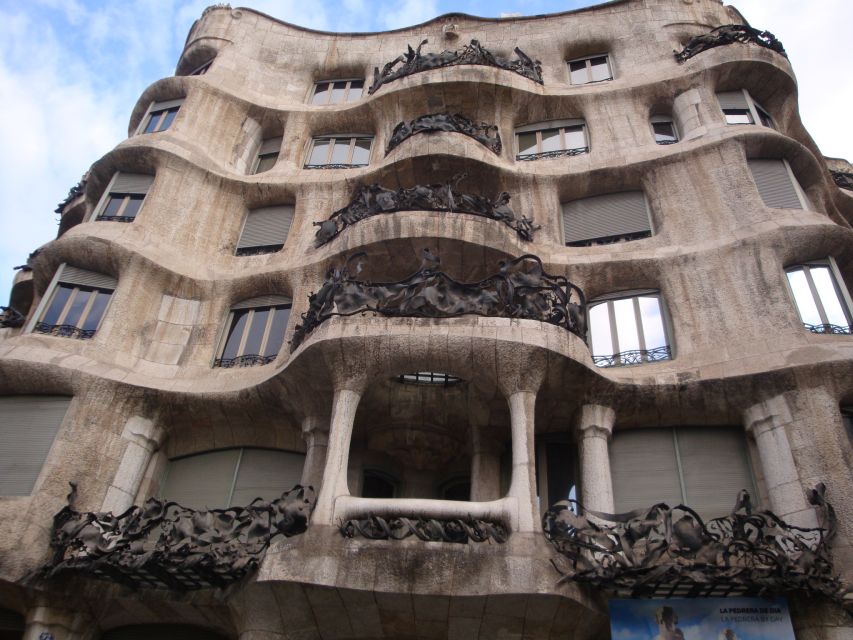
Gaudí’s architecture is full of stories that reward patient looking. A roofline may suggest a dragon. A balcony may resemble a mask. A wall can feel less like a flat surface and more like something shaped by wind or water.
The tour’s themes include a dragon’s den, relics, confetti, and Gaudí’s connection with New York. These vivid labels point you toward the kind of details that are easy to miss if you simply walk along Passeig de Gracia with a camera.
You will also hear about the most famous quarry in the world, a reference to the rough stone character associated with one of Barcelona’s best-known Modernist buildings. The tour discusses how Gaudí made rooms work, including the memorable question of how a house could contain so many rooms yet have no place for a piano.
That sort of detail is one reason a guided walk can be worthwhile. You are not only told who designed a building. You are given a reason to look up, compare one façade with the next, and notice how decoration changes from ground floor to roof.
Palau de la Música and Barcelona’s cultural ambition
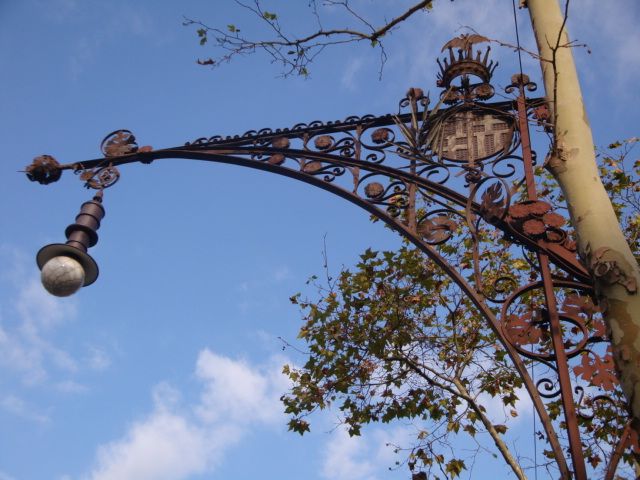
The Palau de la Música Catalana helps widen the tour beyond private homes. Modernism shaped concert halls, civic buildings, and public symbols as well as grand residences.
Its connection with Catalan folk songs is especially helpful for understanding the period. The building was not meant to be neutral. Its forms and decoration helped make a statement about local culture.
You should keep your expectations clear, however. This experience is mainly a street-level architectural tour. Interior visits and museum stops are generally not included, with only a couple of exceptions. If you want to study the inside of the Palau de la Música, Casa Batlló, or another major building, you will need a separate ticket and additional time.
That limitation is also part of the tour’s strength. You cover a wider part of Eixample without losing time to queues or lengthy indoor visits.
From Barcelona’s World Fair to the week of tragedy
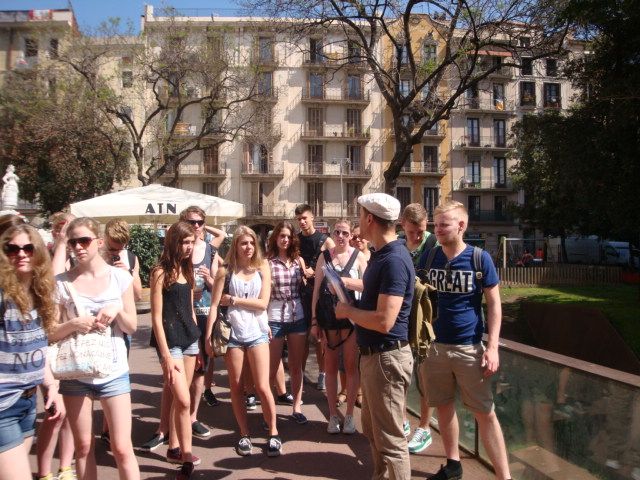
The story moves beyond architecture into the city’s public life. Barcelona’s World’s Fair is part of the account of how the city cleaned itself up and presented a new face to the world.
The tour also addresses the industrial barons, the bourgeoisie, and the festival atmosphere of Raval. These subjects help explain the tension behind the grand buildings. The people who paid for the façades lived in a city shaped by labor, industry, political conflict, and sharp class divisions.
One darker theme is the week of tragedy, a period of unrest that reveals how quickly public order could break down. It is a useful counterweight to the polished buildings of the Golden Square. Barcelona’s Modernist era was not simply a happy age of artistic freedom and new fortunes.
The historical sections are likely to appeal most if you want context rather than a photo checklist. The guide, especially when led by Johannes or Hannes, is described as linking local and political events with people and building styles. That approach can make the three and a half hours pass quickly, but it also means the tour is not a silent stroll.
Sagrada Familia and Gaudí’s unfinished plans
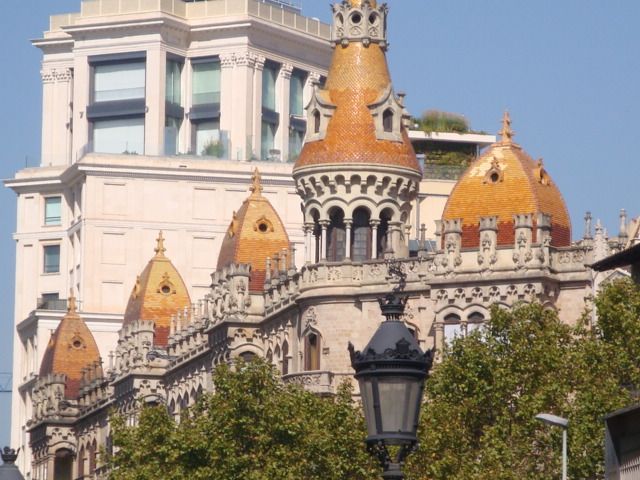
Sagrada Familia appears in the tour’s wider Gaudí story, including the loss of his plans. This gives you a chance to connect the buildings of Eixample with the monument that became Barcelona’s best-known architectural project.
Expect to admire major monuments from outside rather than enter them. The tour does not include admission fees, and the program is built around streets and squares. That keeps the pace relaxed, with time for photographs and a bathroom break, but it means you should not book this as your Sagrada Familia interior visit.
The discussion of Gaudí’s lost plans adds a human note to the monument. A building can become famous as a finished symbol, yet its history includes uncertainty, interrupted work, and changing interpretations.
This is also where the tour’s larger message comes together. Gaudí was part of a citywide movement, not an isolated genius working in a vacuum. His buildings make more sense after you have seen the ambitions of his patrons, the ideas of Modernism, and the cultural movement around him.
The guide and the pace of the walk
The guide is central to this experience. Johannes, also called Hannes, is associated with an energetic, highly informed style. He is praised for making connections between political events, local figures, and architectural forms, and for presenting that material in a clear teaching structure.
That matters because Eixample can overwhelm you with visual detail. Without guidance, you may remember a few famous façades but miss the reason the district looks the way it does. A good explanation gives the buildings a sequence and a purpose.
The pace is described as relaxed. You should have time to stop for photographs, and the walk is not designed as a forced march. Still, three and a half hours on city streets is a substantial outing, so comfortable shoes are sensible even though no special hiking ability is required.
The tour is available in German and English. If you want German-language guiding, this is a particularly useful option. English is also available, but confirm your preferred language when checking the available departure time.
Is $212 good value for a private group?
The price is $212 for a group of up to four people. For four participants, that works out to $53 per person. For two people, the effective price is $106 each, so the value depends heavily on your group size and how much you value private guiding.
The price includes the city tour and a subway ticket. Entry fees are not included, but that is less of a drawback if you mainly want an outdoor introduction to Eixample. You are paying for the guide’s time, a private format, historical interpretation, and a planned route through one of Barcelona’s most architecturally important areas.
I would consider it most worthwhile for a family or small group that wants to ask questions and set a comfortable pace. A solo visitor or couple on a tight budget may prefer a larger group tour or a self-guided walk. A group of four, especially one interested in architecture or Catalan history, gets a more reasonable per-person rate.
The ability to reserve now and pay later gives you some flexibility, and cancellation is free up to 24 hours before the start. Those terms are useful, but the real value comes from choosing this tour for its guide and context, not simply for transport or sightseeing.
Weather, access, and what to bring
This is a three-weather tour. It runs in sun, rain, wind, and even strong showers. In summer, bring a hat, sunglasses, sunscreen, and a small bottle of water. In winter, a jacket or thin coat should be enough according to the practical guidance provided.
The tour is wheelchair accessible. Since it stays on streets and squares, the experience avoids the access issues that can come with historic interiors, although individual street conditions can still matter to your group.
You should also know that the buildings are mainly viewed from the outside. If your ideal Barcelona tour means entering several houses, spending time in museums, or sitting inside a concert hall, this will not fill that role by itself.
Who should book this Barcelona walk?
Book it if you want Barcelona explained through architecture, politics, and local identity. It is especially well suited to first-time visitors who plan to walk through Eixample anyway and want to know what they are seeing.
It also suits repeat visitors who have already photographed Gaudí’s façades but want the wider story. The focus on Cerdà, the Catalan Renaissance, the industrial elite, the World’s Fair, and the city’s difficult political past gives familiar streets more meaning.
Families and small groups should appreciate the private format and relaxed pace. German-speaking visitors have a strong reason to consider it, while English-speaking visitors can also join. You may want another tour if you prefer a short overview, a museum-heavy program, or included entry to famous buildings.
Should you book the Art Nouveau and Gaudí Tour?
I would book this tour if you want expert storytelling in a private setting and are happy to see most sights from the street. The strongest feature is not simply the number of Gaudí buildings. It is the connection between urban planning, Catalan culture, political conflict, and the wealthy patrons who reshaped Barcelona.
The main limitation is clear: admission is not included, and interior visits are generally outside the plan. For a group of four, the price is reasonable for three and a half hours with a dedicated guide. For two people, the decision depends on how much you value personal attention.
Choose it for the stories behind the façades, the Golden Square, and the chance to see Barcelona as a city that rebuilt itself with serious artistic ambition.
FAQ
Where does the tour meet?
The meeting point is Plaza de Urquinaona, in front of Theater Borrás.
How long does the tour last?
The tour lasts three and a half hours.
What languages are available?
The tour is available in German and English.
Is this a private tour?
Yes. It is arranged for a private group of up to four people.
What is included in the price?
The city tour and a subway ticket are included.
Are attraction entry fees included?
No. Entry fees are not included.
Does the tour go inside the buildings?
The tour mainly views monuments from the outside. Museum visits and interior explorations are generally not part of the program, with a couple of exceptions.
Is the tour wheelchair accessible?
Yes, the activity is listed as wheelchair accessible.
What happens if the weather is bad?
The tour runs in sun, rain, wind, and strong showers. In summer, bring sun protection and water. In winter, a jacket or thin coat should be enough.
Just added around Barcelona
- Love in the Gothic Quarter Barcelona: Self-Guided Romantic Walk★ 4.5 · 9 reviews
- Walking tour of the Gothic Quarter of Barcelona + Cathedral★ 5.0 · 8 reviews
- Wine tasting with a view of the Sagrada Familia★ 4.5 · 13 reviews
- Barcelona Jewish & Gothic Tour★ 5.0 · 18 reviews
- Roman & Gotic & Gaudi in Barcelona: private walking tour★ 4.5 · 2 reviews
- Visit to the Modernist houses of the Americans★ 5.0 · 2 reviews
- Self-Guided Audio Tour-The Surrealist Barcelona of Dalí and Gaudí★ 3.5 · 8 reviews
- Barcelona Gaudi Tour: Sagrada Familia, Casa Batllo & Casa Mila★ 5.0 · 4 reviews
Gaudí Tours, compared.
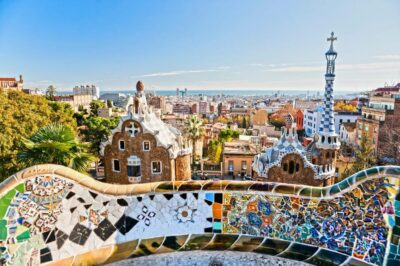
Barcelona: Park Güell and Gaudí House Museum Entry Ticket
Read our review →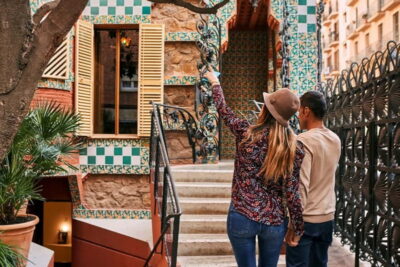
Barcelona: Gaudi’s Casa Vicens Skip-the-Line Entrance Ticket
Read our review →
Sagrada Familia & Gaudi Tour Private or Small Group with Tickets
Read our review →
Complete Gaudi Tour: Casa Batllo, Park Guell & Sagrada Familia
Read our review →
Park Güell: Guided Tour with Optional Gaudí Experience Entry
Read our review →
Barcelona e-Bike Tour: Gaudí & Old Town Small Group
Read our review →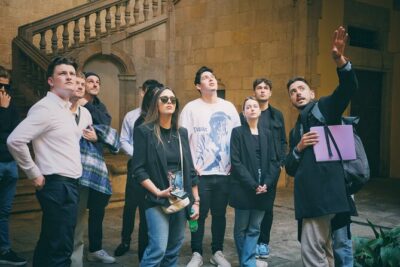
Ramblas, Old Town, Gothic and Gaudi Architecture Walking Tour
Read our review →
Gaudi´s Casa Vicens Skip the Line Ticket with Audioguide
Read our review →Browse the lists this tour appears in