
Review · MADRID
Madrid Historic with an architect : Arabs, Austrias and Bourbons
Madrid’s story becomes much clearer when you read it through its buildings. This private walk with architect Emilio connects Arab walls, royal projects, old churches, markets, and grand public squares across central Madrid. You are not simply ticking off monuments. You are seeing how power, religion, trade, and urban planning changed the city.
I like the architect-led approach, especially the use of plans and historical photographs to explain how Madrid grew. I also like the private format: your group alone can ask questions, pause for coffee, or spend more time on a building that catches your eye.
The main consideration is that this is a history and architecture walk, not a monument-entry tour. You will view the Royal Palace from outside, and the short stops mean some places receive only a quick explanation. The tour can also run longer than three hours, so wear comfortable shoes and allow room in your schedule.
Key points to know before booking
- A private walk with architect Emilio: Your group receives direct guidance rather than joining a large crowd.
- Twelve connected stops: The route links Madrid’s Arab origins with the Austrias and Bourbons.
- Plans and old photographs: These help you see how streets, squares, and buildings changed over time.
- No Royal Palace interior visit: You admire the facades and hear about the architects and monarchs involved.
- A history-heavy architecture tour: Political and social context is part of the explanation at nearly every stop.
- About $65.89 per person: The value is strongest for a small private group that wants depth and conversation.
Why this walk gives Madrid a clear beginning
Madrid can feel like a collection of unrelated sights: a royal palace here, a medieval church there, a market around the corner. This tour gives those places a shared storyline. You move from the area around the opera house and royal palace toward the old medieval core, then on to Madrid’s best-known squares.
The title refers to three broad chapters. Arab Madrid appears in the old wall and the city’s early layout. The Austrias shaped the old center, including Plaza Mayor and the streets around Plaza de la Villa. The Bourbons brought grander planning and royal architecture, especially around the palace and Teatro Real.
That structure is useful because architectural style does not change by accident. Kings, fires, military needs, religion, trade, and public taste all leave marks on the city. Emilio’s role is to connect those causes with what you can actually see in front of you.
The tour includes plans and historical photographs. Those tools matter in Madrid, where a modern street may cover an older route and a polished facade may hide several periods of construction. You get a better sense of what has survived, what was rebuilt, and what disappeared.
More history tours in Spain:
- Historical and Modernist Bike Tour Barcelona
★ 5.0 · 262 reviews - Barcelona: Tipsy Tapas & History Tour in the Gothic Quarter
★ 4.8 · 227 reviews - Barcelona Historical Walking Tour: Gothic Quarter and El Born
★ 5.0 · 217 reviews
Teatro Real and Plaza de Oriente: Madrid’s royal stage
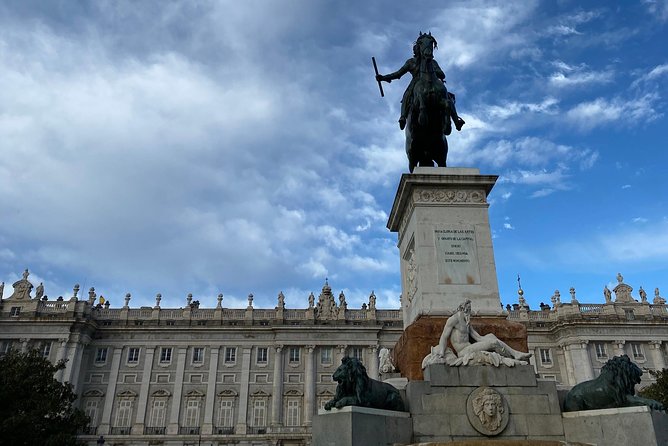
The walk begins at Pl. de Isabel II, beside Teatro Real. The opera house is more than a grand theater to admire from the outside. Its history reflects Madrid’s royal ambitions and the city’s effort to create a major cultural center near the palace.
You spend about 10 minutes here, reviewing the building and its role as an opera theater. That is enough for a focused introduction, though it is not a theater tour and does not include an extended interior visit.
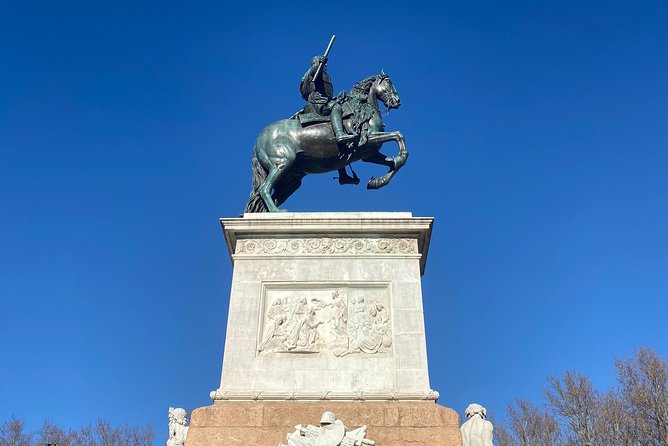
From there, you move to Plaza de Oriente. The square offers a useful lesson in urban change because its appearance is tied to the royal complex and the reshaping of the area around it. The explanation reaches from the Arab period to the present day, so you begin to see Madrid as a city built in layers rather than according to one single plan.
The stop is also a good reminder that public squares are political spaces. They can frame royal buildings, organize movement, or create a formal approach to a palace. Plaza de Oriente helps set up the next stop, the Royal Palace, where those ideas become much easier to see.
The Royal Palace from every side
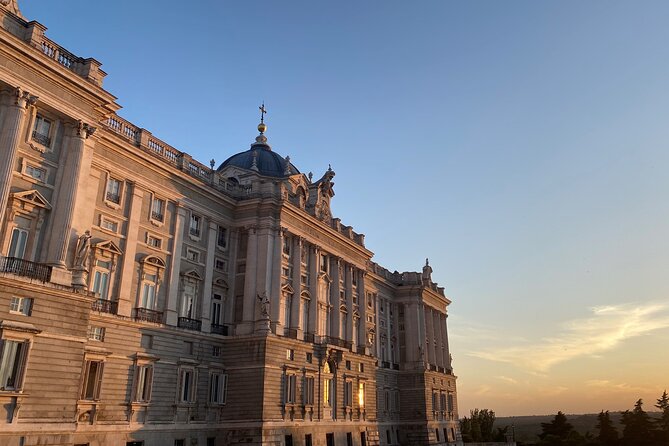
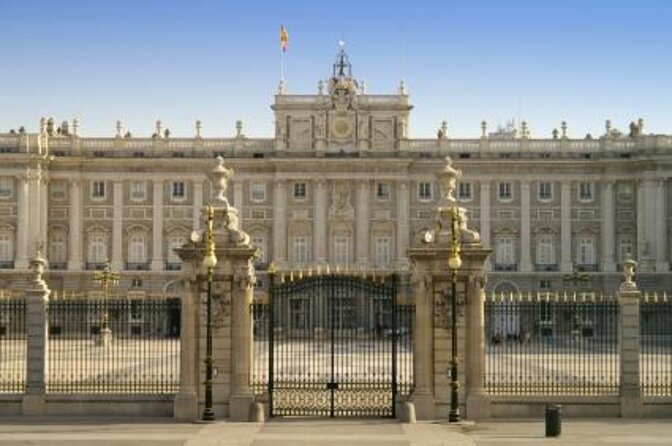
At the Royal Palace, the focus is on the exterior. You examine the different facades and learn about the architects and kings connected with the project. This is one of the tour’s strongest architectural sections because the building is large enough to show how royal design works at city scale.
You should be clear about what is not included. The tour does not take you inside the palace, so you will not see the state rooms, collections, or interior decoration as part of this experience. If the palace interior is a top priority, you will need a separate visit.
For many people, the exterior explanation will be enough to make a later interior visit more meaningful. You will have heard how the project developed and how royal power shaped the surrounding area. Instead of seeing the palace as one enormous block, you can look at its facades as parts of a larger urban statement.
The listed stop lasts about 10 minutes, but the full walk may run from three hours to three and a half hours. The timing at each point is therefore a guide, not a promise that every explanation will be cut off exactly on schedule.
Plaza de Ramales and two old churches
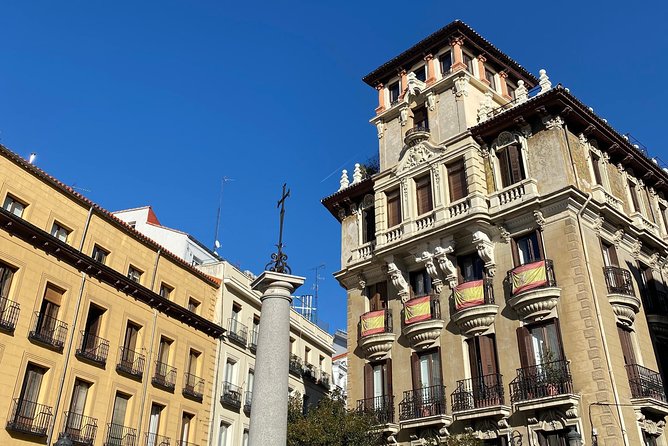
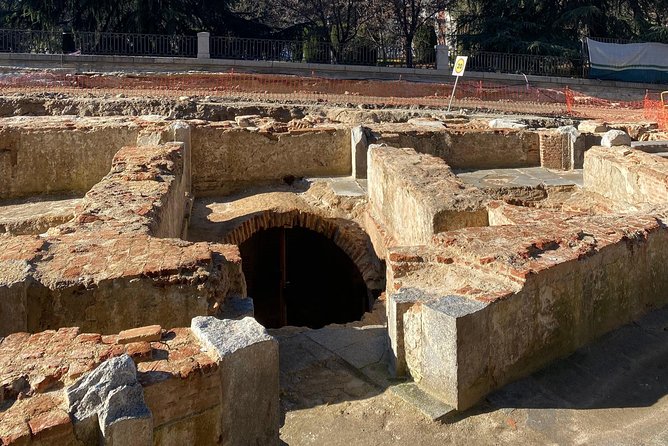
Plaza de Ramales brings the route into a smaller, more personal part of Madrid. Here you see the remains of the Church of San Juan, where the painter Velázquez was buried, along with the Church of Santiago.
The ruins are important because they show how much of Madrid’s past survives in fragments. A wall, foundation, or marked site can tell you about an earlier building even when the church itself no longer dominates the square. This is the sort of stop that is easy to miss on your own.
The nearby Real Iglesia Parroquial de Santiago y San Juan Bautista is visited briefly, with about five minutes devoted to the church and its connection to the apostle Santiago. The stop is short, so expect a concise explanation rather than a long religious-art lecture.
I find this section valuable for its scale. After the palace and opera house, these older religious sites bring you back to the human size of medieval Madrid. You begin to notice how churches helped anchor neighborhoods and routes through the city.
A few more architecture tours around Spain worth a look
- Barcelona: Sant Pau Recinte Modernista Entry Ticket
★ 4.6 · 2,567 reviews - Barcelona: Sagrada Familia, Modernism, and Old Town Tour
★ 4.7 · 1,621 reviews - Ramblas, Old Town, Gothic and Gaudi Architecture Walking Tour
★ 5.0 · 723 reviews - Valencia: Art & Architecture Guided Tour with Monuments Tickets
★ 5.0 · 255 reviews
San Nicolás and the earliest Madrid
The Church of St. Nicholas of the Servitas, or San Nicolas de las Servitas, is presented as Madrid’s oldest church. Its Mudejar tower is the key feature, especially the horseshoe arches that point to the city’s Islamic and Christian architectural connections.
This is one of the most distinctive stops on the route. The tower is not a grand palace, but it carries a great deal of information in its brickwork and form. You can see how architectural traditions continued across changes in religion and government.
The stop lasts about five minutes, which may feel brief if you are especially interested in medieval architecture. Still, the guide’s context helps you understand why this church belongs in a tour about Arabs, Austrias, and Bourbons. Madrid’s early identity is not separate from its later identity. The old forms remain part of the city’s visual language.
Almudena Cathedral and the Arab Wall
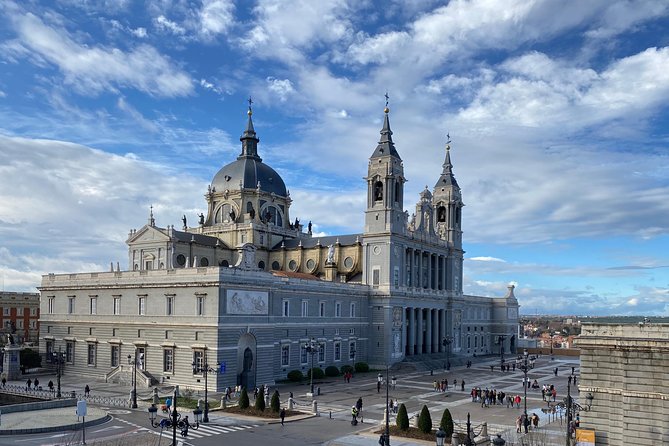
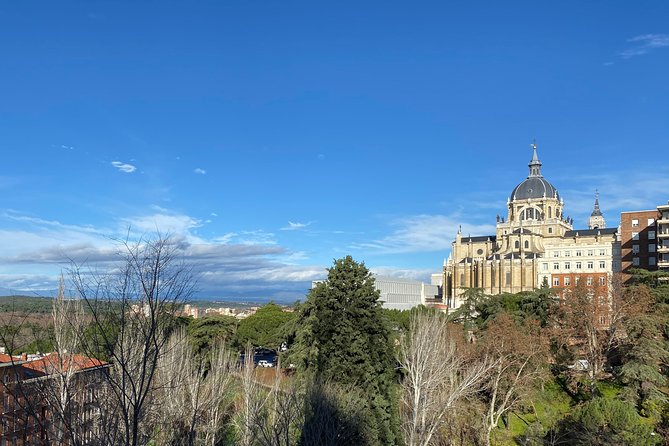
At the Museo de la Catedral de la Almudena, the guide explains the cathedral’s history from a viewpoint outside. The stop is about five minutes, and the emphasis is on the building’s place in Madrid’s development rather than an interior museum visit.
The route then reaches the Arab Wall, among the clearest reminders of Madrid’s ninth-century origins. You see the surviving remains of the old Arab defenses and learn how the early settlement was protected and organized.
This is a key transition in the walk. The palace and formal squares belong to later Madrid, but the wall takes you back to the city’s earliest known chapter. It also helps explain why the oldest center feels compact and irregular compared with the grander royal areas.
Do not expect a long archaeological visit. The stop is short and focuses on the remains that can be seen along the route. Its value comes from the connection to the wider story: Madrid began as a fortified settlement, then expanded far beyond those first boundaries.
Plaza de la Villa and the old civic center
Plaza de la Villa is one of the best places on the route for seeing Madrid’s civic and architectural layers together. You look at the old City Hall and the buildings around the square, including Casa de Cisneros and Casa de los Lujanes.
The square feels different from the open royal spaces visited earlier. Its buildings form a tighter historic setting, and the scale suggests an older center of local government and urban life. The guide explains how the buildings relate to one another rather than treating each facade as an isolated object.
Casa de los Lujanes is especially useful for understanding the variety of old Madrid architecture. Casa de Cisneros adds another period and purpose to the square. You may not remember every date, but you should leave with a clearer picture of how civic buildings, private houses, and public authority shared the same urban space.
This is also a good part of the walk for questions. The route is private, and that matters here. If you want to understand a doorway, tower, facade, or change in street alignment, you can ask without worrying about holding up a large group.
Mercado de San Miguel and the practical side of the city
Mercado de San Miguel offers a welcome change from churches and royal buildings. Its iron structure makes it one of Madrid’s notable market buildings, and the stop gives you a chance to pause for a drink or tapas.
The market is not simply a food break. Its structure shows how modern building materials changed the way public markets could be designed. Iron allowed a large open market space with a different look and feel from the masonry buildings around it.
You have about 10 minutes here, so this is more of an orientation stop than a full meal. If you want to eat, you may need to plan extra time after the tour or ask Emilio how best to use the pause. The guide has also been willing to stop for coffee during a longer walk, which can be useful if the pace and weather call for it.
This is one place where the tour’s flexible private format helps. You can treat the market as a quick architectural stop or turn it into a short refreshment break, depending on the day’s pace.
Plaza Mayor and Puerta del Sol
Plaza Mayor brings the walk into the social and commercial heart of Madrid for the last four centuries. The square is a strong final lesson in urban planning because its regular shape and enclosed form reflect a deliberate effort to organize public life.
The guide explains the square as an example from Castile and connects it with Madrid’s long commercial and civic role. You can look at the surrounding facades, arcades, and open center with a better understanding of why this space has remained important for so long.
The route information names Plaza Mayor as the endpoint, but it also includes a final five-minute stop at Puerta del Sol and its Kilometer 0 marker. Since the two places are close but not identical, confirm the exact finishing point when you meet the guide.
Puerta del Sol is a fitting final reference point because it represents modern Madrid’s centrality. The walk begins near a royal theater and ends among the city’s best-known public meeting places, passing through many earlier layers along the way.
What the $65.89 price really buys
At about $65.89 per person, the cost is easiest to judge by the size of your group. This is a private activity, so only your party participates. For one or two people, it is a fairly substantial spend. For a family or small group sharing the guide, it can offer good value, especially if you would otherwise book separate sightseeing tours.
You are paying for the guide’s time, architectural training, historical materials, and the ability to ask questions as you walk. Admission tickets are not part of the price, but most stops are viewed from public areas and do not require an entry fee. The Royal Palace interior is specifically excluded.
Group discounts are available, and that may improve the price for larger parties. Tips are not included, so plan to tip separately if you feel the service deserves it.
The strongest value comes if you care about how Madrid was built and changed. If you want quick photographs at the main sights with little explanation, a shorter general city walk may suit you better.
Who will enjoy this tour most
I would choose this experience if you like buildings but want more than dates and architectural labels. It suits visitors who enjoy connecting design with politics, religion, urban growth, and daily life.
It is also a good choice early in a Madrid stay. The route covers so much of the historic center that it can help you decide which places deserve a return visit. You may want to revisit the Royal Palace, spend more time at Plaza Mayor, or return to San Miguel for a proper meal.
The tour is conducted in English and confirmation is normally provided at booking, subject to availability for bookings made within one day. Service animals are allowed, public transportation is nearby, and most people can participate.
Weather matters. The experience can be canceled for poor conditions, with a different date or full refund offered. Since much of the walk is outdoors, bring sensible footwear and allow flexibility around Madrid’s weather.
Should you book Madrid Historic with an architect?
Book it if you want a connected explanation of Madrid, not just a procession of famous facades. Emilio’s architectural background, plans, photographs, and long view of the city’s development give the walk more substance than a basic orientation tour.
Skip it if your main aim is to enter the Royal Palace, spend extended time inside churches, or focus only on architecture without historical and social discussion. The tour treats history as part of architecture, and one part of the experience may feel too history-heavy if you expected a technical study of building styles.
For an architecture-minded visitor, a first-time Madrid visitor, or a private group that values conversation, this is a strong choice. Just reserve enough time, expect some stops to be brief, and confirm whether the final meeting point is Plaza Mayor or Puerta del Sol.
FAQ
How long does the tour last?
The tour takes approximately three to three and a half hours. The individual stops are generally short, but the full walk may extend beyond three hours.
Is the Royal Palace interior included?
No. The tour covers the Royal Palace facades and explains the architects and kings involved in the project, but admission to the interior is not included.
Is this a private tour?
Yes. Only your group participates in the activity.
What language is the tour offered in?
The tour is offered in English.
Where does the tour start?
The meeting point is Pl. de Isabel II, 4, in central Madrid, near Teatro Real.
Where does the tour end?
The stated endpoint is Plaza Mayor, but the route also includes a final stop at Puerta del Sol and Kilometer 0. Confirm the exact endpoint with the guide when you meet.
Just added around Spain
- Gaudí and Modernist Art: Guided Tour in Palma de Mallorca★ 4.5 · 3 reviews
- Marques de Riscal and Ysios Rioja Wine Tour w/ Lunch from Bilbao★ 5.0 · 24 reviews
- Love in the Gothic Quarter Barcelona: Self-Guided Romantic Walk★ 4.5 · 9 reviews
- Walking tour of the Gothic Quarter of Barcelona + Cathedral★ 5.0 · 8 reviews
- Wine tasting with a view of the Sagrada Familia★ 4.5 · 13 reviews
- Roman & Gotic & Gaudi in Barcelona: private walking tour★ 4.5 · 2 reviews
- Visit to the Modernist houses of the Americans★ 5.0 · 2 reviews
- Barcelona Jewish & Gothic Tour★ 5.0 · 18 reviews
Historical Tours, compared.
Chicago in a Day: Food, History & Architecture Walking Tour
Read our review →
Kuala Lumpur: Batu Caves & Historic Buildings Tour
Read our review →
Charleston’s Best Highlights: History, Culture & Architecture
Read our review →
Palm Springs Modernism Architecture & History Bike Tour
Read our review →
Charleston: History and Architecture Guided Walking Tour
Read our review →
Historic Georgetown: History, Gossip, & Architecture Walking Tour
Read our review →
Charleston History, Homes, and Architecture Guided Walking Tour
Read our review →
Browse the lists this tour appears in