

Review · BARCELONA
Barcelona Historical Walking Tour: Gothic Quarter and El Born
Barcelona’s old center is best understood on foot, one narrow lane and half-hidden square at a time. This two-hour walk links the Gothic Quarter with El Born, moving from the artists’ café Els 4 Gats through Roman Barcino, the old Jewish quarter, royal courtyards, and the grand church of Santa Maria del Mar.
I like the compact route, which gives you a useful first look without taking half a day. I also like the local storytelling, especially the links to Picasso, Gaudi, Catalan identity, Roman Barcelona, and the Spanish Civil War. The main thing to consider is that the group can reach 20 people, and the guide’s delivery matters: one poor experience involved a guide who spoke too softly for the group to hear.
Key points
- Picasso and Gaudi’s old meeting place: See Els 4 Gats, the Art Nouveau café tied to Barcelona’s modernist artists.
- A strong introduction in two hours: The route covers the Gothic Quarter and El Born without requiring a full-day commitment.
- More than postcard sights: Expect Roman walls, the former Jewish quarter, Civil War scars, legends, and Catalan political history.
- Useful local guidance: Guides such as Juan, Lidia, Petra, Jordan, Sonia, and Vanesa have been praised for energy, humor, explanations, and food suggestions.
- Easy walking route: The pace is described as relaxed and manageable for most people, with time for photos.
- Church tickets cost extra: Admission to Barcelona Cathedral and Santa Maria del Mar is not included.
Why this short walk works in Barcelona’s oldest quarters
Barcelona can feel confusing at first. The Gothic Quarter has no simple grid, its streets twist around old walls, and important buildings often hide behind plain-looking facades. El Born adds another layer, with medieval lanes, grand churches, and traces of the city’s trading past.
This route gives you a framework. Instead of seeing isolated buildings, you connect them to Roman Barcino, medieval religious life, the Jewish community, Catalan memory, royal power, and Barcelona’s modern art scene.
At $30.25 per person, the tour is priced as a low-cost introduction rather than an all-day cultural program. I think it offers good value if you want context before exploring on your own. A guide can point out details you might walk past, explain why a square matters, and show old images on a tablet, as Juan has done.
The tour is offered in English, lasts about two hours, and has a maximum group size of 20. That is small enough for a more personal walk than a large coach excursion, though it is not a private tour. Bookings are commonly made well ahead of time, with an average of 26 days in advance, so popular dates can fill early.
More Gothic quarter walks in Barcelona:
- Barcelona all included: Sagrada, Park Güell, Montjuic & Gothic
★ 5.0 · 2,169 reviews - Barcelona Gothic Quarter Tapas & Taverns Food & Wine Tour
★ 5.0 · 1,470 reviews - Barcelona: Old Town and Gothic Quarter Walking Tour
★ 4.8 · 1,393 reviews
Starting at Plaça del Vuit de Març
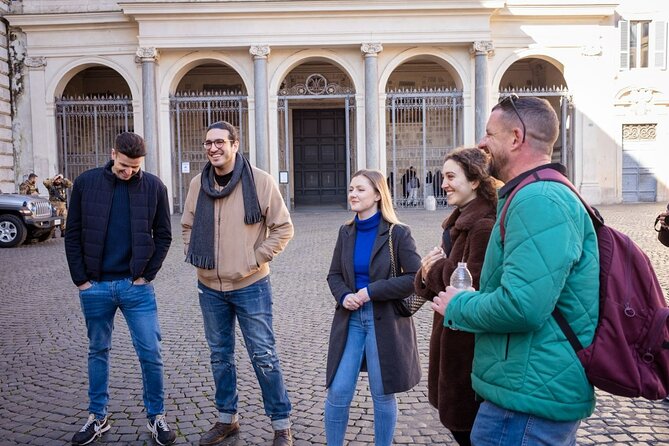
The meeting point is Plaça del Vuit de Març in Ciutat Vella, the old city. From here, you begin close to the Gothic Quarter’s tight lanes and layers of history.
The early part of the walk sets the tone. You are not simply moving between major monuments. The appeal is learning how the city’s past remains visible in small architectural details, side streets, and public spaces.
The route is mostly on foot, with no bus section to break up the old center. That matters because buses cannot enter many of these narrow streets. You get a closer look at courtyards, facades, bridges, and corners that make sense only at walking speed.
Els 4 Gats and Barcelona’s artistic crowd
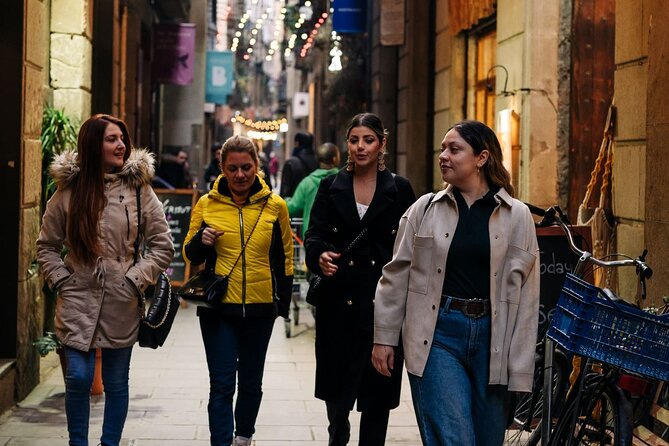
Els 4 Gats is one of the most entertaining first stops. This historic café and restaurant became a meeting place for artists, intellectuals, and modernists, including Pablo Picasso and Antoni Gaudi.
Its Art Nouveau design gives the stop a strong visual hook, but the real value is the social story. Barcelona’s artistic past was not created only in studios and grand museums. Cafés like this helped artists exchange ideas, argue, experiment, and build reputations.
You should expect about 10 minutes here, enough for the guide to explain the café’s role and for you to take a look. It is not a full restaurant visit, and food is not part of the tour. Still, the stop helps connect the old city with the creative world associated with Picasso and Gaudi.
Several guides have received praise for explaining Gaudi well. David was singled out for his Gaudi knowledge, while other guides have connected the city’s architecture with broader Spanish history and local traditions.
El Mon Neix En Cada Besada and Catalan memory
The photomosaic titled El Mon Neix En Cada Besada, or The World Begins with Every Kiss, offers a change of mood. Erected in 2014, it relates to the Catalan defeat on September 11, 1714, during the War of Spanish Succession.
That date became linked to La Diada, Catalonia Day. The artwork represents ideas of freedom and collective identity for many people in Barcelona. The guide can help you understand why a modern public artwork carries older political memory.
This is one of the route’s useful features. You are not limited to medieval buildings. The walk also shows how Barcelona uses public art to discuss its past and its hopes. Plan on roughly 10 minutes, with time for an explanation and photographs.
More architecture walks in Barcelona:
- Ramblas, Old Town, Gothic and Gaudi Architecture Walking Tour
★ 5.0 · 723 reviews - Kids and Family Gothic Quarter Walking Tour in Barcelona
★ 5.0 · 465 reviews - Barcelona Gothic Quarter Walking Tour
★ 4.5 · 456 reviews - Barcelona: Gothic Quarter Walking Tour
★ 4.9 · 383 reviews
Barcelona Cathedral and the story of Saint Eulalia
Barcelona Cathedral rises in the center of the Gothic Quarter and honors Saint Eulalia, the city’s patron saint. According to the tradition connected with the church, Eulalia was tortured and killed by the Romans.
The building gives you a clear example of Gothic religious architecture and a chance to consider how Roman, Christian, and medieval layers overlap in Barcelona. The route includes about 10 minutes here, so you should not expect a long interior visit or a detailed architectural lecture.
Admission to the cathedral is not included. That does not reduce the value of seeing it from the outside, but you should check the admission arrangements if entering is important to you. The same applies to Santa Maria del Mar later in the walk.
Roman walls at Casa de l’Ardiaca
Casa de l’Ardiaca is an unusual stop because Gothic and Renaissance elements meet around remnants of the Roman city. The building houses the vertical face of the Roman wall and aqueducts connected with ancient Barcino.
This is the kind of place a guide adds real value. The remains can be easy to miss when you are focused on more famous churches and plazas. With an explanation, the old wall becomes evidence of Barcelona’s earliest urban footprint rather than just another piece of stone.
The stop is planned for about 10 minutes and admission is free. I would pay close attention here if you care about Roman remains. It gives the walk a clear historical foundation before it moves into medieval Barcelona.
Pont del Bisbe and a well-used legend
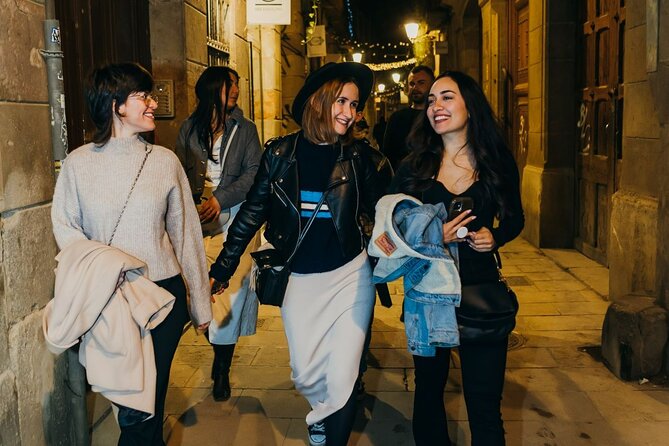
Carrer del Bisbe follows one of the main routes through Roman-occupied Barcino. The Neo-Gothic Pont del Bisbe now crosses the lane and is one of the Gothic Quarter’s most photographed details.
The bridge is also tied to a superstitious legend. The story is designed to capture the imagination, even if you are not inclined to believe it. This is a good example of how the tour mixes documented history with local tales. The facts explain the street, while the legend gives the place a little theatrical sparkle.
You have about 10 minutes here. The lane can feel tight, so the guide’s ability to gather the group and speak clearly matters. Keep your camera ready, but also listen for the story behind the stonework.
Plaça Sant Felip Neri and the scars of war
Plaça Sant Felip Neri is one of the most affecting parts of the route. The small square has a quiet, picturesque appearance, but its walls still show scars linked to a tragic event during the Spanish Civil War.
The contrast is powerful. This is not a grand monument designed to explain history. It is a modest public space where damage remains part of the setting. A short stop here can prompt a more serious look at the city’s recent past.
The group spends about 10 minutes in the square. This is one place where the guide’s tone matters. A good explanation should provide context without turning the stop into a performance. The route gives you time to look, take photos, and consider the setting.
El Call, Barcelona’s former Jewish quarter
MUHBA El Call covers the old Jewish quarter, known as El Call. Its narrow streets and medieval buildings offer a glimpse into Barcelona’s Jewish past, including references to the synagogue and local legends.
This part of the walk helps correct a common problem with quick city tours: they can focus so heavily on kings and churches that other communities disappear. El Call adds another voice to the city’s story.
The stop lasts about 10 minutes and admission is free. You should expect an outdoor explanation of the area rather than a long museum visit. The narrow streets also show why a walking tour works better here than a vehicle-based sightseeing trip.
Plaça de Sant Jaume and the city’s public center
Plaça de Sant Jaume is a major public square surrounded by historic government buildings. It remains a center of civic activity, so the setting connects Barcelona’s past with its present administration.
This is a useful orientation point. By now, you have moved through Roman remains, religious buildings, and old residential lanes. The square shows how the historic center still functions as a place of public power.
The planned stop is about 10 minutes and free. Do not expect a long interior tour of government buildings. The value is in understanding the square’s role and seeing how major civic spaces fit into the old city.
Plaça del Rei and the royal past
Plaça del Rei has a handsome appearance, but the guide also brings out its darker associations. The square houses the Royal Palace and offers a look at Barcelona’s regal past.
This is a good point in the route for connecting architecture with power. Royal buildings can look polished and dignified, but their history also includes conflict, authority, and difficult decisions. The square gives the guide room to tell a story rather than simply identify a facade.
You spend about 10 minutes here, with no admission fee listed for the stop. If you want to explore any interior attractions around the square, treat that as separate from the walking tour.
Plaça de l’Àngel and the angel legend
Plaça de l’Àngel was once known as Wheat Square, reflecting its role in grain trading. Its present name comes from a heavenly legend, which gives the stop a lighter, more folkloric character after the heavier material at Sant Felip Neri and Plaça del Rei.
I like this mix of practical urban history and local storytelling. Grain trading tells you how the city worked. The angel story tells you how people explained places through memory and belief.
The stop lasts around 10 minutes. It is another example of the route’s range: Roman roads, medieval commerce, religious tradition, political identity, and neighborhood legends all appear within a short walk.
Santa Maria del Mar and the finish in El Born
The tour ends at the Basilica de Santa Maria del Mar in El Born. This Catalan Gothic church is closely tied to Barcelona’s maritime past and is one of the route’s grandest sights.
After the narrow streets and compact squares, the church provides a strong finish. Its scale helps you understand the importance of El Born and Barcelona’s connection to the sea, trade, and the people who supported the city’s growth.
Admission is not included, so plan to pay separately if you want to go inside. The tour itself ends at Plaça de Santa Maria, 1, rather than returning you to the starting point. That is convenient if you want to continue exploring El Born, stop for food, or visit the church on your own.
The route’s food advice can also be useful. Tammy has sent extensive suggestions for food and drinks after the walk, and Juan has offered ideas for restaurants, bars, attractions, and other places to see. These recommendations can help you turn the tour into a starting point for the rest of your day.
Guide style and group experience
The guide can shape this tour more than the buildings do. The strongest guide descriptions point to clear explanations, warmth, humor, and a talent for keeping different ages engaged.
Juan has been praised for using an iPad to show historical images, answer questions, and add food and sightseeing advice. Lidia is known for energy, humor, local knowledge, and organized meeting instructions. Jordan uses comedy to keep the history moving, while guides such as Petra, Sonia, Darren, Sara, Craig, Justin, Mariah, and Thami have been praised for clear storytelling and useful local details.
Vanesa has been especially well received by families, including children. Jorge was praised for a relaxed pace that allowed time for photos, and one morning departure was appreciated for being cooler and less busy.
There is one important caution. One poor experience involved a guide who spoke too softly, leading some people to leave. That appears to be an exception among the strong overall results, but it is worth remembering in a group of up to 20. If you have trouble hearing, tell the guide early.
The tour has a 4.9 rating from 217 reviews, with 97 percent of customers recommending it. One cancellation complaint also appears in the feedback, so do not treat a high score as a promise that every departure will be perfect.
Who should book this Barcelona walk?
I would choose this tour if you are visiting Barcelona for the first time and want a fast, sensible orientation to the old center. It also suits repeat visitors who have walked these streets before but want the stories behind details they missed.
Families can benefit from the short length, free outdoor stops, legends, and guides who keep children involved. History-minded visitors will appreciate the Roman remains, El Call, royal square, and Civil War context. Art lovers will enjoy the link to Els 4 Gats, Picasso, and Gaudi.
You may want something else if you prefer a private guide, long interior visits, or a slow architectural study of every church. Two hours allows breadth, not depth. The cathedral and Santa Maria del Mar are included as stops, but their admission is not included, and the tour does not appear designed around extended time inside either building.
Morning is a smart choice if available. The walk has been described as cooler and less busy then, and the easy pace leaves room for photos. Wear comfortable shoes, arrive at Plaça del Vuit de Març ready to walk, and remember that the finish is at Santa Maria del Mar, not the starting point.
Final call: a good first look at old Barcelona
I would book this tour for the price, the short commitment, and the range of places packed into two hours. The best part is not any single monument. It is the way Els 4 Gats, Roman walls, El Call, Plaça Sant Felip Neri, royal Barcelona, and Santa Maria del Mar form one connected story.
Choose it early in your stay so the guide’s restaurant, bar, and sightseeing suggestions can shape the rest of your visit. Skip it only if you already know the old city well or want a private, museum-style tour with included church entry.
Free cancellation is available up to 24 hours before the start time for a full refund. Cancellations or changes made less than 24 hours ahead are not refunded or accepted.
FAQ
How long does the Barcelona Historical Walking Tour last?
The tour lasts approximately two hours.
What areas does the walking tour cover?
The route covers Barcelona’s Gothic Quarter and El Born.
Where does the tour start?
The meeting point is Plaça del Vuit de Març in Ciutat Vella, Barcelona.
Where does the tour end?
The tour ends at Basílica de Santa Maria del Mar, Plaça de Santa Maria, 1.
Is the tour offered in English?
Yes. The experience is offered in English.
How much does the tour cost?
The listed price is $30.25 per person.
Are church admission fees included?
No. Admission to Barcelona Cathedral and Santa Maria del Mar is not included.
How many people can join the group?
The maximum group size is 20 people.
Is this tour suitable for most people?
Yes. Most people can participate, and the walk has been described as easy and manageable.
Can I cancel for a full refund?
Yes. You can cancel at least 24 hours before the start time for a full refund. Cancellations made less than 24 hours before the tour are not refunded.
More History Tours in Barcelona
- Historical and Modernist Bike Tour Barcelona
★ 5.0 · 262 reviews - Barcelona: Tipsy Tapas & History Tour in the Gothic Quarter
★ 4.8 · 227 reviews - Barcelona: Gothic Quarter Tour Dark History & Ghosts Tour
★ 4.8 · 64 reviews - Barcelona: Market, Tasty Tapas/Food and Gothic History Tour
★ 4.7 · 48 reviews
Just added around Barcelona
- Love in the Gothic Quarter Barcelona: Self-Guided Romantic Walk★ 4.5 · 9 reviews
- Walking tour of the Gothic Quarter of Barcelona + Cathedral★ 5.0 · 8 reviews
- Wine tasting with a view of the Sagrada Familia★ 4.5 · 13 reviews
- Roman & Gotic & Gaudi in Barcelona: private walking tour★ 4.5 · 2 reviews
- Visit to the Modernist houses of the Americans★ 5.0 · 2 reviews
- Barcelona Jewish & Gothic Tour★ 5.0 · 18 reviews
- Self-Guided Audio Tour-The Surrealist Barcelona of Dalí and Gaudí★ 3.5 · 8 reviews
- Barcelona Gaudi Tour: Sagrada Familia, Casa Batllo & Casa Mila★ 5.0 · 4 reviews
Gothic Quarter Tours, compared.
Barcelona all included: Sagrada, Park Güell, Montjuic & Gothic
Read our review →
Barcelona Gothic Quarter Tapas & Taverns Food & Wine Tour
Read our review →
Barcelona: Gothic Quarter Ghosts and Legends Walking Tour
Read our review →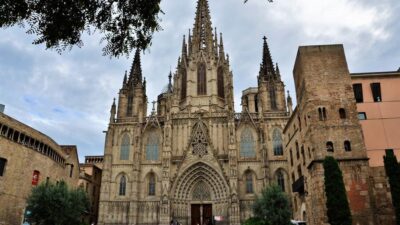
Barcelona: Old Town and Gothic Quarter Walking Tour
Read our review →
Barcelona Old Town & Gothic Quarter Small Group Tour
Read our review →
Ramblas, Old Town, Gothic and Gaudi Architecture Walking Tour
Read our review →
Barcelona: El Born and Gothic Quarter Wine & Tapas Bar Tour
Read our review →
Kids and Family Gothic Quarter Walking Tour in Barcelona
Read our review →Browse the lists this tour appears in