
Review · AUSTRIA
Mirabell: A Baroque Odyssey Walking Tour in Salzburg
Salzburg’s Mirabell Gardens pack a remarkable amount into a short walk: mythological statues, palace politics, The Sound of Music, and one of Austria’s grandest ceremonial rooms. I like that this tour connects the pretty sights to the people and power behind them, rather than treating the gardens as a quick photo stop. I also like the practical ending in the Marble Hall, where the outdoor story moves indoors among memories of concerts, balls, and royal banquets.
The main consideration is time. At about 90 minutes, the tour gives you a focused introduction, not a full study of Mirabell Palace or Salzburg. The Do-Re-Mi steps and famous garden views can also draw a crowd, so anyone hoping for a quiet, unhurried photo session may need to return later on their own.
Key points to know before booking
- A compact Baroque walk: You cover Mirabell Gardens, its statues, the Dwarf Garden, and the palace in about 90 minutes.
- The Do-Re-Mi steps are included: You get time at one of Salzburg’s best-known Sound of Music locations.
- History has a human edge: The guide explains ambition, power struggles, and an imperial murder plot alongside the architecture.
- The finale is indoors: The route ends at Mirabell Palace and its grand Marble Hall.
- A small group format: The tour is limited to 20 people, which should make questions easier than on a large coach outing.
- Good value for a first look: At $21.98 per person, the tour costs less than many longer city excursions while giving you both context and orientation.
Why Mirabell Gardens make a strong first stop
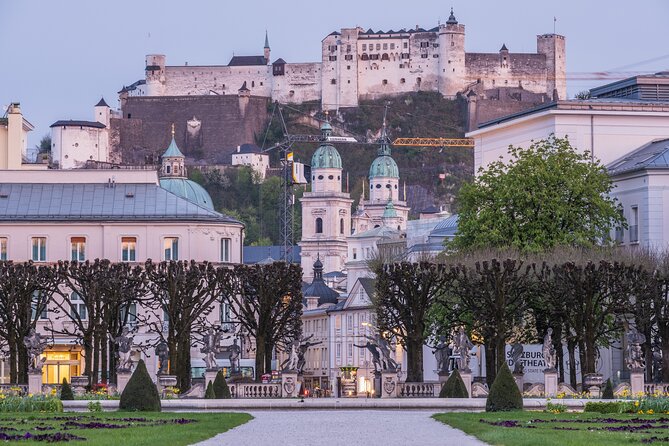
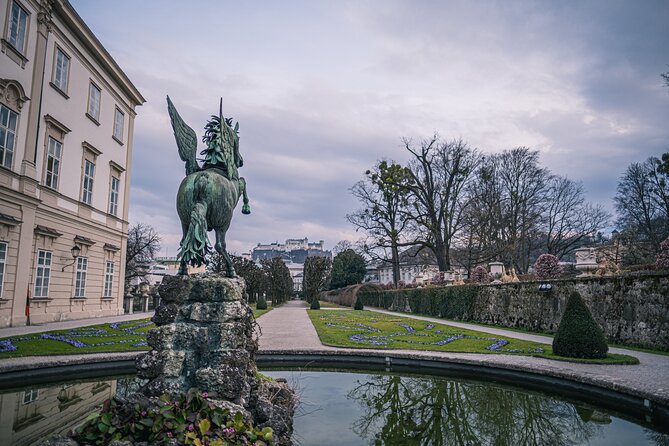
Mirabell Gardens are one of the easiest places in Salzburg to appreciate at a glance. Formal paths, clipped planting beds, fountains, sculptures, and views toward the city create the polished Baroque setting most people picture when they think of Salzburg.
The useful difference here is having someone explain what you are looking at. The garden is not simply a pleasant green space. Its design follows Baroque ideas of order, display, and power. The layout turns nature into a controlled work of art, with each section helping create a sense of ceremony.
I like this approach because it gives the garden a reason behind its beauty. Without context, you may notice a statue of a Greek or Roman god and move on. With a guide, that figure becomes part of a larger story about symbolism, status, and the way rulers used art to shape public impressions.
The tour also gives you a quick introduction to Salzburg itself. One reviewer described the experience as a perfect start to several days in the city, and that makes sense. A walk through Mirabell gives you useful bearings, points out nearby sights, and helps you decide what deserves more time later.
More Baroque architecture tours in Austria:
- Concert at the Palais Schönborn-Batthyány by the Vienna Baroque Orchestra
★ 4.5 · 168 reviews - Vienna: Concert by the Vienna Baroque Orchestra
★ 4.6 · 56 reviews - Vienna: Baroque Orchestra Concert and Dinner
★ 4.6 · 18 reviews
Greek gods, Roman symbols, and Baroque power
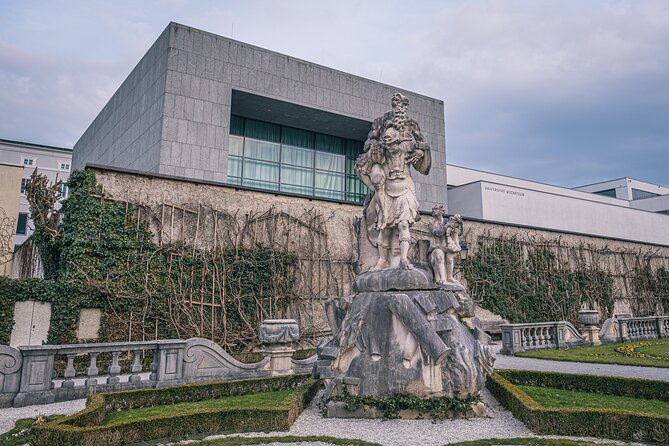
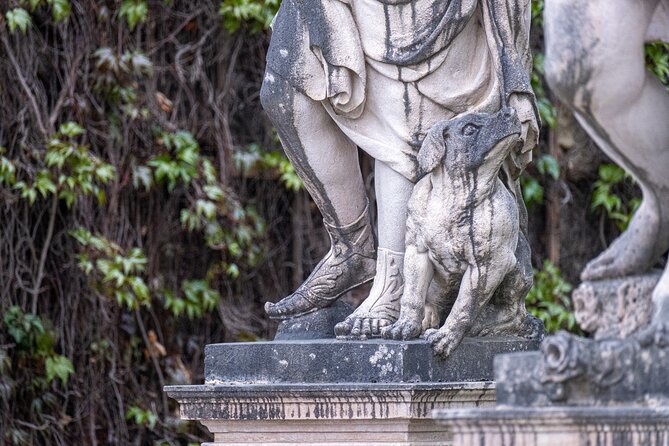
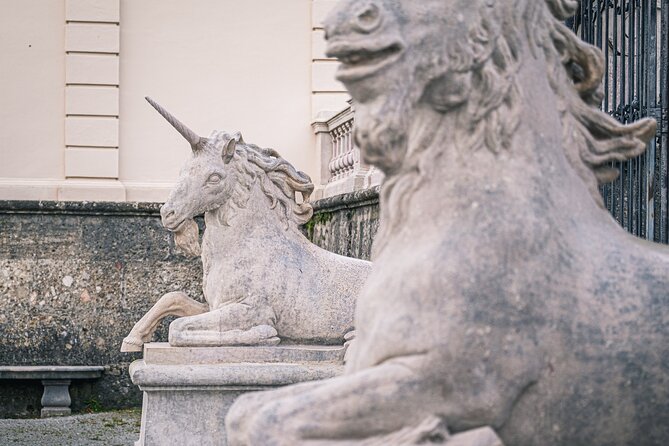
The statues in Mirabell Gardens are not random decoration. They draw on Greek and Roman mythology, a language that educated European rulers and artists used to express strength, wisdom, beauty, and authority.
You can expect the guide to pause at selected figures and explain the stories attached to them. The exact amount of time at each statue may vary, but the larger theme is clear: the garden was built to communicate more than taste. It was also a public statement about the people who commissioned it.
That is where the tour’s title, Baroque Odyssey, earns its place. You move through a carefully designed setting while hearing stories of ambition and political tension. The experience is not a dry architecture lecture. It brings the garden’s polished surface into contact with the less polished behavior of powerful people.
The reference to an imperial murder plot adds a darker thread. This is useful for visitors who prefer history with conflict and consequence. You are not only learning when the garden was laid out or what style it represents. You are also hearing how power could produce danger, suspicion, and dramatic decisions.
The Dwarf Garden and the odd details worth noticing
The Dwarf Garden adds a different mood to the tour. These small figures are among the garden’s memorable features, and the area is described as one of the oldest outdoor music venues in Europe.
That combination makes the stop especially appealing. You get sculpture, local tradition, and a reminder that Mirabell was designed for performance as well as display. Baroque gardens were places to see and be seen, but they also supported music and social events.
I would pay close attention here if you enjoy unusual details. The main palace and formal garden are easy to admire, but smaller features often give you a better sense of how people used the space. The Dwarf Garden breaks up the grand symmetry and gives the visit a more playful touch.
Families may find this section especially approachable. One piece of feedback describes the gardens as suitable for children, and the sculptures offer something concrete to look at when broader historical explanations begin to feel abstract. Still, the tour remains a history walk, so younger children may not enjoy every discussion equally.
The Do-Re-Mi steps and Salzburg’s movie connection
The famous steps from The Sound of Music are one of the tour’s most obvious crowd-pleasers. You will have a chance to see the location associated with the Do-Re-Mi sequence and take photos there.
This is more than a film detour. The steps also fit naturally into the garden’s design, giving the tour a bridge between Salzburg’s older Baroque identity and its modern international fame. For some people, the movie connection will be the reason to book. For others, it may be a fun extra after the history and architecture.
I like that the tour does not appear to rely on the film alone. The garden has enough substance without it, and the movie reference works best when placed in that larger setting. You can enjoy the familiar scene while still learning why Mirabell matters beyond cinema.
Do not expect a private photo shoot. Mirabell is a popular public sight, and the steps may be busy. The 90-minute schedule also means the guide must keep the group moving. If you want portraits from several angles or a long pause for your own photos, plan to come back after the tour.
More architecture walks in Austria:
- Vienna Art Nouveau Walking Tour
★ 4.4 · 33 reviews - Vienna Art Nouveau Walking Tour
★ 5.0 · 21 reviews - Private Klimt & Vienna Art Walk — From Baroque to Secession
★ 4.5 · 16 reviews - Private Vienna Art Nouveau Walking Tour
★ 5.0 · 4 reviews
Walking from Makartplatz to Mirabell Palace
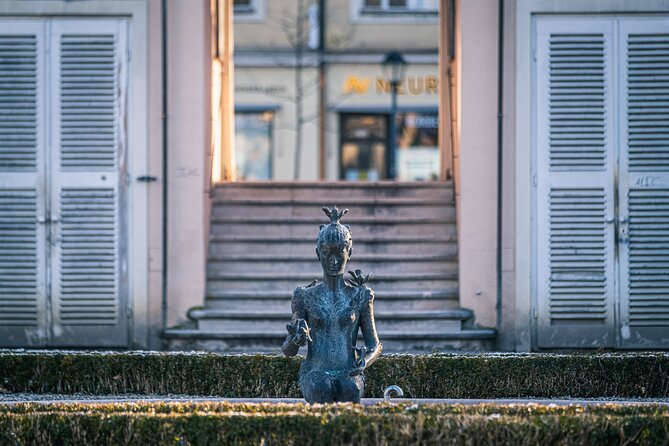
The meeting point is at CalderaMakartplatz 7, 5020 Salzburg, with a 10:00 a.m. start. The tour finishes at Mirabell Palace, at Mirabellplatz 4, on the opposite side of the garden.
The walk between the starting area and the palace takes no more than five minutes, so the route is easy to follow. That simple layout matters in Salzburg, where a first visit can involve a lot of streets, landmarks, and directional choices. You do not need to arrange a transfer between the beginning and end.
The mobile ticket also keeps the arrival process light. Have the ticket ready on your phone and arrive with enough time to locate the meeting point. The supplied details do not name a special entry procedure or a required printed ticket, so a phone ticket is the stated format.
Because the tour begins in the morning, it can work well as an opening activity. You finish before midday and can then continue to other Salzburg sights, eat nearby, or return to one of the garden areas for a slower look.
The Marble Hall finale
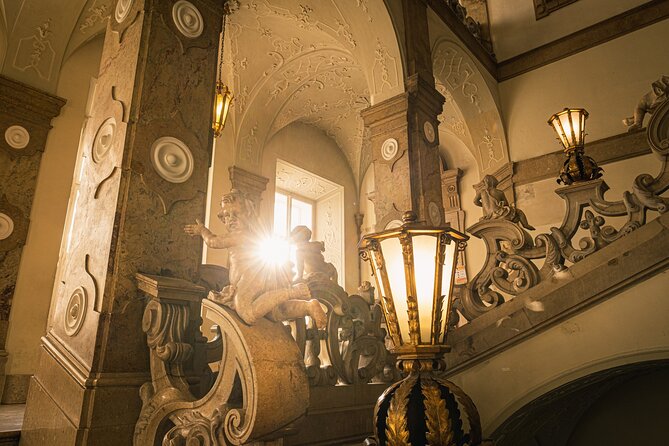
The tour’s planned finale is Mirabell Palace, especially the Marble Hall. This is the point where the garden’s outdoor order gives way to an interior built for ceremony and display.
The room is associated with royal banquets, concerts, and balls. Those uses help explain why it matters. You are not simply entering a handsome historic room. You are seeing the setting where music, politics, social rank, and public performance came together.
I think this ending improves the shape of the experience. A garden walk alone can feel open-ended. Ending in the palace gives the tour a clear final chapter, moving from mythological statues and formal paths to the polished interior of the people who commissioned such spaces.
The Marble Hall may be the strongest part for visitors who prefer interiors to gardens. On the other hand, anyone mainly interested in photography may find the outdoor sections more rewarding. The tour gives you both, but not enough time to study either one at museum length.
What $21.98 buys you
At $21.98 per person, this is a reasonably priced guided introduction to one of Salzburg’s signature places. The value comes from the combination of location, interpretation, and a defined route. You are not paying only to enter a garden. You are paying for the stories that connect the statues, architecture, film history, and palace rooms.
The tour lasts about an hour and a half. That is long enough to provide structure and context, but short enough to fit around a busy Salzburg schedule. If you are comparing it with a full-day city tour, this is much narrower. If you are comparing it with walking through Mirabell without a guide, the extra cost buys explanation and orientation.
A group cap of 20 is another useful part of the price. It is not a private tour, but it is small enough to feel more manageable than a large group. You should still expect to share the guide’s attention, especially at the Do-Re-Mi steps and other popular points.
The value is strongest for a first visit. If you already know Mirabell’s history and have researched the palace, you may prefer to explore independently. For most people who want a clear introduction without spending half a day, the price is fair.
The guide can shape the experience
A guide named Birgit is associated with a particularly warm and informative version of this walk. She has been praised for explaining Salzburg’s history, pointing out interesting sights, and offering ideas for what to see next.
That last part is practical. A good first tour should not trap you in one attraction. It should help you plan the rest of your stay. Suggestions connected with the Augustinian Brewery, a concert at Mirabell Palace, and other Salzburg sights can turn a short walk into a useful starting point for several days in the city.
The supplied information does not guarantee that Birgit will lead every departure, so you should not book solely on the assumption that she will be your guide. Still, the guide-led format is a central reason to choose this experience. You are there for interpretation, not simply transport from one photo stop to another.
The tour provider is Free Walking Tour Salzburg. The format appears friendly and conversational, but the specific tone can depend on the guide and the group.
Who will enjoy this walk most
I would recommend this tour to you if you want a gentle introduction to Salzburg’s Baroque side and prefer a short walk to a long formal tour. It is particularly suited to first-time visitors, film fans, families, and anyone who likes architecture explained through stories.
It also works well for people who want to combine culture with practical planning. The garden is visually accessible, the route is short, and the guide can help you identify other places worth adding to your schedule.
You may want something else if you need extensive historical detail, a private guide, or a long period for photography. The 90-minute format has to keep moving, and the group may not linger at every statue or interior feature.
Most people can participate, and service animals are allowed. The location is near public transportation, which makes arrival easier. The group can include up to 20 people, so anyone seeking complete quiet or a highly personal pace should consider a private option instead.
A few practical points before you reserve
The activity uses a mobile ticket, begins at 10:00 a.m., and ends at Mirabell Palace. Check your phone before leaving for the meeting point, and allow time to find the starting location at Makartplatz.
Free cancellation is available if you cancel at least 24 hours before the local start time. Changes or cancellations made less than 24 hours ahead are not accepted for a refund.
The experience has a five-star rating based on two submitted ratings, but the sample is small. I would treat that as encouraging rather than conclusive. The strongest praise focuses on the guide’s friendly explanations, the useful Salzburg suggestions, and the beauty of the gardens.
Should you book the Mirabell Baroque Odyssey?
Book it if you want a well-priced first look at Mirabell with more substance than a self-guided photo stop. The mix of mythology, palace politics, The Sound of Music, the Dwarf Garden, and the Marble Hall gives the walk a pleasing range.
Skip it if you already know the gardens well or want a slow, independent visit. For everyone else, especially people arriving in Salzburg with limited time, the 90-minute route is a sensible way to get oriented and enjoy one of the city’s most recognizable settings.
FAQ
How long does the Mirabell Baroque Odyssey tour last?
The tour lasts approximately 1 hour and 30 minutes.
What time does the tour start?
The scheduled start time is 10:00 a.m.
Where does the tour begin?
The meeting point is CalderaMakartplatz 7, 5020 Salzburg, Austria.
Where does the tour end?
The tour ends at Mirabell Palace, Mirabellplatz 4, 5020 Salzburg, Austria. The palace is on the opposite side of the garden, about a five-minute walk from the starting point.
Is the Do-Re-Mi location included?
Yes. The route includes the famous Do-Re-Mi steps in Mirabell Gardens, associated with The Sound of Music.
Does the tour include Mirabell Palace and the Marble Hall?
The tour culminates with a visit to Mirabell Palace and the Marble Hall.
How many people can join the tour?
The activity has a maximum group size of 20 people.
Can I cancel for a full refund?
Yes, if you cancel at least 24 hours before the experience start time. Cancellations or changes made less than 24 hours ahead are not accepted for a refund.
Just added around Austria
- Vienna: Baroque Orchestra Concert and Dinner★ 4.6 · 18 reviews
- Vienna’s Hills Private tour: Nature & Hidden Architectural Jewels★ 5.0 · 12 reviews
- Private Tour with an Art Historian of the Leopold Museum: Gustav Klimt, Egon Schiele and Viennese Art Nouveau★ 5.0 · 16 reviews
- Vienna Art Nouveau Walking Tour★ 5.0 · 21 reviews
- Private Klimt & Vienna Art Walk — From Baroque to Secession★ 4.5 · 16 reviews
- Private Vienna Art Nouveau Walking Tour★ 5.0 · 4 reviews
- An Architectural insight of Vienna on a Private Tour with a local★ 3.5 · 2 reviews
- From Vienna: Melk Abbey to Salzburg – Baroque Gems★ 5.0 · 3 reviews
Baroque Architecture Tours, compared.
Lecce: Baroque Architecture and Underground Walking Tour
Read our review →
Train Exp. through the Alps (Royal Baroque Route from Nice)
Read our review →
Dresden: Tour of the Baroque Quarter with a Night Watchman
Read our review →
Interpreti Veneziani Ensemble Baroque Concert in Venice Ticket
Read our review →
Borghese Gallery Max 6 People Tour: Baroque & Renaissance in Rome
Read our review →
Concert at the Palais Schönborn-Batthyány by the Vienna Baroque Orchestra
Read our review →
Guided Walking Tour of Rome: Top Sights & Baroque Treasures
Read our review →
Noto, Modica and Ragusa: The Baroque Tour from Catania
Read our review →Browse the lists this tour appears in