
Review · BARCELONA
Introduction to Barcelona’s Old Town Gothic Quarter Walking Tour
Barcelona’s Gothic Quarter is best understood on foot, one narrow lane and old stone wall at a time. This tour connects Roman Barcino, medieval Barcelona, Catalan politics, and modern art in a single walk, so you get a useful sense of how the city grew rather than a pile of unrelated photo stops.
I like the small group size, capped at 10 adults, and the flexible approach. I also like the mix of major sights and easily missed details, from a Roman aqueduct to a mailbox that pokes fun at slow bureaucracy. The main consideration is pace: with roughly 28 stops in 2 hours 35 minutes, most visits are brief exterior explanations, not long interior tours.
Key points to know before booking
- Roman Barcelona appears in surprising places: See the Temple of Augustus, ancient walls, an aqueduct, and the old forum area.
- The walk links power and religion: City Hall, the Catalan government palace, the cathedral, royal buildings, and the bishop’s palace all fit into one story.
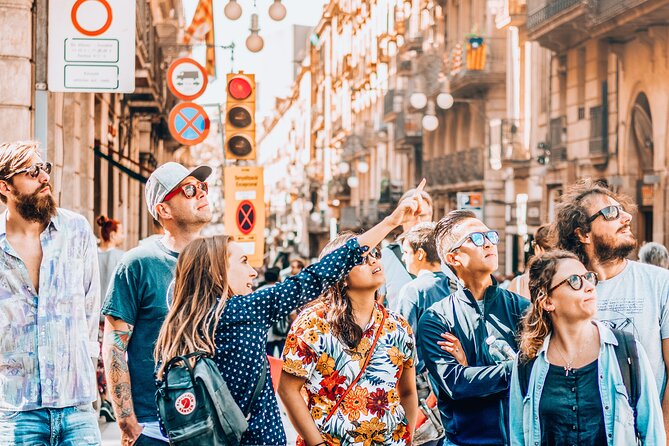
- Small groups make questions easier: The maximum is 10 adults, a useful size for narrow lanes and personal advice.
- You usually stay outside: Entry fees are not included, and the route normally does not enter buildings that charge admission.
- The route ends near Plaça Reial: You finish close to La Rambla, cafés, and central public transport.
- Guides bring different personalities: Laura and Matt are named in the feedback connected with this experience, with history, art, and architecture receiving particular attention.
Why this Gothic Quarter walk works
At $43.37 per person, this is not the cheapest way to walk around central Barcelona. You are paying for a local guide, a planned route, historical context, and personal recommendations after the walk. That can be good value on a first visit, especially if you would otherwise pass the Roman remains and government buildings without knowing what you are seeing.
The tour is also useful for a return visit. You may already know the cathedral or Plaça Reial, but the guide’s flexible plan can shift attention toward architecture, Catalan identity, Roman remains, or quieter corners depending on your interests, the weather, and the day.
I would not book it expecting a museum tour. The route gives you short stops, outside explanations, and time to take photographs. If you want to enter the cathedral, Santa Maria del Mar, the Barcelona History Museum, or the Temple of Augustus, you will need to arrange those admissions separately.
More Gothic quarter walks in Barcelona:
- Barcelona all included: Sagrada, Park Güell, Montjuic & Gothic
★ 5.0 · 2,169 reviews - Barcelona Gothic Quarter Tapas & Taverns Food & Wine Tour
★ 5.0 · 1,470 reviews - Barcelona: Old Town and Gothic Quarter Walking Tour
★ 4.8 · 1,393 reviews
Starting at the old post office
The meeting point is the Edifici de Correus at Plaça de Correus, 1. The building is still a working post office, but its early 20th-century Spanish eclectic design makes it a smart starting point. Look for the four large columns on the eastern façade.
This opening stop sets the tone. Barcelona’s Old Town is not only about famous churches. Ordinary civic buildings can carry clues about ambition, style, and public life. Give yourself enough time to reach the meeting point, since the tour begins outside rather than at a museum desk or hotel lobby.
From here, the route moves toward the port and El Cap de Barcelona. The huge mosaic-covered head was designed by Roy Lichtenstein for the 1992 Olympic period. Its red lips, blue hair, and playful form feel far removed from medieval stonework, which is exactly why it belongs in the story. Barcelona has never been only old. It has repeatedly reinvented its public face.
Santa Maria del Mar and the city built by working people
Santa Maria del Mar is one of the strongest early stops. The church was built between 1329 and 1383 with support from merchants, sailors, and stonemasons rather than only royalty or bishops. The carved figures of porters at the entrance recall the men who carried stone from Montjuïc.
You will normally admire the basilica from outside, so plan a separate visit if its interior matters to you. Even without entering, the guide can explain why the building feels different from a royal church. Its broad, sturdy exterior and clean Gothic lines reflect a community tied to the sea and trade.
The walk then heads into the Gothic Quarter’s most photographed lane, Carrer del Bisbe. The Pont del Bisbe looks medieval, but it was built in 1928 by Joan Rubió i Bellver, an architect associated with Gaudí. It was part of an effort to give the district a more medieval appearance.
Look beneath the bridge for the skull pierced by a dagger. The warning that removing it would bring trouble to Barcelona is local folklore, not a reason to panic, but it gives the passage a bit of theatrical charm. This is a good example of how the tour handles the quarter: history and later storytelling sit side by side.
Nearby, Casa de l’Ardiaca brings together Roman, medieval, and modern Barcelona. It began as a Roman house, later served as an archdeacon’s residence, and now houses the city historical archive. The courtyard is attractive, but the best detail may be the 1902 modernist mailbox by Domènech i Montaner. Birds, ivy, and a turtle decorate it, with the turtle poking fun at the speed of bureaucracy.
Two governments facing each other in Plaça de Sant Jaume
Plaça de Sant Jaume is one of the most important political spaces on the route. Barcelona City Hall faces the Palau de la Generalitat, the seat of the Catalan government. The square occupies the site of the Roman forum, so modern public life continues over ancient foundations.
City Hall has a neoclassical front, while the building behind it contains Gothic halls and later additions. Across the square, the Palau de la Generalitat has served as Catalonia’s government seat for more than 600 years. Saint George appears above its entrance, an important symbol in Catalan culture.
You will not normally go inside either building. The value here is the explanation of how city government and regional government sit directly opposite one another. The square is also used for celebrations, protests, and castells, the human towers associated with Catalonia.
Casa Padellàs adds another useful lesson. The 15th-century mansion was moved stone by stone in the 1930s to save it from demolition. It now forms part of the Barcelona History Museum and sits above Roman remains. Barcelona’s past is not always left exactly where it was found. Sometimes buildings are moved so the story can survive.
More old town architecture walks in Barcelona:
- Barcelona in 1 Day: Sagrada Familia, Park Guell,Old Town & Pickup
★ 5.0 · 13,541 reviews - Barcelona: Sagrada Familia, Modernism, and Old Town Tour
★ 4.7 · 1,621 reviews - Barcelona Old Town & Gothic Quarter Small Group Tour
★ 5.0 · 1,308 reviews - Barcelona e-Bike Tour: Gaudí & Old Town Small Group
★ 5.0 · 769 reviews
Roman remains hiding in plain sight
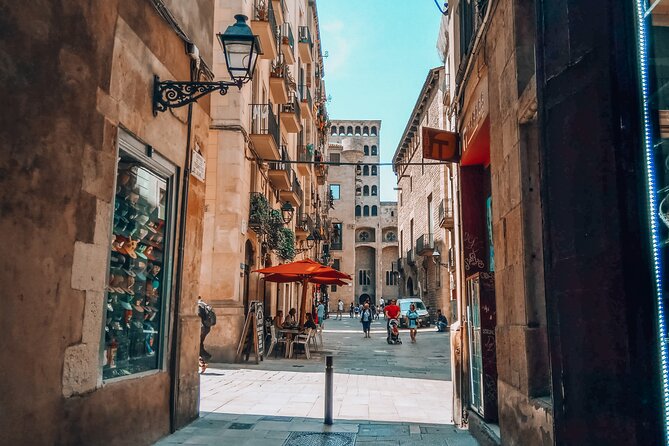
The Roman sections are among the tour’s most rewarding moments because they are easy to miss on your own. A short stretch of the Roman aqueduct appears near Plaça Nova. It once carried water from the Collserola hills into Barcino, the Roman city that occupied this area.
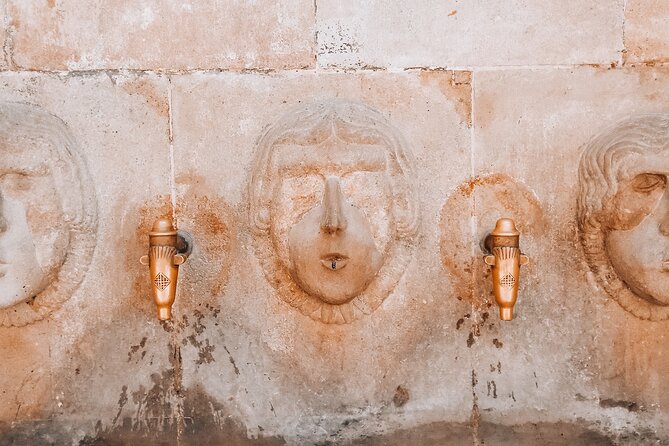
Near Plaça del Rei, the Font dels Senyors offers a smaller, more personal glimpse of medieval life. This Gothic fountain was connected with a water system serving noble residences. It lacks the drama of a palace, but details such as worn stone show how daily routines leave marks on old cities.
The Temple of Augustus is more dramatic in its surprise. Four Roman columns rise inside a narrow medieval courtyard near Carrer Paradís. The temple was built in the first century BCE at the highest point of Barcino and dedicated to the emperor Augustus. Entry is free, but the walking tour generally points out the location rather than providing a full visit.
The Roman wall gives you a stronger sense of scale. Built in the late third and early fourth century, it once enclosed Barcino with 74 towers and two main gates. Parts of it now form the base or side of later buildings. Look for reused stone inscriptions and column fragments. The wall is not presented as a single isolated monument. It is part of the city’s fabric.
Royal Barcelona around Plaça del Rei
Plaça del Rei is the tour’s grand medieval setting. The square is framed by the Palau Reial Major, the Chapel of Santa Àgueda, Casa Padellàs, and the tall Mirador del Rei Martí. It feels enclosed and ceremonial, a sharp contrast to the open political space of Plaça de Sant Jaume.
The Palau Reial Major was the residence of the Counts of Barcelona and later the Kings of Aragon. It is a complex built over time, not one perfectly unified palace. The Saló del Tinell, with its large Gothic arches, was designed to impress. The square is also linked with the traditional account of Columbus meeting Ferdinand and Isabella after returning from his first voyage.
The Chapel of Santa Àgueda was built in the 14th century for royal use. Its plain Catalan Gothic exterior is easy to overlook beside the palace, but it contains the Epiphany Altarpiece by Jaume Huguet. Since the tour usually stays outside, you will need a separate visit to see the interior.
The General Archive of the Crown of Aragon adds substance to the royal setting. Its documents cover centuries of Mediterranean government, including royal decrees, treaties, correspondence, and records from territories connected with the Crown of Aragon. The building is sober, but its contents explain why this city mattered far beyond its walls.
The Mirador del Rei Martí is a 16th-century tower with stacked Gothic-style windows. Despite its name, it was built after King Martin I lived. Its purpose was more about status and visual drama than medieval defence. It gives Plaça del Rei a strong vertical accent.
Cathedral corners and smaller churches
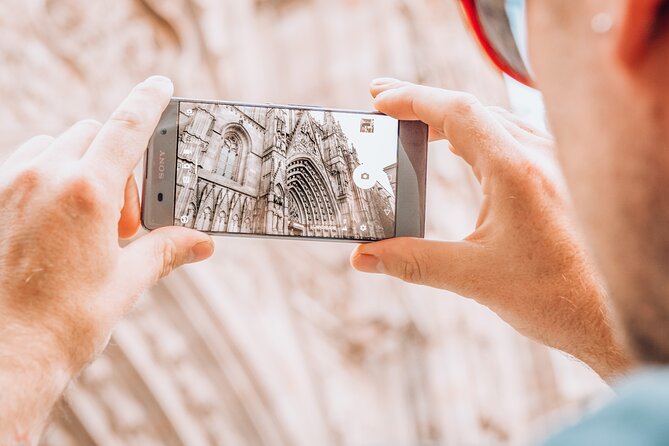
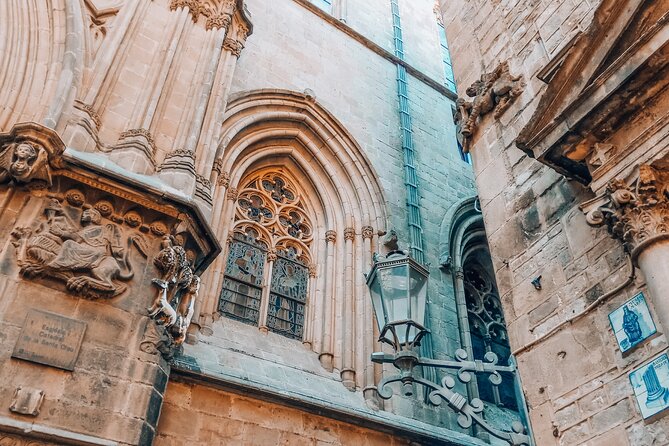
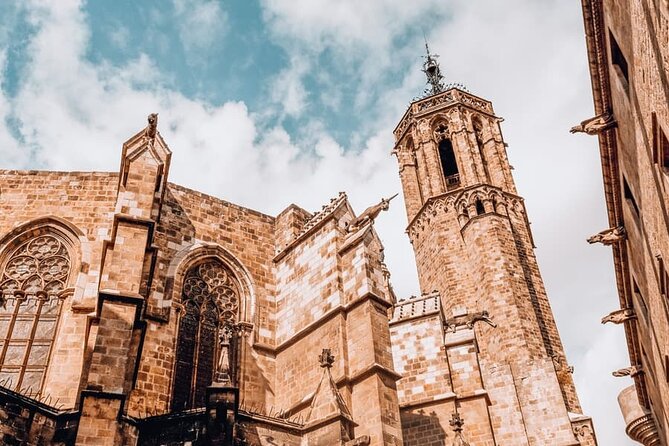
Barcelona Cathedral receives about 10 minutes, enough for an exterior look at its ornate neo-Gothic façade, sculpted saints, and unusual animal figures. Much of the façade dates from the 19th century, even though the cathedral’s story reaches back much further.
Saint Eulàlia, the cathedral’s other dedication, is associated with the 13 white geese kept in the cloister. You will generally not enter on this walk, so remember the geese as a reason to return. The exterior carvings include an elephant and a unicorn, details that reward a slow look upward.
The Chapel of Santa Llúcia is a quieter stop beside the cathedral. Built in the late 13th century, it began as a funerary chapel and later served a religious nursing order. Its simple early Gothic form feels more restrained than the cathedral next door.
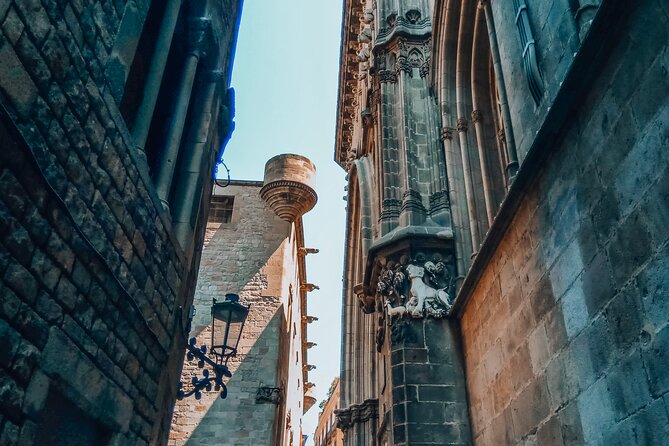
The Basilica dels Sants Martirs Just i Pastor is another church that receives less attention than the major landmarks. The site has hosted Christian worship since at least the fourth century, while the current Gothic structure dates from the 14th century. Its plain façade and tall bell tower give you a pause from the crowds and grand decoration.
The Episcopal Palace completes this cluster of religious power. It has served as the bishop’s residence since the Romanesque period, though the present building includes later changes. From outside, it helps explain how religious authority operated close to royal and civic government.
Gaudí, Picasso, and modern Barcelona
The tour does not treat the Gothic Quarter as a sealed medieval display. At Plaça Nova, the three Mediterranean friezes on the Architects’ Association building were designed by Pablo Picasso and carved by Carl Nesjar in the 1960s. Their rough concrete surface and playful figures contrast sharply with the cathedral across the square.
You may like the boldness, or you may find the pairing awkward. Either way, the work raises a useful question: should a historic district preserve only old styles, or should it keep changing? This is the kind of discussion that makes a guided walk more useful than a quick photograph.
At Plaça Reial, you see two early works by Antoni Gaudí. The modernist streetlamps date from 1879, when he was 27. Their cast-iron columns have vine-like forms and winged helmets linked with Mercury, the Roman god of commerce.
The lamps frame the Font de les Tres Gràcies, a 19th-century neoclassical fountain. The square itself was built on the site of a former convent and is lined with arches, palm trees, balconies, cafés, and street activity. It is more social and open than the narrow Gothic lanes, making it a natural finish.
Pace, group size, and practical value
The tour lasts about 2 hours 35 minutes and is offered in English. With a maximum of 10 adults, you should have a better chance to hear clearly and ask questions than on a large coach-style walk.
Still, the stop schedule is fast. Many places receive about five minutes, while larger subjects such as the Palau de la Generalitat, the Roman wall, and the cathedral receive about 10 minutes. You will see a great deal, but you will not explore every interior or linger at every photograph.
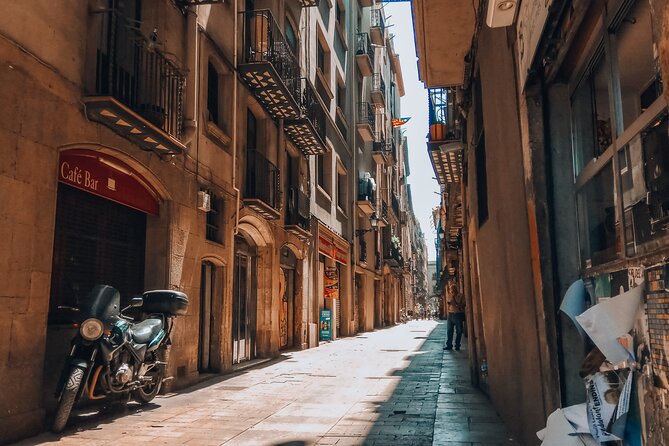
Wear comfortable shoes. The route links plazas, lanes, churches, government buildings, and port-side streets, and the emphasis is walking rather than transport. Food, drinks, personal purchases, admissions, and gratuities are not included. The guide does provide suggestions for eating, exploring, and avoiding tourist traps after the walk, which adds practical value if you are new to Barcelona.
The meeting point is near public transportation. The end is usually at or near Plaça Reial, close to La Rambla, though the exact final spot can shift slightly with the group and day. Free cancellation is available up to 24 hours before the start time, but changes or cancellations inside that window are not accepted.
Should you book this Barcelona walk?
Book it if you want a well-shaped first look at the Old Town, prefer a small group, and enjoy history explained through buildings, symbols, and local stories. It is especially useful at the start of a Barcelona stay, before you return to the cathedral, Santa Maria del Mar, or the History Museum on your own.
Skip it if you want extended time inside churches and museums, or if you prefer to explore at a slow photographic pace. At $43.37, the price makes the most sense when you use the guide’s context and follow-up advice, not when you treat the experience as simple transportation between landmarks.
For many first-time visitors, I would book it early. The experience is often reserved well ahead, and the small group limit matters in narrow streets. Let the walk give you the framework, then choose the interiors and neighborhoods you want to explore more fully.
FAQ
Where does the tour start?
The tour starts at Edifici de Correus, at Pl. de Correus, 1, Ciutat Vella, 08002 Barcelona, Spain.
Where does the tour end?
It usually ends at or near Plaça Reial, close to La Rambla. The exact final location can vary slightly depending on the day and group flow.
How long does the tour last?
The tour lasts approximately 2 hours and 35 minutes.
What language is the tour offered in?
The experience is offered in English.
How many people can join the tour?
The maximum is 10 travelers, making it a small-group experience.
Are admission fees included?
No. Admission fees are not included because the tour typically does not enter buildings that require payment.
Is food included?
No. Food and drinks are not included, though the guide provides local recommendations.
Is transportation included?
No. You are responsible for reaching the meeting point and making your own arrangements during and after the walk.
Can service animals join?
Yes. Service animals are allowed.
What is the cancellation policy?
You can cancel up to 24 hours before the experience for a full refund. Cancellations or changes made less than 24 hours before the start time are not accepted, and the amount paid will not be refunded.
More Architecture Walks in Barcelona
- Ramblas, Old Town, Gothic and Gaudi Architecture Walking Tour
★ 5.0 · 723 reviews - Kids and Family Gothic Quarter Walking Tour in Barcelona
★ 5.0 · 465 reviews - Barcelona Gothic Quarter Walking Tour
★ 4.5 · 456 reviews - Barcelona: Gothic Quarter Walking Tour
★ 4.9 · 383 reviews
Just added around Barcelona
- Love in the Gothic Quarter Barcelona: Self-Guided Romantic Walk★ 4.5 · 9 reviews
- Walking tour of the Gothic Quarter of Barcelona + Cathedral★ 5.0 · 8 reviews
- Wine tasting with a view of the Sagrada Familia★ 4.5 · 13 reviews
- Visit to the Modernist houses of the Americans★ 5.0 · 2 reviews
- Barcelona Jewish & Gothic Tour★ 5.0 · 18 reviews
- Roman & Gotic & Gaudi in Barcelona: private walking tour★ 4.5 · 2 reviews
- Self-Guided Audio Tour-The Surrealist Barcelona of Dalí and Gaudí★ 3.5 · 8 reviews
- Barcelona Gaudi Tour: Sagrada Familia, Casa Batllo & Casa Mila★ 5.0 · 4 reviews
Gothic Quarter Tours, compared.
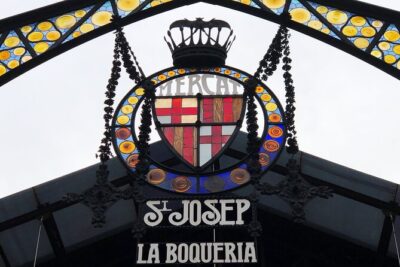
Barcelona all included: Sagrada, Park Güell, Montjuic & Gothic
Read our review →
Barcelona Gothic Quarter Tapas & Taverns Food & Wine Tour
Read our review →
Barcelona: Gothic Quarter Ghosts and Legends Walking Tour
Read our review →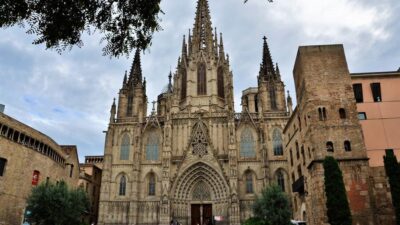
Barcelona: Old Town and Gothic Quarter Walking Tour
Read our review →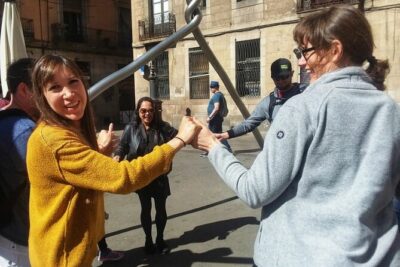
Barcelona Old Town & Gothic Quarter Small Group Tour
Read our review →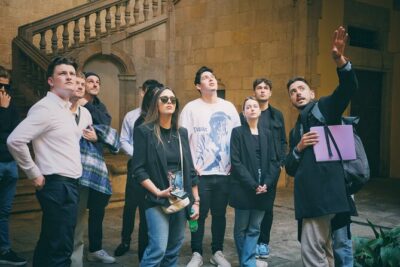
Ramblas, Old Town, Gothic and Gaudi Architecture Walking Tour
Read our review →
Barcelona: El Born and Gothic Quarter Wine & Tapas Bar Tour
Read our review →
Kids and Family Gothic Quarter Walking Tour in Barcelona
Read our review →Browse the lists this tour appears in