
Review · CHICAGO
Chicago: Elevated Architecture Walking Tour
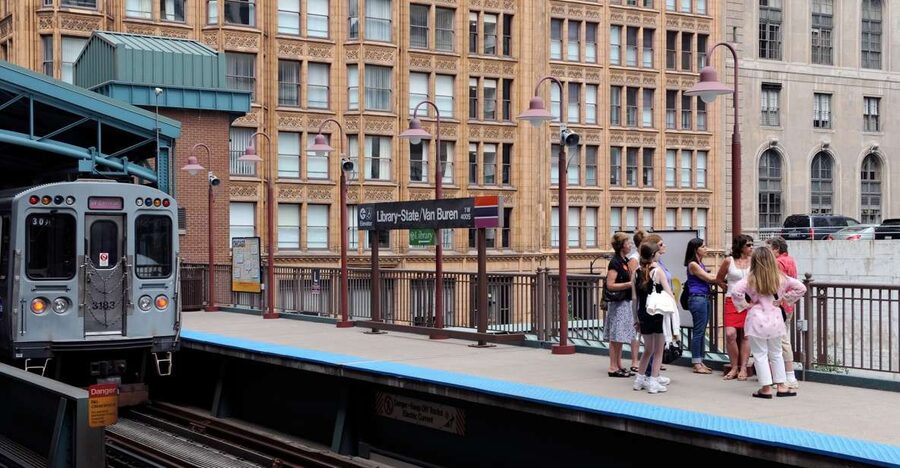
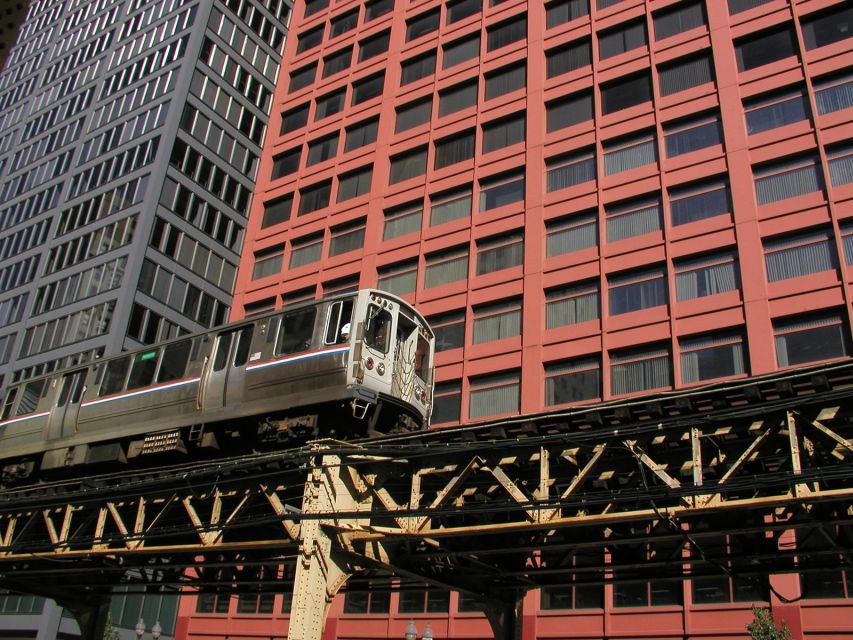
Chicago’s “L” is more than a way to get across town. From its station platforms, you look directly at upper floors, cornices, rooftops, and older buildings that disappear from view at street level. This two-hour walking and transit tour uses that unusual angle to explain how the Loop grew around its trains.
I like the small group, limited to 10 people, and the fact that your “L” fare, guide, and Chicago Architecture Center gallery admission are included. I also like the practical focus: you do not just hear about Chicago transit, you receive a Ventra card and ride the system. The main drawback is clear: stairs, standing, and outdoor walking make this a poor fit for anyone with mobility limitations.
- Above-street architecture: Study building details from station platforms more than 20 feet above ground.
- A real “L” ride: Use the included Ventra card to experience Chicago’s rapid transit system.
- Loop-focused history: Learn how the first elevated train, which began service in 1892, shaped downtown development.
- Small-group format: Travel with no more than 10 participants and an English-speaking certified guide.
- Chicago Architecture Center access: Admission to the center’s galleries is part of the tour.
- Community benefit: Ticket income supports Chicago Architecture Center education and public programs.
Why the Loop Looks Different From an “L” Platform
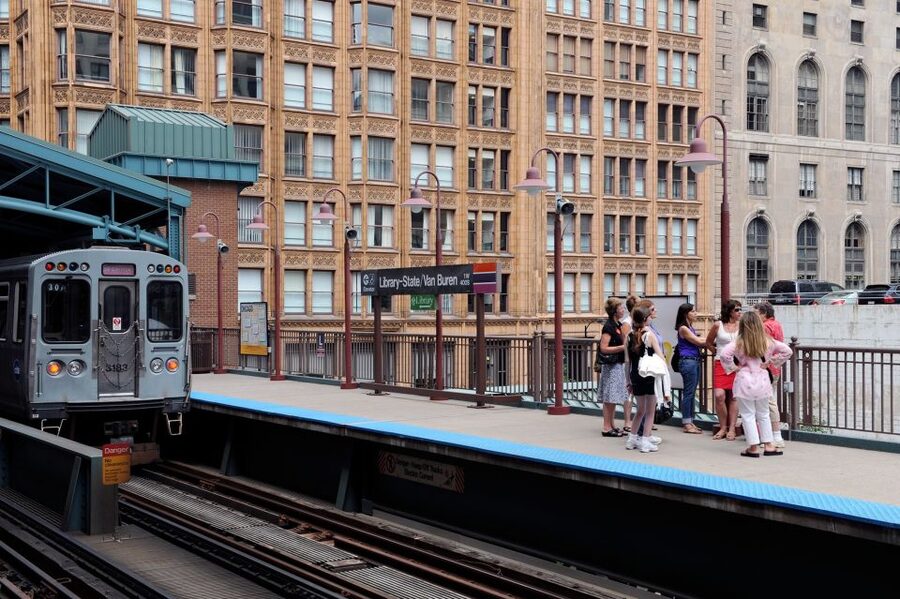
Most architecture tours keep you on sidewalks, where traffic, street trees, and neighboring buildings block the upper parts of the city. This tour changes your height. Standing on a station platform, you can look across streets and face the details above storefront level.
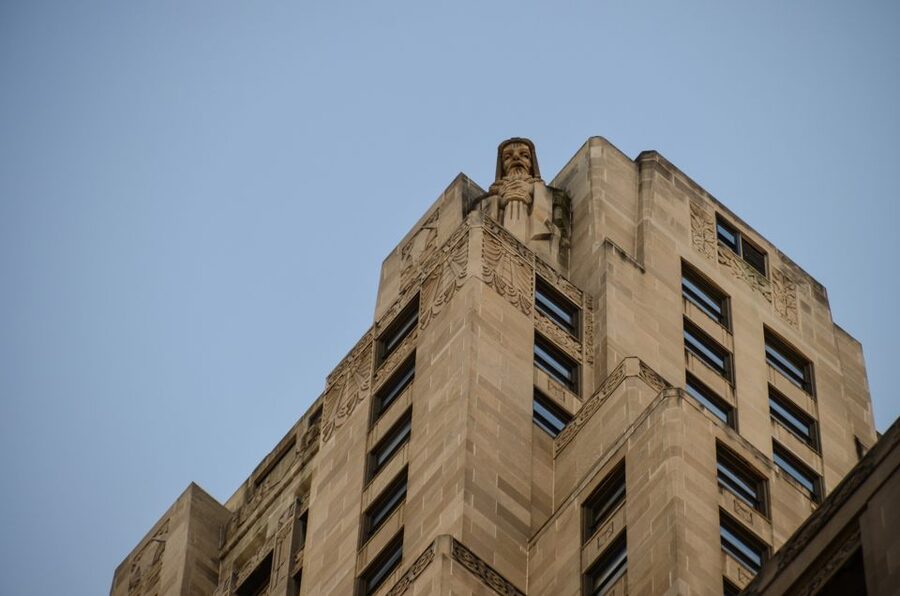
That shift matters in Chicago. The Loop is packed with buildings from different periods, and many of their best design features sit well above your head. From the ground, you may notice an entrance or lobby. From the train, you might find yourself looking at upper stories, rooflines, setbacks, and decorative work that pedestrians usually miss.
The tour also gives you a useful piece of Chicago history. The city’s first elevated train began running in 1892. Since then, the “L” has helped define the character of downtown, not simply by moving people, but by shaping where buildings were constructed and how the Loop functions.
Your guide explains this relationship as you move through the area. That makes the architecture easier to understand. You are not just collecting building names. You are seeing how transit, streets, offices, and public space fit together.
Starting at the Chicago Architecture Center

The tour begins at the Chicago Architecture Center, where you should arrive before departure and show your ticket at the box office. You receive a Ventra card there for the train portion of the experience.
This starting point is useful because the center gives you context before you head into the Loop. Admission to its galleries is included, so you can examine the exhibits as part of the outing rather than paying for a separate visit.
The galleries add value to the tour because they help connect individual buildings with Chicago’s wider architectural story. If you have time, arrive early enough to get oriented before the group leaves. The tour itself lasts two hours, and the schedule may not leave much room for a long visit before departure.
You should also pack lightly. Large bags, luggage, and strollers are not allowed on the tour. Food and drinks are not included and are not permitted during the activity, so plan around those limits rather than arriving with a full day bag.
More architecture walks in Chicago:
- Chicago in a Day: Food, History & Architecture Walking Tour
★ 5.0 · 1,153 reviews - Chicago’s Secret Interiors Architectural Walking Tour
★ 5.0 · 635 reviews - Chicago: Secret Interiors Architecture Walking Tour
★ 4.9 · 498 reviews
Five Stops Across the Loop, With the “L” as Your Viewpoint
The published route lists five visit points between the Chicago Architecture Center and the return there, but it does not name each stop. That means you should think of this as a moving route rather than a tour built around a set of famous landmarks.
At the first stops, your guide introduces the train system and the Loop setting. You begin to see why the “L” is such a useful viewing platform. The train lines pass through a dense section of downtown, placing you close to hundreds of buildings and city sights in a short period.
The next part combines walking with station-platform time. You may be on your feet for much of the tour, moving between street-level points and stations. The pace is designed to cover ground, not to linger for a long private examination of each building.
That is a strength if you want a broad look at downtown. In two hours, you get a feel for how the Loop fits together, rather than spending the whole session on one structure. It is less suited to you if your main goal is detailed interior access or extended photography at each stop.
The train ride forms the heart of the route. You sit on the “L,” use the included Ventra card, and see Chicago from a moving position above the street. This is not a simulated transit experience or a quick explanation beside the tracks. You actually use the system that has shaped the area.
As the route continues, the guide points out architectural features and explains their importance. The precise buildings and platforms can vary with the operating route, so you should expect a guided overview rather than a guaranteed list of named landmarks.
The final stop brings you back to the Chicago Architecture Center. That return makes the experience easy to fit into a day of sightseeing, especially if you plan to continue exploring downtown on foot afterward.
What the Train Ride Adds to an Architecture Tour

The train portion is the reason to choose this experience instead of a standard Loop walking tour. Chicago’s transit system becomes both transportation and viewing deck.
From more than 20 feet above the street, you see the city at a different scale. Sidewalk architecture often feels like a series of façades. From the tracks, you can compare whole blocks, notice upper-level details, and watch how buildings meet the narrow streets below.
The moving view also helps you understand the Loop as a working part of Chicago. You are surrounded by the sound and motion of the transit system, not separated from the city behind a tour bus window. For many people, that everyday setting will feel more useful than a polished sightseeing ride.
The included fare is a small but welcome detail. You do not have to work out the correct ticket while keeping up with the group. The Ventra card is provided at the start, and the guide handles the transit part of the route.
You should expect standing and stairs at stations. Seating may not be available when you want it, and the tour operates outdoors in all weather. Wear shoes and clothing that can handle a wet or windy Chicago day.
How the Guide Shapes the Experience
The quality of this tour depends heavily on the guide because the route itself moves through familiar public spaces rather than private buildings. A good guide turns the passing view into a readable story, pointing out details before the train moves on.
Chris is one named guide associated with the experience. The strongest praise has focused on his architecture and architect commentary, along with his ability to answer questions. That is important here because the tour covers many sights quickly, and clear explanations help you decide what deserves a second look later.
The format allows questions. With no more than 10 participants, you have a better chance of hearing the guide and asking about a building or transit feature than you would on a large coach tour.
Still, small does not mean private. You are part of a shared route, and the group must keep moving. If you want a long conversation about one architect or a slow photography session, a private architecture guide would give you more control.
A few more architecture tours around Chicago worth a look
- Chicago Architecture River Cruise
★ 5.0 · 15,756 reviews - Chicago River 90-Minute Architecture Tour
★ 4.5 · 9,629 reviews - Chicago River: 1.5-Hour Guided Architecture Cruise
★ 4.8 · 8,046 reviews - Chicago Architecture Center River Cruise aboard First Lady
★ 5.0 · 5,536 reviews
Why the Small Group Matters
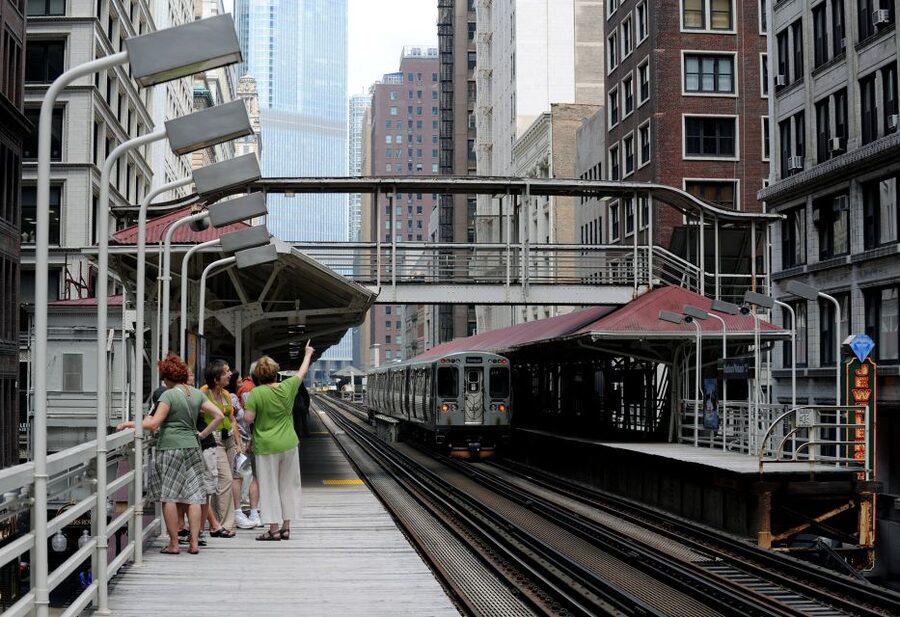
A limit of 10 people is a real advantage on a station-based tour. Platforms can be noisy, trains arrive and leave, and the guide needs to keep the group together while explaining what you are seeing.
A compact group makes it easier to stay close without crowding the guide. It also helps when the tour shifts from the street to a station entrance and then onto the train. You will still need to pay attention, especially in busy public areas, but the experience should feel more manageable than a large group.
The small-group setup also suits question-led touring. You can ask why a building matters, how the “L” affected downtown growth, or what architectural detail you may have missed. The guide’s answers are part of the value, so come prepared with a few questions if you enjoy that style.
The Chicago Architecture Center Galleries Add Context
Gallery admission is included, and it gives the tour a useful beginning or ending. The street route shows you real buildings in context. The galleries can provide a more organized way to understand Chicago architecture and planning.
I see this as a meaningful part of the $35 listed price for a group of up to one participant, not just a minor extra. The tour combines a guide, transit fare, a two-hour route, and access to an architecture institution. The exact value depends on how much time you spend with the galleries and how interested you are in design, but the package is broader than a simple walking tour.
Your ticket also supports the Chicago Architecture Center’s nonprofit work. Its programs include Girls Build!, Teen Fellows, and the Newhouse Architecture + Design Competition. The center also works to keep events such as Open House Chicago free for participants.
That does not replace the need to judge the tour on its own merits, but it is a useful factor if you prefer paying for experiences that support local education and public access.
Is $35 a Fair Price?
At the listed rate of $35 per group up to one person, the value comes from the combination of several modest inclusions rather than one expensive attraction. You get a certified guide, a transit fare, the walking route, and gallery admission.
The ride alone would not justify the cost for most people, since you could use Chicago transit independently. The guide’s interpretation is the main reason to book. You are paying to understand what you are seeing and to use the “L” as part of a carefully planned architecture route.
The price is strongest for first-time Chicago visitors, architecture fans, and people who want a quick but focused introduction to the Loop. It is less compelling if you already know downtown well or plan to spend the day riding the “L” on your own.
Because the group is capped at 10, the price also buys a more personal format than a mass-market city tour. Check the current booking page for the exact departure time and availability, since the activity lasts two hours and operates at set starting times.
Weather, Stairs, and What to Bring
This tour operates rain or shine. Chicago weather can change quickly, so bring weather-appropriate clothing rather than assuming the station platforms will protect you. A face mask or protective covering is also listed among the recommended items.
The practical clothing list is simple:
- Wear comfortable shoes for walking and stairs.
- Bring a layer that works outdoors and on the train.
- Prepare for rain if the forecast is uncertain.
- Carry only a small personal item.
- Leave luggage and large bags elsewhere.
The tour is not ADA accessible. It involves outdoor walking, standing on station platforms, and stairs. It is not suitable for wheelchair users or people with mobility impairments.
That limitation is not a minor footnote. If stairs or prolonged standing are difficult for you, choose a different architecture experience with confirmed accessible arrangements. Also consider the route if you are traveling with a stroller, since strollers are not allowed.
Who Will Enjoy This Chicago “L” Tour Most?
I would choose this tour if you want architecture explained in place, with a real taste of Chicago transit mixed in. It is especially useful during a first visit, when the Loop can feel like a wall of buildings without a clear story.
It also suits repeat visitors who have already seen the major downtown sights from street level. The above-street angle gives you a reason to look again, and the train ride adds a local routine to the sightseeing.
The tour is a good match for:
- Architecture and urban design fans
- First-time visitors building a Loop orientation
- People who enjoy public transit
- Solo visitors who prefer a small guided group
- Anyone who wants a short activity with a local nonprofit connection
You may want to skip it if you dislike stairs, outdoor weather, or standing. It is also not the right choice if you want a slow, highly detailed tour of a few specific buildings, since the route passes many sights and keeps moving.
Final Verdict: Book It for the Viewpoint, Not Just the Ride
Book this tour if the idea of seeing Chicago from the “L” sounds more interesting than another sidewalk lecture. The best part is the combination of motion, height, and explanation: you ride through the Loop while a guide helps you read the buildings around you.
The small group, included Ventra fare, and Chicago Architecture Center galleries strengthen the deal. Chris has received especially strong praise for clear architecture explanations and thoughtful answers, though your assigned guide may differ.
Skip it if accessibility, luggage storage, or indoor shelter is important to you. For everyone else, this is a smart two-hour introduction to the Loop, with enough transit history and architectural detail to change how you look at Chicago’s downtown streets afterward.
FAQ
How long does the Chicago Elevated Architecture Walking Tour last?
The tour lasts two hours.
Where does the tour begin and end?
It begins at the Chicago Architecture Center and returns there at the end.
Is the “L” fare included?
Yes. You receive a Ventra card at the Chicago Architecture Center, and the fare for riding Chicago’s “L” system is included.
Is admission to the Chicago Architecture Center included?
Yes. Admission to the center’s galleries is included with the tour.
Is the tour accessible for wheelchair users?
No. The tour is not ADA accessible and involves outdoor walking, standing on station platforms, and stairs. It is not suitable for wheelchair users or people with mobility impairments.
What language is the tour conducted in?
The live tour is conducted in English.
Just added around Chicago
- Private Chicago Architecture Tour★ 5.0 · 5 reviews
- Private Frank Lloyd Wright Architectural Tour by Luxury Vehicle★ 3.5 · 7 reviews
- Chicago Luxury Minibus City Tour and Architecture River Cruise★ 4.5 · 8 reviews
- Chicago History and Architecture Walking Tour with Boat Cruise★ 4.5 · 10 reviews
- Small Group History And Architecture Walking Tour of Chicago★ 4.5 · 8 reviews
- Private Chicago Architecture Walking Tour★ 5.0 · 6 reviews
- Chicago: Evolution of the Skyscraper Walking Tour★ 4.9 · 10 reviews
- Chicago’s Modern Skyscrapers Guided Walking Tour★ 5.0 · 6 reviews
Walking Tours, compared.

The Official Art Deco Walking Tour by The Miami Design Preservation League
Read our review →
Barcelona: Gothic Quarter Ghosts and Legends Walking Tour
Read our review →
Barcelona: Old Town and Gothic Quarter Walking Tour
Read our review →
Lecce: Baroque Architecture and Underground Walking Tour
Read our review →
Chicago in a Day: Food, History & Architecture Walking Tour
Read our review →

Ramblas, Old Town, Gothic and Gaudi Architecture Walking Tour
Read our review →
Chicago’s Secret Interiors Architectural Walking Tour
Read our review →Browse the lists this tour appears in