
Review · CHICAGO
Chicago: Architecture Center Cruise on Chicago’s First Lady
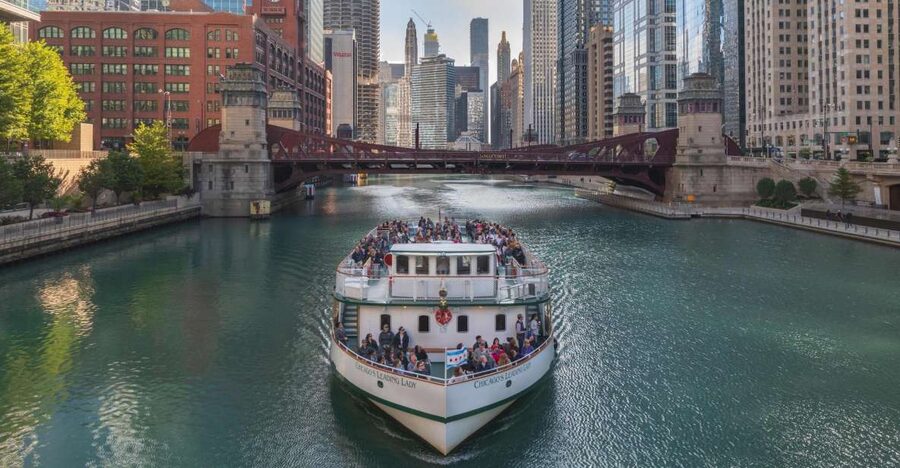
Chicago’s best architecture lesson comes from the water. On this 90-minute cruise aboard Chicago’s First Lady, you travel all three branches of the river while a Chicago Architecture Center docent explains how Chicago’s buildings, bridges, and city planning fit together. The boat gives you a fine view of the city’s famous canyon, but the live talk is the real reason to choose this cruise over a basic sightseeing ride.
I like the guaranteed open-air seating, which lets you keep your view without standing for the whole trip. I also like the practical mix of Art Deco, neoclassical, mid-century modern, and postmodern buildings, plus the chance to hear about 13 bascule bridges. The main drawback is access to the dock: there is no elevator, and the route to the boat can be difficult for some visitors with mobility limits.
Key points to know before boarding
- All three river branches: You see more than the central stretch of downtown, making this a fuller tour than a short out-and-back cruise.
- A live CAC docent: The commentary links buildings to architects, city events, materials, and changing ways of life.
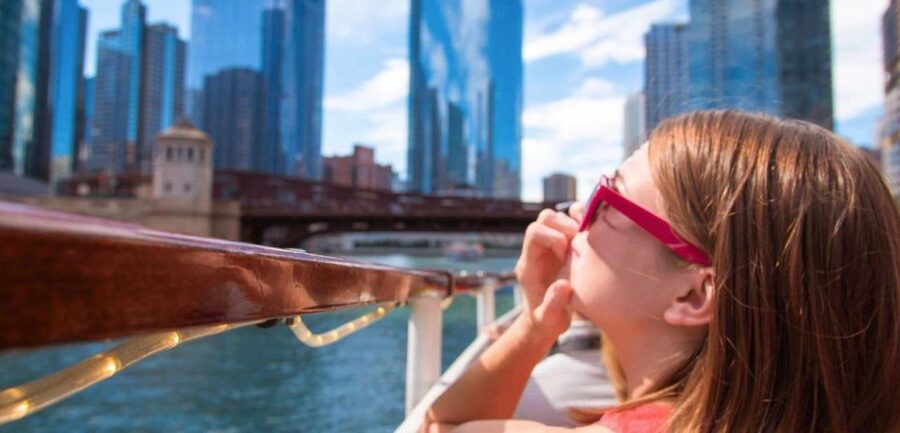
- Open-air upper-deck seats: Your seat is guaranteed, with 360-degree views, though sun, wind, heat, or rain can still affect comfort.
- More than 50 buildings and 13 bridges: The tour gives you a useful introduction to Chicago’s major architectural styles.
- A worthwhile $5 add-on: Add general admission to the Chicago Architecture Center, normally $14, and use the cruise ticket for a visit within five days.
- Bring only what you need: Large bags and luggage are not allowed, and late arrivals cannot receive a refund.
Why the Chicago River is the right classroom

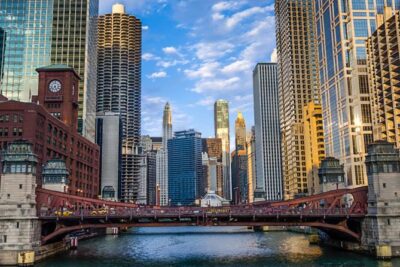
From street level, Chicago’s towers can feel like a wall of stone, glass, and steel. From the river, you get the space to see their height, setbacks, materials, and relationship to one another. The water also makes the city’s famous architectural canyon easier to read.
The live explanation gives those views a clear purpose. Instead of simply pointing at a tall building, the docent connects its design to the period when it was built and to the people behind it. You hear about more than 50 buildings, along with the 13 bascule bridges that lift to let river traffic pass.
I especially like this format for first-time visitors. You do not need a background in architecture to follow the talk. Guides such as Russel, Amy, Claudia, Patricia, Tim, Mary Jo, and Jessica have been singled out for making the subject clear and entertaining, but the exact docent depends on your departure.
The tour is also tied to the Chicago Architecture Center’s nonprofit educational work. That gives the experience a useful purpose beyond sightseeing, and the discounted center admission makes it easier to keep learning after the boat returns.
A few more architecture tours around Chicago worth a look
- Chicago Architecture River Cruise
★ 5.0 · 15,756 reviews - Chicago River 90-Minute Architecture Tour
★ 4.5 · 9,629 reviews - Chicago River: 1.5-Hour Guided Architecture Cruise
★ 4.8 · 8,046 reviews
The boarding point at Michigan Avenue
Check in at the black awning for Chicago’s First Lady on the Riverwalk level at the southeast corner of the Michigan Avenue bridge, where Michigan Avenue meets Wacker Drive. Give yourself time to find the correct level and reach the dock. Downtown bridges, ramps, stairs, and busy walkways can make this slower than the map suggests.
There is no elevator access to the boat dock. A ramp from the State Street and Wacker Drive area can help some visitors, but it may involve a longer walk. One past visitor described using the ramp with an older family member in a manual wheelchair, while another found the dock access much harder than expected. If you have mobility concerns, contact the operator before booking and ask about the current route.
Motorized scooters and electric wheelchairs cannot be taken aboard for safety reasons. If you can transfer, a manual wheelchair from the operator may be available, but this depends on availability. The boat is described as wheelchair accessible, yet the lack of elevator access is an important qualification.
Keep your arrival simple. Luggage and large bags are not allowed, so leave bulky items at your accommodation or in a permitted storage option elsewhere. Assistance dogs are allowed, but other pets are not.
A 90-minute route through all three branches
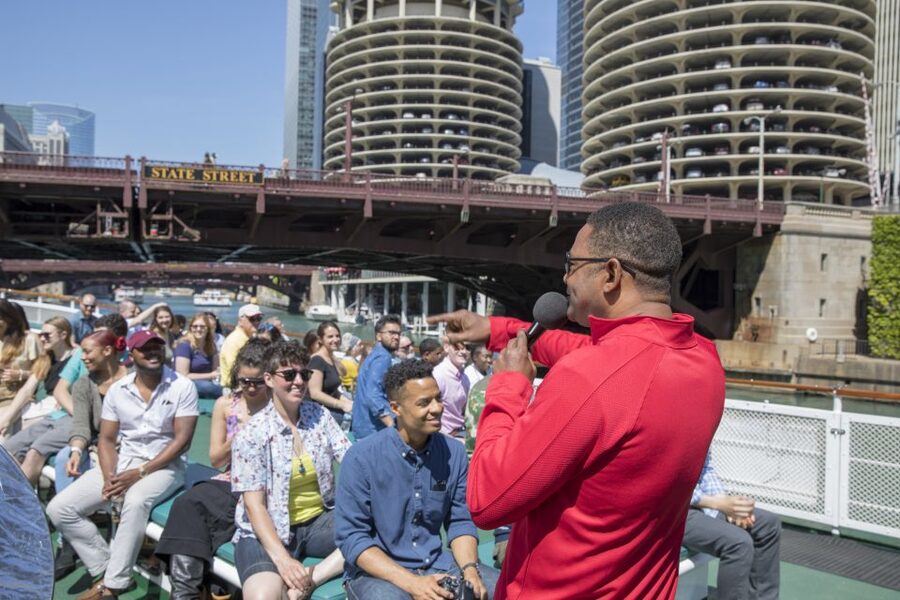
Once aboard, you have a choice between the open-air upper decks and the climate-controlled interior salons. Seating on the open-air upper decks is guaranteed, a helpful detail during busy departures. You can sit down and settle in rather than compete for a railing position.
The open decks offer the best all-around views. You can look up at the buildings, across the river, and along the changing lines of the city. The 360-degree sightlines are especially useful when the boat turns or passes beneath bridges, since the most interesting view may be behind you rather than directly ahead.
The full route covers all three branches of the Chicago River. That matters because some river cruises concentrate on the central canyon and turn back before reaching the forks. Here, you get a broader sense of how the waterway connects different parts of the city and how the buildings change along the route.
The first part of the cruise introduces the major downtown architecture and the river’s role in the city. Your docent points out buildings from several periods, including Art Deco, neoclassicism, mid-century modernism, and postmodernism. The value is in seeing those styles together. You can compare decorative older towers with spare modern designs while learning how Chicago’s skyline changed over time.
As the boat reaches the river branches, the city feels less like one uninterrupted wall of towers. The route gives you different angles and a better sense of scale. You may also find that the commentary shifts from individual buildings to the way the river helped shape the city’s growth and daily life.
The bridges deserve attention, too. The 13 bascule bridges are not just pieces of engineering in the background. Their moving sections explain why the river remains an active working waterway and add a mechanical element to the architectural story. You get a chance to see how bridges, river traffic, and dense downtown construction must work together.
The boat does not stop at each building. This is a moving lecture with changing views, so keep your eyes open and listen for the next reference. If you want to remember particular structures, take brief notes rather than trying to photograph everything. The 90 minutes passes quickly when the talk is steady.
What the docent adds to the skyline
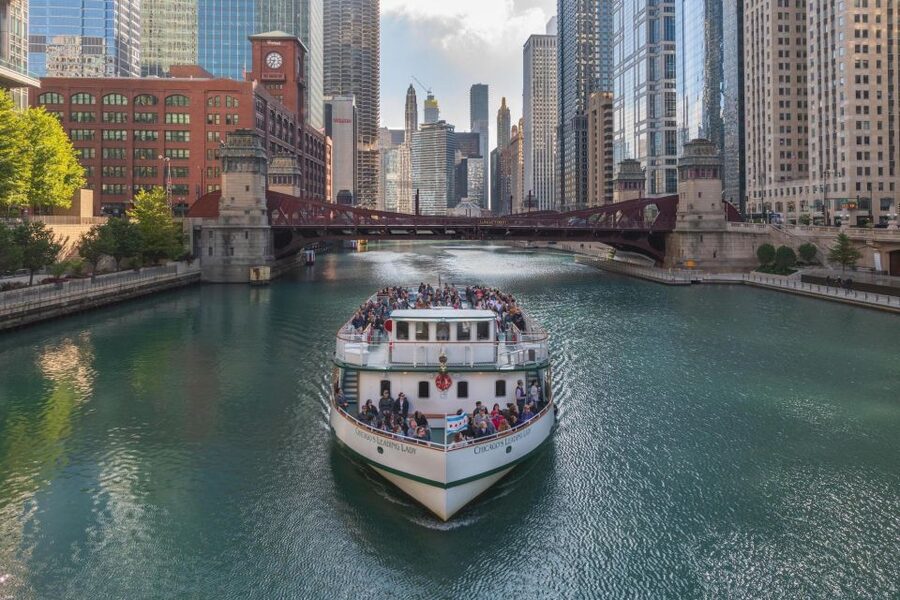
The strongest part of this experience is the human voice on board. Chicago’s First Lady is the only cruise in this comparison described as being narrated by Chicago Architecture Center certified volunteer docents. These volunteers receive training through the center, and their talks focus on architecture, history, and the people who shaped the city.
The best guides make the material feel approachable. Tim has been praised for combining information with humor. Barbara, Amanda, Judith, Cynthia, Bob P, and Kathleen have also been noted for clear and engaging presentations. Mary Jo’s talk was described as especially absorbing, while Nick’s passion helped make architectural details accessible to someone with only basic prior knowledge.
That last point is worth stressing. You do not need to know the difference between every architectural style before you board. The guide explains what to look for, then gives those details a human connection through stories about architects, civic figures, historic events, and Chicago’s growth.
The quality can vary slightly by docent. One guide was said to use filler words often, and another was described as needing more practice despite being well informed. That is a normal risk with a rotating volunteer team. The broad pattern is strong, but do not expect the exact same talk on every departure.
Sound matters on a boat, especially when wind and engine noise compete with the microphone. One visitor found the audio too quiet. If you are seated far from the guide or have trouble hearing, move closer when possible and mention the issue to a crew member early.
Same city, a completely different century:
- Chicago Architecture Center River Cruise aboard First Lady
★ 5.0 · 5,536 reviews - Chicago: Architecture River Cruise Skip-the-Ticket Line
★ 4.8 · 4,325 reviews - Chicago River 45-Minute Architecture Tour from Magnificent Mile
★ 4.5 · 2,924 reviews - Chicago Lake and River Architecture Tour
★ 4.5 · 2,308 reviews
Sun, rain, and the open-air seating
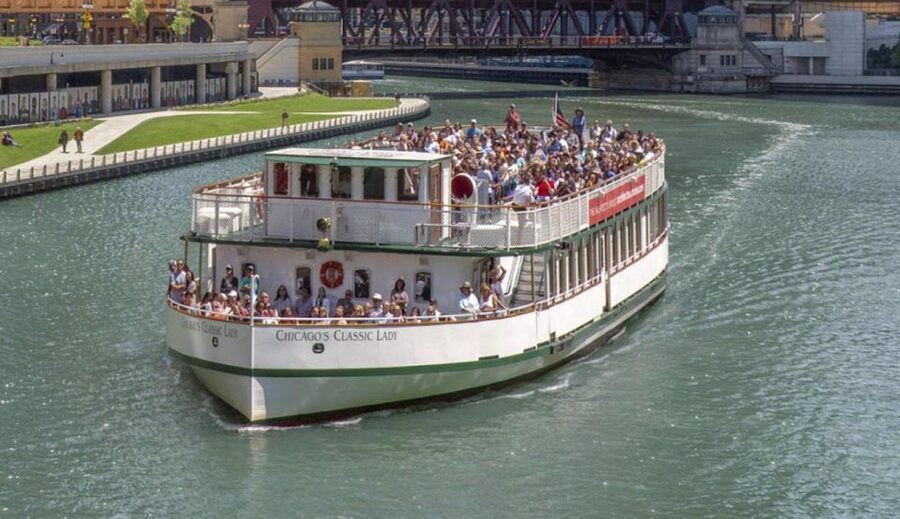
Chicago weather can change the feel of this cruise. On a clear day, the upper deck gives you the best views and a pleasant sense of space. On a hot afternoon, the sun can become tiring, as one visitor noted. Bring sunglasses and a sun hat, and consider sunscreen even though it is not specifically listed among the required items.
The cruise runs rain or shine. Covered seating is available, so a light shower does not automatically ruin the outing. Still, a wet or windy day may make the open decks less comfortable, and the skyline will not have the same crisp look as it does in clear weather.
Late afternoon and early evening can be particularly appealing. A cruise just before sunset lets you see the buildings in changing light, followed by illuminated windows and facades as evening arrives. Starting times vary, so check availability when you book.
The interior salons are climate controlled and include a full-service cocktail and snack bar. You can buy water, soda, wine, beer, chips, cookies, and nuts during the cruise. Food and drinks are not included in the ticket, so treat the bar as a convenience rather than part of the tour price.
Is $57 a fair price?
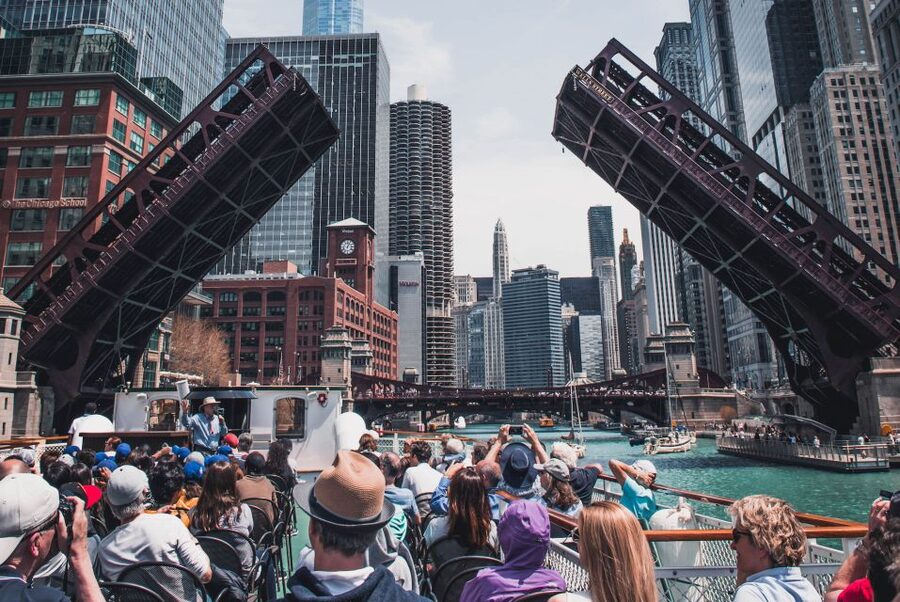
At $57 per person, this is not the cheapest way to see the Chicago River. You are paying more than you would for a simple boat ride because the fare includes a trained architecture docent, guaranteed open-air seating, and the full three-branch route.
I think the price is fair if you care about understanding the city rather than simply taking skyline photographs. A basic cruise can show you tall buildings, but this tour explains why they look different, how the river shaped Chicago, and what the bridges and architects contributed.
The $5 Chicago Architecture Center add-on improves the value. General admission is normally $14, so the discounted rate saves you $9. The center is at the same general boarding location, and the ticket can be used for up to five days after the cruise. That makes it easy to visit on another day instead of trying to squeeze everything into one outing.
For a family, the ticket price can add up. The experience is most useful when at least some people in your group enjoy history, design, city planning, or photography. If nobody wants a guided talk, a lower-cost sightseeing option may suit you better.
A portion of every ticket supports the center’s nonprofit educational mission. That will not change the immediate experience, but it is a worthwhile factor if you prefer activities that feed money back into local education.
Who will enjoy this cruise most?
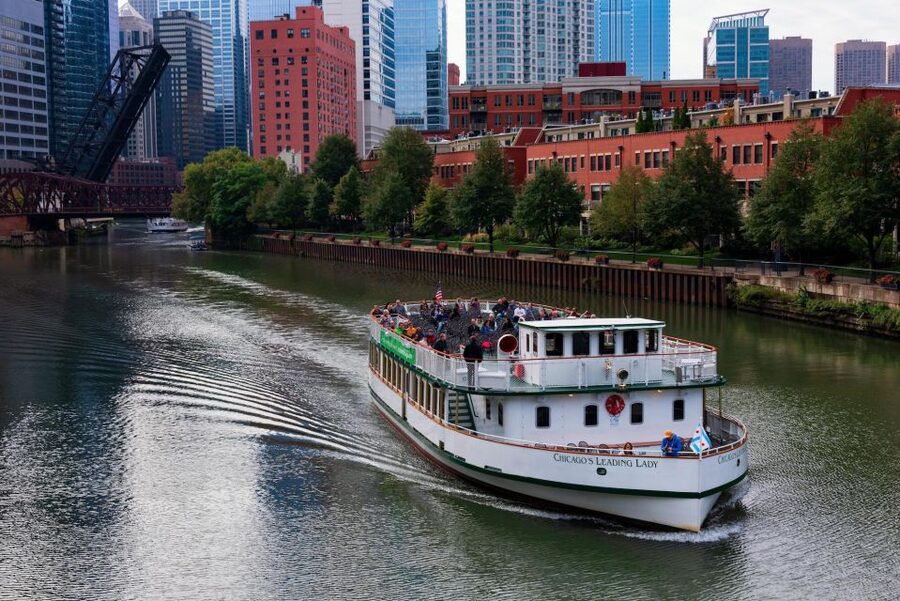
I would choose this tour for a first visit to Chicago, especially early in your stay. It gives you a city orientation from an unusual angle and helps you recognize buildings when you explore downtown on foot later.
It also suits students and design fans. One visitor described the experience as more useful than textbooks for learning about Chicago architecture. You get visual examples right in front of you, with the chance to compare several styles within one outing.
Families can enjoy it if children are willing to listen for part of the 90 minutes. The moving boat and bridges add variety, while the indoor seating gives you a break from sun and heat. For adults who want a calm introduction to the city, the pace is about right.
I would hesitate to recommend it to anyone who dislikes guided commentary or has severe mobility limitations that make a stair and ramp route difficult. The tour is also less appealing if you want complete freedom to wander, photograph, or leave early. Once the boat departs, you follow the full 90-minute route.
Small details that make the day easier
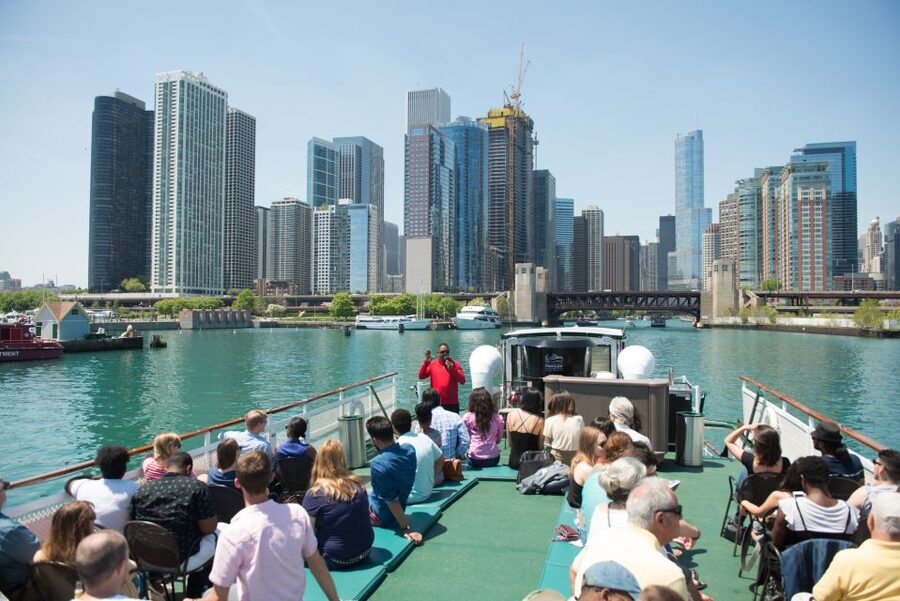
Book ahead. Departures often sell out, especially during popular seasons and on weekends. The activity allows cancellation up to 24 hours in advance for a full refund, and you can reserve now and pay later, which helps if your schedule is still shifting.
Arrive early enough to find the Riverwalk entrance, check in, and board without rushing. Latecomers cannot receive a refund, so do not cut the timing close.
Wear layers. The upper deck may feel warm in the sun and cool in the wind, while the indoor salon offers air conditioning. Keep your belongings small, since large bags and luggage are not permitted.
If you are deciding between a daytime and evening departure, consider your priorities. Daylight makes architectural details easier to see, while a pre-sunset trip adds changing light and illuminated buildings. Both options benefit from a clear forecast.
Should you book Chicago’s First Lady?
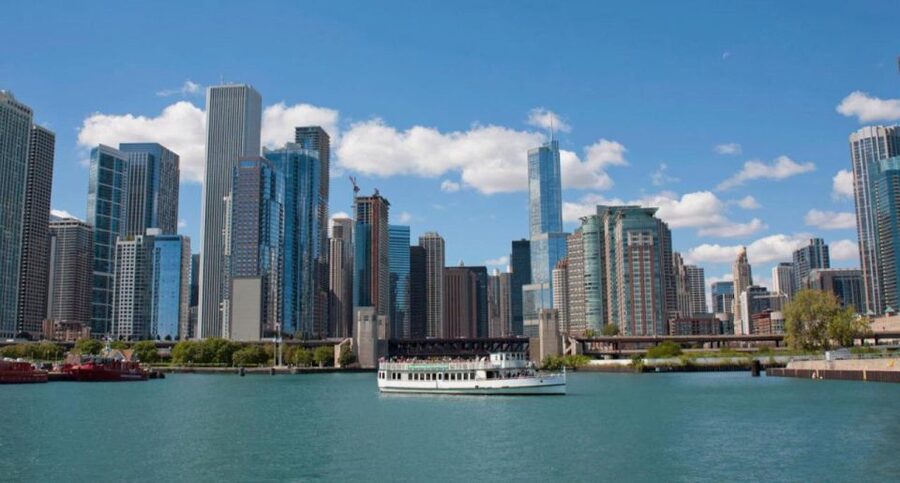
Yes, if you want Chicago’s architecture explained rather than simply displayed. The combination of all three river branches, open-air seating, 50-plus buildings, 13 bridges, and a live Chicago Architecture Center docent gives you a fuller experience than a standard sightseeing cruise.
I would book in advance, choose a time with comfortable weather, and add the $5 Architecture Center admission if you have another day available. Just plan carefully for the dock access, pack light, and remember that the exact guide and sound quality can vary.
FAQ
How long is the Chicago’s First Lady architecture cruise?
The cruise lasts 90 minutes and travels along all three branches of the Chicago River.
What language is the tour in?
The live commentary is in English and is delivered by a Chicago Architecture Center trained volunteer docent.
Where do I check in?
Check in at the black awning for Chicago’s First Lady on the Riverwalk level at the southeast corner of the Michigan Avenue bridge, where Michigan Avenue and Wacker Drive meet Wacker Drive.
Is seating guaranteed?
Yes. Seating is guaranteed on the open-air upper decks. Covered seating is also available inside the climate-controlled salons.
Does the ticket include food and drinks?
No. Water, soda, wine, beer, chips, cookies, and nuts are available for purchase from the onboard bars.
Can I add admission to the Chicago Architecture Center?
Yes. You can add general admission for $5 instead of the normal $14 price. The admission can be used for up to five days after the cruise.
Is the boat accessible for wheelchairs?
The cruise is described as wheelchair accessible, but there is no elevator to the boat dock. Motorized scooters and electric wheelchairs cannot be accommodated. Guests who can transfer may use an operator-provided manual wheelchair if one is available.
Just added around Chicago
- Private Chicago Architecture Tour★ 5.0 · 5 reviews
- Private Frank Lloyd Wright Architectural Tour by Luxury Vehicle★ 3.5 · 7 reviews
- Chicago Luxury Minibus City Tour and Architecture River Cruise★ 4.5 · 8 reviews
- Private Chicago Architecture Walking Tour★ 5.0 · 6 reviews
- Chicago History and Architecture Walking Tour with Boat Cruise★ 4.5 · 10 reviews
- Small Group History And Architecture Walking Tour of Chicago★ 4.5 · 8 reviews
- Chicago: Evolution of the Skyscraper Walking Tour★ 4.9 · 10 reviews
- Chicago’s Modern Skyscrapers Guided Walking Tour★ 5.0 · 6 reviews
Cruises & Boat Tours, compared.
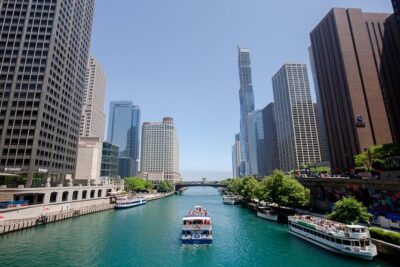
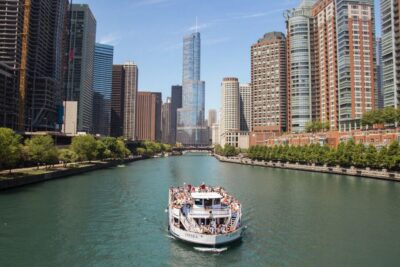
Chicago River: 1.5-Hour Guided Architecture Cruise
Read our review →
Chicago Architecture Center River Cruise aboard First Lady
Read our review →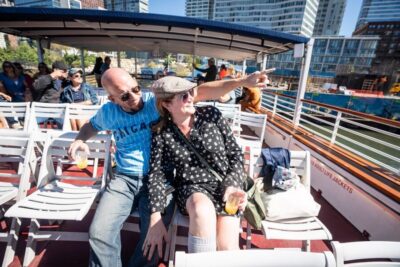
Chicago: Architecture River Cruise Skip-the-Ticket Line
Read our review →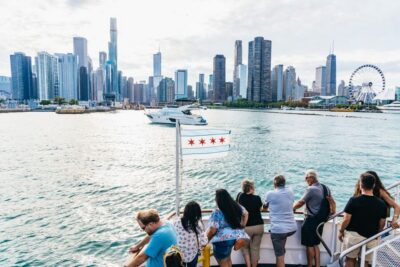
Chicago: 1.5-Hour Lake and River Architecture Cruise
Read our review →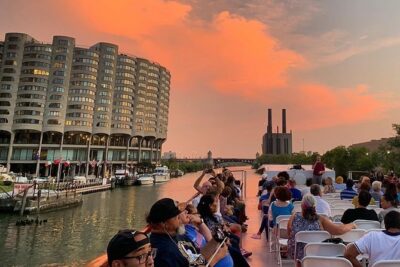
Chicago River 90-Minute Architecture Boat Tour
Read our review →
Chicago River Architecture Tour with Small Boat Upgrade Option
Read our review →Browse the lists this tour appears in