
Review · THE NETHERLANDS
Amsterdam Walking Tour. All about History, Architecture, Traditions & Anecdotes.
Amsterdam’s story unfolds best on foot, and this three-hour walk links grand landmarks with narrow lanes, old bridges, unusual houses, and tucked-away corners. You move from Centraal Station to Dam Square while learning how trade, religion, art, and war shaped the city. The route packs a lot of Amsterdam into one afternoon.
I like the private format, since your group can ask questions and set the pace. I also like the mix of major sights and quieter stops, especially Begijnhof, Staalmeestersbrug, and Oudemanhuispoort. The main consideration is the price: $208.23 is fair for a group of several people, but expensive for one or two guests.
Key points at a glance

- A private three-hour route: Only your group takes part, with a maximum group size of 15.
- A strong first-day introduction: The walk connects Centraal Station, Nieuwmarkt, the Amstel, Begijnhof, and Dam Square.
- History beyond the postcard view: Expect stories about world trade, Catholic worship, Rembrandt, Amsterdam’s merchant past, and the Second World War.
- Good photo pauses: Staalmeestersbrug is set aside for pictures, while several atmospheric streets and old buildings offer natural stops.
- Local food advice: Your guide can suggest bars, restaurants, and cafes for the rest of your stay.
- A guide with personality: Diana is named in the feedback, with particular praise for her flexibility, warmth, and ability to keep a younger guest interested.
Why this Amsterdam walk works well
I see this tour as a useful way to get your bearings early in a visit. It does not try to cover every museum or canal, but it gives you a connected story of the city. You begin at its main railway gateway and finish at the central square where Amsterdam’s urban story began.
The route also avoids a simple checklist of famous sights. You will see well-known places, but the guide uses them as doorways into larger subjects: Catholic life in a Protestant country, merchant wealth, scientific thought, Dutch education, wartime memory, and the city’s famous painters.
The private setup matters. In a large group, a three-hour walk can feel like a march. Here, your party can ask about a building, pause for a photograph, or request advice for dinner. The published maximum is 15 people, so I would still confirm your expected group size when booking, especially if you want a quiet, conversational walk.
Diana is the guide named in the available feedback. Her strengths appear to be flexibility and an easy way with different ages. One family describes her as keeping a teenage daughter attentive, which is no small achievement on a history walk. Another account connects her with a broader weekend experience that included a fishing village, windmills, and cheese tasting. Those extras are not listed as part of this city walk, so treat them as evidence of possible flexibility, not as included features.
More architecture walks in the Netherlands:
- Rotterdam: Architectural Highlights Guided Walking Tour
★ 4.8 · 215 reviews - Rotterdam: Highlights, Gems, Architecture & History Walk
★ 5.0 · 191 reviews - Rotterdam Walk: Hilights, Gems, Architecture & WWII | 2 or 3hrs
★ 5.0 · 149 reviews
Starting at Centraal Station and St. Nicholas Basilica

The meeting point is Loetje, Stationsplein 10, near Centraal Station. The tour begins at 2 pm, a practical time if you arrive in Amsterdam by train or spend the morning settling into your hotel.
Centraal Station gives the guide a useful opening chapter. You can expect an explanation of the station itself, the Victoria Hotel, and other buildings around this busy entrance to the city. This is more than a place to meet. It introduces Amsterdam as a port and trading center, a city that grew through movement, commerce, and connections beyond the Netherlands.
After about 20 minutes, the route goes to St. Nicholas Basilica. This church is one of the few active Catholic churches in Amsterdam, making it an important stop for understanding Dutch religious life. The guide uses it to explain Dutch beliefs and the changes that shaped worship in the city.
The basilica stop lasts about 15 minutes. Admission is listed as free, but the walk does not promise a long interior visit or a special entry arrangement. If seeing the inside matters to you, ask the guide about current access on the day.
Nieuwmarkt and the city’s medieval roots
Nieuwmarkt is a short stop, about 10 minutes, but its subject is larger than its timing suggests. Here you hear about Amsterdam from the Middle Ages and the square’s role as a meeting point.
This is a good place to listen for the basic shape of the old city. You are not just looking at a square; you are considering how people gathered, traded, moved, and built a city around shared public spaces. The quick pace means the guide will likely give you a compact explanation rather than a long historical lecture.
From there, the route reaches Trippenhuis. The description points to Amsterdam’s famous dancing houses and other architectural details. Amsterdam’s leaning and narrow houses are easy to photograph, but a guide can help you notice why they look that way and what their shapes say about the city’s past.
Trippenhuis receives about 10 minutes. That is enough for a focused explanation and a look upward, but not enough for a detailed architectural study. I would treat this as a smart introduction to Amsterdam’s buildings, not a specialist architecture tour.
Rembrandt and Amsterdam’s merchant world
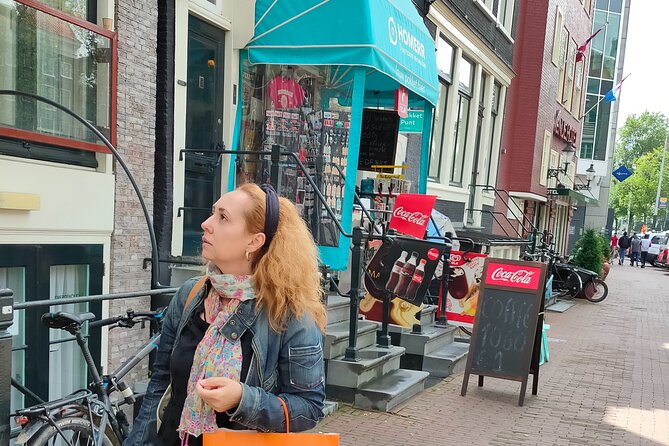
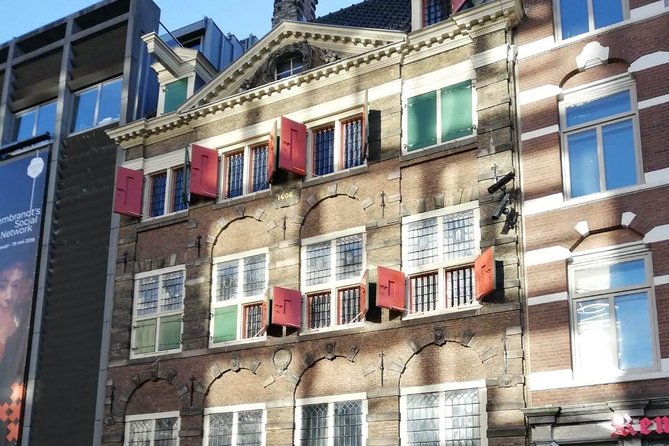
The stop at Museum Het Rembrandthuis adds an art chapter to the walk. You learn about Rembrandt, the Netherlands’ most famous painter, and the guide links his life to Amsterdam.
The scheduled pause is about 10 minutes. The museum admission is not included, so this portion is primarily an exterior and neighborhood explanation unless you arrange entry separately. That distinction matters. If your main goal is to tour Rembrandt’s actual home, plan a separate museum visit rather than expecting this walk to provide one.
The value here is the connection between art and city life. Rembrandt is not presented as an isolated genius. His story fits into Amsterdam’s period of global trade, rising wealth, collectors, and ambitious urban buildings. You get the background first, then you can decide if a longer museum visit deserves space in your own schedule.
An additional part of the route refers to medical and freethinking botanical philosophers. The exact location is not clearly identified, but the subject fits the tour’s larger theme: Amsterdam as a place of contrasts, where commerce, religion, science, and independent thought existed side by side.
Because that stop is not fully specified, I would ask the guide what you will see there. That small question can help you know how much of the walk is fixed and how much changes with the guide’s storytelling.
More history tours in the Netherlands:
- The rise of Haarlem: Culture, History, Art and Architecture Walking Tour
★ 5.0 · 59 reviews - Rotterdam Must Do Tour: Highlights, History, WW2 and Architecture
★ 5.0 · 20 reviews - Gouda Private Walking Tour: History, Architecture & Cheese
★ 4.5 · 8 reviews - Maastricht Highlights, Architecture & Heritage Tour
★ 5.0 · 7 reviews
The Amstel and memories of the Second World War
The Amstel is one of the tour’s most meaningful stops. The river is not treated only as a pleasant view. The guide explains its importance to Amsterdam’s power and development, then connects the area to the Second World War.
This is where the walk gains weight. You are asked to see the river as part of the city’s working life and political story, not simply as a backdrop for photographs. The war discussion also gives the afternoon a serious turn after the lighter subjects of buildings and famous artists.
The stop lasts about 15 minutes. That is enough for an overview, but not for a full wartime history of Amsterdam. If you want detailed information about the occupation, persecution, or resistance, you will need a dedicated museum or memorial visit elsewhere.
The route then pauses at Staalmeestersbrug for about five minutes. This is the clearest scheduled photo stop. Have your phone ready, but do not expect a long break. The bridge works best as a quick picture point within a walking route, not as a full sightseeing stop.
Oudemanhuispoort and the city’s institutions
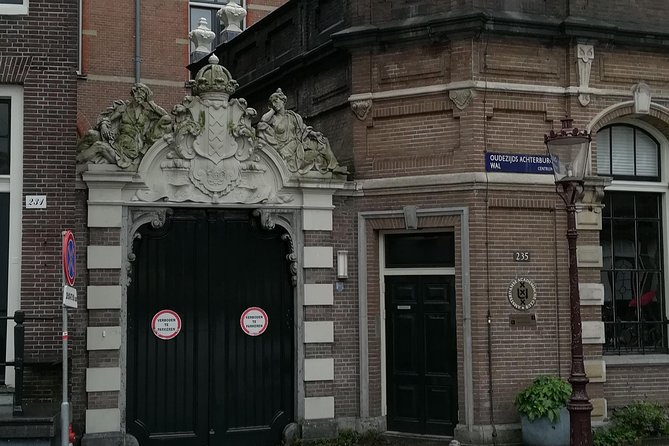
Oudemanhuispoort receives about 15 minutes and brings in two less obvious subjects: one of Amsterdam’s most important companies and the Dutch education system. The wording suggests a story about the commercial force that helped shape the city, along with the institutions that formed its people.
This stop is valuable because it moves beyond pretty canals and old facades. Amsterdam’s success depended on companies, trade, schooling, and systems of organization. A guide can show you how those forces fit into the streets around you.
The exact company is not named in the tour details, so ask for clarification if that subject is especially important to you. The uncertainty does not ruin the stop, but it means you should not book this walk expecting a tightly scripted lecture on one named corporation.
Begijnhof, one of the quietest pauses
Begijnhof is likely to be one of the afternoon’s most memorable locations. It is described as one of Amsterdam’s most beautiful tucked-away places, and its enclosed setting offers a sharp change from the streets around it.
The stop lasts about 15 minutes. The guide presents it as a place where history can be seen directly, not just described. The calm atmosphere makes it a useful pause after the city’s traffic, shops, and busy squares.
Do keep your expectations practical. Fifteen minutes is enough to look around and hear the main story, but not enough to explore every detail at length. The walk also cannot guarantee that every area will be accessible at every moment, since public places can have changing access rules.
Begijnhof is one reason I like the route. It gives you a different sense of Amsterdam without requiring a long detour or museum ticket. You see how a city can preserve a quiet historic space in the middle of a modern center.
Finishing at Dam Square
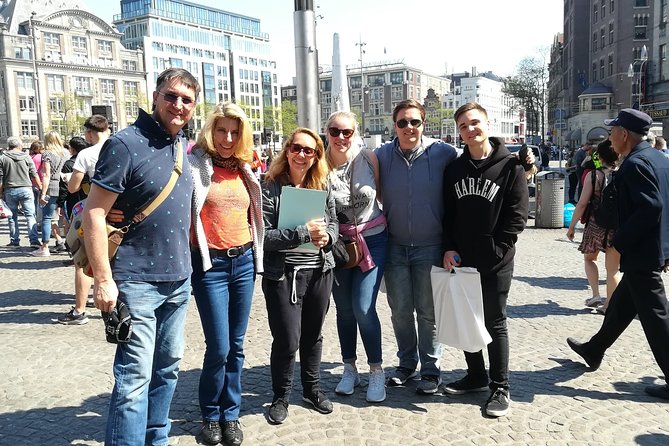
The walk ends at Dam Square after about 15 minutes there. This is Amsterdam’s most important meeting point and the place described as the beginning of the city’s story.
Ending here is practical. You are close to many central streets, shops, cafes, and transport links, and you can continue sightseeing without retracing your steps. The guide can also point you toward bars, restaurants, and cafes for later.
Dam Square is not a quiet final stop. It is a major public space, so expect activity and noise rather than a reflective ending. Still, it makes sense as the final chapter: the route begins with Amsterdam’s railway gateway and ends at its historic civic center.
What $208.23 means for your group
The listed price is $208.23 for a group of up to 15 people. That is not a cheap walking tour for one person, but the math changes quickly as your party grows.
For 10 people, the cost works out to about $20.82 each. For 15, it is about $13.88 each. For two people, it is more than $104 each, so a shared group tour may offer better value if you are comfortable walking with strangers.
The price includes the private guide. It does not include coffee, tea, food, drinks, or admission to Museum Het Rembrandthuis. The free outdoor stops make the cost easier to understand, since you are paying for the guide’s time, route planning, and interpretation rather than a bundle of entry tickets.
I think the tour offers its best value to families, friend groups, and small private parties who want a flexible introduction. Solo visitors and couples should compare the cost with a regular group walk before booking.
Timing, walking pace, and practical details
The tour lasts about three hours and starts at 2 pm. Wear shoes you can use comfortably for several hours, since the experience moves through central streets, squares, bridges, and narrow passages.
The ticket is mobile, and confirmation is provided at booking. The starting point is near public transportation, and the tour ends at Dam Square. Most people can participate, and service animals are allowed.
There is no separate food or drink service. Bring what you need for the afternoon, especially if you prefer to keep moving rather than stop at a cafe. You can also use the guide’s suggestions to choose a place after the walk.
Free cancellation is available if you cancel at least 24 hours before the start time. Changes or cancellations made inside that window are not accepted for a refund. The deadline follows Amsterdam local time.
Who should book this private Amsterdam walk?
I would choose this for a first visit, especially if you want context before visiting museums on your own. The route gives you enough art, religion, architecture, trade, and wartime history to make later sightseeing more meaningful.
It also suits families. Diana’s ability to keep a teenager engaged is a useful sign, and a private group lets you adjust the pace more easily than a large scheduled tour.
This is less suitable if your main goal is interior access. Museum Het Rembrandthuis is not included, and the basilica stop is brief. It is also not the right pick if you dislike walking or want a specialist tour devoted only to art, architecture, or wartime Amsterdam.
Should you book it?
Book this walk if you want a private, story-led introduction with a sensible route from Centraal Station to Dam Square. The strongest reasons are the mix of major landmarks and quieter places, the chance to ask your own questions, and the local suggestions you can use after the tour.
Think twice if you are a couple watching every euro, or if you expect museum entry, meals, or a fully detailed treatment of one subject. For a group of several people, though, the price becomes much more reasonable, and the route gives you a useful first picture of Amsterdam beyond the standard postcard views.
FAQ
How long is the Amsterdam walking tour?
The tour lasts approximately three hours.
How much does the private tour cost?
The price is $208.23 per group, for up to 15 people.
How many people can join the tour?
Only your group takes part, with a maximum group size of 15.
What time and where does the tour begin?
It begins at 2 pm at Loetje, Stationsplein 10, 1012 AB Amsterdam, near Centraal Station.
Where does the tour finish?
The walk ends at Dam Square in central Amsterdam.
Is admission to Museum Het Rembrandthuis included?
No. Admission to Museum Het Rembrandthuis is not included.
Are food and drinks included?
No. Coffee, tea, food, and drinks are not included.
Can I cancel for a full refund?
Yes. You can cancel for a full refund at least 24 hours before the experience start time. Cancellations or changes made less than 24 hours before the start are not accepted for a refund.
Just added around the Netherlands
- Rotterdam Must Do Tour: Highlights, History, WW2 and Architecture★ 5.0 · 20 reviews
- Private Rotterdam Walking Tour – guided by Architects★ 5.0 · 2 reviews
- Rotterdam Architecture and Highlights Walking Tour (TOP RATED)★ 4.5 · 14 reviews
- Escape Room – l’Architecte★ 4.5 · 13 reviews
- Maastricht Highlights, Architecture & Heritage Tour★ 5.0 · 7 reviews
- Gouda Private Walking Tour: History, Architecture & Cheese★ 4.5 · 8 reviews
- Walking Tour about Golden Age Architecture, private local guide★ 5.0 · 15 reviews
- Amsterdam Architecture Tour★ 5.0 · 4 reviews
Walking Tours, compared.

The Official Art Deco Walking Tour by The Miami Design Preservation League
Read our review →
Barcelona: Gothic Quarter Ghosts and Legends Walking Tour
Read our review →
Barcelona: Old Town and Gothic Quarter Walking Tour
Read our review →
Lecce: Baroque Architecture and Underground Walking Tour
Read our review →
Chicago in a Day: Food, History & Architecture Walking Tour
Read our review →

Ramblas, Old Town, Gothic and Gaudi Architecture Walking Tour
Read our review →
Chicago’s Secret Interiors Architectural Walking Tour
Read our review →Browse the lists this tour appears in