
Review · ROME
Rome’s Baroque Art Walking Tour: Who Killed Caravaggio?
Caravaggio’s paintings are famous for their harsh light, dirty feet, and powerful faces. This tour adds the missing ingredient: the painter’s own unruly life. You follow his trail through Roman piazzas and churches while asking who might have wanted him dead.
I like the free church art and the sharp storytelling. You can see major paintings by Caravaggio, Raphael, and Plautilla Bricci without paying museum admission, while guides such as Ivan and Jacobo connect the pictures to fights, patrons, rivals, and crime. The main consideration is the tip model. The booking price is only $3.77, but you should budget a tip of about €10 to $50, depending on how much you value the two hours.
Key points to know
- Caravaggio’s final mystery: Examine the evidence and theories around the painter’s unexplained death.
- Art in working churches: See important paintings in their original religious settings, not only behind museum glass.
- A walk with shade and shelter: The route alternates between open piazzas and cool churches, with places to sit.
- A guide-led performance: Ivan is praised for passionate storytelling, while Jacobo brings an art historian’s approach.
- A small price with a real tip expected: The advertised booking cost is low, but the guide depends on your payment at the end.
- A different Rome itinerary: Begin at Piazza della Minerva and finish near Palazzo Borghese after about two hours.
Why Caravaggio Makes Such a Good Roman Mystery
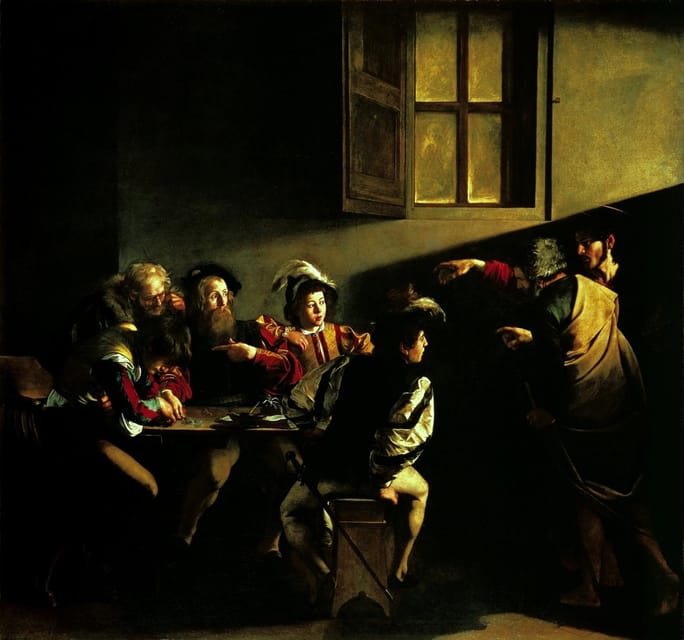
Caravaggio was not a quiet studio painter who kept out of trouble. His art changed the way religious scenes could look, using strong light, ordinary-looking people, and moments of startling human drama. His life had the same force as his paintings, marked by street fights, powerful friends, rival artists, and criminal enemies.
That makes the tour’s central question work well: who killed Caravaggio? You will not get a tidy courtroom answer. Instead, the guide uses historical evidence, eyewitness accounts, and modern theories to examine his last days and the strange circumstances of his death.
I like this approach because it gives you a reason to look closely. A painting is no longer just a famous object on a wall. The people around it, the church that commissioned it, and the artist’s enemies all become part of the story.
The tone is not solemn art-school lecturing. Expect dark humor and politically incorrect jokes. That will suit you if you enjoy a guide with a strong personality and a little bite. If you prefer quiet, formal art commentary, the style may feel too theatrical.
More Baroque architecture tours in Rome:
- Borghese Gallery Max 6 People Tour: Baroque & Renaissance in Rome
★ 5.0 · 185 reviews - Guided Walking Tour of Rome: Top Sights & Baroque Treasures
★ 5.0 · 155 reviews - Renaissance Rome and Baroque Rome
★ 5.0 · 19 reviews
Meeting the Guide at Piazza della Minerva
The tour begins at Piazza della Minerva, beside the elephant statue carrying an obelisk. It is an easy landmark to spot, and the guide carries a sign with the tour name. This first stop gives you a useful Roman orientation before the story starts moving through the city.
The square is a good opening point because the tour can begin with the contrast that defines Rome. Ancient symbols, grand religious buildings, and later Baroque decoration all sit close together. You are not simply walking from one attraction to another. You are watching Rome’s old layers overlap.
The guide spends about 15 minutes here for a photo stop, sightseeing, and explanation. That is long enough to set the mood without using up the whole walk. Be ready to listen outdoors, where traffic and nearby activity may compete with the guide’s voice.
Piazza della Minerva and the Pantheon Connection
From Piazza della Minerva, the route continues toward the Pantheon. The walk takes about five minutes, so this is not a demanding route. You get a quick shift from the quieter square to one of central Rome’s best-known monuments.
The Pantheon itself is listed as a walking point rather than a full guided visit. That distinction matters. You should expect the guide to use the area as part of the route and story, not assume that the tour includes a complete Pantheon interior tour.
This short connection also keeps the experience focused. The purpose is not to cover every major Roman monument. It is to use specific places as scenes in Caravaggio’s story and as settings for understanding Baroque art.
Saint Louis of the French and Three Caravaggio Paintings
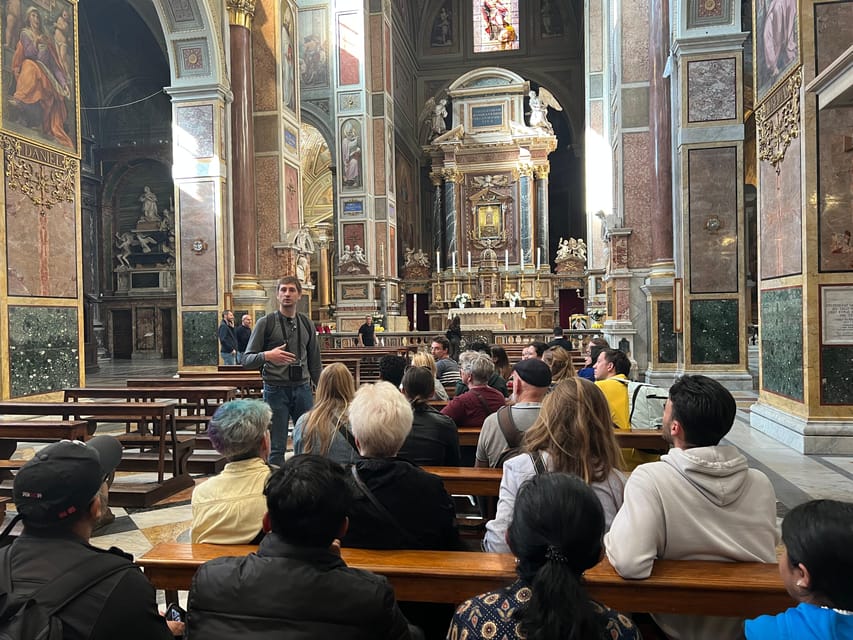
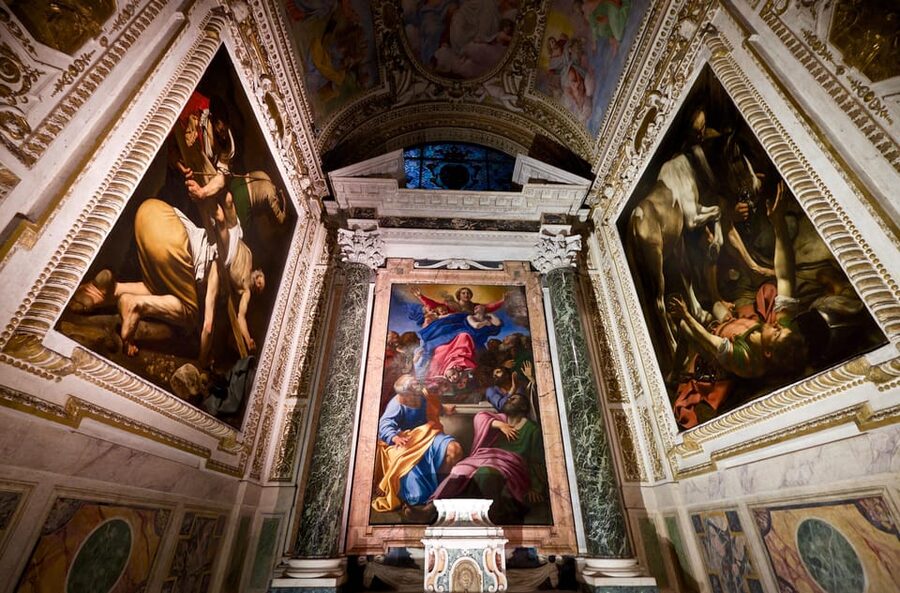
The Church of St. Louis of the French is one of the tour’s strongest stops. You spend about 15 minutes here for a visit and guided explanation, and the church contains major Caravaggio works connected with the life of Saint Matthew.
This is where the art becomes especially direct. Caravaggio did not make holy figures look distant and polished. His scenes can feel physical, immediate, and almost confrontational. You will have a better chance of understanding his impact when you see the paintings in a church rather than encounter them as isolated reproductions.
The guide can also point out how the paintings fit their setting and purpose. That context is valuable. You are not only asking whether a work is beautiful. You are considering why it caused a stir, how viewers might have reacted, and how Caravaggio’s choices differed from the art around him.
Dress properly for church entry. The tour includes religious buildings, so modest clothing is a practical requirement rather than a minor suggestion. The inside of the church also offers relief from the Roman heat and shelter if rain begins.
More architecture walks in Rome:
- City Walk with Architect: Private walking tour of Rome
★ 5.0 · 22 reviews - Rome Baroque: Fountains and Squares Private Walking Tour
★ 5.0 · 7 reviews - Moonlight Walking Tour in the Heart of the Imperial & Baroque Rome
★ 5.0 · 5 reviews - Rome: Renaissance & Baroque Walking Tour
★ 5.0 · 2 reviews
Saint Augustine and Art in Its Original Setting
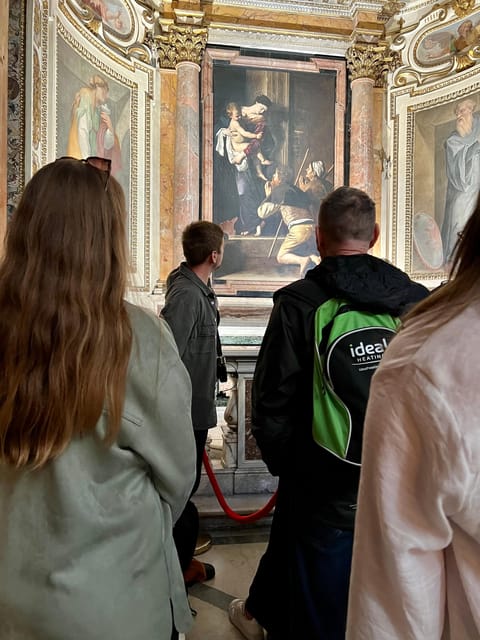
The Basilica of St. Augustine is another 15-minute visit with guided commentary. This stop is important because it shows how much art you can find in Rome’s churches without buying another museum ticket.
The basilica is associated with a well-known Caravaggio painting of the Madonna and Child, and the church setting helps you read it as more than a famous canvas. Religious paintings were made for worship, patrons, and public viewing. Their placement affected how people encountered them.
I especially like this part of the walk for visitors who think they need a long museum list to see major art. Rome often places important works in ordinary daily surroundings. You may be standing in a functioning church, then suddenly facing a painting that would be a headline object in a major gallery elsewhere.
The time here is limited, so you should not expect a full survey of the basilica. The guide’s job is to focus your attention on the key works and tie them back to Caravaggio’s career and temperament.
The Unnamed Stops Keep the Story Moving
Two sections of the route are listed without a named site. One takes about 10 minutes, and the other takes about five minutes with a photo stop and guided explanation. Since the exact locations are not specified, you should not book this expecting a fully itemized monument list.
That lack of detail is a small drawback for careful planners. You cannot study every stop in advance, and the route may feel less predictable than a standard monument tour. At the same time, these shorter sections probably serve as links between the main churches and the final location, keeping the focus on the narrative rather than on collecting famous facades.
The walk is only two hours, so this structure makes sense. A guide can use a square, street, or exterior as a prompt for the next part of the story without spending too long at each point. You get a compact route rather than an exhausting art marathon.
Palazzo Borghese and the Final Stretch
The tour continues to Palazzo Borghese for about 15 minutes of sightseeing, a visit, and guided explanation. This is the final named stop, and the tour ends here.
The palace gives the walk a useful connection to Rome’s powerful families and art patrons. Caravaggio’s career depended not only on talent but also on people willing to commission, protect, or promote his work. In Rome, art and power were close companions.
The itinerary highlights works by Raphael and Plautilla Bricci as well as Caravaggio. That wider range matters. The tour is not only a murder story with a few paintings attached. It offers a look at the Baroque world and at the artists, patrons, and institutions that shaped it.
Plautilla Bricci is an especially interesting inclusion. Her name may be less familiar than Caravaggio’s or Raphael’s, so the stop can broaden your idea of who contributed to Rome’s artistic culture. The experience promises a new way to interpret art, and comparing different artists helps make that promise more credible.
A Two-Hour Walk That Works in Bad Weather
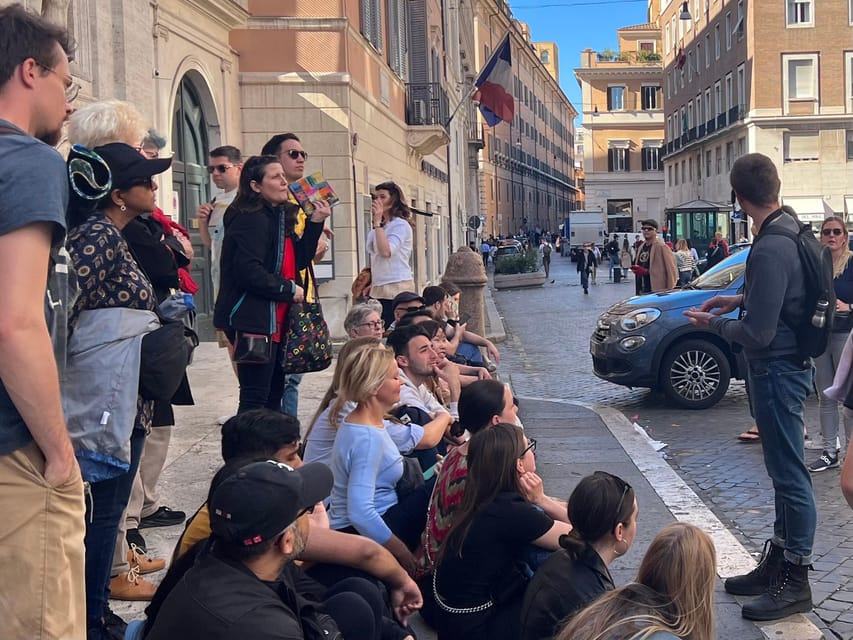
The route is designed for changing Roman weather. You move between open piazzas and churches that provide shade, shelter, and some places to sit. That makes the walk easier to manage on a hot afternoon or during a sudden shower.
Still, you are walking outdoors between stops. Wear comfortable shoes, carry water in warm weather, and bring something suitable for church entry. The route is not described as strenuous, but Rome’s pavement can be tiring, and standing in a square under the sun is different from sitting in a museum.
The short duration is another advantage. Two hours gives you a clear introduction without taking over your day. You could place it early in a Rome visit to get a useful art and city overview, or schedule it after you have seen the major ancient sights and want a different side of the center.
The tour is offered in English with a live guide. No group size is specified, so I would not assume a private or small-group format. If intimate discussion is important to you, check the current booking details before reserving.
What the Tip-Based Price Really Means
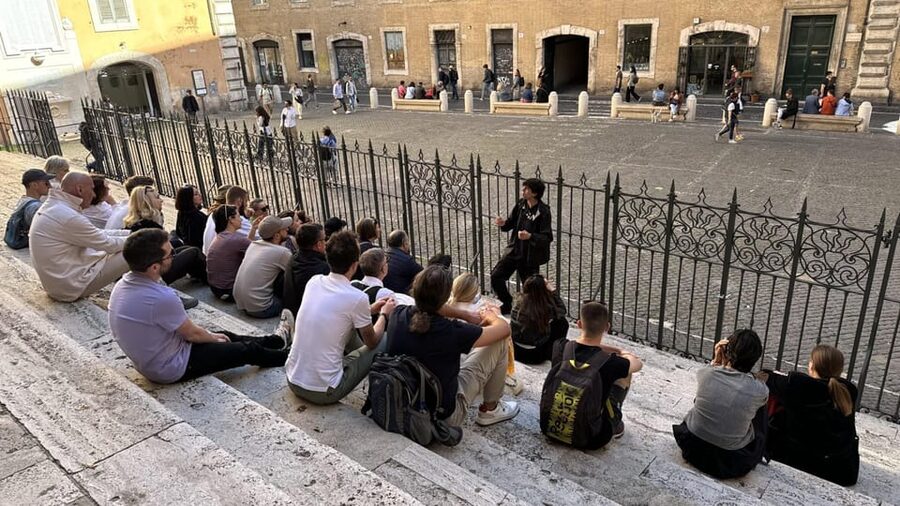
The listed price of $3.77 per person is attractive, but it is not the full cost in the usual sense. This is a pay-what-you-want tour. The guide works for tips, and the suggested range is usually €10 to $50 at the end.
That model can offer good value when the guide is strong. Ivan has been praised for passionate, engaging delivery and for researching small details about Caravaggio’s life. Jacobo brings an art historian’s background and has been particularly effective at explaining the paintings within Rome’s wider art story.
You should think of the $3.77 as a reservation charge, not as a complete two-hour experience for less than the price of a coffee. Decide in advance what the walk is worth to you, then bring enough money to tip fairly. The range is broad because the final amount depends on your budget and how well the guide delivers.
The model also rewards a guide who can tell a story rather than recite dates. This tour depends heavily on personality. If Ivan or Jacobo is leading, the available feedback points to a lively experience, but guide assignments can vary.
Who Will Get the Most From This Walk
You are a strong match for this tour if you like art with a plot. The experience suits visitors who want Caravaggio’s paintings, Roman churches, and a true-crime angle in one compact outing.
It also works well for people who find traditional art history intimidating. The guide gives you a simple way into the paintings through conflict, ambition, scandal, and unanswered questions. You do not need to arrive as an art expert.
The tour may be less suitable if you want a broad survey of every Baroque monument in Rome. It focuses on a selected route and a central mystery, not a complete art-history course. It may also disappoint you if you expect a museum visit, a guaranteed private group, or a fixed answer to the question of who killed Caravaggio.
The jokes deserve a final mention. The dark and politically incorrect style is part of the appeal, but humor is personal. If you want a very respectful, restrained presentation inside churches, ask yourself if this tone fits your travel style.
Booking Details to Keep in Mind
The walk lasts two hours and runs in English. You meet by the elephant statue with the obelisk in Piazza della Minerva, then finish at Palazzo Borghese.
You can cancel up to 24 hours before the start for a full refund, and you can reserve now while paying later. Starting times depend on availability, so check the schedule that fits your day.
The churches make suitable clothing essential. The route includes open-air stops, but the church visits provide shade, shelter, and occasional seating. That balance makes it a sensible choice in warm weather, though you should still prepare for walking between locations.
Should You Book Rome’s Caravaggio Mystery Walk?
I would book this if you want to see serious art without a stiff lecture. The best parts are the paintings in their original churches, the focus on Caravaggio’s troubled life, and the guides’ reported ability to tell the story with passion and memorable detail.
Go in knowing the real price is the tip, the group size is not specified, and two stops are not named in advance. If those points do not bother you, this is a smart, low-commitment way to meet Rome’s Baroque art through scandal, politics, and a little dark humor.
FAQ
How long does the Caravaggio walking tour last?
The tour lasts two hours.
Where does the tour begin?
It begins in Piazza della Minerva, beside the elephant statue with the obelisk. The guide carries a sign with the tour name.
Where does the tour finish?
The tour finishes at Palazzo Borghese.
What language is the tour in?
The live guided tour is conducted in English.
Is this a free tour?
It uses a pay-what-you-want model. The booking price is listed as $3.77 per person, but the guide works for tips. The usual tip is between €10 and $50.
What should I wear?
You should dress appropriately for entry into churches, since the route includes visits to St. Louis of the French and the Basilica of St. Augustine.
Just added around Rome
- Vatican: Exclusive Baroque Evening With Aperitivo & Dinner★ 3.1 · 2 reviews
- Rome Pantheon Highlights From Ancient Rome to Baroque★ 5.0 · 5 reviews
- Borghese Gallery Private Tour: The Greatest Baroque Masterpieces★ 5.0 · 6 reviews
- Private Baroque Tour: Discover Bernini & Caravaggio’s Best Works★ 5.0 · 3 reviews
- Private Personalized Architecture Tour of Rome with an Architect★ 5.0 · 5 reviews
- New Year’s Baroque Concert at Doria Pamphilj Palace★ 5.0 · 2 reviews
- Rome Baroque: Fountains and Squares Private Walking Tour★ 5.0 · 7 reviews
- Renaissance Rome and Baroque Rome★ 5.0 · 19 reviews
Baroque Architecture Tours, compared.
Lecce: Baroque Architecture and Underground Walking Tour
Read our review →
Train Exp. through the Alps (Royal Baroque Route from Nice)
Read our review →
Dresden: Tour of the Baroque Quarter with a Night Watchman
Read our review →
Interpreti Veneziani Ensemble Baroque Concert in Venice Ticket
Read our review →
Borghese Gallery Max 6 People Tour: Baroque & Renaissance in Rome
Read our review →
Concert at the Palais Schönborn-Batthyány by the Vienna Baroque Orchestra
Read our review →
Guided Walking Tour of Rome: Top Sights & Baroque Treasures
Read our review →
Noto, Modica and Ragusa: The Baroque Tour from Catania
Read our review →Browse the lists this tour appears in