
Review · ROME
Rome: Renaissance & Baroque Walking Tour
Rome’s grandest central squares form the backbone of this private walk. You’ll move from Michelangelo’s Farnese Palace and the market at Campo de’ Fiori to Bernini’s fountains, the Pantheon, Trevi Fountain, and the Spanish Steps, with a local licensed guide explaining how Renaissance and Baroque Rome fits together.
I like the private format, which lets your group of up to eight set the pace and ask questions without being lost in a crowd. I also like the route’s variety: one stop gives you food stalls and a sobering past, another brings you face to face with Bernini’s sculpture, and the Pantheon adds a major ancient Roman monument.
The main drawback is the price, $564.62 per group, which is a serious outlay for three hours. The Pantheon’s €5 entrance fee is extra, and the tour ends at the Spanish Steps rather than returning you to your hotel, so you’ll need to plan your next move.
Key points at a glance
- Michelangelo’s Farnese Palace: Begin with one of Rome’s most impressive Renaissance palaces, viewed with your guide from the outside.
- Campo de’ Fiori’s morning market: Visit the food market on weekday mornings and hear about the square’s grim role as a site of executions in the 1500s.
- Bernini in Piazza Navona: See the Four Rivers Fountain, a major Baroque work, then consider the suggested gelato stop at Tre Scalini.
- Pantheon admission is extra: The €5 ticket is not included, but the interior is part of the planned visit.
- Trevi to the Spanish Steps: Toss a coin at Trevi Fountain, see another Bernini fountain at Piazza Barberini, and finish near designer shops and restaurants.
- A true private tour: The guide meets you at your hotel lobby or downstairs at your B&B, with English, French, and Spanish available.
What this three-hour Rome walk actually covers
This is a sightseeing route through central Rome, not an archaeological tour focused on ruins or a museum visit. You’ll spend most of the time outdoors, walking between famous squares and monuments while your guide supplies the dates, names, and stories that are easy to miss when you explore alone.
The route links several different periods. Farnese Palace represents Renaissance power and design. Campo de’ Fiori brings in daily market life and a darker chapter. Piazza Navona and Piazza Barberini show Baroque Rome at its most theatrical, while the Pantheon connects the modern city with the ancient Roman world.
You won’t see every major sight in Rome during these three hours. The Colosseum, Roman Forum, Vatican Museums, and St. Peter’s Basilica are not part of this outing. That narrow focus is useful if you want to understand the center’s fountains, churches, palaces, and squares in one sitting.
The available start times are 9:00 in the morning and 3:00 in the afternoon. I would choose the morning if Campo de’ Fiori’s food market matters to you, since the market is noted as operating only on weekday mornings. The afternoon option may suit you better if you want the walk to lead into dinner near the Spanish Steps.
More Baroque architecture tours in Rome:
- Borghese Gallery Max 6 People Tour: Baroque & Renaissance in Rome
★ 5.0 · 185 reviews - Guided Walking Tour of Rome: Top Sights & Baroque Treasures
★ 5.0 · 155 reviews - Rome’s Baroque Art Walking Tour: Who Killed Caravaggio?
★ 5.0 · 27 reviews
Farnese Palace and the first look at Renaissance Rome
The guide begins at your hotel at the agreed time, with the supplied meeting information also listing Rome Termini as a pickup option. You should provide your hotel name and pickup time when booking, since the tour description says the guide meets you in the hotel lobby or downstairs at your B&B.
At Farnese Palace, the guided stop is brief, about five minutes. That may sound short, but the point here is to introduce one of central Rome’s key Renaissance buildings rather than spend the tour inside a palace museum.
The palace is linked with Michelangelo in the tour description, giving your guide a natural way to explain the scale and ambition of Renaissance Rome. You’ll want to look closely at the building’s exterior and listen for the details that turn a quick photo stop into a clearer picture of who commissioned these grand residences and why their location mattered.
Because this is an exterior visit, don’t expect rooms, galleries, or a long architectural inspection. If your main interest is palace interiors, this stop will feel limited. If you want a compact introduction before moving into the public squares, it does its job.
Campo de’ Fiori, food stalls and a grim public past
The next stop is Campo de’ Fiori, where the planned visit lasts about 15 minutes. On weekday mornings, you can see the fruit and food market, adding a practical slice of Roman life to a route otherwise packed with famous monuments.
I like this change of pace. A market helps you see the square as a place people use, not only as a backdrop for photographs. You can look over the produce and food stalls, then hear how the same square was used for public executions during the 1500s. That contrast gives the stop more weight than a simple market visit.
The timing matters. The market is specifically noted as available only on weekday mornings, so the 3:00 p.m. departure is not the right choice if this is one of your priorities. The tour still visits Campo de’ Fiori in the afternoon, but you should expect the emphasis to be on the square and its story rather than the morning market.
Fifteen minutes is enough for an introduction, not for a leisurely food-shopping session. If you want to buy ingredients, browse every stall, or linger over a snack, you may need to return later on your own.
Piazza Navona and Bernini’s Four Rivers Fountain
Piazza Navona follows, with about 15 minutes for the guided visit and a coffee stop. The square’s long shape is part of what makes it memorable, and your guide will focus on the Baroque design that gives it much of its character.
The central attraction is Bernini’s Four Rivers Fountain, described here as one of his major works from the 1600s. The fountain rewards a slow look. Rather than treating it as a quick photo stop, pay attention to the figures, movement, and theatrical arrangement of the sculpture. Your guide can help explain what you are seeing instead of leaving you to identify only the name.
There is also a specific food suggestion: Tre Scalini Bar for a chocolate truffle ice cream. The stop is presented as an opportunity for the best chocolate truffle gelato in the square, but the purchase is not listed as included in the tour price. Treat it as an optional break, not part of the admission or package.
The short timing means you may get only a taste of Piazza Navona. You can always return later for a longer meal or another look at the fountain, especially if you want to study the details without keeping up with the group.
More architecture walks in Rome:
- City Walk with Architect: Private walking tour of Rome
★ 5.0 · 22 reviews - Rome Baroque: Fountains and Squares Private Walking Tour
★ 5.0 · 7 reviews - Moonlight Walking Tour in the Heart of the Imperial & Baroque Rome
★ 5.0 · 5 reviews - The Official Art Deco Walking Tour by The Miami Design Preservation League
★ 5.0 · 1,580 reviews
Entering the Pantheon for €5
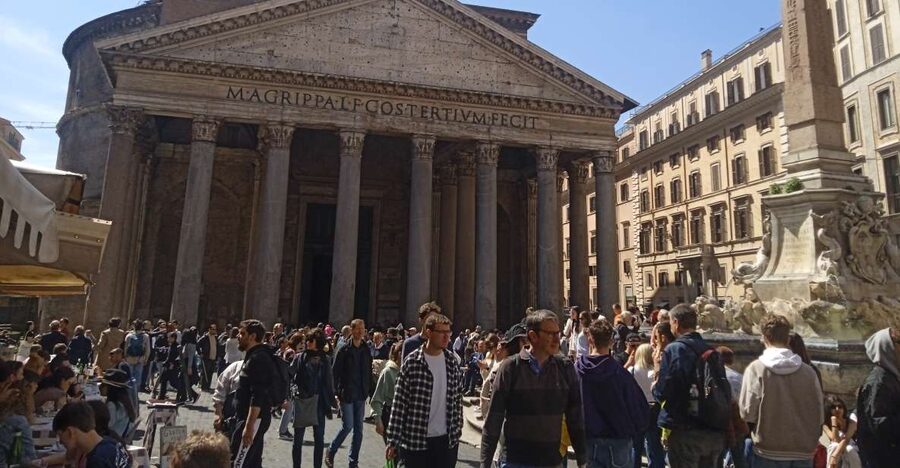
The Pantheon is the most substantial interior visit on the route, with about 30 minutes planned for the stop. The €5 entrance ticket is not included, so budget for that separately if you want to go inside.
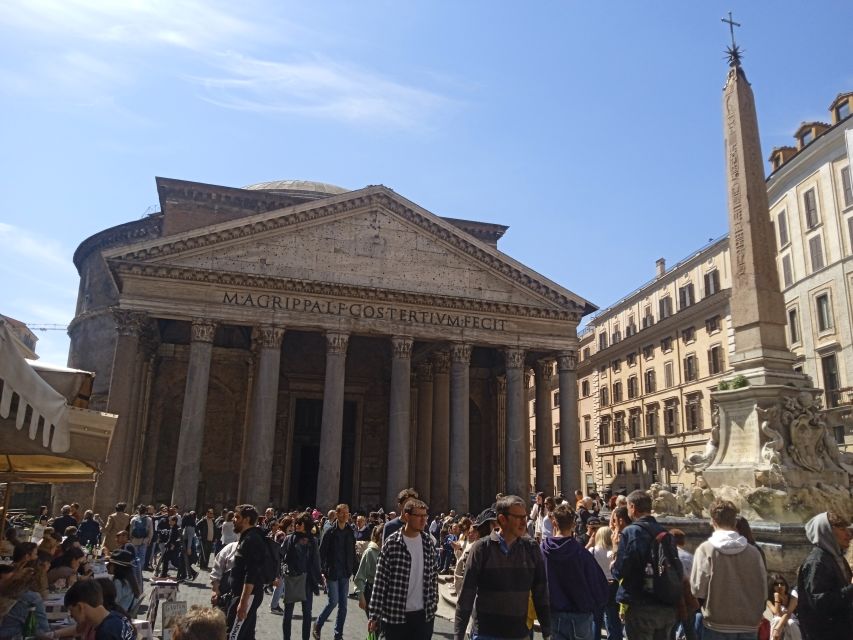
The building is described as one of the oldest and best-preserved Roman temples. It was built by Marcus Agrippa in the first century B.C., yet the tour places it within the Baroque center because of its setting among later streets, churches, and squares. That makes it a useful bridge between ancient Rome and the city you are seeing today.
I consider this ticket a worthwhile extra for most people on the tour. The outside is impressive, but the interior gives you a better sense of the building’s scale and survival. Thirty minutes is enough for a guided introduction and a careful look, though not a long study session.
Keep in mind that the tour’s advertised price does not cover this admission. If some members of your group prefer not to enter, confirm how the timing will work with your guide. The supplied information says the Pantheon will be visited inside, but it does not give a separate alternative for anyone who skips the ticket.
Trevi Fountain and the coin toss
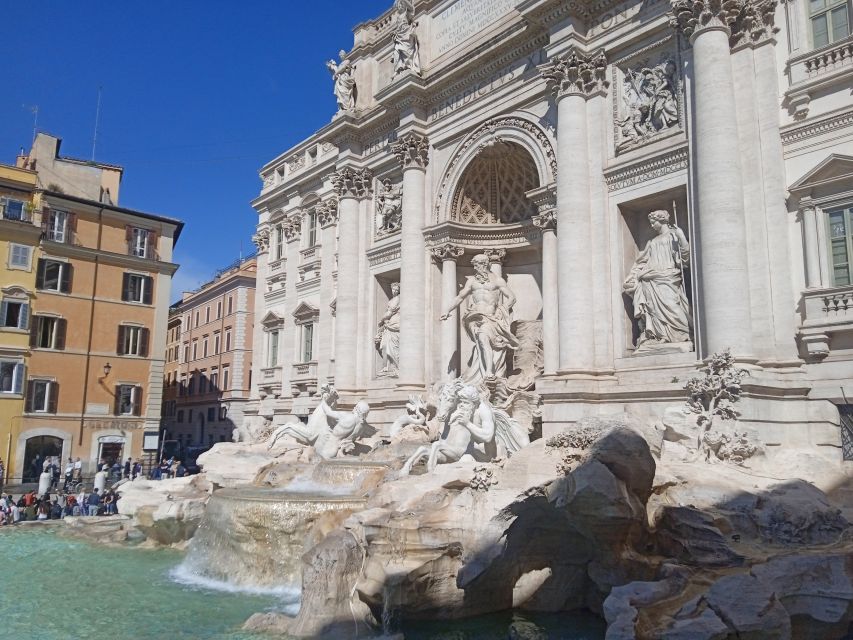
The route then reaches Trevi Fountain, with about 30 minutes for the guided stop and some shopping time. This is one of Rome’s most famous public spaces, and the usual ritual is to throw a coin into the fountain so you can return to Rome.
The coin toss is simple, but it gives the stop a playful moment after the denser architecture and art earlier in the walk. Your guide can also place the fountain within the route’s broader Baroque theme, helping you connect it with the Four Rivers Fountain and the Triton Fountain still to come.
The itinerary includes shopping at this point. That does not mean a dedicated shopping excursion, so keep your expectations in check. You’ll have a chance to browse around the area, but the tour’s main purpose remains sightseeing and explanation.
Thirty minutes is a fair amount of time for the fountain, photos, and a short look at nearby shops. If you want a slow visit, a long coffee, or extensive shopping, you’ll need to return independently. The advantage of the private walk is that you can ask your guide what deserves your limited time.
Piazza Barberini and Bernini’s Triton Fountain
Piazza Barberini receives about 20 minutes of guided attention. Here you’ll see Bernini’s Triton Fountain, another major work by the same sculptor who created the Four Rivers Fountain in Piazza Navona.
Seeing both fountains on one walk is one of the route’s best features. You can compare their settings and designs while the details are still fresh. The tour gives you more than a list of famous names, since the sequence lets you recognize Bernini’s role in shaping the visual character of central Rome.
Barberini Palace, home to the Ancient Art Museum, is viewed from outside. The museum itself is not included as a visit, so don’t book this walk expecting gallery time or a palace interior. The exterior stop works better as a short architectural pause before the final stretch.
At this stage, your feet may feel the distance. Comfortable shoes are specifically recommended, and that advice matters. This is a walking tour over central streets and squares, with no vehicle transfer between the stops.
Ending at the Spanish Steps
The final stop is the Spanish Steps and the surrounding Spanish Square, where about an hour is allocated for guided time, food, and free time. This gives the ending a more relaxed feel than the earlier short stops.
You can finish with lunch, dinner, or a small meal in the area, and your guide can suggest restaurants. The stop also leaves room for designer shopping. Since the tour ends here, the Spanish Steps are not simply a photo stop before a ride back to your hotel. You can continue your own plans immediately.
This arrangement is useful if you want a guide-led introduction followed by independent time. It is less convenient if you expect a return transfer or need to get back to your accommodation. The tour description says you arrive back in Rome, but the detailed route identifies the Spanish Steps as the final stop, so plan on ending there.
The Spanish Steps also make sense as the finish because they place you near shops and restaurants. You can treat the guided portion as your orientation, then stay in the area for lunch or dinner without retracing the route.
Private group value and practical limits
The cost is $564.62 per group of up to eight people. For one or two people, that is expensive for a three-hour walk. For a full group of eight, the cost works out to about $70.58 per person, before the Pantheon ticket and any food or drinks.
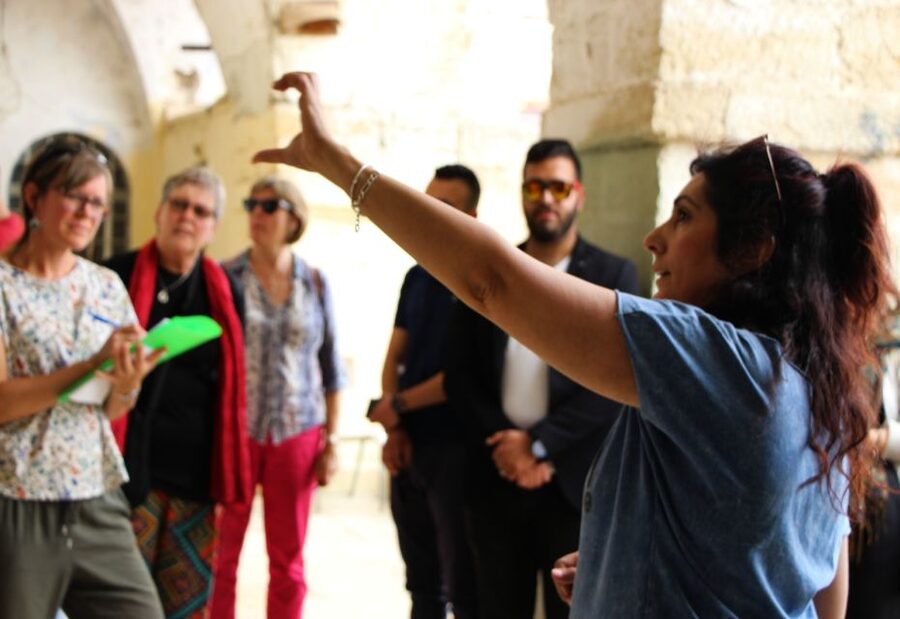
That group pricing is the key to judging the value. A family or group of friends can split the fixed price and receive a private guide rather than joining a large public walk. You also get hotel or B&B pickup, language choices in English, French, or Spanish, and the freedom to ask questions that fit your interests.
The price makes less sense if you are traveling alone or as a couple and mainly want to see the monuments without much explanation. In that case, you may prefer a less expensive group walk, though you would give up the private setting and direct pickup.
The tour is listed as wheelchair accessible, but the route remains a three-hour walk through central Rome. If you use a wheelchair, confirm the practical route details with the provider before booking, especially for street surfaces and the exact meeting point. Rain does not cancel the experience, so bring suitable protection and expect the tour to continue in wet weather.
The cancellation policy is flexible: you can cancel up to 24 hours ahead for a full refund. You can also reserve now and pay later, which helps if your Rome schedule is still changing.
Who will get the most from this Rome walk
I would choose this tour for a group that wants a private introduction to central Rome without spending a full day inside museums. It suits first-time visitors who want the major fountains, squares, and the Pantheon arranged in a sensible route.
It is also a good fit if you care about architecture and public spaces but want some everyday atmosphere along the way. Campo de’ Fiori’s market, the coffee and gelato suggestions, and the final free time near the Spanish Steps keep the experience from feeling like a string of monuments.
You should look elsewhere if your main goal is ancient ruins, Vatican art, or extended museum visits. You should also think twice if you dislike walking, want a low-cost activity for a small party, or need a tour that returns you to your hotel.
Book the 9:00 a.m. departure if the weekday market matters most. Pick 3:00 p.m. if you prefer to end near the Spanish Steps in time for dinner and shopping. Either way, wear comfortable shoes and reserve enough time after the tour for your own plans.
Should you book it?
Book this private walk if you are traveling with a group of up to eight and want a guide to connect Rome’s Renaissance and Baroque center into one clear story. The strongest parts are the private format, the mix of fountains and squares, the interior Pantheon visit, and the final freedom to continue near the Spanish Steps.
Skip it if $564.62 feels too high for three hours, especially for one or two people. Also skip it if Campo de’ Fiori’s market is essential but you can only take the afternoon departure, or if your Rome priorities lie elsewhere. For the right-sized group, this is a focused and convenient way to get your bearings in central Rome while leaving the rest of the day open.
FAQ
How long is the Renaissance and Baroque walking tour?
The tour lasts three hours. Starting times are listed at 9:00 a.m. and 3:00 p.m., subject to availability.
How much does the tour cost?
The price is $564.62 per group of up to eight people. The €5 Pantheon entrance ticket is not included.
Is the tour private?
Yes. The tour is arranged for a private group, with up to eight people included in the group price.
Where does the guide meet the group?
The guide will meet you in your hotel lobby or downstairs at your B&B. Rome Termini is also listed as a pickup location. You should provide your hotel name and preferred pickup time.
Which languages are available?
The live guide is available in English, French, and Spanish.
Does the tour enter the Pantheon?
Yes. The planned route includes an interior visit to the Pantheon. The €5 entrance fee must be paid separately.
Is Campo de’ Fiori’s food market open during every tour?
No. The food market is noted as operating only on weekday mornings. The 9:00 a.m. tour is the better choice if the market is important to you.
What should I bring, and does the tour run in rain?
Bring comfortable shoes. The tour takes place even in rainy weather.
Just added around Rome
- Vatican: Exclusive Baroque Evening With Aperitivo & Dinner★ 3.1 · 2 reviews
- Rome Pantheon Highlights From Ancient Rome to Baroque★ 5.0 · 5 reviews
- Borghese Gallery Private Tour: The Greatest Baroque Masterpieces★ 5.0 · 6 reviews
- Private Baroque Tour: Discover Bernini & Caravaggio’s Best Works★ 5.0 · 3 reviews
- Private Personalized Architecture Tour of Rome with an Architect★ 5.0 · 5 reviews
- New Year’s Baroque Concert at Doria Pamphilj Palace★ 5.0 · 2 reviews
- Rome Baroque: Fountains and Squares Private Walking Tour★ 5.0 · 7 reviews
- Renaissance Rome and Baroque Rome★ 5.0 · 19 reviews
Baroque Architecture Tours, compared.
Lecce: Baroque Architecture and Underground Walking Tour
Read our review →
Train Exp. through the Alps (Royal Baroque Route from Nice)
Read our review →
Dresden: Tour of the Baroque Quarter with a Night Watchman
Read our review →
Interpreti Veneziani Ensemble Baroque Concert in Venice Ticket
Read our review →
Borghese Gallery Max 6 People Tour: Baroque & Renaissance in Rome
Read our review →
Concert at the Palais Schönborn-Batthyány by the Vienna Baroque Orchestra
Read our review →
Guided Walking Tour of Rome: Top Sights & Baroque Treasures
Read our review →
Noto, Modica and Ragusa: The Baroque Tour from Catania
Read our review →Browse the lists this tour appears in