
Review · CHICAGO
Chicago: History and Architecture Guided Kayak Tour
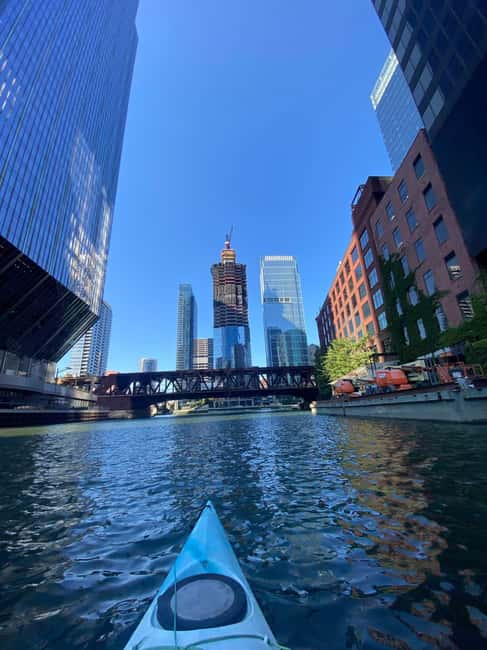
Chicago’s most unusual sightseeing route runs below street level. On this two-hour kayak tour, you paddle through the city center, under working iron bridges, with towers rising on both sides. The Chicago River becomes both viewpoint and history lesson.
I like the small group of six, which gives the guide room to explain the river without turning the outing into a lecture. I also like the mix of city scenery and engineering stories, especially the explanation of why the river flows in reverse. The main drawback is practical: this is not suitable for non-swimmers or people with mobility impairments, and the kayak weight limits may affect which boat you can use.
Key points to know
- The river is the route: See downtown from water level instead of from a sidewalk or observation deck.
- The reversed river has a story: The guide explains one of Chicago’s most famous engineering feats.
- Iron bridges add drama: Paddle beneath articulated bridges connected to the world’s second-largest operational drawbridge system.
- Six people is the limit: The small format should make it easier to hear the guide and ask questions.
- The finish is central: You end downtown, in a useful spot for continuing your Chicago sightseeing.
- Bring the right expectations: Kayaking requires swimming ability, balance, and comfort in a small boat.
Why the Chicago River is the real attraction
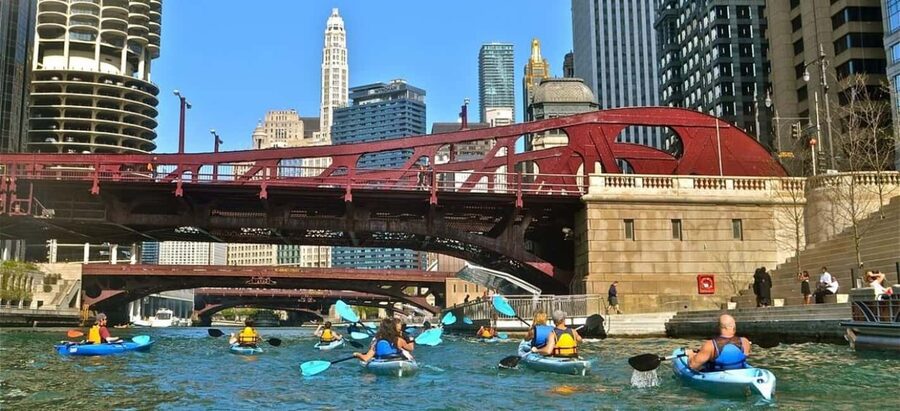
Chicago’s river is not just a strip of water between office buildings. It explains much of the city’s growth, industry, and modern shape. From a kayak, you get close to the working parts of the city: bridges, river walls, promenades, and the changing skyline.
I find this route more revealing than a standard architecture walk because you keep moving through the space the city was built around. Looking up from the water gives the buildings a different scale. The river corridor frames them tightly, creating an urban canyon where old engineering and new construction appear side by side.
The guide connects the scenery to Chicago’s development. You learn about the people who helped shape the city, the river’s role in its growth, and the engineering decisions that changed its course. Those details give the buildings around you a reason for being there, instead of leaving you with a collection of impressive facades and little context.
This is still an active paddle, not a sightseeing boat ride. You help move the kayak, listen while afloat, and keep aware of the river around you. That makes the outing more physical and more personal, but it also means you should not book it expecting a completely effortless tour.
Other buildings people go to see in Chicago:
- Chicago Architecture River Cruise
★ 5.0 · 15,756 reviews - Chicago River 90-Minute Architecture Tour
★ 4.5 · 9,629 reviews - Chicago River: 1.5-Hour Guided Architecture Cruise
★ 4.8 · 8,046 reviews
Setting out through the downtown river corridor
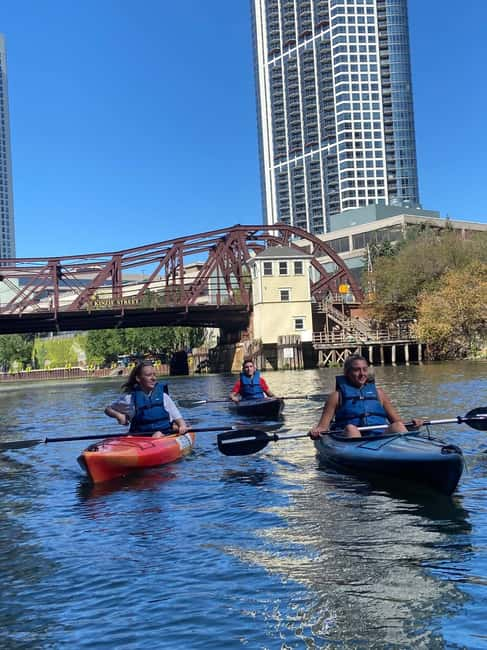
The tour lasts two hours, a useful length for visitors who want an outdoor activity without giving up an entire day. You receive the kayak and required equipment, then follow a live English-speaking guide along the downtown section of the Chicago River.
The route takes you through the central city, where the waterway sits beside the recently renovated Riverwalk promenade. From the kayak, you can watch people using the riverfront while seeing the skyline from an angle that street-level visitors miss.
The shoreline activity is part of the appeal. You are not paddling through an isolated natural setting. Instead, you share the view with the public life of downtown, including the movement along the promenade and the constant presence of the city above you.
A group limited to six matters here. On a larger excursion, traffic, bridge noise, and city sounds could make it hard to hear a guide. With six participants, you should have a better chance to follow the explanations and ask a question when something catches your attention.
The tour provider is Wateriders Kayak Tours & Rentals. No individual guide names are supplied, so you should expect a live guide but cannot request a particular person based on the available information.
Passing beneath Chicago’s working bridges
The bridges are among the clearest reasons to choose this tour instead of a regular city walk. You pass beneath distinctive ironwork structures that form part of the world’s second-largest operational drawbridge system.
That is a useful detail to experience from the river. From a sidewalk, a bridge can look like a piece of street infrastructure. From below, you see how it spans the channel and how closely the waterway is tied to the city’s transport system.
The bridges also break up the paddle with recognizable moments. You are not simply traveling along a straight channel while the guide talks. Each crossing gives you a new frame for the buildings, riverfront, and sky.
The wording operational matters. These are not just preserved structures sitting in place for decoration. They belong to an active bridge system. The tour’s focus on engineering helps you notice the city as a machine as well as a collection of architecture.
You should keep your camera ready, but do not let photography distract you from handling the kayak. The information provided does not promise photo stops or a dry place for valuables, so pack only what you can manage safely on the water.
Understanding why the river flows in reverse
The reversed flow is the tour’s strongest single story. Chicago’s river does not behave as most people expect, and the guide explains the engineering behind that change.
This is the kind of fact that stays with you because it changes how you see the city after the tour. Once you know the river’s direction was altered, the waterway stops looking like a passive natural feature. It becomes evidence of a major civic decision and a reminder that Chicago reshaped its environment to support the city’s growth.
The guide also covers other engineering feats connected with the river. The supplied details do not list each one, so you should not expect a fixed checklist of named structures. What you can count on is a broader explanation of how people altered and managed the river.
I like that the history is tied to the place in front of you. You are not hearing a detached talk in a room. The river, bridges, shoreline, and buildings provide the examples as you move past them.
More history tours in Chicago:
- Chicago in a Day: Food, History & Architecture Walking Tour
★ 5.0 · 1,153 reviews - Historical and Architectural Chicago Fireboat River & Lake Cruise
★ 5.0 · 246 reviews - Chicago: Food, History and Architecture Tour
★ 4.8 · 104 reviews - Chicago Walking Tour: Historic Skyscrapers
★ 5.0 · 67 reviews
Skyline views from water level
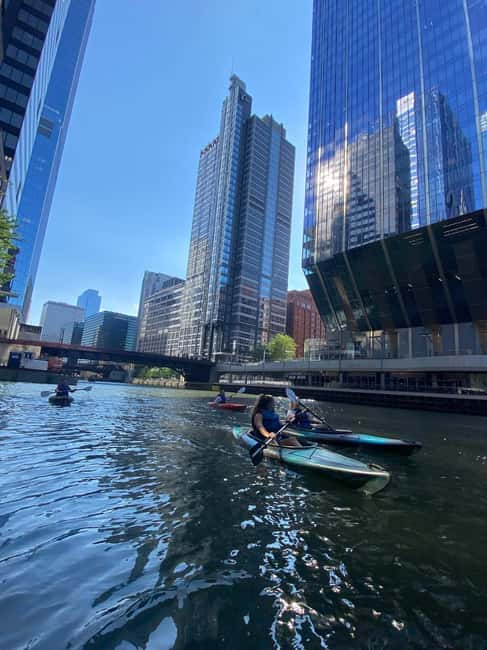
Chicago is famous for architecture, but many visitors see it from sidewalks, elevated trains, restaurants, or observation decks. Kayaking changes the viewpoint. Buildings rise directly from the riverbanks, and the water creates long sightlines through the center of town.
The skyline is constantly present, but the tour does not reduce the city to a postcard. You also see the edges of downtown, the Riverwalk, bridge machinery, and the practical business of keeping a major urban waterway in use.
The river’s narrow channel gives the views a special shape. Instead of looking across a broad park or lake, you look forward and upward, with buildings on both sides. That makes the paddle appealing to people who enjoy architecture but want more than a standard guided walk.
The shoreline is also changing. The downtown riverfront has been renovated, and the tour lets you see how public spaces now meet the water. You can compare the active promenade with the older infrastructure that made the river useful in the first place.
Because the tour is only two hours, it works best as one part of a Chicago day rather than a full city orientation. The finish is at a central location, so you can continue exploring downtown afterward.
Wildlife in the middle of downtown
The river is not only concrete, steel, and office towers. Wildlife has returned to this downtown stretch, and you may spot animals along the water during the paddle.
The information does not promise particular species, so treat wildlife as a pleasant possibility rather than the main purpose of the outing. The city views and river history are the dependable features. Any wildlife sighting adds a welcome change of pace.
I like this contrast. One moment you are looking at iron bridgework and engineered river walls, and the next you may notice signs of nature along the water. It shows that the river has become more than an industrial channel.
Do not book this as a nature tour. The setting remains central Chicago, with a developed shoreline and city activity around you. The wildlife element works best as a bonus within an urban history and architecture trip.
What the $64 price gets you
At $64 per person, the tour sits at a reasonable price for a two-hour guided activity in central Chicago. The cost includes the live guide, kayak, and equipment, so you are paying for both the water access and the interpretation.
The value is strongest if you care about the river’s story. A rental without a guide might give you exercise and views, but it would not necessarily explain the reversed flow, bridge system, or river’s role in Chicago’s growth. Here, the guide turns a paddle into a focused sightseeing experience.
The small group also supports the price. A six-person limit gives the outing a more personal feel than a large commercial excursion. You are paying for a shared tour, not a private charter, but the group size should keep it from feeling crowded.
Food and transportation to the starting point are not included. You need to reach the launch area on your own and plan your meal separately. Since the tour ends in a central location, it pairs well with other downtown plans, but you should allow enough time to get to the start before the scheduled departure.
The flexible booking terms reduce some risk. You can cancel up to 24 hours in advance for a full refund, and you can reserve now while paying later. Starting times vary, so check availability when choosing your date.
Who should book this paddle
I would recommend this tour to you if you want to see Chicago’s architecture from an unusual angle and enjoy learning how a city was built. It suits visitors who like active sightseeing, urban engineering, and compact guided outings.
It is also a good fit for someone with limited time. Two hours is long enough to give the river proper attention, yet short enough to fit around museums, meals, or an afternoon downtown.
You need to be comfortable in a kayak and able to swim. The activity is not suitable for non-swimmers or people with mobility impairments. A single kayak has a listed limit of about 275 pounds, while a double kayak has a limit of about 500 pounds. Those limits are worth checking carefully when planning your booking.
The tour may be less suitable if you want a quiet nature outing, a fully passive sightseeing ride, or a broad trip through every part of Chicago. The route focuses on the downtown river corridor and its architecture, history, bridges, and engineering.
The provided equipment makes planning easier, but you should still dress for being outdoors and on the water. Since no food or transportation is included, handle those needs before or after the paddle.
A practical way to fit it into your day
I would schedule the kayak tour as a central activity, not as a rushed add-on between distant neighborhoods. The ending point is central, which makes it easy to continue downtown, but you still need to reach the starting point independently.
Before booking, check three things:
- Confirm the starting time and make sure you can arrive with room to spare.
- Check whether a single or double kayak fits your party and the listed weight limits.
- Leave room in your day for the possibility that you will want to continue along the Riverwalk or explore nearby downtown sights afterward.
The tour is conducted in English. If you want detailed explanations of Chicago’s development, bridge system, and river engineering, you should be comfortable following spoken English while paddling.
The high rating attached to the experience suggests that the basic formula is working: a small group, an active route, and strong city views combined with a clear historical focus. Still, one short written comment cannot answer every practical question, so rely on the stated limits and inclusions when deciding.
Should you book the Chicago history and architecture kayak tour?
Book it if you want an active way to understand downtown Chicago, especially if the idea of passing beneath working iron bridges appeals to you. The reversed river story, skyline views, and six-person limit make this more than a simple kayak rental.
Skip it if you cannot swim, have mobility limitations, or prefer sightseeing without physical effort. At $64, it offers good value for a two-hour guided outing, provided you want the history and engineering commentary as much as the paddle itself.
For the right visitor, this is a smart Chicago choice: short, focused, unusual, and closely tied to the city’s defining waterway.
FAQ
How long is the Chicago history and architecture kayak tour?
The tour lasts two hours.
How much does the tour cost?
The listed price is $64 per person.
Is a guide included?
Yes. A live English-speaking tour guide is included.
Are the kayak and equipment provided?
Yes. The kayak and equipment are included in the tour price.
How large is the group?
The tour is limited to six participants.
What language is the tour conducted in?
The tour is conducted in English.
Is transportation to the starting point included?
No. Transportation to the starting point is not included.
Is food included?
No. Food is not included.
Can I cancel for a full refund?
Yes. You can cancel up to 24 hours in advance for a full refund.
Can I reserve now and pay later?
Yes. You can reserve your place and pay later.
Are there kayak weight limits?
Yes. The listed limit is about 275 pounds for a single kayak and about 500 pounds for a double kayak.
Is the tour suitable for non-swimmers?
No. The activity is not suitable for non-swimmers.
Is the tour suitable for people with mobility impairments?
No. The activity is listed as unsuitable for people with mobility impairments.
Just added around Chicago
- Private Chicago Architecture Tour★ 5.0 · 5 reviews
- Private Frank Lloyd Wright Architectural Tour by Luxury Vehicle★ 3.5 · 7 reviews
- Chicago Luxury Minibus City Tour and Architecture River Cruise★ 4.5 · 8 reviews
- Small Group History And Architecture Walking Tour of Chicago★ 4.5 · 8 reviews
- Private Chicago Architecture Walking Tour★ 5.0 · 6 reviews
- Chicago History and Architecture Walking Tour with Boat Cruise★ 4.5 · 10 reviews
- Chicago: Evolution of the Skyscraper Walking Tour★ 4.9 · 10 reviews
- Chicago’s Modern Skyscrapers Guided Walking Tour★ 5.0 · 6 reviews
Historical Tours, compared.
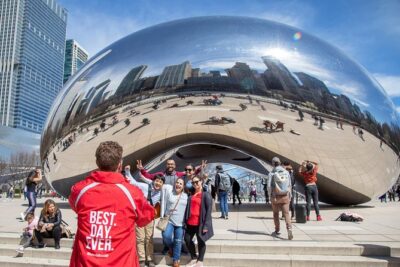
Chicago in a Day: Food, History & Architecture Walking Tour
Read our review →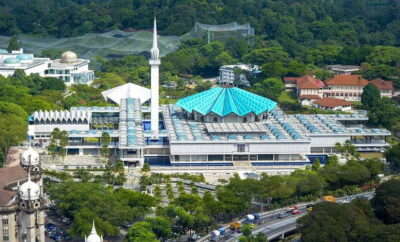
Kuala Lumpur: Batu Caves & Historic Buildings Tour
Read our review →
Charleston’s Best Highlights: History, Culture & Architecture
Read our review →
Palm Springs Modernism Architecture & History Bike Tour
Read our review →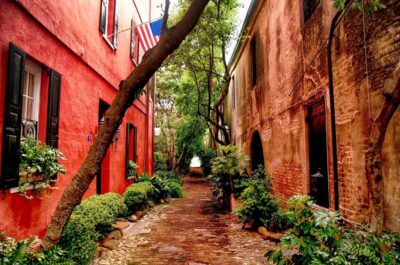
Charleston: History and Architecture Guided Walking Tour
Read our review →
Historic Georgetown: History, Gossip, & Architecture Walking Tour
Read our review →
Charleston History, Homes, and Architecture Guided Walking Tour
Read our review →
Browse the lists this tour appears in