
Review · BARCELONA
Barcelona Walking Tour: Modernisme & Iconic Architecture
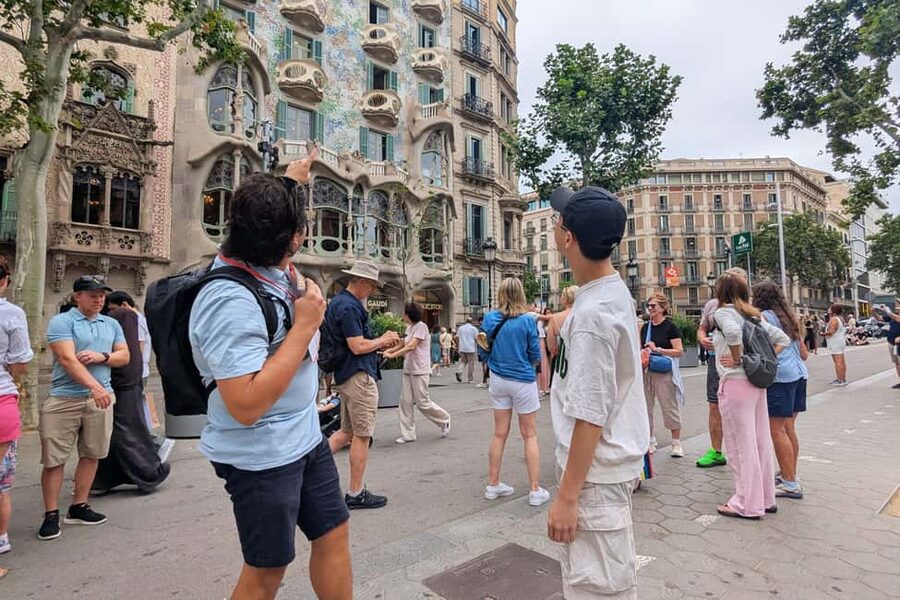
Barcelona’s Modernisme is best understood from the street, where grand façades compete for your attention block after block. This two-hour walking tour follows Passeig de Gràcia and the Eixample, linking Gaudí’s famous Casa Batlló and Casa Milà with less familiar works by Barcelona’s other great architects.
I like the small price of $17, especially since the guide provides context you will not get from simply photographing façades. I also like the focus on the whole movement, not just Gaudí. The main drawback is clear: entrance tickets to Casa Batlló and La Pedrera are not included, so this is an exterior architecture tour rather than an indoor visit.
Key points at a glance
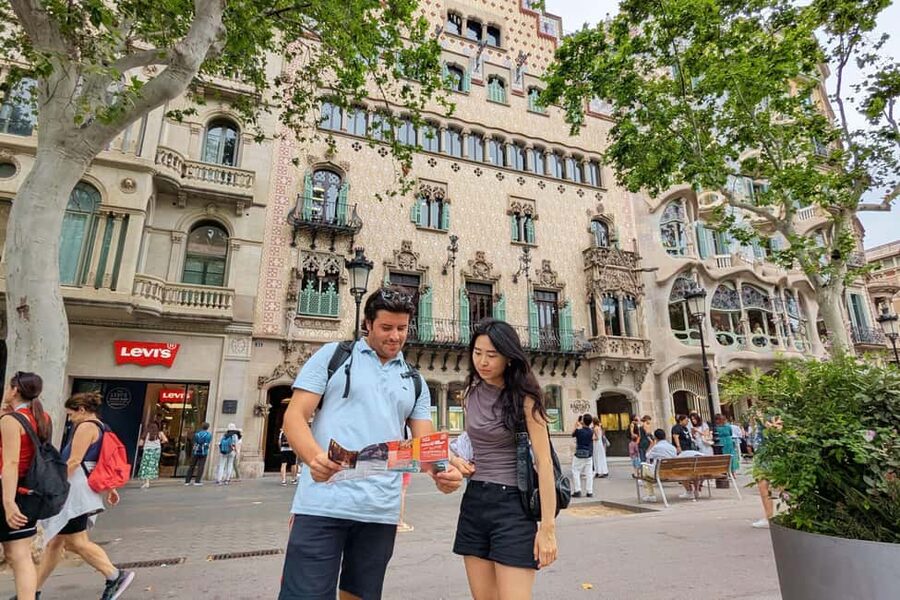
- See the famous façades from street level: Casa Batlló and Casa Milà anchor the walk, with plenty of time devoted to their shapes, colors, and details.
- Look beyond Gaudí: Casa Comalat, Casa Lleó Morera, Palau de Quadras, Casa Ramon Casas, and other Modernista buildings broaden the story.
- Learn how Barcelona changed: The guide connects architecture with the political and economic forces that shaped the city.
- Walk the Quadrat d’Or: This central Eixample area is one of Barcelona’s best places to compare different Modernista styles within a short distance.
- Start in an easy central location: The meeting point is beneath Plaça de Catalunya, close to major transport links and the beginning of the route.
- A dependable option: The tour runs even if only one person books, and you can cancel up to 24 hours ahead for a full refund.
Why Barcelona’s Modernisme deserves a walking tour
Barcelona’s Modernisme was more than decorative architecture. It was part of a period when the city was growing, wealthy families were commissioning new homes, and Catalan culture was asserting its identity.
That wider setting matters. If you only see Casa Batlló in a photograph, you may remember the rippling balconies and colorful roof. With a guide, you can place it beside nearby buildings and notice how architects used stone, iron, glass, ceramics, and sculpture in very different ways.
The tour moves through the Quadrat d’Or, or Golden Square, in the Eixample. This part of the city is laid out in a grid, making it unusually easy to compare façades along the same broad avenues. You are not walking from one isolated sight to another. You are reading an entire district as an outdoor gallery.
Recent tours were led by Boris and Pierre. Boris was praised for linking architecture to the political and economic forces behind Barcelona’s growth. Pierre was noted for his enthusiasm for the city’s many building styles and for giving useful recommendations for the rest of a trip. Guides can vary, but those comments point to the tour’s strongest purpose: helping you understand what you are seeing rather than simply naming buildings.
More architecture walks in Barcelona:
- Barcelona: Old Town and Gothic Quarter Walking Tour
★ 4.8 · 1,393 reviews - Ramblas, Old Town, Gothic and Gaudi Architecture Walking Tour
★ 5.0 · 723 reviews - Kids and Family Gothic Quarter Walking Tour in Barcelona
★ 5.0 · 465 reviews
Meeting at Plaça de Catalunya
The tour begins at the Turisme de Barcelona Tourist Information Office at Plaça de Catalunya 17. The office is on the underground level, which makes the meeting point a little less obvious than a statue or street corner.
Look for the large red Tourist Information totem in the square. The escalators beside it lead down to the office, where the guide waits inside. Arrive 15 minutes early. Plaça de Catalunya is a busy central meeting place, and allowing extra time helps you find the underground office without rushing.
This is a useful starting point for a walking tour. The square sits between the older city and the Eixample, so the route quickly moves into the architectural district. If you are staying elsewhere, the central location also makes the beginning and end of your day easy to plan.
The tour is offered in English, Spanish, and Catalan. It is also listed as wheelchair accessible. You should still wear comfortable shoes because the experience remains on foot for two hours, with several blocks between major stops.
Casa Comalat and the first lesson in Modernisme
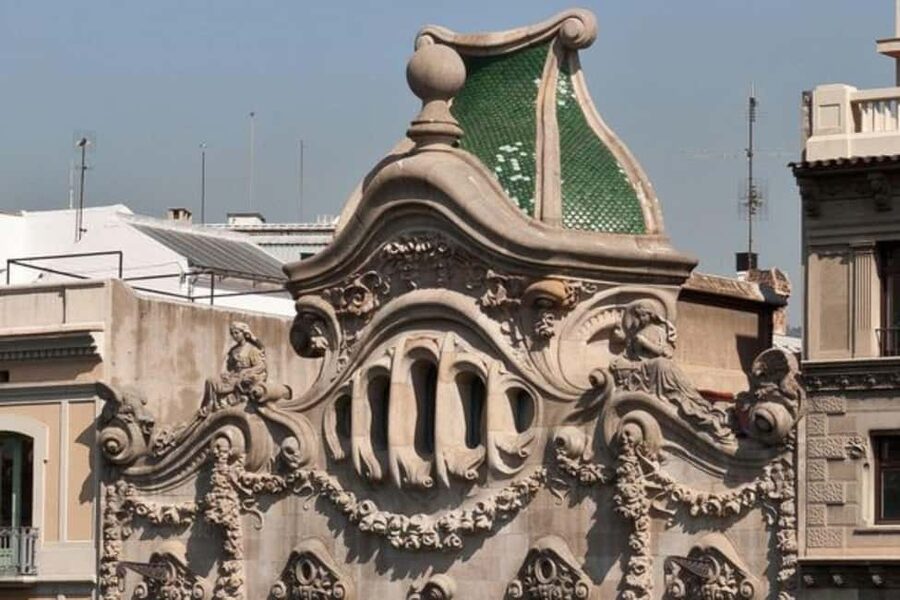
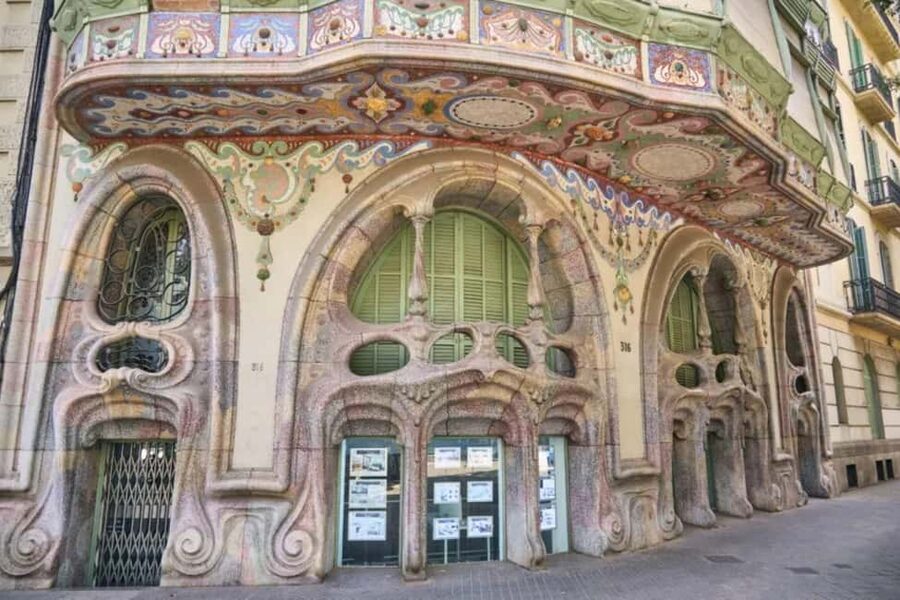
The first listed architectural stop is Casa Comalat, reached after a walk of about 15 minutes. This building is a good early reminder that Barcelona’s Modernisme was not a single formula created by one architect.
Casa Comalat is known for its decorative treatment and unusual character. Here, your attention turns from the instantly recognizable Gaudí buildings to the smaller choices that make Eixample façades so rewarding: curved forms, ornament, balconies, surface patterns, and the relationship between a private residence and the street.
You may find this stop more rewarding if you look up as you walk. Many of Barcelona’s best architectural details sit above eye level, and a guide can point out features you would otherwise pass without noticing.
The route is not designed as an indoor house tour. You will see and discuss the architecture from public streets, so the value comes from observation and explanation rather than rooms, furnishings, or interior art.
Casa Lleó Morera and the competition along Passeig de Gràcia
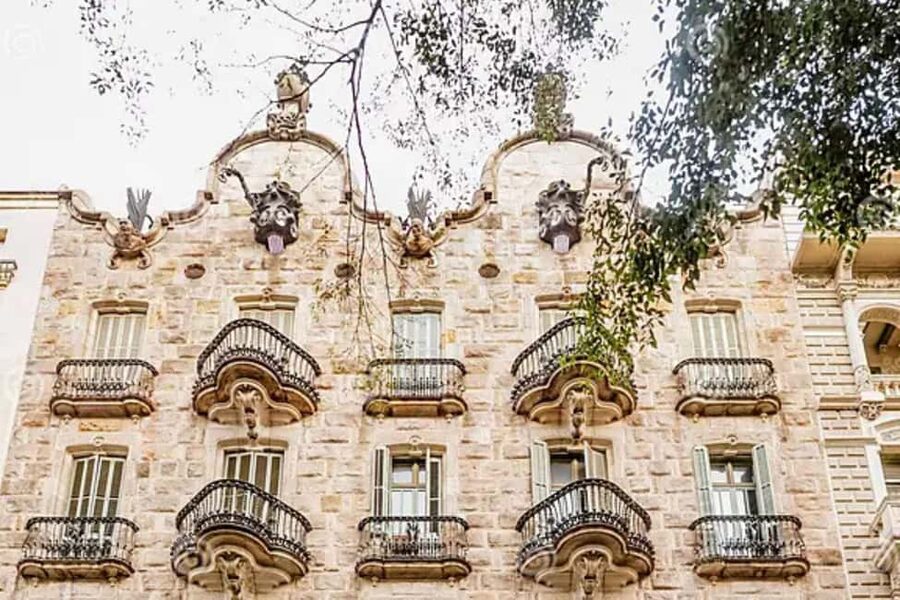
The itinerary next includes Casa Lleó Morera, one of the key buildings in the famous Block of Discord. This stretch of Passeig de Gràcia is one of the most useful places in Barcelona for understanding the rivalry and variety among Modernista architects.
Casa Lleó Morera is not simply another ornate façade. Its sculptural decoration and carefully worked details show how much attention wealthy owners and architects gave to the outside of a home. Beside neighboring buildings, it becomes part of a visual conversation, with each architect offering a different answer to the same question: how can a city residence express status, taste, and Catalan identity?
The route lists Casa Lleó Morera again later, along with the Block of Discord. That repetition reflects the importance of this area to the tour. You will encounter the building as part of a closer look at the group of façades rather than as a quick stop on its own.
Do not expect a long visit inside Casa Lleó Morera. The building is best appreciated from the avenue, where you can compare its decoration with Casa Batlló and the other façades nearby.
A few more architecture tours around Barcelona worth a look
- Barcelona: Sant Pau Recinte Modernista Entry Ticket
★ 4.6 · 2,567 reviews - Barcelona: Sagrada Familia, Modernism, and Old Town Tour
★ 4.7 · 1,621 reviews - Historical and Modernist Bike Tour Barcelona
★ 5.0 · 262 reviews - Sant Pau Recinte Modernista Entrance Ticket in Barcelona
★ 4.5 · 230 reviews
Fundació Antoni Tàpies and Montaner i Simon
The walk continues to the Fundació Antoni Tàpies, housed in the former Editorial Montaner i Simon building. This stop adds another layer to the story because Modernisme was not limited to private mansions.
A publishing house had a different purpose from a grand family residence, yet its architecture still used the period’s interest in structure, ornament, and new forms. Seeing the former editorial building helps you notice how the movement reached commercial and cultural buildings as well as domestic ones.
Today, the building is connected with the Antoni Tàpies Foundation. The tour does not include admission, so you should think of this stop as an exterior architectural visit. If modern art is high on your list, you may want to return separately, but the walking tour itself keeps its attention on the building and its place in Barcelona’s Modernisme.
This is one of the tour’s better choices because it prevents the story from becoming a parade of private homes. You see how the same artistic climate affected different types of buildings.
Passeig de Gràcia, Barcelona’s grand architectural stage
Passeig de Gràcia is the spine of the experience. It is a broad, elegant avenue where Modernista architecture appears at a scale that makes comparison easy.
As you walk, the guide discusses the stories behind the façades and points out buildings such as the Pons and Pascual Houses, Antoni Rocamora Houses, Pia Batlló House, Heribert Pons House, Jaume Moysi House, Sebastià Pratsjusà House, Climent Arola House, and Garriga Nogués House.
You will not spend equal time at every building. That would be impossible in two hours. Instead, these names form part of a larger lesson: Barcelona’s architectural identity was built by many architects, clients, and craftsmen. The route gives you a framework for noticing the smaller details between the headline sights.
This section is also where a guide adds real value. Without help, you may see a row of attractive buildings and assume they all belong to Gaudí. The tour separates the architects and points out how their façades differ in materials, decoration, geometry, and mood.
Casa Batlló and the Block of Discord
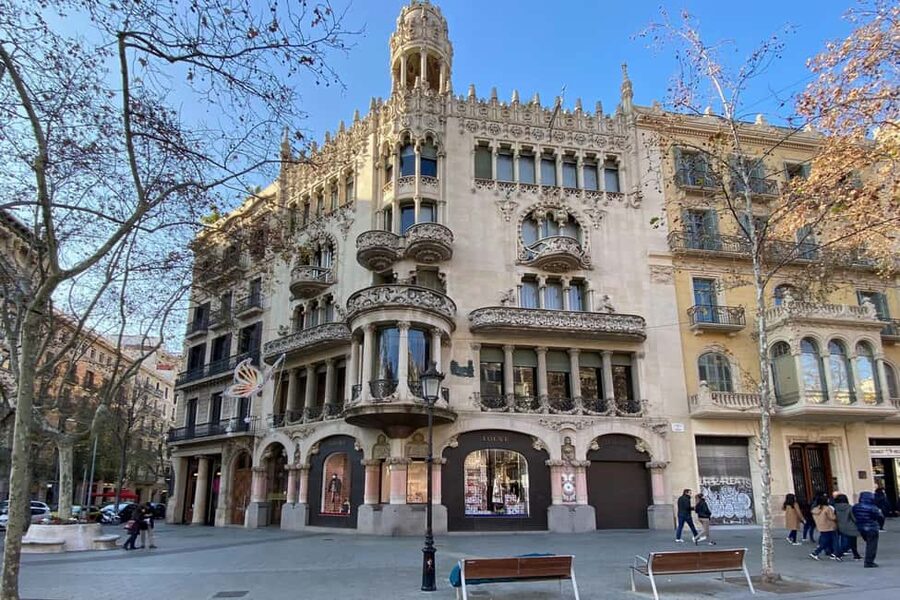
Casa Batlló is the tour’s most instantly recognizable stop. Its curved façade, unusual balconies, and scaled roof have made it one of Barcelona’s best-known buildings.
From outside, the building rewards patient looking. The façade does not rely on a single grand feature. It combines color, texture, irregular windows, bone-like forms, and a roofline that suggests a creature or a piece of sculpture. A guide can explain how those elements fit into Gaudí’s approach and why the building looks so different from its neighbors.
Casa Batlló sits in the Block of Discord, where several Modernista buildings face one another along the same stretch of Passeig de Gràcia. The name captures the visual effect: the façades seem to compete for attention rather than follow one tidy style.
This is likely to be the busiest part of the walk, and you may have to share the pavement with people stopping for photographs. The guide’s explanations help you look past the crowd and focus on the architectural details.
The tour does not include admission to Casa Batlló. If you want to see its interior, you must arrange a separate ticket. That is not a minor distinction. The outside gives you the broad visual idea, while the inside offers another level of Gaudí’s design. For a first orientation, though, the exterior discussion is useful before deciding which buildings deserve your paid entry time.
Casa Milà, La Pedrera, and the end of the route
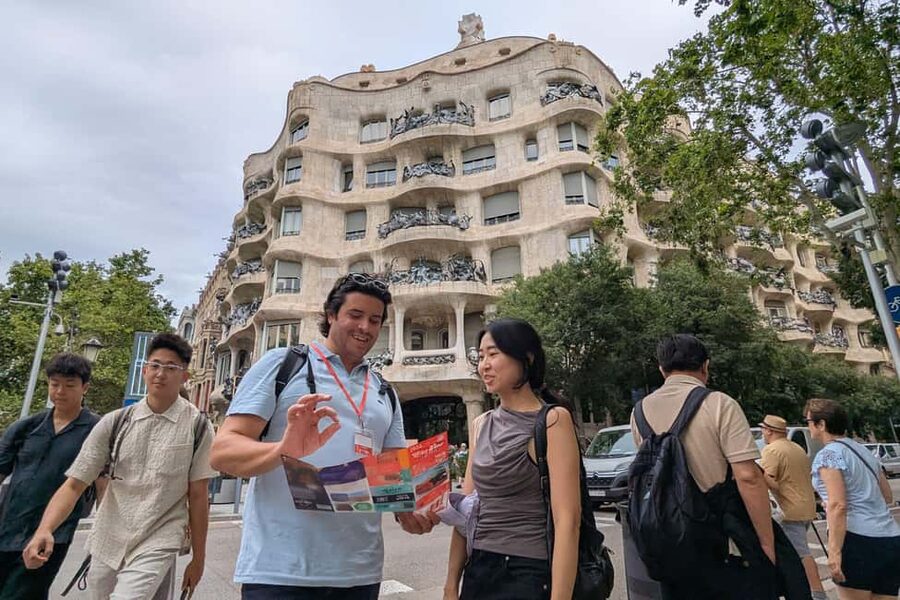
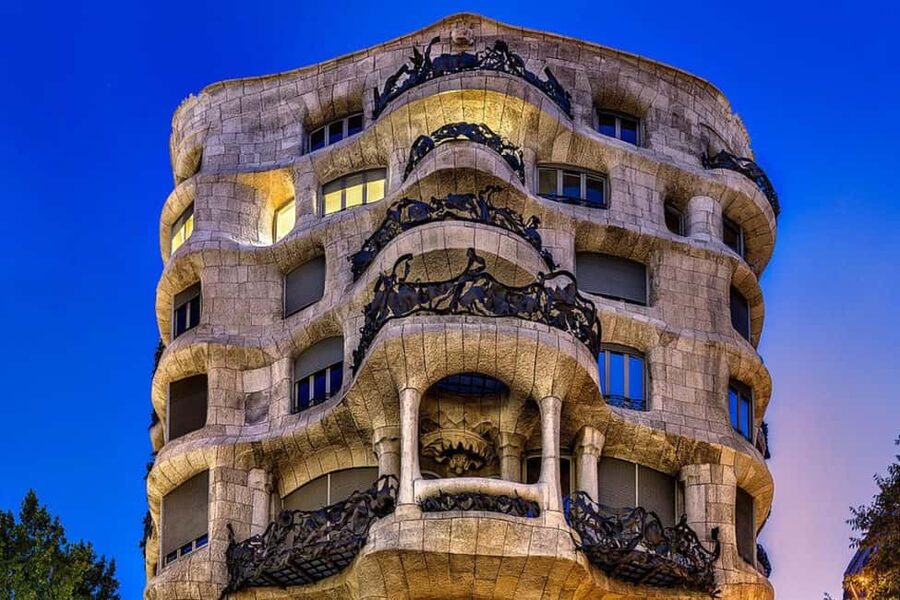
Casa Milà, better known as La Pedrera, brings the route to another major Gaudí work. Its wave-like stone exterior and sculptural rooftop make it quite different from Casa Batlló, even though both buildings sit along Passeig de Gràcia.
La Pedrera helps show Gaudí moving away from conventional straight lines and formal symmetry. From street level, you can study the flowing façade and the heavy, sculptural quality of the balconies. The building is also a useful contrast with the more colorful and figurative Casa Batlló.
Admission to La Pedrera is not part of the $17 tour price. Again, you will see the exterior and receive the guide’s interpretation, but you will not visit the interior spaces or rooftop as part of this activity. If you plan to go inside, check availability separately and allow extra time after the walk.
The tour finishes at Casa Ramon Casas. Ending here keeps the focus on the broader Modernista district rather than making Gaudí the only conclusion. Casa Ramon Casas is another reminder that the Eixample is filled with notable residences, even after the famous buildings have taken most of the attention.
What the $17 price really buys you
At $17 per person, the tour offers good value if you want context and a planned route through central Barcelona. The price covers a professional guide and two hours of walking through Passeig de Gràcia and the Eixample.
You are paying for interpretation, not admission. That distinction helps set the right expectation. If you want to enter Casa Batlló or La Pedrera, the tour will not replace those tickets. But if you are unsure which buildings deserve your time, the walk can help you choose.
The guaranteed departure is another practical advantage. Some walking tours require a minimum number of participants, while this one runs even with a single booking. That makes it easier to fit into a tightly planned Barcelona visit.
You can reserve now and pay later, and cancellation is free up to 24 hours before the start time. Those terms are helpful if your plans are still shifting, though you should still arrive early at the meeting point.
Who will get the most from this walk
I would choose this tour early in a Barcelona visit if you care about architecture, design, or city history. It gives you bearings in the Eixample and may help you plan which buildings to revisit.
It suits first-time visitors who know Gaudí’s name but want to understand the people and forces around him. It also works for returning visitors who have already seen Casa Batlló but want to notice the less famous façades nearby.
You should be comfortable walking outdoors for two hours. Bring comfortable shoes and a camera. The route is wheelchair accessible, and live guiding is available in English, Spanish, and Catalan.
This may not be the best choice if your main goal is to tour interiors. You will not enter Casa Batlló or La Pedrera, and the experience depends on paying attention to façades from the street.
Should you book the Modernisme walking tour?
Book it if you want a compact, affordable introduction to Barcelona’s architecture and you would like help seeing beyond Gaudí. The strongest feature is the range: Casa Batlló and La Pedrera provide the headline sights, while Casa Comalat, Casa Lleó Morera, the former Montaner i Simon building, and the many Eixample residences supply the wider story.
Skip it if you want a museum-style visit with interior access. In that case, put the $17 toward individual admission tickets instead.
For most architecture-minded visitors, I would take the walk near the start of the trip. You will leave with a better sense of the Quadrat d’Or, a short list of buildings worth revisiting, and a clearer idea of how Barcelona’s Modernisme shaped the city you see today.
FAQ
How long does the Barcelona Modernisme walking tour last?
The tour lasts two hours.
Where does the tour begin?
It begins at the Turisme de Barcelona Tourist Information Office at Plaça de Catalunya 17, on the underground level.
Where will I find the guide?
Look for the large red Tourist Information totem in Plaça de Catalunya. The escalators beside it lead underground to the tourist office, where the guide waits inside.
Are Casa Batlló and Casa Milà admission tickets included?
No. Entrance to Casa Batlló and Casa Milà, also called La Pedrera, is not included.
What languages are available?
The live guide is available in English, Spanish, and Catalan.
Does the tour run with only one participant?
Yes. The tour is guaranteed to depart even if only one person books.
Just added around Barcelona
- Love in the Gothic Quarter Barcelona: Self-Guided Romantic Walk★ 4.5 · 9 reviews
- Walking tour of the Gothic Quarter of Barcelona + Cathedral★ 5.0 · 8 reviews
- Wine tasting with a view of the Sagrada Familia★ 4.5 · 13 reviews
- Roman & Gotic & Gaudi in Barcelona: private walking tour★ 4.5 · 2 reviews
- Visit to the Modernist houses of the Americans★ 5.0 · 2 reviews
- Barcelona Jewish & Gothic Tour★ 5.0 · 18 reviews
- Self-Guided Audio Tour-The Surrealist Barcelona of Dalí and Gaudí★ 3.5 · 8 reviews
- Barcelona Gaudi Tour: Sagrada Familia, Casa Batllo & Casa Mila★ 5.0 · 4 reviews
Walking Tours, compared.
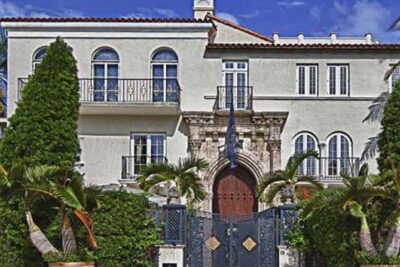
The Official Art Deco Walking Tour by The Miami Design Preservation League
Read our review →
Barcelona: Gothic Quarter Ghosts and Legends Walking Tour
Read our review →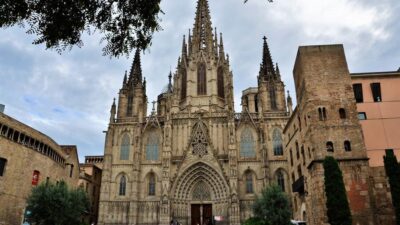
Barcelona: Old Town and Gothic Quarter Walking Tour
Read our review →
Lecce: Baroque Architecture and Underground Walking Tour
Read our review →
Chicago in a Day: Food, History & Architecture Walking Tour
Read our review →
Ramblas, Old Town, Gothic and Gaudi Architecture Walking Tour
Read our review →
Chicago’s Secret Interiors Architectural Walking Tour
Read our review →Browse the lists this tour appears in