
Review · BARCELONA
Barcelona: Old Town and Gothic Quarter Walking Tour
Barcelona’s oldest streets make the best classroom in the city. This walking tour links Roman walls, medieval squares, the Gothic Cathedral, La Rambla, La Boqueria, and El Born in one useful route, so you get both the major sights and the small details you might otherwise walk past.
I especially like the way the tour connects 2,000 years of city life to places you can actually see, from the former Roman Forum at Plaça de Sant Jaume to the ancient baths at Pati Llimona. I also like the small-group limit of 15, which gives guides such as Alba, Joris, Nilo, and Isabel room to answer questions and adjust the pace.
The main drawback is that this is a walking overview, not a ticketed museum tour. You generally see several landmarks from the outside or pass by them, and the advertised duration can range from 2.5 to 4 hours, so check your chosen departure before planning the rest of your day.
Key points at a glance
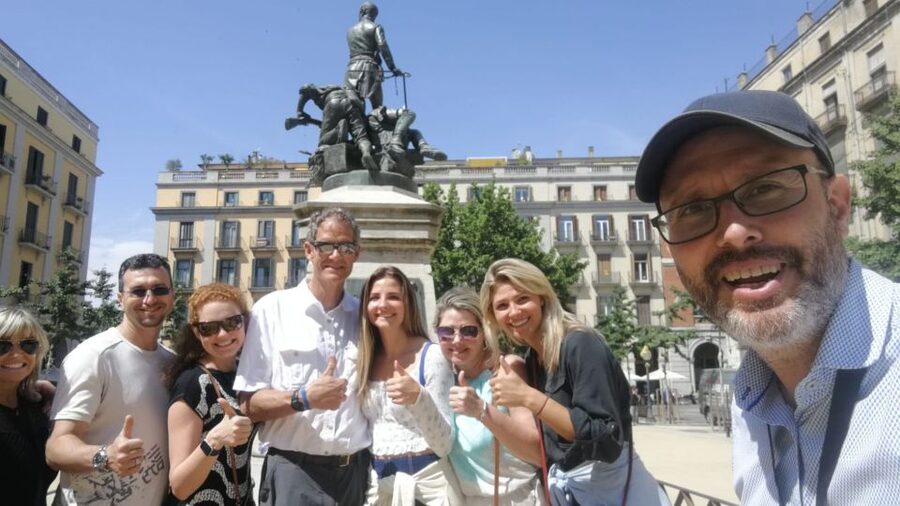
- Roman Barcelona in plain view: Begin at Plaça de Sant Jaume and trace the city’s Roman walls and baths.
- A useful first-day route: The walk connects the Gothic Quarter, La Rambla, Boqueria Market, and El Born.
- Small groups matter: A maximum of 15 people makes it easier to hear the guide and ask questions.
- Strong storytelling: Guides including Alba, Joris, Nilo, Ane, Isabel, and Steven are often praised for history, humor, and local suggestions.
- Good value at $21: You cover several central areas with a live guide without paying separate admission fees.
- Come prepared to walk: Wear comfortable shoes and leave luggage or large bags behind.
Why this route works so well in Barcelona
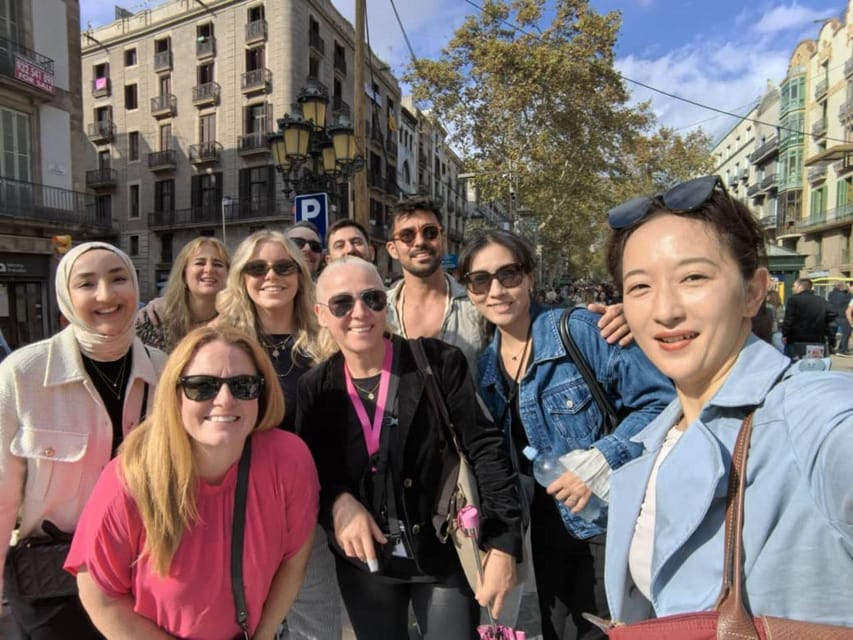
Barcelona can feel confusing on a first visit. The Gothic Quarter has narrow lanes, sudden squares, old churches, Roman remains, and modern cafes packed into a compact area. La Rambla is only a short walk away, yet it feels much broader and more theatrical. El Born adds another layer, with medieval streets and a more local neighborhood mood.
This tour gives those areas a story instead of treating them as disconnected photo stops. You begin with Roman Barcelona, move through the medieval city, then finish amid the food stalls, shops, and streets of the modern center.
That order makes sense. I prefer learning how a city began before looking at what it became, and this walk follows that path. It also leaves you with a practical map in your head. Afterward, you can return to the cathedral, shop at Boqueria, explore El Born, or decide which places deserve more of your time.
The cost is $21 per person, which is a fair price for a 2.5-hour guided walk. Some departures may run closer to four hours, so check the exact option you select. Since entrance tickets and personal purchases are not included, the value comes from the guide, the route, and the context rather than from included attractions.
More Gothic quarter walks in Barcelona:
- Barcelona all included: Sagrada, Park Güell, Montjuic & Gothic
★ 5.0 · 2,169 reviews - Barcelona Gothic Quarter Tapas & Taverns Food & Wine Tour
★ 5.0 · 1,470 reviews - Barcelona Old Town & Gothic Quarter Small Group Tour
★ 5.0 · 1,308 reviews
Plaça de Sant Jaume and the Roman beginning
The tour starts at Plaça de Sant Jaume, one of Barcelona’s most important public squares. The Roman Forum once occupied this area, and the square has remained a center of Catalan political life for more than 2,000 years.
That makes it an excellent opening stop. Instead of beginning with a generic introduction, your guide can show how the modern city grew over the footprint of the Roman settlement. The square also helps you understand Barcelona as a living city, not simply a collection of old buildings.
Guides have different ways of presenting this material. Alba is often described as energetic and especially good at connecting historical facts with local stories. Joris is praised for answering questions and keeping the discussion engaging. If you enjoy asking about Catalan identity, politics, or the relationship between Barcelona and Spain, this is a good point to raise it.
Do not expect a long archaeological lecture. The appeal is seeing how the past remains part of the present. You are standing in a working civic space while hearing about the city that came before it.
Roman walls and the Pati Llimona baths
From the square, the walk reaches sections of Barcelona’s Roman walls. These remains are among the best-preserved Roman walls in the world, and they are easy to miss when you walk through the surrounding streets on your own.
A guide makes the difference here. You learn to notice the scale and placement of the walls, then connect them to the basic needs of Roman life. The Roman baths at Pati Llimona offer a glimpse of that everyday world, showing that the ancient city was not only about forts and officials. People also needed places to wash, meet, and carry out ordinary routines.
This is one of the most useful parts of the tour for visitors who want more than pretty architecture. The ruins can look modest at first glance, but the explanation gives them weight. I like that the tour does not rush straight to the most famous church. It gives Barcelona an older foundation first.
Keep in mind that the route involves walking through active city streets. You will not have a quiet archaeological park to yourself, and the Roman remains are integrated into the city rather than isolated from it. That is part of the experience, but it means you should stay close to the guide.
Gothic Quarter streets and Plaça del Rei
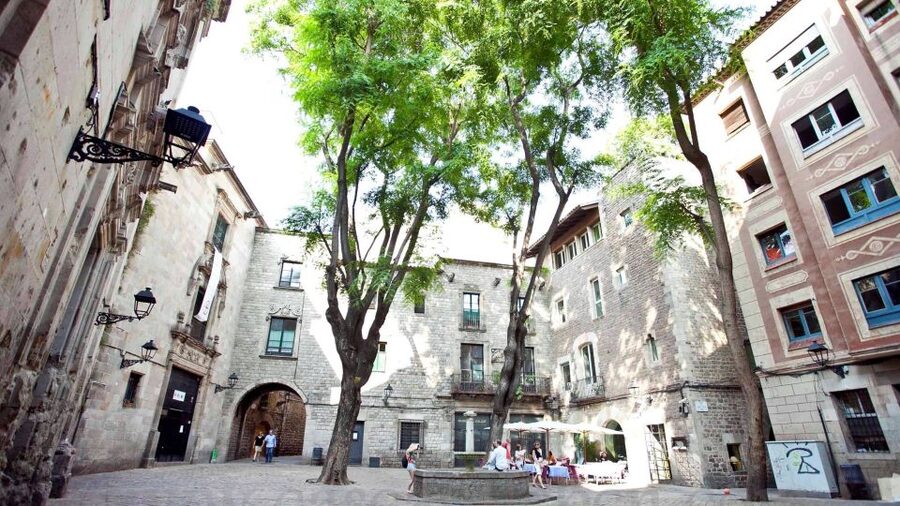
The Gothic Quarter is the heart of the walk. Its lanes are narrow, irregular, and full of architectural clues. A guide can point out details that blend into the background, explain why the streets developed as they did, and show how medieval Barcelona differed from the Roman settlement.
Plaça del Rei is a major stop. The square is home to the Palace of the Viceroy and the Palau Reial, and it carries the weight of Barcelona’s royal past. It is also linked with the famous welcome given to Christopher Columbus by the Catholic Monarchs after his journey to the Americas.
That story is worth hearing in place, but a good guide should also give it context rather than treating it as a single heroic moment. The broader value of the stop is that you see Barcelona’s connection to royal power, trade, exploration, and the changing world of the late medieval period.
The Gothic Quarter is also where the tour becomes less predictable. You may pass cafes, small shops, and lively lanes between formal landmarks. Guides such as Steven have used puzzles, architectural details, and playful observations to keep people looking up and paying attention. That style suits the neighborhood, since the best discoveries are often above eye level.
More old town architecture walks in Barcelona:
- Barcelona in 1 Day: Sagrada Familia, Park Guell,Old Town & Pickup
★ 5.0 · 13,541 reviews - Barcelona: Sagrada Familia, Modernism, and Old Town Tour
★ 4.7 · 1,621 reviews - Barcelona e-Bike Tour: Gaudí & Old Town Small Group
★ 5.0 · 769 reviews - Ramblas, Old Town, Gothic and Gaudi Architecture Walking Tour
★ 5.0 · 723 reviews
Barcelona Cathedral and Catalan Gothic design
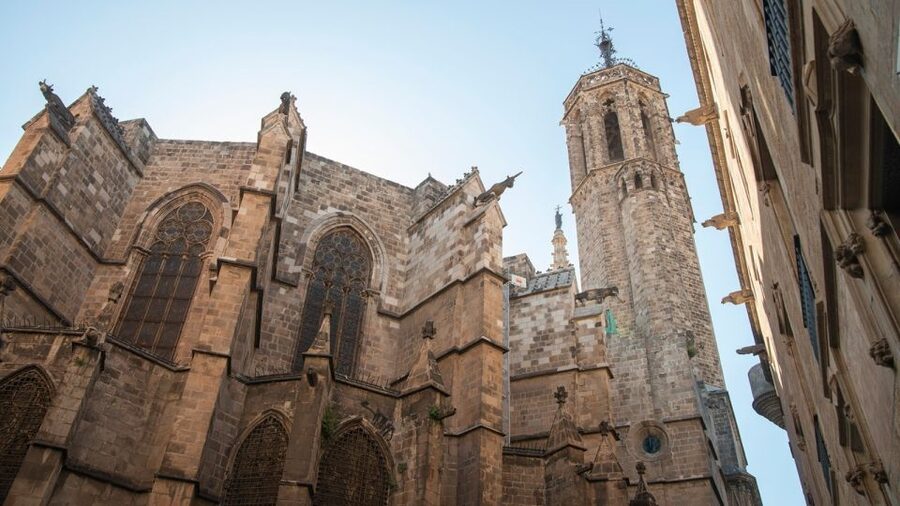
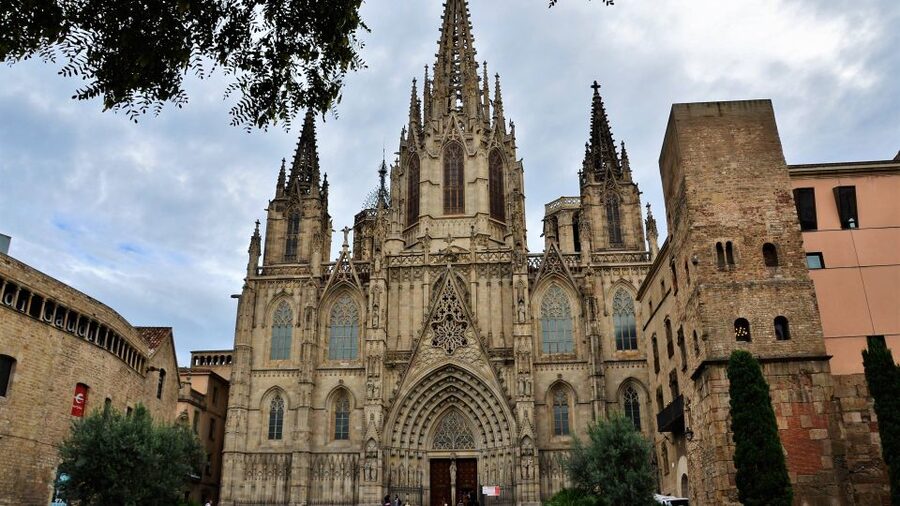
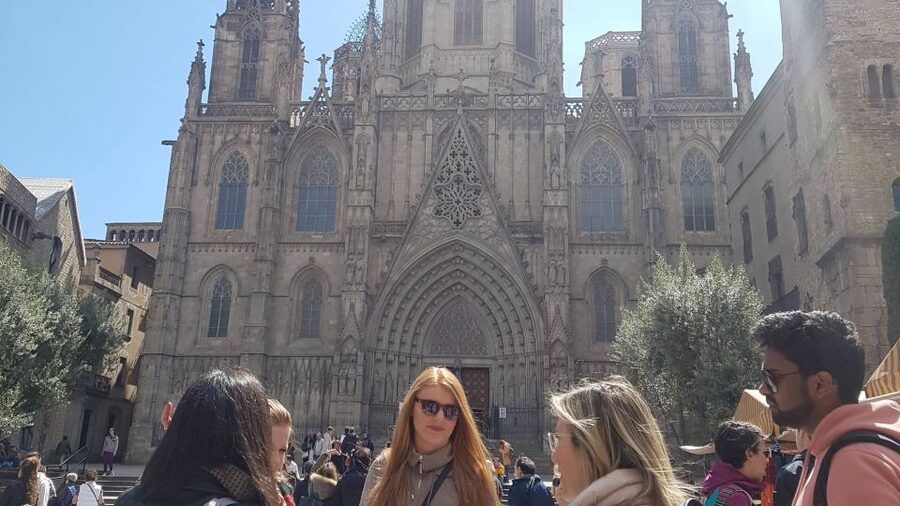
Barcelona Cathedral is one of the route’s major visual anchors. Even if you only see it from outside, the building gives you a clear example of Catalan Gothic design and a sense of the religious importance of the old city.
Your guide can help you read the architecture rather than simply photograph the facade. Look for the scale, vertical lines, stonework, and the way the building dominates the surrounding lanes. The crowded setting makes the cathedral feel even more imposing.
This is also a good place to ask about the difference between Catalan Gothic architecture and other medieval styles. The tour is not an architecture class, but several guides bring strong backgrounds in buildings and design. One guide, Stephanie, is described as having a doctorate in architecture, while other guides regularly connect art, architecture, and local traditions.
Admission is not included, so do not assume the walk includes a full interior visit. If seeing the inside matters to you, ask your guide about visiting separately and allow extra time after the tour.
La Rambla and La Boqueria Market
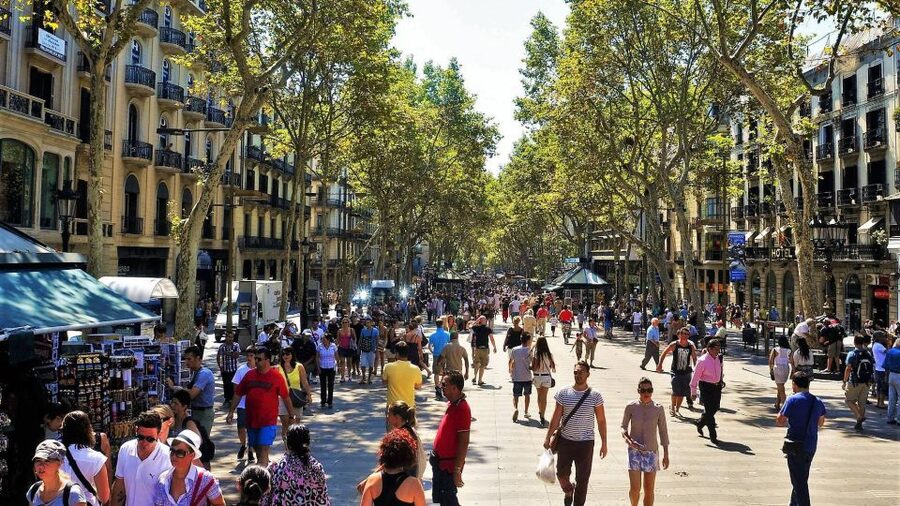
La Rambla changes the mood. The Gothic Quarter is tight and shadowed, while this famous boulevard opens into a broad public promenade lined with flower stalls, eateries, street performers, and outdoor cafes.
The tour passes along La Rambla rather than treating it as a destination by itself. That is probably the right approach. The boulevard is entertaining, but it can also be crowded and tourist-oriented. Your guide can explain its role in city life while helping you notice the mix of old traditions and modern commerce.
La Boqueria is the liveliest food stop. More than 300 stalls offer local products, and the market gives you a quick look at Catalan food culture. You may see fruit, prepared foods, seafood, sweets, and other produce, though the exact market experience depends on the time and crowd level.
I like having a guide here because it is easy to wander without understanding what you are seeing. You can ask what is local, what is seasonal, and what might make sense for a later snack. Several guides, including Alba, Ane, Stephen, and Nilo, are praised for useful restaurant and food suggestions.
You should not treat this as a dedicated market tasting tour. Personal expenses are not included, and the schedule may leave only limited time to browse or buy something. If you want to eat at La Boqueria, plan to return on your own or ask whether the guide allows a short stop during your departure.
Plaça Reial and the changing city center
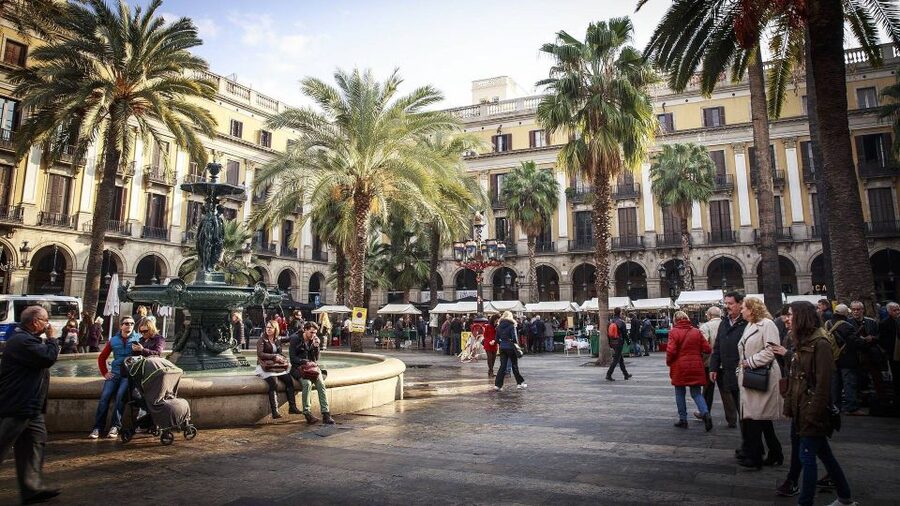
Plaça Reial adds another important contrast. Its arcades, open layout, cafes, and street activity show a different side of central Barcelona from the medieval lanes nearby.
The square is a good place to watch the city in motion, but it can also be busy and commercial. Your guide helps place it within the larger route, explaining how Barcelona’s public spaces changed as the city expanded and modernized.
I would not book this tour solely for Plaça Reial. Its value comes from how it links the Gothic Quarter to La Rambla and the rest of the walk. Think of it as a useful transition stop rather than the main event.
Santa Maria del Mar and El Born
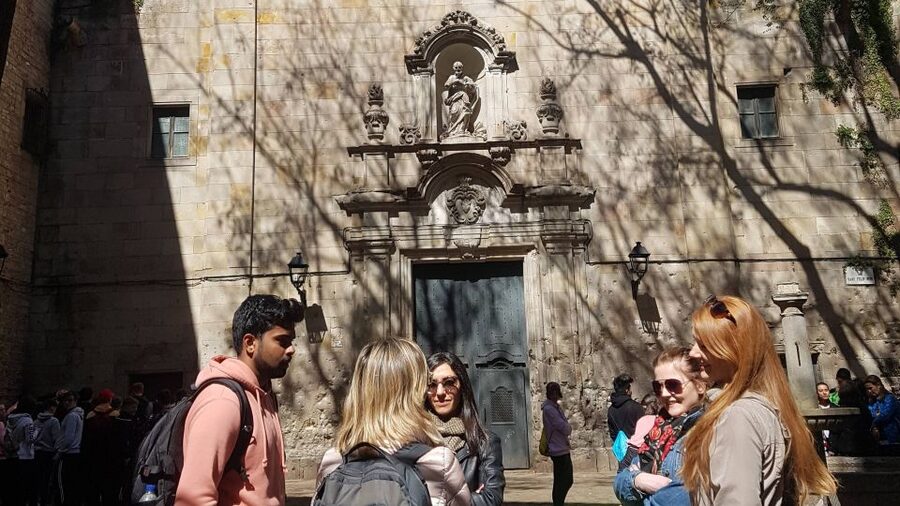
The route continues toward El Born and Santa Maria del Mar, one of the finest examples of Catalan Gothic architecture. The church is particularly famous for how quickly it was built, an achievement that reflects impressive medieval planning and construction skill.
Santa Maria del Mar gives the tour a strong ending because it feels different from Barcelona Cathedral. The two churches belong to the same broad Gothic tradition, yet their settings and stories are not identical. Your guide can help you compare them and explain why Santa Maria del Mar matters to the people and merchants of medieval Barcelona.
El Born is more than a pretty neighborhood. Its lanes, cafes, boutiques, and restored historic buildings create a relaxed final stretch after the busier center. The tour finishes at Passeig del Born, which is convenient if you want to continue exploring, eat, shop, or return toward the waterfront.
This part of the route may appeal most to visitors who want a little atmosphere alongside formal history. You get architecture, but you also see how old streets function today. The tradeoff is that some places are passed from the outside, so you should return later if a particular church or building catches your attention.
What the guides do best
The strongest pattern among the guides is their ability to make history conversational. Alba is repeatedly praised for energy, local stories, and practical food advice. Joris is known for passion, questions, and clear explanations. Nilo is described as attentive to the group and careful not to leave people behind.
Other guides bring their own tone. Steven uses humor and visual challenges. Isabel is praised for inviting people to imagine earlier periods and for balancing facts with anecdotes. Ane, Laura, Montse, Mariah, and Jose Carlos are also noted for warmth, storytelling, and helpful answers.
That range matters because a walking tour depends heavily on the individual guide. The company offers English and Spanish, but you cannot assume a particular guide will lead your departure. The consistent expectation is a live, personable guide, not a recorded audio walk.
The small-group maximum of 15 is another plus. A group of five can feel almost private, while a full group of 15 remains manageable if everyone stays together. Several guides make a point of checking that people can hear and keeping the group moving at a sensible pace.
Practical advice before you book
Wear comfortable shoes. The route covers several hours on foot, with paved streets and plenty of standing while the guide explains a site. Barcelona’s old center is not difficult to reach on foot, but the surfaces and crowds reward sensible footwear.
Leave luggage and large bags behind. They are not allowed, and carrying unnecessary belongings through narrow streets makes the walk less pleasant. Keep your phone and wallet secure in crowded areas, especially around La Rambla and La Boqueria.
The meeting point may vary by booking option, with the Movistar Centre listed as one possible starting location. Check the exact meeting details before setting out. The final point is Passeig del Born, so do not plan to finish where you started.
Children under two can join free. The tour is best for people who can manage a sustained city walk and enjoy listening while standing. It can work well for families, couples, first-time visitors, and anyone who wants a clear introduction before exploring alone.
Free cancellation up to 24 hours in advance and the reserve-now, pay-later option make the booking less rigid. Still, the practical question is simple: can you spare at least 2.5 hours, and are you ready to walk?
Is the $21 tour worth it?
At $21, I consider this a good-value introduction to central Barcelona. You cover the Roman core, Gothic Quarter, La Rambla, La Boqueria, Plaça Reial, El Born, and two major churches without paying for several separate guided visits.
The value depends on what you want. If you want detailed interior access, food tastings, or a slower architecture study, this tour will feel too broad. If you want the city explained by a real person and a route that helps you get oriented quickly, the price is easy to justify.
I would book it near the beginning of a Barcelona stay. Use the guide’s suggestions to decide where to eat and which sites deserve a return visit. Guides often offer practical advice about food and other places to see, which can save you from wasting a meal or afternoon.
Should you book this Barcelona walking tour?
Book it if you are visiting Barcelona for the first time, enjoy history told through streets and buildings, or want one efficient walk through the city center. It is especially useful if Roman remains, medieval architecture, Catalan Gothic churches, local food, and neighborhood atmosphere all appeal to you.
Skip it if you dislike group walks, need frequent transport, or want every landmark explored inside. You should also avoid squeezing it into a tight schedule until you confirm whether your departure lasts 2.5 hours or closer to four.
For most visitors, this is a smart first look at Barcelona. The route is broad, the price is modest, and the best guides turn old stones into a city you can understand.
FAQ
How long does the Barcelona Old Town and Gothic Quarter tour last?
The stated duration ranges from 2.5 to 4 hours, depending on the option and departure selected. Check availability for the exact starting time and duration.
What language is the tour offered in?
The tour is offered in English and Spanish with a live guide.
How many people can join the small group?
The group can include up to 15 participants. A private group option is also available.
Where does the tour start and finish?
The meeting point can vary by the option booked, with the Movistar Centre listed as one possible starting point. The tour finishes at Passeig del Born, 08003 Barcelona.
Are entrance fees or food included?
No. Personal expenses are not included, so any food, drinks, shopping, or separate admission costs are paid by you.
What should I bring, and can I bring luggage?
Bring comfortable shoes for several hours of walking. Luggage and large bags are not allowed. Children under two years old can join free.
More Architecture Walks in Barcelona
- Kids and Family Gothic Quarter Walking Tour in Barcelona
★ 5.0 · 465 reviews - Barcelona Gothic Quarter Walking Tour
★ 4.5 · 456 reviews - Barcelona: Gothic Quarter Walking Tour
★ 4.9 · 383 reviews - Barcelona: Gothic Quarter Walking Tour with 10+ Attractions
★ 5.0 · 369 reviews
Just added around Barcelona
- Love in the Gothic Quarter Barcelona: Self-Guided Romantic Walk★ 4.5 · 9 reviews
- Walking tour of the Gothic Quarter of Barcelona + Cathedral★ 5.0 · 8 reviews
- Wine tasting with a view of the Sagrada Familia★ 4.5 · 13 reviews
- Visit to the Modernist houses of the Americans★ 5.0 · 2 reviews
- Barcelona Jewish & Gothic Tour★ 5.0 · 18 reviews
- Roman & Gotic & Gaudi in Barcelona: private walking tour★ 4.5 · 2 reviews
- Self-Guided Audio Tour-The Surrealist Barcelona of Dalí and Gaudí★ 3.5 · 8 reviews
- Barcelona Gaudi Tour: Sagrada Familia, Casa Batllo & Casa Mila★ 5.0 · 4 reviews
Gothic Quarter Tours, compared.
Barcelona all included: Sagrada, Park Güell, Montjuic & Gothic
Read our review →
Barcelona Gothic Quarter Tapas & Taverns Food & Wine Tour
Read our review →
Barcelona: Gothic Quarter Ghosts and Legends Walking Tour
Read our review →
Barcelona Old Town & Gothic Quarter Small Group Tour
Read our review →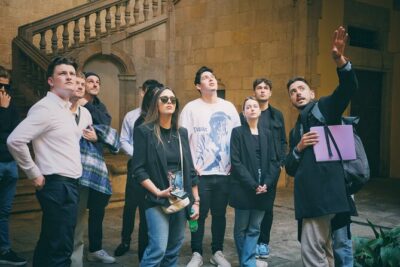
Ramblas, Old Town, Gothic and Gaudi Architecture Walking Tour
Read our review →
Barcelona: El Born and Gothic Quarter Wine & Tapas Bar Tour
Read our review →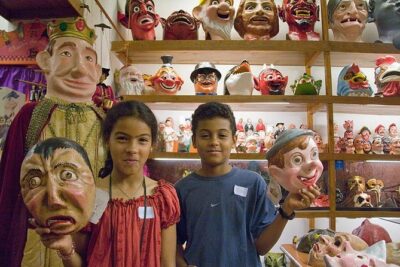
Kids and Family Gothic Quarter Walking Tour in Barcelona
Read our review →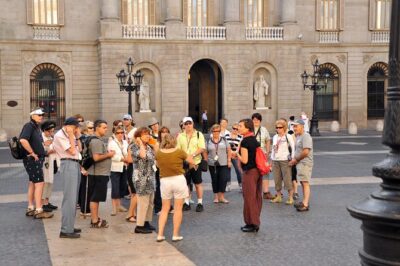
Browse the lists this tour appears in