
Review · ROME
Rome Baroque: Fountains and Squares Private Walking Tour
Rome’s great centerpieces come one after another on this private walk: Trevi Fountain, the Spanish Steps, the Pantheon, and Piazza Navona. It is a strong first look at central Rome, especially if you want a guide to explain the popes, emperors, artists, and legends behind the stone.
I like two things here. First, the route brings together several of Rome’s most famous sights without asking you to plan the connections yourself. Second, private chauffeur service and a fixed-menu meal make the experience easier for families or small groups who want more than a standard walking tour.
The main caution is the price: $710.76 per person is a serious outlay for three to four hours, even with transportation and a meal included. You are paying for privacy, convenience, and a dedicated guide, not for a long list of paid attractions.
Key points at a glance
- Five major sights in one central walk: Trevi Fountain, Piazza di Spagna, Piazza del Popolo, the Pantheon, and Piazza Navona.
- A private experience: Only your group participates, so the pace and questions can be more personal than on a large group tour.
- Luxury transport included: Pickup and drop-off come with a private chauffeur, even though the main sightseeing is on foot.
- A meal closes the experience: Lunch or dinner at a local restaurant is included through a fixed menu.
- Strong storytelling is part of the appeal: The company’s guides, including Francesca on related walks, are praised for anecdotes, papal intrigue, and an engaging style.
- Allow three to four hours: The five listed stops are each planned for about 30 minutes, before allowing for transfers, walking, and the meal.
Why this route works for a first look at Rome
Rome can feel like a museum without walls. Turn a corner and you find an ancient column, a Baroque church, or a fountain built to impress a pope. That is exciting, but it can also make a first visit feel scattered.
This tour gives you a clear line through the historic center. You move from the Trevi Fountain to the Spanish Steps, continue to Piazza del Popolo, then reach the Pantheon and Piazza Navona. These places are not just photogenic stops. Together, they show how ancient Rome, papal Rome, royal Rome, and modern Rome were layered onto the same streets.
You also get a private professional guide rather than a self-guided route on your phone. That matters at places such as the Pantheon, where the building’s shape is easy to admire but its changes from ancient temple to Christian church require explanation.
The walk is described as lasting about three to four hours. The five principal stops are each assigned about 30 minutes, but the total time also includes the movement between them and the included meal. Treat the schedule as a half-day experience rather than a tightly timed two-hour stroll.
More Baroque architecture tours in Rome:
- Borghese Gallery Max 6 People Tour: Baroque & Renaissance in Rome
★ 5.0 · 185 reviews - Guided Walking Tour of Rome: Top Sights & Baroque Treasures
★ 5.0 · 155 reviews - Rome’s Baroque Art Walking Tour: Who Killed Caravaggio?
★ 5.0 · 27 reviews
Trevi Fountain and the coin ritual
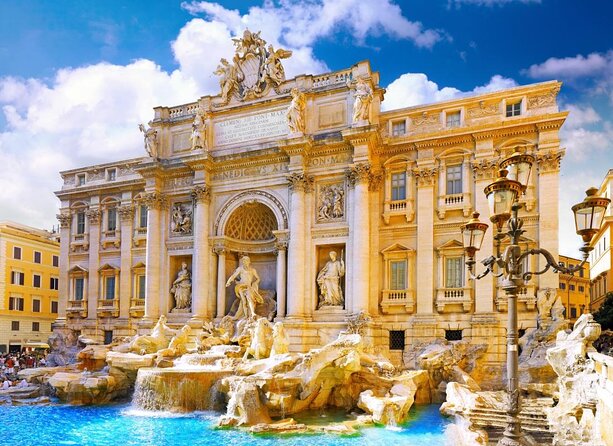
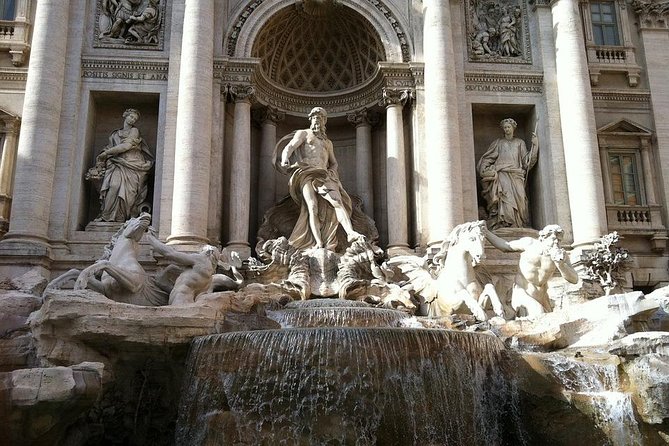
The Trevi Fountain is the natural opening act. It is Rome’s most famous fountain and one of the city’s essential first-visit sights. The central figure of Oceanus rises from a theatrical arrangement of rock, water, and sculpted forms, making the fountain feel far larger than the small piazza around it.
You will have about 30 minutes here. That gives you time to see the fountain, hear its story, and take photographs, although the square can be crowded and noisy. The private format helps because you can ask your guide to explain the symbolism instead of simply stopping for a picture and moving on.
The familiar coin toss is part of the fun. Tradition says that throwing a coin into the fountain ensures your return to Rome. It is a small ritual, but it gives the stop a personal touch. Bring a few coins if you want to take part.
There is no separate admission charge listed for this stop. The challenge is space. You are looking at a major public monument in a compact setting, so do not expect solitude or a quiet pause. Stay aware of your belongings and keep your expectations realistic: the value here is the guide’s context and the ease of having this famous sight built into your route.
Piazza di Spagna and the Spanish Steps
Piazza di Spagna connects the Spanish square below with the Trinità dei Monti church above. The Spanish Steps were built to link the church, which was under the patronage of the king of France, with the piazza and the Spanish Embassy to the Holy See.
This is a stop where geography tells part of the story. The long triangular square below and the rising staircase above show how Rome’s streets were shaped by competing powers and religious institutions. Your guide can help make sense of those connections, which are easy to miss when you are focused only on the view.
You have roughly 30 minutes here. That is enough for an explanation and photographs, but not a long pause in the area. The steps are also a place where practical comfort matters. You will be walking and standing, and the route includes several major public spaces in succession.
The tour does not promise special access or a private area at the Spanish Steps. You are seeing a public monument as part of a guided route. Its strength is placement: after Trevi, it keeps you in the heart of Rome before moving toward the broader Piazza del Popolo.
Piazza del Popolo and Augustus’s obelisk
Piazza del Popolo feels different from the tighter spaces around Trevi and the Spanish Steps. It was laid out in 1538 as a grand entrance to Rome’s main northern gateway and later remodeled, most recently by Giuseppe Valadier in 1823.
The center of the piazza is marked by a 36-meter obelisk brought from ancient Egypt by Augustus. It originally stood in the Circus Maximus, the huge ancient venue for public spectacles. That single monument gives your guide an excellent chance to connect imperial Rome with the later city built around it.
Allow about 30 minutes. The broad space gives you a chance to step back and understand the city’s scale. It is also a useful contrast to the crowded fountain and staircase stops.
Piazza del Popolo is not simply another square on a checklist. It explains Rome’s northern approach and shows how later planners gave the city a formal, ceremonial entrance. If you enjoy urban design, ancient monuments, or the way Rome keeps reusing its past, this may be one of the most satisfying stops.
More architecture walks in Rome:
- City Walk with Architect: Private walking tour of Rome
★ 5.0 · 22 reviews - Moonlight Walking Tour in the Heart of the Imperial & Baroque Rome
★ 5.0 · 5 reviews - Rome: Renaissance & Baroque Walking Tour
★ 5.0 · 2 reviews - The Official Art Deco Walking Tour by The Miami Design Preservation League
★ 5.0 · 1,580 reviews
The Pantheon, Rome’s ancient survivor
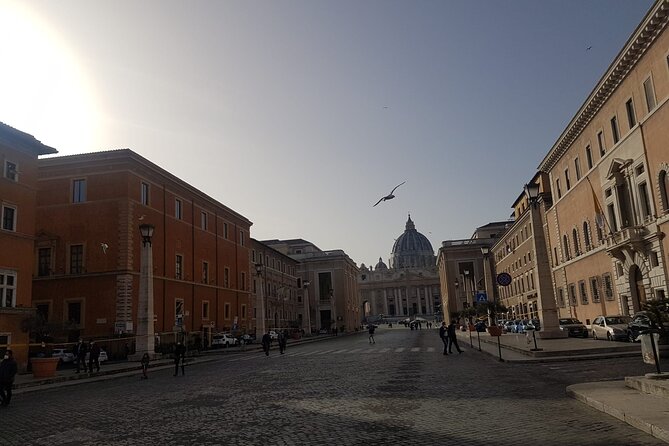
The Pantheon is the architectural high point of the walk for many people. It is described as the best-preserved ancient building in Rome, and its survival gives you a direct sense of the proportions and ambition of Roman construction.
Inside, look up at the immense dome and its oculus, the open circular section at the top. Light enters through that opening and changes the feel of the interior as the day progresses. The effect is simple and powerful: a building designed nearly two thousand years ago still controls your attention with one large circle of sky.
The building was originally dedicated to the gods of ancient mythology. In the seventh century, it became a Christian church. That change is central to understanding why the Pantheon survived while so many other ancient structures disappeared or were dismantled.
You can also see the tombs of Raphael, the famous Renaissance artist, and Victor Emmanuel II, the first king of Italy. Those burials add later layers to an already old building.
The scheduled stop is about 30 minutes. That is enough for an introduction and a look inside, but you may want to linger. The experience is not described as a specialist architectural visit, and the guide cannot control how much time other people spend inside. Still, a guide’s explanation helps you notice more than the dome alone.
The Pantheon is also the place where the tour’s walking demands become clear. By this point, you have crossed several central neighborhoods and visited monuments that invite you to stand, look upward, and listen. Wear comfortable shoes, even though the tour includes vehicle service.
Piazza Navona and Bernini’s Four Rivers
The final major square is Piazza Navona, not far from the Pantheon. It was built on the ruins of Emperor Domitian’s stadium, so its long shape reflects the footprint of an ancient athletic venue.
Today, the visual focus is Bernini’s Fountain of the Four Rivers. The fountain’s figures represent four major rivers, and the composition is designed to be read from several angles. This is a good place for your guide to explain how Baroque art used movement, drama, water, and scale to impress people in a public square.
The stop is planned for about 30 minutes. Piazza Navona rewards a slow look because the surrounding buildings, fountains, and open space work together. At the same time, it is a busy public square with restaurants and passing crowds. The tour gives you an introduction rather than a private viewing.
The route’s endpoint is well chosen. After the ancient Pantheon, Piazza Navona brings you back to the theatrical side of papal Rome. The result is a natural finish to a walk focused on fountains, squares, and the way powerful people used public spaces to shape the city.
The included meal and what it adds
The tour ends at one of the company’s favorite local restaurants for a traditional Mediterranean meal. Lunch or dinner is included through a fixed menu.
That is more useful than it may first appear. After several hours of walking and listening, you do not have to search for a restaurant or decide where to eat in an unfamiliar part of town. The meal also gives the experience a social ending instead of dropping you at the final monument and sending you on your way.
The fixed menu limits flexibility. Food and drinks outside the organized meal are not included, so you should expect to pay extra for anything beyond the set arrangement. Tell the operator about dietary requirements or allergies when booking. The provided information does not specify the restaurant, menu, or drink selection, so ask for those details if they are important to you.
The meal is a useful benefit for families and small groups, but it should not be the main reason to book. The central value is the private guiding and transport. Think of the food as a practical finish rather than a separately reviewed dining experience.
What the private format changes
This is not a shared bus tour. Only your group participates, and a private professional guide accompanies you. That allows you to ask questions about topics that interest you, such as ancient engineering, papal politics, Baroque artists, or the legends attached to Rome’s streets.
The company’s guides are praised for being organized, engaging, and good at adding anecdotes. Francesca is specifically named in connection with the company’s walks, and the descriptions of her work emphasize storytelling about popes, courtesans, palaces, and unusual corners of Rome. You should not assume Francesca will lead every departure, so ask when booking if having her as your guide matters.
Some of the company’s walks have used earpieces for a small group, helping people hear the guide safely while moving through the city. This particular experience is private, and the equipment details are not specified. If clear audio is important to you, confirm whether an earpiece will be supplied.
The private format is especially helpful if your group has mixed interests or a child who needs a different pace. It also costs more. A couple or family paying $710.76 per person is making a choice for convenience and attention, not saving money.
Is $710.76 per person a fair value?
At $710.76 per person, this is an expensive Rome walking tour. The price includes pickup and drop-off in luxury transportation with a private chauffeur, a professional private guide, and lunch or dinner from a fixed menu.
That package can make sense for a special occasion, a family group, or anyone who values door-to-door service. It can also be useful if you have limited time in Rome and want the city’s best-known central sights arranged in one smooth half-day.
The value is harder to justify if you are a budget-conscious couple, already staying near the historic center, or comfortable using public transport and eating on your own. You can see these public monuments independently for far less. The difference is the guide’s interpretation, the private attention, the transport, and the meal.
I would also compare the price based on group size. A private tour becomes more reasonable when shared by several people, although the listed amount is per person and the available discount structure is not explained. Ask how group discounts apply before paying.
Who should book this experience?
I would consider this tour for a first visit to Rome when you want orientation without the work of arranging every detail. It suits families, small groups, and visitors who prefer a private guide over a large scheduled departure.
It is also a good match if you want the classic center rather than a specialist visit to the Colosseum, Vatican Museums, or catacombs. Those major sights are not part of this route. The focus is public squares, fountains, the Pantheon, and the stories that connect them.
You should think twice if you dislike fixed meals, prefer a slow pace at one monument, or want extensive time inside the Pantheon. Five major stops in three to four hours means the day is broad rather than leisurely.
The walk is suitable for most people, and service animals are allowed. It is near public transportation, though pickup and drop-off by private vehicle are included. The child rate applies only when a child is sharing with two paying adults, so check the final price carefully for a family booking.
Cancellation and planning notes
You receive confirmation at booking, and free cancellation is available up to 24 hours before the local start time for a full refund. Cancellations or changes made less than 24 hours in advance are not accepted for a refund.
Give dietary requirements and allergies when you book. Gratuities are optional and are not included. Since the schedule includes both vehicle service and walking, ask for the pickup details and the expected meal timing before the day begins.
FAQ
How long does the Rome Baroque walking tour last?
The experience lasts approximately three to four hours. The five main stops are each planned for about 30 minutes, with additional time for walking, transfers, and the included meal.
Which sights are included?
The route includes Trevi Fountain, Piazza di Spagna and the Spanish Steps, Piazza del Popolo, the Pantheon, and Piazza Navona with Bernini’s Fountain of the Four Rivers.
Is transportation included?
Yes. Pickup and drop-off with luxury transportation and a private chauffeur are included.
Is this a private tour?
Yes. Only your group participates in the activity, and a private professional guide accompanies you.
Is lunch or dinner included?
Yes. The tour includes either lunch or dinner at a local restaurant, served through a fixed menu. Extra food or drinks outside that arrangement are not included.
Can I request a specific guide?
Francesca is named among the guides associated with the company’s walks, but the supplied information does not guarantee that she leads every departure. Contact the provider if a particular guide is important to you.
What happens if I need to cancel?
You can cancel up to 24 hours before the local start time for a full refund. Cancellations or changes made less than 24 hours before the start time are not refunded or accepted.
Should you book it?
Book this tour if you want a polished private introduction to central Rome and are willing to pay for convenience. The route covers the city’s most recognizable fountains and squares, the Pantheon adds real architectural weight, and the chauffeur service and meal remove much of the day’s planning.
Skip it if the price feels uncomfortable or if you prefer to explore independently. Rome’s public center is easy to walk through on your own, and this tour does not include the Colosseum or Vatican Museums.
For the right group, the combination of a private guide, strong storytelling, five major sights, and a restaurant meal makes the cost easier to understand. Just confirm the guide, menu, pickup details, and group discount before booking.
Just added around Rome
- Vatican: Exclusive Baroque Evening With Aperitivo & Dinner★ 3.1 · 2 reviews
- Rome Pantheon Highlights From Ancient Rome to Baroque★ 5.0 · 5 reviews
- Borghese Gallery Private Tour: The Greatest Baroque Masterpieces★ 5.0 · 6 reviews
- Private Personalized Architecture Tour of Rome with an Architect★ 5.0 · 5 reviews
- Private Baroque Tour: Discover Bernini & Caravaggio’s Best Works★ 5.0 · 3 reviews
- New Year’s Baroque Concert at Doria Pamphilj Palace★ 5.0 · 2 reviews
- Renaissance Rome and Baroque Rome★ 5.0 · 19 reviews
- Moonlight Walking Tour in the Heart of the Imperial & Baroque Rome★ 5.0 · 5 reviews
Baroque Architecture Tours, compared.
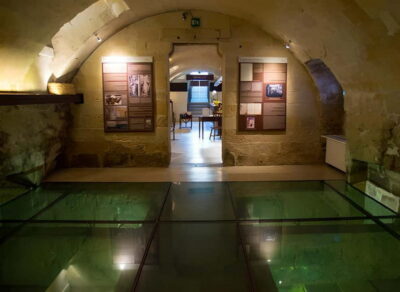
Lecce: Baroque Architecture and Underground Walking Tour
Read our review →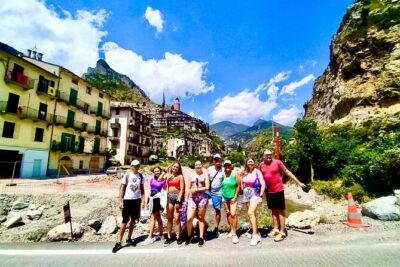
Train Exp. through the Alps (Royal Baroque Route from Nice)
Read our review →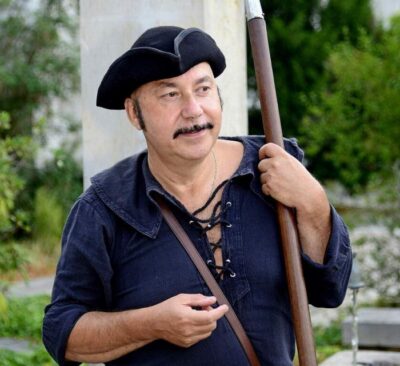
Dresden: Tour of the Baroque Quarter with a Night Watchman
Read our review →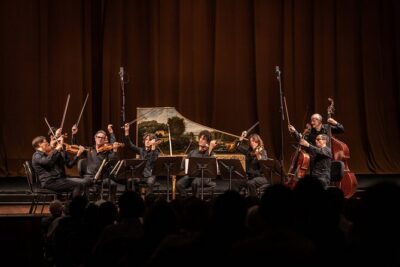
Interpreti Veneziani Ensemble Baroque Concert in Venice Ticket
Read our review →
Borghese Gallery Max 6 People Tour: Baroque & Renaissance in Rome
Read our review →
Concert at the Palais Schönborn-Batthyány by the Vienna Baroque Orchestra
Read our review →
Guided Walking Tour of Rome: Top Sights & Baroque Treasures
Read our review →
Noto, Modica and Ragusa: The Baroque Tour from Catania
Read our review →Browse the lists this tour appears in