
Review · ROME
City Walk with Architect: Private walking tour of Rome
Rome reveals itself best on foot, and this private walk treats the city as an open-air architecture lesson. You move from ancient columns to Baroque fountains and grand modern monuments while a professional guide explains how each piece fits into Rome’s long story.
I like the private format, which lets you ask plenty of questions and adjust the route to your interests. I also like the chance to see both famous sights and less obvious architectural details, with Bado offering practical Rome tips along the way. The main drawback is simple: you walk for about two and a half hours, and most sites are viewed from outside rather than explored at length indoors.
Key points to know
- Bado leads an English-language architecture walk with historical context, practical advice, and time for questions.
- The route links ten central sights, from Piazza della Minerva to Piazza Venezia.
- You can shape the itinerary, rather than follow a rigid route set in advance.
- The tour is private, so only your group takes part.
- The Vittoriano terrace adds a high viewpoint near the end of the walk.
- Plan for steady walking, with small breaks but no private transportation.
Why this private Rome walk is different
Many Rome walking tours move quickly from one famous monument to the next. This experience takes a more focused approach: architecture provides the thread connecting the stops.
You are not simply checking off the Trevi Fountain, Spanish Steps, and Pantheon. You can ask why a square was designed in a certain way, how an ancient column ended up in a later city setting, or how Rome’s grand public buildings changed the feel of the streets around them.
The private setup matters here. With a large group, an architecture question can easily get lost. With only your own party, you can ask Bado to slow down, explain a detail again, take a photo, or shift attention toward the buildings that interest you most.
Bado is described as an architecture student and guide with a strong command of Rome’s architecture and history. He also offers tips and recommendations beyond the formal route. That makes this a useful early-in-your-stay activity, especially if you want help deciding what to see next.
More architecture walks in Rome:
- Guided Walking Tour of Rome: Top Sights & Baroque Treasures
★ 5.0 · 155 reviews - Rome’s Baroque Art Walking Tour: Who Killed Caravaggio?
★ 5.0 · 27 reviews - Rome Baroque: Fountains and Squares Private Walking Tour
★ 5.0 · 7 reviews
Piazza della Minerva starts the story
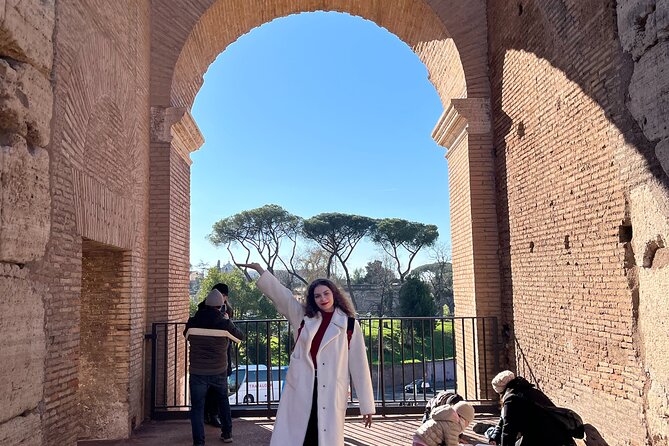
The meeting point is Piazza della Minerva, near the center of Rome. It is a good starting place because the square brings together layers of Roman history in a compact space.
You begin with a short orientation of about five minutes before moving into the main route. Since the exact order can change based on your interests, you should treat the listed stops as the tour’s core sights rather than a guaranteed minute-by-minute schedule.
Starting here also gives you a calm introduction before the route reaches Rome’s busier showpieces. The square is close to major central sights, so it works well as a practical meeting point for a walking tour.
Trevi Fountain and the Column of the Immaculate Conception
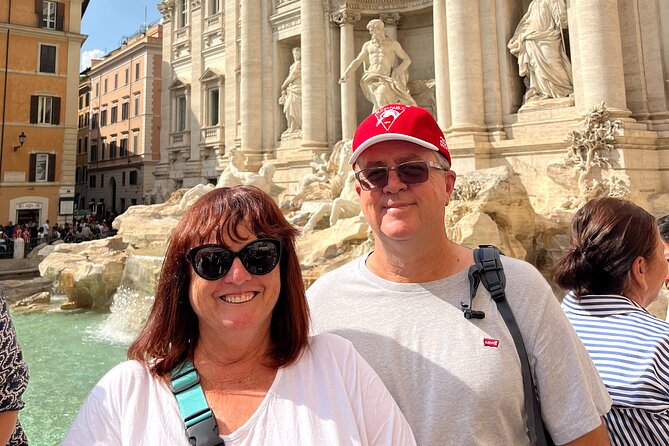
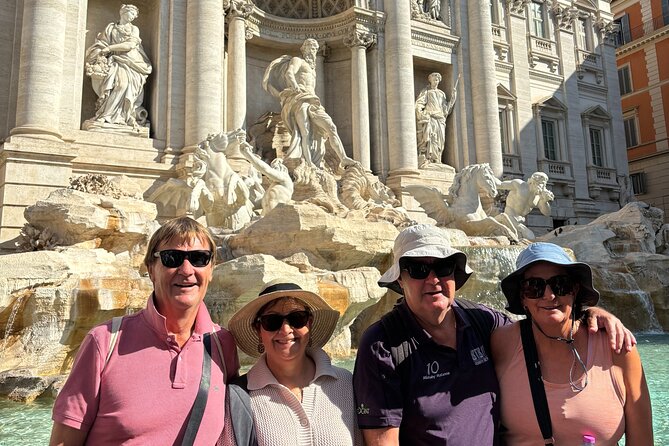
The Trevi Fountain receives about 15 minutes. That is enough time to look at the fountain’s theatrical design, understand its place in the surrounding streets, and take photographs.
A guide adds value here because Trevi can feel like a quick photo stop. Architectural explanations help you notice the relationship between the fountain, the stonework, the water, and the narrow urban setting. You should not expect a long private viewing area or a quiet visit. The stop is brief and focused.
The route then moves to the Column of the Immaculate Conception, also known as the Colonna dell’Immacolata Concezione. This stop lasts about 15 minutes and gives you a chance to compare a commemorative column with the ancient Roman columns seen elsewhere in the city.
That comparison is one of the tour’s strengths. Rome’s streets are full of monuments from different periods, and the guide can help you see how public memory, religion, politics, and architecture overlap.
The Spanish Steps and Piazza del Popolo
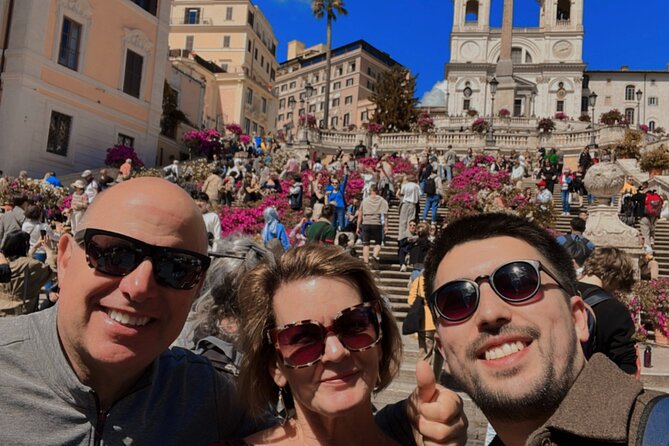
The Spanish Steps are another 15-minute stop. You will have time to examine the famous staircase and the urban space around it, rather than simply pass by on the way to a shopping street.
The steps are an ideal place to discuss how stairs can act as both a practical route and a public stage. The surrounding setting also shows how Rome’s monumental spaces connect with everyday city life.
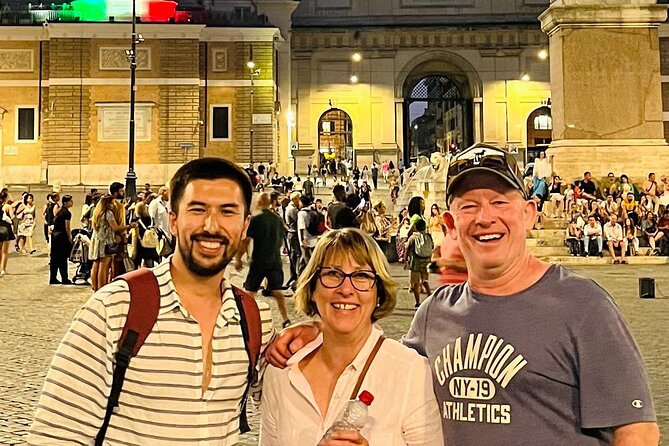
Piazza del Popolo follows, with another 15 minutes. The square is broad, formal, and carefully arranged, making it a useful contrast to the tighter spaces around Trevi and the Spanish Steps.
Here, I would pay attention to the overall layout rather than just one monument. A good guide can help you read the shape of the square, its entrances, its symmetry, and the way surrounding buildings frame the open space. Because the tour is private, you can spend more time on this kind of visual explanation if architecture is your main interest.
More private architecture tours in Rome:
- Rome: Caravaggio and Baroque Art Private Guided Tour
★ 4.4 · 11 reviews - Borghese Gallery Private Tour: The Greatest Baroque Masterpieces
★ 5.0 · 6 reviews - Private Personalized Architecture Tour of Rome with an Architect
★ 5.0 · 5 reviews - Rome Caravaggio and Baroque Masterpieces Private Guided Tour
★ 5.0 · 5 reviews
Piazza Colonna and the Temple of Hadrian
At Piazza Colonna, you see the Column of Marcus Aurelius during a 15-minute stop. The column offers a direct link to imperial Rome, but its current setting also shows how ancient monuments were absorbed into the later city.
This is where the architecture theme becomes especially useful. Instead of treating ancient Rome as a separate archaeological zone, the walk shows how Roman remains sit among government buildings, shops, streets, and modern daily life.
The Temple of Hadrian is the next listed stop, also for about 15 minutes. Its surviving columns are a striking reminder that Rome’s ancient buildings often survive in altered form. The point is not only to identify the monument, but to understand what you are actually seeing and what has changed around it.
You should keep your expectations realistic. The schedule gives each location a short visit, so the guide’s explanation will be central. This is a city walk with architectural commentary, not a long archaeological inspection at every stop.
Piazza Navona and the Pantheon
Piazza Navona receives about 15 minutes and gives you one of Rome’s best settings for understanding how a public space can preserve the shape of an earlier building program while taking on a new identity.
The square is especially useful for comparing architecture and public life. You can look at the fountains, the surrounding facades, and the long shape of the piazza while Bado explains the historical layers behind it.
The Pantheon is also allotted about 15 minutes. It is one of the most important stops for anyone interested in architecture, since its massive ancient structure and distinctive interior design have influenced buildings far beyond Rome.
The schedule lists the Pantheon as a visit, but it does not promise extended interior access. I would ask at the beginning whether your preferred itinerary includes going inside and how that fits the timing. The tour’s main strength is explanation and comparison, so even an exterior-focused stop can be worthwhile, but you should not book it expecting a full guided museum visit.
This is also a good place to ask technical questions. The private format gives you room to focus on the parts of Roman construction and design that matter most to you.
Piazza Venezia and the Vittoriano terrace
The tour ends at Piazza Venezia, with about 25 minutes devoted to the Vittoriano building and access to its terrace.
This final stop changes the rhythm of the walk. After a series of fountains, columns, steps, and historic squares, the Vittoriano presents a much larger and more imposing architectural statement. The terrace adds a viewpoint over central Rome, giving you a chance to connect the places you have just visited.
Ending here is practical too. Piazza Venezia is a major central landmark and an easy place from which to continue sightseeing. The walk does not return you to the starting point, so plan your next activity from this side of the historic center.
The terrace is an important part of the experience because it gives you a broad view rather than another close look at a single monument. Still, the precise view and access details are not described beyond terrace access, so treat it as an included feature rather than a full rooftop excursion.
How much walking should you expect?
The advertised duration is about two hours and 30 minutes. The itinerary includes ten stops, most lasting 15 minutes, with short pauses between them.
This is not a difficult hike, but it is a real city walk. You need to be comfortable walking for at least an hour, and ideally for most of the tour. Small breaks are included, but they do not turn the experience into a seated sightseeing tour.
Wear comfortable shoes and be ready for Rome’s uneven urban surfaces. That advice is especially important because the tour moves between several central districts instead of staying in one small square.
Most people can participate, and service animals are allowed. The experience is near public transportation, though private transportation is not included. If walking long distances is difficult for you, this may not be the right choice.
What the private format adds
The strongest feature is flexibility. You are not locked into a fixed route if your group has a particular interest in ancient engineering, Baroque design, civic monuments, religious architecture, or Rome’s modern building projects.
At booking, think about what you want from the walk. If you have already seen the Trevi Fountain and Spanish Steps, ask Bado to put more emphasis on architectural details or lesser-known buildings. If this is your first day in Rome, ask for practical advice about how to organize the rest of your visit.
The private setting also helps with different interests within one group. One person can ask about history, another about design, and another about photography without holding up a large party.
The tradeoff is that flexibility works best when you speak up. If you have no special requests, the guide will still have a strong route, but you may get more value by explaining your priorities before the walk begins.
Is $118.82 per person a fair price?
At $118.82 per person, this is not a budget walk. The value depends heavily on group size and how much you care about architecture.
For one or two people, the cost is high for a two-and-a-half-hour experience. For a larger private group, group discounts can make the price easier to justify, especially since the fee covers a dedicated English-speaking guide rather than a place in a large shared group.
You are paying for time with a guide who can adapt the conversation, not for paid admission to a series of attractions. The listed stops have no admission charge, and the main included service is the guide. That means the tour makes the most sense if you want interpretation, planning help, and the chance to ask detailed questions.
I would compare it with a standard group sightseeing walk. If you only want a quick introduction to Rome’s famous sights, a less expensive group option may serve you well. If you want a private architecture conversation and a route shaped around your interests, the added cost is easier to defend.
The experience is often booked about 39 days ahead, so you should plan early if you want a particular date.
Tips for getting more from the walk
Tell Bado what you have already seen. The route can be adjusted, and this prevents your private time from feeling repetitive.
Ask about indoor access before the tour begins, especially for the Pantheon. The schedule gives the monument a short stop, and the information provided does not promise a lengthy interior visit.
Bring questions. This is not just a point-and-name tour. Ask about building materials, urban planning, changes made over time, or why a monument sits where it does.
Use the walk as a first or second-day orientation if you want practical suggestions for the rest of your stay. Bado is described as offering tips and recommendations, and the private setting gives you time to ask about places beyond the formal route.
Remember that the ending point is Piazza Venezia, not Piazza della Minerva. That can work in your favor, since you finish near major central sights, but it is worth planning ahead.
Free cancellation is available if you cancel at least 24 hours before the start time. Cancellations or changes within 24 hours are not refunded or accepted.
Who should book this Rome architecture tour?
I would choose this tour if you enjoy buildings as much as famous artworks, prefer private guiding, or want a flexible route through Rome’s historic center.
It is particularly suited to couples, families, and small groups who like to ask questions at their own pace. Architecture students and serious enthusiasts may appreciate the chance to focus on design and urban planning rather than only hearing a standard historical script.
It is less suitable if you want extensive time inside museums and monuments, dislike walking, or mainly want transportation between sights. It also may not be the best value for a solo visitor on a tight budget.
The high rating and full recommendation from the available feedback fit the tour’s main strengths: Bado’s patience, his willingness to answer questions, his help with photos and recommendations, and his clear interest in Roman architecture. One practical detail also matters: he was able to remain patient when a group arrived late, which suggests a personal approach, though you should still aim to arrive on time.
Should you book it?
Book this private walk if you want Rome explained through its buildings, squares, columns, and street plans rather than simply photographed. The route covers a remarkable range of central sights, and the private format gives you a better chance to shape the discussion around your interests.
Skip it if you want long interior visits or a low-cost way to see Rome’s highlights. For the right group, though, the combination of Bado’s architecture background, flexible routing, and central ten-stop walk makes the price reasonable, especially when shared among several people.
FAQ
Where does the tour start?
The tour starts at Piazza della Minerva in central Rome. The meeting point is in the center of the piazza or another spot there depending on the itinerary.
Where does the tour end?
The scheduled ending point is Piazza Venezia in Rome, near the Vittoriano building.
How long does the tour last?
The tour lasts approximately two hours and 30 minutes.
Is the tour private?
Yes. Only your group participates in the activity.
What language is the tour offered in?
The tour is offered in English and includes an English-speaking guide.
Is transportation included?
No. Private transportation is not included. This is a walking tour, and it is located near public transportation.
Can the route be changed?
Yes. The experience allows flexibility instead of requiring one predetermined route, so you can discuss your interests and shape the itinerary.
Is the tour suitable for people who have difficulty walking?
The tour is not recommended for people who cannot walk for at least one hour. There are small breaks between portions of the walk.
What is included in the price?
The English-speaking guide is included. The listed attractions do not require an admission ticket for the tour stops.
Can I cancel for a full refund?
Yes, if you cancel at least 24 hours before the experience start time. Cancellations within 24 hours are not refunded, and changes within that period are not accepted.
Just added around Rome
- Vatican: Exclusive Baroque Evening With Aperitivo & Dinner★ 3.1 · 2 reviews
- Rome Pantheon Highlights From Ancient Rome to Baroque★ 5.0 · 5 reviews
- Borghese Gallery Private Tour: The Greatest Baroque Masterpieces★ 5.0 · 6 reviews
- Private Baroque Tour: Discover Bernini & Caravaggio’s Best Works★ 5.0 · 3 reviews
- Private Personalized Architecture Tour of Rome with an Architect★ 5.0 · 5 reviews
- New Year’s Baroque Concert at Doria Pamphilj Palace★ 5.0 · 2 reviews
- Rome Baroque: Fountains and Squares Private Walking Tour★ 5.0 · 7 reviews
- Renaissance Rome and Baroque Rome★ 5.0 · 19 reviews
Walking Tours, compared.
The Official Art Deco Walking Tour by The Miami Design Preservation League
Read our review →
Barcelona: Gothic Quarter Ghosts and Legends Walking Tour
Read our review →
Barcelona: Old Town and Gothic Quarter Walking Tour
Read our review →
Lecce: Baroque Architecture and Underground Walking Tour
Read our review →
Chicago in a Day: Food, History & Architecture Walking Tour
Read our review →
Ramblas, Old Town, Gothic and Gaudi Architecture Walking Tour
Read our review →
Chicago’s Secret Interiors Architectural Walking Tour
Read our review →Browse the lists this tour appears in