
Review · ROME
Rome Caravaggio and Baroque Masterpieces Private Guided Tour
Caravaggio’s Rome is best understood inside its churches, where his paintings still hang in the places for which they were made. This private three-hour tour takes you to three of the city’s most important Caravaggio works, then connects them to Bernini, Borromini, ancient Rome, and the city’s grand political buildings.
I like the one-to-one format, which gives you room to ask why a painting shocked its first audience or how Caravaggio’s life shaped his work. I also like the free church admissions and the chance to see major works in their original setting, rather than only in a crowded museum.
The main consideration is pace. You cover several central sites in about three hours, and the Pantheon is viewed from outside unless you arrange and pay for entry separately. The route is also more useful for people who enjoy art, churches, and Roman history than for anyone wanting a slow museum visit.
Key points to know before booking
- Three churches hold the main Caravaggio works: Santa Maria del Popolo, San Luigi dei Francesi, and the church connected with Saint Matthew’s story.
- Emilio and Martin are named guides: Emilio is praised for his passion for Caravaggio and Roman art, while Martin brings wider Roman and European art history into the conversation.
- The tour links Baroque art with ancient Rome: You see Piazza Navona, the Pantheon exterior, Augustus’s tomb, Ara Pacis, and Palazzo di Montecitorio.
- It is a private experience: Only your own group participates, so the guide can adjust the discussion and pace.
- Church dress rules matter: Knees and shoulders must be covered for both men and women.
- The price is $237.09 per person: That can make sense for a small group wanting expert attention, but it is not a budget choice for a solo visitor.
Why Caravaggio works so well in Rome
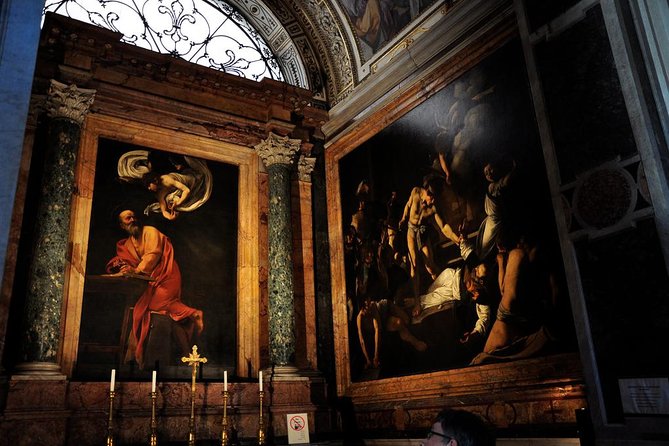
Caravaggio is not presented here as a distant museum painter. His pictures remain in Roman churches, often where worshippers and passersby encounter them as part of the building itself. That setting matters. You can look at the paintings while seeing the architecture, chapel space, and religious purpose around them.
A private art historian guide can also point out details you might miss on your own. The tour focuses on Caravaggio’s treatment of Saint Peter, Saint Paul, and Saint Matthew, along with the artist’s time in Rome and the people who helped his career.
The guides named in the feedback are Emilio and Martin. Emilio is especially associated with lively explanations of Caravaggio and Roman history. One unusual addition on an earlier tour was a visit to Rome’s first public library, where a 16th-century book was shown. That stop is not promised in the scheduled route, so treat it as a possible extra rather than part of the package.
More Baroque architecture tours in Rome:
- Borghese Gallery Max 6 People Tour: Baroque & Renaissance in Rome
★ 5.0 · 185 reviews - Guided Walking Tour of Rome: Top Sights & Baroque Treasures
★ 5.0 · 155 reviews - Rome’s Baroque Art Walking Tour: Who Killed Caravaggio?
★ 5.0 · 27 reviews
Santa Maria del Popolo and two dramatic crucifixions
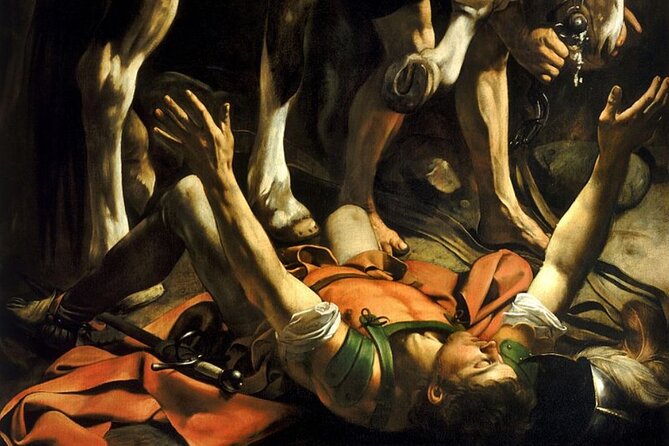
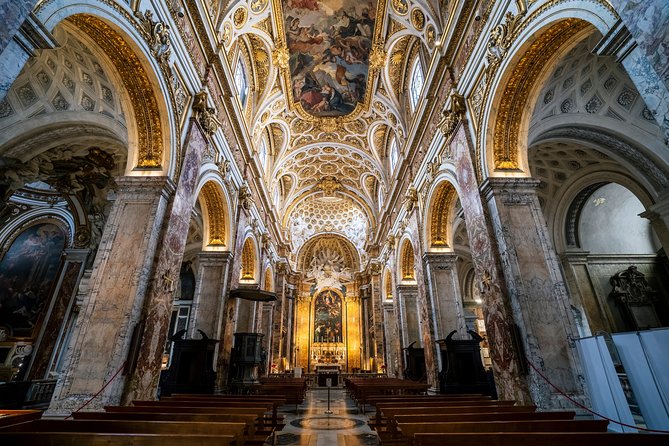
The tour begins at Piazza del Popolo, a useful starting point because it puts you near Santa Maria del Popolo and several major Roman sights. Inside the church, you see Caravaggio’s paintings dedicated to the crucifixions of Saint Peter and Saint Paul.
These works reward careful looking. Caravaggio was famous for using strong light, plain human figures, and forceful physical action. Your guide can help you read the gestures, shadows, and unusual viewpoints rather than simply pointing out the artist’s name and moving on.
The church admission is included at no extra cost. The visit itself is listed as about 20 minutes, so you should expect a focused explanation, not a long period for sketching or quiet study.
Piazza del Popolo is also a convenient place to begin a walking route through central Rome. The square can be busy, and the church may have religious services or visitor restrictions at certain times, though no specific closure schedule is provided. Keep your clothing suitable for church visits from the start.
Augustus’s tomb and the Ara Pacis
The route also takes in the remains of Augustus’s monumental tomb and the Ara Pacis, the Altar of Peace. These ancient monuments broaden the tour beyond Caravaggio and show how Rome’s history sits on top of itself, with imperial monuments, churches, palaces, and government buildings sharing a compact center.
This stop is useful if you want more than a painter-by-painter art lesson. Augustus’s tomb points to the political power of ancient Rome, while the Ara Pacis reflects the public image Augustus wanted to project. Your guide can connect that older use of art and architecture for power with the later Baroque use of spectacle and religious drama.
The schedule does not give a separate visit time or specify entry arrangements for these monuments. Plan on seeing them as part of the route, and ask your guide what can be viewed from outside on your date.
San Luigi dei Francesi and Caravaggio’s Saint Matthew
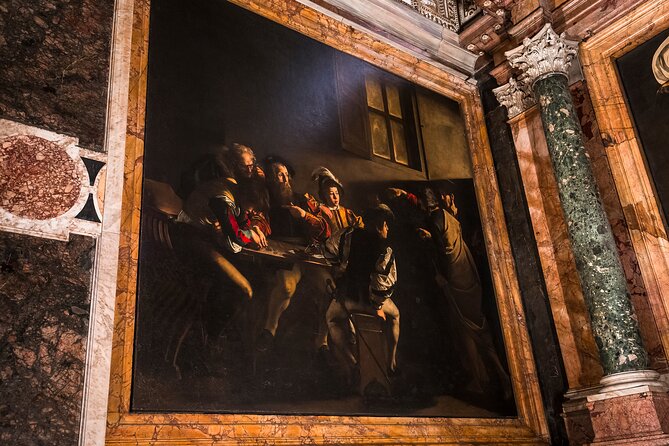
At the Church of St. Louis of the French, the focus returns to Caravaggio. You stop to see the three paintings dedicated to Saint Matthew and his life. The church visit is listed at about 15 minutes, with admission free.
This is one of the tour’s strongest sections because three related paintings allow you to compare Caravaggio’s approach across a small cycle. Rather than seeing one famous canvas in isolation, you can follow how the artist presents Matthew’s calling, identity, and role.
The church is a functioning place of worship, not simply an art gallery. That means you should keep your voice low, follow the guide’s instructions, and be ready for a brief visit if religious activity is taking place. The experience is best for someone who wants context and interpretation, not a long, unhurried period alone with each painting.
More private architecture tours in Rome:
- City Walk with Architect: Private walking tour of Rome
★ 5.0 · 22 reviews - Rome: Caravaggio and Baroque Art Private Guided Tour
★ 4.4 · 11 reviews - Rome Baroque: Fountains and Squares Private Walking Tour
★ 5.0 · 7 reviews - Borghese Gallery Private Tour: The Greatest Baroque Masterpieces
★ 5.0 · 6 reviews
Piazza Navona, Bernini, and Borromini
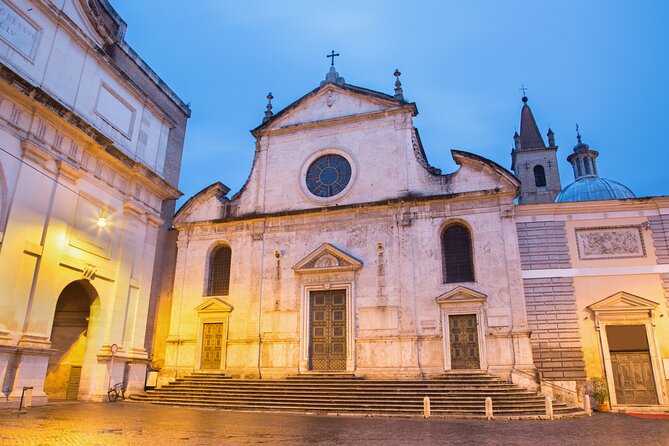
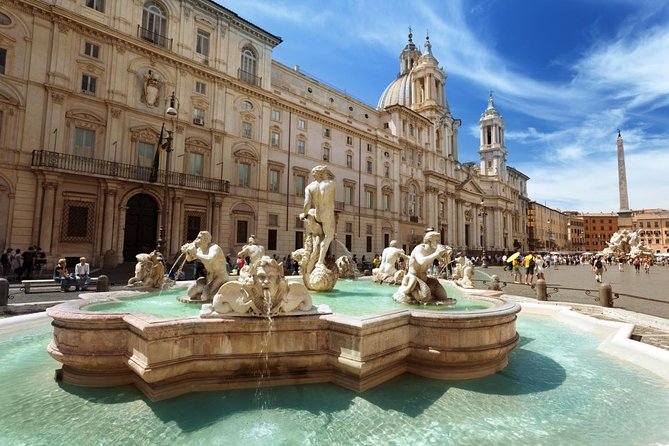
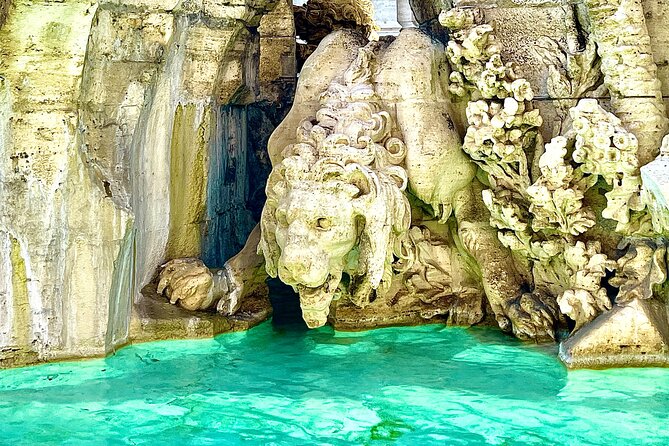
Piazza Navona brings you into the heart of Roman Baroque design. The square is famous for the Fountain of the Four Rivers, sculpted by Bernini, and for the Church of Sant’Agnese in Agone, designed by Borromini.
This pairing makes the stop especially worthwhile. Bernini and Borromini were both major Baroque figures, but their work has different visual energy. Your guide can explain how the fountain, church facade, and long piazza work together as a public show of movement, drama, and power.
The scheduled stop lasts about 15 minutes. That is enough for an orientation and a focused explanation, but not enough for a full visit inside the church or a relaxed look at every fountain figure. If you want photographs, take them quickly and stay close to your guide.
Piazza Navona is also one of the most open and social places on the route. It gives your eyes a break after the darker church interiors, though crowds and street activity can make it harder to hear. A private guide helps here because you can ask the group to pause in a quieter spot.
Caravaggio’s Roman home and the Pantheon exterior
The route passes a magnificent building once owned by Cardinal Del Monte, where Caravaggio lived after arriving in Rome. This detail gives useful personal context. Caravaggio’s success depended not only on talent, but also on patrons who gave him protection, commissions, and access to influential circles.
The building is viewed as part of the route rather than presented as a separate interior visit. That distinction matters. You are seeing a place tied to the artist’s Roman life, but you should not expect a house museum or rooms devoted to Caravaggio.
Next comes the Pantheon. The tour views the ancient temple from outside and explains its original dedication by Agrippa to all the gods, its later conversion into a church, and its role as a burial place for Italy’s kings after national unification in 1870.
The Pantheon is one of Rome’s most impressive buildings, and even an exterior explanation has value. Still, entry is not included. If stepping inside is important to you, budget for a separate ticket and confirm whether your schedule allows it. The listed stop is about 15 minutes, so the standard program does not leave much room for an extended interior visit.
Saint Ignatius and Rome’s Baroque illusion
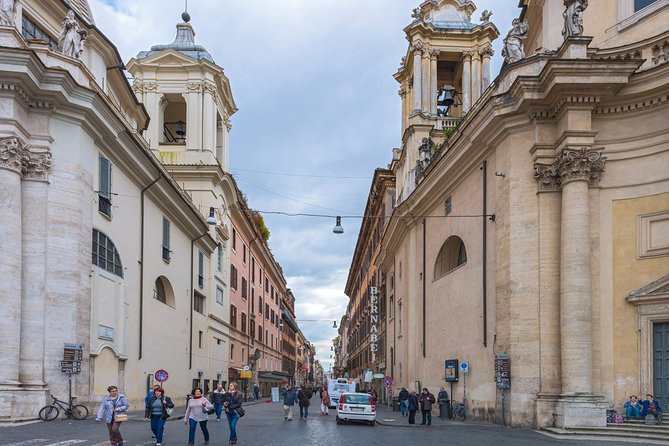
You also pass the church dedicated to Saint Ignatius of Loyola, founder of the Jesuit order. The square in front of it is described as a fine example of Roman Baroque style.
The route does not promise a full interior visit, so think of this as a passing architectural stop. It helps show how widely Baroque design appears in Rome, from major fountains and churches to the shape of public squares.
This is where a guide with interests beyond Caravaggio can add real value. Martin, one of the named guides, is praised for bringing Roman and European art history into the discussion. That wider frame keeps the tour from becoming a narrow checklist of paintings.
Palazzo di Montecitorio and the end of the walk
The tour ends at Palazzo di Montecitorio, home of Italy’s Parliament. The facade was based on a project by Bernini, and the building’s long history gives the final stop a political edge.
The scheduled visit lasts about 10 minutes. You will view the building and hear about its role, but this is not a parliamentary tour and no interior access is included.
The end point is Piazza di Monte Citorio, in central Rome. That makes it practical for continuing to nearby sights, finding lunch, or walking onward, though the experience does not include food, drinks, hotel pickup, or drop-off.
What $237.09 per person gets you
At $237.09 per person, this is a premium activity. The price is easiest to justify if you are traveling with family or friends and value having a private guide rather than joining a larger group. Group discounts may improve the cost for a larger party, but the exact discount is not specified.
You are paying for the art historian guide, private attention, and a carefully connected route through central Rome. Church admissions are free, so the value comes from interpretation and access to the guide, not from bundled entrance fees.
For a solo visitor mainly interested in ticking off landmarks, the price may feel high. You can see several exteriors and enter the churches without paying an admission charge. For a couple or small group that wants to understand what it is seeing, the cost can be more reasonable, especially if you ask questions and use the private format fully.
Timing, clothing, and practical details
The experience lasts about three hours, with morning and afternoon departure options. That makes it easy to place around another Rome activity, though you should avoid scheduling it too tightly against a timed entry elsewhere.
The starting point is Piazza del Popolo, and the tour ends at Piazza di Monte Citorio. Pickup and drop-off are not included. The route is near public transportation, but the supplied details do not state the exact walking distance between stops or the number of steps.
Wear smart casual clothing with covered knees and shoulders. This rule applies to both men and women and is essential because several churches are part of the route. Bringing a light layer or scarf can help you meet the requirement without dressing formally.
The order of the stops can change. That is normal for a route involving active churches and busy public spaces, but it means you should not plan around one exact sequence.
Confirmation is normally sent at booking, though bookings made within one day of the tour are confirmed as soon as possible, subject to availability. The cancellation terms say you can receive a full refund when canceling at least 24 hours before the start time. The additional conditions also say refund requests must be made within and no later than 48 hours from the tour date, so read the final booking terms carefully if your plans may change.
Who should book this Caravaggio tour
I would choose this tour if you want Caravaggio explained by a specialist and prefer seeing art in working churches rather than only in galleries. It also suits you if you like connecting painting with Roman politics, ancient monuments, architecture, and the lives of artists.
The private format is helpful for couples, families, and small groups with mixed levels of interest. A person who already knows Caravaggio can ask detailed questions, while someone new to his work can get the basic story without feeling lost.
I would hesitate if your priority is entering every landmark, spending a long time at each painting, or keeping costs low. The Pantheon is outside only, the route moves through several sites, and the schedule is designed for guided interpretation rather than extended independent viewing.
Should you book it?
Book this experience if Caravaggio is high on your Rome list and you want a guide to explain why his paintings matter in their original churches. Emilio is a particularly appealing choice if available, based on his reported focus on Caravaggio and Roman art, while Martin appears well suited to anyone who wants wider European art context.
Skip it if you want a slow museum day or a tour built around interior access to every major monument. At $237.09 per person, the private format needs to be the main reason you book. For the right small group, the chance to see three Caravaggio works, walk through Baroque Rome, and ask questions at your own pace makes the cost easier to defend.
FAQ
How long is the Rome Caravaggio and Baroque tour?
The tour lasts approximately three hours.
Is this a private tour?
Yes. Only your own group participates in the private activity.
What language is offered?
The tour is offered in English.
Who leads the tour?
A professional art historian guide leads the experience. Guides named in the available information include Emilio and Martin.
Where does the tour start?
The meeting point is Piazza del Popolo in Rome.
Where does the tour end?
The tour ends at Piazza di Monte Citorio, 00186 Rome.
Is the Pantheon entrance included?
No. The Pantheon is viewed from outside, and entry tickets are not included.
Are church admission fees included?
The listed church visits have free admission. The professional guide is included, but any other option not specifically mentioned is excluded.
What should I wear?
Wear smart casual clothing. Knees and shoulders must be covered for both men and women when entering churches.
Can I cancel for a full refund?
You can cancel at least 24 hours before the experience start time for a full refund. Changes or cancellations made less than 24 hours before the start time are not accepted for a refund.
Just added around Rome
- Vatican: Exclusive Baroque Evening With Aperitivo & Dinner★ 3.1 · 2 reviews
- Rome Pantheon Highlights From Ancient Rome to Baroque★ 5.0 · 5 reviews
- Borghese Gallery Private Tour: The Greatest Baroque Masterpieces★ 5.0 · 6 reviews
- Private Baroque Tour: Discover Bernini & Caravaggio’s Best Works★ 5.0 · 3 reviews
- Private Personalized Architecture Tour of Rome with an Architect★ 5.0 · 5 reviews
- New Year’s Baroque Concert at Doria Pamphilj Palace★ 5.0 · 2 reviews
- Rome Baroque: Fountains and Squares Private Walking Tour★ 5.0 · 7 reviews
- Renaissance Rome and Baroque Rome★ 5.0 · 19 reviews
Baroque Architecture Tours, compared.
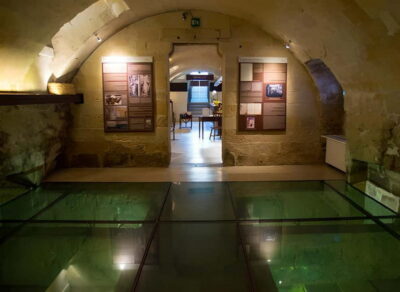
Lecce: Baroque Architecture and Underground Walking Tour
Read our review →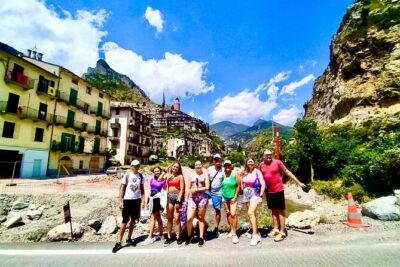
Train Exp. through the Alps (Royal Baroque Route from Nice)
Read our review →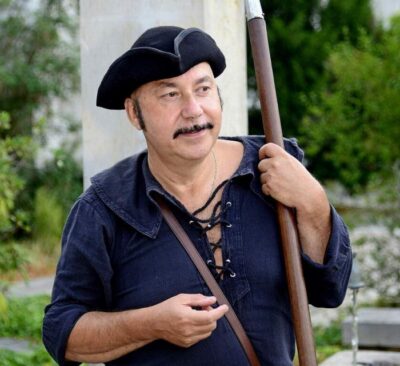
Dresden: Tour of the Baroque Quarter with a Night Watchman
Read our review →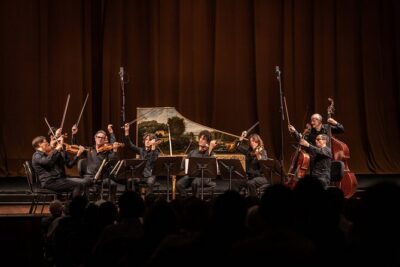
Interpreti Veneziani Ensemble Baroque Concert in Venice Ticket
Read our review →
Borghese Gallery Max 6 People Tour: Baroque & Renaissance in Rome
Read our review →
Concert at the Palais Schönborn-Batthyány by the Vienna Baroque Orchestra
Read our review →
Guided Walking Tour of Rome: Top Sights & Baroque Treasures
Read our review →
Noto, Modica and Ragusa: The Baroque Tour from Catania
Read our review →Browse the lists this tour appears in