
Review · ITALY
Milan Skyscrapers Guided Tour: Porta Nuova, Unicredit tower & Vertical Forest
Milan’s modern face is the star here: Porta Nuova, with its sleek towers, public squares, and celebrated Vertical Forest. I like that this tour explains why the district changed, rather than simply pointing at tall buildings. I also like the private format, which gives your group a more personal guide, such as Valerio, who led one especially well-received tour.
The main drawback is the price, $265.09 per person, for a three-hour walking tour. You are paying for a private architecture guide and a focused route, not a full-day sightseeing package. The tour also requires moderate fitness, and hotel pickup is not included.
Key points at a glance
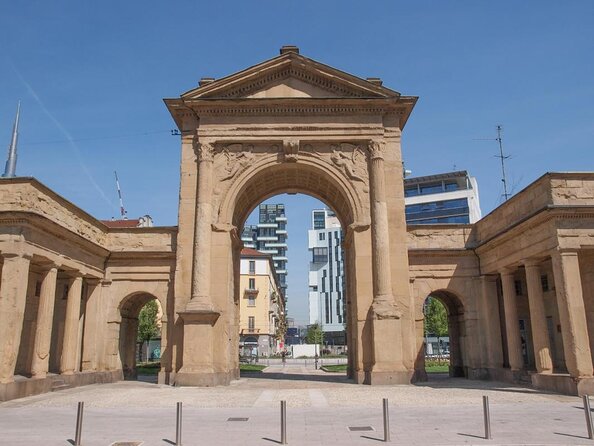
- Porta Nuova’s post-Expo makeover: See how Milan’s 2015 World Expo helped drive a major renewal project.
- Piazza Gae Aulenti and Unicredit Tower: Visit Milan’s most recognizable modern square and view one of Europe’s tallest skyscrapers.
- Corso Como after dark: Walk along a street known for Milan’s nightlife and design culture.
- Isola’s unusual contrast: Compare older railing houses, shared galleries, and courtyards with the new Vertical Forest towers.
- A private three-hour route: Your own art historian guide leads only your group.
- Eataly at the start and finish: Begin at the Milan food hall and return there for regional Italian specialties.
Why Milan’s modern side deserves a tour
Many first visits to Milan focus on the Duomo, La Scala, and grand nineteenth-century streets. Those sights matter, but the city’s newer districts tell another story. Around Porta Nuova and Isola, Milan has tested how offices, homes, public spaces, greenery, shopping, and design can fit together.
This tour is built around that change. You are not simply walking from one photo stop to the next. The guide explains the large renewal project connected with the 2015 World Expo and shows how new construction altered Milan’s skyline.
The central question is a useful one: how can an old city add modern towers without losing its local neighborhoods? You can consider that question as the route moves from polished Piazza Gae Aulenti to the older streets of Isola.
I find this approach more useful than a basic skyscraper walk. Architecture makes more sense when you understand what came before it and why the new buildings were placed there. Here, the older and newer parts of Milan appear within the same three-hour outing.
More skyscraper tours in Italy:
- Florence Skyline from the Top of Brunelleschi’s Dome
★ 4.5 · 99 reviews - Chicago Premium Driving Tour with River Boat Cruise and Sky Deck
★ 4.5 · 165 reviews - Chicago Walking Tour: Art Deco Skyscrapers Loop
★ 5.0 · 138 reviews
Starting at Eataly Milano Smeraldo
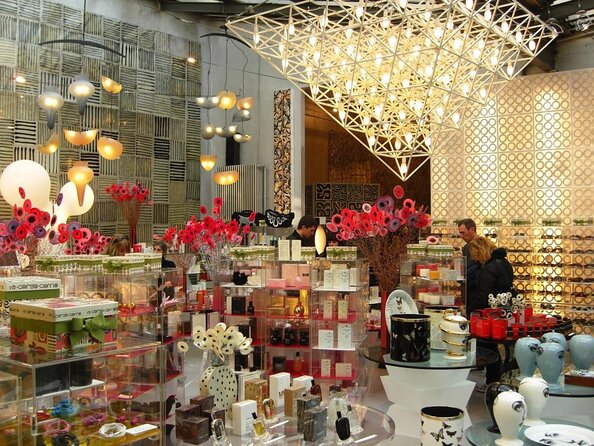
The meeting point is Eataly Milano Smeraldo at Piazza XXV Aprile, 10. This is a practical starting place because Eataly gives you a clear landmark and a chance to see a large collection of Italian food under one roof.
The tour also returns here at the end. During the visit, your guide takes you through Eataly, where you can find regional specialties ranging from Valle d’Aosta to Sicily. The experience includes the chance to sample several Italian treats, though the exact foods and tasting arrangements are not specified.
That food stop gives the tour a welcome change of pace. You spend much of the route looking upward at towers, discussing city planning, and walking through new public spaces. Eataly brings the focus back to everyday Italian life and regional cooking.
I would not treat it as a full meal or a dedicated food tour. The main subject is architecture and urban renewal. Still, if you enjoy Italian food, the stop adds a useful local flavor and makes the tour feel less like a technical building inspection.
Walking through Corso Como
From the meeting area, the route includes Corso Como, one of Milan’s best-known streets for evening activity. The guide uses it as a link between the older city and the new Porta Nuova district.
Corso Como helps you see that Milan’s modern identity is not limited to office towers. The street is tied to nightlife, fashion, design, and social life. Walking here gives the tour a more human scale before it reaches the large open space of Piazza Gae Aulenti.
Your guide’s commentary is especially valuable along this part of the route because the buildings are not always easy to understand at street level. A trained art historian can point out how the new district relates to older Milanese patterns, rather than leaving you with only a list of architects and construction dates.
The route is a walking tour, so comfortable shoes matter. There is no hotel pickup or drop-off, and you need to reach Eataly on your own. The meeting area is near public transportation, which helps if you are staying elsewhere in Milan.
Piazza Gae Aulenti and the Unicredit Tower
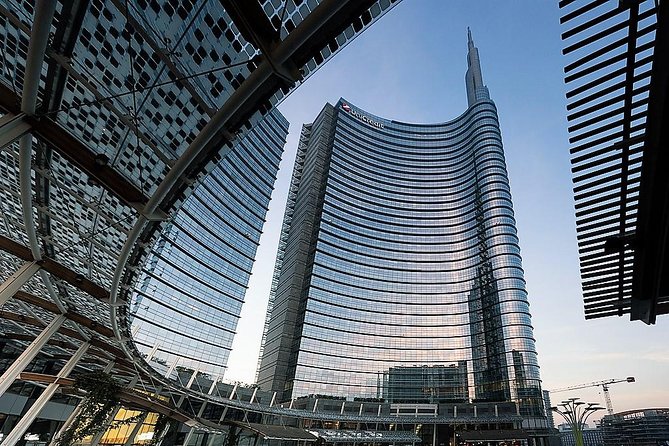
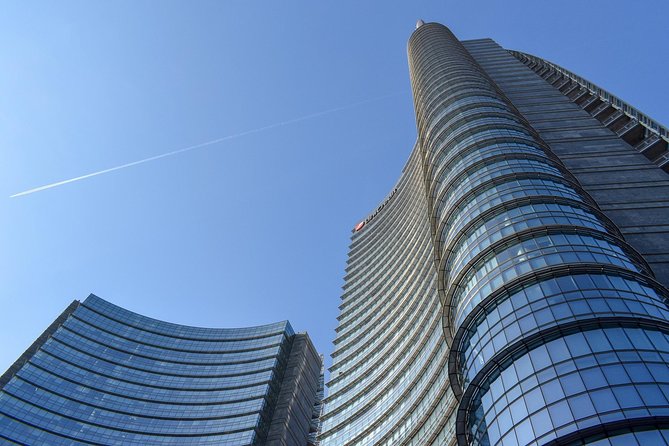
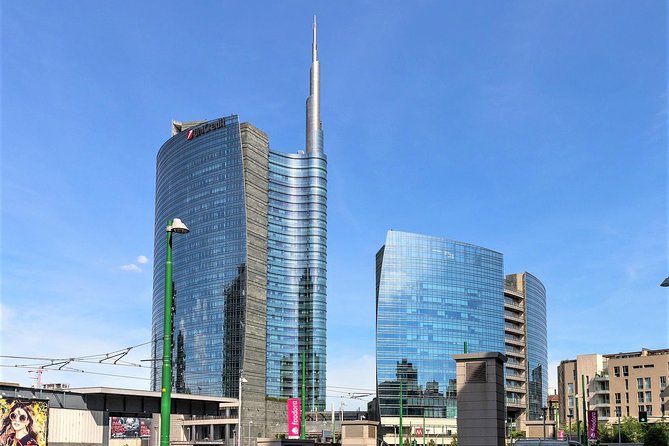
Piazza Gae Aulenti is the visual center of the modern district. Its open design, surrounding buildings, and strong geometric lines make it one of the clearest places to see how Milan has changed.
The Unicredit Tower is the main landmark here. It is described as the tallest in Europe, and the tour places it at the heart of your visit to the new skyline. You will see the tower in Piazza Gae Aulenti and hear about its role in Milan’s transformation.
Do not assume that the tour includes entry to the tower or a guaranteed visit to an observation deck. The route refers to scenic terraces and views across the district, but the included services list only a professional art historian guide and a private tour. If an elevated viewpoint matters to you, confirm exactly what is included before booking.
Even without going inside a tower, the square is a strong place for photographs and for understanding the scale of Porta Nuova. The guide can give context to the towers around you, helping you see the district as a planned project rather than a random collection of tall buildings.
This is also where the tour will likely feel most contemporary. The square’s design, the tall offices, and the open public space create a sharp contrast with Milan’s older streets. That contrast is one of the tour’s main rewards.
More guided tours in Italy:
- Florence Skip-the-Line Duomo Tour with Guide & Brunelleschi Dome
★ 5.0 · 1,176 reviews - Florence in a Day: David, Cathedral & City Highlights Guided Tour
★ 4.5 · 947 reviews - Florence: David, Cathedral & City Highlights Guided Tour
★ 4.8 · 471 reviews - Guided Walking Tour of Rome: Top Sights & Baroque Treasures
★ 5.0 · 155 reviews
The Isola district and its older homes
The route then reaches Isola, a historic district with a very different character. Here you see railing houses, shared galleries, and inner courtyards. These details matter because they show the neighborhood’s older residential pattern before the new towers arrived.
The word Isola means island, and the district has long had its own identity within Milan. The tour information emphasizes its distinctive houses and common spaces, so you should expect the guide to focus on how people lived and moved through this older area.
This section keeps the experience from becoming a simple celebration of modern construction. You get a direct comparison between modest historic housing and large new developments. That comparison raises practical questions about city renewal, local character, and the cost of progress.
The private format is useful here. A guide can adjust the explanation to your interests, spending more time on design, public planning, or the relationship between Isola and Porta Nuova. With only your group taking part, you do not have to follow a large crowd or wait for strangers at every stop.
One highly positive account singled out a guide named Valerio after a hot July afternoon. The description indicates that the tour met very high expectations, which suggests that the guide’s ability to explain the new district is central to the experience. Since only one guide’s name is provided, you should not assume Valerio will lead your booking, but you can request him if the operator allows it.
The Vertical Forest towers
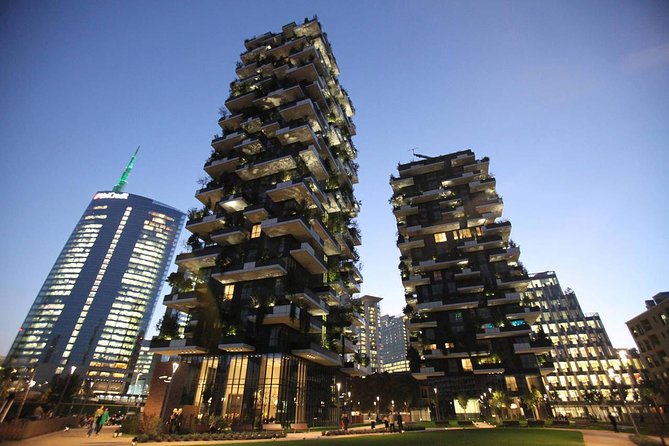
The Vertical Forest is the most distinctive stop on the route. These residential towers use trees and plants as part of their design, creating a model of urban reforestation and biodiversity without spreading the city farther into open land.
The figures are impressive: about 900 trees and more than 20,000 plants are associated with the towers. The project received recognition in 2016 as the most beautiful urban project in the world, according to the tour description.
The important point is not just the number of plants. The Vertical Forest shows a different way to think about greenery in a dense city. Instead of placing all vegetation in one distant park, the design brings trees and plants onto residential towers.
You will view the towers from the Isola area. The available information does not say that you enter the buildings or visit private terraces, so plan on an exterior architecture visit. The towers are still easy to appreciate from the streets, where their planted balconies create a striking contrast with the nearby older houses.
This stop is likely the tour’s strongest visual moment. It also gives the guide a chance to explain sustainability in concrete terms. You can see the idea directly, then judge for yourself how well the design works as architecture and as city planning.
What the three-hour timing means
Three hours is enough to connect the main sites without turning the outing into an exhausting full-day commitment. You get Porta Nuova, Corso Como, Piazza Gae Aulenti, Unicredit Tower, Isola, the Vertical Forest, and Eataly in one focused route.
The short duration also means the tour cannot cover every building or give a lengthy interior visit at each stop. If you want a broad overview of Milan’s entire architecture, this is too narrow. If you want a clear look at the city’s newest district, the timing is sensible.
A moderate level of physical fitness is required. You will be walking between districts and spending time outdoors. The experience does not list special accessibility arrangements, so anyone with mobility concerns should ask the provider for current details before paying.
Weather can affect your comfort. One highly praised outing took place on a very hot July afternoon, so summer visitors should plan for heat during the walk. The itinerary includes public squares and streets rather than a long indoor program.
Is $265.09 per person good value?
At $265.09 per person, this is an expensive tour if you are comparing it with a standard group walking tour. The price becomes easier to justify if you value having a private guide, want to ask detailed architecture questions, and are traveling with a group that can share the cost.
The tour includes a professional art historian guide and private participation for your group. That matters because the subject is specialized. Buildings such as the Unicredit Tower and Vertical Forest are easy to photograph, but harder to interpret without context.
The listing also mentions group discounts. Since the discount amount is not provided, check the final price for your party before booking. The value improves when several people travel together and want a tailored explanation rather than a large shared group.
You should also factor in what is not included. Hotel pickup and drop-off are excluded, and the tour does not clearly promise entry into buildings or a formal meal at Eataly. Think of the price as paying for private guiding and food-oriented stops, not transportation, admission tickets, or a full culinary experience.
The tour is booked on average 45 days ahead, so it is sensible to arrange it early if you want a particular date. You receive confirmation at booking, and mobile tickets are available.
Who will enjoy this private architecture walk?
I would recommend it most strongly to you if modern architecture, city planning, and design are important parts of your trip. It is also a good fit if you have already seen Milan’s main historic sights and want a different side of the city.
Families, couples, and small groups can benefit from the private format, especially if they want to set the pace and ask their own questions. The group discount may also help make the cost more reasonable for several people.
Food lovers will appreciate the Eataly stop, but you should not book this as a food tour. The regional specialties add interest to an architecture route. They are not the central subject.
You may want to skip it if your priority is entering famous buildings, riding to a rooftop, or seeing Milan’s historic monuments. The focus is on outdoor viewing, explanation, and the contrast between new development and the older Isola district.
Should you book the Porta Nuova tour?
Book it if you want Milan explained through its recent transformation. The combination of Piazza Gae Aulenti, the Unicredit Tower, Corso Como, Isola, and the Vertical Forest gives you a clear three-hour look at the city’s modern identity.
The private art historian guide is the main reason to pay the premium. The tour works best when you want context, not just photographs. Ask ahead about terrace access, the exact tasting arrangements at Eataly, and whether you can request Valerio.
Skip it if $265.09 feels too high for a walking route or if you need hotel transportation and a full indoor program. For the right visitor, though, this is a focused and personal way to see how Milan is changing while older neighborhoods remain part of the picture.
FAQ
Where does the Milan Skyscrapers Guided Tour begin?
The tour begins at Eataly Milano Smeraldo, Piazza XXV Aprile, 10, 20121 Milan, Italy.
Where does the tour end?
The activity ends back at the meeting point at Eataly Milano Smeraldo.
How long does the tour last?
The tour lasts approximately three hours.
Is this a private tour?
Yes. Only your group participates in the activity, and a professional art historian guide leads the tour.
What places are included on the route?
The route includes Porta Nuova, Corso Como, Piazza Gae Aulenti, the Unicredit Tower, the Isola district, the Vertical Forest towers, and Eataly.
Is hotel pickup included?
No. Hotel pickup and drop-off are not included. The meeting point is near public transportation.
Can I cancel for a full refund?
Yes, if you cancel at least 24 hours before the experience starts. Cancellations made less than 24 hours in advance are not refunded, and changes within that period are not accepted.
Just added around Italy
- Vicenza: discovering the city of Palladio by e-bike★ 5.0 · 4 reviews
- Vicenza: Palladian Architecture Private Walking Tour★ 3.3 · 3 reviews
- Vatican: Exclusive Baroque Evening With Aperitivo & Dinner★ 3.1 · 2 reviews
- Turin: Art Nouveau Walking Tour with Coffee★ 5.0 · 11 reviews
- Venice Music Project – Baroque Autumn – Season 2025★ 4.5 · 7 reviews
- Walking tour in Venice with an architect★ 5.0 · 16 reviews
- Palladio. A wonderful live tale through time&soul, from Ve/Pd/Vr★ 5.0 · 7 reviews
- Turin, Art Nouveau walking tour and coffee break★ 4.0 · 7 reviews
Skyscraper Tours, compared.
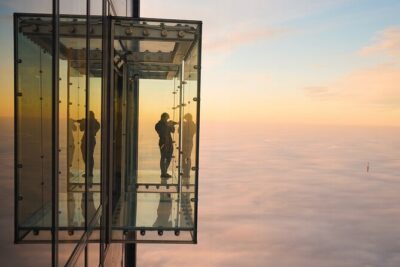
Chicago Premium Driving Tour with River Boat Cruise and Sky Deck
Read our review →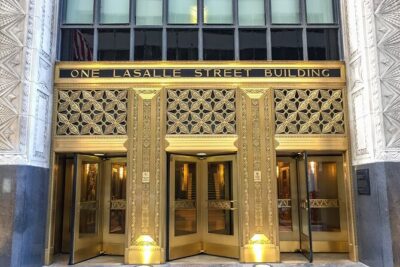
Chicago Walking Tour: Art Deco Skyscrapers Loop
Read our review →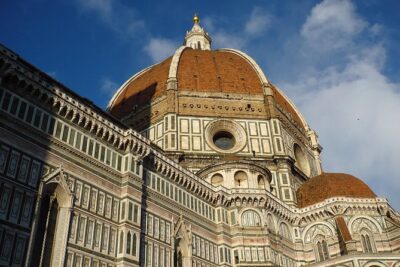
Florence Skyline from the Top of Brunelleschi’s Dome
Read our review →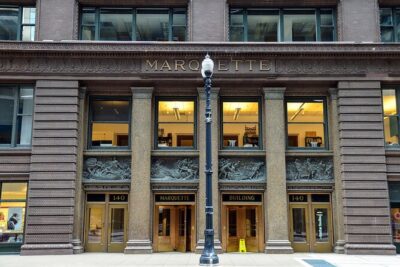
Chicago Walking Tour: Art Deco Skyscrapers Riverfront
Read our review →
Walking Tour: Chicago’s Loop – Home of the Modern Skyscraper
Read our review →

3-Hour Shanghai Bund Swift Tour with River Cruise or Skyscraper
Read our review →Browse the lists this tour appears in