
Review · MADRID
Architecture tour Gran Vía from its best rooftops 20thC
Madrid reveals itself best from above, then at street level. This tour begins on the rooftop of the Círculo de Bellas Artes and ends near Plaza de España, linking broad city views with the buildings, streets, and social changes that shaped Gran Vía. Local architect Emilio leads the walk in English, using plans and historical photos to make the city’s growth easier to read.
I like the opening view from the Círculo and the chance to enter places you could easily pass without noticing, especially the interior of the Telefónica building. I also like the tour’s cultural angle: Gran Vía is not treated as a row of handsome façades, but as a record of Madrid’s 20th-century ambitions, cinemas, hotels, offices, and changing public life.
The main caution is pace. This is a serious architecture tour, not a quick stroll with a few fun facts. The opening talk can run long, the full experience may take close to four hours, and cold or rainy weather is a real concern on the rooftops.
Key points to know before booking
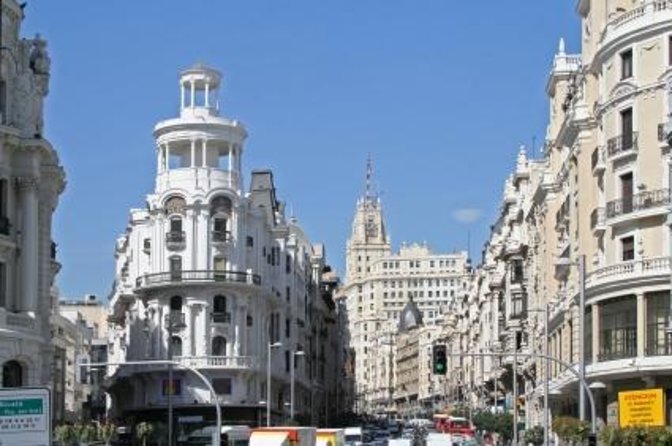
- Two rooftops frame the walk: Start at the Círculo de Bellas Artes and finish with views toward the Royal Palace, cathedral, Royal Theatre, and Casa de Campo forest.
- Architect Emilio guides the experience: He explains Madrid’s buildings through urban history, architectural style, plans, old photographs, and personal enthusiasm for the city.
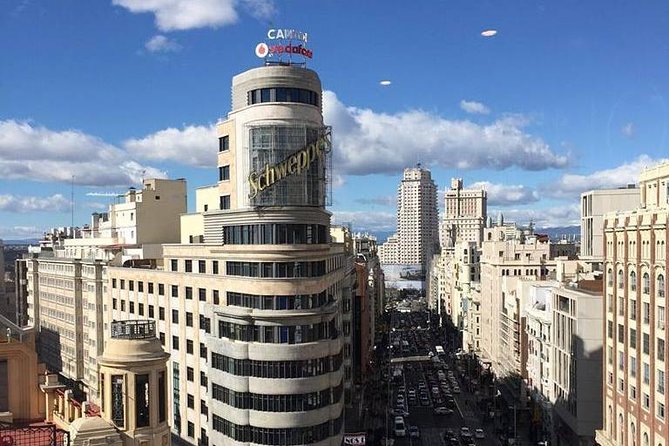
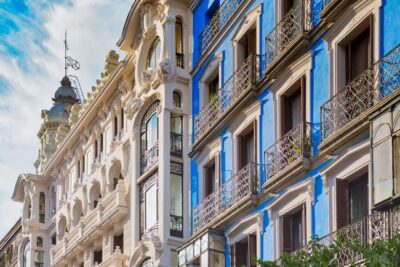
- Gran Vía is the main classroom: You examine the Telefónica building, Carrion Building, Schweppes sign, Plaza del Callao, and the Art Deco Museo Chicote.
- The tour is detailed, not lightweight: It suits adults with a real interest in buildings, history, and city planning more than anyone wanting a quick overview.
- Extra costs matter: The Círculo de Bellas Artes entrance costs €6 per booking, and a final rooftop option at the RIU Hotel carries an additional fee depending on the time and day.
- Weather can change the plan: The experience requires good weather, and poor conditions may lead to a new date or a refund.
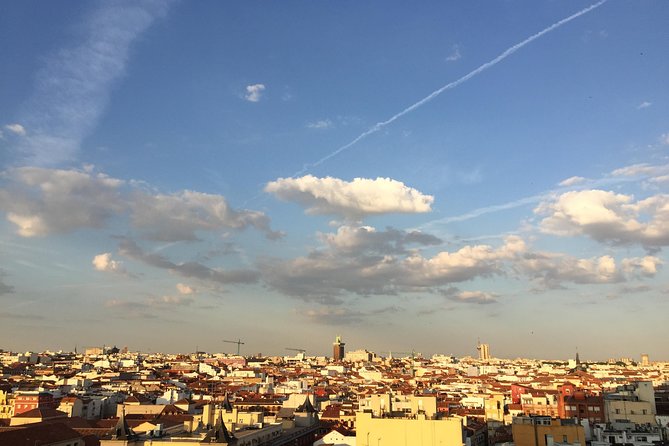
Madrid from the Círculo rooftop
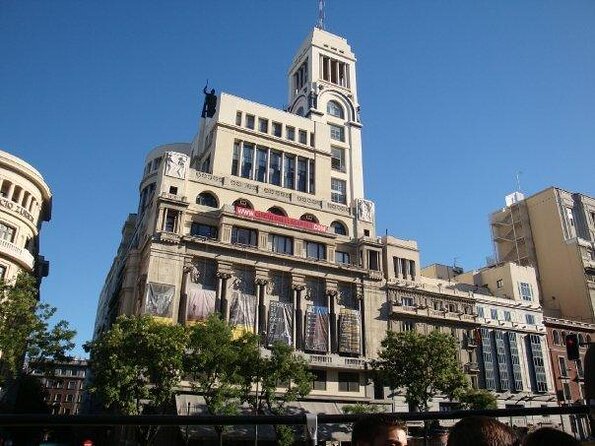
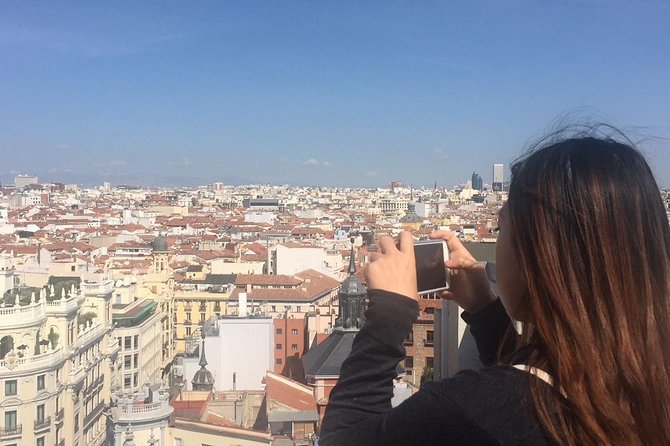
The tour starts at the Azotea del Círculo de Bellas Artes, on Calle del Marqués de Casa Riera. This is a strong place to begin because you can see Madrid as a city rather than as a collection of separate sights.
Emilio uses the view to explain the city’s urban and architectural development. The point is not simply to identify a palace dome or a famous avenue. You learn how Madrid expanded, how Gran Vía changed the center, and how different periods left their mark on the city’s skyline.
Set aside about an hour and 15 minutes for this opening stop. That makes it the longest single part of the tour, and it is also where the most concentrated explanation takes place. If you enjoy city planning and architectural detail, this time gives you useful bearings for the rest of the walk. If you prefer to start moving right away, it may feel slow.
The Círculo itself adds another layer. After the rooftop, you go down through the impressive staircase and see the interior of the Antonio Palacios building. The €6 entrance fee is not included, so budget for it separately. This is one of the tour’s better values because the building is part of the subject, not just a meeting point.
Bring a jacket if the forecast is uncertain. The rooftop setting is exposed, and one cold, windy, or rainy day made the opening talk harder to enjoy. The tour can be adjusted or canceled in poor weather, but you should still dress for time outside.
A few more architecture tours around Spain worth a look
- Barcelona: Sant Pau Recinte Modernista Entry Ticket
★ 4.6 · 2,567 reviews - Barcelona: Sagrada Familia, Modernism, and Old Town Tour
★ 4.7 · 1,621 reviews - Ramblas, Old Town, Gothic and Gaudi Architecture Walking Tour
★ 5.0 · 723 reviews
Gran Vía through architecture, cinema, and cocktails
From the Círculo, the route moves into the Gran Vía area. This avenue is often treated as Madrid’s shopping and nightlife strip, but Emilio uses it to show how the city’s 20th-century identity was built.
The walk connects architecture with entertainment and public life. You are not just looking at decoration. You are considering why these large buildings appeared, how new technology affected Madrid, and how cinemas, offices, shops, and cocktail bars helped make Gran Vía a symbol of modern city life.
That approach is what gives this experience its value. A standard sightseeing walk might point out the famous signs and take a photo. Here, you are asked to notice the structure, style, period, and purpose of each building. If you like learning why a place looks the way it does, you will get much more from the route.
Museo Chicote and Madrid’s Art Deco mood
The stop at Museo Chicote is short, only about five minutes, but it gives the route a welcome change of tone. This cocktail bar occupies an Art Deco interior designed by Luis Gutiérrez Soto in 1931.
The space is connected with Madrid’s film and nightlife culture. Hollywood stars including Ava Gardner visited, and Pedro Almodóvar has been associated with film premieres held there. You will not spend long inside, and the tour does not include a drink, but the stop helps place Gran Vía in its social setting.
I like this small pause because architecture becomes easier to remember when tied to a real use. A bar is not presented as a static historic room. It becomes part of the city’s film culture and evening life.
Still, keep your expectations in check. Five minutes is enough for context and a look, not a full interior tour or cocktail stop. If you want to linger, you will need to return on your own.
Entering Madrid’s first skyscraper at Telefónica
The Telefónica building receives about 20 minutes, with entrance included through Fundación Telefónica. This is one of the most useful stops for anyone curious about how Madrid first embraced the skyscraper.
The building dates from 1929, and Emilio explains what it was like when built as well as the changes made in its 2012 renovation. That comparison gives you a practical way to read an old building. You can consider its original purpose, how it adapted, and how modern use can coexist with historic form.
The interior matters here. Several parts of the experience take place outside, looking upward or across the city, so entering Telefónica gives you a different view of the architecture. It also answers a question that often gets missed on walking tours: how did these grand façades work from the inside?
The short time limit keeps the tour moving, but it also means this is an introduction rather than an exhaustive building visit. If Telefónica is the stop you most want to study, you may wish to return later.
Same city, a completely different century:
- Barcelona: Sagrada Familia Entry Ticket with Audio Guide
★ 4.6 · 105,312 reviews - Barcelona: Casa Batlló Entry with Self-Audioguide Tour
★ 4.7 · 25,359 reviews - Barcelona in 1 Day: Sagrada Familia, Park Guell,Old Town & Pickup
★ 5.0 · 13,541 reviews - Barcelona: Sagrada Familia Skip-the-Line Entry Ticket & Tour
★ 4.8 · 12,789 reviews
The Carrion Building and the Schweppes sign
At Plaza del Callao, the Carrion Building provides one of Gran Vía’s most recognizable sights. Built in 1933, it is famous for the Schweppes neon sign that has become part of Madrid’s visual identity.
Emilio explains the building and its surroundings rather than treating the sign as a standalone photo opportunity. That is useful because Plaza del Callao can feel like a busy commercial crossroads. The tour gives you a reason to pause and read the buildings around it.
This is another short stop, listed at about five minutes. The benefit is efficiency: the route keeps its focus on the architectural story instead of turning every landmark into a long lecture. The tradeoff is that you will not spend much time examining the Carrion Building in detail.
Look up as you walk. Gran Vía rewards attention above shopfront level, and the tour is especially good at pointing out details you might otherwise miss. One participant described finishing the walk with a different view of buildings such as the Primark site. That is the real goal here: changing how you look at familiar streets.
Finishing near Plaza de España
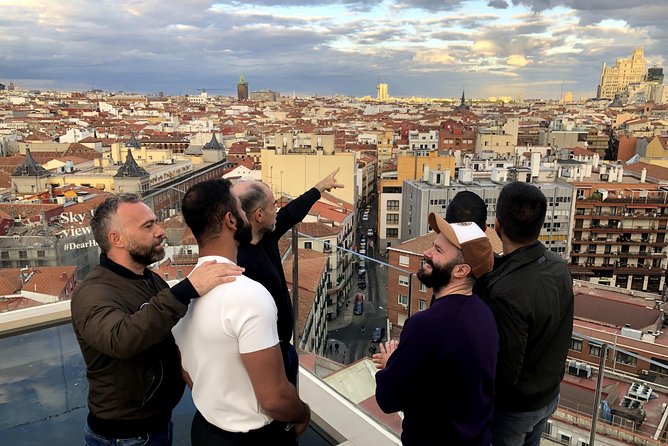
The walking route ends at Plaza de España, with a final rooftop view. From above, you can look toward the Royal Palace, the cathedral, the Royal Theatre, and the Casa de Campo forest.
The listed stop takes about 15 minutes, but the ending can be more flexible. You may stay for a drink and continue enjoying the view. Drinks are not included, and the rooftop option may involve an extra fee if the ending is at the RIU Hotel. The stated charges are €5 on weekdays from 5 p.m. to 11 p.m., €10 on weekdays from 11 a.m. to 5 p.m., and €10 all day on Saturdays, Sundays, and bank holidays.
Because the final terrace arrangement has conditions and added costs, check the details before you book. The tour description calls it a secret hotel terrace, but you should think of it as an optional finish rather than a guaranteed included drink stop.
I like ending above Plaza de España because it gives the tour a clear visual close. You have started with Madrid from the center and end by looking toward some of its major royal and civic landmarks. It also leaves you in a useful part of central Madrid for continuing your own sightseeing.
What Emilio adds to the experience
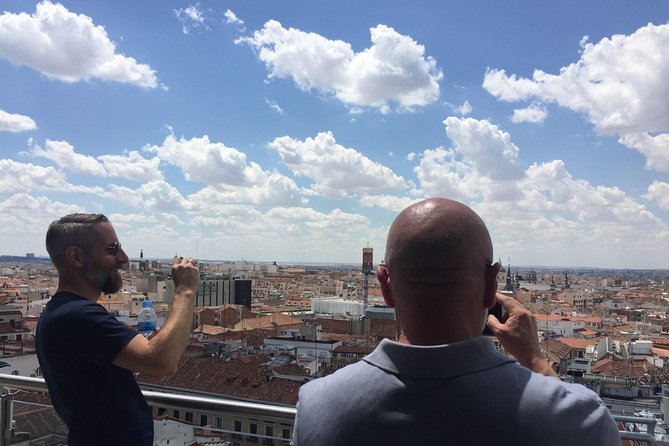
Emilio is a local architect, and his background shapes the tour. He does not simply name styles or dates. He connects architecture with Madrid’s history, geography, urban growth, and cultural life.
He also uses plans and historical photos. These tools matter because old buildings can be hard to understand from the pavement. A photograph can show what stood there before, while a plan can explain how a building fits into a wider street or block.
The tone is friendly and open to questions. That is a strength if you like discussion. It can also stretch the schedule. One longer tour ran past the usual time because the group asked many questions, so plan for anywhere from about three hours and 35 minutes to four hours rather than assuming a strict three-hour finish.
The tour is offered in English. The guide has also been praised for clear English and for making complicated subjects approachable, but the material remains specific. You will hear about architectural styles, historical periods, and urban planning rather than only broad sightseeing facts.
Who will enjoy this, and who may not
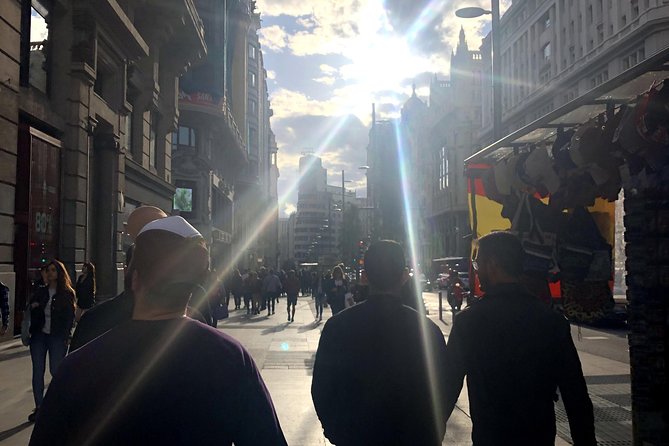
I would choose this tour if you have a casual or serious interest in architecture, city planning, Spanish history, or the way cultural life shapes buildings. It is also a good fit if you have already seen Madrid’s major sights and want to understand the city’s central streets in more detail.
It is less suitable if you want a light overview, a short photo walk, or a tour built mainly around food and drinks. The emphasis is on explanation. You need to be willing to listen for extended periods and walk between stops.
There are stairs, especially at the Círculo de Bellas Artes. The experience is not suitable for strollers, and it may not suit young children. Most adults can participate, but the combination of rooftop access, stairs, and a long walking-and-listening format requires reasonable comfort on foot.
The private format is useful for couples, families with older children, or a small group with shared interests. Only your group participates, so you can ask questions and set the pace to some degree. Group discounts are available, which may improve the value for a larger party.
Is $216.62 a fair price?
At $216.62 per person, this is an expensive walking tour. The price makes more sense if you value private guiding, an architect’s interpretation, access to the Telefónica interior, the Círculo building, and two rooftop settings.
It is not the best choice if you mainly want transportation, a fast introduction, or a list of landmarks. Several stops are brief, and drinks and some rooftop charges are extra. The €6 Círculo entrance fee also needs to be added.
The strongest part of the price is the guide’s subject knowledge and preparation. You are paying for a structured explanation of Madrid’s development, not just for entry tickets. If Emilio’s detailed approach matches your interests, the tour offers something difficult to reproduce by wandering Gran Vía alone.
Book it for value rather than for low cost. The experience is most worthwhile for someone who will remember the explanation and use it during the rest of a Madrid stay.
Timing, weather, and practical planning
Allow four hours in your schedule. The official duration is approximately three hours and 35 minutes to four hours, and questions or a larger group may add time.
The start is at the Círculo rooftop, not simply somewhere near it, so arrive ready to follow the meeting instructions carefully. The end is at Plaza de España, with public transportation nearby and plenty of options for continuing your day.
The tour requires good weather. If poor conditions cancel the experience, you can receive a different date or a full refund. You can also cancel for a full refund up to 24 hours before the start time. Cancellations or changes inside that 24-hour window are not refunded or accepted.
I would avoid placing a tight museum reservation immediately afterward. Give yourself room for a long explanation, questions, stairs, weather delays, and the optional final drink.
Should you book this Gran Vía architecture tour?
Book it if you want Madrid explained by someone who sees buildings as evidence of social and urban change. Emilio’s route gives you rooftop views, historic interiors, Gran Vía landmarks, old photographs, and architectural context in one carefully connected experience.
Skip it if you prefer a short, easygoing walk or if your main goal is to visit many interiors. You spend substantial time on the two rooftops, and the tour’s detailed opening may feel too long in poor weather.
For the right audience, this is one of the more distinctive ways to understand central Madrid. You finish not just knowing what the famous buildings are, but seeing why they were built and how the city around them changed.
FAQ
How long does the architecture tour last?
The tour lasts approximately three hours and 35 minutes to four hours. A large group or an active question period may make it run longer.
Where does the tour begin?
It begins at the Azotea del Círculo de Bellas Artes de Madrid, at Calle del Marqués de Casa Riera, 2, in central Madrid.
Where does the tour end?
The walking route ends at Plaza de España. The experience may finish on a hotel rooftop with views toward the Royal Palace, cathedral, Royal Theatre, and Casa de Campo forest.
Is the Círculo de Bellas Artes entrance included?
No. The entrance fee is €6 per booking and is not included in the tour price.
Are drinks included at the rooftop stops?
No. Alcoholic drinks and other rooftop beverages are not included. The optional RIU Hotel rooftop finish may also carry an extra charge depending on the day and time.
Is the Telefónica building entrance included?
Yes. Entrance to Fundación Telefónica is included.
What happens if the weather is poor?
The experience requires good weather. If it is canceled because of poor conditions, you will be offered another date or a full refund.
Just added around Spain
- Gaudí and Modernist Art: Guided Tour in Palma de Mallorca★ 4.5 · 3 reviews
- Marques de Riscal and Ysios Rioja Wine Tour w/ Lunch from Bilbao★ 5.0 · 24 reviews
- Love in the Gothic Quarter Barcelona: Self-Guided Romantic Walk★ 4.5 · 9 reviews
- Wine tasting with a view of the Sagrada Familia★ 4.5 · 13 reviews
- Walking tour of the Gothic Quarter of Barcelona + Cathedral★ 5.0 · 8 reviews
- Visit to the Modernist houses of the Americans★ 5.0 · 2 reviews
- Barcelona Jewish & Gothic Tour★ 5.0 · 18 reviews
- Roman & Gotic & Gaudi in Barcelona: private walking tour★ 4.5 · 2 reviews
Madrid Architecture Tours, compared.
Madrid Historic with an architect : Arabs, Austrias and Bourbons
Read our review →
Architour through Lavapiés and Rastro with an architect
Read our review →
Browse the lists this tour appears in