
Review · MADRID
Architour through Lavapiés and Rastro with an architect
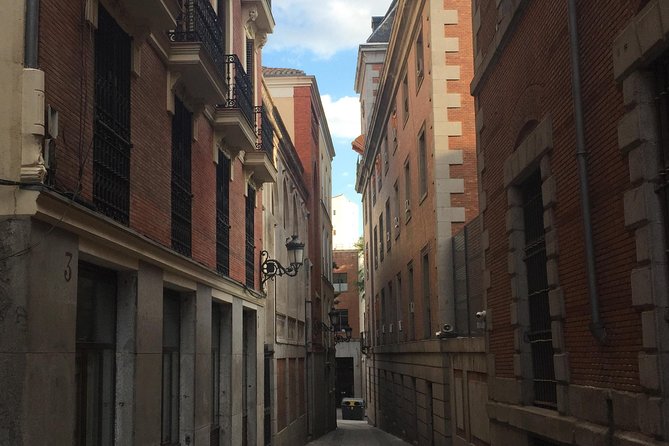
Lavapiés makes a fine case for looking up. In one compact walk, architect Emilio links old alleys, corrala housing, an Inquisition prison, Art Deco theaters, rationalist design, street art, and busy neighborhood markets. You get Madrid as a lived-in district, not just a parade of grand monuments.
I like the architect’s point of view, which gives buildings a job, a date, and a reason for looking the way they do. I also like the private format: your group can ask questions, linger over a facade, or adjust the pace without strangers tagging along.
The main drawback is the price, $210.12 per person, which is a serious spend for about three hours. Drinks and tapas are extra, and you’ll want proper walking shoes. The tour also changes with the calendar: El Rastro is the focus on Sunday, while vintage furniture shops replace it during the rest of the week.
What makes this Lavapiés walk different
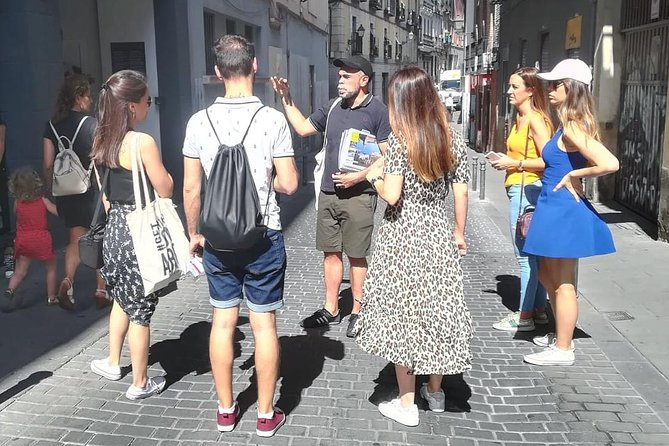
- An architect leads the route: Emilio lives in Lavapiés and explains how politics, building styles, and neighborhood life shaped the area.
- Old and modern Madrid meet: You move from medieval and Baroque traces to Art Deco, rationalist architecture, and Jean Nouvel’s Reina Sofía extension.
- The route includes working neighborhood spaces: Mercado San Fernando provides a place to stop for tapas and local suggestions, not simply a photo stop.
- El Rastro changes by day: Sunday brings the famous street market, while vintage furniture stores are part of the weekday version.
- Building access is included: The price covers access to the buildings included in the route, although food and drinks are not covered.
- It is a private activity: Only your own group takes part, making this a useful choice for families, friends, architecture students, and curious repeat visitors.
Starting at Plaza de Tirso de Molina
The tour begins at Plaza de Tirso de Molina, in central Madrid. Emilio uses the square to set up the story of Lavapiés and Madrid, so the first 15 minutes are less about rushing to a landmark and more about understanding where you are.
This is important because Lavapiés can seem like a jumble of narrow streets, old apartment blocks, shops, bars, and changing public spaces. A good introduction helps you read the neighborhood as a series of layers. You’ll hear how Madrid developed and how Lavapiés became one of the city’s most mixed districts.
The meeting point is easy to reach by public transportation. Since the tour is on foot, arrive ready to walk from the start. The route ends at Mercado de San Fernando, so you do not finish where you began.
A few more architecture tours around Spain worth a look
- Barcelona: Sant Pau Recinte Modernista Entry Ticket
★ 4.6 · 2,567 reviews - Barcelona: Sagrada Familia, Modernism, and Old Town Tour
★ 4.7 · 1,621 reviews - Ramblas, Old Town, Gothic and Gaudi Architecture Walking Tour
★ 5.0 · 723 reviews
Under a corrala at the former Inquisition prison
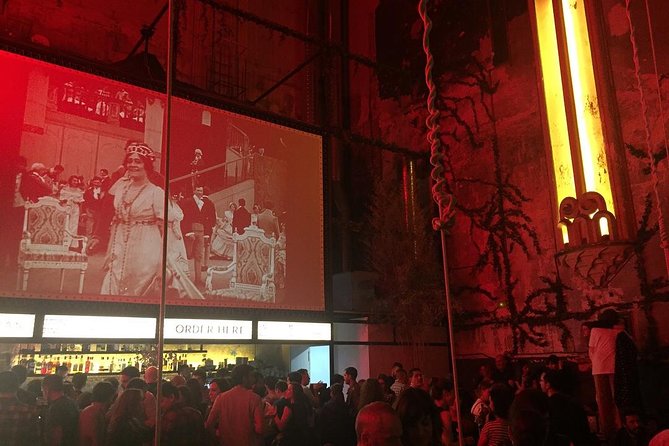
A short walk leads to the old Carcel de la Inquisicion, an Inquisition prison located beneath a corrala. The stop lasts only about 10 minutes, but it gives you a useful look at the way Madrid’s buildings were adapted over time.
A corrala is a type of apartment building organized around shared galleries and an interior courtyard. It is one of the most recognizable forms of traditional Madrid housing, and seeing a prison beneath one adds a darker note to the neighborhood’s story.
This is not a grand museum visit with a long display of objects. Its appeal is architectural and historical context. Emilio helps you notice what is tucked behind ordinary residential forms, where a passing visitor could easily walk by without understanding what lies below.
El Rastro on Sunday, vintage shops on other days
El Rastro is the route’s most obvious public attraction, but the timing matters. On Sunday, you visit the street market itself. On other days, the tour turns toward vintage furniture stores, giving you a quieter look at the area’s commercial character.
The 15-minute stop is brief, so do not expect a long browsing session or a full market expedition. Think of it as a guided introduction to the area, with Emilio explaining how the market fits into the neighborhood rather than leaving you to shop on your own.
Sunday is likely the livelier option, but it may also feel more crowded. If you prefer design, old furnishings, and a calmer pace, another day may suit you better. This is one of the few parts of the experience where the calendar has a real effect on what you see.
Two theaters, two very different design ideas
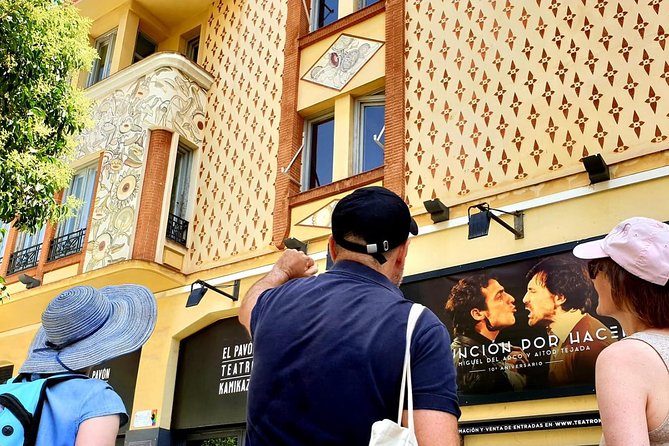
The next stops show how much architectural variety can fit into a few Madrid blocks. At El Pavón Teatro Kamikaze, you pause for about five minutes to see the facade and its Art Deco clock.
That clock is a small detail, but it gives Emilio an opening to explain the theater’s design and place it within Madrid’s architectural development. If you want, the tour can include a coffee break at the theater’s cafe. The coffee is not listed as included, so plan to pay separately.
Later, you see Teatro Figaro, described as the first theater built in Spain according to modern movement principles. The visit is also brief, about five minutes, but the contrast with El Pavón is the point. One theater offers Art Deco character, while the other reflects a more modern architectural program.
I like this part of the walk because it trains your eye. Instead of treating architecture as a list of famous buildings, the tour lets you compare facades, decorative choices, and ideas about how a theater should look.
Same city, a completely different century:
- Barcelona: Sagrada Familia Entry Ticket with Audio Guide
★ 4.6 · 105,312 reviews - Barcelona: Casa Batlló Entry with Self-Audioguide Tour
★ 4.7 · 25,359 reviews - Barcelona in 1 Day: Sagrada Familia, Park Guell,Old Town & Pickup
★ 5.0 · 13,541 reviews - Barcelona: Sagrada Familia Skip-the-Line Entry Ticket & Tour
★ 4.8 · 12,789 reviews
The 1930s rationalist Imprenta Municipal
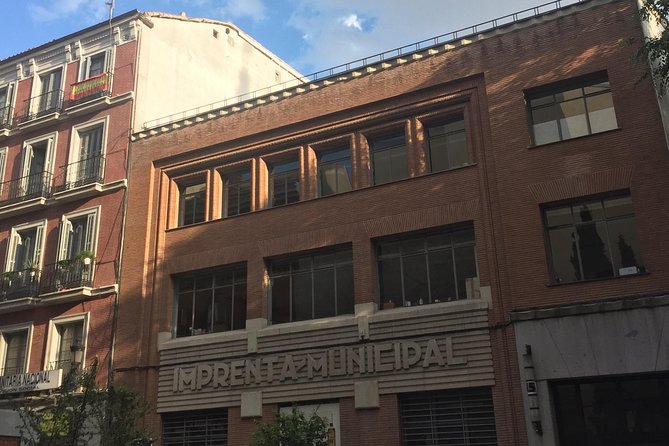
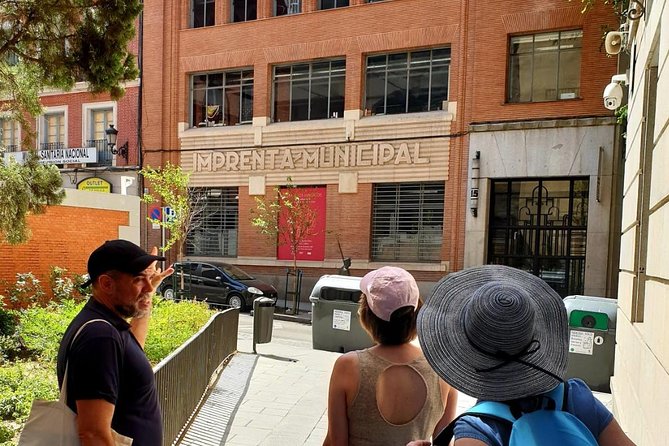
The Imprenta Municipal is one of the route’s most important stops. This municipal printing press is a work of rationalist architecture from around 1930, and access to the building is included in the tour price.
Rationalist architecture tends to favor clear forms and practical purpose over heavy decoration. You do not need a design background to appreciate the building. Emilio’s role is to point out the choices that separate it from older Madrid styles and to explain how the city was experimenting with modern ideas.
Allow about 15 minutes here. That is enough for a focused visit, though not a long architectural seminar. If this is the kind of building you would miss on a standard city walk, it helps justify the tour’s cost. The experience does not simply take you to famous squares. It directs your attention to civic architecture with a specific story.
Plaza Lavapiés and a changing neighborhood
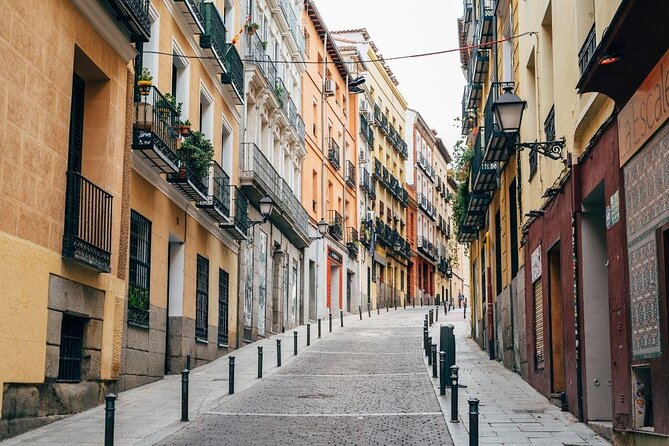
Plaza Lavapiés is the center of the district and gives the neighborhood its name. The stop is short, around five minutes, but the square carries much of the social meaning of the route.
Here you see residents from different racial and cultural backgrounds living alongside long-established neighbors and newer arrivals. Emilio connects the visible changes in the square with the wider story of Lavapiés, including the ways new businesses and residents are reshaping the area.
This is a useful place to keep your expectations realistic. The tour does not present Lavapiés as a frozen historic quarter. It shows a neighborhood still changing, with all the energy and tension that can bring. If you want only polished monuments, this may not be your ideal route. If you want to understand central Madrid as a real residential district, it is one of the most useful stops.
Reina Sofía’s Jean Nouvel extension
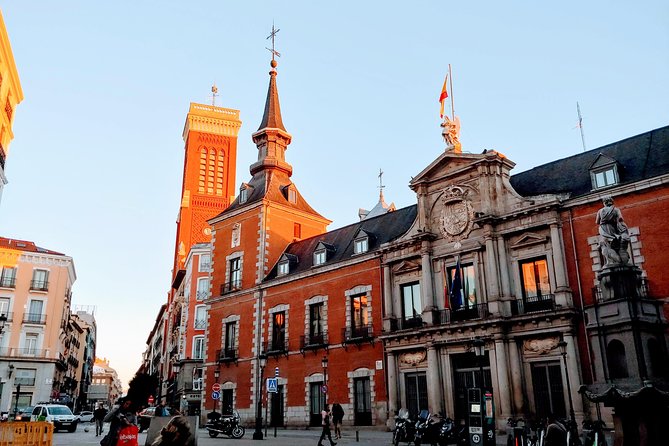
The route continues to the extension of the Museo Nacional Centro de Arte Reina Sofía, designed by Jean Nouvel. The visit includes the restaurant, library, and covered patio, with time to discuss the proposals considered in the 1999 design competition.
You spend roughly 10 minutes here. That is not enough to visit the full museum, and the tour is not an art museum tour. Instead, the focus is on the extension as a piece of contemporary architecture and on the decisions behind its design.
This stop also gives the route a welcome change of scale. After narrow streets, older housing, theaters, and local commerce, you encounter a major cultural institution with a more recent architectural language. The covered patio and library offer practical examples of how a large public building can connect with the surrounding city.
If you plan to visit the Reina Sofía separately, this short stop can make that visit more rewarding. You will already have a framework for thinking about the building rather than treating the extension as a modern box attached to an older museum.
Tapas and Madrid advice at Mercado San Fernando
The walk finishes at Mercado San Fernando on Calle de Embajadores. You stop for tapas and a drink while Emilio discusses the route and offers suggestions for the rest of your time in Madrid.
Food and drinks are not included, so keep some money aside. This final stop is more than a meal break. It gives you time to ask follow-up questions about buildings, restaurants, neighborhoods, and places to visit next.
The market setting fits the route well. You finish in a functioning local market rather than at a formal attraction, and the conversation can continue over vermouth, beer, or another drink. Several experiences with Emilio have included a pleasant drink or vermouth at the end, which makes the final stop feel social rather than rushed.
The advertised length is about three hours, although the route may run closer to three and a half hours depending on questions, stops, and the pace of your group. Do not schedule a tight appointment immediately afterward.
What Emilio adds as an architect and resident
The strongest reason to book is Emilio himself. He is an architect who lives in Lavapiés, and his explanations cover architecture, urban planning, history, and politics. That combination matters because buildings do not exist separately from the people and decisions around them.
His local connection also shapes the practical side of the walk. He can suggest decor shops, restaurants, rooftops, and other places to visit in Madrid. You get more than a fixed speech because the private format allows the discussion to follow your interests.
The route has worked well for people with a specific interest in architecture, including an architecture student, but you do not need technical training. The guide explains styles such as medieval, Baroque, Escorial, Neoclassical, Art Deco, and modern movement architecture through actual buildings on the street.
I would expect the best experience if you enjoy asking questions. Emilio’s appeal is not just the number of facts he can provide. It is the way he connects an old facade, a public square, a theater, and a market to the larger story of Madrid.
Is $210.12 per person a fair price?
At $210.12 per person, this is not a budget walking tour. The price makes more sense if you are traveling as a small private group and want a specialist guide rather than a broad introductory tour.
You are paying for roughly three hours with an architect, access to the buildings included in the route, a private experience, and a final stop where you can get personal suggestions for Madrid. The value rises if you have already seen the Royal Palace, Plaza Mayor, and other standard sights and want a more unusual side of the city.
The value is weaker if you mainly want a casual stroll or if you do not care about architectural detail. Drinks, tapas, and coffee are extra, and the tour includes several short exterior stops. I would compare it with the cost of a private guide in Madrid, not with the price of a large group walking tour.
Group discounts are available, which may make the cost easier to manage for friends or family traveling together. Since only your group participates, you can also shape the conversation around your interests instead of following a fixed crowd.
Walking, timing, and practical details
Wear your most comfortable walking shoes. The route covers central streets and several neighborhoods, and the need for good footwear is not a minor point. The first start point is Plaza de Tirso de Molina, and the final stop is Mercado de San Fernando, so plan your onward route from there.
The experience is offered in English and is suitable for most people. Service animals are allowed, and the route is near public transportation. The available information does not give a detailed accessibility assessment for every building, so contact the provider if you need specific mobility information.
The tour requires good weather. If poor weather cancels it, you are offered another date or a full refund. You can also cancel for a full refund up to 24 hours before the start time. A minimum number of participants is required, though the activity itself is private once confirmed.
One timing detail deserves attention: La Tabacalera de Lavapiés is closed for works from July 25. That means the route may not include its interior during that period. Check the current status before booking if this former industrial building and its street art are high on your list.
Who should book this Madrid architecture tour?
I would choose this walk if you want to understand how Madrid works at street level. It suits repeat visitors, architecture students, design fans, urban history readers, and anyone who prefers neighborhood life to a checklist of major sights.
It is also a good fit for a private family or friend group with mixed interests. Emilio covers architecture, but the route also includes markets, food, politics, local history, and practical Madrid advice. You can ask questions without worrying about holding up a large group.
I would hesitate if your budget is tight, if you dislike walking, or if you want extensive time inside museums and monuments. The stops are often short, and the tour is about connections between places rather than long visits at one attraction.
Should you book it?
Book this tour if you want a focused, personal look at Lavapiés and El Rastro, especially if you are curious about buildings most city tours skip. Emilio’s local knowledge, architectural training, and easy access to questions are the main reasons to pay the premium.
Choose Sunday for the street-market version of El Rastro. Choose another day if vintage furniture shops appeal more to you, and check La Tabacalera’s status if you are visiting from July 25 onward. Bring good shoes, budget extra for food and drinks, and leave room in your schedule for the final market conversation.
FAQ
How long does the tour last?
The tour lasts approximately three hours, although it may take closer to three and a half hours depending on the pace and discussion.
Where does the tour begin?
It begins at Plaza de Tirso de Molina in central Madrid.
Where does the tour end?
It ends at Mercado de San Fernando on Calle de Embajadores, where you stop for tapas and a drink.
Is this a private tour?
Yes. Only your own group participates in the activity.
Is the tour offered in English?
Yes, the tour is offered in English.
Are food and drinks included?
No. Drinks at the markets, bars, restaurants, or cafes are not included. Tapas and a drink at Mercado San Fernando are paid separately.
Can I cancel for a refund?
You can cancel up to 24 hours before the experience starts for a full refund. Cancellations or changes made less than 24 hours before the start time are not refunded or accepted.
Just added around Spain
- Gaudí and Modernist Art: Guided Tour in Palma de Mallorca★ 4.5 · 3 reviews
- Marques de Riscal and Ysios Rioja Wine Tour w/ Lunch from Bilbao★ 5.0 · 24 reviews
- Love in the Gothic Quarter Barcelona: Self-Guided Romantic Walk★ 4.5 · 9 reviews
- Walking tour of the Gothic Quarter of Barcelona + Cathedral★ 5.0 · 8 reviews
- Wine tasting with a view of the Sagrada Familia★ 4.5 · 13 reviews
- Visit to the Modernist houses of the Americans★ 5.0 · 2 reviews
- Barcelona Jewish & Gothic Tour★ 5.0 · 18 reviews
- Roman & Gotic & Gaudi in Barcelona: private walking tour★ 4.5 · 2 reviews
Madrid Architecture Tours, compared.

Architecture tour Gran Vía from its best rooftops 20thC
Read our review →
Madrid Historic with an architect : Arabs, Austrias and Bourbons
Read our review →

Browse the lists this tour appears in