
Review · ITALY
Private tour: The Gothic Line in Borgo a Mozzano (Lucca)
The most unusual part of this Lucca-area outing is that you walk through German World War II bunkers built into the hills, not just look at a plaque beside a road. The tour also connects those fortifications to local families, wartime restrictions, and the Gothic Line’s role in defending northern Italy.
I like the private format, which lets you set the pace with a guide such as Anna, Carlo, or Paola, and I like the mix of documents, military structures, and scenery. The main catch is practical: to see all three bunkers, you need your own car or rental, and the small museum and bunker admission fees cost extra.
Key points
- Three wartime sites plus Devil’s Bridge: The route combines the Memory Museum, two bunkers near Borgo a Mozzano, a larger bunker at Anchiano, and Ponte della Maddalena.
- A personal guide makes the history human: Local stories and accounts of how Italian civilians lived under wartime rules add context beyond military dates.
- The private format is genuinely useful: You can ask questions, adjust the pace, and spend more time at the sites that interest you.
- A car is needed for the full route: The first two stops are walkable from the meeting point, but Anchiano and Devil’s Bridge require driving.
- Budget for admission fees: The museum and two bunkers cost €10 per adult, or €15 per adult if you visit the museum and all three bunkers.
- Allow for uneven walking: Comfortable shoes and a moderate level of fitness are sensible for bunker visits and the walk across the bridge.
Why Borgo a Mozzano makes a good Gothic Line base
Borgo a Mozzano lies north of Lucca along the Serchio River, in an area where the hills and river crossings gave wartime defenses real strategic value. The Gothic Line was a German defensive system built across Italy during World War II. Here, the fortifications were not abstract military marks on a map. They controlled roads, river approaches, and movement through the valley.
That local focus is what gives this tour its appeal. You are not spending three hours on a broad lecture about the entire Italian campaign. You are seeing a small section of the defensive line and learning how it affected the people who lived nearby.
The tour begins in Piazza Guglielmo Marconi, in front of Borgo a Mozzano train station. You can arrive by car, but the town is also reachable by train from Lucca, Pisa, and Florence. That makes the first part possible without a car, although you will need one if you want to complete the entire route.
The tour lasts about three hours, with morning and afternoon departure options. Since it is private, the timing is more flexible than a fixed group excursion. The advertised price is $204.70 per group, up to 15 people, so the value improves sharply if you are sharing it with family or friends. Booking information also lists a maximum of 20 people per booking, so I would confirm the exact group limit and price before paying for a larger party.
More Gothic quarter walks in Italy:
- Sorrento: Gothic-Baroque Art Tour & Free local Tasting
★ 5.0 · 16 reviews - Milan: Guided Dog-Friendly Tour, From Gothic to Eclectic
★ 5.0 · 2 reviews - Barcelona all included: Sagrada, Park Güell, Montjuic & Gothic
★ 5.0 · 2,169 reviews
The Memory Museum and the civilian side of war
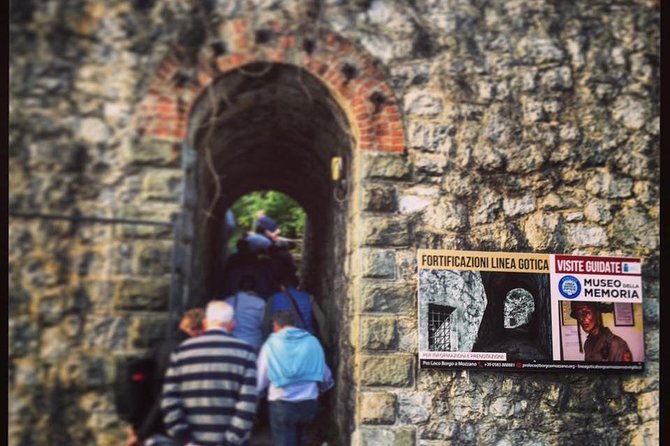
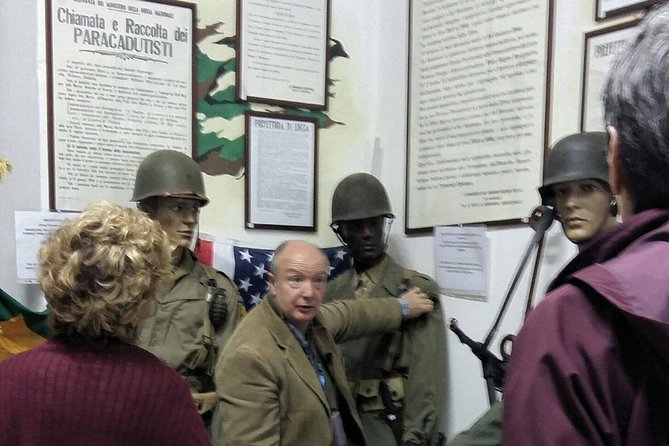
Your first stop is the Museo della Memoria, a small museum a short walk from the station. Its size is modest, but the material covers more than weapons and uniforms. You can expect documents tied to Lucca and the Gothic Line, uniforms and arms from both Allied and German forces, troop-issued objects, photographs, and notices issued by the fascist prefect.
Those official notices are especially useful. Curfews, limits on movement, and restrictions on black-market sales show how war shaped ordinary routines. They help you understand that the Gothic Line was not only a military project. It also brought controls, fear, shortages, and pressure to people living close to the defenses.
The museum includes material connected to local Resistance fighters as well. That gives your guide a firm base for explaining the difference between the official German and fascist systems and the local response to them.
Admission is not included in the tour price. Plan on €10 per adult for the museum plus two bunkers, or €15 per adult for the museum plus all three bunkers. The museum takes about 30 minutes in the planned route, which is enough for an introduction but not a long museum visit.
I would pay close attention to the documents rather than rushing toward the military objects. The notices and local photographs are the pieces most likely to give you a sense of what the war meant beyond the battlefield.
The two Borgo a Mozzano bunkers
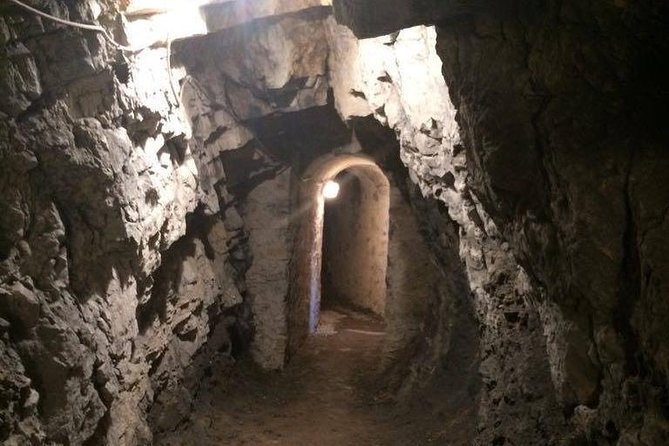
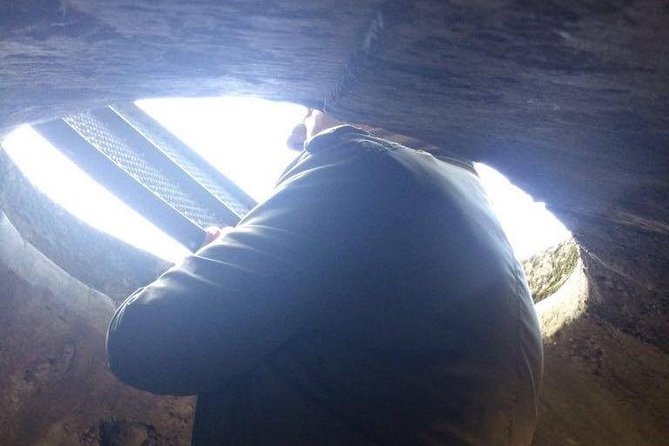
From the museum, you walk for about 10 minutes to the sports field area, where two low-lying bunkers helped defend the Gothic Line’s antitank wall. These are not decorative ruins. The German forces excavated deep into the rock to create observation posts and firing positions.
The bunkers were designed for cannons and machine guns. Their purpose was to watch the approach and help stop armored vehicles from breaking through the defensive line. Seeing the structures in place makes the military plan easier to understand than reading about it in a book.
The planned visit to these bunkers takes about two hours, including the nearby sites and interpretation. A private guide matters here because the structures can be stark and difficult to read on your own. A guide can explain where soldiers watched from, how the firing positions related to the antitank wall, and why the river valley mattered.
You should wear comfortable shoes. The tour requires a moderate level of physical fitness, and bunker interiors can involve uneven surfaces or confined spaces. The supplied information does not promise lighting, stairs, or specific interior conditions, so anyone with mobility concerns should ask the operator for current details before booking.
The two Borgo a Mozzano bunkers are the easiest part of the fortification route if you arrive by train. They are close enough to reach on foot from the museum and station area. That is helpful if you want the historical introduction but cannot arrange a car for the entire outing.
Anchiano’s bunker and the value of renting a car
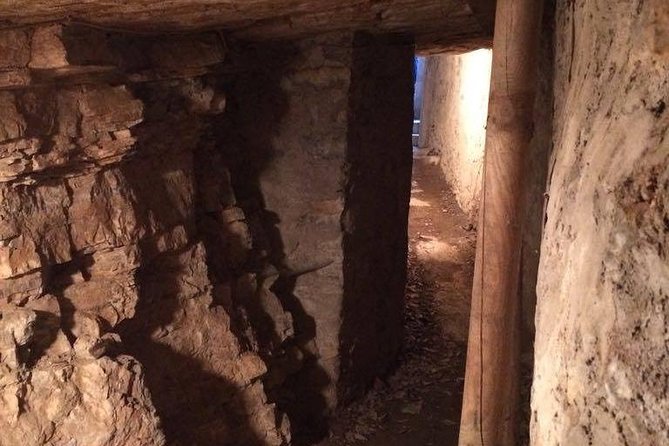
The third bunker lies in the medieval hamlet of Anchiano, a short drive away. This fortification extends many meters into the hill below the village church. It was built by the Todt Organization to protect the left side of the Serchio River and the Gothic Line.
This is the bunker that makes the car requirement most important. You cannot simply continue the walking route from the station. You must drive, using your own vehicle or a rental, and the same is true for the final stop at Devil’s Bridge.
The Anchiano bunker was designed for cannons, machine guns, and observation posts. Its position below the church gives the visit a strong sense of place. You are seeing how military construction was inserted into an old settlement and its surrounding hills.
If World War II history is your main reason for booking, I would make sure you see all three bunkers. The first two show the defensive system near Borgo a Mozzano, while Anchiano gives you a larger and more elaborate fortification to compare with them.
There is a tradeoff. Driving between sites adds logistics to what is described as a three-hour tour. You need to coordinate the car, follow the guide, and allow enough time for the visits. The benefit is a much fuller picture of the Gothic Line than you would get from the museum and nearby bunkers alone.
More private architecture tours in Italy:
- Lecce: Baroque and Underground Tour – Private Tour
★ 4.5 · 85 reviews - Private Tour: Venice Art and Architecture Walking Tour
★ 4.0 · 22 reviews - City Walk with Architect: Private walking tour of Rome
★ 5.0 · 22 reviews - Baroque Noto private walking tour
★ 4.5 · 15 reviews
Devil’s Bridge adds an older layer to the route
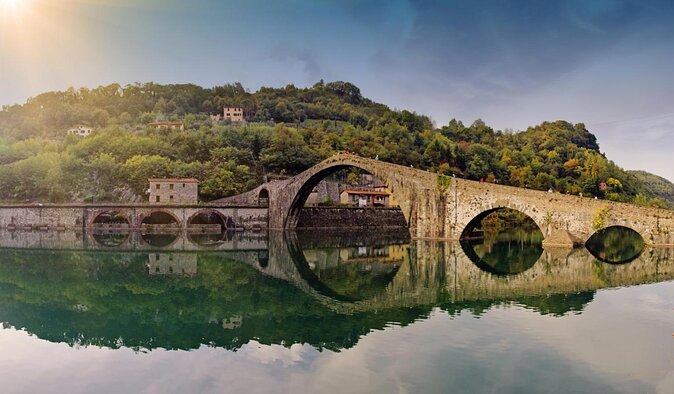
After Anchiano, you drive to Ponte della Maddalena, better known as Devil’s Bridge. This medieval bridge crosses the Serchio River with a distinctive humpback shape and uneven arches. You can walk across it, and the highest point gives you a broad view of the river and surrounding hills.
The bridge was built to help pilgrims traveling from northern Italy and Europe toward Rome. That earlier purpose gives the stop a useful contrast with the bunkers. The route moves from medieval movement and pilgrimage to modern war and military control, all within the same river valley.
Devil’s Bridge also has a direct connection to World War II. It was the only bridge across the Serchio that the Germans did not destroy during the war, and leaving it intact proved to be a major strategic mistake. Your guide can connect the bridge’s medieval history with its later military importance.
The visit takes about 30 minutes. It is a good final stop because it gives you time outdoors after the museum and bunker interiors. It also provides one of the tour’s best photo opportunities, although the bridge can be uneven and requires care while crossing.
Do not think of this as a separate sightseeing stop tacked onto a military tour. The bridge helps explain why the area mattered. A river crossing that served pilgrims for centuries also mattered to armies, vehicles, and defensive planners.
What the private guide changes
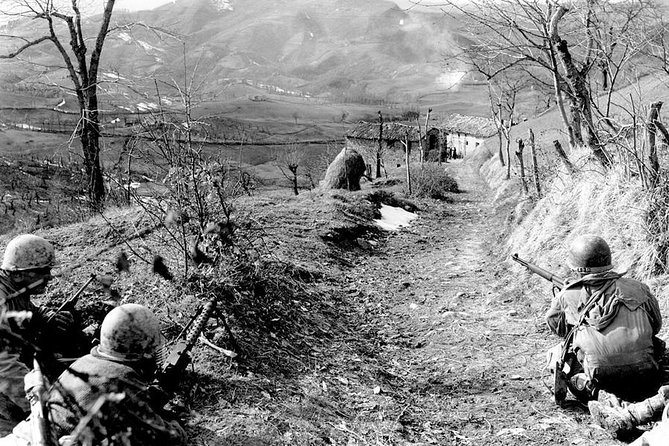
A private tour is most useful here because the subject needs explanation. Bunkers can look like plain concrete or stone structures when you first see them. Their value comes from knowing what they were built to do and how they fit into the wider defense.
The guide can also adjust the conversation to your interests. If you are a serious World War II student, you can focus on fortification design, German positions, and the Gothic Line. If you are new to the subject, you can spend more time on the local setting and civilian experience.
Several guides have led this experience, including Paola, Anna, and Carlo. The guide assigned to you may vary. Carlo has been noted for sharing personal family stories, while Anna has guided people through the bunkers and local wartime story at a flexible pace. These details point to the tour’s strongest feature: the history is presented through a local lens rather than as a detached military lesson.
The private format also suits mixed groups. One person can ask about Resistance activity, another can focus on architecture, and someone else can simply enjoy the medieval village and river views. You are not forced to keep up with a large group or wait for people with different interests.
Price, timing, and practical value
At $204.70 per group, the price needs to be judged by group size. For one or two people, it is a fairly expensive three-hour outing once admission fees and car costs are added. For a family or group of friends, the per-person cost becomes much more reasonable, especially because you receive a private guide rather than joining a general walking tour.
The tour includes the guide, private group format, and photography stops. It does not include museum and bunker admission, hotel pickup, or transportation between the attractions. The car requirement is the largest extra consideration.
A train can get you to Borgo a Mozzano from Lucca, Pisa, or Florence, but public transport does not solve the complete route. If you arrive by train, you can visit the museum and the two nearby bunkers, but you will need another transport plan for Anchiano and Devil’s Bridge.
The experience is usually booked well ahead, with an average booking lead time of about 76 days. That does not guarantee that every date sells out, but it suggests that you should not leave this until the last moment, particularly if you need a specific morning or afternoon departure.
Free cancellation is available if you cancel at least 24 hours before the start time. Changes or cancellations inside that 24-hour window are not refunded, based on local time.
Who will enjoy this tour most
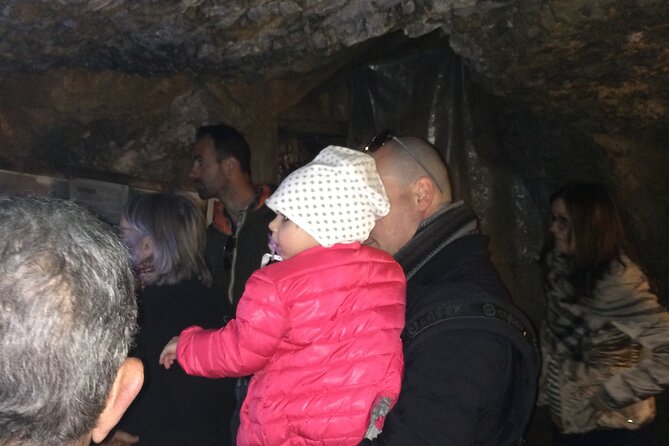
I would recommend it first to anyone with a real interest in World War II, military history, or the Italian Resistance. The opportunity to enter several German bunkers and hear about their purpose is unusual, especially near Lucca, where many visitors focus on the city walls, churches, and opera connections.
It also works for people who do not normally seek out military sites. The museum keeps the story tied to civilian life, and Devil’s Bridge adds medieval history and scenery. The guide’s job is not only to identify artillery positions. It is to explain how the defensive line affected Lucca and the communities near the Serchio.
Families with older children may find the physical sites more memorable than a conventional museum. Still, the group needs to be comfortable walking, standing, and handling uneven ground. The tour is not designed as a fully accessible sightseeing loop, and the operator should be contacted in advance about specific mobility needs.
I would hesitate to book it if you want a relaxed, no-driving half day from Lucca. The route involves arranging a car, moving between sites, and paying for admissions. It also suits curious adults better than very young children who may have little interest in military history or museum documents.
Should you book the Gothic Line tour?
Book it if you want a personal, offbeat history outing that combines wartime bunkers, local civilian stories, and an important medieval bridge. The strongest reason to choose it is the guide-led interpretation. Without that, the bunkers would be difficult to understand and easy to mistake for anonymous ruins.
The value is best for a group sharing the $204.70 cost and willing to rent or bring a car. Ask about the day’s assigned guide, confirm the group-size limit, and budget €10 or €15 per adult for admissions. If you can manage those details, this is a thoughtful addition to a Lucca visit and a rare chance to see a less familiar side of Tuscany.
FAQ
How long does the Gothic Line tour last?
The tour lasts approximately three hours. The route includes the Memory Museum, bunker visits, and Ponte della Maddalena.
Where does the tour start?
It starts in front of Borgo a Mozzano train station at Piazza Guglielmo Marconi, 4, 55023 Borgo a Mozzano LU, Italy. The tour ends back at the meeting point.
Can I reach Borgo a Mozzano without a car?
Yes. Borgo a Mozzano can be reached by train from Lucca, Pisa, and Florence. However, you need your own vehicle or a rental car to reach all three bunkers and Devil’s Bridge.
Is transportation included?
No. Hotel pickup, hotel drop-off, and transportation between the attractions are not included. You must provide your own transportation for the driving portions.
What does admission cost?
The museum plus two bunkers costs €10 per adult. The museum plus all three bunkers costs €15 per adult. These fees are not included in the tour price.
Is the tour private?
Yes. Only your group participates in the activity. The advertised price is for a group of up to 15 people, while the additional booking information lists a maximum of 20 people per booking, so confirm the limit when booking.
What should I wear?
Wear comfortable shoes. You should also have a moderate level of physical fitness for walking and visiting the bunker sites.
Just added around Italy
- Vicenza: discovering the city of Palladio by e-bike★ 5.0 · 4 reviews
- Vicenza: Palladian Architecture Private Walking Tour★ 3.3 · 3 reviews
- Turin: Art Nouveau Walking Tour with Coffee★ 5.0 · 11 reviews
- Vatican: Exclusive Baroque Evening With Aperitivo & Dinner★ 3.1 · 2 reviews
- Venice Music Project – Baroque Autumn – Season 2025★ 4.5 · 7 reviews
- Walking tour in Venice with an architect★ 5.0 · 16 reviews
- Palladio. A wonderful live tale through time&soul, from Ve/Pd/Vr★ 5.0 · 7 reviews
- Turin, Art Nouveau walking tour and coffee break★ 4.0 · 7 reviews
Gothic Quarter Tours, compared.
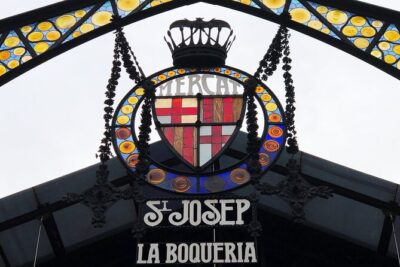
Barcelona all included: Sagrada, Park Güell, Montjuic & Gothic
Read our review →
Barcelona Gothic Quarter Tapas & Taverns Food & Wine Tour
Read our review →
Barcelona: Gothic Quarter Ghosts and Legends Walking Tour
Read our review →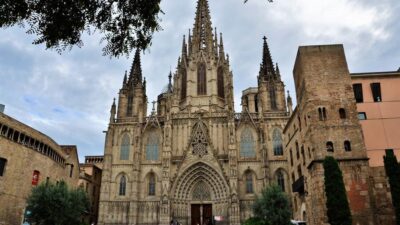
Barcelona: Old Town and Gothic Quarter Walking Tour
Read our review →
Barcelona Old Town & Gothic Quarter Small Group Tour
Read our review →
Ramblas, Old Town, Gothic and Gaudi Architecture Walking Tour
Read our review →
Barcelona: El Born and Gothic Quarter Wine & Tapas Bar Tour
Read our review →
Kids and Family Gothic Quarter Walking Tour in Barcelona
Read our review →Browse the lists this tour appears in