
Review · CHICAGO
Chicago Architecture Walking Tour: What’s New
Chicago’s newest buildings tell a good story about where the city is headed. This 90-minute walk stays close to the Chicago Architecture Center and the Chicago River, letting you study fresh designs without trying to cover all of downtown at once. You’ll look at Tribune Tower’s recent changes, new apartment styles, 465 N Park Drive, St. Regis Chicago, and Apple Michigan Avenue.
I like the small group size, capped at 15, and the way the tour connects new construction with older Chicago landmarks. I also like that a professional CAC guide leads the walk and that gallery admission is included. The main catch is simple: access to building interiors can change, and the tour remains useful even when some indoor stops are unavailable.
Key points to know
- The focus is recent Chicago architecture, not a broad survey of every famous building in the Loop.
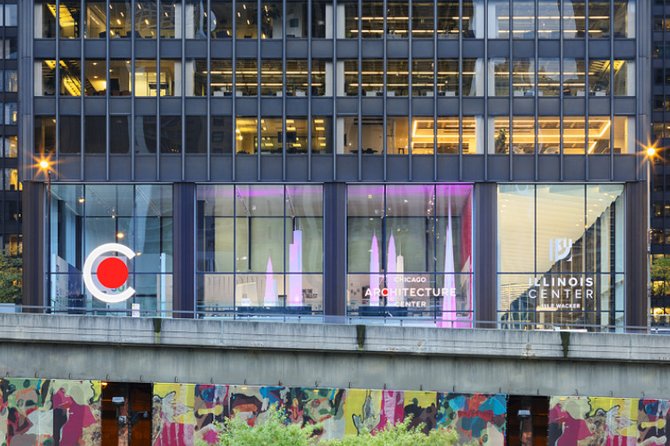
- The route stays compact, beginning and ending at the Chicago Architecture Center at 111 E Wacker Dr.
- Pioneer Court and Tribune Tower provide historical context for the newer buildings nearby.
- The St. Regis, 465 N Park Drive, and new rental apartments show current design and development trends.
- Apple Michigan Avenue offers a close look at retail architecture and public space.
- The $35 price includes CAC gallery admission, and the group is limited to 15 people.
A close look at Chicago’s current building boom
I like this tour because it treats Chicago as a city still being built, not just a museum of old skyscrapers. The route concentrates on buildings and renovations that reflect present-day choices about housing, retail, public space, sustainability, and how new work fits beside famous older architecture.
You will not spend the morning racing from one end of the city to another. The walk centers on the area around the Chicago Architecture Center, beside the river, so the 90 minutes feel focused. That helps if you are new to architecture. Instead of staring up at dozens of towers and trying to remember names, you can ask about a handful of projects and see how they relate to one another.
The tour is also a good fit for people who already know Chicago. The subject is not simply the city’s classic skyline. It is the newer layer, including projects you might otherwise pass without understanding.
More architecture walks in Chicago:
- Chicago in a Day: Food, History & Architecture Walking Tour
★ 5.0 · 1,153 reviews - Chicago’s Secret Interiors Architectural Walking Tour
★ 5.0 · 635 reviews - Chicago: Secret Interiors Architecture Walking Tour
★ 4.9 · 498 reviews
Starting at the Chicago Architecture Center

The tour begins at the Chicago Architecture Center, at 111 E Wacker Dr. The opening remarks take about 10 minutes, and gallery admission is included. That gives your guide a chance to explain the focus of the walk before you head outdoors.
The center matters here because it supplies useful context without sending you through a long museum visit. You can see the galleries as part of the experience, then go outside and apply that background to actual buildings. If you are an architect, designer, student, or simply someone who enjoys looking closely at buildings, this pairing adds value to the $35 price.
I would allow enough time to arrive at the center before the scheduled start. The meeting point is near public transportation, and the tour returns there at the end. Hotel pickup and drop-off are not provided, so you need to make your own way to the riverfront.
Pioneer Court and the older buildings beside the new work
From the CAC, the group moves toward Pioneer Court. This stop lasts about 15 minutes and sets up one of the tour’s best themes: new Chicago architecture makes more sense when you compare it with the buildings that came before.
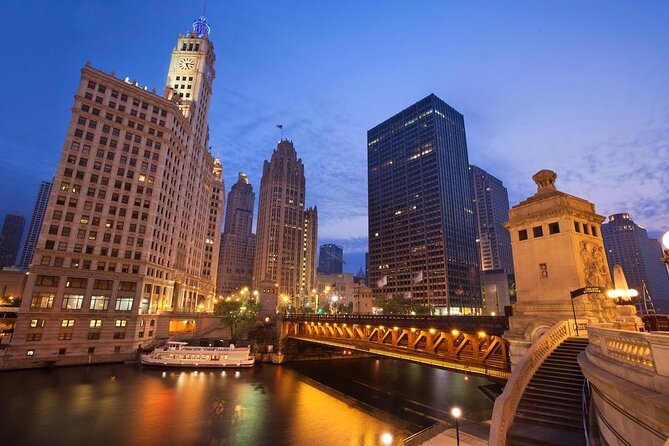
Your guide discusses buildings around Pioneer Court, including the Wrigley Building and Tribune Tower area. The point is not just to admire familiar facades. You will consider how a newer project responds to a historic neighbor, and how public spaces help connect buildings that were designed in different periods.
This is where a strong guide can make a real difference. Guides such as Paul S., Paula, Mary Ann, Karen, and Mary Jo have led this type of CAC walk, and the feedback on their storytelling and ability to answer questions is especially strong. Paul S. was praised for explaining architects, buildings, and community spaces, while Paula brought in history, sustainability, and the story behind each project.
The exact guide will depend on your date, so do not book expecting one particular person. Still, the CAC clearly treats the guide as more than someone who points at facades. You can expect interpretation, conversation, and room for questions.
Tribune Tower: a historic landmark with a new role
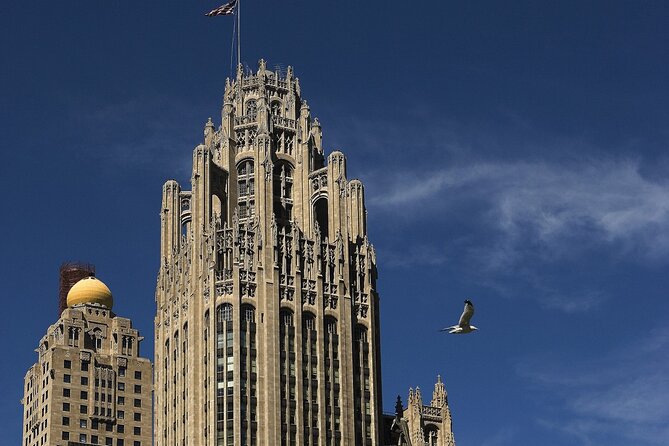
The walk then turns to recent renovations and additions at Tribune Tower. This is one of the most useful stops because it shows how an older landmark can be adapted rather than simply preserved as a frozen object.
The tour focuses on the changes to the historic tower and how its newer use affects the surrounding area. You will look at the meeting point between old and new work, a subject that comes up often in major cities but feels especially sharp in Chicago, where famous historic buildings sit close to modern towers.
This stop should appeal to you if you care about preservation, adaptive reuse, or the practical problems of updating an older building. It also helps explain why a tour about new architecture needs historic buildings in the picture. New design is rarely isolated. It has to deal with height, materials, street edges, nearby landmarks, and the expectations people bring to a famous address.
A few more architecture tours around Chicago worth a look
- Chicago Architecture River Cruise
★ 5.0 · 15,756 reviews - Chicago River 90-Minute Architecture Tour
★ 4.5 · 9,629 reviews - Chicago River: 1.5-Hour Guided Architecture Cruise
★ 4.8 · 8,046 reviews - Chicago Architecture Center River Cruise aboard First Lady
★ 5.0 · 5,536 reviews
Small urban rental apartments and the changing city
Another portion of the walk examines recent trends in small urban rental apartments. This is a more everyday subject than a landmark skyscraper, but it may be one of the most useful parts of the tour.
You will consider how developers and architects are shaping compact rental housing in a dense downtown area. The discussion can help you read buildings that do not attract the same attention as a dramatic tower. Look at the size of the building, the way it meets the sidewalk, and how it adds homes to an already crowded part of the city.
This topic also brings architecture back to real life. A building is not only a facade or an engineering feat. It is a place where people live, and its design affects light, privacy, shared areas, access, and the feel of the street. If you are interested in urban planning or housing, this part may be more useful than a simple list of famous buildings.
The walk does not promise access to every interior, and building entry can change because of weekend schedules, holidays, or unexpected closures. That is worth keeping in mind. The tour’s value rests mainly in the guide’s explanation and the views from public areas.
465 N Park Drive and the shape of a newer skyline
The discussion of 465 N Park Drive continues the look at recent residential design. Here, you can compare another newer project with the older towers and civic spaces around it.
The location helps you see how new buildings change the visual balance of the area. A recent tower does not arrive on an empty block. It joins a crowded collection of older structures, streets, plazas, and riverfront views. Your guide explains the project as part of that setting rather than treating it as an isolated object.
For me, this is where the tour’s narrow route becomes a strength. You are not using half your time to travel between distant examples. You can stay with a few buildings long enough to discuss why they look and function as they do.
St. Regis Chicago and contemporary tower design
The St. Regis Chicago is another major stop. The building gives the tour a chance to examine a prominent modern tower and the design choices that make it different from earlier skyscrapers nearby.
You will view the building from outside and hear about its place in current Chicago architecture. The stop works best as a comparison exercise. Look from the St. Regis toward the older towers, then back again. Differences in shape, scale, materials, and relationship to open space become easier to notice when a guide points them out.
This is the kind of stop that can satisfy a serious architecture fan without shutting out a newcomer. You do not need technical training to follow the discussion. If you want more detail, the small group makes it easier to ask about structure, design intent, or the building’s effect on the surrounding streets.
Apple Michigan Avenue and architecture for public use
The route includes about 10 minutes at Apple Michigan Avenue. This is not just a retail stop. The building provides a clear example of how a commercial space can be designed as part of the city rather than as a closed box.
Your guide examines the store from the public realm, including its placement along Michigan Avenue and its connection to the surrounding area. The stop also broadens the tour beyond tall residential and office towers. Architecture includes shops, entrances, gathering places, and the way a building invites people inside.
Some visitors may find this stop less rewarding if they want only monumental skyscrapers. I think it earns its place because it shows a different kind of design problem. A store must be recognizable, easy to enter, and useful to a huge range of people, all while fitting into one of Chicago’s most important streets.
Returning to the CAC and using the included galleries
The walk ends back at the Chicago Architecture Center, with closing remarks taking about five minutes. Since gallery admission is included, you can continue with the center’s exhibits if you have time and energy.
That return point is practical. You do not need to arrange a second meeting spot across town, and you can use the center to follow up on questions from the walk. If you are planning a full day around architecture, this makes the tour a sensible first activity. You get an introduction outdoors, then a chance to look at exhibits indoors.
The center does not provide hotel transport, coat check, or storage for luggage and strollers. Plan accordingly. Service animals are allowed, pets are not, and most people can take part. The itinerary and interior access can change without notice, so treat the listed buildings as the intended focus rather than a guarantee of entry.
What the $35 price gets you
At $35 per person, this is a fair price if you want interpretation rather than a self-guided walk. You are paying for a 90-minute route, a certified professional guide, and admission to the CAC galleries.
You could walk around Pioneer Court, Michigan Avenue, and the river area for free. The challenge is knowing what you are seeing and how the buildings connect. The tour earns its cost by organizing that information into a tight route and giving you someone to answer questions.
The value is strongest for visitors who are curious but not trained in architecture. You do not need to buy a guidebook or spend hours researching every building. It is also good value for Chicago residents who want to see current projects in a new way. People already familiar with the classic architecture tours may appreciate that this one turns attention toward newer work.
The price feels less worthwhile if you want extensive interior visits or a broad tour of Chicago’s entire architectural story. This is a focused walk, not a full city survey. Its strength is explanation, not the number of buildings checked off a list.
Group size, weather, and the practical side of the walk
The maximum group size is 15. That is small enough for personal questions and easier listening on a city sidewalk. It does not mean you will receive a private tour, but it should feel more manageable than a large coach group.
Wear shoes suited to 90 minutes of walking and check the forecast before you go. One tour led by Paul S. continued in rainy conditions, with the guide answering questions and keeping the mood positive. Rain can affect your comfort and the clarity of your views, so bring suitable clothing rather than assuming the walk will move indoors.
The tour is near public transportation, but pickup and drop-off are not included. The route begins and ends at the CAC, which simplifies planning. Confirmation is provided at booking, and free cancellation is available if you cancel at least 24 hours before the start time. Cancellations or changes made later are not refunded or accepted.
The itinerary may change, and interior access can be limited on weekends, holidays, or during unexpected closures. That is normal for an urban architecture walk, but it is important if you are booking mainly to enter a particular building.
Who will get the most from this architecture walk
I would choose this experience if you fit one of these groups:
- You want a short introduction to new Chicago buildings.
- You enjoy design but do not know how to read architecture on your own.
- You are an architect, designer, student, or urban planning fan.
- You have already seen the famous historic landmarks and want a different angle.
- You prefer a small walking group to a large sightseeing tour.
- You want a tour that combines outdoor views with CAC gallery admission.
It is less suitable if you want a long architectural survey, guaranteed interior access, or a tour devoted only to Chicago’s oldest landmarks. The focus is recent design and renovation, with enough historic context to make those changes understandable.
Should you book Chicago Architecture Walking Tour: What’s New?
I would book it if you want to understand how Chicago is changing, not just admire the buildings that made it famous. The compact route, CAC guide, small group, and gallery admission give you a useful package for $35.
Go in expecting a guided examination of a few key projects, not a greatest-hits tour of the whole city. If that sounds right, this is a smart choice for both first-time visitors and Chicago residents. Book at least a day ahead if your plans are firm, since the experience is often reserved well in advance, and leave room for itinerary changes or limited building access.
FAQ
Where does the tour begin?
It begins at the Chicago Architecture Center, 111 E Wacker Dr, Chicago, IL 60601.
How long does the walking tour last?
The tour lasts approximately 1 hour and 30 minutes, including the opening and closing remarks.
What buildings and areas does the tour cover?
The route includes the Chicago Architecture Center, Pioneer Court, the historic Tribune Tower and its recent changes, newer urban rental apartment designs, 465 N Park Drive, St. Regis Chicago, and Apple Michigan Avenue.
Is admission to the Chicago Architecture Center included?
Yes. Admission to the CAC galleries is included in the tour price.
How many people can join the tour?
The tour has a maximum of 15 participants.
Can I cancel for a full refund?
Yes, if you cancel at least 24 hours before the experience start time. Cancellations or changes made less than 24 hours in advance are not accepted, and the amount paid is not refunded.
Just added around Chicago
- Private Chicago Architecture Tour★ 5.0 · 5 reviews
- Private Frank Lloyd Wright Architectural Tour by Luxury Vehicle★ 3.5 · 7 reviews
- Chicago Luxury Minibus City Tour and Architecture River Cruise★ 4.5 · 8 reviews
- Small Group History And Architecture Walking Tour of Chicago★ 4.5 · 8 reviews
- Private Chicago Architecture Walking Tour★ 5.0 · 6 reviews
- Chicago History and Architecture Walking Tour with Boat Cruise★ 4.5 · 10 reviews
- Chicago: Evolution of the Skyscraper Walking Tour★ 4.9 · 10 reviews
- Chicago’s Modern Skyscrapers Guided Walking Tour★ 5.0 · 6 reviews
Walking Tours, compared.
The Official Art Deco Walking Tour by The Miami Design Preservation League
Read our review →
Barcelona: Gothic Quarter Ghosts and Legends Walking Tour
Read our review →
Barcelona: Old Town and Gothic Quarter Walking Tour
Read our review →
Lecce: Baroque Architecture and Underground Walking Tour
Read our review →
Chicago in a Day: Food, History & Architecture Walking Tour
Read our review →

Ramblas, Old Town, Gothic and Gaudi Architecture Walking Tour
Read our review →
Chicago’s Secret Interiors Architectural Walking Tour
Read our review →Browse the lists this tour appears in