
Review · SPAIN
Melilla: Modernist and Art Deco gems
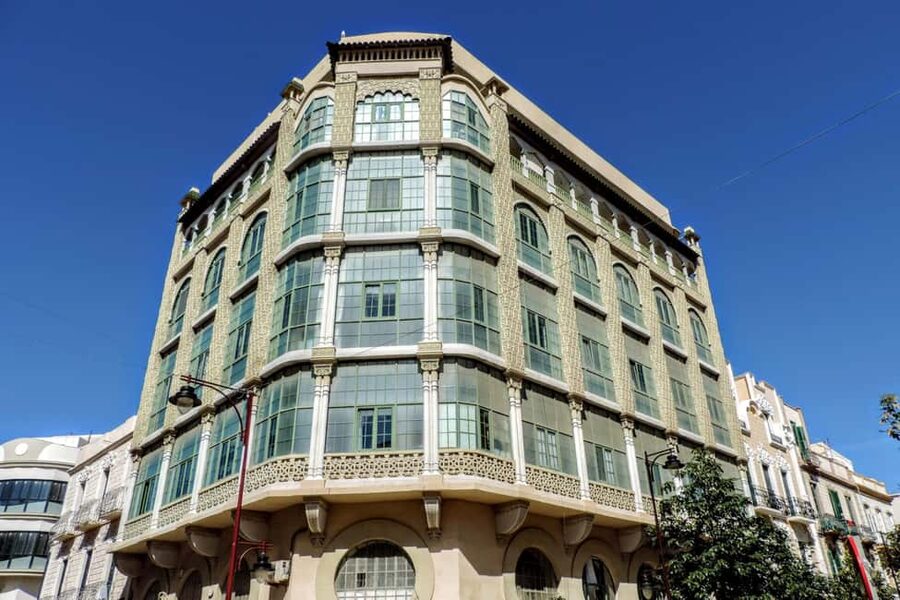
Melilla’s Modernist Triangle is a fine surprise on Spain’s African coast: a compact city center filled with curved façades, floral details, glass-fronted buildings, and Art Deco lines. This two-hour walk follows the work of Enrique Nieto, a disciple of Lluís Domènech, whose designs helped reshape 20th-century Melilla.
I like two things right away: the route keeps its focus on architecture rather than trying to cover all of Melilla, and Patricia, the official guide, brings a clear personal connection to the city. The main consideration is language: the tour is conducted in Spanish, so you’ll get the most from it if you can follow spoken Spanish.
Key points to know
- Enrique Nieto’s Melilla: Follow the architect’s influence through façades filled with curved forms and natural motifs.
- A central walking route: The tour begins and ends at Plaza de España, with no hotel transport included.
- Patricia as your guide: She is an officially accredited Melilla guide and focuses on the city’s Modernist character.
- Major landmarks included: See Casa Melul, Casa de los Cristales, the Edificio del Acueducto, Cámara de Comercio, and the former El Telegrama del Rif building.
- A short, useful introduction: Two hours gives you a focused look at the Modernist Triangle without taking over your day.
- Easy booking terms: The tour costs $17 per person, is wheelchair accessible, and allows cancellation up to 24 hours before the start for a full refund.
Why Melilla’s architecture deserves two hours
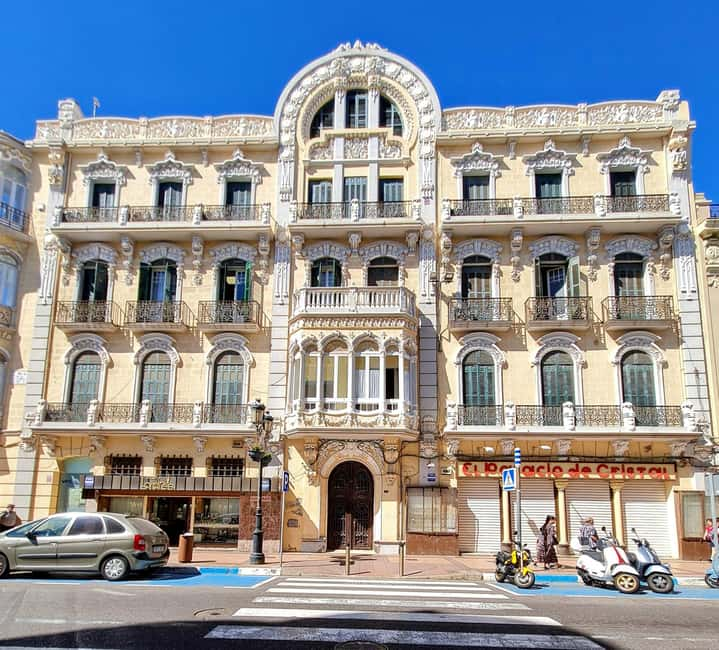
Melilla is often understood through its military setting, Mediterranean position, and cultural mix. This walk gives you another way to read the city. Instead of focusing mainly on fortifications or borders, you look upward at balconies, window frames, decorative curves, tiled surfaces, and carefully shaped façades.
The city’s Modernist center grew during the expansion of Melilla in the early 20th century. Enrique Nieto played a major role in that change. His work brought the visual language of Spanish Modernisme to North Africa, creating a city center that feels distinct from both mainland Spain and the surrounding region.
The phrase Golden Triangle refers to the central area where many of these notable buildings are grouped. That concentration makes the tour practical. You are not spending most of the afternoon crossing town between isolated monuments. Instead, the route moves through a connected urban district where one façade leads naturally to the next.
I especially like this kind of walk for travelers who enjoy architecture but do not want a technical lecture. You can study the details, hear the story behind the buildings, and still keep your bearings in the city.
More Art Deco tours in Spain:
- The Official Art Deco Walking Tour by The Miami Design Preservation League
★ 5.0 · 1,580 reviews - Miami South Beach Art Deco Walking Tour
★ 5.0 · 1,039 reviews - Miami Beach Food and Art Deco Walking Tour
★ 4.5 · 245 reviews
Meeting Patricia at Plaza de España
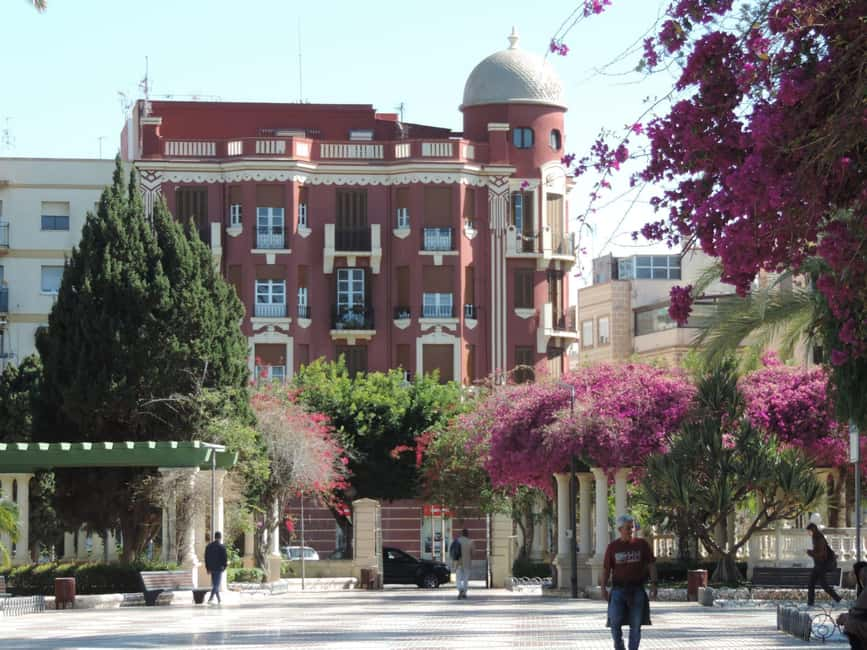
The meeting point is at the door of the Casino Militar de Melilla, next to Plaza de España. Patricia will have official city guide accreditation, so she should be easy to identify at the appointed time.
Plaza de España is a sensible place to begin. It puts you close to the Modernist center and gives you a broad urban setting before the route narrows into individual streets. You start with the city around you, then move into the details that make this district special.
Contact Patricia through WhatsApp about 72 hours before the tour. That simple step is worth doing, especially if you want to confirm the meeting point or make sure your arrival plans are clear.
The tour is in Spanish. Some material may be shown in its original language, so do not expect an English-language presentation. If your Spanish is limited, you can still appreciate the buildings, but the value of the walk depends heavily on how much of Patricia’s explanation you can follow.
Calle Ejército Español and the first architectural details
The first guided section takes about 20 minutes along Calle Ejército Español. This is the longest stop on the route, which suggests that the guide uses it to set the scene and explain what you should look for during the rest of the walk.
Pay attention to the way Modernist buildings use more than straight lines. Curves, plant-inspired details, and decorative treatment around windows and balconies help turn ordinary residential and commercial façades into designed works of art.
This opening segment is useful because it gives you a visual vocabulary. Once Patricia points out recurring shapes and motifs, you can begin spotting them on your own. That makes the remainder of the tour more rewarding than simply collecting building names.
Calle Miguel de Cervantes and the walk between landmarks
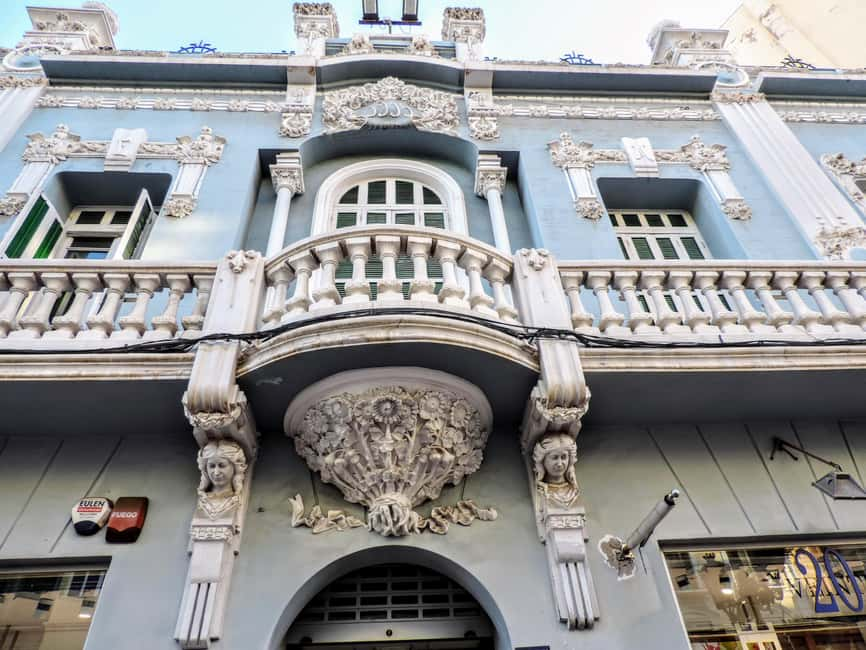
The route continues to Calle Miguel de Cervantes for about 10 minutes. This is a shorter guided section, likely suited to viewing buildings as part of the surrounding streets rather than stopping at one major monument.
That distinction matters. Modernist architecture is not always experienced as a single grand structure. In Melilla, the character of the district comes from the relationship between several façades, their balconies, their street corners, and the rhythm of the whole neighborhood.
You may find this part less dramatic if you are looking only for famous individual buildings. I would treat it as a connecting chapter, helping you see how the architectural style spreads through the city center.
A few more architecture tours around Spain worth a look
- Barcelona: Sant Pau Recinte Modernista Entry Ticket
★ 4.6 · 2,567 reviews - Barcelona: Sagrada Familia, Modernism, and Old Town Tour
★ 4.7 · 1,621 reviews - Ramblas, Old Town, Gothic and Gaudi Architecture Walking Tour
★ 5.0 · 723 reviews - Historical and Modernist Bike Tour Barcelona
★ 5.0 · 262 reviews
Avenida Cándido Lobera and the city’s broad urban setting
Avenida Cándido Lobera receives about 15 minutes of guided attention. A larger avenue can help you step back and see the buildings at a wider angle, rather than examining them only from a narrow pavement.
This is where the tour’s subject becomes more than decoration. The architecture reflects a period when Melilla was expanding and presenting itself as a modern Mediterranean city. The buildings were part of an urban project, not random flourishes added one at a time.
I like that the route includes both streets and avenues. Smaller streets reveal craftsmanship close up. Broader roads give you room to consider how the buildings work together as a city.
Plaza Menéndez Pelayo and the Golden Triangle
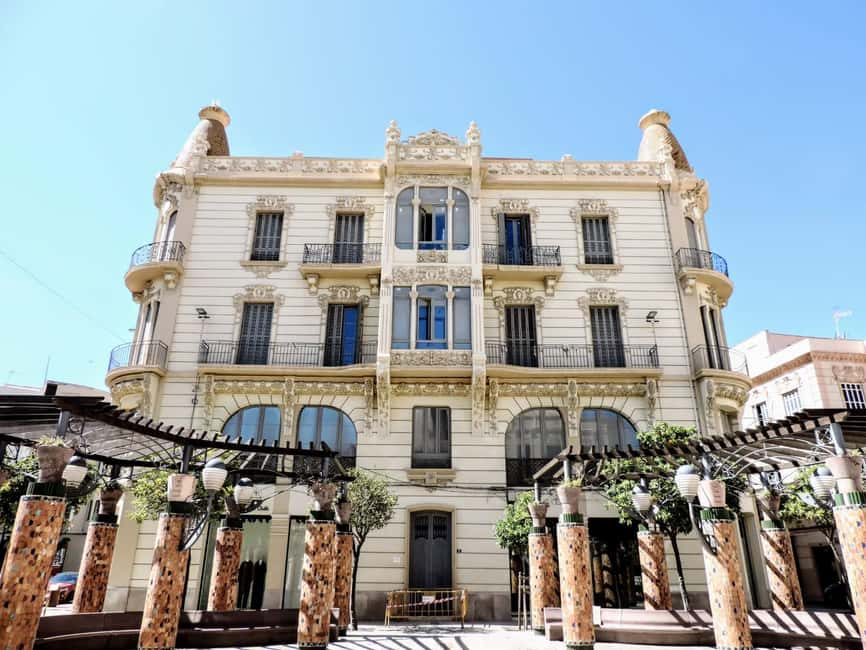
The next 15-minute stop is Plaza Menéndez Pelayo. Public squares are often the best places to pause during an architecture walk because they give you space to compare several elevations at once.
This section helps explain why the district is called the Golden Triangle. The term is not just a catchy label. It points to a concentrated area where Modernist buildings form a practical walking circuit.
Look for contrasts between older decorative curves and later Art Deco restraint. The experience is not limited to one pure style. The route covers Modernist and Art Deco work, allowing you to see how design changed across the 20th century.
For me, this is one of the strongest reasons to take a guide. You can photograph an ornate façade by yourself, but a guide can help you understand what separates Modernisme from Art Deco and why both belong in the same city walk.
Calle Abdelkader and the cultural mix of Melilla
Calle Abdelkader brings another 15-minute section. The street name itself reflects the wider cultural setting of Melilla, a Spanish city on the North African coast with several cultural influences meeting in one place.
The architectural story works best when you keep that setting in mind. Melilla’s Modernist center is Spanish in its artistic roots, but its location gives the buildings a different atmosphere from similar work in Barcelona or other mainland cities.
You do not need to force a grand theory onto every façade. Simply notice how this European architectural style was adapted to a city in Africa, beside the Mediterranean, and within a culturally mixed urban setting.
Patricia’s enthusiasm is likely most useful here. Her role is not only to identify buildings, but to connect the design to the city she knows and cares about. The strongest praise for her guiding centers on her warmth, clear explanations, and ability to make Melilla feel personal rather than distant.
Calle General Marina and the practical rhythm of the walk
Calle General Marina takes about 10 minutes. By this point, the route has given you enough examples to recognize the main features of Melilla’s Modernist streets.
A two-hour tour needs this kind of rhythm. Not every stop can be a major highlight, and shorter sections prevent the experience from becoming a slow procession of dates and names. You keep moving, but the route still pauses often enough for explanation and photographs.
The practical advantage is that you see a lot without committing to a full-day activity. If you have limited time in Melilla, this walk can give you a strong introduction to the central architecture before you continue exploring independently.
Calle General Chacel and the details worth photographing
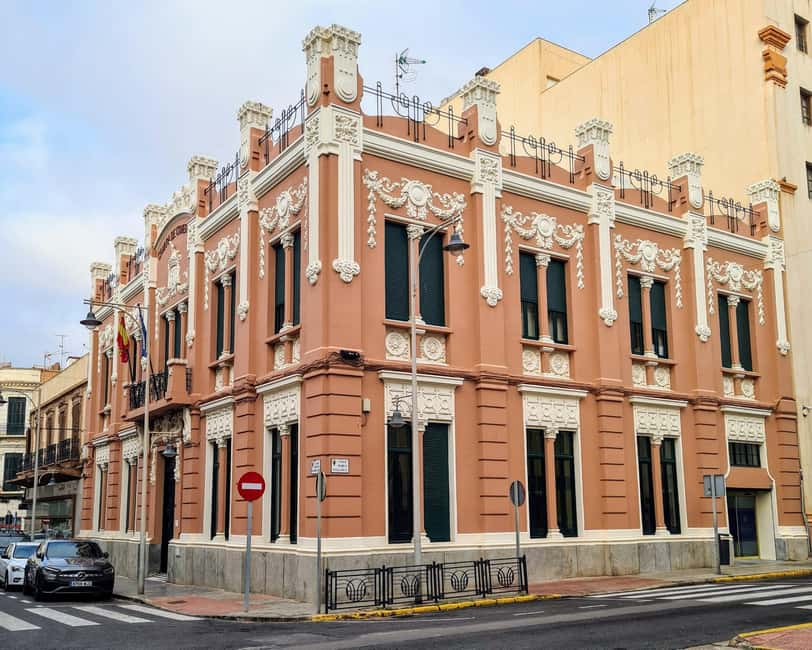
The 10-minute stop on Calle General Chacel is another chance to look closely. Modernist buildings reward attention to small features: the shape of a balcony, the frame around a window, a decorative curve, or the way a natural motif is worked into the façade.
Take photographs from several distances. A wider image shows the building in its street setting. A closer one records the details that you might otherwise forget after the tour.
Do not expect every building to be open to the public. This is primarily an exterior walking tour, and its value comes from reading the city streets rather than entering interiors.
Avenida Juan Carlos I, Rey and the main named landmarks
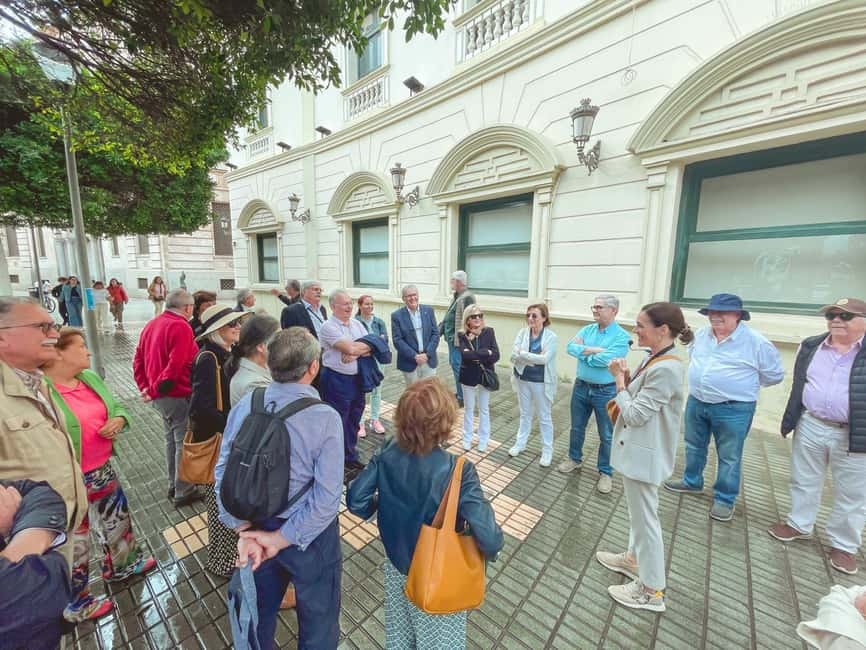
The final long section is a 20-minute guided walk along Avenida Juan Carlos I, Rey. This is where the tour highlights several of the buildings most closely associated with Melilla’s Modernist identity.
You can expect to see Casa Melul, Casa de los Cristales, the Edificio del Acueducto, the Cámara de Comercio, and the former building of the newspaper El Telegrama del Rif. Each name gives you a useful point of reference, but the real pleasure is comparing their façades.
Casa de los Cristales is especially memorable as a name because it hints at the importance of glass and light in the design. Casa Melul and the Edificio del Acueducto add to the range of forms you encounter. The Cámara de Comercio and the former newspaper building show how Modernist design served civic and commercial purposes, not only private homes.
This part should leave you with a clearer sense of how broad Nieto’s influence was. The route is not built around one isolated masterpiece. It presents a group of buildings that helped give central Melilla a shared visual identity.
Returning to Plaza de España
The walk ends back at Plaza de España. Finishing where you began makes the tour easy to fit into a day of sightseeing, and it means you are not left searching for transport from an unfamiliar final stop.
The return also gives you a chance to revisit the square with new eyes. After two hours of looking at façades, you may notice details you missed at the beginning. That change in perception is a good measure of the tour’s success: you leave not only with a list of buildings, but with a better way to look at Melilla.
The route does not include pickup or drop-off at your accommodation. Plan to reach Plaza de España on your own and allow a little extra time to find the Casino Militar meeting point.
Is $17 a fair price?
At $17 per person, this is good value if you care about architecture or want a guided introduction to central Melilla. The price covers an official guide and about two hours of focused walking, which is less than many longer city excursions and does not force you to spend a full day on one subject.
The value comes from interpretation. You can walk these streets without paying anything, but you may not know which buildings matter, how the styles differ, or why Enrique Nieto is central to Melilla’s architectural story.
The price does not cover drinks, snacks, or transport. Bring what you need for the walk, and remember that the experience is conducted on foot. The tour is wheelchair accessible, a useful feature for visitors who need an accessible route, though you should still confirm any personal mobility requirements with Patricia in advance.
Free cancellation is available up to 24 hours before the start time, and you can reserve now and pay later. Those terms help if your schedule in Melilla depends on ferry, flight, or border arrangements.
Who should take this Melilla walking tour?
I would recommend it most strongly to:
- Architecture fans interested in Modernism, Art Nouveau, or Art Deco.
- First-time visitors who want a clear introduction to central Melilla.
- Spanish speakers who enjoy guided city walks.
- Visitors with only a few hours available.
- People who prefer local explanation over a self-guided list of buildings.
- Anyone curious about the meeting of Spanish architectural ideas and North African urban life.
It may be less suitable if you need an English-language guide or want to enter historic buildings. It is also not a food tour, fortification tour, or general overview of every part of Melilla. Its subject is specific, and that focus is part of its strength.
The strongest praise for Patricia centers on her kindness, enthusiasm, and ability to explain the city in an engaging way. That matters on an architecture walk. A dry catalogue of architects and dates can make even beautiful buildings feel flat. Patricia’s approach appears to connect the design with Melilla’s identity and with her own affection for the city.
Should you book the Modernist Triangle tour?
Book this tour if you want to understand why Melilla is important to the story of Spanish Modernism and you can follow Spanish-language guiding. For $17, you get a compact route, an accredited local guide, and a useful introduction to buildings you might otherwise pass without noticing.
Skip it if you need English commentary, want indoor access, or prefer a broad city tour covering fortifications and other sights. For everyone else, this is a smart way to spend two hours in central Melilla, especially with Patricia’s personal knowledge and clear enthusiasm for the city.
FAQ
How long does the Melilla Modernist tour last?
The walking tour lasts about two hours.
Where does the tour begin?
It begins at the door of the Casino Militar de Melilla, next to Plaza de España.
Where does the tour end?
The tour returns to Plaza de España, at the same general starting point.
Who guides the experience?
Patricia, an official Melilla guide, leads the tour. She has official city guide accreditation.
What language is the tour in?
The live guided tour is conducted in Spanish. Some content may be shown in its original language.
What buildings can I see?
The route includes Casa Melul, Casa de los Cristales, the Edificio del Acueducto, the Cámara de Comercio, and the former building of the newspaper El Telegrama del Rif.
Is the tour wheelchair accessible?
Yes, the activity is listed as wheelchair accessible.
Can I cancel the booking?
Yes. You can cancel up to 24 hours before the tour for a full refund. You can also reserve now and pay later.
Just added around Spain
- Gaudí and Modernist Art: Guided Tour in Palma de Mallorca★ 4.5 · 3 reviews
- Marques de Riscal and Ysios Rioja Wine Tour w/ Lunch from Bilbao★ 5.0 · 24 reviews
- Love in the Gothic Quarter Barcelona: Self-Guided Romantic Walk★ 4.5 · 9 reviews
- Walking tour of the Gothic Quarter of Barcelona + Cathedral★ 5.0 · 8 reviews
- Wine tasting with a view of the Sagrada Familia★ 4.5 · 13 reviews
- Visit to the Modernist houses of the Americans★ 5.0 · 2 reviews
- Barcelona Jewish & Gothic Tour★ 5.0 · 18 reviews
- Roman & Gotic & Gaudi in Barcelona: private walking tour★ 4.5 · 2 reviews
Art Deco Tours, compared.
The Official Art Deco Walking Tour by The Miami Design Preservation League
Read our review →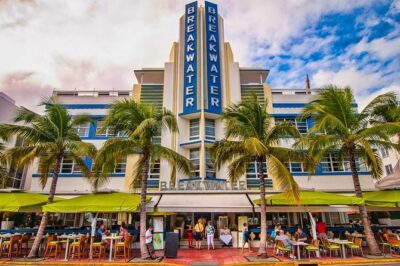
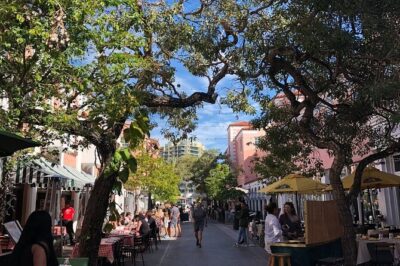
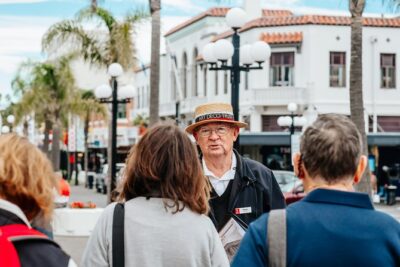
Guided 10am Morning Art Deco Walk From Napier Art Deco Trust
Read our review →
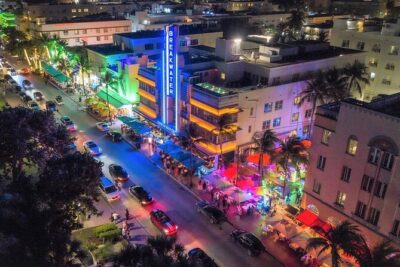
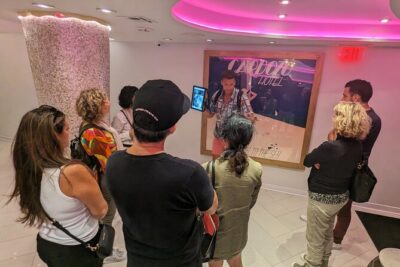
Award-winning Art Deco & Neon Lights Walking Tour in Miami Beach
Read our review →
Browse the lists this tour appears in