
Review · CHICAGO
Marvels & Feats: An Engineer’s Tour of Chicago Architecture
Chicago’s skyscraper story is really an engineering story. On this two-hour walk, you’ll see how Chicago’s builders dealt with soft ground, gravity, wind, height, and changing technology. The tour also takes you inside a few buildings, which matters. Chicago architecture is much easier to understand when you can study the structure from within, not just admire the outside.
I like the engineer-led explanation and the way the route connects early skyscrapers with newer riverfront work. I also like the small group size, capped at 20, which should make it easier to hear and ask questions. The main drawback is physical: you’ll be walking outdoors in all weather, and the tour does not provide hotel pickup or drop-off.
- See 150 years of engineering change in Chicago’s Loop and along the river.
- Learn from an actual engineer, with Hillary named as one guide.
- Enter several buildings, rather than viewing every structure only from the sidewalk.
- Examine Chicago’s unusual foundations, including a building tied to a haunted reputation.
- Finish at Riverpoint Park with a broad view of the Chicago River.
- Pay $35 for about two hours, a fair price if you enjoy buildings, cities, and practical explanations.
Why Chicago Is the Right City for an Engineering Tour
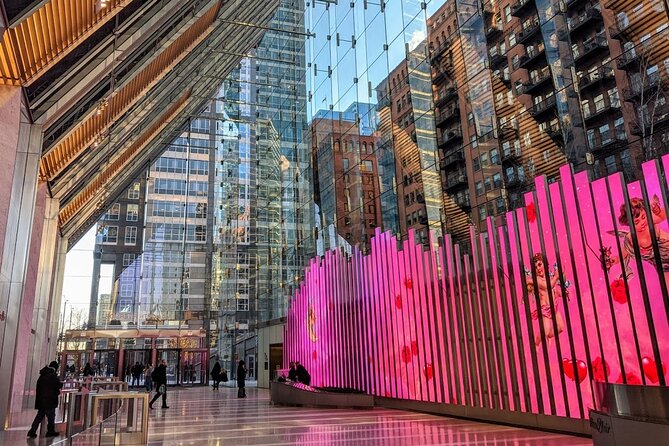
Chicago is a useful classroom because its buildings show several stages of urban engineering in a compact area. The city is closely tied to the birth of the skyscraper, and this route uses that story as more than a sightseeing hook.
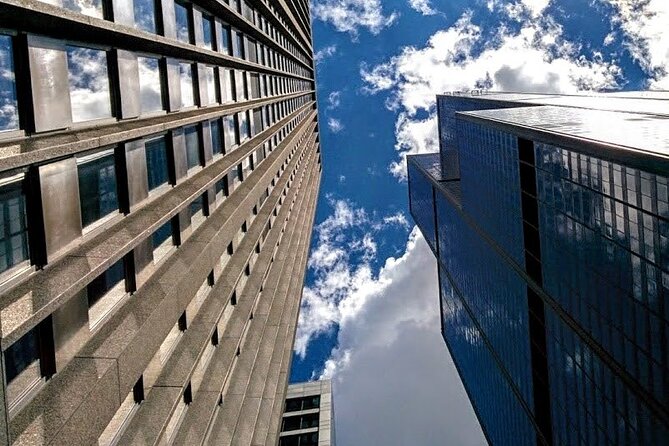
You’ll look at how engineers made tall buildings possible, then follow the problems that came with greater height. A tower must carry its own weight, resist wind, and transfer pressure safely into the ground. Those ideas can sound technical, but the promise here is that they are explained in plain language without stripping away the real engineering.
That balance is important. Architecture walks often focus on façades, famous designers, and dates. This one asks a different question: How does the building actually work? If you want a better sense of why a structure looks the way it does, the approach should give you more than a list of names.
The route also includes stories that make the science easier to remember. You’ll hear about the man known as the father of the skyscraper, an engineer who was a classmate of Gustav Eiffel. You’ll also examine a building with a haunted reputation that can be linked to uneven settling on a floating foundation. The unusual detail is not just a bit of city folklore. It gives you a way to understand how soil and foundations affect a building long after construction ends.
Starting at 430 South Michigan Avenue
The tour begins at 430 S. Michigan Avenue at 2:30 pm. That location puts you on the edge of the Loop, Chicago’s famous central business district, so you should plan to arrive ready to walk rather than treating the meeting point as a quick curbside pickup.
There is no hotel transportation. You’ll need to make your own way to the starting point and from the end point at Riverpoint Park, 150 N. Riverside Plaza. Both locations are near public transportation, which helps if you are staying outside the central area or do not want to use a car.
The start time has one practical advantage: you can spend the morning on another Chicago activity and still join the walk in the afternoon. The tradeoff is that your tour will take place through the afternoon in changing weather and daylight. The operator runs the experience in all weather, so check the forecast and dress for conditions. Comfortable shoes are a sensible choice, since the tour includes outdoor walking and several stops.
The group limit is 20 people. That is not a private walk, but it is small enough to feel more manageable than a large city tour. An engineer-led route also benefits from a group that can pause, look up, and ask questions without creating too much delay.
A few more architecture tours around Chicago worth a look
- Chicago Architecture River Cruise
★ 5.0 · 15,756 reviews - Chicago River 90-Minute Architecture Tour
★ 4.5 · 9,629 reviews - Chicago River: 1.5-Hour Guided Architecture Cruise
★ 4.8 · 8,046 reviews
The Loop: Foundations, Height, Gravity, and Wind
About 75 minutes of the tour takes place in the Loop. This is the main portion of the experience, and it focuses on buildings that reveal how structural design changed over time.
You’ll study early Chicago architecture through the problems engineers had to solve. Tall buildings are not simply wider buildings stacked upward. Their weight increases, their foundations become more demanding, and wind becomes a serious concern. The route explains how buildings handle gravity and wind, giving you a practical framework for looking at the city afterward.
That is where the guide’s technical background matters. The experience is designed to make the concepts understandable, but it does not treat you as if you need a watered-down version. I would choose this tour if you enjoy asking why a building was built in a certain way, or if you want more than a parade of landmark names.
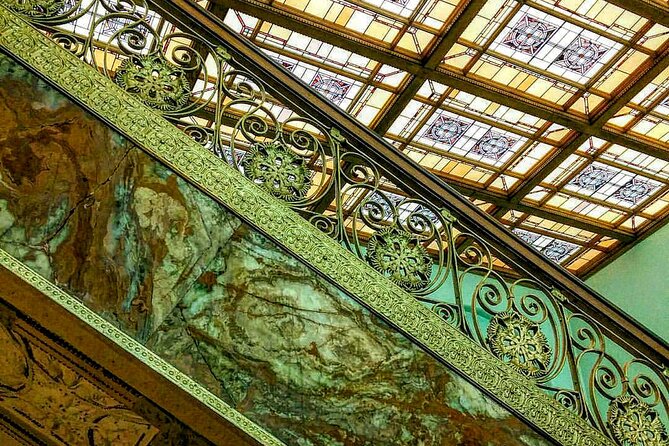
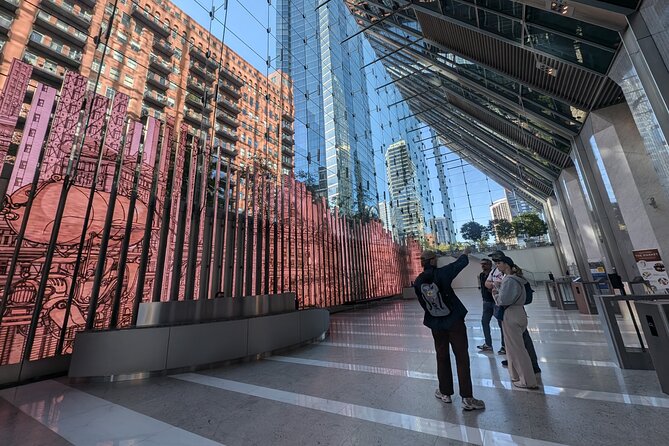
The first section also includes visits inside a few buildings. This is one of the best features of the route. From the sidewalk, you can see a tower’s exterior, but you cannot always understand its scale, structure, or interior arrangement. Stepping indoors gives you another angle on the design and helps connect the outside form with the spaces people actually use.
The exact interiors are not specified, so you should not book expecting a particular landmark or guaranteed access to a famous private space. Still, the promise of entering several buildings adds real value. Many architecture walks remain entirely outside. This one gives you a chance to see how Chicago’s architecture feels from the inside.
The Floating Foundation and the Haunted Building
One of the most memorable ideas on the route is the connection between a building’s reputation and its foundation. You’ll learn how a building associated with haunting can earn that reputation simply because it settles unevenly on a floating foundation.
The point is not to dismiss the story with a quick ghost tale. The foundation issue gives you a clear example of how difficult Chicago’s ground conditions can be for builders. If one part of a structure moves differently from another, doors, floors, walls, and the people inside may all feel the effects.
This is the kind of detail I value on a city walk. It links engineering to everyday experience. You do not need a degree to understand that a floor that shifts or a building that settles unevenly can feel unsettling. The story also helps you remember the larger lesson: the success of a tall building depends on what happens below street level as much as what happens above it.
The tour does not provide the building’s name in the available details, so you should not assume that you will be visiting a particular haunted attraction. The useful part is the explanation of the structure and the reason its foundation matters.
The Father of the Skyscraper and Chicago’s Early Ambition
Another stop concerns the engineer identified as the father of the skyscraper. You’ll learn that he was a classmate of Gustav Eiffel, a detail that places Chicago’s early engineering work in a wider international setting.
The story is valuable because it shifts your attention from skyscrapers as visual icons to skyscrapers as technical experiments. Chicago was not simply filling its center with taller buildings for dramatic effect. Engineers were testing new ways to support height, organize weight, and make dense urban construction possible.
I like this part of the route because it gives historical context without forcing you to memorize a long timeline. You are shown a building, then given a reason to care about its designer and method. That is a better way to learn than hearing a string of dates with no physical evidence in front of you.
The tour also helps you compare early engineering solutions with later ones. The city’s architecture becomes a record of changing priorities and methods. As you move through the Loop, you can see that a building’s age is not the only thing that matters. Its structure reveals what engineers knew, what materials were available, and what problems they were trying to solve.
Same city, a completely different century:
- Chicago Architecture Center River Cruise aboard First Lady
★ 5.0 · 5,536 reviews - Chicago: Architecture River Cruise Skip-the-Ticket Line
★ 4.8 · 4,325 reviews - Chicago River 45-Minute Architecture Tour from Magnificent Mile
★ 4.5 · 2,924 reviews - Chicago Lake and River Architecture Tour
★ 4.5 · 2,308 reviews
Along the Chicago River: Forty-Five Minutes of Newer Engineering
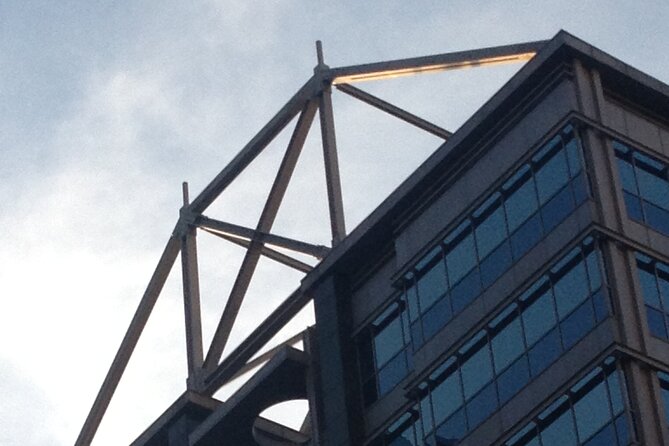
The final 45 minutes take you to the Chicago Riverwalk area. This section focuses on more recent engineering feats and gives the tour a change of pace after the dense Loop streets.
The river provides useful views. You can see buildings from a different angle, with more room to judge their height, shape, and relationship to the water. The setting also makes it easier to compare older downtown construction with newer work along the river.
You’ll finish at Riverpoint Park, 150 N. Riverside Plaza, with a broad view of the Chicago River. That ending is practical as well as scenic. You are not returned to the starting point, so it is worth checking your plans before booking. If you have dinner reservations near Michigan Avenue, you will need to allow time to get back.
The river portion is shorter than the Loop section, but it gives the tour a useful conclusion. You begin with the city’s early engineering challenges and finish by looking at newer solutions in a changing urban setting. The route does not treat Chicago’s architecture as frozen in the past. It shows the city still testing ways to build, connect, and use its central riverfront.
What the $35 Price Gets You
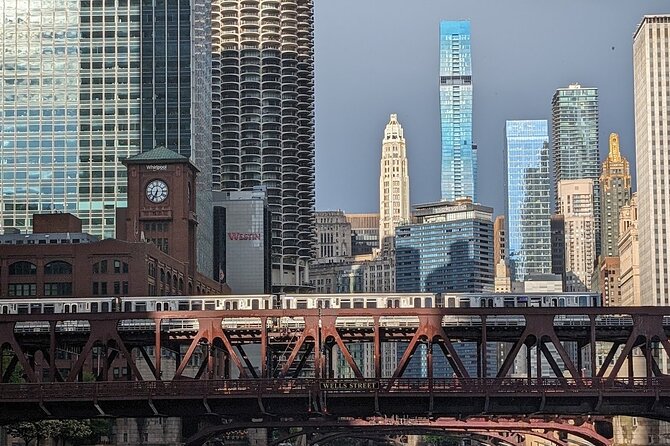
At $35 per person, this is reasonably priced for a two-hour guided walk, especially because the experience includes a specialist guide and access to several building interiors. You are paying for interpretation, not admission to a major paid attraction.
The value depends on your interests. If you mainly want skyline photographs, you could walk through the Loop and along the river on your own. But you would miss the structural explanations, the foundation story, and the connection between Chicago’s early skyscraper work and its newer riverfront engineering.
I would consider the price particularly fair for anyone who enjoys architecture, city planning, construction, or science explained through real places. It also works well for visitors who have already seen the major façades and want a new way to look at familiar streets.
The tour has a maximum of 20 people, which adds to the value. A smaller group makes it easier to hear the guide and follow a technical explanation. It does not guarantee a private experience, but it should feel more focused than a large sightseeing group.
Who Will Enjoy This Walk Most
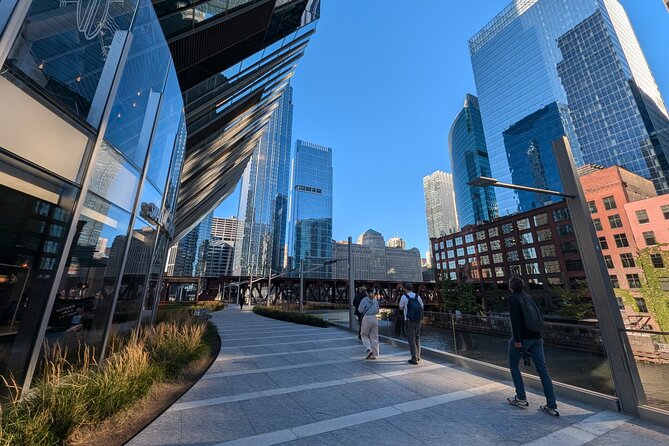
This tour suits you if you are curious about how buildings work. You do not need an engineering background. The stated aim is to make the material graspable without dumbing it down, and the format uses visible buildings to explain ideas that might otherwise feel abstract.
It is also a good choice for repeat visitors to Chicago. You may already know the Loop’s major streets, but this route gives you fresh questions to ask. Why is a building shaped this way? How does it handle wind? What sits below its foundation? Why did one structure become associated with ghosts?
Families with older children may find the subjects engaging, especially if they enjoy machines, construction, or tall buildings. The moderate physical fitness requirement is worth taking seriously. You will walk for two hours, spend time outdoors, and move between the Loop and riverfront. Service animals are allowed.
I would be more cautious if you want a relaxed ride, a short stroll, or a tour built mainly around famous architectural interiors. This is an active walking experience, and the technical focus may not suit someone who prefers only decorative details and landmark photographs.
Weather, Timing, and Practical Planning
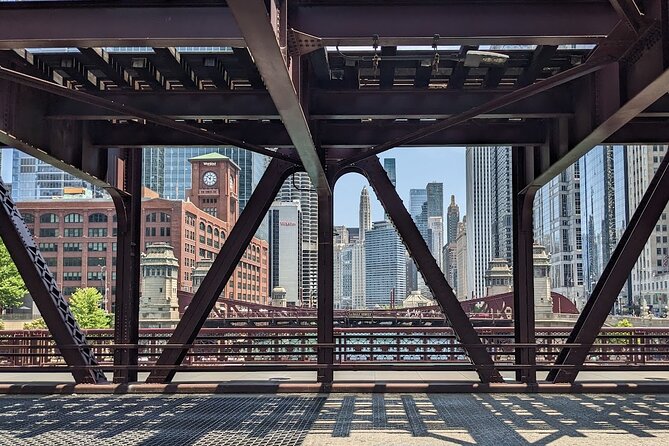
The tour operates in all weather. That means your clothing matters more than usual because the route includes outdoor walking and river views. Bring suitable layers and protection for the forecast, and wear shoes you can comfortably use for two hours.
A mobile ticket keeps the booking simple, but you still need to arrive at the correct meeting point. The confirmation is sent within 48 hours of booking, subject to availability, so leave enough time if your plans are tight.
The tour is usually booked about 45 days in advance. That suggests you should reserve early if your Chicago schedule is fixed, especially if you want the 2:30 pm departure on a particular date. Free cancellation is available until 24 hours before the start time. After that point, the payment is not refunded, and changes are not accepted.
The guide named in the available information is Hillary, who is described as opening up early Chicago architecture and pointing out less obvious parts of the city. Guide assignments can vary, so treat that name as useful information rather than a guarantee for every departure.
Should You Book Marvels & Feats?
Book this tour if you want Chicago architecture explained through engineering problems and real solutions. The strongest reasons are the specialist guide, the chance to enter several buildings, the unusual foundation story, and the contrast between the Loop and the Chicago River.
Skip it if you want a sightseeing bus, a private tour, or a route with no concern for weather and walking. For $35, though, the experience offers a focused way to see Chicago beyond its famous skyline. You leave with practical questions about gravity, wind, foundations, and height, which is exactly what a good architecture walk should give you.
FAQ
Where does the tour start?
It starts at 430 S. Michigan Avenue, Chicago, Illinois 60605.
What time does the tour begin?
The scheduled start time is 2:30 pm.
Where does the tour end?
The tour ends at Riverpoint Park, 150 N. Riverside Plaza, Chicago, Illinois 60606, with a broad view of the Chicago River.
How long does the experience last?
The tour lasts about two hours. Around 1 hour and 15 minutes takes place in the Loop, followed by about 45 minutes near the Chicago Riverwalk.
Is the tour available in bad weather?
Yes. It operates in all weather conditions, so you should dress appropriately.
What is the cancellation policy?
You can cancel for a full refund up to 24 hours before the experience start time. Cancellations or changes made less than 24 hours before the start time are not accepted for a refund.
Just added around Chicago
- Private Chicago Architecture Tour★ 5.0 · 5 reviews
- Private Frank Lloyd Wright Architectural Tour by Luxury Vehicle★ 3.5 · 7 reviews
- Chicago Luxury Minibus City Tour and Architecture River Cruise★ 4.5 · 8 reviews
- Chicago History and Architecture Walking Tour with Boat Cruise★ 4.5 · 10 reviews
- Small Group History And Architecture Walking Tour of Chicago★ 4.5 · 8 reviews
- Private Chicago Architecture Walking Tour★ 5.0 · 6 reviews
- Chicago: Evolution of the Skyscraper Walking Tour★ 4.9 · 10 reviews
- Chicago’s Modern Skyscrapers Guided Walking Tour★ 5.0 · 6 reviews
Chicago Architecture Tours, compared.
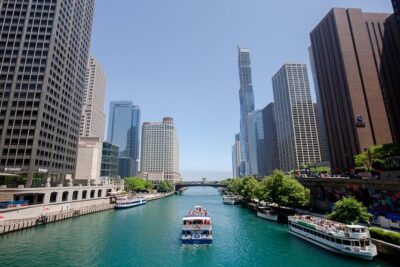
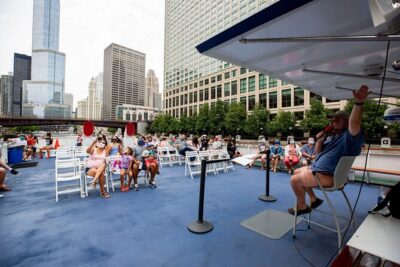
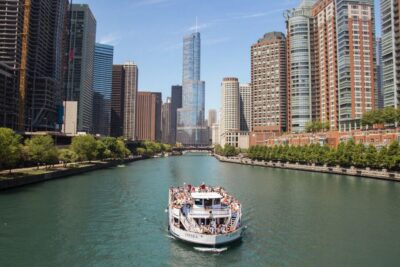
Chicago River: 1.5-Hour Guided Architecture Cruise
Read our review →
Chicago Architecture Center River Cruise aboard First Lady
Read our review →
Chicago: Architecture River Cruise Skip-the-Ticket Line
Read our review →
Chicago River 45-Minute Architecture Tour from Magnificent Mile
Read our review →
Chicago: 1.5-Hour Lake and River Architecture Cruise
Read our review →Browse the lists this tour appears in