
Review · BARCELONA
Enchanting Gothic Quarter by Night Tour
Barcelona’s Gothic Quarter changes character after sunset. On this two-hour walk, you move from Plaça de Catalunya into lanes lined with Roman remains, medieval churches, royal buildings, and modern political symbols. The route is less about entering grand interiors and more about learning how the old city fits together.
I like the Roman-to-modern timeline here, especially the stops at Plaça de la Vila de Madrid and the Barcino letters. I also like the way the walk connects monuments to living Catalan culture, from the Caganer figure to the human tower monument and current politics in Plaça de Sant Jaume.
The main caution is reliability. One booking ended with no guide arriving and no reply from the operator, although customer support later helped. Most importantly, check your meeting point and keep your phone available at 6 pm.
Key points to know before booking
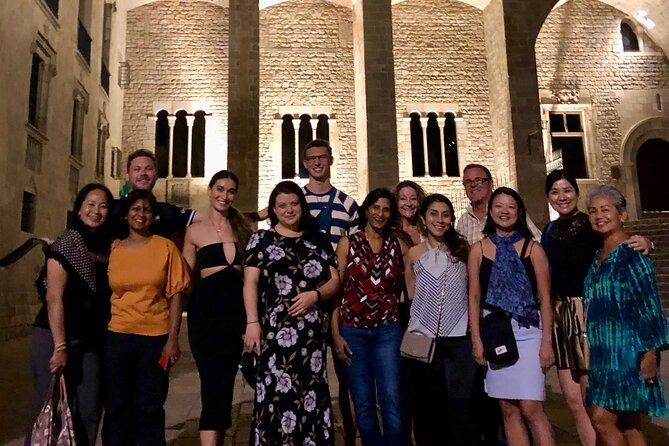
- A night route through old Barcelona: Walk from Plaça de Catalunya to Plaça de Sant Jaume after the heat and daytime crowds have eased.
- Roman remains come early: The necropolis at Plaça de la Vila de Madrid and the Barcino marker give the city a clear ancient starting point.
- The cathedral is mainly an exterior stop: You discuss architecture, religion, and local culture without a cathedral admission included.
- Guides make the difference: Tyler received especially strong praise for engaging explanations, while Paulo also led a highly enjoyable and informative walk.
- The group is capped at 20 people: That is small enough for questions, though not the same as a private tour.
- The finish is practical: You receive local restaurant suggestions near Plaça de Sant Jaume, with churros, hot chocolate, gelato, or ice cream available at your own cost.
Starting at Plaça de Catalunya at 6 pm
The meeting point is outside the Hard Rock Cafe at Plaça de Catalunya, 21. This is a simple place to find, but the square is large, so arrive a little early and look for the guide rather than assuming the group will be easy to spot.
The tour begins with a short introduction. That opening matters because the walk soon turns into the narrow streets of Ciutat Vella, where it is easy to lose your bearings. You get the broad outline first, then spend the next two hours connecting the old city’s Roman, medieval, religious, and political layers.
The tour uses a mobile ticket and confirmation is provided when you book. The advertised start time is 6 pm, and the walk lasts about two hours. Since most of the experience takes place outdoors, comfortable shoes and a charged phone are sensible choices, even though those items are not listed as formal requirements.
More Gothic quarter walks in Barcelona:
- Barcelona all included: Sagrada, Park Güell, Montjuic & Gothic
★ 5.0 · 2,169 reviews - Barcelona Gothic Quarter Tapas & Taverns Food & Wine Tour
★ 5.0 · 1,470 reviews - Barcelona: Old Town and Gothic Quarter Walking Tour
★ 4.8 · 1,393 reviews
Las Ramblas and the fountain tradition
The first short stop takes you along Las Ramblas, Barcelona’s famous promenade. You do not spend the whole tour here. Instead, it acts as a transition from the broad central square into the older quarter.
The stop includes the city’s well-known fountain and its local water tradition. The wording of the tour presents this as a playful, almost magical moment, but the real value is orientation. You are moving from modern Barcelona’s main pedestrian artery toward the historic streets that sit just beside it.
This part is brief, around 10 minutes. That is good news if you want the Gothic Quarter rather than a long Las Ramblas walk. It also means you should not book this experience expecting an in-depth tour of the promenade.
Roman Barcelona at Plaça de la Vila de Madrid
Plaça de la Vila de Madrid is one of the route’s most useful stops. It is a square with pines and jacaranda trees, but beneath and around it are remains of a Roman necropolis dating to the first century AD.
This gives you a clear starting point for Barcelona’s story. Before royal palaces, Gothic churches, and political demonstrations, there was Barcino, the Roman city. The necropolis helps explain that the area was not simply built up in the medieval period. Its urban story reaches back much further.
You spend about 15 minutes here. That is enough time for a focused explanation and a look at the site, but it is not a museum visit. If you prefer tours that place monuments into a larger story, this is one of the strongest early stops. If you want long periods to wander alone, the fixed pace may feel brisk.
Santa Maria del Pi and Gothic design
The Basilica de Santa Maria del Pi gives the walk its first major medieval church. It is a 14th-century Gothic building with the heavy, upright character you expect from Catalan Gothic architecture.
The tour visits the area outside the basilica only. This detail matters. You can study the exterior, hear about the building’s place in local architecture, and understand how the church fits into the old quarter, but you should not book this walk as a substitute for a church interior visit.
The stop lasts about 15 minutes. Your guide can point out the building’s form and use it to explain Gothic design in the region. The benefit is context. Instead of looking at a church for a few minutes and moving on, you learn why it belongs to this part of the city’s story.
A few more architecture tours around Barcelona worth a look
- Barcelona: La Pedrera Night Experience
★ 4.4 · 4,633 reviews - La Pedrera – Casa Mila Night Experience
★ 4.0 · 564 reviews - Barcelona: Casa Batlló ‘A Winter Night’ Experience
★ 4.5 · 495 reviews - Sagrada Familia Evening Private Tour with Expert Guide
★ 4.5 · 170 reviews
Finding Barcino in the modern street plan
The Esculptura de lletres Barcino marks an ancient entrance to the Roman villa of Barcino, dating from the first century BC. This is a small but important stop because it turns Roman Barcelona from an abstract idea into something you can locate in the present-day city.
I like this part of the route because it shows how much of Barcelona’s oldest story survives in fragments. You may not get a sweeping archaeological site, but you do get a direct link between the Roman settlement and the streets under your feet.
The stop is about 10 minutes. Keep your expectations in proportion: this is a viewing and explanation stop, not a long archaeological visit. Its value depends on the guide’s ability to connect a modest marker with the city’s larger past.
Barcelona Cathedral after dark
The Cathedral of Santa Cruz and Santa Eulalia is one of the route’s central landmarks. Its appearance brings together medieval Gothic elements and Neo-Catalan Gothic touches, giving the guide a useful subject for discussing architecture, religion, and local identity.
The cathedral stop lasts around 15 minutes. The walk focuses on the outside area, and admission is not included, so plan on seeing the building from the public spaces rather than touring the interior as part of this experience.
That limitation is not necessarily a flaw. At night, the exterior offers a strong setting for a guide’s explanation, and you can hear how religious buildings shaped the old city. But if you specifically want the cloister, chapels, or interior art, you will need a separate visit.
This is also the point where a good guide matters most. Tyler was praised for explaining each stop carefully and keeping two children engaged throughout the walk. That is a useful sign for families, since historical tours can lose younger listeners quickly. The experience with Paulo was also described as informative and enjoyable.
Plaça del Rei and the age of kings
Plaça del Rei brings you into the royal chapter of Barcelona’s past. The square, the Royal Palace, and the Chapel of Santa Agatha preserve the setting of a period when kings ruled from the heart of the old city.
This stop is scheduled for about 15 minutes. Rather than treating the plaza as a pretty backdrop, the guide uses it to explain the power structure behind the buildings. You see how royal authority, religious life, and city government once occupied the same compact area.
Again, this is primarily an exterior experience. You should think of it as a guided reading of the square, not an included palace visit. That distinction helps explain the low price. You are paying for a walking guide and interpretation, not a bundle of entry tickets.
The Caganer and Barcelona’s playful side
The brief Caganer stop adds a different tone. The figure is known as the pooper, a humorous character in Catalan culture. After Roman ruins, churches, cathedrals, and royal buildings, this moment shows that local identity is not only solemn or grand.
You spend around 10 minutes here. The stop may be especially useful if you want to understand details that are easy to miss when you walk alone. A guide can explain why this comic figure belongs in a discussion of Barcelona’s culture rather than treating it as a random curiosity.
I appreciate the change of pace. A tour made up only of military, religious, and royal history can feel heavy. The Caganer gives you a small piece of local humor and reminds you that culture often survives through ordinary, odd, and funny symbols.
Plaça de Sant Jaume and present-day politics
Plaça de Sant Jaume is the political center of the city and one of the most meaningful stops on the route. Here, the guide discusses the current political situation in Barcelona, adding a modern layer to the Roman and medieval material covered earlier.
That present-day focus is a strong reason to choose this tour over a basic monument walk. You are not only looking backward. You are also hearing how the old center remains tied to civic life and Catalan identity.
The tour ends here after roughly 10 minutes in the square. The location is practical. Plaça de Sant Jaume is about three minutes from Jaume I metro station on line L4, and about five minutes from Las Ramblas and Liceu metro station on line L3. Taxis can reach the square from the nearby avenues.
A small Catalan symbol at Plaça Sant Miquel
The final stop is Plaça Sant Miquel, where a monument to the traditional Catalan human tower appears. These towers, known as castells, are one of the clearest visual symbols of cooperation and local tradition in Catalonia.
The stop is short, about five minutes, but it gives the walk a fitting final image. You have moved from Roman foundations through medieval power and religious buildings to a living regional tradition.
The guide also provides a list of local restaurant recommendations here. That does not include a meal, and you should not treat the list as a reservation service. It is simply useful at the point when you may want dinner in the Gothic Quarter.
Churros, chocolate, or gelato after the walk
The tour may finish with the option to enjoy churros and hot chocolate or gelato and ice cream, but these are not included in the price. You pay separately.
That flexibility works well. If you are ready for dinner, you can use the restaurant suggestions and move on. If you want a sweet finish, you have the option without being charged for food you may not want.
Do not confuse this with a food tour. The listed experience is a historical walking tour, and the food stop is an optional ending rather than a central part of the route.
Is $21.69 a good value?
At $21.69 per person, this is a fair price for a two-hour guided walk in central Barcelona. You are paying for a guide, a planned route, historical interpretation, and local cultural context. You are not paying for museum admissions, food, or private service.
The value is strongest if you want help connecting scattered sights. Walking through the Gothic Quarter alone can be rewarding, but you may pass the Roman necropolis, Barcino marker, Caganer, or political square without understanding why each matters.
The value is weaker if you want interior access or a very small private group. The maximum group size is 20, which keeps the experience manageable but does not guarantee an intimate walk. The tour also covers many stops in two hours, so explanations must remain focused.
The average booking lead time is about 40 days. That suggests you may want to reserve ahead, especially if your Barcelona dates are fixed. Free cancellation is available until 24 hours before the start time. Cancellations or changes made inside that window are not refunded or accepted.
Who should book this Gothic Quarter walk?
I would choose this tour if you want a first look at the old center, prefer evening sightseeing, and enjoy history explained in plain language. It suits families especially well when the guide is engaging. Tyler’s approach with two children shows how much difference a lively guide can make.
It is also a good match for anyone curious about more than architecture. The route includes religion, Roman origins, royal power, Catalan humor, current politics, and local food suggestions. That mix gives you a broader picture than a simple list of churches and squares.
I would look elsewhere if your main goal is entering the cathedral, touring royal interiors, or eating your way through the quarter. Those are not included. You should also allow extra time to find the guide at the Hard Rock Cafe and confirm the meeting details before setting out.
Service animals are allowed, and the tour is near public transportation. Most people can participate, though the supplied information does not describe the route’s exact surfaces or step-free access. If mobility details are important to you, ask the provider before booking.
Should you book it?
Book this walk if you want the Gothic Quarter to make sense, not just look old. The Roman necropolis, Barcino marker, cathedral, Plaça del Rei, Caganer, and Plaça de Sant Jaume form a useful sequence, and strong guides such as Tyler and Paulo can turn that sequence into a memorable evening.
I would be cautious only because of the isolated no-show problem reported for one booking. Confirm the meeting point, arrive early, and keep your phone on. With that practical step taken, the low price and wide range of subjects make this a solid introduction to Barcelona’s old center.
FAQ
Where does the tour start?
The tour starts outside the Hard Rock Cafe at Pl. de Catalunya, 21, in Barcelona.
What time does the tour begin?
The listed start time is 6 pm.
How long does the tour last?
The walking tour lasts approximately two hours.
Where does the tour end?
It ends at Plaça de Sant Jaume in the Gothic Quarter.
Is admission to the cathedral included?
No admission is included. The tour focuses on the outside area of Barcelona Cathedral.
Are churros, hot chocolate, gelato, or ice cream included?
No. These are optional purchases at your own expense after the tour.
How large can the group be?
The tour can have a maximum of 20 people.
Just added around Barcelona
- Love in the Gothic Quarter Barcelona: Self-Guided Romantic Walk★ 4.5 · 9 reviews
- Walking tour of the Gothic Quarter of Barcelona + Cathedral★ 5.0 · 8 reviews
- Wine tasting with a view of the Sagrada Familia★ 4.5 · 13 reviews
- Visit to the Modernist houses of the Americans★ 5.0 · 2 reviews
- Barcelona Jewish & Gothic Tour★ 5.0 · 18 reviews
- Roman & Gotic & Gaudi in Barcelona: private walking tour★ 4.5 · 2 reviews
- Self-Guided Audio Tour-The Surrealist Barcelona of Dalí and Gaudí★ 3.5 · 8 reviews
- Barcelona Gaudi Tour: Sagrada Familia, Casa Batllo & Casa Mila★ 5.0 · 4 reviews
Gothic Quarter Tours, compared.
Barcelona all included: Sagrada, Park Güell, Montjuic & Gothic
Read our review →
Barcelona Gothic Quarter Tapas & Taverns Food & Wine Tour
Read our review →
Barcelona: Gothic Quarter Ghosts and Legends Walking Tour
Read our review →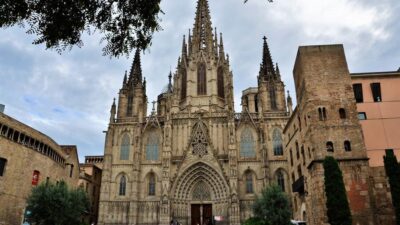
Barcelona: Old Town and Gothic Quarter Walking Tour
Read our review →
Barcelona Old Town & Gothic Quarter Small Group Tour
Read our review →
Ramblas, Old Town, Gothic and Gaudi Architecture Walking Tour
Read our review →
Barcelona: El Born and Gothic Quarter Wine & Tapas Bar Tour
Read our review →
Kids and Family Gothic Quarter Walking Tour in Barcelona
Read our review →Browse the lists this tour appears in