
Review · CHICAGO
Chicago’s Original Dazzling Architectural Interiors Tour
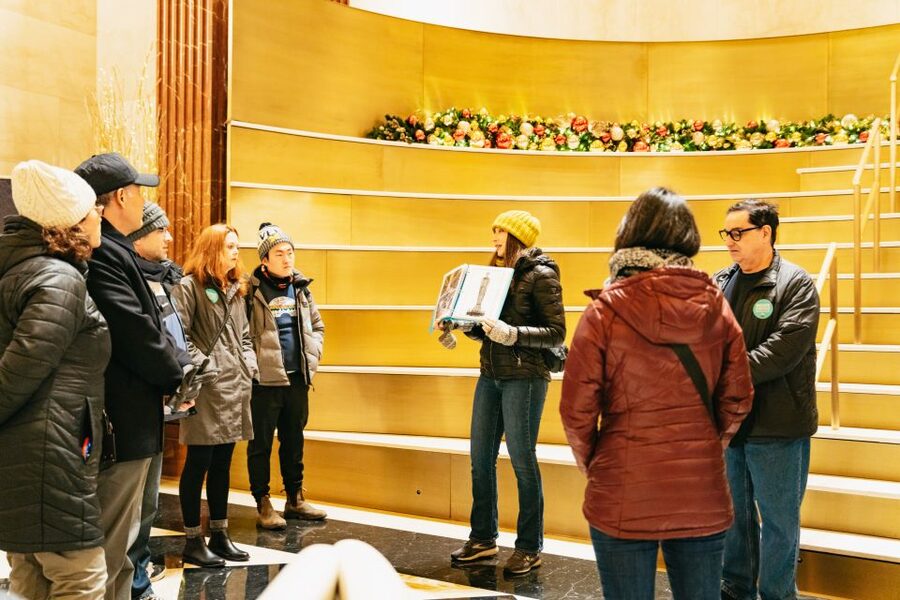
Chicago keeps some of its best architecture indoors. This two-hour walk takes you from Roaring Twenties Art Deco elegance to an 1880s downtown landmark, then into a Moorish-flavored Postmodern space and beneath the world’s largest Tiffany stained-glass dome. I like that the route shows you places you could easily pass without noticing, and that the guides connect decoration to Chicago’s larger story. The Tiffany dome is the grand finale, but the smaller interiors may surprise you more.
I also like the range of styles. You are not getting one long lecture about skyscrapers. You move across decades, with Frank Lloyd Wright’s renovation work, Art Deco details, Moorish decoration, and stained glass all sharing the same walk. The main consideration is pace: two hours on foot means comfortable shoes matter, and the tour is conducted in English only.
Key details at a glance

- Look up at a record-setting Tiffany dome: Finish beneath the world’s largest Tiffany stained-glass dome.
- See four distinct design eras: The route includes Roaring Twenties Art Deco, 1880s architecture, Postmodern work, and Moorish details.
- Enter overlooked downtown spaces: Several interiors are places you might walk past every day without realizing what is inside.
- Hear Chicago brought to life: Guides including Spencer, Henry, and Kaylee explain how the city’s past shaped its buildings.
- Pay one clear price: The tour costs $35 per person, with all required entrance fees included.
- Finish near Millennium Park: The final stop puts you close to Cloud Gate, commonly called The Bean.
Why Chicago’s interiors tell a better story
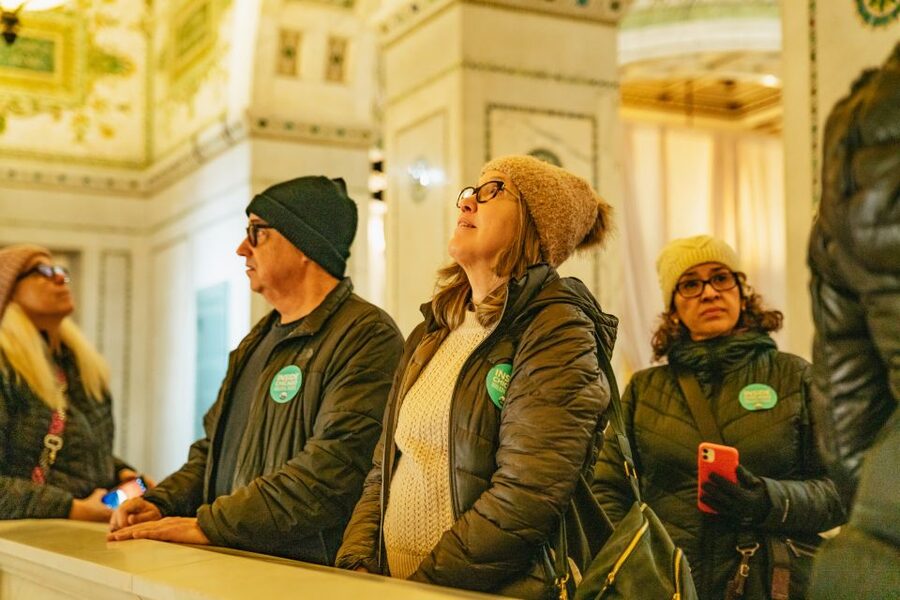
Chicago is famous for its skyline, but the city’s outdoor monuments are only half the story. From the sidewalk, a building may look plain, formal, or even easy to ignore. Step inside, and suddenly the ceiling, columns, glass, and decorative details tell you what the building once wanted people to feel.
That is the useful idea behind this tour. You are not simply walking from one address to another. You are comparing how Chicago expressed wealth, confidence, business, and artistic taste at different times. The route moves from the 1880s to the Roaring Twenties and then to the Postmodern era, so you can see how design changed instead of studying one period in isolation.
I especially like this approach for a first visit to Chicago. You get architecture, city history, and a bit of detective work. The guide points out the details your eyes might miss, then gives them a place in the city’s story.
The tour is also a good answer for anyone who has already seen the major outdoor sights. You may know the Chicago River, the Loop, and Millennium Park, but interiors reveal a quieter side of downtown. The experience is less about collecting famous facades and more about noticing what is overhead, behind a doorway, or inside a building you have passed before.
A few more architecture tours around Chicago worth a look
- Chicago Architecture River Cruise
★ 5.0 · 15,756 reviews - Chicago River 90-Minute Architecture Tour
★ 4.5 · 9,629 reviews - Chicago River: 1.5-Hour Guided Architecture Cruise
★ 4.8 · 8,046 reviews
Starting at 425 South Financial Place
The meeting point is the plaza in front of 425 S. Financial Place, next to a metal horse sculpture. That landmark matters because it gives you a clear visual target in an area filled with office buildings and busy streets.
Arrive ready to walk. The experience lasts two hours, and the route links several indoor locations across downtown. The exact starting time varies, so check availability when you book. You will want comfortable shoes and clothing suited to the weather, since the tour includes outdoor walking between interiors.
Entrance fees are included in the $35 price. That makes the cost easier to judge because you do not need to add separate admission charges during the route. Gratuities are not included, so plan for that separately if you feel the guide has provided a good experience.
The tour is wheelchair accessible, which is important for an interiors route that enters several public spaces. If accessibility is essential for your visit, confirm the current arrangements when booking, since building access can depend on the locations open that day.
Art Deco glamour from the Roaring Twenties
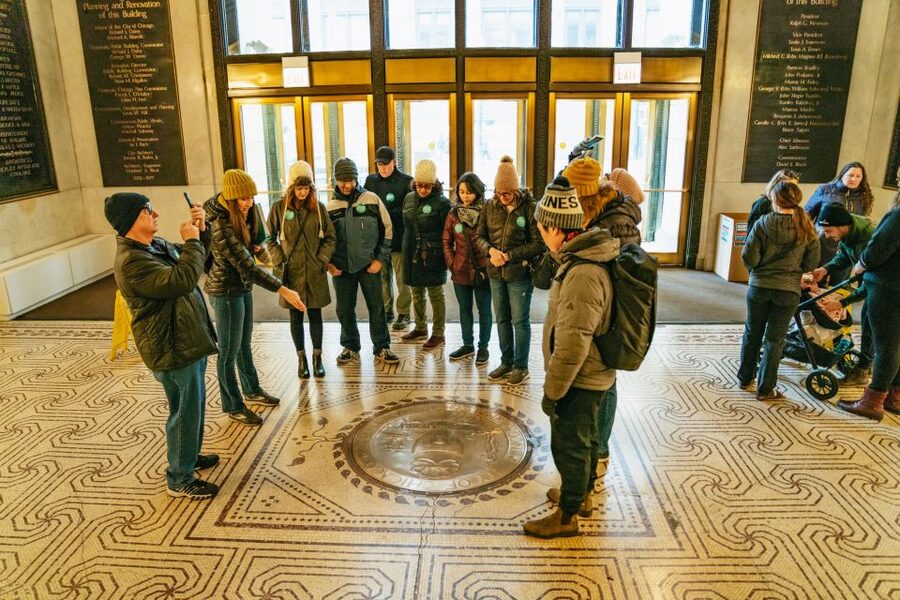
The first major mood is the polished elegance of the 1920s. This part of the route places you inside a classic Art Deco masterpiece, where decoration carries much of the message.
Art Deco was not shy. It favored geometry, order, symmetry, and a sense of modern luxury. Look for the kind of details that make a building feel carefully staged rather than merely functional. The appeal is not only the surface decoration. It is the way the interior shows the optimism and confidence of a city that saw itself as modern and important.
You will get more from this stop if you let the guide explain how the details fit together. A quick glance may reveal a handsome ceiling or polished wall, but a guided look helps you notice repeated patterns, vertical lines, and the balance between ornament and structure.
This is also where the tour earns its place for people who are not architecture specialists. You do not need to know design terms before arriving. The guide gives you a way to read the room, and you can use that method at other buildings during your trip.
Stepping back to Chicago in the 1880s
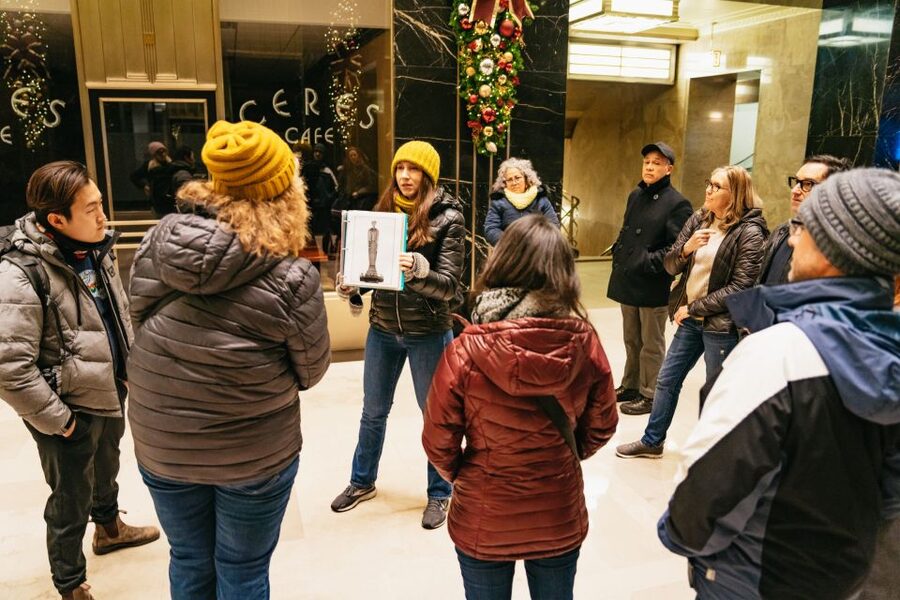
The route then moves roughly 50 years earlier, to one of the oldest and best-known buildings in downtown Chicago. This change in period is one of the tour’s strongest features. Instead of treating Chicago architecture as one grand block of history, it lets you feel the difference between late 19th-century ambition and 1920s glamour.
An 1880s building carries a different visual language. Its structure and decoration reflect a city still shaping its identity after a period of fast growth and rebuilding. You can expect the guide to focus on how the building was made and styled, not just on its age.
This stop gives the tour some needed weight. The Art Deco interior is polished and theatrical, but the older building helps explain the conditions that came before it. You see that Chicago’s architectural story did not begin with the famous modern skyscraper. It developed through several changing ideas about height, materials, public space, and civic pride.
For me, this is the kind of stop that makes a walking tour worthwhile. You are looking at a real place, not a model or a museum display, and the building remains part of the working downtown environment.
Same city, a completely different century:
- Chicago Architecture Center River Cruise aboard First Lady
★ 5.0 · 5,536 reviews - Chicago: Architecture River Cruise Skip-the-Ticket Line
★ 4.8 · 4,325 reviews - Chicago River 45-Minute Architecture Tour from Magnificent Mile
★ 4.5 · 2,924 reviews - Chicago Lake and River Architecture Tour
★ 4.5 · 2,308 reviews
Frank Lloyd Wright’s hand in an older interior
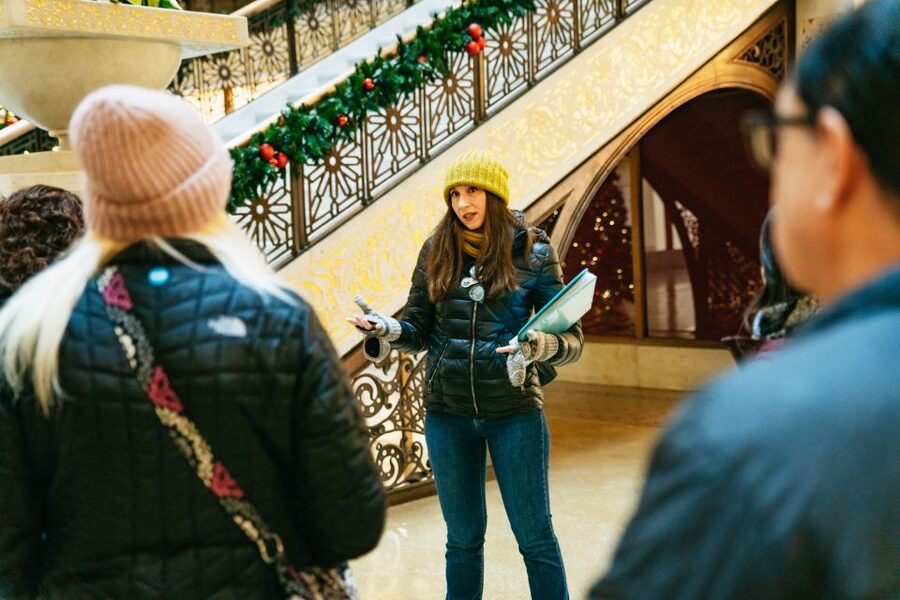
The tour also includes turn-of-the-century interiors renovated by Frank Lloyd Wright. This is a useful detail for architecture fans, but it should interest anyone curious about how a famous designer dealt with an existing space.
Wright is often associated with houses and major architectural projects, yet renovation work shows another side of his practice. Rather than starting with an empty site, he had to respond to a building already carrying its own structure and identity.
As you look around, pay attention to the relationship between the original building and the later work. The value here is not simply seeing a famous name attached to an interior. It is understanding how design can change a room without erasing everything that came before.
The tour does not present every stop as a single grand masterpiece. That is a strength. You get to compare full buildings, renovated spaces, decorative interiors, and unexpected details. The result feels more like reading the city than ticking off famous names.
A Postmodern ceiling with Moorish details
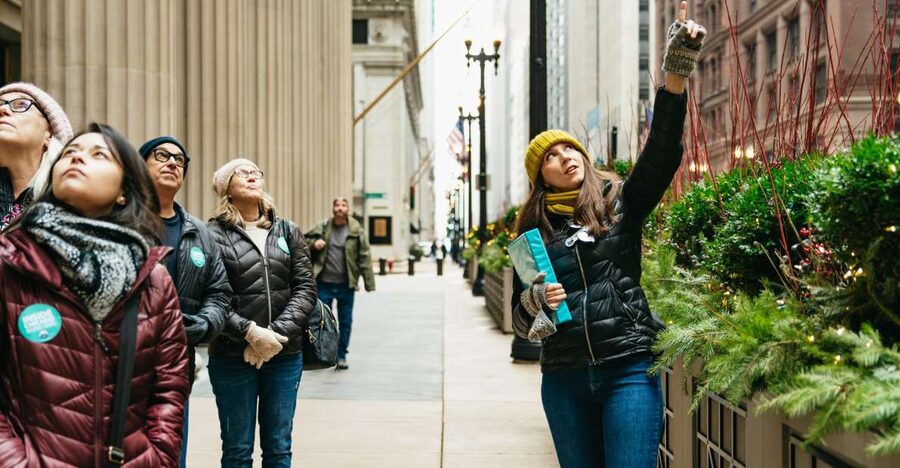
Later, the route shifts again, this time to a vaulted ceiling from the Postmodern era surrounded by Moorish details. This stop brings a different kind of visual energy.
Postmodern design often played with references, historic forms, and unexpected combinations. A vaulted ceiling framed by Moorish decoration can feel far removed from the clean lines of Art Deco or the older downtown structure. That contrast is precisely why it works in the itinerary.
You may find this stop especially useful if you think of Chicago architecture only in terms of steel, glass, and modern skyscrapers. The city’s interiors can be theatrical, playful, and decorative. They can borrow from older traditions while sitting inside a much newer building.
This part also gives the guide room to explain that architecture is not a straight march toward simpler design. Different periods revive old ideas, reinterpret them, and combine them in new ways. You do not need to love every style to appreciate the comparison.
Ending under the Tiffany stained-glass dome
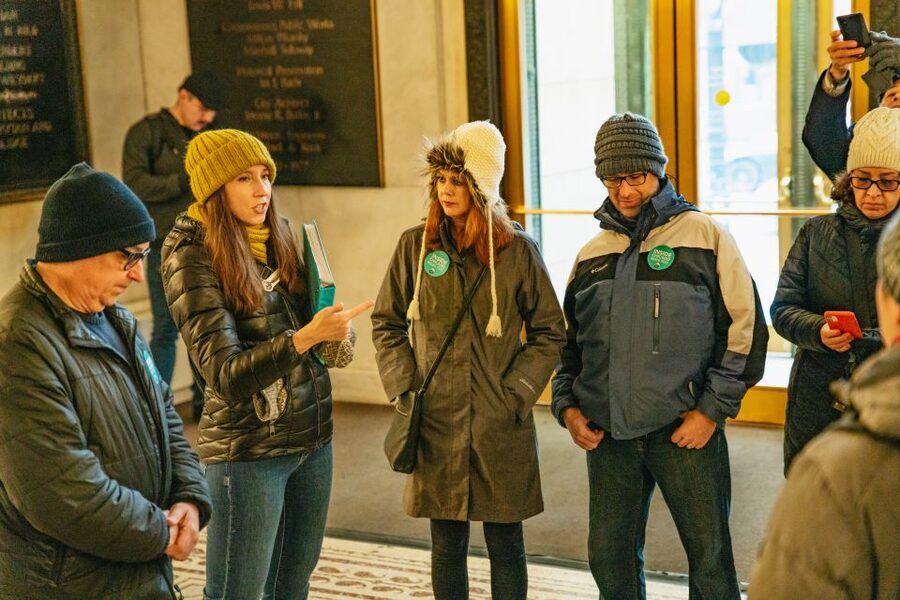
The final major stop is the tour’s visual climax: the world’s largest Tiffany stained-glass dome. You end by looking upward at a broad field of colored glass, close to Millennium Park and Cloud Gate.
This is the moment to slow down. The dome is not something you should view at eye level while listening to a quick explanation. Give yourself time to study the pattern, the color, and the way the light changes the ceiling. The size matters, but so does the craftsmanship. A large interior feature can dominate a room while still rewarding close inspection.
The location is practical, too. After the tour, you are near one of Chicago’s most recognizable public spaces. If you have not yet visited Millennium Park, you can continue there afterward. Cloud Gate is close by, giving you an easy next stop without arranging another ride.
I would not book this tour only for the dome, though. The final ceiling is the headline attraction, but the route works because the earlier interiors prepare you to notice it. You have already moved through several styles and learned to look beyond the obvious.
The guides shape the experience
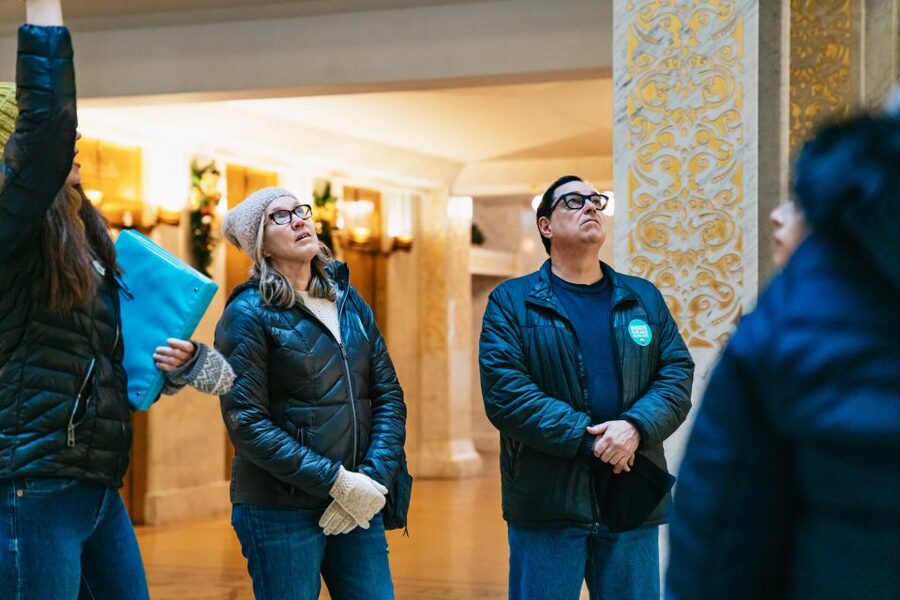
A walking tour of interiors depends heavily on the guide. The spaces are attractive on their own, but a good explanation helps you understand why they matter.
Spencer is a Chicago native who brings a strong sense of place to the route. Henry has architectural training and is able to discuss the buildings with enthusiasm and a broad store of information. Kaylee is described as friendly, professional, and comfortable to follow, even when rain interrupted the walk.
Those details matter because the tour includes several different periods and design approaches. You want a guide who can shift from local history to architectural observation without turning the experience into a classroom lecture.
The best way to use your guide is to ask questions. If a detail catches your eye, ask why it was used, when it was added, or how it fits the building. The tour is conducted in English, so you should be comfortable following spoken explanations for two hours.
The overall rating is 4.9 from 39 reviews, with particular praise for the guides’ enthusiasm, local background, historical context, and ability to point out details that are easy to miss. That matches the main purpose of the tour: helping you see familiar downtown spaces with sharper eyes.
Is $35 a fair price?
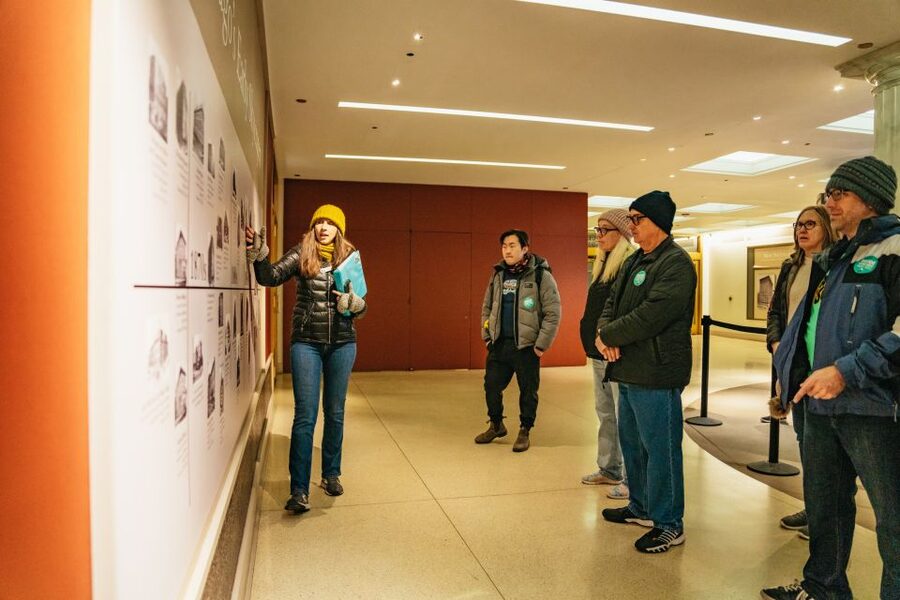
At $35 per person, this is a reasonable price for a two-hour guided experience, especially because all necessary entrance fees are included. You are paying for access, route planning, and interpretation, not just a walk through public streets.
The value depends on your interests. If you only want outdoor skyline views, you can explore downtown on your own for less. But if you want access to interiors and an explanation of how the styles connect, the fee is easier to justify.
It is also a good use of time on a rainy or chilly day. The walk still includes outdoor stretches, so it is not a fully indoor activity, but much of the appeal comes from getting inside and looking up.
The tour offers free cancellation up to 24 hours before the start time, and you can reserve now and pay later. Those terms help if your Chicago plans are still shifting.
Who should book this walk?
I would recommend it to first-time visitors who want more than the usual downtown photo stops. It suits architecture fans, history-minded visitors, and anyone who enjoys finding beauty in places that do not announce themselves from the sidewalk.
It is also a smart choice for repeat visitors. You may already know Millennium Park and Chicago’s famous skyline, but this route gives you a different set of sights. The interiors make the city feel less familiar in a good way.
Families with older children may enjoy it if the children are comfortable walking and looking closely at buildings. The changing styles help keep the route from feeling repetitive. Still, the experience is best for people who genuinely want to listen and observe, not for anyone seeking a fast-paced attraction.
The main drawbacks are clear. The tour is in English, the group size is not specified, and the experience requires walking between sites. Weather-appropriate clothing and good shoes will make a noticeable difference.
Final verdict: a strong choice for curious Chicago visitors
Book this tour if you want to understand Chicago through its interiors rather than simply photograph its skyline. The route gives you four distinct design moods, a Frank Lloyd Wright connection, overlooked downtown rooms, and a memorable finish beneath the Tiffany dome.
I would choose it early in a Chicago visit, then use what you learn for the rest of your sightseeing. After two hours, you will likely notice ceilings, doorways, patterns, and decorative details that you would otherwise pass without a glance. That is the real value here: not just seeing beautiful rooms, but learning how to see the city better.
FAQ
How long is Chicago’s Original Dazzling Architectural Interiors Tour?
The tour lasts two hours.
How much does the tour cost?
The price is $35 per person.
What is included in the price?
All necessary entrance fees are included.
Where does the tour meet?
Meet in the plaza in front of 425 S. Financial Place, next to the metal horse sculpture.
What language is the tour conducted in?
The live guided tour is conducted in English.
Is the tour wheelchair accessible?
Yes, the activity is wheelchair accessible.
What should I bring?
Bring comfortable shoes, weather-appropriate clothing, and a face mask or protective covering.
Are gratuities included?
No. Gratuities are not included in the tour price.
Can I cancel my booking?
Yes. You can cancel up to 24 hours in advance for a full refund. You can also reserve now and pay later.
Just added around Chicago
- Private Chicago Architecture Tour★ 5.0 · 5 reviews
- Private Frank Lloyd Wright Architectural Tour by Luxury Vehicle★ 3.5 · 7 reviews
- Chicago Luxury Minibus City Tour and Architecture River Cruise★ 4.5 · 8 reviews
- Small Group History And Architecture Walking Tour of Chicago★ 4.5 · 8 reviews
- Private Chicago Architecture Walking Tour★ 5.0 · 6 reviews
- Chicago History and Architecture Walking Tour with Boat Cruise★ 4.5 · 10 reviews
- Chicago: Evolution of the Skyscraper Walking Tour★ 4.9 · 10 reviews
- Chicago’s Modern Skyscrapers Guided Walking Tour★ 5.0 · 6 reviews
Chicago Architecture Tours, compared.
Chicago River: 1.5-Hour Guided Architecture Cruise
Read our review →
Chicago Architecture Center River Cruise aboard First Lady
Read our review →
Chicago: Architecture River Cruise Skip-the-Ticket Line
Read our review →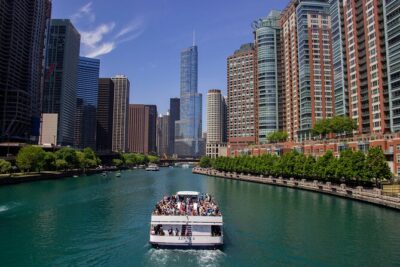
Chicago River 45-Minute Architecture Tour from Magnificent Mile
Read our review →

Chicago: 1.5-Hour Lake and River Architecture Cruise
Read our review →Browse the lists this tour appears in