
Review · ITALY
Bologna: Guided Architecture Walking Tour
Bologna’s historic center reads like an open-air architecture lesson, from the university halls of the Archiginnasio to the leaning Garisenda Tower and the broad sweep of Piazza Maggiore. This private two-hour walk links the city’s Gothic, Renaissance, Baroque, and Classical landmarks without sending you far from the center.
I like the private group format, since you can ask questions without competing with a large crowd. I also like the route’s range: you see major civic buildings, churches, towers, arcades, and market streets rather than one grand monument repeated in different forms.
The main drawback is the $186.92 per person price, especially because entrance fees are not included. This makes the tour a better value for a small group that wants a personal guide than for a solo visitor who is happy to read signs and explore independently.
Key points at a glance
- The Archiginnasio begins the story: Learn why Bologna’s university shaped the city and why this palace matters.
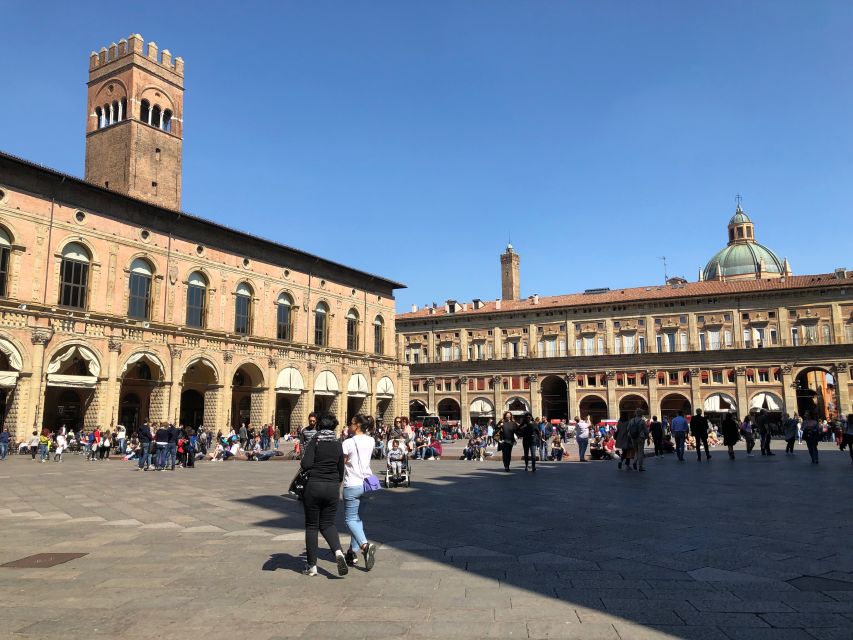
- Piazza Maggiore packs in several styles: The square brings together the Basilica of San Petronio and major government buildings.
- The Two Towers are viewed from street level: You stop at the base of the Asinelli and Garisenda towers rather than paying for an interior visit.
- Roberta gets specific praise: Her tour is described as informative, engaging, and responsive to individual questions.
- The walk ends in the Quadrilatero: You finish among markets and shops, a useful spot for continuing your own exploration.
- The tour is private and multilingual: Live guiding is available in Italian, English, French, German, and Spanish.
Starting at the Archiginnasio and Piazza Galvani
Meet your guide in front of the entrance to the Palace Archiginnasio at Piazza Galvani 1. The nearby Biblioteca Comunale dell’Archiginnasio is an easy landmark, and the tour begins with one of Bologna’s most important buildings rather than with a general city introduction.
The Archiginnasio served as the main office building for the University of Bologna, widely recognized as the oldest university in the world. That fact gives the opening real weight. You are not simply looking at an old palace. You are beginning with a building tied to centuries of study, teaching, and civic life.
The first portion includes Piazza Galvani and about 15 minutes of guided walking. This is a useful way to get your bearings before the larger squares and landmarks appear. Your guide can explain how the university fits into Bologna’s identity, then connect that story to the buildings you see later.
You should note that entrance to the buildings mentioned on the walk is not included. The tour focuses on exterior architecture and guided interpretation, so do not book it expecting a museum visit inside the Archiginnasio. If entering the palace matters to you, you will need to arrange that separately.
More architecture walks in Italy:
- Lecce: Baroque Architecture and Underground Walking Tour
★ 4.6 · 1,248 reviews - Experience Florence’s Art and Architecture on a Walking Tour
★ 5.0 · 318 reviews - Guided Walking Tour of Rome: Top Sights & Baroque Treasures
★ 5.0 · 155 reviews
San Petronio and the broad face of Piazza Maggiore
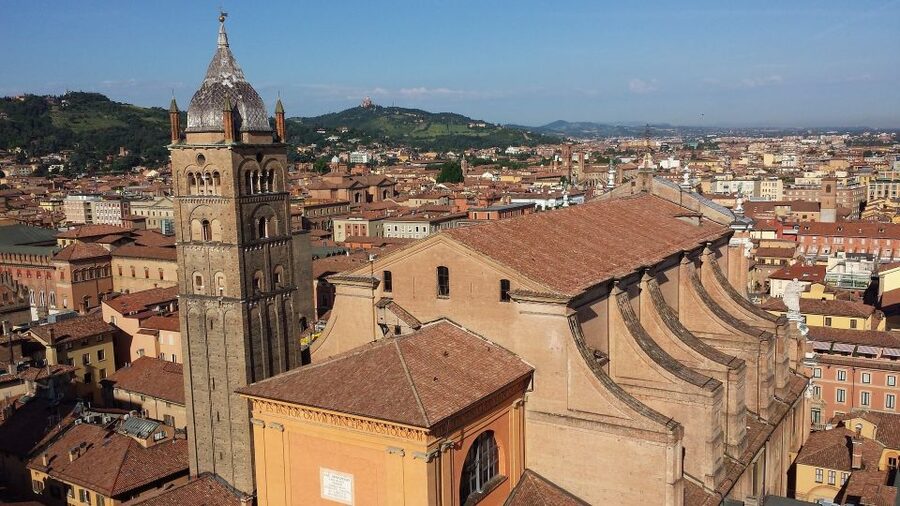
From the Archiginnasio, the walk continues to Piazza Maggiore, the main civic square at the center of the route. The Basilica of San Petronio gives the square its largest visual punch, with an imposing facade that is notably unusual in its appearance.
The guide points out the basilica’s architectural features and the contrast between its finished and unfinished elements. Since the tour covers several architectural periods, San Petronio becomes a helpful reference point for understanding Bologna’s Gothic character before you move on to Renaissance and Classical details elsewhere.
I appreciate the route’s order here. Starting at the university and then walking into the city’s principal square creates a clear progression from academic power to religious and civic power. You are not just checking off famous places. You are seeing how different institutions claimed space in the same compact center.
The square also gives you a chance to pause and look up. On a short walking tour, it is easy to rush from facade to facade. Here, the open space makes the scale of San Petronio easier to judge, especially after the more enclosed setting around the Archiginnasio.
Again, the activity does not include admission to the basilica or other buildings. You will receive a guided exterior visit unless your guide and schedule allow something more, so clarify your expectations before booking.
Piazza del Nettuno and Bologna’s civic buildings
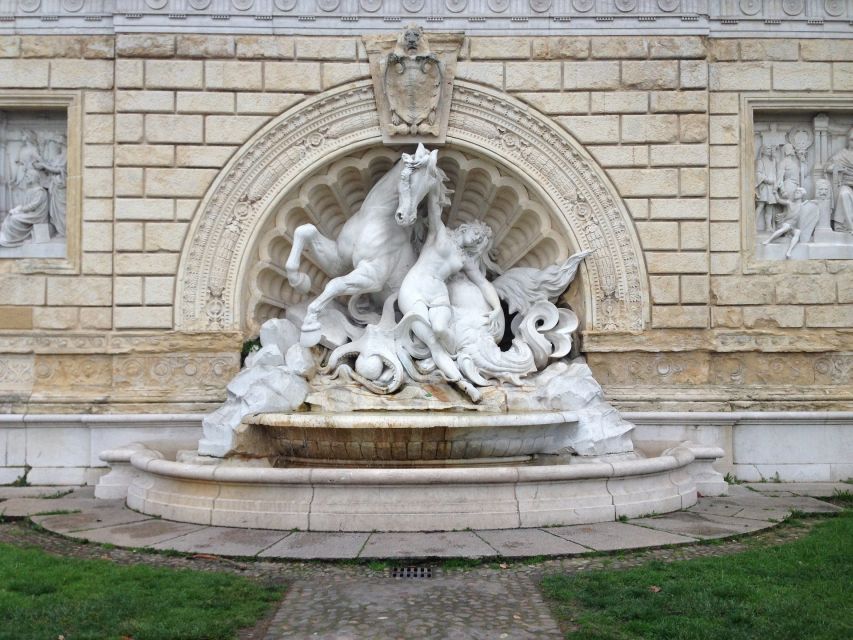
Next comes Piazza del Nettuno, a smaller but important square beside Piazza Maggiore. Its name comes from the Fountain of Neptune, although the architectural interest here extends well beyond the fountain itself.
Three major administrative buildings frame this part of the route: Palazzo d’Accursio, Palazzo del Podestà, and Palazzo del Capitano del Popolo. Their presence helps explain how Bologna’s government operated and how civic architecture changed over time.
Palazzo d’Accursio is especially useful to consider as part of the city’s public face. Rather than treating it as a single isolated facade, the guide can show how the surrounding buildings form a civic cluster. That makes the stop more worthwhile than a quick photo at a famous square.
The itinerary lists guided sightseeing around Palazzo d’Accursio and Piazza del Nettuno. You should expect explanations from outside, not a full tour of the interiors. If you are keen on government rooms, collections, or decorated halls, you will need a separate visit.
This section is also where a private guide can add real value. The buildings are close together, but their roles and architectural details are not always obvious at a glance. A good guide helps you notice why one facade feels more formal, why another looks older, and how the square developed as a center of administration.
The Asinelli and Garisenda Towers from below
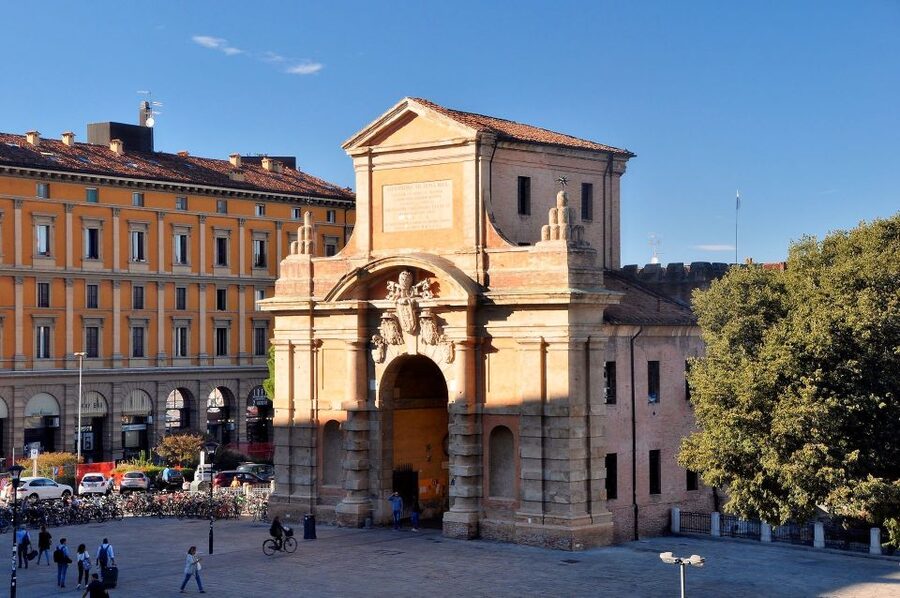
At Piazza di Porta Ravegnana, the route reaches Bologna’s best-known medieval landmarks, the Asinelli and Garisenda towers. The walk stops at their base, so you can study the towers from street level and hear about their history and construction.
The Asinelli Tower is the taller of the pair, while the Garisenda Tower is famous for its pronounced lean. Seeing them together makes their difference clear. One rises dramatically above the surrounding streets, while the other draws your eye through its tilt and compact scale.
This is an important expectation to set: the experience does not list a climb of the Asinelli Tower. You are viewing the structures from below and learning about their features. That is still a strong stop on a two-hour architecture walk, but it is not a tower-access ticket.
The towers also shift the tour from grand public squares to medieval urban power. Their height and shape show how Bologna once expressed status through private towers. You can look upward from the base and understand why these buildings remain among the city’s most recognizable sights.
If you want photographs, this stop may be the busiest portion of the walk simply because the towers are so easy to spot and so central to Bologna’s image. A private group can make it easier to pause for a few minutes without slowing a larger party.
More guided tours in Italy:
- Florence Skip-the-Line Duomo Tour with Guide & Brunelleschi Dome
★ 5.0 · 1,176 reviews - Florence in a Day: David, Cathedral & City Highlights Guided Tour
★ 4.5 · 947 reviews - Florence: David, Cathedral & City Highlights Guided Tour
★ 4.8 · 471 reviews - Historical Guided Tour of Florence’s Iconic Cathedral
★ 3.5 · 88 reviews
Corte Isolani and the wooden arch
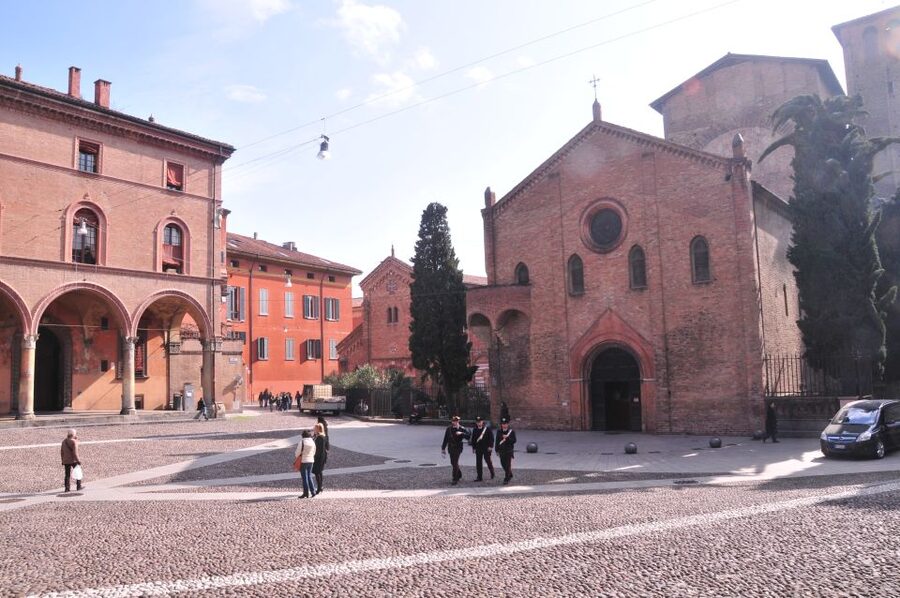
After the towers, the route continues toward the wooden arch of Corte Isolani. This is one of the more distinctive details on the walk, especially after the larger churches and government buildings.
The arch gives you a change of scale. Instead of another imposing square or tall facade, you focus on a smaller architectural feature within the street fabric. It is the kind of detail you might pass without noticing if you were walking alone with a map.
The supplied route description also includes the Oratory of Santa Cecilia. Its presence adds another religious stop, but the experience is centered on seeing and discussing the exterior rather than entering a building. The guide can connect this quieter site with the larger churches earlier in the tour.
I like this part of the route because it keeps the walk from becoming a parade of only headline sights. Bologna’s character comes from the way important monuments sit beside ordinary passages, market streets, and smaller places of worship. Corte Isolani helps you see that contrast.
San Giacomo Maggiore and the final stretch
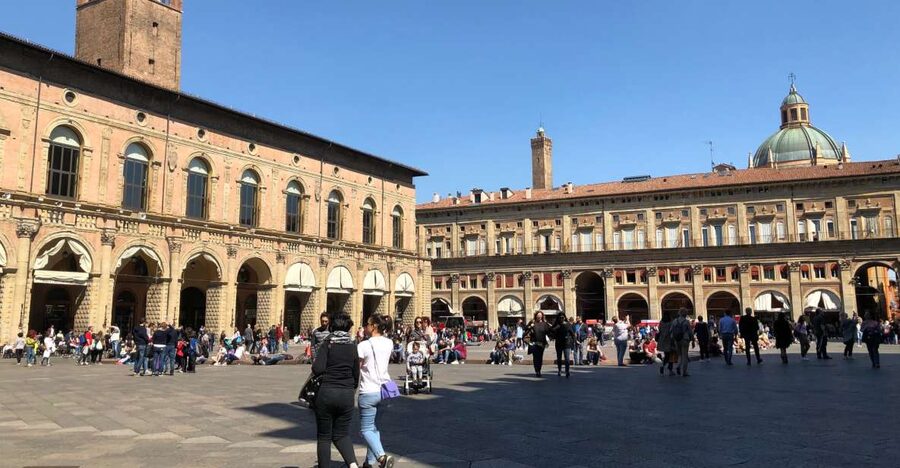
The tour continues to the exterior of San Giacomo Maggiore. This church gives the guide another opportunity to compare architectural styles and discuss how Bologna’s religious buildings differ in shape, decoration, and setting.
You should expect an outside visit here. The activity information does not include entry, and the itinerary describes sightseeing rather than an interior tour. That keeps the pace practical, but it also means you will need to return on your own if you want a longer look inside.
The final area is the Quadrilatero, Bologna’s traditional market district. The tour ends among markets and shops, which is a smart place to finish because you can continue exploring without arranging another transfer. You might stop for food, browse local products, or simply wander the narrow streets after the guide departs.
The route then returns to the Archiginnasio meeting point. That makes the tour easy to fit into a day of central Bologna sightseeing. You do not need to plan a taxi or learn a new neighborhood to find your way back.
What the private format is worth
At $186.92 per person, this is not a budget walking tour. Its value depends heavily on how many people share the private booking and how much you want a guide’s attention.
For a couple, family, or small group, the cost can make sense if you want to ask questions about particular buildings, request extra attention to architecture, or move at a comfortable pace. The feedback connected with guide Roberta is especially positive on this point. Her explanations are described as informative and engaging, and she is praised for responding well to individual wishes and questions.
That is the clearest strength of this experience. A private guide can adjust the conversation. If you care about Gothic facades, medieval towers, university history, or the practical life of the market quarter, you can make that interest part of the walk.
The price is harder to justify if you are alone, already understand Bologna’s architecture, or mainly want entrance tickets. No building admission is included, and the tour lasts only two hours. You are paying for the guide, the route, and the private attention, not for access to a collection of interiors.
The rating is 4.5 from two reviews, so I would treat the available feedback as encouraging but limited. The specific praise for Roberta is useful, though it does not guarantee that she will lead every departure. Check the guide details when you book.
Timing, languages, and walking comfort
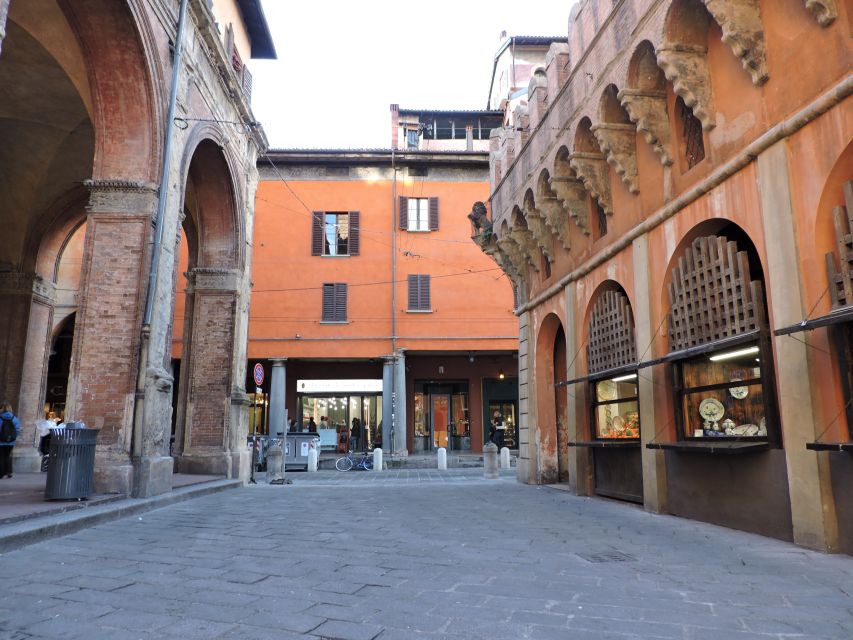
The tour lasts two hours, with starting times available according to the date you select. That duration is long enough to cover the main central sights but short enough to fit before lunch, after arrival, or alongside a museum visit.
The walk includes multiple stops and stretches between them. Comfortable shoes are sensible, even though the route stays in the central city. You will spend time looking upward at towers and facades, so a slower pace may suit you better than trying to hurry through every stop.
A live guide is available in Italian, English, French, German, and Spanish. This gives you a good chance of receiving the tour in a language you prefer, but select the language carefully when checking availability.
The activity is wheelchair accessible. Since access details can vary at individual buildings and along specific streets, it is still sensible to tell the provider about your needs when reserving. The tour’s central route and private format may make adjustments easier, but the supplied information does not promise interior access at each landmark.
Free cancellation is available up to 24 hours before the scheduled start for a full refund. You can also reserve now and pay later, which is useful if your Bologna plans are still shifting.
Who should book this Bologna walk?
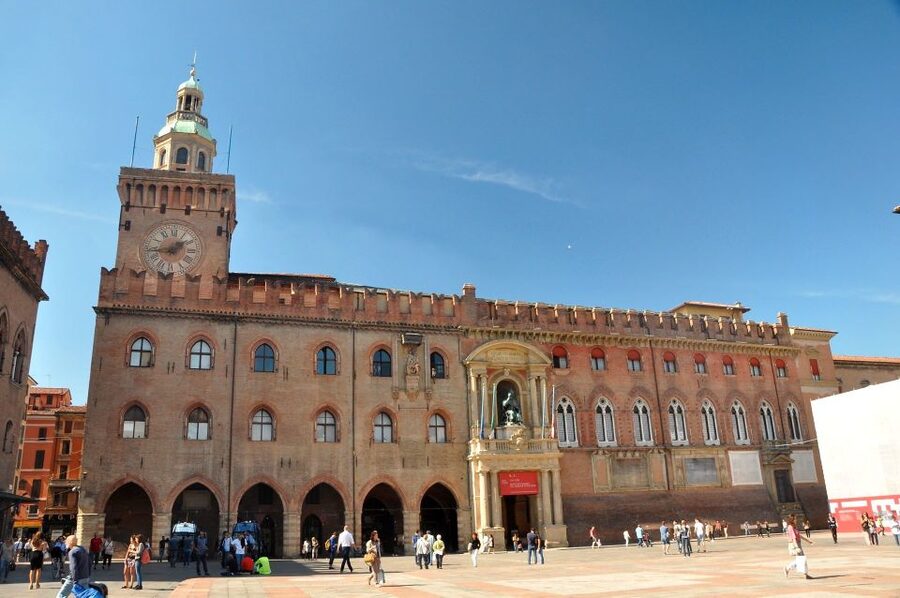
I would recommend it most strongly to a small private group that wants a guided introduction to Bologna’s architecture without spending half a day indoors. The route brings together the university, basilica, government buildings, towers, churches, arcades, and market streets in a compact period.
It also suits you if you prefer asking questions to following an audio guide. The positive comments about Roberta’s flexibility suggest that the human part of the tour is its main advantage. Bring a few questions of your own, since a private format gives you a better chance to shape the conversation.
This is less suitable if you want extensive interior visits, a tower climb, or a low-cost orientation walk. Those are not included. You will see the exteriors of the Archiginnasio, San Petronio, Palazzo d’Accursio, the Two Towers, Santa Cecilia, and San Giacomo Maggiore, then finish in the Quadrilatero.
Should you book it?
Book this tour if you want a focused architectural introduction with a private guide and you place a high value on personal questions and flexible discussion. The route is thoughtfully assembled, and the progression from the Archiginnasio to Piazza Maggiore, the civic squares, the Two Towers, and the Quadrilatero gives you a useful picture of central Bologna.
Skip it if the $186.92 price feels high for two hours or if you mainly want to enter the buildings. In that case, use the route as a self-guided outline and spend your money on selected admission tickets instead.
For a couple or small group meeting Bologna for the first time, I think the private format is the deciding factor. The architecture is excellent, but the chance to have a guide such as Roberta respond to your interests is what makes this more than a quick walk between famous facades.
FAQ
Where does the Bologna architecture tour begin?
It begins in front of the entrance to the Palace Archiginnasio at Piazza Galvani 1 in Bologna. The nearby Biblioteca Comunale dell’Archiginnasio is listed as the starting location.
Where does the tour end?
The activity ends back at the Archiginnasio meeting point.
How long does the walking tour last?
The tour lasts two hours. Starting times depend on availability for the date you choose.
Which languages are available?
Live guiding is available in Italian, English, French, German, and Spanish.
Are entrance fees included?
No. Entrance to the buildings mentioned during the walk is not included in the price.
Is the tour private and wheelchair accessible?
Yes. The activity is offered as a private group and is listed as wheelchair accessible.
Just added around Italy
- Vicenza: discovering the city of Palladio by e-bike★ 5.0 · 4 reviews
- Vicenza: Palladian Architecture Private Walking Tour★ 3.3 · 3 reviews
- Turin: Art Nouveau Walking Tour with Coffee★ 5.0 · 11 reviews
- Vatican: Exclusive Baroque Evening With Aperitivo & Dinner★ 3.1 · 2 reviews
- Venice Music Project – Baroque Autumn – Season 2025★ 4.5 · 7 reviews
- Walking tour in Venice with an architect★ 5.0 · 16 reviews
- Palladio. A wonderful live tale through time&soul, from Ve/Pd/Vr★ 5.0 · 7 reviews
- Turin, Art Nouveau walking tour and coffee break★ 4.0 · 7 reviews
Walking Tours, compared.
The Official Art Deco Walking Tour by The Miami Design Preservation League
Read our review →
Barcelona: Gothic Quarter Ghosts and Legends Walking Tour
Read our review →
Barcelona: Old Town and Gothic Quarter Walking Tour
Read our review →
Lecce: Baroque Architecture and Underground Walking Tour
Read our review →
Chicago in a Day: Food, History & Architecture Walking Tour
Read our review →
Ramblas, Old Town, Gothic and Gaudi Architecture Walking Tour
Read our review →
Chicago’s Secret Interiors Architectural Walking Tour
Read our review →Browse the lists this tour appears in